
The Ultimate Guide to the 10 Best Street Food Singapore Has to Offer in 2026
Harry the matcha king
Harry is our resident matcha obsessive. He’s tasted hundreds of bowls and tracks every cup in Savor.
Singapore's hawker centres are a living museum of flavor, a vibrant tapestry where generations of culinary history are served on a plate for just a few...
Singapore's hawker centres are a living museum of flavor, a vibrant tapestry where generations of culinary history are served on a plate for just a few dollars. Navigating this world of iconic dishes can be overwhelming, with countless stalls claiming to offer the best street food in Singapore. But how do you remember which Chicken Rice had the silkiest skin, or which Laksa broth was perfectly balanced? This guide is your framework for documenting that culinary journey, turning fleeting tastes into a personal food diary.
Forget chasing trends or relying on generic online reviews. This list provides the tools to rate like a critic of your own experience. We'll explore the essential dishes that define Singapore’s food paradise, from the smoky wok hei of Char Kway Teow to the delicate Popiah. More importantly, we'll give you actionable tips on how to deconstruct each dish, note its specific textures and flavors, and compare different versions. Think of this not just as a list to follow, but as a blueprint to create a food memory database that is uniquely yours. It’s time to track your tastes, compare your discoveries, and build a chronicle of your Singaporean food adventure.
1. Chicken Rice (Hainanese Chicken Rice)
Often hailed as Singapore’s unofficial national dish, Hainanese Chicken Rice is a masterclass in simplicity and precision. This iconic meal features perfectly poached chicken, served chilled or at room temperature, alongside fragrant rice cooked in rich chicken stock and pandan leaves. The deceptively plain appearance hides a complex, harmonious flavor profile that makes it one of the best street food Singapore has to offer.
What elevates this dish are the three essential condiments served alongside it. A fiery, tangy chili-lime sauce, a smooth, pungent ginger paste, and a thick, sweet dark soy sauce allow you to customize every bite. The magic lies in finding your perfect ratio of chicken, rice, and sauce, creating a balanced explosion of savory, spicy, and aromatic notes.
Why It's a Must-Try
Chicken Rice embodies Singapore's hawker culture: taking humble ingredients and perfecting them through generations of technique. It represents a culinary ideal where texture is just as important as taste. The chicken should be unbelievably tender with silky, gelatinous skin, while the rice grains remain distinct and aromatic. It’s a dish that’s both comforting and deeply satisfying.
Where to Find It & Pro Tips
- Iconic Stalls: Tian Tian Hainanese Chicken Rice at Maxwell Food Centre is world-famous, but don't miss local favorites like Wee Nam Kee or the Boon Tong Kee chain for consistently excellent renditions.
- Best Time to Go: Aim for just before the lunch rush (around 11:30 AM) to get the freshest batch.
- Ordering: Specify if you prefer "white" (poached) or "roasted" chicken. While poached is the classic, the roasted version offers a crispier, savory skin. Don’t forget to ask for a side of the flavorful chicken broth.
2. Laksa (Curry Noodle Soup)
A sensory explosion in a bowl, Laksa is a rich and aromatic noodle soup that captures the heart of Peranakan cuisine. This beloved dish features thick rice noodles submerged in a vibrant, spicy coconut curry broth, brimming with ingredients like prawns, fish cakes, and cockles. The broth’s complexity, built from a ground spice paste (rempah) of galangal, turmeric, and chili, makes it a cornerstone of the best street food Singapore offers.
What makes Laksa so compelling is its perfect balance of creamy, savory, and spicy elements. The two dominant styles in Singapore offer distinct experiences: the famous Katong Laksa has a thicker, richer gravy and noodles cut short so they can be eaten with only a spoon, while the less common Assam Laksa is a sour, fish-based version without coconut milk. Each spoonful delivers a multi-layered taste sensation that is both comforting and exhilarating.
Why It's a Must-Try
Laksa is a testament to Singapore’s multicultural heritage, blending Chinese and Malay culinary influences into a uniquely satisfying dish. The harmony between the springy noodles, the creamy broth, and the fresh toppings like laksa leaves and bean sprouts creates an unforgettable textural and gustatory adventure. It's a perfect dish for tracking and comparing how different stalls balance spice, creaminess, and toppings.
Where to Find It & Pro Tips
- Iconic Stalls: 328 Katong Laksa on East Coast Road is a legendary institution, famously defeating Gordon Ramsay in a hawker cook-off. For other fantastic bowls, try Janggut Laksa at Roxy Square or Sungei Road Laksa for a charcoal-fired version.
- Best Time to Go: Visit between meals, around 10:30 AM or 3 PM, to avoid long queues.
- Ordering: Most stalls will ask if you want cockles ("hum"), which add a briny depth. Don’t be shy about requesting extra sambal chili on the side to customize the heat. True Katong-style laksa is served without chopsticks, so be prepared to use just your spoon.
3. Satay (Grilled Meat Skewers)
An icon of Southeast Asian communal dining, Satay is the smoky, aromatic heart of Singapore’s hawker scene. These skewers of marinated meat—typically chicken, beef, or mutton—are grilled to perfection over a live charcoal fire, imparting a distinctive, irresistible char. The tender, juicy meat is served with a rich, chunky peanut sauce, creating a perfect harmony of sweet, savory, and spicy flavors that makes it some of the best street food Singapore has to offer.
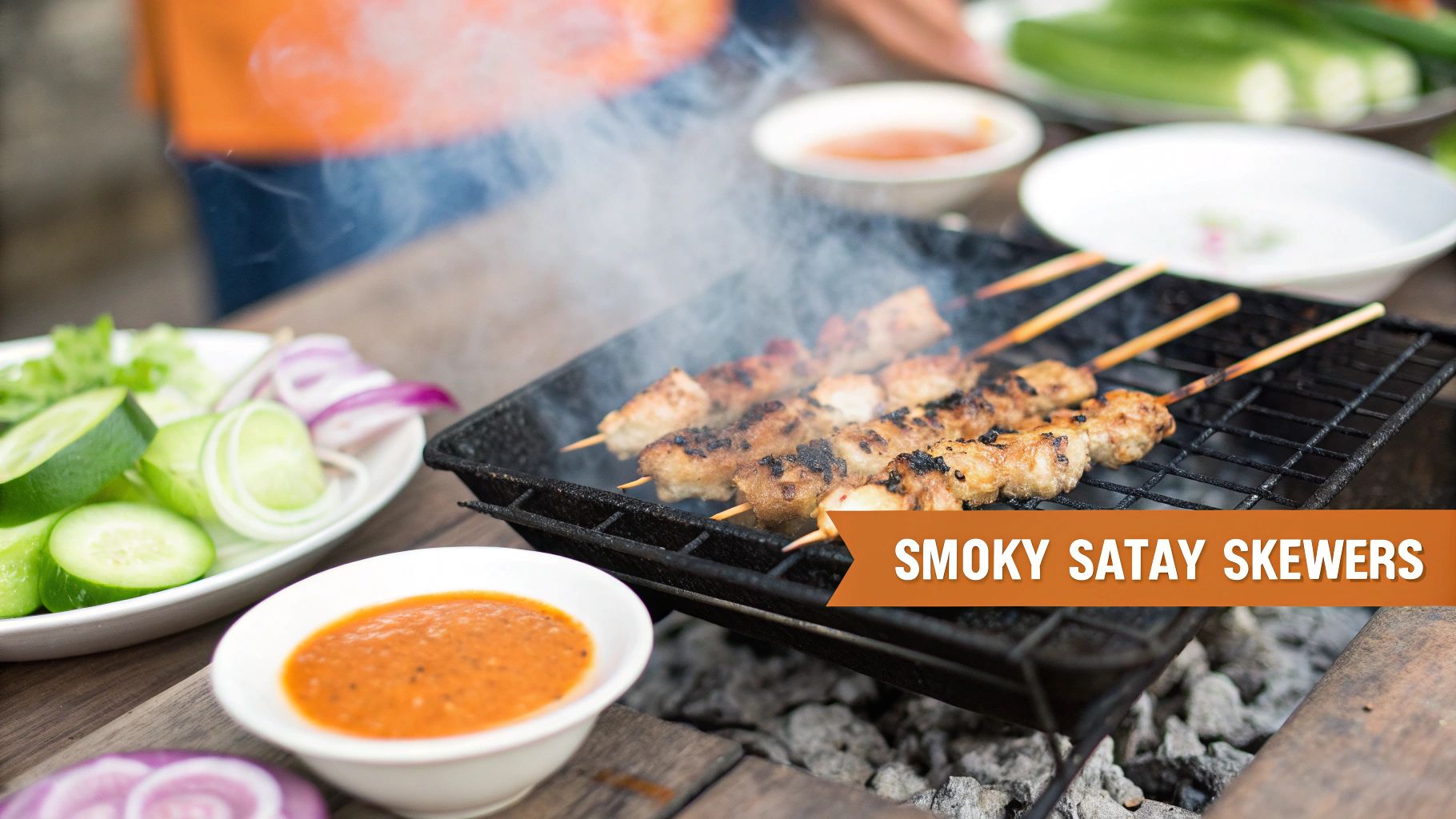
What truly makes satay a culinary experience is its interactive nature. The skewers arrive alongside crisp cucumber, sharp red onion, and ketupat (compressed rice cakes), all designed to complement the main event. Dipping each piece into the complex peanut sauce, you control the flavor intensity of every bite. This dish is not just about eating; it’s a social ritual meant for sharing and savoring.
Why It's a Must-Try
Satay is a masterclass in the art of grilling and marinade. The subtle differences between stalls are what make it fascinating; one vendor’s marinade might emphasize turmeric and lemongrass, while another’s peanut sauce is spicier. It’s a dish that invites comparison and rewards curiosity, allowing you to discover your personal preference for meat tenderness, char level, and sauce balance. Learn more about the global journey of grilled skewers and other foods from around the world.
Where to Find It & Pro Tips
- Iconic Stalls: Head to Stall 7 & 8 at Lau Pa Sat for a classic satay street experience. Other beloved spots include Chuan Kee Satay at Old Airport Road Food Centre and the historic Haron Satay at East Coast Lagoon Food Village.
- Best Time to Go: Satay is primarily an evening food. Stalls typically open in the late afternoon and get busiest after 6:00 PM.
- Ordering: Satay is ordered by the stick, with a minimum order of 10 sticks common. A mix of chicken, beef, and mutton is a great way to start. Remember to ask for extra peanut sauce if you're a fan; it's the soul of the dish.
4. Carrot Cake (Fried Radish Cake)
Do not let the name fool you; there are no carrots in Singapore’s Carrot Cake, or chai tow kway. This beloved dish is a savory, stir-fried masterpiece made from steamed radish cake (daikon) cut into cubes, fried with garlic, eggs, and preserved radish (chai poh). Its misleading English name is a direct translation of the Hokkien term for radish, making it one of the most intriguing finds for the best street food Singapore has to offer.
What makes this dish so compelling is the delightful contrast of textures. The radish cake cubes are pan-fried until they develop a perfectly crispy, golden-brown exterior while remaining soft and almost creamy on the inside. The salty, umami-rich crunch of the preserved radish bits scattered throughout creates a savory symphony, making every bite a unique experience.
Why It's a Must-Try
Carrot Cake is a dish of delicious contradictions: crispy yet soft, simple yet complex. It showcases the Teochew culinary influence on Singaporean hawker fare, where simple ingredients are transformed through expert frying techniques. The dish is typically served in two distinct styles: "white" (the original savory version) or "black" (fried with a sweet, dark soy sauce), allowing you to choose your own flavor adventure.
Where to Find It & Pro Tips
- Iconic Stalls: Check out local legends like Ah Fook Fried Carrot Cake at Golden Mile Food Centre, or explore the various highly-rated stalls at Maxwell Food Centre and Tiong Bahru Market.
- Best Time to Go: Visit stalls during their opening hours (often early morning) to taste the dish fried in the freshest oil, which significantly impacts the texture.
- Ordering: First-timers should try both the "white" and "black" versions to see which they prefer. The "black" version is ideal for those who enjoy a sweeter, more caramelized flavor profile.
5. Chili Crab
While often enjoyed in a restaurant setting, Chili Crab’s soul is pure hawker-style indulgence, making it an undisputed icon and one of the best street food Singapore showcases. This celebratory dish features a whole mud crab, stir-fried in a wok and drenched in a semi-thick, sweet, and savory tomato-chili sauce. The result is a glorious, messy, and utterly delicious experience that requires you to get your hands dirty.
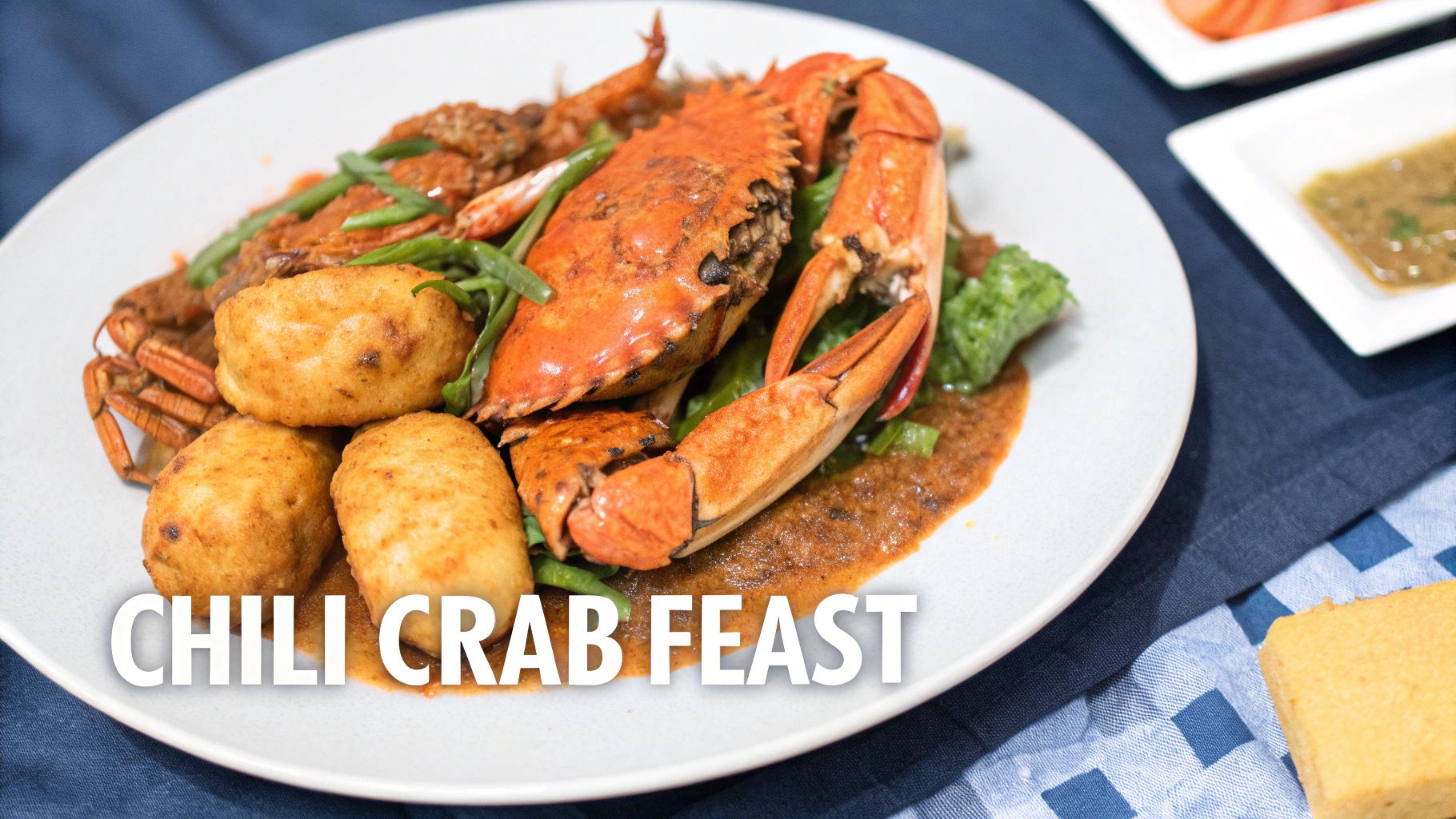
The sauce is the star, a complex gravy that balances the heat of red chilies with the tang of tomato paste, thickened with ribbons of beaten egg. It’s designed to be mopped up with deep-fried or steamed buns called mantou, which are soft, fluffy vessels perfect for soaking up every last drop of the precious sauce. The sweet, succulent crab meat, combined with the rich, piquant gravy, creates a multi-layered flavor profile that is both uniquely Singaporean and world-renowned.
Why It's a Must-Try
Chili Crab is more than just a meal; it's a communal event. It represents Singapore's flair for transforming premium seafood into a messy, interactive, and unforgettable dining spectacle. The joy comes from cracking open the shells, digging out the tender meat, and liberally coating it in the addictive sauce. It's a dish that demands your full attention and rewards you with one of the most satisfying flavor combinations in the culinary world.
Where to Find It & Pro Tips
- Iconic Stalls: While many associate it with seafood restaurants like JUMBO Seafood or Mellben Seafood, you can find excellent versions at hawker centers like Newton Food Centre for a more casual experience.
- Best Time to Go: Visit during dinner hours, as this is typically when seafood stalls are at their busiest and the crabs are freshest. Prepare for a wait, especially on weekends.
- Ordering: Don't forget the mantou; ordering chili crab without it is a missed opportunity. You can choose fried (crispy) or steamed (fluffy). Female crabs are often prized for their roe, so ask if it's available.
6. Roti Prata (Fried Indian Flatbread)
A beloved breakfast or supper snack, Roti Prata is a theatrical and delicious staple. This South Indian-inspired flatbread is made from a simple dough of flour, water, and ghee (clarified butter), which is masterfully stretched, flipped, and folded into paper-thin layers. Fried on a hot griddle until the outside is golden and shatteringly crisp while the inside remains soft and chewy, it’s a textural masterpiece and undeniably one of the best street food Singapore has to offer.
The magic of prata lies in its versatility. The plain version, known as kosong, is a perfect vessel for the accompanying fish or mutton-based curry. However, the dish can be customized with a huge variety of fillings, from a simple egg (telur) to more elaborate combinations like cheese, mushrooms, onions, or even sweet options like condensed milk. Each bite is a delightful contrast of flaky, savory, and rich flavors.
Why It's a Must-Try
Roti Prata is more than just food; it’s a performance. Watching a skilled prata master stretch and flip the dough is a mesmerizing experience central to the hawker culture. The dish perfectly balances crispiness, chewiness, and savory satisfaction, making it a comforting and universally loved meal. The quality can vary significantly, turning the hunt for the perfect prata into a rewarding culinary adventure.
Where to Find It & Pro Tips
- Iconic Stalls: The Roti Prata House on Upper Thomson Road is legendary for its crispy prata. Other must-visit spots include Mr and Mrs Mohgan's Super Crispy Roti Prata for its famously flaky texture and Zam Zam Restaurant for rich curries.
- Best Time to Go: Prata is best enjoyed fresh off the griddle. Visit during peak breakfast (8-10 AM) or supper times (after 9 PM).
- Ordering: Start with a "kosong" (plain) and an "egg" prata to judge a stall's fundamental skills. Pay attention to the curry; a great curry elevates the entire dish. Don't be afraid to ask for extra sauce.
7. Char Kway Teow (Fried Flat Rice Noodles)
A dish defined by its searing heat and smoky aroma, Char Kway Teow is a quintessential hawker centre experience. This beloved meal consists of wide, flat rice noodles stir-fried in a screaming-hot wok with sweet and savory dark soy sauces, crunchy bean sprouts, chives, shrimp, and slices of Chinese sausage. What truly makes this one of the best street food Singapore offers is the elusive element of wok hei or "breath of the wok."
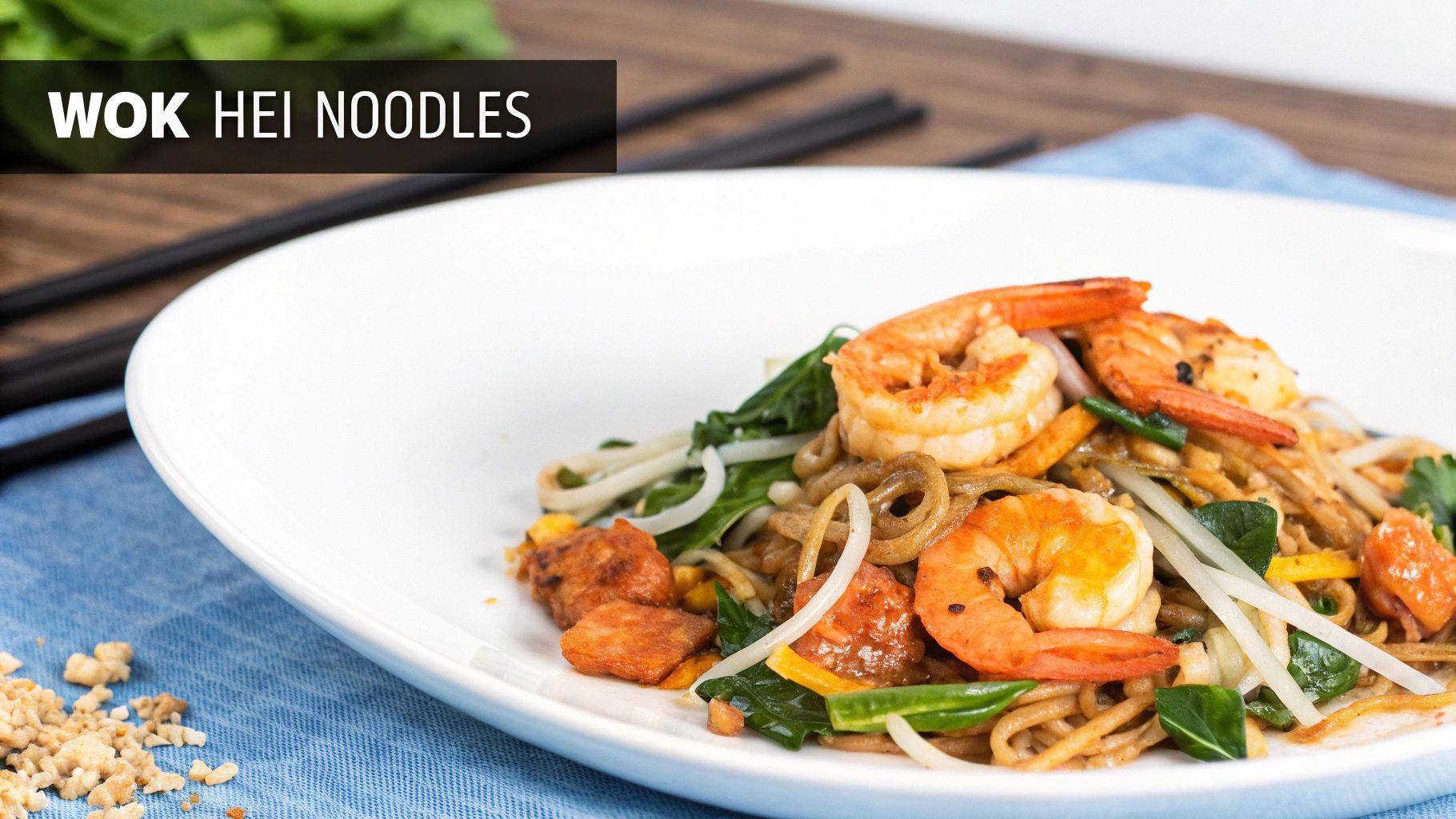
This prized smoky flavor is imparted only when fresh ingredients hit a seasoned, intensely heated wok, creating a caramelized char that infuses every noodle. The result is a dish that is simultaneously sweet, savory, and smoky, with a delightful interplay of textures from the chewy noodles, crisp sprouts, and tender seafood. The subtle salty crunch from preserved radish adds another layer of complexity.
Why It's a Must-Try
Char Kway Teow is the ultimate test of a hawker chef's skill. The difference between a good and a legendary plate lies entirely in the execution of wok hei. It’s a dish that is deeply comforting and intensely flavorful, offering a powerful taste of Singapore's culinary heritage. Tracking your experiences with this dish can reveal your personal preference for noodle texture, char level, and sauce balance.
Where to Find It & Pro Tips
- Iconic Stalls: Boon Lay Power Char Kway Teow is legendary for its intense wok hei. Other fantastic options include the stalls at Tiong Bahru Market and Tian Tian Char Kway Teow at Maxwell Food Centre.
- Best Time to Go: Visit during off-peak hours (like 2-4 PM). The wok is seasoned and at optimal temperature, and the chef isn't rushed, often resulting in a better fry.
- Ordering: Most stalls offer a version with or without cockles (hum), so specify your preference. If you enjoy spicy food, be sure to ask for chili to be mixed in during the frying process for a more integrated heat.
8. Popiah (Fresh Spring Roll)
A refreshing and lighter alternative to Singapore's many fried delicacies, Popiah offers a delicate balance of textures and savory-sweet flavors. These fresh spring rolls consist of a paper-thin, non-fried crepe skin, tenderly wrapped around a generous filling of stewed jicama (turnip), carrots, and bean sprouts. What makes Popiah one of the best street food Singapore has is its deceptively complex character, where the moisture must be perfectly controlled to avoid making the fragile skin soggy.
The core of a great Popiah is the braised turnip filling, slow-cooked until soft and flavorful. This is layered with crispy elements like fresh bean sprouts and crunchy peanuts, then slathered with a sweet hoisin-based sauce and a touch of chili. Each roll is a masterful assembly—a soft, chewy, crunchy, and savory parcel that highlights the freshness of its ingredients.
Why It's a Must-Try
Popiah is a testament to the art of texture in Singaporean cuisine. The contrast between the soft skin, the moist turnip filling, and the crunch from bean sprouts and peanuts is what makes it so addictive. It’s a healthy yet flavorful option that showcases Teochew and Hokkien culinary traditions. Finding a stall that makes its own wrappers is like discovering a hidden gem.
Where to Find It & Pro Tips
- Iconic Stalls: Seek out renowned vendors like Jian Bo Shui Kueh (which also sells excellent popiah) at Tiong Bahru Market or Glory Catering for a classic rendition. Many local hawker centres have a dedicated popiah expert.
- Best Time to Go: Popiah is great any time of day but is best enjoyed immediately after being made, when the skin is at its most resilient.
- Ordering: Don't be shy about customizations. You can often request extra chili, more peanuts, or even ask for no bean sprouts. Watching the vendor expertly assemble the roll is part of the experience.
9. Nasi Lemak (Coconut Rice with Sambal)
A beloved breakfast staple with Malaysian roots, Nasi Lemak is a fragrant and soulful dish that has become a cornerstone of Singaporean hawker culture. The heart of this meal is rice steamed with rich coconut milk and pandan leaves, creating an aromatic, creamy base. Served alongside is a fiery, sweet sambal chili paste, which provides the perfect counterpoint, forming the foundation for one of the best street food Singapore proudly serves.
The dish is a complete textural and flavor experience, typically rounded out with crispy fried anchovies (ikan bilis), roasted peanuts, a slice of fresh cucumber, and a hard-boiled or fried egg. Different stalls offer their own unique sets, adding on sides like fried chicken wings or otah (grilled fish paste). This customizability ensures that every plate of Nasi Lemak is a new adventure.
Why It's a Must-Try
Nasi Lemak is a masterclass in balance. The quality is judged by the fluffiness of the rice, the intensity of the coconut fragrance, and the complex character of the sambal. It’s a dish that can be deceptively simple but requires immense skill to perfect. The interplay between the rich, comforting rice and the punchy, addictive chili makes it an unforgettable meal.
Where to Find It & Pro Tips
- Iconic Stalls: Boon Lay Power Nasi Lemak is a legendary late-night spot, while Selera Rasa Nasi Lemak at Adam Road Food Centre is famous for its fluffy basmati rice.
- Best Time to Go: While traditionally a breakfast food, many popular stalls open in the evening, making it a popular supper choice.
- Ordering: Nasi Lemak is often sold in sets. "Set A" might be the basic version, while others include fried chicken or fish. Don't be shy about asking for extra sambal if you love the spice. Look for stalls where the peanuts and anchovies are fresh and crisp.
10. Oyster Omelette (Orh Luak)
An indulgent and texturally complex dish, the Oyster Omelette, known locally as Orh Luak, is a hawker centre staple that perfectly balances savory and briny flavors. This is not your typical breakfast omelette; it’s a pan-fried mixture of eggs, a gooey tapioca starch batter, and plump, fresh oysters. The result is a glorious combination of crispy, charred edges and a soft, chewy interior, all brought together by the salty burst of seafood.
What truly defines a top-tier Orh Luak is its textural contrast. The skillful hawker fries the starch batter until it achieves a perfect crispiness on the outside while remaining delightfully soft and slightly sticky inside. Served with a tangy, vinegar-based chili sauce for dipping, this dish is a true testament to the technical skill that makes Singaporean street food some of the best street food Singapore has to offer.
Why It's a Must-Try
Oyster Omelette is a dish of delightful contradictions. It's simultaneously crispy and chewy, savory and briny, and simple yet incredibly difficult to perfect. The quality hinges entirely on the freshness of the oysters and the chef's control over heat and timing. Trying it allows you to appreciate the high level of craftsmanship in hawker cooking, where a few humble ingredients are transformed into an unforgettable culinary experience.
Where to Find It & Pro Tips
- Iconic Stalls: Find excellent versions at Hup Kee Fried Oyster Omelette at Newton Food Centre, as well as renowned stalls at Old Airport Road Food Centre and Bedok 85 Market.
- Best Time to Go: Visit during off-peak hours (like mid-afternoon) when the chef isn't rushed. This often results in a better-cooked omelette with more attention to achieving that perfect crispy-chewy balance.
- Ordering: Don't be shy to request it "extra crispy" (chao tar) if you prefer more crunch. Also, observe the oysters before ordering; fresh, plump ones are a good sign. A great house-made chili dip is a keeper.
Top 10 Singapore Street Foods Comparison
| Dish | Implementation complexity | Resource requirements | Expected outcomes | Ideal use cases | Key advantages |
|---|---|---|---|---|---|
| Chicken Rice (Hainanese Chicken Rice) | Medium — precise poaching and rice infusion technique | Whole chicken, chicken stock, rendered pork fat, aromatic rice cooker; moderate prep time | Tender, silky chicken; fragrant, oily rice; balanced condiments | Comparative stall testing of core components (chicken, rice, sauces) | Iconic, minimalist components make objective scoring straightforward |
| Laksa (Curry Noodle Soup) | High — multi-layered spice paste and long broth preparation | Many spices, coconut milk, long-simmered broth (3–4 hrs), noodles and toppings | Rich, creamy coconut-curry broth with layered spice complexity | Detailed scoring of broth, noodles and toppings; regional variation studies | Deeply complex flavors with many independent scoring dimensions |
| Satay (Grilled Meat Skewers) | Medium — marinade technique and charcoal grilling skill | Marinated meats, skewers, charcoal grill, peanut sauce ingredients | Smoky, charred meat with pronounced marinade and dipping sauce | Quick comparative tastings; evaluating meat quality, char and sauce balance | Portable, quick service and high variability in grill/marinade execution |
| Carrot Cake (Fried Radish Cake) | Low–Medium — pan-frying timing and oil control | Radish cake (daikon), preserved radish, dried shrimp, frying wok/oil | Crispy exterior, soft/creamy interior, umami from chai poh and sauces | Texture-focused comparisons and oil-freshness assessments | Textural contrasts make component scoring simple and revealing |
| Chili Crab | High — live seafood handling and sauce balancing | Live mud crabs, thick chili-tomato gravy ingredients, large woks, mantou | Tender crab meat in glossy sweet-spicy gravy; communal, messy dining | Seasonal protein quality tracking and sauce-balance evaluations | Distinctive, memorable flavor profile with multiple scoreable elements |
| Roti Prata (Fried Indian Flatbread) | Medium — hand-stretching and layering technique | Dough, ghee/oil, hot griddle, optional fillings (egg, meat) | Paper-thin flaky layers; crisp exterior with soft interior | Rapid consistency testing and technique-focused comparisons | Very quick service and low cost enable frequent sampling |
| Char Kway Teow (Fried Flat Rice Noodles) | High — high-heat wok skill to achieve "wok hei" | Wide rice noodles, high-heat wok, soy/dark soy, seafood and sausage | Smoky wok hei flavor, glossy noodles, balanced umami and char | Technique-driven comparisons across stalls (wok heat, timing) | Technique-dependent outcome makes differences clear and scoreable |
| Popiah (Fresh Spring Roll) | Low–Medium — wrapper quality and assembly precision | Thin crepe wrappers, fresh vegetables, sauces, rolling station | Light, fresh roll with crisp vegetables and delicate wrapper | Freshness and wrapper-origin comparisons; lighter dietary tracking | Vegetable-forward, portable and appealing to wellness-focused users |
| Nasi Lemak (Coconut Rice with Sambal) | Medium — rice infusion and sambal development | Coconut milk, pandan, rice, sambal ingredients, side components | Fragrant coconut rice with spicy-sour-sweet sambal and crunchy sides | Comparing rice fragrance vs. sambal heat; side-component quality checks | Distinct fragrance and side elements yield immediately noticeable differences |
| Oyster Omelette (Ah Orh Jian) | Medium–High — timing, starch-to-egg ratio and oyster freshness | Fresh oysters, eggs, tapioca/cornstarch, hot oil/wok | Crispy edges with slightly creamy center and bursts of oyster brine | Freshness and texture-focused stall comparisons; seasonal sourcing | Freshness-dependent dish with clear textural benchmarks for scoring |
Start Your Own Food Story Today
You've journeyed through the sizzling woks and bubbling broths that define Singapore’s culinary landscape. From the silky simplicity of Chicken Rice to the complex fire of Chili Crab, this list is more than just a guide to the best street food in Singapore; it's a passport to its heart. Each hawker stall is a testament to generations of culinary heritage, where recipes are perfected over decades and every plate tells a story. We’ve given you the map, but the most exciting chapter is the one you write yourself.
The true magic of Singaporean street food is in the act of discovery. It’s finding that one Char Kway Teow stall with the perfect amount of wok hei, or debating with friends over which hawker serves the definitive Laksa. This is where your personal food journey begins. Your palate is unique, and what makes a dish memorable to you might be different from anyone else’s. Was the satay sauce perfectly nutty? Was the Popiah skin flawlessly thin? These are the details that transform a meal into a cherished memory.
Turning Taste into a Tangible Memory
As you navigate the bustling hawker centres, remember that this experience is yours to own. Don't just eat; engage with your food. Pay attention to the textures, the balance of sweet and savory, and the subtle aromas. This mindful approach elevates your culinary adventure from a fleeting moment to a lasting story.
Your personal discoveries are invaluable. Here’s how to start building your own culinary chronicle:
- Compare and Contrast: Don't just try one version of Chicken Rice. Visit a few stalls and make your own "best of" list. Note the differences in the chili sauce, the texture of the rice, and the tenderness of the chicken.
- Document the Details: What made a particular Oyster Omelette stand out? Was it the crispy edges or the plumpness of the oysters? Capturing these specifics helps you understand your own preferences.
- Create Your Own Itinerary: Use our suggestions as a starting point, but don't be afraid to wander. Some of the most unforgettable meals are found in unexpected corners.
The passion for food in Singapore is infectious, and for some, it sparks an even bigger dream. Many legendary hawkers started with a single recipe and a deep love for feeding people. For those inspired to turn their culinary passion into a business, understanding the operational side is paramount. Mastering the logistics, including a detailed food truck health inspection checklist, is an essential step toward ensuring your future venture is built for success and safety from day one.
Ultimately, your exploration of Singapore’s food scene is a personal narrative waiting to be written. Every bite is a new entry, every hawker centre a new chapter. The goal is not just to find the best street food in Singapore, but to discover what you love and why. Track tastes, share discoveries, and build a personal food vault that reflects your unique journey through this incredible food paradise.
Ready to capture every delicious detail? Download Savor to document your Singapore food adventure, from the first bite of Roti Prata to the last spoonful of Laksa. Create your personal food diary, rate like a critic, and never forget a meal again. Start building your food story today at Savor.