
Food Bazaar: Build a Personal Food Archive (2026)
Alex the juice queen
Alex hunts for the best juice bars and presses. She rates every sip and saves her favorites in Savor.
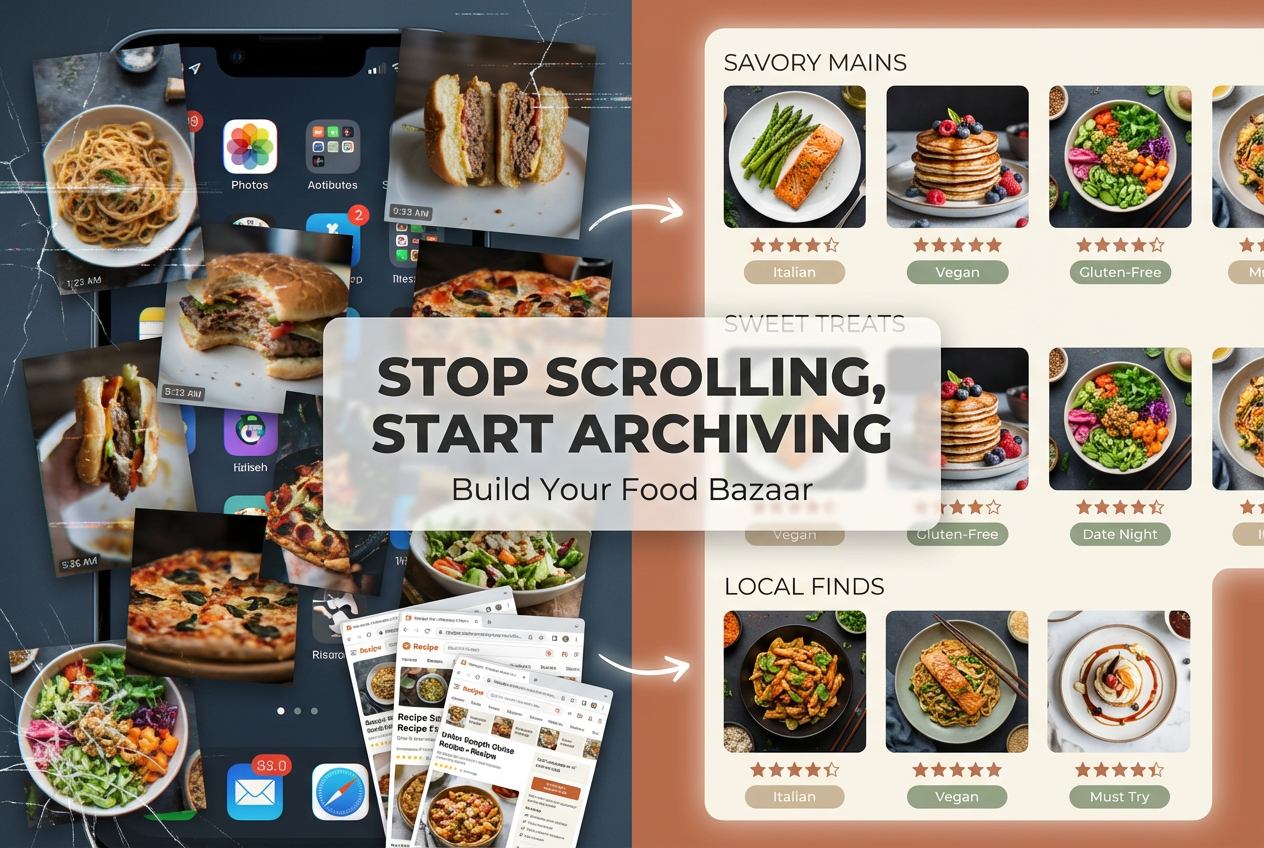
Stop Scrolling, Start Archiving: How to Build Your Personal Food Bazaar You’ve taken 2,000 food photos. You’ve scrolled through them a hundred times looking...
Stop Scrolling, Start Archiving: How to Build Your Personal Food Bazaar
You’ve taken 2,000 food photos. You’ve scrolled through them a hundred times looking for "that rigatoni place with the spicy sauce." You can’t find it. Your camera roll is a black hole where incredible meals go to die.
This is the problem plaguing the Serious Foodie in 2025. You’re not struggling to find new restaurants - you’re struggling to remember the ones you’ve already loved. The stakes are higher than you think: you’re losing a personal archive of cultural experiences, flavor discoveries, and evolving taste memories that define who you are as a culinary explorer.
The solution isn’t another review app. It’s a fundamental shift in how you think about food documentation. This guide introduces the concept of the "Food Bazaar" - a curated, searchable, visual vault that treats your dining history like a collection of rare artifacts worth preserving, organizing, and sharing.
Table of Contents
- The "Black Hole" Problem: Why Your Camera Roll Is Failing You
- The "Culture Over Fuel" Philosophy
- What Is a Food Bazaar?
- The Feature Matrix: "The Old Way" vs. "The Bazaar Way"
- The 10-Point Palate Score System
- Building Your First Bazaar: Step-by-Step Guide
- Advanced Bazaar Strategies for the Serious Foodie
- How to Make Your Food Memories Searchable
- Frequently Asked Questions
The "Black Hole" Problem: Why Your Camera Roll Is Failing You
Your phone’s camera roll was never designed to be a food archive. It’s a chronological dump where your best meals get buried between screenshots of grocery lists and blurry concert photos.
Here’s the brutal reality: the average food-conscious urban professional eats out 4-5 times per week. That’s roughly 200-250 restaurant meals per year. If you’re photographing even half of them, you’re adding 100+ food images to your phone annually. Within three years, you’re sitting on 300+ food photos with zero organizational structure.
The consequences are real. You forget which restaurant had that perfect cacio e pepe. You can’t remember if the ramen spot with the 48-hour broth was in the Mission or Japantown. When a friend asks for a sushi recommendation, you draw a blank despite having tried a dozen places in the past year.
This isn’t a memory problem. It’s an infrastructure problem.
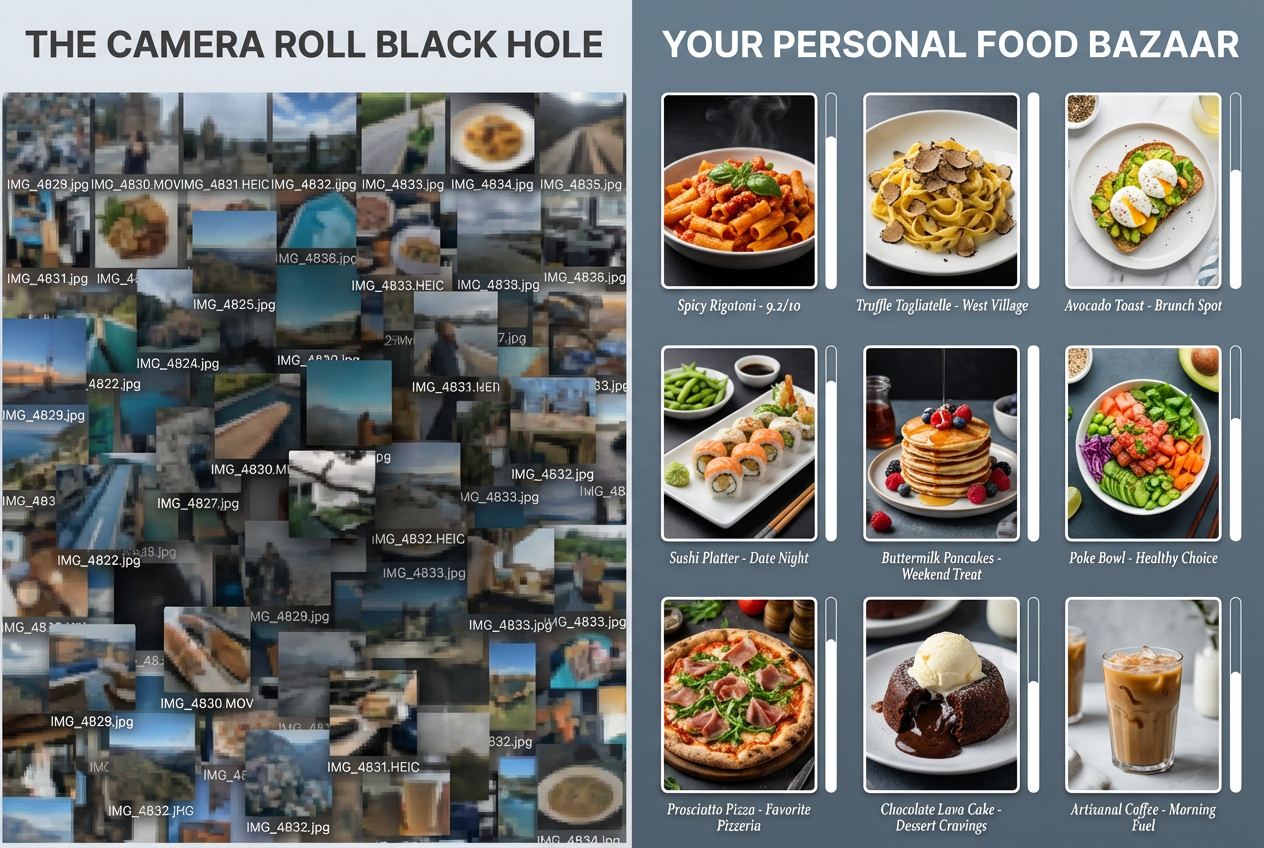 Transform your chaotic food photos into a structured digital vault that preserves your culinary legacy and makes every meal searchable and significant.
Generic review platforms make this worse. Yelp and Google Maps are built around venues, not dishes. You can’t search for "best spicy rigatoni I’ve tried" or "all the truffle pastas from 2024." The five-star rating system tells you nothing about complexity, technique, or how a dish compares to similar versions you’ve tried elsewhere.
The food blogger’s solution - maintaining a separate Instagram account or blog - creates its own problems. You’re performing for an audience instead of building a personal reference tool. The chronological feed format still makes it impossible to find specific dishes later. And you’re trapped in the algorithmic demands of yet another social platform.
What you need is a system designed from the ground up for personal curation, not public performance.
The "Culture Over Fuel" Philosophy
Before we talk about systems and apps, we need to address why this matters. For the Serious Foodie, dining is not just fuel. It’s a cultural pursuit that deserves documentation and reflection equal to any other hobby.
Think about wine collectors. They maintain detailed cellar logs, complete with tasting notes, vintage information, and purchase dates. They can tell you exactly which bottle they opened for their birthday in 2019 and how it compared to the same vintage from a different producer.
Art collectors do the same. They catalog every piece, track provenance, document condition, and organize by period, artist, or style.
Why should your food experiences be any different?
Every meal you care enough to photograph represents a decision, a discovery, or a memory worth preserving. That bowl of ramen you waited 45 minutes for on a rainy Tuesday tells a story about your taste evolution. The anniversary dinner at the Michelin-starred tasting menu is a milestone. Even the disappointing $18 pasta teaches you something about your palate and what you value.
The Serious Foodie community understands this instinctively. You’re not just looking for the next meal - you’re building a personal canon of taste experiences. The problem is that the tools available don’t support this level of intentionality.
Your dining history is a form of cultural capital. It signals expertise, worldliness, and refined taste. But unlike wine or art, food is ephemeral. The only record you have is what you create yourself.
This is where the bazaar concept becomes powerful.
What Is a Food Bazaar?
A food bazaar is a curated collection of dish-level memories organized for searchability, comparison, and sharing. It’s not a restaurant list. It’s a dish database that treats every plate as an individual artifact worth cataloging.
The metaphor is intentional. A traditional bazaar is a marketplace where merchants display carefully selected goods - spices, textiles, ceramics - each with its own story and origin. Shoppers browse, compare, and make informed choices based on expertise and personal taste.
Your personal food bazaar works the same way. Instead of letting dishes pile up in chronological chaos, you organize them into meaningful collections that reflect your interests and discoveries.
A "Ramen Bazaar" might contain every tonkotsu, shoyu, and miso bowl you’ve tried over three years, each with its own score, tags, and notes. A "Paris 2024 Trip" bazaar preserves the complete culinary narrative of your vacation. A "Truffle Season" collection tracks every truffle dish you encounter during peak months, letting you compare preparations across restaurants and years.
The key difference from traditional food apps: you’re curating for yourself, not performing for others. There’s no follower count, no algorithmic feed, no pressure to post. Your bazaar is a private archive that happens to be shareable when you choose.
Think of it as the difference between a public museum and a private collection. Both have value, but the private collector curates based on personal meaning, not popular appeal.
The bazaar model solves the fundamental problem of food memory: it turns an unsearchable pile of photos into a queryable database organized around the unit that actually matters - the dish.
The Feature Matrix: "The Old Way" vs. "The Bazaar Way"
Let’s compare how different approaches handle the core challenges of food memory:
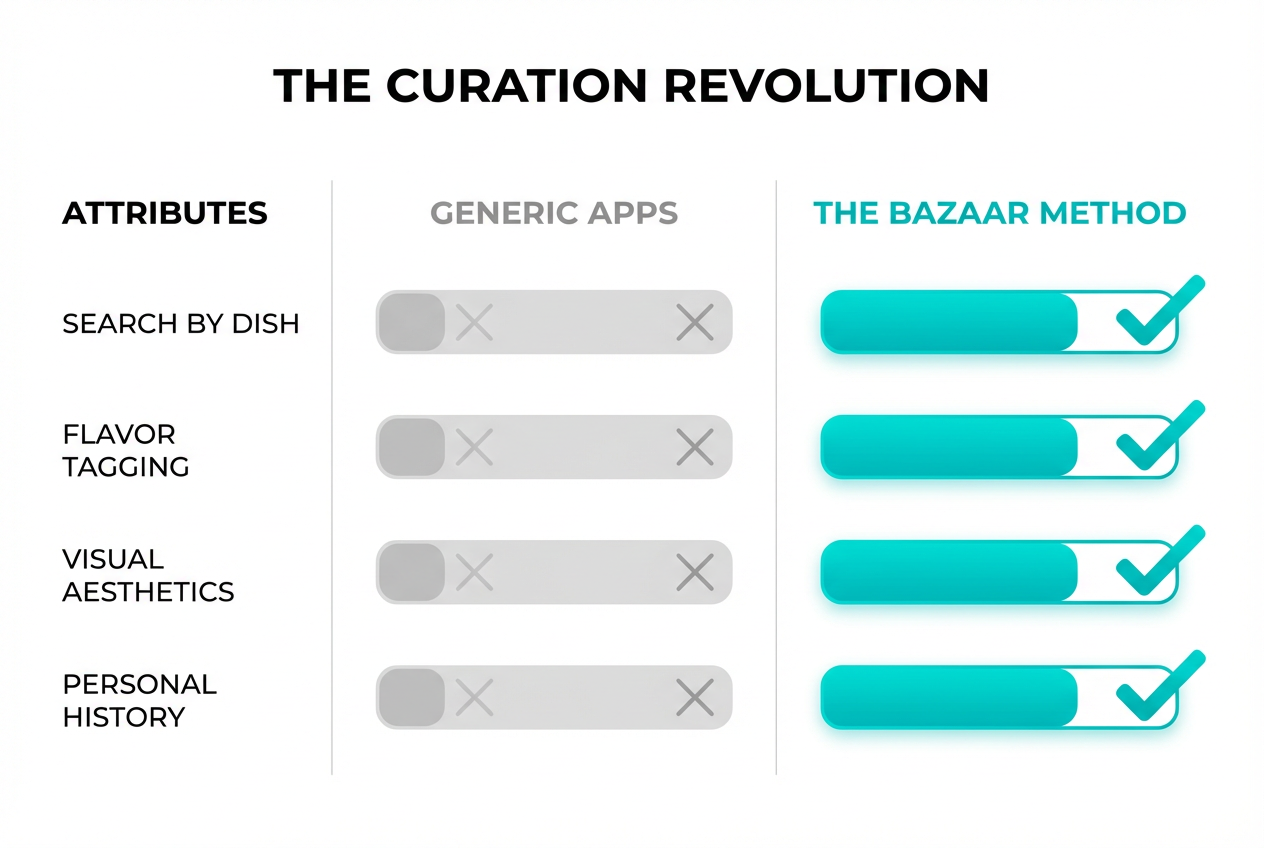 Compare the limitations of mainstream dining apps against the specialized tools required for high-level culinary archiving and personal food collection management.
Camera Roll Chaos (The Old Way)
- Organization: Chronological only
- Searchability: Location/date only, no dish-level search
- Rating System: None
- Tagging: Limited to basic keywords
- Visual Display: Grid of thumbnails with no context
- Comparison: Impossible without manual scrolling
- Sharing: Individual photos only
Generic Review Apps (Yelp, Google Maps)
- Organization: By venue, not dish
- Searchability: Restaurant names, not specific dishes
- Rating System: 1-5 stars, venue-level only
- Tagging: Categories like "Italian" or "Mexican"
- Visual Display: Mixed user photos, not your personal archive
- Comparison: Cross-venue comparison not supported
- Sharing: Public reviews with social pressure
The Bazaar Way
- Organization: By dish, collection, or custom category
- Searchability: Full-text search across dish names, ingredients, notes
- Rating System: Nuanced 10-point scale with multiple criteria
- Tagging: Custom tags for ingredients, techniques, occasions
- Visual Display: Gallery-style with ratings and context visible
- Comparison: Side-by-side dish comparison across time/venues
- Sharing: Private or selective with curated collections
The difference is stark. Traditional approaches treat food documentation as an afterthought. The bazaar method treats it as a deliberate practice worthy of serious tools.
Restaurant tracking apps have evolved to address some of these gaps, but most still focus on venues rather than individual dishes. The breakthrough comes when you shift your mental model from "where did I eat?" to "what did I eat and how did it make me feel?"
The 10-Point Palate Score System
A five-star rating tells you almost nothing. Was it a five because of exceptional technique, or because you were on vacation and everything tasted better? What made that pasta a four instead of a five - was it the texture, the sauce balance, or just that you’d had better versions elsewhere?
The Serious Foodie needs a scoring system with actual resolution. Enter the 10-point palate score.
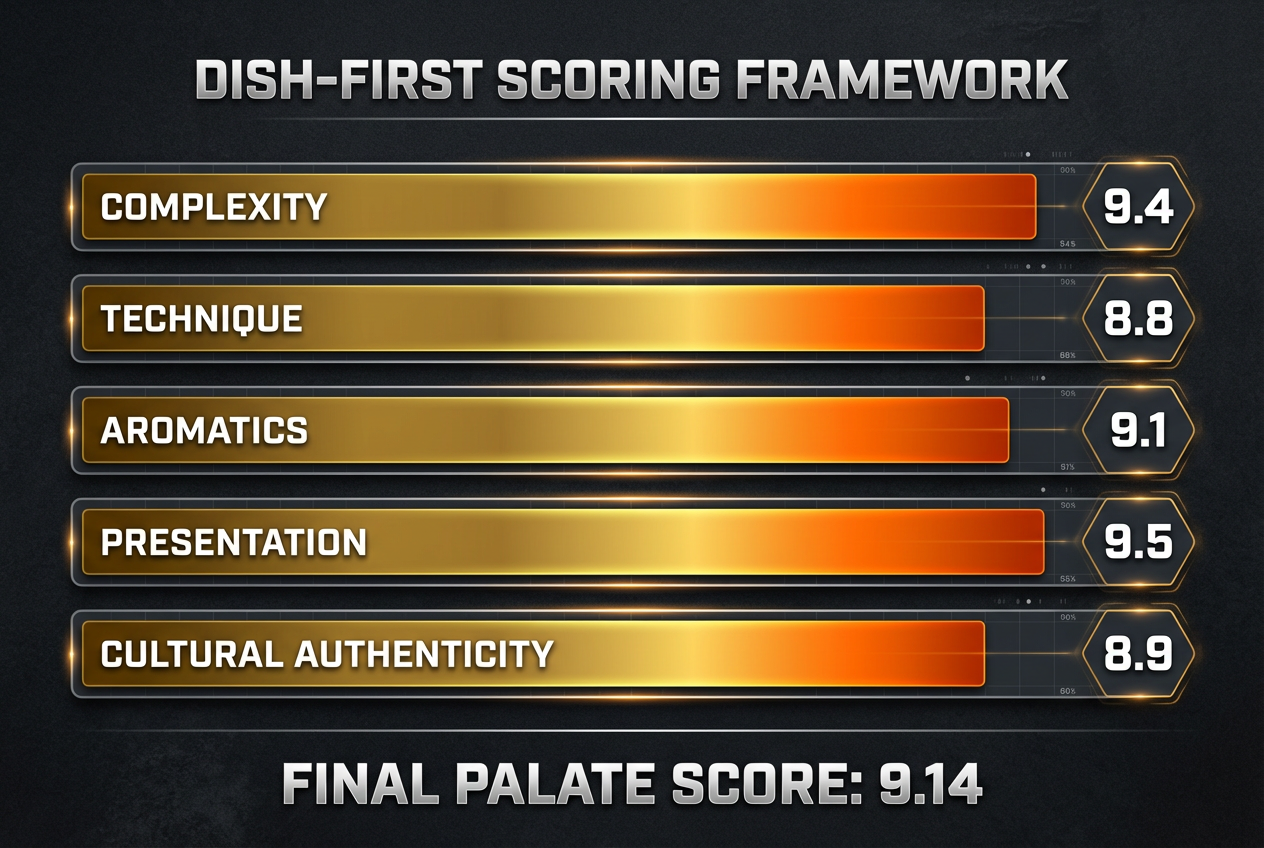 Move beyond generic five-star ratings with a nuanced, data-backed scoring system designed specifically for the serious culinary critic and hobbyist.
The Framework
The 10-point system recognizes that a great dish operates on multiple levels simultaneously. Here’s how to break it down:
Flavor (0-3 points) This is the foundation. Is the dish delicious? Does it deliver on its core promise? A perfect 3 means the flavor is exceptional, balanced, and memorable. A 2 is very good but not revelatory. A 1 is acceptable but forgettable.
Technique (0-2 points) Execution matters. Was the pasta cooked to proper texture? Is the protein seared correctly? Does the dish show technical mastery? This is where you reward the chef’s skill independent of whether the flavor profile matches your personal taste.
Creativity (0-2 points) Is this dish bringing something new? Does it combine ingredients in unexpected ways? A perfect 2 doesn’t mean weird for weird’s sake - it means thoughtful innovation that enhances the experience.
Presentation (0-1 point) Visual appeal counts, but it’s not everything. Reserve the full point for dishes that genuinely enhance the experience through plating. A sloppy-looking bowl can still score high if the other elements are exceptional.
Value (0-2 points) This is relative to context. A $15 neighborhood trattoria pasta might earn 2 points if it’s exceptional for the price, while a $45 fine-dining version needs to justify the premium to score the same.
Using the System in Practice
The power of this system is comparison over time. When you score your third tonkotsu ramen of the month, you’re not just assigning an arbitrary number - you’re creating data points that reveal patterns in your taste.
You might discover you consistently rate dishes with high acidity higher than others. You might notice your technique scores have gotten harsher as you’ve learned more about cooking. You might find that a 7.5 from 2022 wouldn’t score as high today because your reference points have evolved.
This is the difference between passive consumption and active curation. You’re building a personalized flavor database that becomes more valuable the longer you maintain it.
Dish tracking apps that support this kind of nuanced scoring separate casual diners from serious food enthusiasts. The act of scoring forces you to articulate what you value and why.
Building Your First Bazaar: Step-by-Step Guide
Ready to stop scrolling and start archiving? Here’s how to build your first themed collection.
Step 1: Choose Your Theme
Start with something you’re already passionate about. If you’re obsessed with ramen, build a Ramen Bazaar. If you’ve been exploring your city’s taco scene, that’s your starting point. The theme should be specific enough to be meaningful but broad enough to include multiple experiences.
Good starting themes:
- A specific dish type (ramen, pizza, tacos)
- A cuisine exploration (all the Thai restaurants you try)
- A travel destination (Tokyo 2024)
- A seasonal ingredient (truffle season, stone fruit summer)
- A technique focus (everything grilled, all the raw fish)
Step 2: Gather Your Existing Data
Go back through your camera roll for the past 6-12 months. Export every photo that fits your chosen theme. Yes, this is tedious. Yes, it’s worth it. You’re building a foundation.
For each photo, capture:
- The dish name
- The restaurant name and location
- The date you ate it
- Any immediate memories about the experience
Don’t worry about perfect notes yet. Just get the basic data collected.
Step 3: Implement Your Scoring System
Now comes the harder part. Look at each dish photo and assign it a score using the 10-point framework. Be honest. Be consistent. If you can’t remember enough detail to score it fairly, that’s valuable information - it tells you the dish wasn’t memorable enough to preserve.
This process will take time. A 20-dish bazaar might require an hour of focused scoring. That’s fine. This is a practice, not a race.
Step 4: Add Rich Context Through Tags
Tags are what make your bazaar searchable and useful. For each dish, add tags for:
- Key ingredients (pork belly, uni, burrata)
- Preparation methods (wood-fired, raw, braised)
- Flavor profiles (spicy, umami-forward, citrus-bright)
- Occasions (date night, solo lunch, group dinner)
- Special notes (Michelin-starred, byob, cash-only)
The more consistent your tagging vocabulary, the more powerful your search becomes.
Step 5: Write Memory Notes
This is where the archive becomes personal. For your top-rated dishes, write a few sentences about the experience. What made it special? Who were you with? What was the context?
These notes serve two purposes. First, they preserve the full memory, not just the visual. Second, they help you understand your own taste patterns over time.
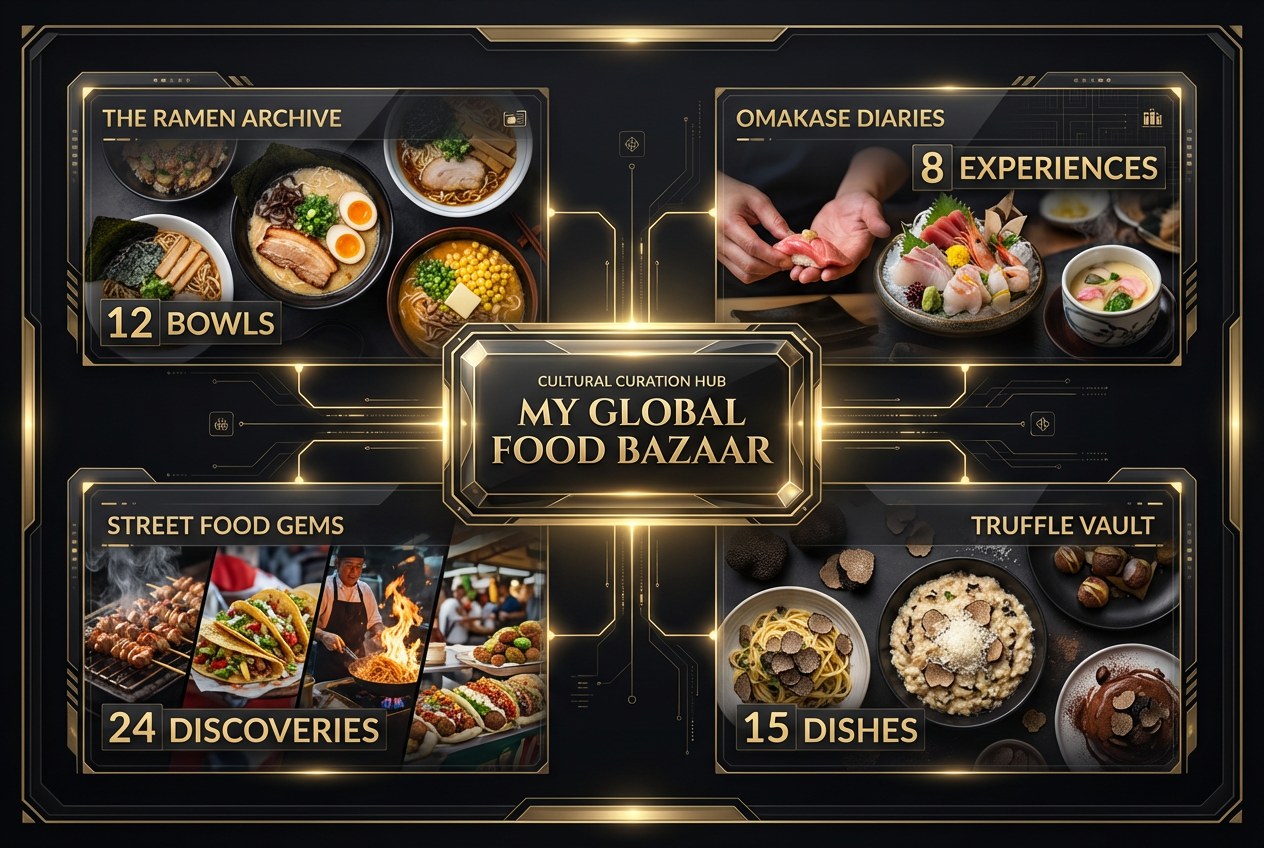 Stop making lists and start building archives. Organize your dining history into thematic collections that reflect your personal journey and culinary expertise.
Step 6: Set Up Smart Search
A proper bazaar should let you search across multiple dimensions:
- "Show me all pork dishes rated 8 or higher"
- "Find every truffle pasta from 2024"
- "What did I eat in Rome?"
- "Which ramen shops did I tag as ’rich broth’?"
If your tool doesn’t support this kind of querying, you’re not building a bazaar - you’re just making a fancy folder.
Step 7: Share Selectively
The beauty of the bazaar model is that you control visibility. You might keep your personal notes private while sharing a curated "Best Ramen in San Francisco" list with friends. You might export your Paris food guide as a PDF for a colleague planning a trip.
Food journaling apps that treat privacy as a feature, not an afterthought, understand that not every culinary opinion needs to be public.
Advanced Bazaar Strategies for the Serious Foodie
Once you’ve built your first collection, you can deploy more sophisticated curation strategies.
The Comparison Matrix
Build parallel collections for direct comparison. If you’re serious about understanding regional pizza styles, create separate bazaars for Neapolitan, New York, Detroit, and New Haven pies. Score them all using the same framework. Over time, you’ll develop genuine expertise about what distinguishes each tradition.
This approach works for any category with meaningful variation: regional Chinese cuisines, Japanese ramen styles, French wine regions, Italian pasta shapes.
The Evolution Archive
Track how your relationship with a specific dish or restaurant changes over time. Create a bazaar called "Flour + Water Visits" where you log every meal at your favorite pasta spot over years. Watch your scores and notes evolve as the menu changes, as your palate develops, as your reference points expand.
This kind of longitudinal tracking reveals patterns invisible in single-visit reviews. You might discover a restaurant’s quality has slipped, or that your appreciation for a cuisine has deepened, or that seasonal ingredients make a huge difference in execution.
The Ingredient Focus
Instead of organizing by dish type, organize by ingredient. A "Uni Chronicles" bazaar could include everything from sushi to pasta to raw preparations, all unified by the presence of sea urchin. This approach helps you develop ingredient-level expertise and spot preparation methods that maximize particular flavors.
The Price Point Analysis
Create collections organized by budget. A "Under $15 Lunch" bazaar challenges you to find exceptional value. A "Special Occasion Splurges" collection helps you remember which expensive meals justified their price tags. Over time, you develop a calibrated sense of value across price points.
The Technique Study
If you’re learning to cook, build bazaars around specific techniques you want to master. A "Emulsification" collection might include carbonara, aioli, hollandaise, and mayonnaise from various restaurants. Tasting professional versions helps you understand what you’re aiming for in your own kitchen.
Food diary apps designed for home cooks can support this kind of cross-referenced learning between dining out and cooking at home.
The Collaboration Model
Share edit access to specific bazaars with trusted fellow foodies. A "SF Pizza Quest" bazaar that three people contribute to becomes exponentially more valuable than three separate lists. Set ground rules for scoring consistency and let the collaborative curation begin.
How to Make Your Food Memories Searchable
Search is the difference between a pretty photo album and a functional culinary database. Here’s how to optimize your archive for discoverability.
Tag Taxonomy Best Practices
Develop a consistent vocabulary. Don’t tag one dish "chile" and another "chili" and a third "spicy." Pick one term and stick with it. Create a master tag list and add to it deliberately.
Useful tag categories:
- Proteins (pork, beef, seafood, vegetarian)
- Carbs (pasta, rice, bread, potato)
- Cooking methods (grilled, fried, raw, braised)
- Flavor descriptors (spicy, sweet, savory, umami)
- Meal types (breakfast, lunch, dinner, snack)
- Dining contexts (solo, date, group, business)
- Special attributes (Michelin-starred, byob, outdoor seating)
Naming Conventions
Be specific with dish names. "Pasta" doesn’t help. "Cacio e Pepe" is better. "Cacio e Pepe with 24-month Pecorino Romano and Tellicherry pepper" is best. The more detail, the more searchable.
Include the restaurant name in your notes even if it’s tagged separately. This redundancy helps when searching across platforms or exporting data.
Location Data
Always tag the neighborhood or district, not just the city. "Mission District, San Francisco" beats "San Francisco" for search purposes. If you travel frequently, precise location data becomes invaluable.
Date Context
Capture the season along with the specific date. "Summer 2024" as a tag helps you find all the stone fruit desserts or tomato salads you tried during peak season.
Cross-Referencing
Link related dishes explicitly. If you try the carbonara at three different Roman restaurants, tag them all as "Carbonara Comparison 2024." This creates thematic threads that transcend individual bazaar collections.
AI and Auto-Tagging
Modern food apps increasingly use image recognition to suggest tags. A photo of pasta might auto-suggest "pasta, Italian, noodles, carbs." Review and refine these suggestions rather than accepting them blindly. The AI helps with baseline categorization, but your personal judgment creates real value.
Restaurant review apps with strong search functionality recognize that serious users need more than keyword matching - they need multi-dimensional filtering across ratings, tags, dates, and locations simultaneously.
Frequently Asked Questions
What makes a food bazaar different from a regular photo album?
A food bazaar is a structured database built around dishes, not a chronological photo dump. It includes scoring systems, searchable tags, detailed notes, and organizational frameworks designed specifically for culinary curation. Photo albums are passive storage; bazaars are active reference tools that get more valuable over time.
How long does it take to build a meaningful food bazaar?
Your first themed collection of 20-30 dishes takes 2-3 hours to set up properly, including scoring and tagging. After that, maintaining it requires about 5-10 minutes per new meal you add. The key is consistency - adding one dish per week with full context beats adding 50 photos at once with minimal detail.
Can I build a food bazaar without a specialized app?
Technically yes, using spreadsheets or note-taking apps, but you’ll lose significant functionality. Proper bazaar tools offer visual galleries, multi-field filtering, easy comparison views, and mobile-friendly interfaces that generic tools don’t provide. The right tool makes the practice sustainable rather than burdensome.
Should I score every dish I eat or just memorable ones?
Focus on dishes you’d want to remember or recommend. If you photograph something, that’s usually a signal it’s worth documenting. But if you’re eating out five times a week, you don’t need to catalog every bowl of pho - just the ones that teach you something about your taste or represent genuine discoveries.
How do I handle dishes I didn’t photograph?
Write them up anyway if they were significant. A detailed note with a score is more valuable than a photo with no context. You can add stock images or menu screenshots as placeholders. The memory and data matter more than the photo.
What if my taste changes and my old scores seem wrong?
That’s actually valuable information about your palate evolution. Don’t go back and change old scores - instead, add a note explaining how your perspective has shifted. A dish you rated 8.5 in 2022 might only merit a 7 today, and that delta tells a story about your development as a taster.
How can I share my food bazaar without making it public?
Look for tools that offer selective sharing - private by default with the option to export specific collections as PDFs or share via private links. You want control over visibility at the collection level, not forced public posting. Savor is specifically designed for this kind of private-first curation with optional sharing.
What’s the minimum information I need to capture for each dish?
At minimum: dish name, restaurant, date, photo, and overall score. Everything else - detailed notes, tags, multi-criteria scoring - makes the archive more powerful but the basics alone are enough to prevent memory loss. Start simple and add detail as the practice becomes habitual.
Your camera roll will keep filling up with food photos whether you organize them or not. The question is whether those images become a searchable archive of your culinary journey or just more digital clutter slowly fading from memory.
The bazaar approach isn’t for everyone. It requires intentionality, consistency, and a belief that your dining experiences matter enough to preserve properly. But for the Serious Foodie who views food as culture rather than fuel, it’s the difference between passive consumption and active curation.
Stop reviewing. Start archiving. Your future self - the one searching desperately for "that ramen place with the 48-hour broth" - will thank you.