
A Guide to the Chinese Food Menu From Dim Sum to Mapo Tofu
Alex the juice queen
Alex hunts for the best juice bars and presses. She rates every sip and saves her favorites in Savor.
Stepping into a great Chinese restaurant can feel like opening a book in a language you don’t quite recognize. The menu, often sprawling and full of unfamiliar...
Stepping into a great Chinese restaurant can feel like opening a book in a language you don’t quite recognize. The menu, often sprawling and full of unfamiliar terms, holds the key to an incredible meal—but it can be intimidating. This guide is your translator.
We’re going to walk through the structure of a typical Chinese food menu, from the first page to the last. My goal is to help you move past the handful of dishes you already know and order with the confidence of a seasoned regular, turning every meal into a memory worth keeping.
Why Bother Learning the Menu?
You could easily point to a picture of General Tso’s chicken and have a perfectly fine meal. But navigating a Chinese menu is about so much more than just ordering dinner—it's about unlocking one of the world’s richest culinary traditions. The menu is a roadmap to discovering new flavors, textures, and regional specialties that might just become your next obsession.
And this isn't a niche skill. The global appetite for authentic Chinese food is exploding. The international market for Chinese restaurants has swelled to a staggering USD 71.6 billion, and it’s projected to grow by another 6.2% each year through 2033, according to a report from Dataintelo.com. This massive global presence means you’re going to encounter more diverse menus than ever before. Knowing how to read them is your key to the good stuff.
What You'll Walk Away With
By the end of this guide, you’ll have the tools to decode any Chinese menu thrown your way. You'll be able to:
- Identify and understand the common sections, from appetizers to the chef's specials.
- Tell the difference between major regional styles like Cantonese, Sichuan, and Hunan just by scanning the menu.
- Recognize popular dishes and know what they’ll taste like before you take the first bite.
- Clearly communicate your dietary needs to make sure you get exactly what you want.
More importantly, this guide is about helping you build your own food story. Every dish you try is a memory waiting to be saved. We'll show you how a private food diary like Savor helps you track tastes, share discoveries, and turn each meal into a permanent part of your personal culinary journal. When you start documenting your experiences, you can compare the Mapo Tofu from three different restaurants, remember that incredible hidden gem you found last year, and build a reliable list of your all-time favorites.
The Anatomy of a Chinese Food Menu
Think of a Chinese food menu as more than just a list of things to eat. It’s a well-thought-out roadmap designed to help you build a complete, balanced meal. Each section is a different chapter in your dining story, moving you logically from light, palate-awakening starters to hearty, satisfying mains. Getting the hang of this flow is the first real step to ordering like a pro.
Most menus kick things off with Appetizers (开胃菜, kāi wèi cài), which are small bites meant to get you started. This is where you'll find the universally loved hits like crispy egg rolls, savory spring rolls, and those perfect little pan-fried or steamed dumplings, often called potstickers. They’re ideal for sharing and give you a sneak peek at the textures and flavors coming your way.
Right after the appetizers, you'll often find a section for Soups (汤, tāng). Chinese soups can be all over the map, from light and delicate to incredibly rich and complex. Wonton soup, with its savory broth and tender dumplings, is a classic on the lighter side. On the other end of the spectrum, hot and sour soup delivers a thicker, more potent punch, perfectly balancing spicy chili with the sharp tang of vinegar.
The Heart of the Meal
The real core of any Chinese menu is the Main Courses, and they’re almost always organized by the main protein. This structure is a lifesaver, making it super easy to find exactly what you're craving.
- Chicken (鸡, jī): This section is home to everything from the sweet and tangy sauce of Orange Chicken to the savory, nutty flavors of Kung Pao Chicken, which is famously tossed with peanuts and vegetables.
- Beef (牛, niú): Here you'll find those robust, hearty dishes like Beef with Broccoli swimming in a rich brown sauce or the thinly sliced, wok-seared beef in a classic Mongolian Beef.
- Pork (猪, zhū): Look for timeless favorites like Sweet and Sour Pork, with its signature crispy coating and bright sauce, or twice-cooked pork, which is incredibly tender and packed with flavor.
- Seafood (海鲜, hǎi xiān): This category usually includes shrimp, fish, and squid cooked in all sorts of ways, like salt and pepper shrimp or fish fillets in a light, delicate garlic sauce.
Beyond the proteins, you'll see dedicated sections for Vegetables (蔬菜, shū cài) and the all-important staples like Noodles & Rice (面饭, miàn fàn). The vegetable dishes are rarely just boring steamed greens; they’re often stir-fried with garlic or a light sauce to bring out their natural flavors. Meanwhile, the noodles and rice section contains everything from simple steamed rice to elaborate Lo Mein or flavorful fried rice. The sauces you'll encounter often pull from a deep base of savory, salty, and sometimes sweet notes—a concept you can explore more deeply by understanding what is umami flavor in our detailed guide.
To help you picture how an order comes together, this simple diagram breaks down the typical hierarchy of a Chinese menu.
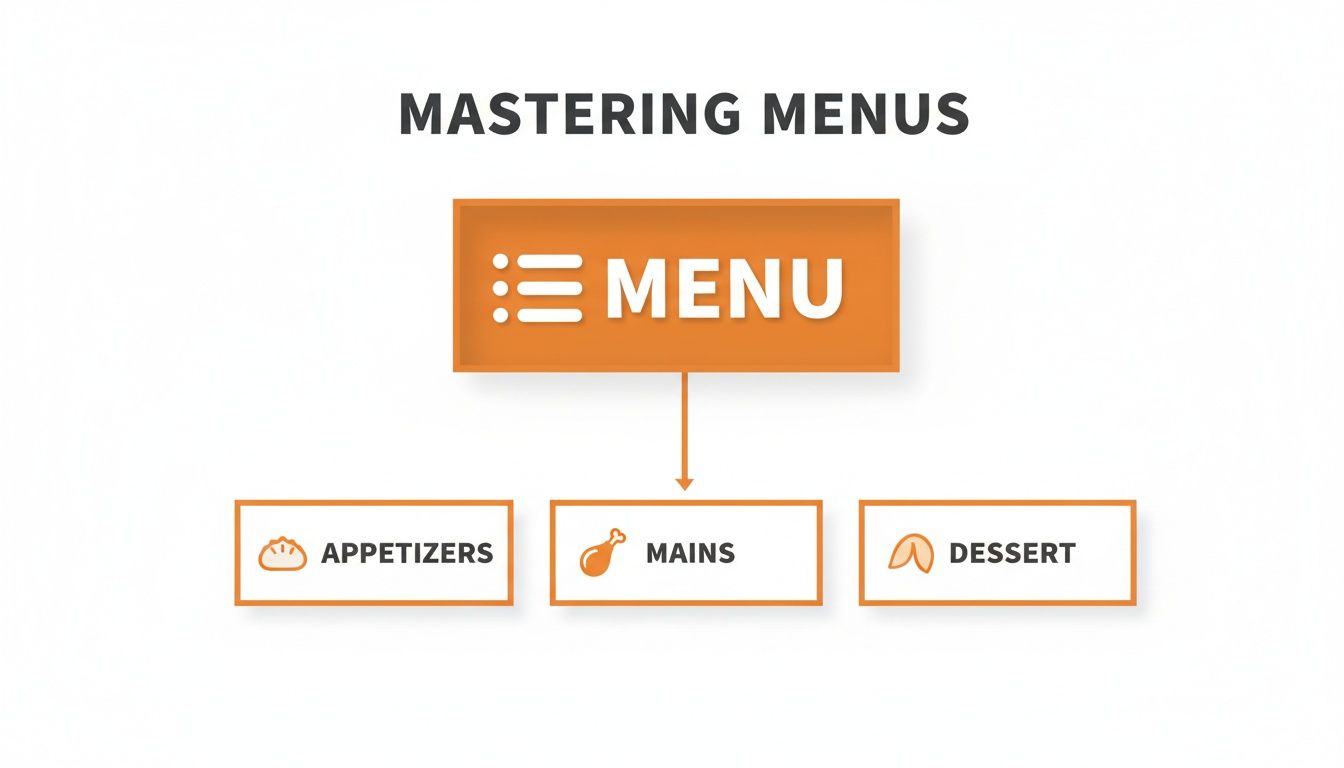
This visual gives you a clear roadmap, showing how a meal progresses from starters to mains, helping you plan a well-rounded dining experience.
Common Chinese Menu Sections at a Glance
To make things even clearer, here’s a quick-reference table that breaks down what you can typically expect from each part of the menu.
| Section (English/Pinyin) | Typical Dishes | Common Flavors & Textures |
|---|---|---|
| Appetizers (开胃菜, kāi wèi cài) | Egg Rolls, Spring Rolls, Dumplings, Wontons | Crispy, crunchy, savory, juicy fillings |
| Soups (汤, tāng) | Wonton Soup, Hot and Sour Soup, Egg Drop Soup | Savory, light, spicy, tangy, thick or thin broth |
| Chicken (鸡, jī) | General Tso's Chicken, Kung Pao Chicken | Sweet, spicy, savory, nutty, tangy |
| Beef (牛, niú) | Beef with Broccoli, Mongolian Beef, Pepper Steak | Rich, savory, tender, wok-charred |
| Pork (猪, zhū) | Sweet and Sour Pork, Twice-Cooked Pork | Sweet, tangy, crispy, tender, rich |
| Seafood (海鲜, hǎi xiān) | Salt & Pepper Shrimp, Fish in Garlic Sauce | Salty, spicy, delicate, light, briny |
| Vegetables (蔬菜, shū cài) | Stir-Fried Bok Choy, Garlic Green Beans | Fresh, crisp, garlicky, light sauce |
| Noodles & Rice (面饭, miàn fàn) | Lo Mein, Fried Rice, Chow Mein, Steamed Rice | Savory, salty, soft, chewy, foundational |
This table is your cheat sheet, a handy guide to help you navigate your next menu with confidence and build a meal that hits all the right notes.
Navigating Special Sections
Many menus will have a "Chef's Specials" or "House Specialties" section. Pay very close attention to this part of the menu. This is where a restaurant really shows off, highlighting its most unique or signature dishes. These are often recipes passed down through generations or modern creations the chef is especially proud of. It’s a fantastic place to discover something truly memorable.
By understanding these distinct sections, you can move beyond simply ordering dishes and start composing meals. A well-rounded order might include a crispy appetizer, a comforting soup, a savory meat dish, a fresh vegetable, and a side of rice or noodles for a complete, family-style experience.
As you start exploring, remember that every dish is a new data point for your palate. Logging what you try in a private food diary like Savor helps you keep track of what you love. You can note the crispiness of an egg roll or the exact spice level of a Kung Pao chicken, creating a personal reference guide that makes every future order even better. Rate like a critic to build your own definitive guide to your favorite spots.
A Culinary Tour of China's Regional Cuisines
To really get a handle on a Chinese food menu, you have to appreciate that you’re not looking at one cuisine. You’re looking at a collection of ancient culinary traditions from a country the size of a continent. Thinking of "Chinese food" as one single thing is like saying "European food" covers both Italian pasta and Swedish meatballs—it misses all the delicious details.
Understanding the major regional cuisines is the secret to predicting a dish's flavor profile long before it hits your table. This knowledge turns menu navigation from a guessing game into a confident exploration. It’s your secret weapon for finding exactly what you’re in the mood for, whether that’s a fiery kick or something subtle and clean.
Cantonese Cuisine: The Art of Freshness
When you think of dim sum, perfectly steamed fish, or glossy roasted duck, you’re picturing Cantonese cuisine (Yue, 粤菜). Hailing from the southern Guangdong province, this style is all about showcasing the pure, natural flavor of top-notch ingredients.
Cantonese chefs are masters of subtlety, preferring techniques like steaming and light stir-frying to preserve the original taste and texture of the food. Sauces tend to be light and mild, designed to complement, not overpower, the main ingredient.
- Signature Flavors: Mild, fresh, slightly sweet, and savory. Think ginger, scallions, soy sauce, and oyster sauce.
- Must-Try Dishes: Dim Sum (a huge variety of small plates like har gow and siu mai), Char Siu (barbecue pork), and steamed whole fish.
- What to Look For: Any menu items described as "steamed" (蒸, zhēng) or featuring light, clear sauces.
Sichuan Cuisine: A Symphony of Spice
Venture inland to the southwest, and you’ll find the bold, electrifying flavors of Sichuan cuisine (Chuan, 川菜). This region is famous for its liberal use of garlic, chili peppers, and the unique Sichuan peppercorn. But this isn't just about heat; it's about a complex flavor profile known as málà (麻辣), which translates to "numbing and spicy."
The Sichuan peppercorn delivers a tingly, citrusy numbness that dances on your tongue, creating a fascinating contrast with the fiery heat of the chilies. This cuisine is layered, complex, and incredibly addictive—a full-sensory experience that goes far beyond simple spice.
- Signature Flavors: Numbing, spicy, pungent, and deeply savory.
- Must-Try Dishes: Mapo Tofu (soft tofu in a fiery chili and bean sauce), Kung Pao Chicken (the authentic, spicy version), and Dan Dan Noodles.
- What to Look For: Dishes described with terms like "spicy," "numbing," or containing chili and peppercorn.
This focus on distinct, powerful regional flavors is deeply ingrained in modern dining. Research from Mordor Intelligence's market analysis shows that Chinese consumers maintain a strong preference for regional cuisines like Sichuan hot pot and Southern Chinese dumplings over international options. This highlights why a dish-centric tracking approach is so valuable for food lovers.
Hunan Cuisine: The Purely Fiery
Often confused with Sichuan cuisine, Hunan food (Xiang, 湘菜) brings its own distinct style of heat. Located in central China, Hunan cuisine is known for its purely spicy, or xiāng là (香辣), flavor profile, which means "fragrant and spicy."
Unlike Sichuan's numbing spice, Hunan heat is a more direct, fiery experience derived from fresh and pickled chili peppers. The cooking here is often heavier on oil and uses techniques like smoking and stewing to create rich, aromatic dishes. If you’re a true chili-head who loves a straightforward, powerful kick, the Hunan section of a Chinese food menu is your playground.
- Signature Flavors: Purely spicy, sour, salty, and smoky.
- Must-Try Dishes: Steamed Fish Head with Chopped Chili, Chairman Mao's Red-Braised Pork Belly, and Dry-Pot Chicken.
- What to Look For: Menu items featuring fresh chilies, pickled vegetables, or smoked ingredients.
Your Culinary Compass: Think of these regions as a flavor guide. For mild and fresh, go Cantonese. For a spicy and numbing adventure, choose Sichuan. For straight, fiery heat, explore Hunan.
By tracking your meals from different regions in a food diary like Savor, you can start building a personal map of your palate. Note the difference between the numbing heat of a Sichuan dish and the direct spice of a Hunan plate. Over time, you’ll develop an intuitive sense of what you’ll love, making every trip to a Chinese restaurant a chance to track tastes and share discoveries.
Popular Dishes and What to Expect
Let's be honest, sometimes the sheer size of a Chinese food menu can be intimidating. But within that vastness, there are legendary dishes that have become famous for a reason. These are the all-stars, the crowd-pleasers you can always count on for a fantastic meal.
This is your guide to those iconic dishes—the perfect starting point if you're new to the cuisine, or a comforting classic if you're a seasoned pro. We'll break down what makes each one so special, from flavor and texture to why they've earned a permanent spot in our hearts.
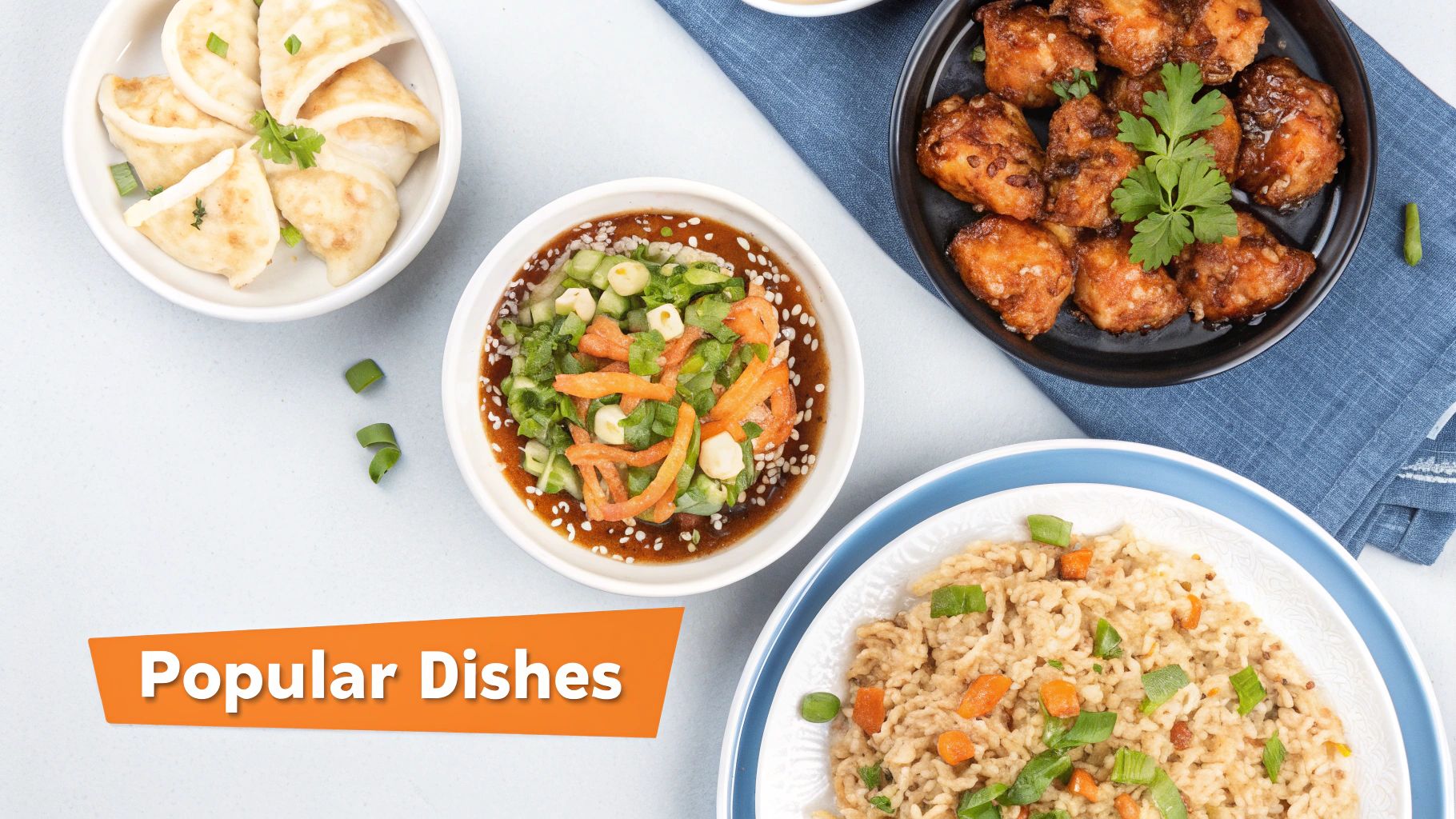
Think of these dishes as the foundation of your Chinese food knowledge. Once you understand the balance of crispy, tender, sweet, and savory in these classics, you'll be able to order with confidence every time. It's also worth noting how much the industry has evolved, with many restaurants now using eco-friendly takeaway containers to make sure your favorite meal is sustainable, too.
The Undisputed Champions
Some dishes on a Chinese-American menu are so beloved they've practically become celebrities. An analysis of over seven million orders showed that egg rolls are the king, showing up in a staggering 18.23% of all orders.
Right behind it is the legendary General Tso's Chicken, accounting for 14.8% of orders. Other heavy hitters include Crab Rangoon (10.9%) and Sweet and Sour Chicken (10%). These aren't just popular; they're institutions.
- General Tso's Chicken: This is a masterclass in texture. You get wonderfully crispy, deep-fried chunks of chicken, all coated in a glossy sauce that's the perfect trifecta of sweet, savory, and just a little bit spicy. It’s that contrast between the crunchy batter and the rich, clinging sauce that makes it so addictive.
- Crab Rangoon: It’s hard to imagine starting a meal without these. They're crispy, golden wontons filled with a warm, creamy mixture of cream cheese and imitation crab. That first bite, where the crunchy wrapper gives way to the savory, slightly tangy filling, is pure comfort food.
- Sweet and Sour Chicken (or Pork): A true icon. Battered pieces of meat are fried until golden and then tossed in that unmistakable, vibrant sweet-and-tangy sauce. Usually served with chunks of bell pepper, onion, and pineapple, it’s a dish that hits all the right notes.
More Must-Try Favorites
Beyond the top contenders, there's a whole second tier of dishes that are just as essential to know. From simple, savory stir-fries to comforting noodle bowls, each one offers a completely different experience and helps round out your understanding of the menu.
Getting familiar with these dishes will seriously broaden your ordering horizons. And if you're ever in a city known for its incredible Chinese food, like San Francisco, knowing these classics is a must. You can even check out our guide on where to eat in San Francisco's Chinatown to put your knowledge to the test.
Beef with Broccoli
Simple, elegant, and always satisfying. This stir-fry is all about the beautiful contrast between tender, thinly sliced beef and bright, crisp-tender broccoli florets. It’s all brought together in a rich, savory brown sauce made from oyster sauce and soy sauce. It’s a classic for a reason.
Lo Mein
This is the ultimate comfort noodle dish. Soft, chewy egg noodles are tossed in a savory soy-based sauce with your choice of protein and plenty of vegetables. Unlike chow mein, where the noodles get crispy, lo mein noodles stay soft, soaking up all that delicious sauce.
Track Tastes, Share Discoveries
Every time you try one of these classics, you're gathering valuable data for your palate. Log it in Savor to remember which restaurant’s General Tso's has the perfect crunch or whose Crab Rangoon has the creamiest filling. This personal catalog turns you into the expert of your own taste.
By getting to know these popular dishes, you build a solid foundation for exploring any Chinese menu you come across. Start with these favorites, rate like a critic, and soon you’ll have the confidence to dive into the more unique regional specialties.
Ordering with Dietary Needs and Preferences
Trying to navigate any menu with dietary restrictions can feel like a challenge, but Chinese menus are often far more accommodating than you might expect. The key isn't to avoid dishes, but to understand the common building blocks and learn how to communicate clearly.
With a little bit of knowledge, you can sidestep the usual suspects and still have an incredible meal.
Handling Common Allergens
Certain ingredients are common in Chinese cooking, but that doesn't make them impossible to avoid. The secret is being direct and specific about your needs.
- Soy: Soy sauce is the backbone of countless marinades and sauces. If you have a soy allergy, your best bet is to ask if a dish can be prepared simply with salt, white pepper, and garlic. Steamed dishes are often a safe harbor, but always ask if a soy-free sauce option is available.
- Peanuts: While forever linked with Kung Pao chicken, peanuts and peanut oil are common, especially in fiery Sichuan cooking. You have to be crystal clear about a peanut allergy. When you order, ask for your food to be cooked with a different oil.
- Gluten: This one is tricky. Most soy sauce is brewed with wheat, and most noodles are wheat-based. Your best friends here are rice-based dishes and rice noodles. You can also ask if the kitchen has tamari (a gluten-free soy sauce). Steamed rice, vegetables, and proteins without a batter are generally your safest options.
A simple, direct approach always wins. Saying, "I have a severe peanut allergy, please ensure no peanuts or peanut oil are used," is much more effective than a vague request.
Tips for Vegetarians and Vegans
Chinese cuisine is a paradise for plant-based eating, offering a world of options that go way beyond a boring plate of steamed broccoli. Many classic dishes are vegetarian by nature or can be modified with a simple request.
Start by scanning the menu for a dedicated "Vegetable" or "Tofu" section. A dish like Buddha's Delight (Luóhàn zhāi) is a fantastic, traditionally vegan stir-fry loaded with tofu skin, mushrooms, and all sorts of vegetables.
- Ask to substitute meat with tofu (豆腐, dòufu) or just extra vegetables.
- Specify "no meat" (不要肉, bùyào ròu) and, if you're vegan, "no egg" (不要鸡蛋, bùyào jīdàn).
- Double-check the sauce. Oyster sauce is a common ingredient, so ask if they can use a mushroom-based alternative or a simple garlic sauce instead.
Knowing what to ask for is half the battle, but knowing how to ask can make all the difference. Learning a few key phrases for how to order food in Chinese can turn a potentially stressful experience into a smooth and delicious one.
Once you find that perfect dish—the one with the exact modifications that made it sing—don't let that discovery fade away. Use a food journal like Savor to track tastes, noting which swaps worked best and at which restaurant. It’s like creating a personalized dietary roadmap, ensuring you get a meal you love every single time.
How to Track and Compare Your Food Discoveries
You’ve navigated the menu, explored regional cuisines, and found a new favorite dish. But what happens next week when the memory of that perfect Mapo Tofu starts to fade? A great meal is more than a fleeting moment; it's a piece of your personal culinary history. This is where a private food diary transforms your dining experiences from simple memories into a searchable, personal database of your palate.
This process turns every meal into a useful data point. Instead of relying on vague recollections, you can build a reliable log that helps you find incredible food again and again. It’s the difference between saying, "I had great dumplings somewhere downtown," and knowing exactly which spot served those perfectly pan-fried pork and chive potstickers you rated a 9/10.
Building Your Personal Food Chronicle
Getting started with a food diary is straightforward. The goal is to capture the essential details that made a dish memorable. With a dish rating app like Savor, you can quickly document your discoveries from any Chinese food menu and build a rich, private library of your tastes.
Here’s a simple process to follow:
- Snap a Photo: A quick picture is the fastest way to visually catalog your meal. It instantly reminds you of the presentation, portion size, and context.
- Rate the Dish: Assign a score on a 1-10 scale. This objective rating is crucial for future comparisons—was this Dan Dan noodle an 8.5, or was it a life-changing 10?
- Add Your Notes: This is where your personal story comes alive. Jot down specific details about the flavor profile (was it more numbing or fiery?), the texture (were the noodles perfectly chewy?), and the overall experience.
Track Tastes, Share Discoveries
Your food memory database is your ground truth. It’s a private space where you can be completely honest about your preferences, free from outside influence. Over time, this chronicle becomes an invaluable resource for rediscovering old favorites and making smarter ordering decisions.
From Single Meal to Curated Lists
The real power of tracking your meals emerges over time. A single entry is a memory; a collection of entries becomes a powerful tool for comparison and discovery. You can start creating curated lists tailored specifically to your palate, making you the ultimate expert on your own tastes.
Imagine being able to:
- Compare every version of Sweet and Sour Pork you've ever eaten, sorted by your personal rating, to definitively know which restaurant does it best.
- Create a "Best Dim Sum" list featuring your top-rated har gow, siu mai, and char siu bao from various spots around the city.
- Share curated discoveries with a friend visiting from out of town, giving them a personalized guide based on dishes you’ve actually tried and loved.
This transforms dining from a series of one-off events into a connected journey. You become the critic of your own food life, building a personal guide to what truly tastes good to you. The goal is to rate like a critic for an audience of one: yourself.
Your Questions About Chinese Food Menus Answered
Even after breaking down the menu, a few common questions always seem to pop up. Think of this as the final piece of the puzzle, clarifying the small details that make a big difference when you're ordering.
We'll tackle everything from noodle nuances to group dining etiquette, giving you the last few bits of knowledge you need to order like a pro.
Common Menu Mysteries Solved
Here are the quick, straightforward answers to the questions we hear most often.
What Is the Difference Between Lo Mein and Chow Mein?
The main distinction is all in the cooking method. Lo Mein noodles are fully boiled first, then gently tossed with sauce and other ingredients. The result is a soft, saucy dish. Chow Mein noodles, on the other hand, are stir-fried, often until they get a little crispy, and they're served with a much lighter sauce.Are Fortune Cookies an Authentic Chinese Tradition?
Nope. Fortune cookies are not a traditional Chinese custom. They were most likely invented in California around the early 20th century, probably by Japanese-American immigrants. Chinese restaurants in the U.S. adopted them as a fun novelty for diners, but you won't find them in restaurants in China.
Ordering for a Group
Sharing a meal with friends or family is the heart and soul of Chinese food culture. Understanding how to order for a table makes the whole experience better for everyone.
What Does Family Style Mean When Ordering?
Family style is the traditional, communal way to eat. Instead of each person ordering their own individual plate, the table orders several different dishes together. Everything is placed in the center for everyone to share, which lets each person try a little bit of everything.How Much Food Should I Order for a Group?
A solid rule of thumb for family-style ordering is to choose one main dish per person, plus one extra dish for the table. So, for a group of four, ordering five main dishes plus rice is usually a good amount. If you're getting appetizers, you might dial back the number of mains slightly.
Answering these small questions removes the final barriers to exploring the menu with confidence. Each piece of knowledge helps you better track tastes and refine your ordering strategy for the next time you dine out.
Ready to turn your culinary explorations into a lasting chronicle? With Savor, you can document every dish, remember every flavor, and build a personal food story that's all your own. Download the app and start to Rate like a critic today.