
Your Guide to the Best French White Wines
Alex the juice queen
Alex hunts for the best juice bars and presses. She rates every sip and saves her favorites in Savor.
Welcome to the incredible world of French white wine. It's a landscape of staggering variety, from the flinty, crisp Sauvignon Blanc of the Loire Valley to...
Welcome to the incredible world of French white wine. It's a landscape of staggering variety, from the flinty, crisp Sauvignon Blanc of the Loire Valley to the rich, buttery Chardonnay of Burgundy. Forget any notion that this is a subject reserved for experts. This guide is your starting point for a personal tasting adventure where every single glass tells a story.
Your Journey into French White Wines Starts Right Now
Diving into French white wines can feel like cracking open a history book, but the only story that truly matters is the one your own palate is about to write. Let's get one thing straight: stuffy tasting notes and intimidating labels are not the point. The real joy is in discovering what you love, one sip at a time.
Maybe it's a zesty Sancerre that instantly transports you to a perfect summer afternoon. Or perhaps it's a complex, nutty Meursault that pairs so perfectly with roast chicken it silences the table. Each of these moments is a memory worth capturing, and this guide is designed to be your companion on that journey. We'll break down the major regions, key grapes, and simple food pairings that can elevate any meal. The goal isn't to turn you into a sommelier overnight, but to give you the confidence to explore, experiment, and most importantly, trust your own taste.
Start Documenting What You Taste
Every bottle you try is another data point in your personal flavor journey. When you start documenting your discoveries, you transform a fleeting moment into a lasting, searchable chronicle of your palate. This is how you build a real, tangible understanding of what you love.
- Note the Basics: What was the wine? Where was it from? Who were you with? Simple context is what turns a data point into a rich memory.
- Capture the Flavors: Did you get green apple, lemon curd, wet stone, or something else entirely? There are no wrong answers here.
- Give It a Score: Rate it based purely on your own enjoyment. This creates a benchmark, allowing you to compare a future glass to a past favorite.
The only wine critic that matters is you. By documenting your impressions, you're building a personal library of flavors and preferences. Suddenly, it becomes effortless to remember that perfect bottle for your next dinner party or quiet night in.
With Savor, you can easily track tastes and share discoveries, turning each glass into a permanent part of your food story. The process is dead simple: snap a photo, add your notes, and rate it. Over time, you’ll have a private wine diary that reveals the patterns of your unique palate, making it incredibly easy to find your next favorite bottle. Let’s begin this delicious exploration together.
Exploring the Major French White Wine Regions
To really get French white wines, you first have to understand their profound sense of place. The country's wildly diverse geography, climate, and soil—a concept the French beautifully wrap up in a single word, terroir—is what gives every single bottle its unique personality.
Think of this as a virtual tour. We're going to connect the dots between the flavors swirling in your glass and the specific landscapes where those grapes were born. Each region is a specialist, championing the grapes that thrive in its own backyard. This is exactly why a Chardonnay from Burgundy tastes so remarkably different from one grown anywhere else on the planet. As we journey through these areas, keep a mental map of which flavor profiles sound most appealing to you. This is how you'll start building your tasting wish list.
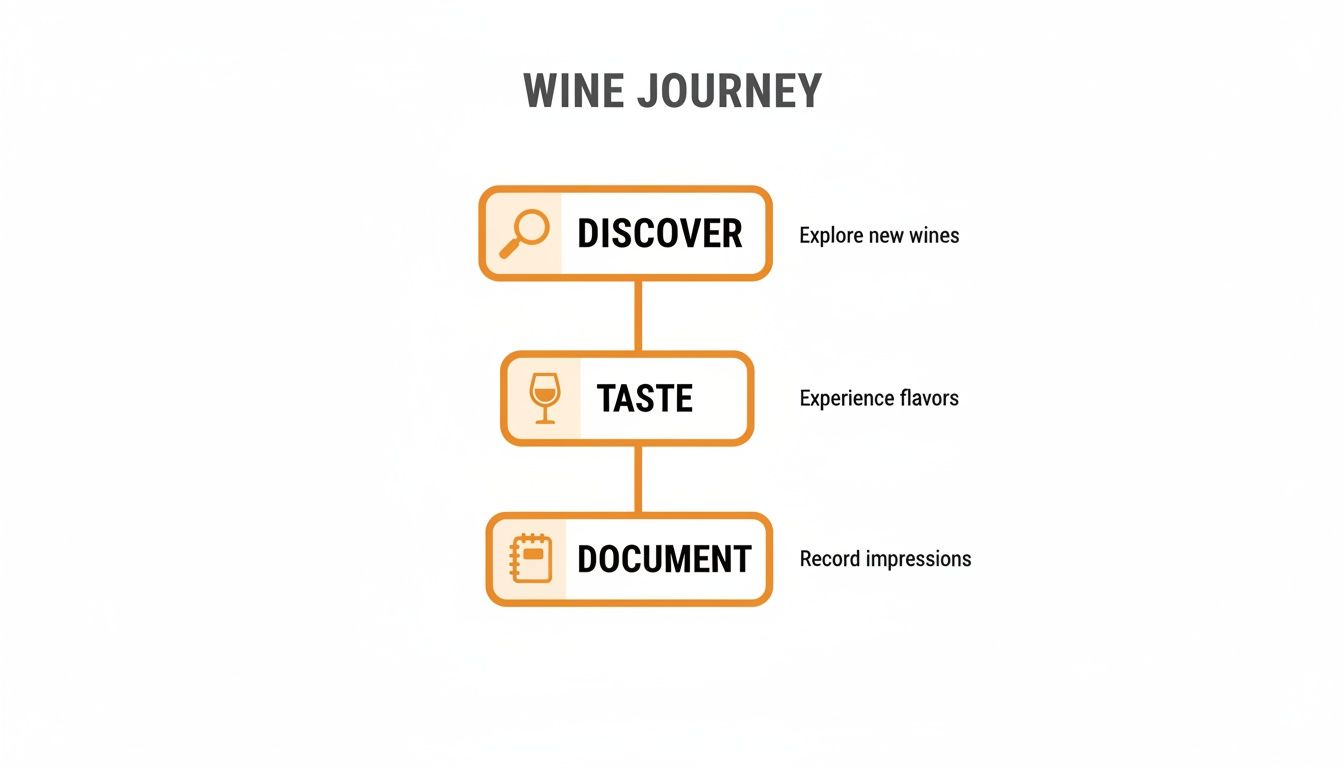
This simple cycle—discovering a new wine, truly tasting it, and then documenting the experience—is the key to building your personal flavor library. This process transforms a simple tasting into a lasting memory, allowing you to track your preferences and build a rich, personal database of your favorite French whites. To give you a quick lay of the land, this table breaks down the essential details for each key region.
Key French White Wine Regions at a Glance
| Region | Primary Grape(s) | Common Tasting Notes |
|---|---|---|
| Loire Valley | Sauvignon Blanc, Chenin Blanc | Gooseberry, lime, flint, wet stone, quince, chamomile |
| Burgundy | Chardonnay | Green apple, lemon zest, hazelnut, butter, toasted brioche |
| Alsace | Riesling, Gewürztraminer, Pinot Gris | Citrus, white peach, petrol, lychee, rose petals, ginger |
| Bordeaux | Sauvignon Blanc, Sémillon | Grapefruit, grass, fig, lanolin, honey, apricot |
| Rhône Valley | Viognier, Marsanne, Roussanne | Honeysuckle, peach, apricot, almond, beeswax |
This is just your starting point. Now, let's dive a little deeper into what makes each of these places so special.
Loire Valley: The Home of Crisp Sauvignon Blanc
Stretching along France’s longest river, the Loire Valley is ground zero for fresh, aromatic, and incredibly vibrant white wines. It's most famous for its singular expression of Sauvignon Blanc, especially from the twin appellations of Sancerre and Pouilly-Fumé. These wines are celebrated for their racy acidity and punchy notes of gooseberry, lime, and a distinctive flinty or smoky minerality that feels like licking a wet stone. But the Loire is more than a one-trick pony. It’s also the spiritual home of Chenin Blanc, a grape with astonishing versatility. In places like Vouvray and Savennières, it can be anything from bone-dry and complex—with notes of quince and chamomile—to lusciously sweet dessert wines capable of aging for decades.
Burgundy: The Gold Standard for Chardonnay
When wine lovers talk about the world's greatest expressions of Chardonnay, they are almost always talking about Burgundy. In this revered region, Chardonnay is a master of reflecting its terroir. You get a full-blown masterclass in the grape's potential, from the steely, unoaked, and mineral-driven wines of Chablis in the north to the rich, complex, and often oak-aged styles of Meursault and Puligny-Montrachet further south. These wines are prized for their balance, elegance, and structure. Depending on the specific village and vineyard, you might find notes ranging from crisp green apple and lemon in Chablis to hazelnut, butter, and toasted brioche in the prestigious wines of the Côte de Beaune.
Exploring Burgundy is about more than just taste; it's about understanding how a single grape can produce a dazzling spectrum of styles based on the soil it's grown in. Documenting your tastings from different villages is a fantastic way to train your palate to recognize these subtle but profound differences.
Alsace: Aromatic Wines with German Influence
Tucked right up against the German border, Alsace has a unique cultural and winemaking identity all its own. Unlike most of France, Alsatian wines are almost always labeled by grape variety—a clear nod to its Germanic heritage. The region is famous for its dry, aromatic white wines, produced in a style that emphasizes pure, unadulterated fruit expression over any oak influence. The "noble grapes" of Alsace create some of its most compelling bottles:
- Riesling: Here, Riesling is typically dry, powerful, and intensely mineral, with notes of citrus, white peach, and often a signature petrol-like aroma as it ages.
- Gewürztraminer: This one is impossible to miss. It's intensely aromatic with notes of lychee, rose petals, and ginger, all wrapped in a rich, full-bodied texture.
- Pinot Gris: Produces full-bodied, smoky, and sometimes slightly spicy wines that are far richer and more textured than its leaner Italian cousin, Pinot Grigio.
Bordeaux: Elegant Blends and Sweet Treasures
While world-famous for its reds, Bordeaux also produces sophisticated and incredibly age-worthy white wines, known as Bordeaux Blanc. These are almost always blends, primarily of Sauvignon Blanc and Sémillon. The Sauvignon Blanc brings the acidity and bright citrus notes, while Sémillon adds body, a waxy texture, and flavors of fig and lanolin. The best dry whites hail from Pessac-Léognan and Graves. Of course, Bordeaux is also home to Sauternes, one of the world's most legendary dessert wines. Here, Sémillon and Sauvignon Blanc grapes are affected by "noble rot" (botrytis), which shrivels the grapes and concentrates their sugars and flavors. The result is a rich, golden nectar with decadent notes of honey, apricot, and toasted nuts.
Beyond these iconic regions, exciting white wines are popping up from all corners of France. The Rhône Valley, for example, produces powerful, full-bodied whites from Viognier, Marsanne, and Roussanne. Newer areas are also gaining serious recognition, like Languedoc-Roussillon, a region known for its sun-drenched vineyards, which consistently offers incredible value and innovation.
Understanding the Grapes Behind the Glass
Okay, we've toured the regions. Now it's time to meet the real stars of the show: the grapes themselves. Getting to know the core personality of each grape is like learning the alphabet of flavor—it gives you the language to understand what you love and why.
Think of each grape variety as having its own distinct character. A Sauvignon Blanc from the Loire might be zesty, sharp, and intensely aromatic, while a Chardonnay from Burgundy could be rich, elegant, and complex. Knowing the difference helps you move beyond just saying you "like" a wine to pinpointing the specific notes that make your palate sing. That's the key to building a rich, searchable diary of your own taste discoveries.
Let's break down the five most important white grapes in France. This is your toolkit for knowing what’s in your glass so you can rate like a critic and document every last detail.
Chardonnay: The Versatile Superstar
There’s a reason Chardonnay is the world’s most famous white grape. It's a blank canvas that perfectly reflects where it’s grown and how it's made. In France, it hits its absolute peak in Burgundy, producing a breathtaking range of styles.
- In Chablis (Northern Burgundy): Expect a crisp, lean, and unoaked style with piercing acidity. The flavors are all about green apple, lemon, and a signature mineral streak that people often call "flint" or "wet stone." It's incredibly focused and refreshing.
- In Côte de Beaune (e.g., Meursault): This is where Chardonnay often gets the royal treatment with oak barrels, resulting in a richer, full-bodied wine. You'll find notes of ripe apple, hazelnut, butter, and toasted brioche. These are complex, creamy wines with a finish that seems to last forever.
When you log a Chardonnay in Savor, make a quick note of whether it’s oaked or unoaked. That one detail is a game-changer for figuring out which style you truly prefer.
Sauvignon Blanc: The Aromatic Sprinter
If Chardonnay is the versatile artist, Sauvignon Blanc is the energetic sprinter. It’s famous for its punchy aromatics and racy, mouth-watering acidity. Its spiritual home is the Loire Valley, where it produces some of the most distinctive French white wines on the planet. The classic profile is unmistakable: think zesty grapefruit, gooseberry, freshly cut grass, and that sharp, flinty minerality. Wines from Sancerre and Pouilly-Fumé are the global benchmarks for this style. It's the kind of wine that feels like a splash of cold water on a hot day. To see how it stacks up against another popular grape, check out our deep dive into the difference between Pinot Grigio and Sauvignon Blanc.
Chenin Blanc: The High-Wire Act
Chenin Blanc is a true master of balance. It can produce wines that range from bone-dry and searingly acidic to lusciously sweet, all while holding onto its signature high-voltage acidity. The Loire Valley is its playground, especially in appellations like Vouvray and Savennières.
Chenin Blanc is a chameleon. In its dry forms, it can offer flavors of quince, yellow apple, and chamomile. In its sweet dessert styles, it transforms into honeyed notes of ginger and marmalade. This incredible versatility makes it a thrilling grape to explore and document.
Its ability to age is legendary. A great Chenin Blanc can evolve in the bottle for decades, making it a fascinating subject for anyone looking to track how a single wine changes over time.
Riesling: The Terroir Transmitter
Found almost exclusively in Alsace, French Riesling is nearly always dry, powerful, and intensely aromatic. This grape acts like a microphone for its terroir, amplifying the mineral character of the soil it grows in with stunning clarity. Expect powerful notes of lime, white peach, and jasmine, all supported by a spine of electrifying acidity. As it gets older, it often develops a famously complex note of petrol or kerosene that wine lovers go crazy for. Unlike its German cousins, you can almost always count on an Alsatian Riesling to be dry and incredibly food-friendly.
Viognier: The Perfumed Powerhouse
Hailing from the Northern Rhône Valley, Viognier is a full-bodied, aromatic heavyweight. It’s a grape that delivers a rich, almost oily texture with lower acidity than the others on this list, making it feel lush and decadent. The aromas are hedonistic and perfumed, bursting with notes of apricot, peach, and honeysuckle. It’s an expressive, almost opulent grape that produces wines meant to be enjoyed in all their youthful glory. If you love bold, fragrant whites, Viognier is a must-try.
How to Pair French White Wines with Food
Discovering a fantastic bottle of French white wine is only half the adventure. The other half is unlocking its full potential with the right food. A truly great pairing doesn't just complement the meal—it creates an entirely new experience, one where both the wine and the dish are elevated into something more memorable.
The goal here is harmony. We want to turn a simple dinner into a lasting memory you'll want to document and revisit. This guide moves beyond generic advice to offer specific, memorable pairings that actually work, organized by wine style to give you a clear roadmap for your next culinary experiment.
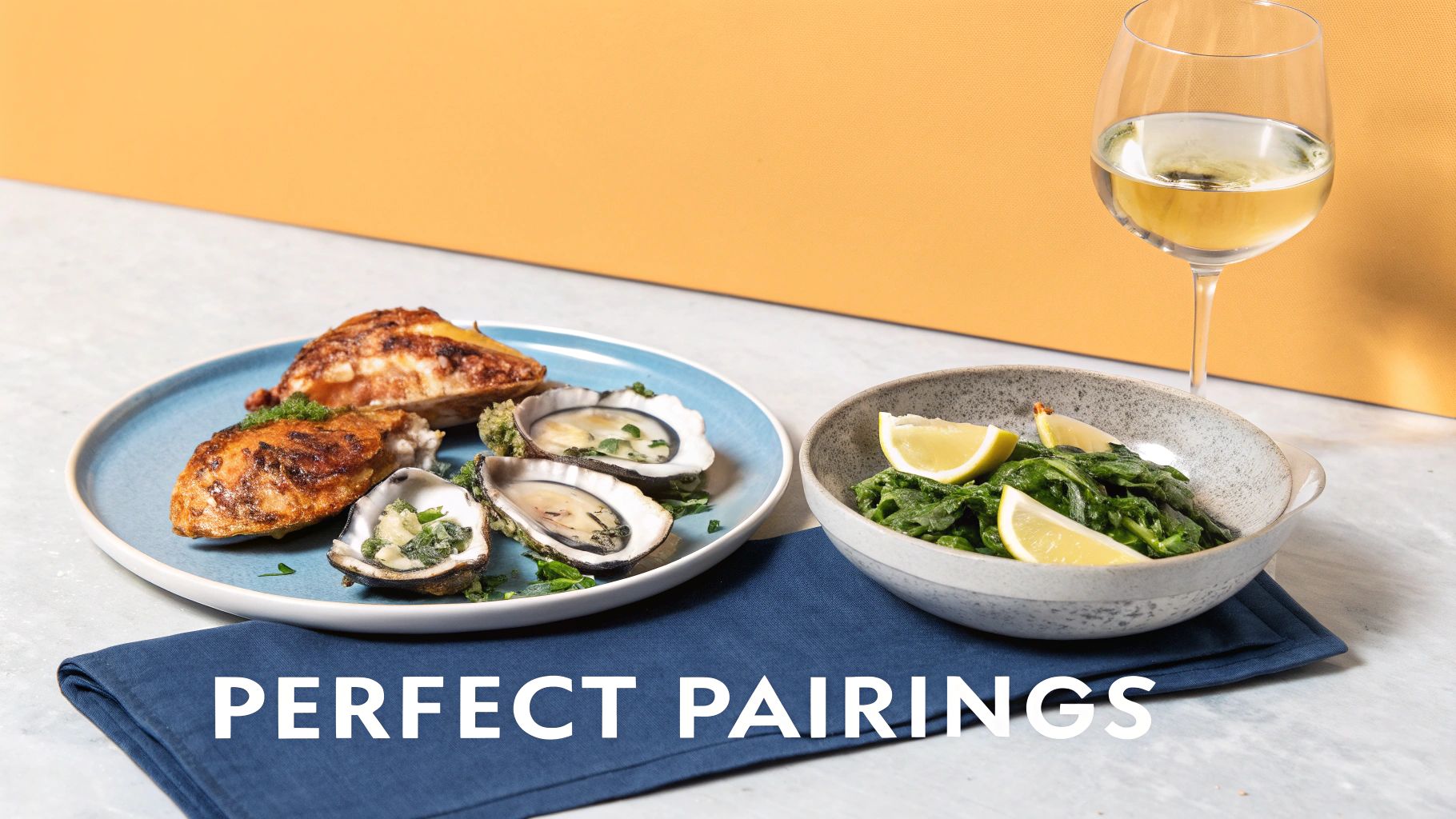
Light and Crisp Wines
These are the zesty, high-acidity wines that feel like a splash of cool water on your palate. Think Sancerre, Pouilly-Fumé, Chablis, and Muscadet. Their job is to cleanse the palate and cut through richness with their bright citrus, green apple, and mineral notes, making them exceptionally versatile dance partners for food. A great guiding principle here is "what grows together, goes together." The Loire Valley, home to many of these crisp whites, is famous for its goat cheese (chèvre). The wine's acidity slices through the cheese's tangy creaminess in a classic, can't-miss pairing. But where these wines truly shine is with seafood.
- Classic Pairing: A mineral-driven Chablis with fresh oysters is legendary for a reason. The wine’s flinty notes echo the oceanic brininess of the oysters, creating a perfect, harmonious bite.
- Creative Pairing: Try a zesty Sancerre with a salad tossed in a fresh herb and lemon vinaigrette. The wine’s grassy notes will harmonize beautifully with the herbs, while its acidity stands up to the dressing.
- Weekday Meal: A simple pan-seared fish with a squeeze of lemon becomes something special alongside a glass of Muscadet. It's an effortless upgrade.
Full-Bodied and Rich Wines
Welcome to the world of texture and complexity. These wines, often exemplified by oaked Chardonnay from Burgundy (like Meursault or Puligny-Montrachet) or powerful whites from the Rhône Valley (like Condrieu), are richer and creamier. They have the weight to stand up to more substantial dishes. Think of these wines as a component of the dish itself, almost like a finishing sauce. Their notes of butter, hazelnut, vanilla, and ripe stone fruit complement creamy textures and roasted flavors without overpowering them. They're perfect for dishes that demand a wine with real presence and depth.
- Classic Pairing: A buttery Meursault with roasted chicken or turkey is a timeless combination. The wine’s richness mirrors the savory flavors of the bird and any creamy sauces served alongside it.
- Creative Pairing: Pair a Viognier from the Rhône with a mildly spiced dish like a Moroccan chicken tagine. The wine’s apricot and floral notes will beautifully complement the dish's sweet spices and dried fruit.
- Comfort Food: A rich, oak-aged Chardonnay from Bordeaux is a fantastic match for creamy pasta dishes or mushroom risotto.
Aromatic and Off-Dry Wines
This category is all about wines that lead with powerful aromatics and often have a touch of residual sugar. Think of Gewürztraminer and Riesling from Alsace, or an off-dry Chenin Blanc from Vouvray in the Loire Valley. Their floral, spicy, and tropical fruit notes, combined with just a hint of sweetness, make them uniquely suited for challenging pairings. These wines are your secret weapon against spice and heat. That slight sweetness masterfully tames the fire of spicy foods, allowing the other flavors in the dish to shine through. They also create a fascinating contrast with salty, savory dishes.
Don't be afraid to pair an off-dry wine with a savory meal. The touch of sweetness in an Alsatian Riesling or a Vouvray can masterfully balance the heat of Thai or Vietnamese cuisine, turning a potentially clashing pairing into a harmonious one.
- Classic Pairing: A fragrant Gewürztraminer with pungent cheeses like Munster is a quintessential Alsatian experience. To explore more delicious combinations, you might be interested in our guide to pairing wines with an aged cheeses list.
- Creative Pairing: An off-dry Vouvray with spicy pork tacos is a game-changer. The wine's sweetness cools the palate, while its high acidity cuts right through the richness of the pork.
- Global Flavors: Try a dry Alsatian Riesling with sushi or sashimi. Its clean profile and citrus notes will highlight the freshness of the fish without overwhelming it.
Ultimately, the best pairing is the one you enjoy most. Use these suggestions as a starting point, then get curious. Document what works—and what doesn't. Every meal is a chance to rate like a critic and build your personal food story.
What’s Happening in French White Wine Right Now?
Understanding the classic regions is your foundation, but the world of French white wine is anything but static. New chapters are being written every season, and knowing what’s happening on the ground can help you find incredible value and appreciate the story behind each vintage. For anyone who loves tracking their tastings, this is the context that turns a simple note into a meaningful data point.
The two biggest forces shaping what's in your glass today are the recent harvest conditions and the ever-present influence of a changing climate. Winemakers are constantly on their toes, and their ingenuity directly impacts the character of the bottles you bring home.
A Welcome Rebound in the Vineyards
After a few nail-biter seasons plagued by frost and rough weather, some of France's most iconic white wine regions are bouncing back in a big way. This is fantastic news for wine lovers, signaling better availability for some of the world's most sought-after whites. In fact, some areas are seeing a serious comeback. Did you know that Burgundy and the Loire Valley are staging an impressive recovery? According to France's Agreste ministerial service, national wine output is forecasted at 37.4 million hectolitres. Burgundy's production is jumping a whopping 45% year-on-year, while the Loire Valley—home to crisp Sauvignon Blancs like Sancerre and Pouilly-Fumé—is up 26%. You can read more about the latest French harvest predictions on Decanter.com.
What does this mean for you? It means finding your favorite bottles from these celebrated regions just got a little easier. When you log these vintages in your Savor diary, noting the year helps you remember the story of a comeback season.
Adapting to a Warmer World
The long-term reality of climate change continues to be a defining factor. Warmer growing seasons are shifting everything from when grapes are picked to the final flavor profile of the wine itself.
- Riper Flavors, Higher Alcohol: Warmer temperatures mean riper grapes with more sugar. This often translates to wines with slightly higher alcohol and richer, more pronounced fruit flavors. You might notice a Loire Sauvignon Blanc from a warmer year leans more tropical than its classic grassy, flinty self.
- Chasing the Chill: To maintain that crucial, mouth-watering acidity that makes white wines so refreshing, vintners are getting creative. They're planting vineyards at higher elevations or exploring cooler, previously overlooked plots of land.
- Rediscovering Old Grapes: There's a growing buzz around historic or lesser-known grape varieties that are naturally better suited to warmer, drier conditions. Keep an eye out for these on labels.
This is where keeping a food and wine diary becomes so powerful. By tracking wines from the same producer across different vintages, you can personally map how these environmental shifts are influencing taste. You're not just tasting wine; you're documenting a living history, one glass at a time.
When you understand these trends, you add another layer of depth to your appreciation. Every bottle has a backstory shaped by nature and human resilience, and now you have the context to follow along.
How to Buy and Serve French White Wine
You’ve explored the regions, met the grapes, and imagined the perfect food pairings. Now for the best part: putting all that knowledge into action. This is where your curiosity transforms into a tangible, delicious experience, as we give you the practical tools to confidently select, store, and serve French white wine. Walking into a wine shop can feel overwhelming, but a few key terms on a French wine label can act as your trusted guide. Learning this language empowers you to make smarter choices, ensuring the bottle you bring home is exactly what you were hoping for.
Decoding the French Wine Label
At first glance, French labels might seem cryptic, but they hold a wealth of information about the wine's quality and origin. Think of it as a wine's birth certificate, telling you exactly where it's from and the strict standards it had to meet. Here are the essential terms to know:
- Appellation d'Origine Contrôlée (AOC): This is the highest level of quality classification in France. Seeing this on a label guarantees the wine was produced in a specific geographical area and followed rigid rules for everything from grape varieties to production methods. It’s a powerful seal of authenticity.
- Grand Cru: Translated as "great growth," this term signifies the absolute best of the best. It's reserved for the highest-quality vineyards in regions like Burgundy and Alsace, known for their exceptional terroir. These are often special-occasion wines with serious aging potential.
- Vieilles Vignes: This simply means "old vines." While it’s not an official classification, it suggests the wine was made from grapes grown on older, more established vines. These vines typically produce fewer grapes, but their flavors are far more concentrated and complex.
Serving Temperatures for the Best Experience
Serving white wine at the right temperature is absolutely critical. It can be the difference between a muted, flat experience and one bursting with vibrant aromas and flavors. One of the most common mistakes is serving whites ice-cold, which completely masks their delicate nuances.
Think of serving temperature like adjusting the focus on a camera. The right temperature brings all the wine's intricate details—its aromas, acidity, and texture—into sharp, clear view. A few degrees can change everything.
Here’s a simple checklist for hitting the perfect serving temperature:
- Light-Bodied, Crisp Whites (Sancerre, Chablis, Muscadet): Serve chilled, around 45-50°F (7-10°C). This temperature is key to preserving their zesty acidity and refreshing mineral notes.
- Full-Bodied, Rich Whites (Meursault, Condrieu): Serve slightly warmer, between 50-55°F (10-13°C). This allows their complex aromas of butter, nuts, and ripe fruit to fully open up and express themselves.
- Aromatic & Sweet Whites (Alsace Riesling, Sauternes): Serve well-chilled, from 43-47°F (6-8°C). The cold enhances their freshness and provides a beautiful balance to their sweetness.
A good rule of thumb? Take the bottle out of the fridge about 20-30 minutes before you plan to serve it. This allows it to warm up just enough to express its full personality. As you explore different bottles, remember that this journey is yours to define. If you're interested in broadening your palate even further, you may want to check out our guide on the best red wine selections to see how they compare. Every bottle you open is a new opportunity to learn, discover, and document. Use what you've learned here to make informed choices, and then rate like a critic to build your personal database, one delicious glass at a time.
Your French White Wine Questions, Answered
Let's be honest—navigating the world of French white wine can feel like learning a new language. To wrap things up, here are some quick, straightforward answers to the questions we hear all the time.
What Is the Most Popular French White Wine?
Hands down, Chardonnay from Burgundy and Sauvignon Blanc from the Loire Valley are the two titans of French white wine, recognized and loved all over the world. Chardonnay is the ultimate chameleon, giving us everything from the crisp, flinty styles of Chablis to the rich, buttery expressions found in Meursault. On the other hand, Sauvignon Blanc, especially from Sancerre, is prized for its zesty acidity and vibrant notes of gooseberry and wet stone.
Is French White Wine Typically Dry or Sweet?
The overwhelming majority of French white wine is dry. Think of classic, food-friendly wines like Sancerre, Chablis, Pouilly-Fumé, and most white Bordeaux—they are all crafted in a dry style. That said, France is also home to some of the world's most legendary sweet wines, including the luscious Sauternes from Bordeaux and late-harvest Chenin Blanc from the Loire Valley.
What Does AOC Mean on a French Wine Label?
AOC is short for Appellation d'Origine Contrôlée, which translates to "controlled designation of origin." It's more than just a place name; it’s a legal guarantee. It ensures the wine comes from a specific geographical area and was made following a strict set of rules—from the grape varieties used to how the vines are managed. Think of it as a seal of authenticity that promises the wine is a true expression of its unique terroir.
Which French White Wine Is Best for Beginners?
For anyone just dipping their toes in, a Sauvignon Blanc from the Loire Valley, like a Sancerre, is a brilliant place to start. Another fantastic option is an unoaked Chardonnay from the Mâconnais region of Burgundy. Both are expressive, easy to find, and classic examples of their grapes, making them perfect for figuring out what you love without breaking the bank.
Ready to turn these answers into delicious discoveries? With Savor, you can document every bottle, from that first sip of Chablis to a complex aged white. Track tastes, build your personal wine diary, and never forget a great glass again.