
Indian Food: Regional Mastery & Flavor Profiles Guide (2026)
Alex the juice queen
Alex hunts for the best juice bars and presses. She rates every sip and saves her favorites in Savor.
The Serious Foodie's Guide to Indian Regional Mastery You're staring at a menu filled with unfamiliar names. Galouti kebabs. Laal maas. Appam. Your server asks...
The Serious Foodie's Guide to Indian Regional Mastery
You're staring at a menu filled with unfamiliar names. Galouti kebabs. Laal maas. Appam. Your server asks if you'd like "North Indian or South Indian style," and you realize something: You've been ordering the same butter chicken for years, treating an 8,000-year-old culinary civilization like it's a single cuisine.
Let's fix that.
Indian food isn't one thing. It's 28 states, each with its own climate, history, and flavor DNA. It's the difference between a Kashmiri wazwan feast and a Kerala fish curry - two dishes that share a country but almost nothing else. This guide will help you graduate from "ordering Indian food" to mastering the regional nuances that separate a generic curry house from an authentic regional kitchen.
Table of Contents
- The Connoisseur's Mindset: Culture, Not Fuel
- The Regional Deep Dive: India's Flavor Profiles
- The Serious Foodie Checklist: How to Spot Authenticity
- The Connoisseur's Glossary: Terms to Know
- Building Your Personal Indian Food Archive
- Frequently Asked Questions
The Connoisseur's Mindset: Culture, Not Fuel
BLUF: Indian cuisine represents 30+ distinct regional food cultures shaped by 8,000 years of history, geography, and trade routes - not a single "curry" category.
Walk into most Western Indian restaurants and you'll see the same lineup: tikka masala, vindaloo, saag paneer. It's the culinary equivalent of thinking all European food is pizza and pasta. The reality is that a Punjabi dhaba (roadside eatery) and a Chettinad kitchen in Tamil Nadu have about as much in common as a Parisian bistro and a Bavarian beer hall.
The story begins in the Indus Valley around 6,000 BCE, where archaeological evidence shows early Indians were already cultivating turmeric and black pepper. Fast forward through millennia of invasions, migrations, and trade: the Mughals brought Persian techniques and ingredients (the foundation of Northern cuisine), the Portuguese introduced chili peppers in the 16th century (revolutionizing regional heat profiles), and the British Raj created fusion dishes that evolved into what many Westerners now consider "authentic" Indian food.
Geography dictates everything. The coastal states of Kerala and Goa built cuisines around coconut, tamarind, and fresh seafood. The arid deserts of Rajasthan developed preservation techniques using yogurt and dried lentils. The fertile Gangetic plains of Punjab created dairy-heavy dishes with wheat breads. The Bengali delta's proximity to rivers and the Bay of Bengal made mustard oil and fish the backbone of Eastern cooking.
Understanding this isn't academic - it changes how you order. When you know that "Indian food" is actually a collection of distinct regional cuisines, you stop asking for generic recommendations and start building a mental map of flavors, techniques, and traditions.
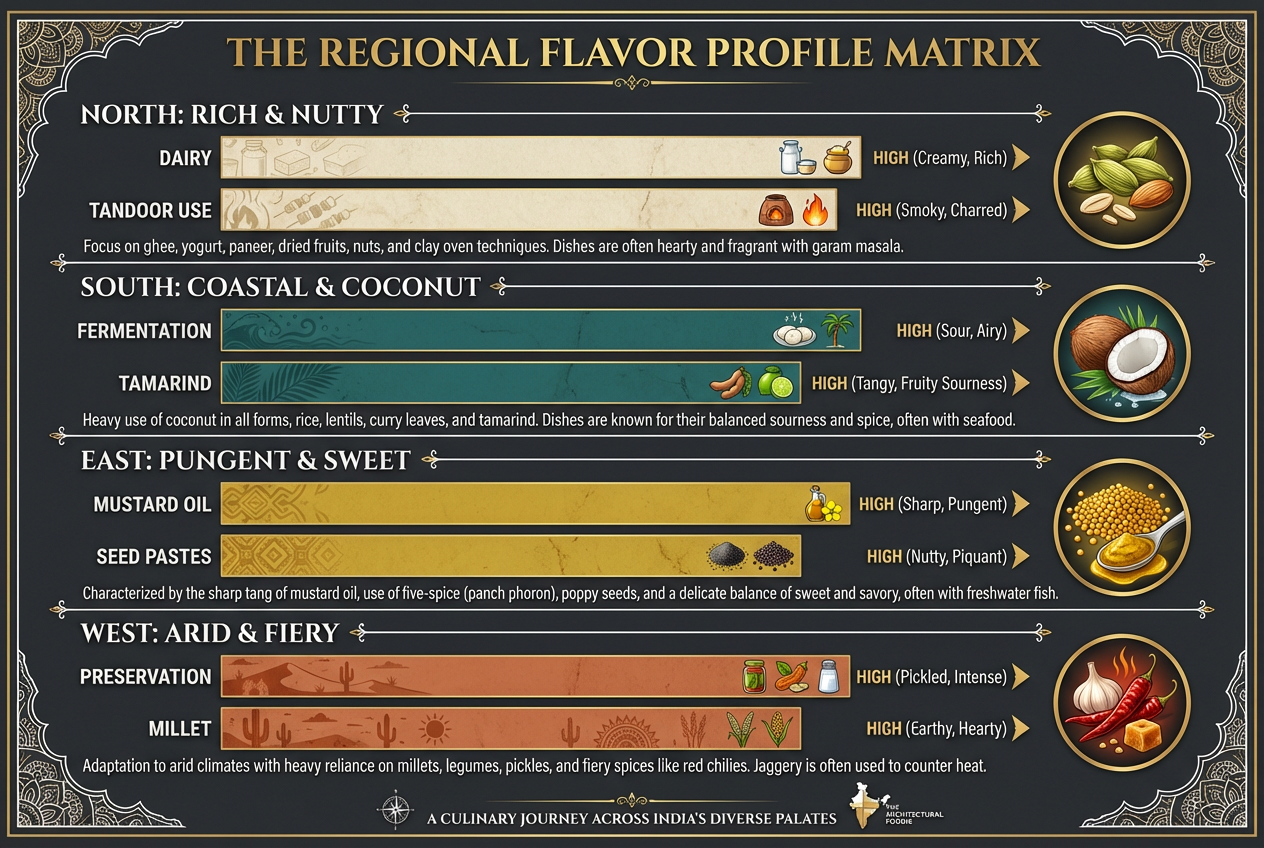 Master the geography of taste with our regional matrix, designed to help you navigate the complex flavor profiles of India's most iconic culinary destinations.
The Regional Deep Dive: India's Flavor Profiles
BLUF: Indian regions cluster into four distinct flavor profiles based on climate, agriculture, and cultural influence - each with signature techniques, ingredients, and must-order dishes.
The Rich and Nutty North (Punjab, Kashmir, Delhi)
The tandoor is your first clue. This cylindrical clay oven, heated to around 900°F, creates the smoky char on naans and the caramelized crust on tandoori chicken. But the real sophistication lies in the Persian influence that arrived with the Mughal Empire.
In Kashmir, the signature dish is rogan josh - lamb braised with Kashmiri chilies (which provide color, not heat), fennel, and ginger. The name literally means "red oil," and a proper version will show a slick of aromatic fat on the surface. The wazwan, Kashmir's multi-course feast, can include 36 dishes and represents the pinnacle of North Indian culinary ceremony.
Punjab gave us the dishes most Westerners associate with "Indian food" - butter chicken (invented in 1950s Delhi when a restaurant owner added tomato and cream to leftover tandoori chicken), dal makhani (black lentils simmered overnight with butter and cream), and nihari (a slow-cooked beef or lamb stew originally served for breakfast by Mughal royalty).
The dairy obsession here is real. Paneer, ghee, yogurt-based marinades - all products of Punjab's agricultural abundance. The breads are wheat-based: naan, kulcha (stuffed with spiced potatoes or onions), and paratha (layered flatbread).
Must-order dishes:
- Galouti kebab (Lucknow's melt-in-mouth mutton patties, allegedly created for a toothless nawab)
- Rogan josh (Kashmir's aromatic lamb curry)
- Amritsari fish (batter-fried fish from the holy city)
- Nihari (overnight-simmered meat stew)
The Coastal and Coconut South (Kerala, Tamil Nadu, Karnataka)
The moment you taste a proper dosa, you're experiencing 2,000 years of fermentation technique. Rice and urad dal (black lentils) are soaked, ground, and left to ferment overnight. The batter develops a subtle sourness - not from vinegar, but from natural lactic acid bacteria. The result is a crepe so thin you can read through it, with a crisp texture that shatters under your teeth.
South Indian cuisine is defined by the "Spice Coast" heritage. This is where European traders came for pepper, cardamom, and cinnamon. The Portuguese landed in Goa, the Dutch in Kerala, and each left their mark - but the indigenous traditions remained dominant.
Kerala's cooking revolves around coconut (oil, milk, and grated flesh), curry leaves, and tamarind. A proper Kerala fish curry (meen moilee) uses freshly extracted coconut milk, green chilies, and ginger. The fish - often kingfish or pomfret - should be barely cooked, flaking at the touch of a fork.
Tamil Nadu's Chettinad cuisine is among India's spiciest. A Chettinad chicken curry might include 20+ spices, each roasted and ground separately. The heat comes from Guntur chilies, and the complexity from stone-ground masalas that include star anise, kalpasi (stone flower lichen), and marathi mokku (dried flower buds).
The breads here are different: appam (lacy, fermented rice pancakes with crispy edges and soft centers), uttapam (thick rice pancakes studded with onions and chilies), and idiappam (string hoppers made from pressed rice noodles).
Must-order dishes:
- Masala dosa (fermented rice crepe filled with spiced potatoes)
- Meen moilee (Kerala fish in coconut milk)
- Chettinad pepper chicken (fiery chicken with stone-ground spices)
- Sambar (tamarind-based lentil stew with vegetables)
The Pungent and Sweet East (Bengal, Assam, Odisha)
Mustard oil is the signature. When you walk into an authentic Bengali restaurant, that sharp, pungent aroma - that's mustard oil being tempered with whole spices. It's an acquired taste for some, but for Bengalis, cooking fish in anything else is culinary sacrilege.
The five-spice blend called panch phoron (cumin, fennel, fenugreek, nigella, and mustard seeds) defines Bengali flavor profiles. These seeds are tempered in hot oil until they crackle and pop, releasing their aromatic compounds.
Bengal is fish country. The hilsa (ilish), a river fish so prized it's practically a cultural icon, is steamed in mustard paste or fried with minimal spices to preserve its delicate flavor. A proper Bengali meal follows a specific sequence: bitter greens first (to aid digestion), then lentils, vegetables, fish, meat, and finally, sweet curd or mishti (Bengali sweets).
The Portuguese influence shows up in unexpected places. Vindaloo? That's actually an East Indian dish (from Goa) based on the Portuguese "vinha d'alhos" (wine and garlic). The British Raj created dishes like kedgeree (rice with smoked fish) and mulligatawny soup (a bastardized version of South Indian rasam).
Must-order dishes:
- Machher jhol (Bengali fish curry with mustard oil and panch phoron)
- Kosha mangsho (slow-cooked goat curry)
- Shukto (bitter gourd and vegetable stew)
- Chingri malai curry (prawns in coconut milk)
The Arid and Fiery West (Rajasthan, Gujarat, Maharashtra)
Water scarcity shaped Western Indian cuisine. In Rajasthan's Thar Desert, preservation became an art form. Lentils are sun-dried into papad, milk is reduced to khoya, vegetables are pickled in mustard oil and spices.
Laal maas (red meat) is Rajasthan's culinary war cry - mutton cooked with an alarming quantity of Mathania chilies, which provide both color and serious heat. The dish originated with Rajput warriors and was traditionally cooked over open fires while on military campaigns.
Gujarat offers a counterpoint: predominantly vegetarian, often sweet. Gujarati thalis include dishes like dhokla (fermented and steamed gram flour cakes), khandvi (rolled gram flour sheets), and shrikhand (strained yogurt dessert). The food is designed to balance the intense heat - many dishes include jaggery (unrefined cane sugar) alongside the spices.
Maharashtra gave us the vada pav (Mumbai's spiced potato fritter in a bun, often called the "Indian burger"), pav bhaji (spiced mashed vegetables with butter-toasted buns), and the Maharashtrian specialty of misal pav (sprouted lentils in spicy gravy).
The bread here shifts to millet-based rotis (bajra, jowar) in the rural areas, while Mumbai street food embraces the Portuguese-influenced pav (soft white bread rolls).
Must-order dishes:
- Laal maas (Rajasthani fiery red meat curry)
- Dhokla (fermented and steamed savory cake)
- Vada pav (Mumbai's iconic street food)
- Dal baati churma (Rajasthani lentils with baked wheat balls and sweet crumble)
If you're looking to build your own system for tracking and rating these regional discoveries, Savor's dish rating app lets you create a personal database of every memorable Indian meal you experience.
The Serious Foodie Checklist: How to Spot Authenticity
BLUF: Authentic regional Indian kitchens reveal themselves through specific technical markers - oil separation, whole spice integration, regional bread pairings, and proper cooking vessel choices.
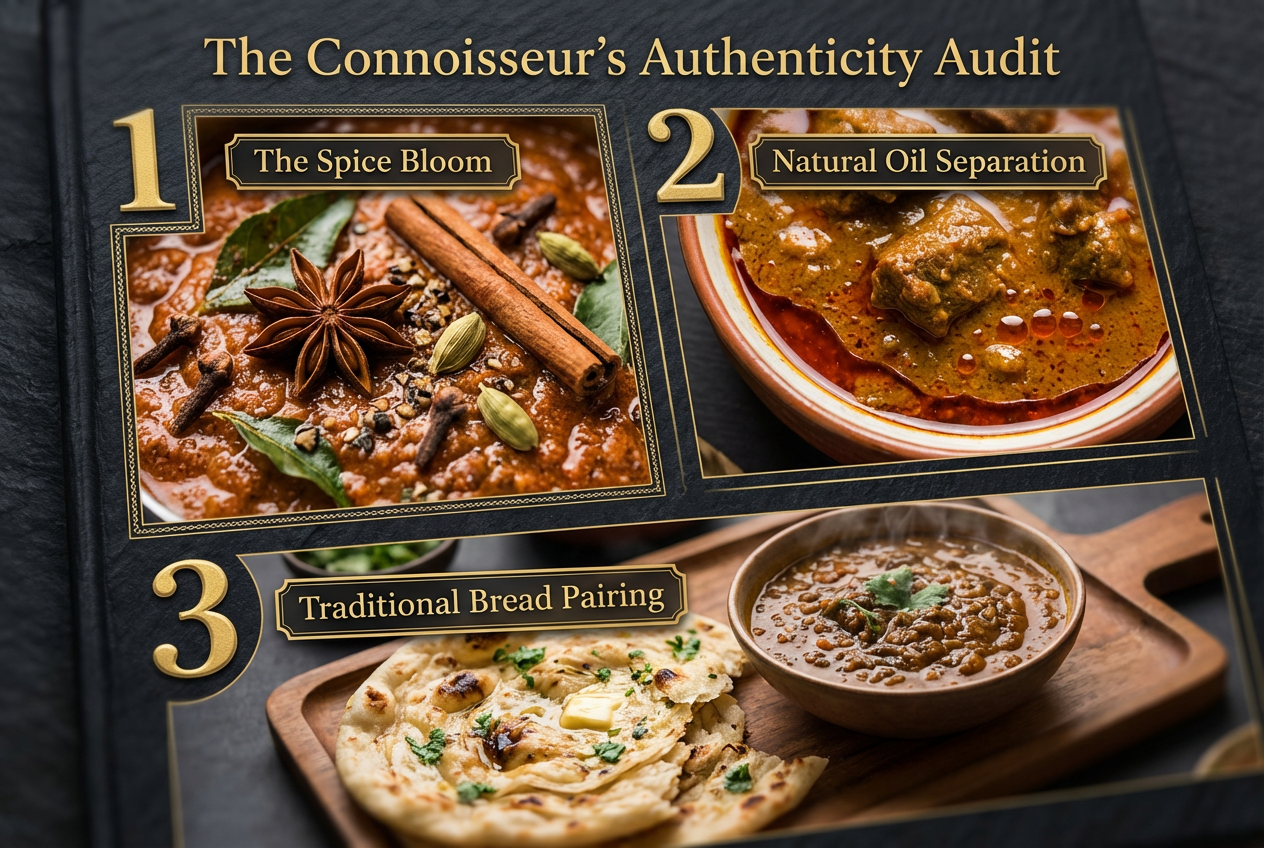 Elevate your dining experience by learning to spot the technical markers of an authentic regional kitchen, from whole spice integration to proper oil separation.
The Oil Test
A proper curry will show oil separation - that slick of aromatic fat floating on top. This isn't a flaw; it's proof of technique. When whole spices are properly tempered in hot oil, their fat-soluble flavor compounds extract into the cooking medium. If your curry looks uniformly emulsified like a sauce from a jar, that's a red flag.
The type of oil matters regionally:
- Mustard oil in Bengali and Eastern dishes (sharp, pungent aroma)
- Coconut oil in South Indian and Goan cooking (sweet, nutty scent)
- Ghee in North Indian preparations (buttery, rich aroma)
- Groundnut oil in Maharashtrian and Western dishes (neutral, high smoke point)
Ask your server what oil they use. If they can't tell you, or if everything is cooked in generic "vegetable oil," you're probably in a generic kitchen.
The Bread Pairing
Nothing reveals a restaurant's regional authenticity faster than bread recommendations. A kitchen that understands its own cuisine will pair specific breads with specific gravies based on texture and moisture content.
The basic matrix:
- Naan/kulcha (leavened wheat breads): Pair with rich, creamy North Indian gravies that need structural support
- Roti/chapati (unleavened whole wheat): Pair with drier vegetable preparations and dal
- Paratha (layered, often stuffed): Works as a standalone meal or with yogurt-based dishes
- Appam (rice pancakes): Pair with South Indian stews and thin coconut-based curries
- Puri (fried puffed bread): Pair with dry potato preparations or chana masala
If a restaurant suggests naan with a Kerala fish curry or appam with a North Indian korma, they're not cooking from a place of regional knowledge.
The Spice Bloom
Look at your curry. Can you see whole spices? Cardamom pods, cinnamon bark, whole dried chilies, curry leaves floating on the surface? Or is everything a uniform brown paste?
Whole spices indicate proper tadka (tempering) technique. The spices are added to hot oil in a specific sequence based on size and oil content. Larger spices like bay leaves and cinnamon go first, followed by seeds (cumin, mustard), then curry leaves last (which splutter violently).
If you bite into a whole green cardamom pod, don't complain - you're supposed to move it to the side of your plate. Its presence means the kitchen is doing things right.
The Cooking Vessel Clues
Traditional cooking vessels aren't just aesthetic choices - they affect flavor:
- Clay pots (handi): Used for dum cooking, where the vessel is sealed and slow-cooked. Creates a unique earthy flavor.
- Iron kadhai (wok): Seasoned iron imparts a subtle metallic note and helps with even heat distribution.
- Brass or copper vessels: Used in some South Indian temple cooking; the metal interacts with acidic ingredients like tamarind.
High-end regional restaurants will serve dishes in these traditional vessels. It's not just presentation - it's a signal that they're following proper technique.
The Restaurant's Regional Focus
Be suspicious of restaurants that claim to serve "all of India." A menu that spans Kashmir to Kerala, Bengal to Mumbai is probably doing none of it particularly well. The best regional Indian restaurants specialize:
- A Chettinad restaurant that focuses exclusively on Tamil Nadu cuisine
- A Bengali restaurant that lists multiple fish preparations
- A Punjabi dhaba that makes its own paneer daily
Specialization requires depth of knowledge - the right spice sources, proper technique training, and often, cooks from that specific region.
For a deeper understanding of how to evaluate and rate different dishes across cuisines, check out our guide to creating your personal food database.
The Connoisseur's Glossary: Terms to Know
BLUF: Mastering Indian cuisine vocabulary - from cooking techniques like "dum" and "tadka" to ingredient terms like "panch phoron" and "curry leaves" - enables precise ordering and meaningful restaurant conversations.
Cooking Techniques
Dum cooking: The original pressure-cooker. A heavy-bottomed pot is sealed with dough, then cooked over low heat (traditionally with coals on top and bottom). Steam can't escape, so ingredients cook in their own juices. Hyderabadi biryani is the classic example - rice and meat layered, sealed, and cooked until the grains separate and absorb all the aromatic steam.
Tadka (or Tarka/Tempering): The technique of blooming whole spices in hot oil or ghee. The spices are added in sequence - cumin seeds first, then mustard seeds (which pop), then curry leaves (which splutter), finally dried red chilies. This flavored oil is either used as the cooking base or poured over a finished dish as a flavor bomb.
Tandoor cooking: Clay oven cooking at 900°F. The intense heat creates the signature char and smoky flavor. Breads are slapped onto the interior walls, meats are skewered and lowered inside. The Maillard reaction (browning) happens almost instantly.
Bhuna: A slow-cooking technique where ingredients are stirred continuously to evaporate moisture and concentrate flavors. The spices literally stick to the pan, then are scraped up and reincorporated. Creates deep, dark, concentrated curries.
Korma: A braising technique using yogurt, cream, or nut pastes. The meat is seared, then simmered slowly in the sauce until tender. Mughlai in origin, kormas are rich and mild.
Essential Ingredients
Panch phoron: The Bengali five-spice blend (equal parts cumin, fennel, fenugreek, nigella, and brown mustard seeds). Never ground - always used whole for tempering.
Curry leaves: Not related to "curry powder" (which is a British invention). These small, aromatic leaves are a staple in South Indian cooking. They lose flavor quickly when dried, so fresh is essential. They have a complex aroma - slightly citrus, slightly nutty.
Kasuri methi: Dried fenugreek leaves. Adds a subtle bitterness and depth to North Indian curries. A finishing ingredient - added in the last few minutes of cooking.
Asafoetida (Hing): A resin with an intensely pungent smell when raw that mellows into a smooth, umami depth when cooked. Used in tiny quantities in vegetarian cooking (especially by Jains, who avoid onions and garlic).
Tamarind: Provides the sour note in South Indian and coastal cuisines. Comes as a paste, concentrate, or dried pulp (which you soak and strain).
Ghee: Clarified butter, cooked until the milk solids brown and are removed. Nutty, rich, with a high smoke point. Used both for cooking and as a finishing touch.
Bread Vocabulary
Naan: Leavened flatbread cooked in a tandoor. Can be plain or stuffed (garlic naan, keema naan with spiced meat).
Roti/Chapati: Unleavened whole wheat flatbread cooked on a griddle. Everyday bread in North Indian homes.
Paratha: Layered flatbread, brushed with ghee and folded multiple times before cooking. Can be plain or stuffed (aloo paratha with potatoes, gobi paratha with cauliflower).
Kulcha: Leavened bread similar to naan, but softer. Often stuffed with spiced onions or potatoes.
Puri: Deep-fried puffed bread. Served with dry vegetable preparations.
Appam: South Indian fermented rice pancake, thick in the center with lacy, crisp edges. Pairs with stews and coconut-based curries.
Dosa: Fermented rice and lentil crepe, crispy and served with sambar and chutney.
Spice Blends
Garam masala: Literally "hot spice mix," but referring to warming spices, not chili heat. Typically includes cinnamon, cardamom, cloves, cumin, coriander, and black pepper. Every region (and family) has its own blend.
Chaat masala: Tangy spice blend used in street food. Contains dried mango powder (amchur), black salt (kala namak), cumin, and coriander.
Curry powder: A British invention, not used in traditional Indian cooking. It's a one-size-fits-all blend that doesn't exist in authentic regional cuisine.
Cultural Terms
Wazwan: The elaborate multi-course feast of Kashmir. Can include 36 dishes, served on large platters shared among four people. The meal is a ritual, with specific dishes served in specific orders.
Thali: A sampler platter representing a complete regional meal. Typically includes rice or bread, dal, vegetables, yogurt, pickle, and a sweet. The composition varies by region.
Dhaba: Roadside eatery, common along highways in North India. Known for hearty, no-frills cooking - often better than fancy restaurants.
Bhuna gosht: Not a dish but a technique - meat that's been slow-cooked until the moisture evaporates and the spices coat each piece.
Understanding these terms changes how you read menus and talk to servers. Instead of asking "What's good?", you can ask "Is your biryani dum-cooked?" or "Do you use fresh curry leaves?" The answers will tell you everything you need to know about the kitchen's authenticity.
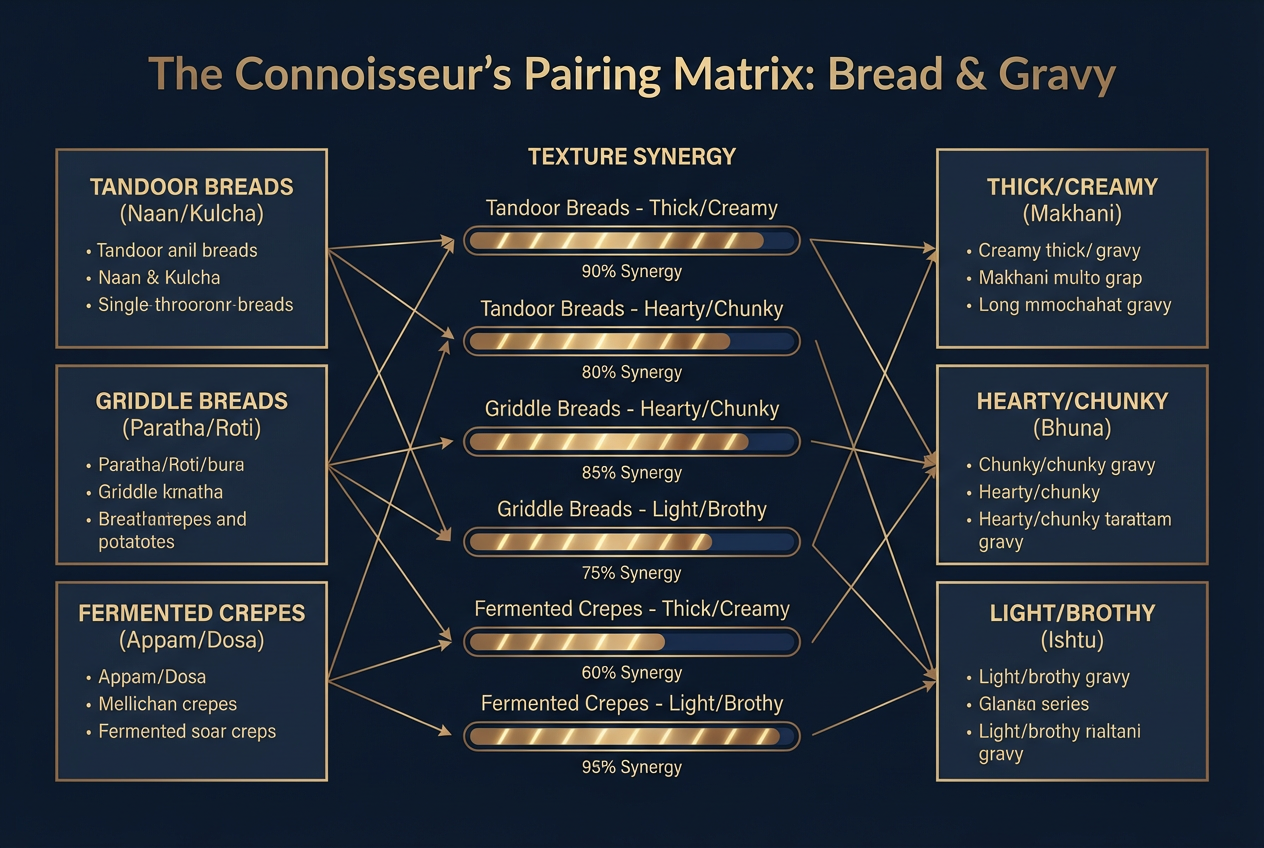 Stop settling for generic sides. Use our Bread-to-Curry Matrix to ensure every bite features the scientifically perfect balance of texture, soak, and flavor profile.
Building Your Personal Indian Food Archive
BLUF: Document each regional Indian meal by noting state of origin, dominant spice profile, bread pairing, and heat level - creating a searchable personal library you can reference for future dining decisions.
Most people's Indian food memories blur together into a vague recollection of "that really good curry I had somewhere." That's a shame, because the details are what make Indian cuisine so fascinating.
Here's a simple system for logging your Indian food experiences:
The Regional Tag
Every dish should get tagged with its region of origin:
- Punjab
- Kashmir
- Bengal
- Kerala
- Tamil Nadu (Chettinad)
- Rajasthan
- Gujarat
- Goa
This single tag will help you identify patterns. Maybe you discover you're consistently drawn to coastal cuisines, or that you prefer the dairy-rich preparations of the North.
The Dominant Spice Profile
Note the primary flavors you're tasting:
- Coconut and curry leaf (South Indian)
- Mustard and panch phoron (Bengali)
- Cardamom and saffron (Kashmiri)
- Cumin and coriander (North Indian)
- Tamarind and chili (Chettinad)
This creates a flavor map you can reference. When you're craving that specific "tangy, coconut-forward" profile, you'll know to order from South Indian or Goan menus.
The Bread Pairing
Note which bread worked best with the dish. This isn't trivial - the right bread transforms a meal. Record:
- What bread was recommended
- What bread you actually chose
- Whether the pairing worked (or what would have been better)
Over time, you'll develop an intuitive sense for pairings. A rich, creamy korma needs the structural integrity of naan. A Bengali fish curry wants the neutral canvas of steamed rice. A dry Rajasthani preparation calls for the richness of ghee-laden paratha.
The Heat Level (Your Personal Scale)
Indian heat is complex. It's not just Scoville units - it's the type of chili, the cooking method, the balancing ingredients. Create your own scale:
- Mild (aromatic but no real heat)
- Medium (gentle warmth that builds)
- Hot (proper sweat-inducing heat)
- Incendiary (approaching painful)
Note both the intensity and the character of the heat. Kashmiri chilies provide color with minimal burn. Bird's eye chilies deliver sharp, immediate heat. Guntur chilies create a slow-building, lingering fire.
The Technical Details
For dishes that really impress you, note:
- Visible whole spices (what you can see and identify)
- Oil type (if you can determine it)
- Cooking vessel (if served in traditional cookware)
- Texture of the sauce (thin and brothy vs. thick and clinging)
- Whether you could see oil separation
These details will help you identify truly excellent regional cooking versus generic interpretations.
The Context
Where did you eat this? Was it:
- A specialist regional restaurant
- A generic "Indian" restaurant
- A home-cooked meal
- A street food vendor
- A high-end tasting menu
Context affects your expectations and helps you calibrate your personal rating system. A home-cooked Bengali machher jhol should be evaluated differently than a fine-dining interpretation.
If you're serious about building this archive, learning how to rate dishes systematically will help you create consistent, useful records you can actually search and reference years later.
The goal isn't to become a professional critic. It's to build a personal reference library that helps you make better dining decisions. When you're traveling to a new city and searching for Indian food, you'll be able to say "I'm looking for Tamil Nadu-style Chettinad cuisine with proper whole spice integration" instead of just "good Indian food."
That specificity changes everything.
Frequently Asked Questions
What is the difference between North and South Indian food?
North Indian cuisine is characterized by wheat-based breads (naan, roti), dairy-heavy gravies (cream, yogurt, paneer), tandoor cooking methods, and Persian-influenced Mughlai preparations. South Indian cuisine centers on rice, coconut (milk and oil), fermented batters (dosa, idli), tamarind for sourness, and significantly higher use of curry leaves. The climate difference matters too - Northern dishes are richer to provide energy in colder regions, while Southern cuisine is lighter and coconut-based, suited to tropical heat. The spice profiles differ dramatically: North Indian cooking relies heavily on garam masala and cream, while South Indian dishes use mustard seeds, curry leaves, and coconut.
How do I know if an Indian restaurant is authentic?
Look for regional specialization rather than pan-Indian menus - restaurants that focus exclusively on Bengali, Punjabi, or Chettinad cuisine tend to be more authentic. Check for visible technical markers: whole spices floating in curries, oil separation on the surface, regional-appropriate bread pairings, and cooking in traditional vessels. Ask what type of oil they use for different dishes (mustard oil for Bengali, coconut oil for South Indian). Authentic kitchens will be able to recommend specific bread pairings for each curry based on texture. If the menu features dishes from Kashmir to Kerala without regional distinction, or if servers can't explain regional differences, you're likely in a generic kitchen designed for Western tastes.
What are the essential spices for Indian cooking at home?
Start with whole spices that you toast and grind yourself: cumin seeds, coriander seeds, cardamom pods (green and black), cinnamon sticks, cloves, and black peppercorns. Add dried red chilies (Kashmiri for color, Guntur for heat), mustard seeds (for South Indian tempering), and fennel seeds. For powdered spices, stock turmeric, chili powder, and garam masala (though making your own garam masala is superior). Don't forget fresh aromatics: curry leaves (freeze them if you can't get fresh), ginger, garlic, and green chilies. Specialty ingredients like asafoetida (hing), dried fenugreek leaves (kasuri methi), and tamarind paste will expand your range. One often-overlooked essential: high-quality ghee, which provides that authentic nutty richness impossible to replicate with vegetable oil.
Why does Indian food from restaurants taste different from homemade?
Restaurant cooking uses significantly more fat (ghee, oil, butter) and cream than home cooking, creating richer, heavier dishes. Commercial kitchens often pre-make base gravies (onion-tomato masalas) and add proteins to order, while home cooking builds each dish from scratch. The tandoor makes a massive difference - home ovens can't replicate that 900°F smoky char on naans and kebabs. Restaurants also use more salt and often MSG or commercial spice blends for consistency. The biggest difference is time: home-cooked dal might simmer for 30 minutes, while a dhaba's dal has been cooking (and developing flavor) for hours. Finally, home cooking tends to be healthier and more subtle, focusing on balanced nutrition rather than the intense flavors designed to impress in a single restaurant visit.
What is the proper way to eat Indian food?
Traditionally, Indian food is eaten with the right hand, using bread (naan, roti) or rice as a utensil to scoop curries and vegetables. Tear off a piece of bread, use it to pinch a portion of curry or vegetable, and fold it into a small package before eating. With rice-based meals (South Indian thalis), mix curry into the rice with your fingers, then gather and compress it into a small ball. The mixing is important - it combines flavors and textures intentionally. Pace yourself through a thali, starting with lighter items (rice, dal) before moving to heavier curries. Don't worry about whole spices (cardamom pods, bay leaves, cinnamon) - move them to the side of your plate rather than eating them. If using utensils, a spoon and fork work better than a knife for most Indian dishes.
How can I reduce the heat level in Indian dishes?
Dairy is your most effective tool - yogurt, cream, or raita (yogurt with cucumber) directly neutralizes capsaicin, the compound responsible for chili heat. Adding coconut milk works similarly in South Indian dishes. Sweetness helps balance heat, so a small amount of sugar or honey can tame overly spicy curries. Acid (lemon juice, tamarind) doesn't reduce heat but provides contrast that makes it more manageable. If cooking at home, reduce the quantity of dried chilies and chili powder, but don't eliminate them entirely - you'll lose important flavor complexity. For restaurant meals, ask for dishes to be prepared "mild" or "medium" rather than ordering from the "spicy" section. And remember: rice and bread are heat buffers - they dilute the capsaicin concentration with each bite. Water actually spreads capsaicin around your mouth, making heat worse.
What is the best way to order at an Indian restaurant for the first time?
Start by asking about the restaurant's regional specialty - if they focus on Punjab, Kerala, or Bengal, order dishes from that region. Request a thali if available; it provides a complete meal with small portions of multiple dishes, helping you identify what you enjoy. Ask the server which bread pairs with each curry you order (naan vs. roti vs. appam). Order one familiar dish alongside one unfamiliar regional specialty - this gives you a comfort anchor while expanding your range. Request medium spice level initially; you can always add heat with provided chilies or chili oil. If you're interested in tracking your experience for future reference, consider using a dish rating system to document what worked and what didn't. Don't be afraid to ask questions about preparation methods, ingredients, or cooking techniques - knowledgeable servers appreciate engaged customers.
Why is bread pairing important in Indian cuisine?
Indian bread isn't just a vessel - it's an integral structural and flavor component designed to complement specific gravy textures and moisture levels. Naan's leavened, slightly chewy texture provides the structural strength needed to scoop rich, creamy North Indian gravies without falling apart. Roti's thin, pliable texture works better with drier preparations where you need flexibility to pinch and fold. Appam's soft, spongy center is designed to absorb thin, coconut-based South Indian stews. Paratha's layered, flaky richness can stand alone or pair with yogurt-based dishes where the bread's ghee complements the dairy. Getting the pairing wrong isn't just aesthetic - a delicate appam will disintegrate in a heavy korma, while thick naan will overpower a subtle fish curry. Traditional Indian meals consider bread-to-curry ratio as carefully as wine pairing in Western fine dining.
The path from "ordering butter chicken" to mastering regional Indian cuisine isn't about memorizing dishes - it's about building a mental framework for understanding how geography, history, and technique create flavor. Start with one region that interests you. Order three different dishes from that region at three different restaurants. Note the differences. Build your personal archive.
Six months from now, you'll walk into an Indian restaurant and know exactly what you want: "The Chettinad pepper chicken, please, and could I get that with appam instead of rice?" The server will pause, smile slightly, and you'll know you've crossed over. You're not a tourist in Indian cuisine anymore. You're starting to speak the language.