
Mousse au chocolat: Your Guide to a Fluffy, Rich Dessert at Home
Harry the matcha king
Harry is our resident matcha obsessive. He’s tasted hundreds of bowls and tracks every cup in Savor.
What is it about a truly great mousse au chocolat that stays with you? It’s that perfect, almost magical contrast—an intensely deep chocolate flavor delivered...
What is it about a truly great mousse au chocolat that stays with you? It’s that perfect, almost magical contrast—an intensely deep chocolate flavor delivered in a texture as light as air. Forget those dense, heavy puddings. We’re aiming for a flawless, cloud-like mousse you’ll be proud to make and even more proud to share.
This guide is your roadmap to mastering a dessert that’s absolutely worth remembering—a culinary win you'll want to log in your Savor app to track your progress from that first attempt to your final, perfect batch.
Why This Dessert Is Worth Remembering
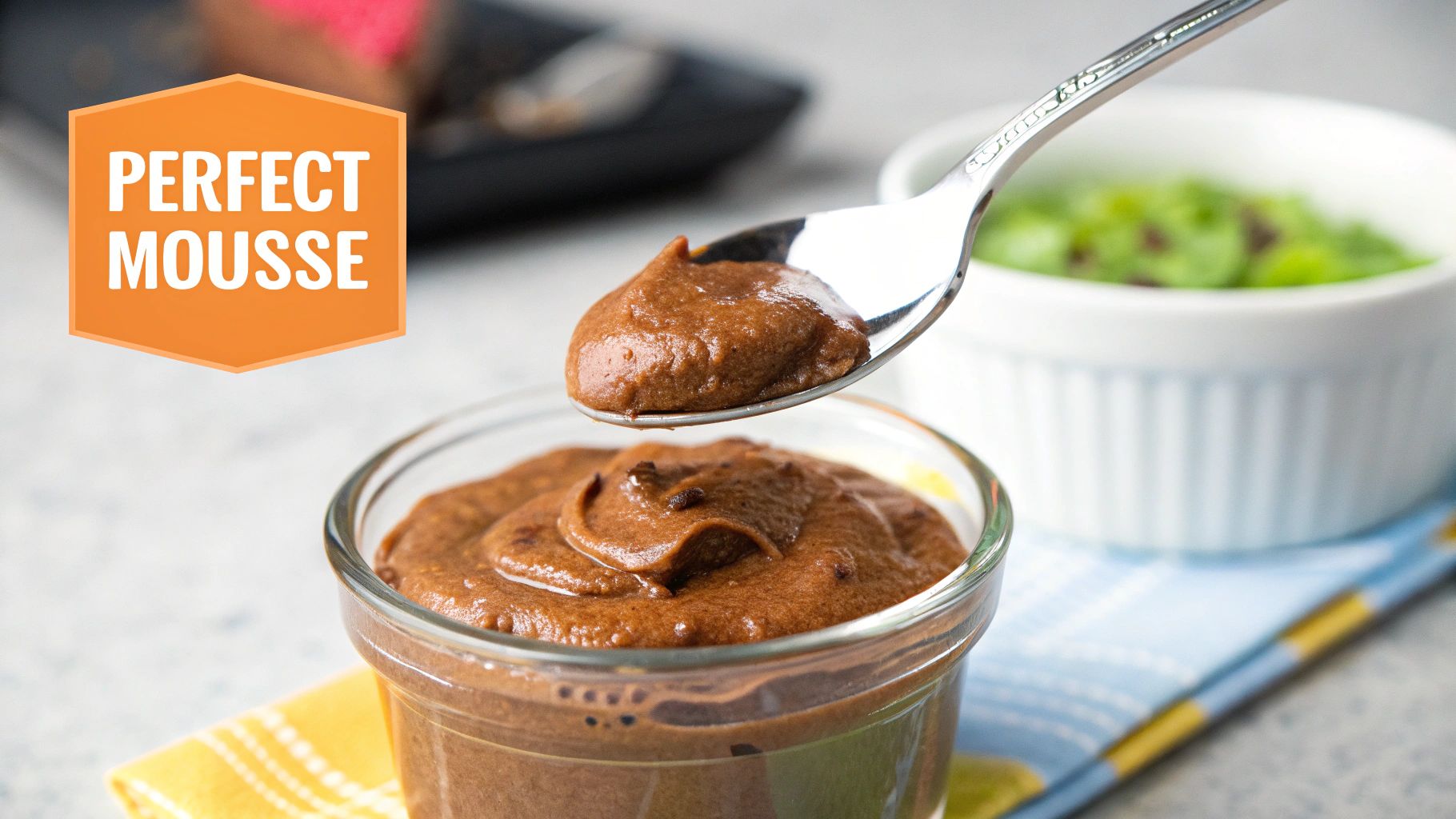
The silky dream of a chocolate mousse has deep roots in French culinary history. While it was first documented in the early 20th century, its popularity exploded after World War II when chocolate finally became widely available again.
Its appeal is undeniable. In the United States alone, an estimated 38,924 restaurants feature some form of chocolate mousse on their menus. This rich history and global presence make it the perfect dish for a food explorer to document. You can learn more about the global appeal of chocolate treats and check out chocolate market trends and distributions. For travelers and food lovers, logging the perfect mousse in a Parisian bistro versus a modern twist in NYC becomes an invaluable food memory.
What Makes a Mousse Memorable?
The best dining experiences are often tied to specific dishes that get every single detail right. When you start to track your food journey, you notice the small things that elevate a good dish to a great one. For mousse au chocolat, these are the elements that create a lasting impression:
- Texture: Was it airy and cloud-like, or was it dense and pudding-like? A truly memorable mousse has a delicate, almost ethereal feel.
- Flavor Intensity: Did the chocolate flavor really shine? The best versions use high-quality dark chocolate—typically 50-70% cacao—for a deep, complex taste that lingers.
- Balance: How well were the sweetness and richness managed? A hint of bitterness from the chocolate should cut through the richness of the eggs.
Capturing these details helps you build a personal database of what you love, turning a fleeting taste into a permanent, searchable memory. It’s how you go from just eating to truly understanding your own palate.
The Few, The Proud: Choosing Your Mousse Ingredients
An unforgettable mousse au chocolat isn't built from a long, complicated shopping list. Its magic comes from just a handful of high-quality ingredients. Choosing the best you can find is the single most important step you'll take.
The final result is a direct reflection of what you put into it. There are no shortcuts and no strong flavors to hide behind; the purity of the ingredients is what makes this classic so good.
The Heart of the Mousse: The Chocolate
The biggest decision you'll make is the chocolate. It's the star, and its quality will define the entire dessert. Step away from the baking chips—they're loaded with stabilizers that keep them from melting smoothly, which is a one-way ticket to a grainy, disappointing texture.
Instead, reach for high-quality chocolate bars or callets (the little discs pros use). You’re looking for a dark chocolate with a cacao content somewhere between 60% and 70%. This is the sweet spot. It delivers a deep, complex flavor that’s rich and intense without being punishingly bitter or overly sweet. If you want to go down the rabbit hole of exceptional chocolate, exploring a guide to the best chocolate in the world is a great place to start your hunt.
The Secret Structure: Fresh Eggs
Classic mousse au chocolat gets its incredible structure and lightness from eggs alone—no cream, no gelatin. The yolks and whites play two very different, but equally critical, roles.
- Egg Yolks: These are your richness and flavor powerhouse. They also act as an emulsifier, helping the melted chocolate form a smooth, stable base. This is where that velvety, decadent mouthfeel comes from.
- Egg Whites: When whipped into a meringue, these are responsible for the mousse's signature airy, cloud-like texture. All those tiny air bubbles you beat into the whites are what transform a dense chocolate mixture into something ethereal.
For the best results, your eggs need to be incredibly fresh and, crucially, at room temperature. This isn't just a friendly suggestion; it's non-negotiable. Room-temperature egg whites whip up to a much greater volume than cold ones, and that volume is everything.
The Supporting Cast: Sugar and Salt
While chocolate and eggs are the main event, a couple of supporting players are needed to round out the flavor profile. The goal here is to enhance, not overpower. A small amount of granulated sugar does two things: it helps stabilize the egg whites as they whip, and it adds just enough sweetness to balance the bitterness of the dark chocolate.
Finally, a tiny pinch of salt is the secret weapon. Salt doesn't make the mousse salty. It's a flavor amplifier, taming any harsh bitterness and making those deep chocolate notes absolutely sing. It’s a tiny addition that makes a huge difference.
Achieving a Flawless Mousse Texture
Technique is everything when it comes to the iconic, airy texture of a perfect mousse au chocolat. This isn't about complex culinary acrobatics, though. It's about patience and understanding what each simple step accomplishes. We'll walk through the process together, focusing on the actions that build that unforgettable, cloud-like structure.
This visual guide breaks down the simple, yet powerful, combination of ingredients that form the very foundation of our mousse.
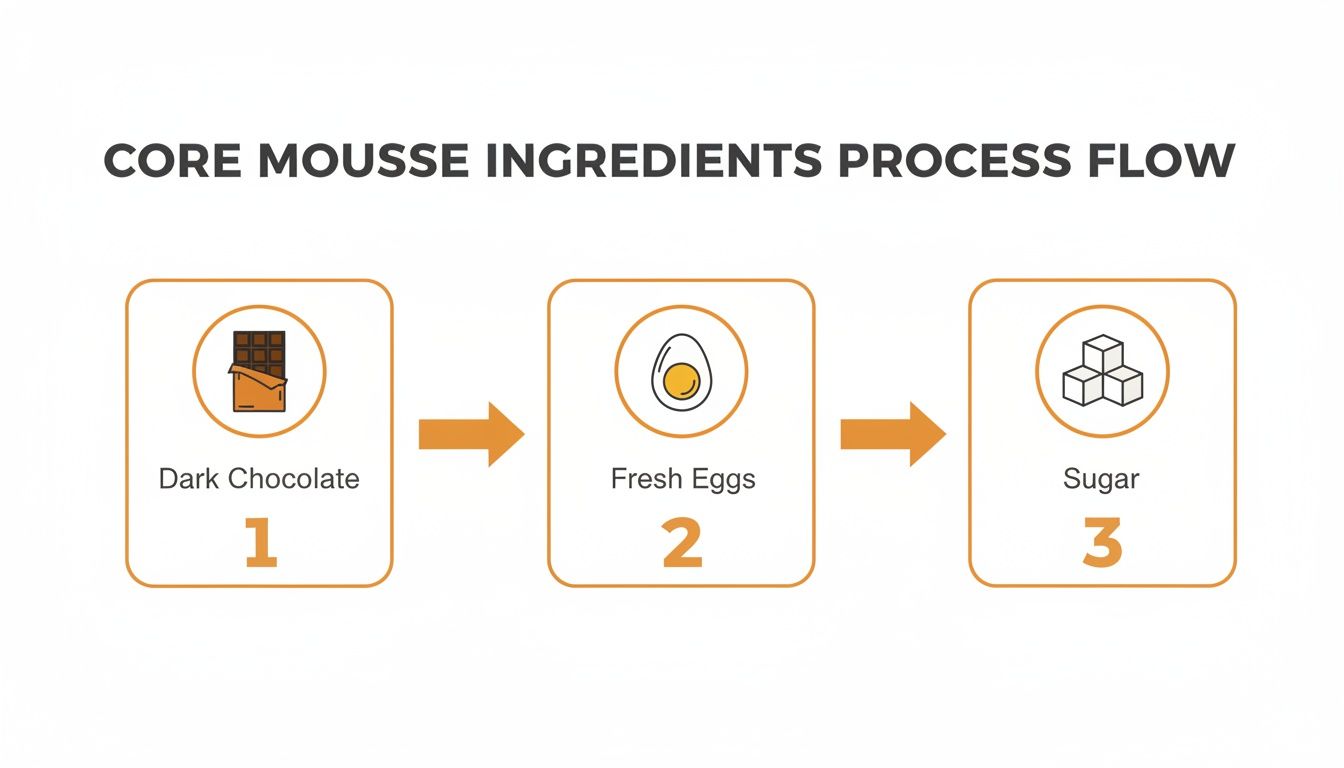
Each element plays a critical role, transforming from basic raw materials into a sophisticated dessert through careful, deliberate technique.
Creating the Chocolate Base
The journey begins with melting the chocolate. Our goal is a smooth, glossy, and completely liquid base without a hint of graininess. The biggest enemy here is direct, harsh heat, which can cause the chocolate to "seize"—turning it into a stiff, clumpy mess almost instantly.
To avoid this disaster, we use a bain-marie, which is just a fancy term for a simple double boiler. All you need is a heatproof bowl set over a saucepan of gently simmering water. The key is making sure the bottom of the bowl doesn't actually touch the water; you want the gentle steam to do all the work.
Once the chocolate is melted and perfectly smooth, take it off the heat and let it cool slightly. It should feel warm to the touch, not hot. Now, it's time to add the egg yolks one by one, whisking vigorously after each addition. This step enriches the base and acts as an emulsifier, creating a velvety foundation for your mousse.
The Art of Whipping Egg Whites
This is where the real magic happens. The air you incorporate into the egg whites is what gives the mousse its signature lift and ethereal texture. You absolutely must start with impeccably clean and dry equipment, as even the slightest trace of fat or grease can prevent the whites from reaching their full, glorious volume.
Begin whipping the room-temperature egg whites on a medium speed. To achieve that signature light and airy consistency, having the right equipment is a game-changer. A reliable stand mixer, like the KitchenAid Artisan Stand Mixer, is an essential tool for whipping egg whites and cream to perfection. Once they become foamy and opaque, gradually add the sugar. Continue whipping until you reach stiff peaks. This means when you lift the whisk, the peak that forms should stand straight up, without collapsing back into the bowl.
The Gentle Art of Folding
You've worked hard to create two very different components: a dense, rich chocolate base and a light-as-air meringue. The final, most delicate step is combining them without destroying all that volume you just built. This is not stirring; it is folding.
Start by "sacrificing" about a third of your whipped egg whites. Go ahead and stir this first portion right into the chocolate base to lighten it up. This makes the chocolate mixture more receptive to the rest of the whites, so you won't have to work as hard (and risk deflating everything) to combine them.
Now, add the remaining egg whites on top of the lightened chocolate base. Using a large spatula, cut down through the center of the bowl to the bottom, then sweep up along the side, gently turning the mixture over on itself. Rotate the bowl a quarter turn and repeat. Continue this gentle motion just until no white streaks remain. Patience is your best friend here; stop as soon as it's combined. Mastering these foundational techniques takes practice. For those who want to deepen their skills, exploring some of the best cooking classes online can be a fantastic way to learn from experts.
Mousse au Chocolat Key Stages and Visual Cues
Navigating the mousse-making process is much easier when you know exactly what to look for at each stage. This quick-reference guide breaks down the critical steps and their corresponding visual cues.
| Stage | What to Do | What to Look For |
|---|---|---|
| Melting Chocolate | Melt chopped chocolate in a bain-marie over simmering water. | The chocolate should be completely smooth, glossy, and liquid, with no lumps or graininess. |
| Adding Yolks | Whisk egg yolks into the slightly cooled chocolate base one at a time. | The mixture will thicken slightly and become even glossier, resembling a rich, velvety sauce. |
| Whipping Whites | Beat egg whites until foamy, then gradually add sugar. | The whites will form stiff, upright peaks that hold their shape when the whisk is lifted. |
| Folding | Gently combine the whipped whites into the chocolate base in two stages. | The final mixture should be uniform in color, light, airy, and full of tiny bubbles. |
The final step is to chill the mousse for at least four hours, allowing it to set properly and the flavors to meld into something truly special.
Solving Common Mousse au Chocolat Problems
Even with just a few ingredients, mousse au chocolat can be a finicky thing. Its simplicity is deceptive—the technique is everything. One small misstep can mean the difference between a cloud of chocolate and a grainy, dense pudding.The good news is that most of these problems are completely fixable. Don't think of a failed mousse as a disaster; see it as a valuable lesson. Each batch teaches you something new. Documenting these moments is key. A quick note in your food diary— "Mousse was grainy, chocolate was definitely too hot"—is the kind of data that makes your next attempt flawless.
Fixing Grainy or Seized Mousse
A gritty, grainy texture is the most common complaint, and it almost always points to one culprit: seized chocolate. This happens when your beautifully melted chocolate gets a sudden temperature shock, usually from a tiny stray drop of water or cold egg yolk. It instantly tightens into a stiff, lumpy mess.
Your first instinct might be to toss it, but don't. You can bring it back from the brink. Get the bowl off the heat and add one tablespoon of very hot water or strong coffee. Now, whisk like you mean it. It’s going to look much worse before it gets better, but trust the process. The hot liquid forces the cocoa solids and cocoa butter to re-emulsify. Keep whisking, and within a minute, you should see it transform back into a smooth, glossy base.
Rescuing a Dense or Heavy Mousse
Did your mousse turn out more like a heavy pudding than a light, airy cloud? That’s a volume problem. It almost always comes down to two things: under-whipped egg whites or being too aggressive when you fold them in.
A classic mousse gets all its structure from the air you beat into those egg whites. If you only whip them to soft peaks, they just don't have the strength to hold up the heavy chocolate mixture and will collapse under the weight. Your target is stiff peaks. The other enemy of airiness is a heavy hand during the folding process. If you stir or mix instead of gently folding, you’re just knocking out all the air you worked so hard to incorporate. The moment you can’t see any more white streaks, stop.
Balancing Unbalanced Flavors
Sometimes the texture is spot-on, but the flavor is just… off. Maybe it’s cloyingly sweet, or maybe it’s so bitter it’s barely edible. This problem almost always tracks back to your choice of chocolate. Using a chocolate with a low cacao percentage (anything under 50%) or swapping in milk chocolate will give you a much sweeter mousse. On the other hand, going too dark (above 75%) without adjusting the sugar can be overpowering for most people.
For a reliably balanced and intensely flavorful mousse, stick with a high-quality dark chocolate in the 60-70% cacao range. This hits the sweet spot, providing a robust chocolate flavor with just enough natural sweetness.
Creative Twists and Serving Ideas
Once you've nailed the classic mousse au chocolat, the real fun begins. Think of that traditional recipe as your perfect blank canvas, ready for you to splash on flavors and textures that make it truly yours. This is where a timeless dessert becomes a personal signature.
From here, you can branch out into countless variations. Every new version is a discovery, a perfect opportunity to log in your food diary app and track how a small change—like a dash of espresso—completely shifts the final experience.
Flavor Infusions and Modern Variations
Infusing new flavors into your mousse is surprisingly simple. The trick is to add notes that enhance the chocolate, not steamroll it. Just a few thoughtful tweaks can produce dramatically different and exciting results.
- Espresso Mousse: Dissolve one teaspoon of high-quality instant espresso powder into the warm, melted chocolate. This won't make your mousse taste like a latte; instead, it deepens the chocolate flavor, lending it a robust, earthy complexity.
- White Chocolate Mousse: Swap the dark chocolate for an equal amount of high-quality white chocolate. Because it’s so much sweeter, you'll need to cut back the sugar significantly, or even omit it entirely. The result is a delicate, creamy mousse with beautiful vanilla notes.
- Dairy-Free Aquafaba Mousse: For a shockingly effective vegan version, replace the egg whites with aquafaba—the liquid from a can of chickpeas. Whip it with sugar just like egg whites until it forms stiff, glossy peaks. This modern technique creates an unbelievably light and stable mousse anyone can enjoy.
These variations tap into a broader shift in the dessert world. Chocolate mousse is riding a premium wave in a global market valued at USD 142.88 billion in 2024. For food lovers, this signals an exciting evolution of a classic, perfect for tracking new taste discoveries.
Sophisticated Serving Suggestions
How you present your mousse is just as important as how you make it. A thoughtful garnish or pairing elevates the whole experience. The best pairings provide contrast. Think about balancing the rich, deep flavor of the chocolate with something bright, tart, salty, or textural.
Consider these elegant finishing touches:
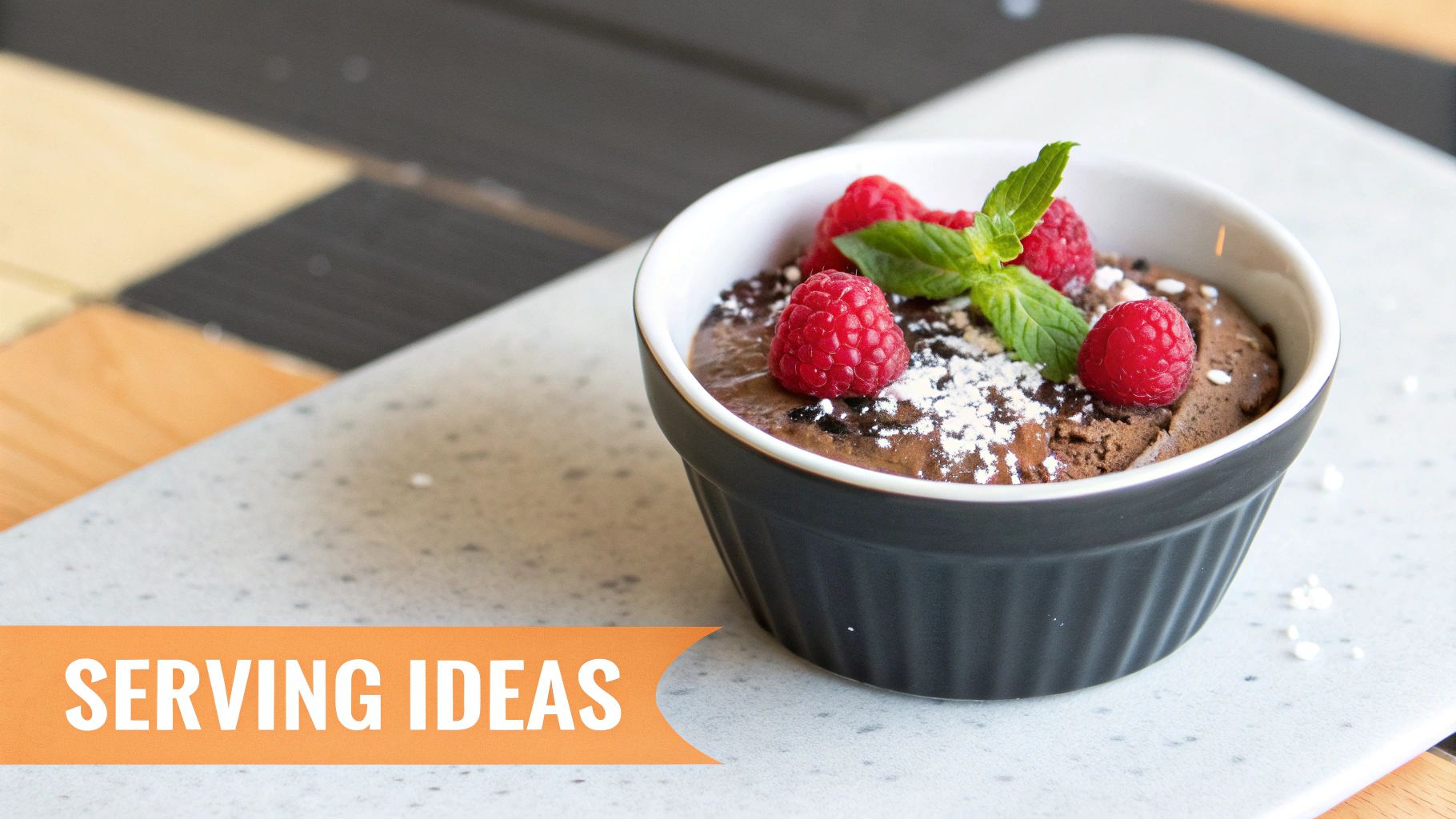
- Fruit and Cream: The bright acidity of fresh raspberries or a sour cherry compote cuts through the richness beautifully. A dollop of tangy crème fraîche or unsweetened whipped cream offers a creamy, cooling counterpoint.
- Salt and Oil: For a truly modern twist, sprinkle the top with flaky sea salt (like Maldon) and a delicate drizzle of high-quality extra virgin olive oil. The salt makes the chocolate taste sweeter, while the peppery notes of the oil add an unexpected savory depth.
- Textural Crunch: Add a little something to chew on with a sprinkle of toasted pistachios or hazelnuts, crunchy cocoa nibs, or delicate chocolate shavings. This simple addition makes every bite more interesting.
To take your experience to the next level, you might even explore a pro's guide to food pairing, which can unlock new ideas for complementing rich flavors.
Documenting Your Culinary Journey
Making the perfect mousse au chocolat is a process. It’s a journey of tiny adjustments and happy accidents. Keeping a record of those lessons is the fastest way to get from “good” to “unforgettable.” This is where you turn a simple dessert into a documented story of mastery.
When you log your latest creation in an app like Savor, try to go beyond a simple ‘good’ or ‘bad’ rating. The real magic is in the details.
Rate Your Mousse Like You Mean It
To really understand your results, you have to break down the experience. Think like a food critic, but for an audience of one: your future self.
- Texture: Was it right? Rate it on a scale from 1 (dense, almost pudding-like) to 10 (impossibly light, airy, and perfect).
- Chocolate Intensity: Did the specific chocolate you chose actually come through? Was it bold and complex or a little muted?
- Sweetness Balance: Jot down whether it was perfectly balanced or if it leaned too sweet or became overly bitter. A note on this can save your next batch.
This is also the perfect place to add specific notes. Did you use Valrhona this time instead of Callebaut? Did you try a slightly different folding technique? Write it down. A great photo can also capture the visual success of your dish; our guide on how to photograph food is full of tips for getting that perfect shot.
Once you’ve finally nailed it—the texture, the flavor, the balance—save that winning formula. Create a list called something like “Perfect Desserts” so you never, ever forget how you did it.
Your Mousse au Chocolat Questions, Answered
Getting the details right is what separates a pretty good mousse from a truly unforgettable one. Here are some quick answers to the most common queries.
Can I Use Milk Chocolate Instead of Dark Chocolate?
You absolutely can, but it’s not a one-for-one swap. Milk chocolate has a lot more sugar and milk solids, which changes the final flavor and texture. If you make a direct substitution, you'll likely end up with a mousse that's cloyingly sweet. To fix this, you’ll need to cut back on the added sugar in the recipe, or maybe even skip it altogether. Just be prepared for a slightly softer, less intensely chocolatey result.
Why Are Raw Eggs Used in This Recipe?
The classic French recipe for mousse au chocolat is all about the eggs—they're the magic ingredient that creates the signature texture. The rich yolks form a velvety base, while the whipped whites provide that iconic, cloud-like lift. There's no gelatin or heavy cream needed; it's pure, old-school technique. If you have concerns about using raw eggs, pasteurized eggs are a perfect substitute. They’ve been gently heat-treated to eliminate any risks and work beautifully here.
What Should I Do if My Chocolate Seizes?
First off, don't panic. Seized chocolate is what you get when a tiny drop of water hits melting chocolate or if it gets shocked by a sudden temperature change, turning it into a grainy, stiff mess. To save it, get the bowl off the heat immediately. Add one tablespoon of very hot water or strong black coffee and start whisking like you mean it. I know it looks like it's getting worse at first, but keep going. The mixture should eventually smooth out and become glossy again.
Ready to turn your culinary creations into a searchable, shareable food story? With Savor, you can document every dish, from your first attempt at mousse au chocolat to your final masterpiece. Track tastes, share discoveries.