
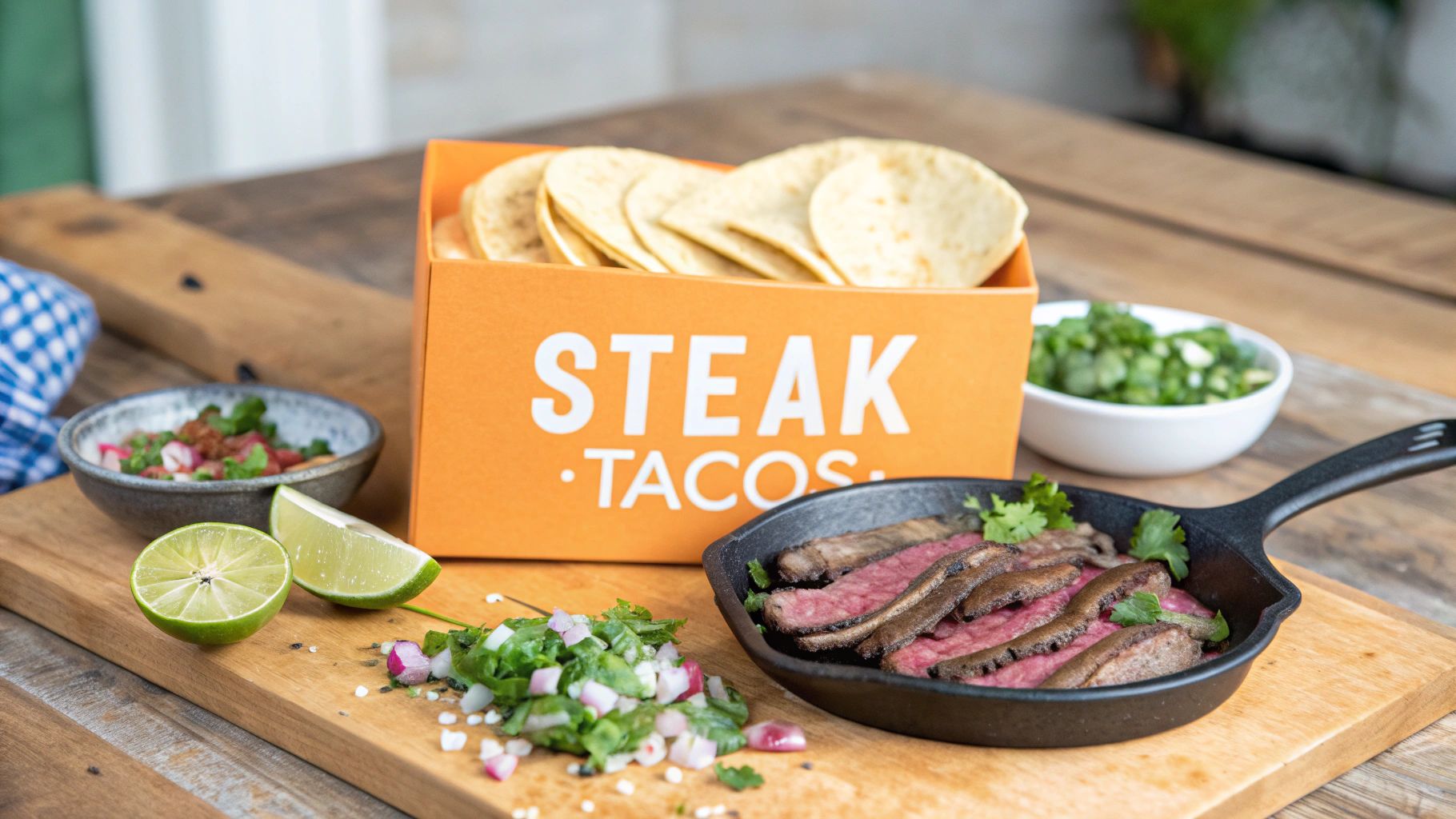
The Ultimate Guide to Authentic Tacos de Bistec at Home
Alex the juice queen
Alex hunts for the best juice bars and presses. She rates every sip and saves her favorites in Savor.
When you think of Mexican street food, what comes to mind? For many, it's the sizzle of meat hitting a hot griddle, the scent of warm corn tortillas, and a...
When you think of Mexican street food, what comes to mind? For many, it's the sizzle of meat hitting a hot griddle, the scent of warm corn tortillas, and a meal that’s ready in minutes. That, in a nutshell, is the magic of the taco de bistec.
The name itself tells you almost everything you need to know. 'Bistec' is simply thinly sliced beef steak, seasoned and seared over blistering heat, then piled onto a tortilla. It's a perfect example of food that is fast, deeply flavorful, and accessible to everyone.
What Makes Tacos de Bistec a Street Food Classic
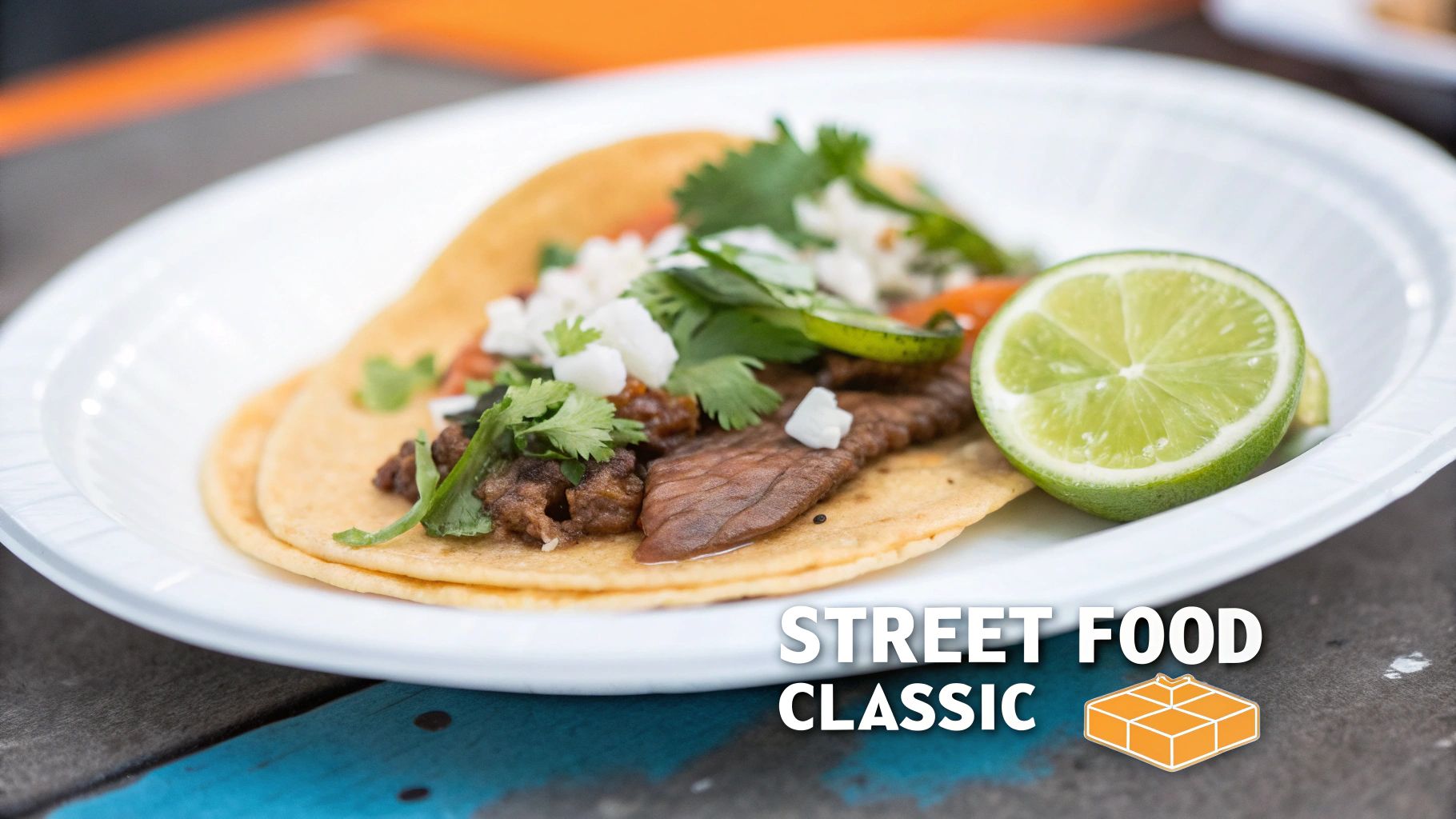
At its heart, the genius of the taco de bistec is its beautiful simplicity. This isn't slow-cooked barbacoa or heavily marinated carne asada. Bistec is all about speed. The beef, often a humble but flavorful cut like top sirloin or diezmillo (chuck roll), is sliced paper-thin so it cooks in just a few moments.
This rapid-fire cooking method locks in the beef's natural juices, guaranteeing a tender, savory bite every single time. It's this focus on immediacy that makes it the quintessential street food. A taquero can serve dozens of these tacos in minutes, feeding a hungry crowd with a fresh, hot meal without any real wait time. The beauty is in its minimalism.
The Essential Components
A perfect taco de bistec is a harmony of just a few core elements, and each one has to be right. This isn't a dish that hides behind complicated sauces; its greatness comes from the quality and preparation of these simple parts.
- The Bistec: The star of the show is, of course, the thinly sliced beef. It’s usually seasoned with nothing more than salt, pepper, and maybe a hint of garlic or a squeeze of lime. This lets the pure, unadulterated flavor of the beef shine.
- The Tortilla: Real-deal tacos de bistec are almost always served on small, warm corn tortillas. A great taquero will often double them up for sturdiness, quickly slicking them on the griddle with a bit of the rendered beef fat for an extra layer of flavor.
- The Classic Toppings: The traditional garnish is a fresh, sharp trio: finely chopped white onion, fresh cilantro, and a final, crucial squeeze of lime. This simple combination cuts right through the richness of the beef, adding a bright, acidic kick that pulls everything together.
This straightforward formula has made the taco de bistec a cultural and economic powerhouse. It represents one of the most significant beef consumption trends in Mexico, reflecting just how central this affordable cut is to the country's diet. Mexico actually ranks fifth globally in meat consumption, and bistec—being far more accessible than premium steaks—is a go-to for millions. This makes the dish both a genuine cultural experience and an incredibly democratic meal. You can find more insights on this from the USDA's report on Mexico's beef industry.
The genius of the taco de bistec is its purity. It's not trying to be anything other than what it is: perfectly cooked steak on a warm tortilla. It’s a testament to the idea that the best food is often the simplest.
The Rich History of a Taqueria Favorite
The story of the taco de bistec isn't just a recipe; it's the story of modern Mexico. While the corn tortilla is an ancient food, with roots stretching back millennia, the arrival of beef with the Spanish in the 16th century changed everything. That simple, powerful fusion—indigenous tradition meets new world ingredient—set the stage for what would become one of the world's most beloved street foods.
But the taco de bistec as we know it today was really forged in the fire of 20th-century urban growth. As industrialization pulled people from the countryside into booming hubs like Mexico City, a new need arose: fast, affordable, and deeply satisfying food for the working class. The taqueria was the answer. It wasn't just a food stall; it was a humming engine of urban life, a place where skilled taqueros could turn out incredible food in seconds.
The Taqueria as a Community Pillar
Taquerias quickly became the heartbeat of their neighborhoods. They were more than just a place to grab a quick bite—they were social anchors. These were the spots where factory workers refueled on their lunch breaks, where families gathered for a weeknight dinner, and where friends met up late into the night. The sizzle of the flat-top griddle, the plancha, and the rhythmic chop-chop-chop of the taquero's knife became the undeniable soundtrack of the city.
The taqueria is pure theater, a performance of flavor and speed. The way a taquero seasons, sears, and builds a perfect taco de bistec in a matter of seconds is a genuine craft, passed down through generations and embodying the true spirit of Mexican street food.
When you trace the origins of this simple taco, you’re also tracing the entrepreneurial spirit that has fueled the taqueria scene for decades, inspiring countless people to consider how to start a restaurant business themselves. It’s this very spirit that helped carry Mexican food across the globe.
From Local Favorite to Global Phenomenon
The honest, uncomplicated appeal of the taco de bistec is exactly what allowed it to travel so far beyond Mexico. Its journey mirrors the explosion of Mexican food's popularity worldwide. Today, the U.S. market for Latin food and beverages has hit a staggering $4.3 billion, with Mexican cuisine leading the charge. This isn't some passing trend; it's driven by a deep and sustained hunger for authentic, accessible dishes.
Just how deep? Americans now eat an incredible 4.5 billion tacos every single year. That number alone is a powerful testament to the taco’s universal appeal. You can dig into more of the data on the growth of the Mexican food industry to see just how massive this movement has become.
At the end of the day, its success comes down to the simple truth of its ingredients and preparation. A taco de bistec doesn't need fancy sauces or complicated techniques to be delicious. It’s a perfect formula: perfectly seasoned beef, a warm corn tortilla, and a sprinkle of fresh toppings. From its humble start on the streets of Mexico, it has become a true cultural ambassador—a vibrant, fast-paced, and deeply satisfying taste of real Mexican food culture.
Sourcing the Best Ingredients for Your Tacos
Great tacos are built from the ground up, and that foundation rests entirely on the quality of your ingredients. While tacos de bistec are beautifully simple, that simplicity means every single component has to be perfect. This isn't a dish that can hide behind a heavy sauce; its magic comes from nailing the essentials—the right beef, the perfect tortillas, and the freshest toppings.
Think of it as building with premium materials. You wouldn’t use flimsy wood to craft a sturdy table, and the same logic applies here. Sourcing well is the first and most critical step in recreating that authentic taqueria flavor in your own kitchen. Let's break down exactly what you should be looking for.
Finding the Perfect Cut of Beef
The soul of tacos de bistec is, of course, the steak. The word "bistec" itself just means steak, but for this specific job, not just any cut will do. You’re on the hunt for something that’s both packed with flavor and incredibly tender—and most importantly, something that can be sliced razor thin.
The ideal cut is a balancing act between flavor, texture, and price. While every taqueria has its secrets, a few common cuts consistently deliver fantastic results for the home cook.
- Top Sirloin (Sirloin): A fantastic all-around choice. Top sirloin has a great beefy flavor and stays tender when cooked quickly. It's relatively lean but has just enough marbling to keep it from drying out.
- Flank Steak (Falda): Known for its rich, intense beefiness, flank steak is a classic for a reason. Its long muscle fibers mean you must slice it thinly against the grain to guarantee tenderness.
- Diezmillo (Chuck Roll Steak): Walk into any Mexican butcher shop (carnicería), and you'll find diezmillo. It comes from the chuck and has excellent marbling, making it incredibly flavorful and forgiving to cook.
- Skirt Steak (Arrachera): Often the star of carne asada, skirt steak also works beautifully for bistec thanks to its robust flavor. Just like flank, it needs to be sliced very thin to avoid being chewy. For a deeper dive into how different cuts are used, our guide to Argentinian cuts of beef offers some fascinating context.
But here’s the most critical part: the thickness. You need the beef sliced paper-thin—we’re talking no thicker than 1/8 of an inch. This is non-negotiable. It ensures the meat cooks in mere seconds on a hot surface, getting a perfect sear without turning tough. Just ask your butcher to slice it for "bistec" or "milanesa"; they'll know exactly what you mean.
Choosing Your Bistec Cut
Picking the right beef can feel like a big decision, but it's hard to go wrong with these classics. This table breaks down what makes each cut special and where it shines.
| Beef Cut | Flavor Profile | Texture | Best For |
|---|---|---|---|
| Top Sirloin | Lean, classic beef flavor | Tender and juicy | A reliable, crowd-pleasing taco that’s easy to cook. |
| Flank Steak | Deeply beefy, robust | Firm with a distinct grain | Those who want an intense, steak-forward flavor. |
| Diezmillo | Rich, well-marbled | Very tender and forgiving | Achieving authentic taqueria flavor with minimal effort. |
| Skirt Steak | Bold, mineral-rich | Chewy in the best way | A powerful, flavorful taco that stands up to toppings. |
Ultimately, the best cut is the one you can find fresh and sliced properly. Don't be afraid to ask your butcher for their recommendation—they're the experts.
Marinades, Tortillas, and Toppings
With the perfect beef secured, it’s time to focus on the supporting cast. A simple marinade elevates the steak, the right tortilla provides the perfect vessel, and fresh toppings add the final flourish.
The marinade for tacos de bistec is meant to complement the beef, not overpower it. This is a quick flavor bath, not an overnight soak. A classic mix of lime juice for acidity, minced garlic for a pungent kick, a pinch of Mexican oregano, and a drizzle of oil is all you need. Let the meat sit for just 15-30 minutes before it hits the heat.
The goal of the marinade is to add a subtle layer of flavor that sings in harmony with the beef, not to mask it. It's the quiet background music that makes the star performer shine even brighter.
Next up, the tortillas. For true authenticity, high-quality corn tortillas are non-negotiable. Look for ones made with nixtamalized corn for the best flavor and texture. Always warm them on a dry skillet or comal until they're soft, pliable, and just starting to puff up. This step is essential—a cold, stiff tortilla can ruin an otherwise perfect taco.
Finally, prepare the classic toppings: finely chopped white onion and fresh cilantro. This simple duo provides a sharp, herbaceous crunch that cuts straight through the richness of the beef, creating a perfectly balanced bite every single time.
Cooking Tacos de Bistec Like a Taquero
Recreating the magic of a bustling taqueria in your own kitchen is more than possible. It’s all about embracing the philosophy of the taquero: high heat and lightning-fast execution. The secret isn't some complicated, hours-long recipe. It's about getting your pan screaming hot and cooking that paper-thin beef in mere seconds.
This is where the art comes in—the rhythm, the confidence, the mastery of heat. We'll walk you through two methods that bring that authentic experience home. Whether you're using a skillet on the stove or firing up the grill, the goal is the same: delivering that deeply satisfying, unmistakable flavor of true tacos de bistec.
Think of the process as three core pillars: the beef, the tortillas, and the toppings. Success is all about how they come together in harmony.

This simple flow shows that from the moment you source your ingredients, every step leads directly to that perfect, final taco.
Stovetop Searing: The Classic Taqueria Method
This is how you capture the soul of a taqueria's plancha (griddle) with a tool you almost certainly already own: a heavy cast-iron skillet or a classic comal. Cast iron is your best friend here. It gets incredibly hot and, more importantly, stays incredibly hot, which is non-negotiable for getting that instantaneous sear on the thin bistec.
That perfect, flavorful crust is the entire point. If you're looking to up your searing game, you can explore the best non-toxic pans for searing steak to find the right tool for your kitchen. The mission is to cook the beef so fast that it chars on the outside while staying unbelievably tender on the inside.
Step-by-Step Stovetop Recipe
- Get Your Station Ready. This is critical. Your marinated beef should be at room temperature for at least 15-30 minutes. Have your chopped onions, cilantro, limes, and warm tortillas ready to go and within arm's reach. The cooking happens way too fast to stop and chop something.
- Heat the Skillet. Place your cast-iron skillet or comal over high heat. Let it get brutally hot—a drop of water should sizzle and vanish in a heartbeat. Don't add any oil just yet.
- Sear the Bistec. Now, working in small batches to keep the pan hot, add a slick of high-smoke-point oil (like avocado or grapeseed). Immediately lay the beef down in a single layer. You want to hear an aggressive, roaring sizzle. Cook for just 30-60 seconds per side. That’s it.
- Chop and Finish. As each batch finishes, move the seared beef to a cutting board and give it a rough chop into small, taco-sized pieces. Once all the meat is cooked, throw it all back into the hot pan for a final 15-20 seconds, tossing it with all those delicious juices. This is a classic taquero move to reheat the meat and coat it in its own flavor.
- Assemble. Now. Pile that hot, chopped bistec into your warm, doubled-up corn tortillas. Garnish with a pinch of onion and cilantro, a hard squeeze of lime, and serve immediately. Don't wait.
Grilling for a Smoky Flavor
If you're chasing that extra layer of smoky char, the grill is your answer. The direct, open flame mimics the intensity of a plancha but adds a distinct smokiness you just can't replicate indoors. The process is just as quick, so having everything prepped and ready is just as important.
The trick to grilling meat this thin is a clean, well-oiled grate and smart heat management. You want one side of your grill blazing hot for the sear and a cooler zone to gently warm your tortillas without turning them into crackers.
Grilling bistec is a dance with fire. You want to embrace the char and smoke without overcooking the delicate meat. The perfect grilled taco de bistec has crisp, slightly blackened edges and a tender, juicy center.
Step-by-Step Grilling Recipe
- Prep the Grill and Your Station. Get your gas or charcoal grill ripping hot—aim for 450-500°F (230-260°C). Scrape the grates clean and wipe them down with an oil-soaked paper towel to prevent sticking. And just like before, have all your toppings and tortillas ready to go.
- Sear the Beef. Lay the marinated bistec directly over the hottest part of the grill. It’s so thin, it will cook in a flash. We’re talking about 45-60 seconds per side, just long enough to get beautiful grill marks and crispy edges.
- Warm the Tortillas. While the meat sears, toss your corn tortillas on the cooler side of the grill for about 20-30 seconds per side. You just want to make them soft and pliable.
- Chop and Serve. Get the beef off the grill immediately and onto a cutting board. Give it that quick, rough chop into small pieces. The residual heat will finish cooking it through perfectly.
- Build Your Tacos. Assemble everything right away. Pile that smoky, chopped beef into the warm tortillas and finish with your fresh toppings. That combination of char-grilled beef and soft corn is a total game-changer.
How to Serve and Pair Your Tacos
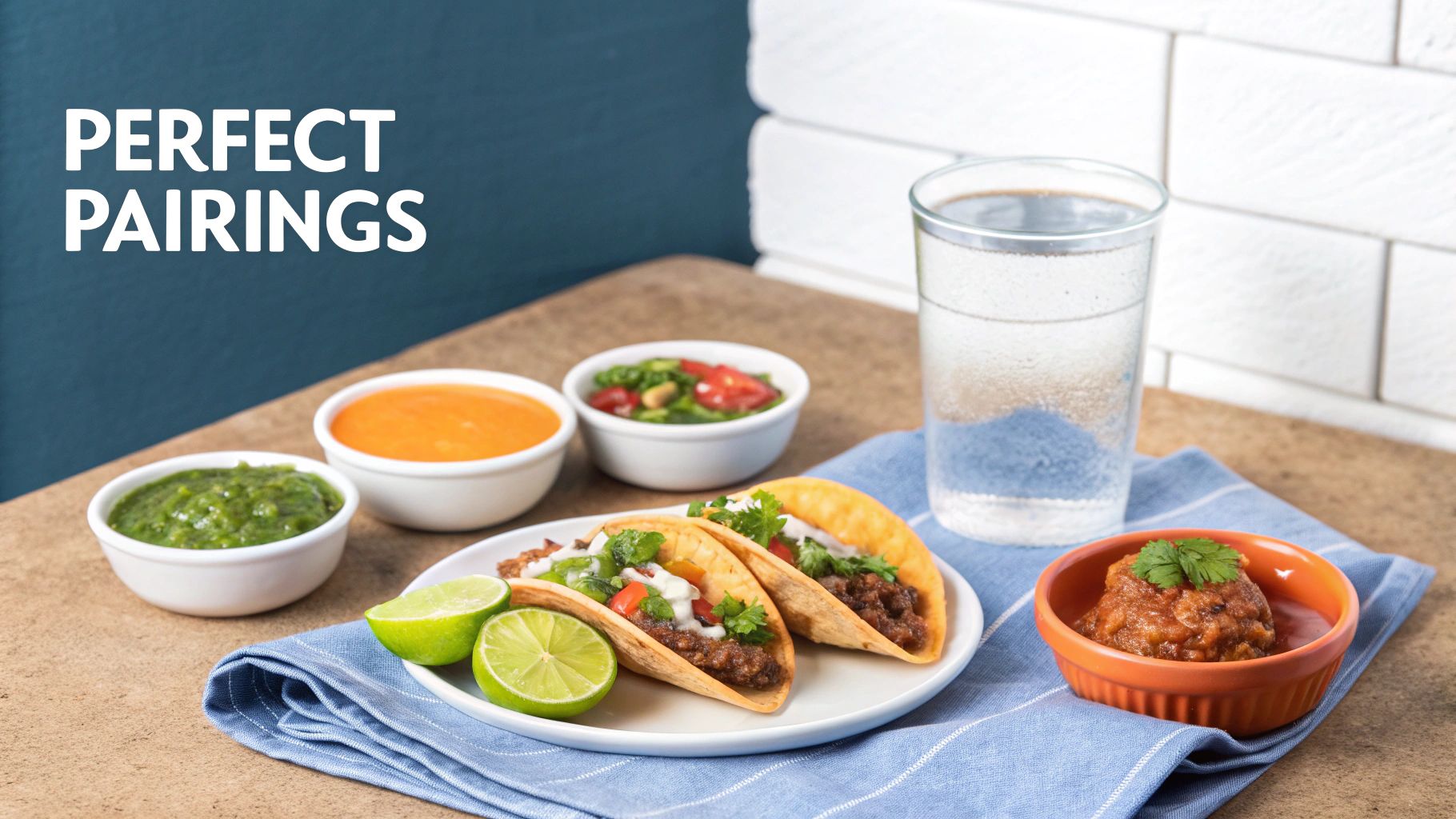
You’ve done the hard part. The bistec is perfectly seared, the tortillas are warm and pliable, and the aroma is filling your kitchen. Now for the fun part: turning a great meal into an unforgettable experience.
How you present your tacos de bistec is what elevates them from a simple weeknight dinner to a genuine taqueria-style event. It’s all about creating a vibe.
For a laid-back, social gathering, nothing beats a build-your-own taco bar. Just lay out the chopped bistec, warm tortillas, and all your toppings in separate bowls. This lets everyone craft their own perfect taco, sparking conversation and creating a lively, communal atmosphere that’s impossible not to love.
If you’re aiming for a more curated dinner, you can plate the tacos yourself. This approach ensures every single one is perfectly balanced and ready to devour the moment it hits the table, just like you’d get from a professional taquero.
Building a Complete Meal with Sides
To truly make your tacos a feast, you need the right supporting cast. Classic Mexican side dishes are designed to complement the rich, beefy flavor of the bistec without stealing the show. They add texture, depth, and turn a great taco into a complete meal.
- Frijoles Charros: Forget boring refried beans. These "cowboy beans" are a hearty, smoky stew of pinto beans simmered with bacon, chorizo, and jalapeños. They’re the perfect savory counterpoint to the straightforward goodness of the steak.
- Cebollitas Asadas: Grilled spring onions are a taqueria non-negotiable. Tossed with a bit of oil and salt and grilled until they’re soft and beautifully charred, their sweet, mellow flavor is unbelievably good alongside a juicy taco.
- Spicy Pickled Vegetables: You need something to cut through the richness. A mix of pickled carrots, jalapeños, and onions provides a bright, acidic crunch that wakes up your palate between bites.
The perfect side dish doesn’t compete with the main event; it enhances it. Think of these sides as the supporting cast that makes your star performer—the taco de bistec—shine even brighter.
Finding the Perfect Beverage Pairings
The right drink can tie the whole experience together, cleansing your palate and making the flavors of the beef and salsa pop. From traditional non-alcoholic options to classic cocktails, there’s a perfect match for every mood. And if you're thinking of adding a little something extra, our guide to the best cheese for Mexican food has you covered.
Classic Drink Pairings
- Aguas Frescas: These refreshing, fruit-infused waters are a cornerstone of any authentic Mexican meal. Horchata, a sweet and creamy rice milk drink with a hint of cinnamon, or a tart Jamaica (hibiscus tea) are fantastic choices that cool the palate.
- Mexican Lagers: A crisp, light-bodied beer like a Modelo Especial or Pacifico is a no-brainer. Its clean finish and bubbles slice right through the richness of the bistec without getting in the way of its flavor.
- Margaritas and Palomas: When it's cocktail time, you can’t go wrong with the classics. A well-made margarita with fresh lime juice echoes the citrus notes in the taco, while a grapefruit-forward Paloma offers a bright, slightly bitter contrast that’s incredibly refreshing.
Documenting Your Taco Discoveries with Savor
Every taco de bistec tells a story. Think about it—the sizzle of the beef in your own kitchen, that incredible hidden taqueria you found on a late-night walk. These are the moments that make eating special, and they're absolutely worth remembering. Savor is designed to be your personal vault for these food memories, helping you keep a record of every delicious detail.
Instead of letting these experiences fade into a pleasant but fuzzy memory, you can use Savor to build a living, searchable history of every taco you try. Documenting your homemade tacos de bistec isn't just about snapping a picture; it’s about creating a personal reference guide for your own cooking.
From Your Kitchen to the Streets
When you nail a batch of tacos de bistec at home, use Savor to log exactly what happened. Was the marinade perfect this time? Did the stovetop method give you a better sear than the grill? You can add private notes on what worked and what you’d change, turning every meal into another step toward perfecting your own signature recipe.
- Rate Your Recipe: Give your own creation an honest score. This is how you track improvements over time.
- Log Your Techniques: Note the specific cut of beef, how long you marinated it, and the cooking method you used.
- Plan for Next Time: Add a quick thought like, “Needs more lime juice,” or, “Try flank steak next time.”
This simple process turns you from a home cook into your own trusted critic. Over time, you build a reliable guide based entirely on your own palate. For more on turning your meals into meaningful memories, our guide on using a food journaling app has some great tips to get you started.
Building Your Personal Taco Map
The Savor tagline is "Track tastes, share discoveries," and this is where that idea really shines. As you explore different taquerias, you can build a personal map of the best tacos de bistec in your city or anywhere your travels take you. This isn't about relying on crowd-sourced reviews from strangers; it's about building a list you trust completely because you’re the one who curated it.
Savor empowers you to "Rate like a critic." This means judging the dish, not just the restaurant. Compare the bistec from one spot to another based on texture, seasoning, and overall flavor, creating your own side-by-side comparisons that help you define what makes a perfect taco for you.
The scale of taco consumption is just massive. In the United States alone, people eat around 4.5 billion tacos annually—that's roughly the weight of 120,000 elephants. With so many options out there, creating your own curated guide is more valuable than ever. Learn more about the gargantuan scale of taco consumption, and you'll see why a personal food diary is so useful.
By documenting your taco de bistec journey, you’re doing more than just eating. You’re creating a delicious, personal history, one bite at a time.
Got Questions About Your Tacos de Bistec?
Even with the simplest recipes, a few questions always pop up. That’s a good thing. Getting the little details right is what separates a decent home-cooked taco from a truly mind-blowing one. This is where we tackle the common queries that come up when you’re trying to nail authentic tacos de bistec in your own kitchen.
Think of this as your personal taquero support line. We’ll cover everything from smart ingredient swaps to fixing common cooking mistakes, all to help you build confidence and focus on the sheer joy of making incredible food.
Ingredient Substitutions and Sourcing
Let's start with the star of the show: the beef. A lot of people ask what to do if they can't find diezmillo or top sirloin already sliced paper-thin. No problem. Just buy a whole steak and ask your butcher to slice it for you. Or, if you want to do it yourself, pop the steak in the freezer for 20-30 minutes. That little bit of chill time firms it up just enough to make getting those super-thin slices with a sharp knife a whole lot easier.
Then there are the marinade questions. What if your pantry is missing a key player?
- Can I use regular oregano? You can, but it's a bit of a bully compared to its milder, citrusy Mexican cousin. Use about 25% less to keep its stronger, more pungent flavor from taking over the whole dish.
- What about bottled lime juice? Look, fresh is always going to give you that bright, clean acidity that makes a taco sing. But in a pinch, bottled juice will work. Just make sure it’s 100% pure lime juice with no sneaky added sugars.
- Is there a gluten-free option for tortillas? You're in luck. Traditional corn tortillas are naturally gluten-free, which is exactly why they're the classic choice. If you have a severe allergy, just double-check the package to make sure they’re made in a facility that avoids cross-contamination.
Cooking Techniques and Troubleshooting
Getting that perfect taqueria texture is all about the technique. The number one question from home cooks is, "Why did my bistec come out tough and chewy?" The culprit is almost always heat and timing. Your pan has to be screaming hot before the meat ever touches it. And once it's in, you're cooking it for no more than 60 seconds per side. Max.
Another classic mistake is overcrowding the pan. Tossing in too much meat at once drops the temperature, causing the beef to steam in its own juices instead of getting that beautiful, quick sear.
The most common error is treating bistec like a thick steak. You are not rendering fat or developing a deep crust over several minutes. The goal is a lightning-fast sear that cooks the meat through while keeping it tender.
Finally, people often wonder if they can prep things in advance to make dinner time less chaotic. The answer is a huge yes. You can chop your onion and cilantro hours ahead and keep them in an airtight container in the fridge. The beef can marinate for up to four hours, though honestly, 30 minutes is all it really needs to pick up the flavor. Doing this prep work makes that final, fast-paced cooking process feel totally under control.
Ready to chronicle every delicious taco de bistec you create and discover? With Savor, you can turn every meal into a lasting memory. Track your recipes, rate local taquerias, and build a personal guide to your favorite flavors.