
The Cookout Menu Bible: From Restaurant Hacks to Gourmet Hosting
Harry the matcha king
Harry is our resident matcha obsessive. He’s tasted hundreds of bowls and tracks every cup in Savor.
The Cookout Menu Bible: From Drive-Thru Hacks to Gourmet Hosting You know that feeling when you look at a menu with 40 milkshake flavors and wonder if you’re...
The Cookout Menu Bible: From Drive-Thru Hacks to Gourmet Hosting
You know that feeling when you look at a menu with 40 milkshake flavors and wonder if you’re ordering lunch or taking a pop quiz? Or when you’re hosting a cookout and realize you’re about to serve the same tired hot dogs and store-bought potato salad you’ve been making since college?
The term "cookout menu" exists in two distinct worlds. There’s the cult-favorite Cook Out restaurant chain, where North Carolina locals treat the menu like a sacred text, memorizing tray combinations and milkshake hacks with the devotion of sommelier. Then there’s the backyard cookout menu - that canvas of grilled proteins and sides that can either cement your reputation as a thoughtful host or mark you as someone who thinks ketchup is a vegetable.
This guide bridges both. We’ll decode the Cook Out restaurant menu like wine critics analyze a vintage, then show you how to build a cookout menu for hosting that moves beyond generic grocery store defaults into territory worth documenting.
Table of Contents
- The Cultural Legend of the Cook Out Tray
- The Anatomy of a Tray: Maximizing Value-to-Flavor Ratio
- The Milkshake Mixology Lab: 40+ Flavors Decoded
- Secret Menu Hacks You Won’t Find on the Board
- The Modern Urban Cookout Menu
- Building Your Protein Strategy
- Chef-Driven Sides That Actually Matter
- The Drink Program: Beyond Beer in a Cooler
- Documenting Your Food Memories
- Frequently Asked Questions
The Cultural Legend of the Cook Out Tray
The Cook Out Tray is a masterclass in value engineering disguised as fast food - a main, two sides, and a drink for under ten dollars, with 40+ milkshake flavors and enough side combinations to create your own personal algorithm.
Walk into any Cook Out location after midnight in North Carolina and you’ll see something remarkable: everyone from college students to shift workers treating their order like a chess opening. They’re not just hungry. They’re strategizing.
The restaurant launched in 1989 in Greensboro, and it’s spent the past three decades building a reputation that defies typical fast-food logic. No national advertising campaigns. No celebrity endorsements. Just word-of-mouth devotion to a menu structure so flexible it borders on overwhelming.
Here’s what makes it different: while most chains limit customization to protect speed and consistency, Cook Out embraced chaos. You can order a burger tray with quesadilla and chicken nuggets as your two sides. The menu doesn’t judge. It just delivers.
This flexibility created a secondary culture - the "Cook Out hack" community. People discovered that sides cost less than mains, so ordering a tray with a cheaper entree and premium sides became the insider move. Others found that certain milkshake combinations created flavors the menu never intended.
The tray system works because it respects a fundamental truth about eating: variety beats monotony. You don’t want just a burger. You want a burger, some fries, maybe a corn dog, and something cold to wash it down. The tray acknowledges this without forcing you into rigid combo categories.
For the serious food person, this presents an interesting challenge. How do you approach a menu this vast without defaulting to the safest, most boring choices? The answer requires treating the Cook Out menu like any other culinary landscape - with intention, curiosity, and a willingness to make mistakes.
The Anatomy of a Tray: Maximizing Value-to-Flavor Ratio
A strategically built tray balances protein quality, textural variety, and flavor contrast across three components - your main sets the foundation, your sides provide diversity, and your drink either complements or cleanses.
Let’s start with the structure. Every tray includes one main item, two sides, and one drink. The main options range from burgers and chicken to BBQ and hot dogs. The sides include everything from french fries to full quesadillas. The drink selection spans 40+ milkshake flavors, plus standard sodas and tea.
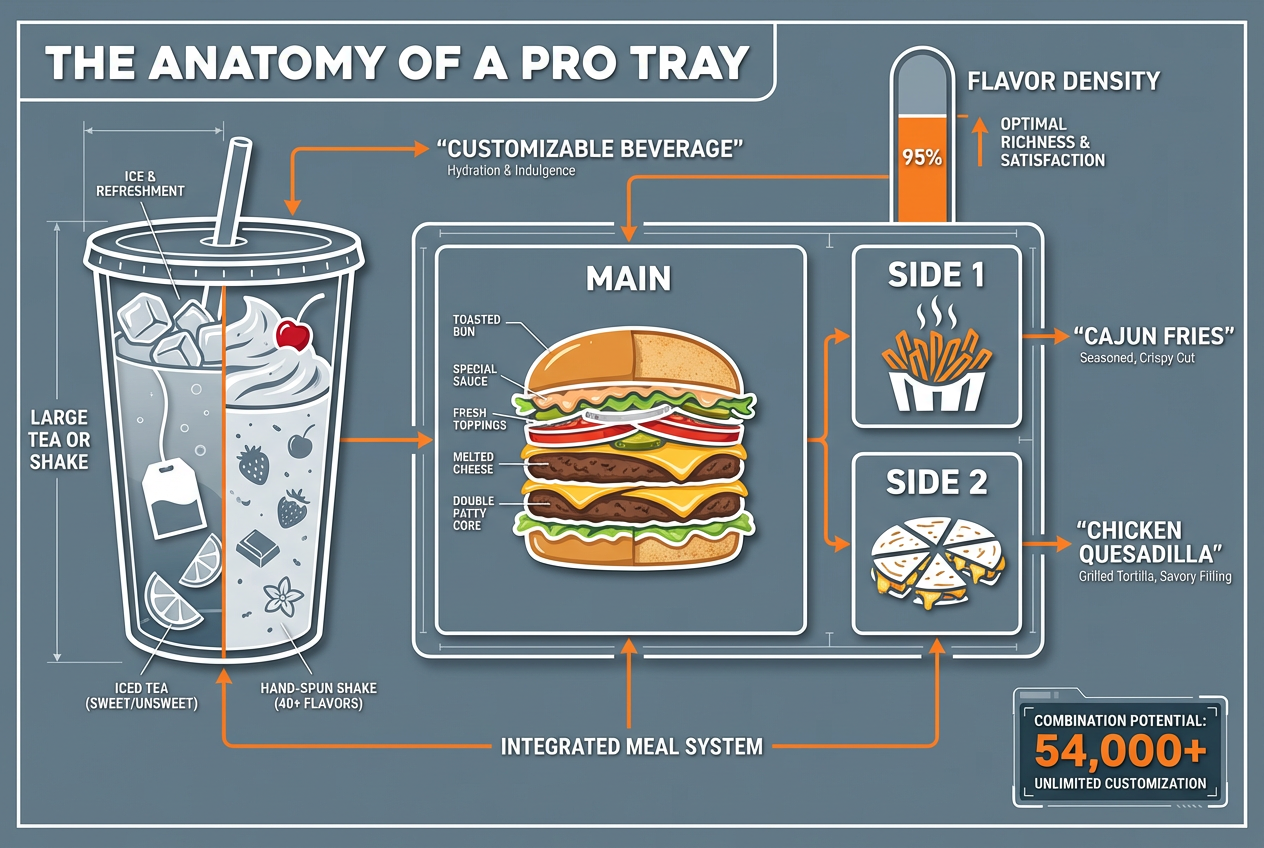 Navigating the complexity of the Cook Out Tray requires a strategic approach to maximize both volume and variety for the serious foodie.
The rookie mistake is treating sides like afterthoughts. You order a burger, grab fries and hushpuppies, and call it done. But here’s the thing: Cook Out’s side menu includes items that would be entrees elsewhere. A quesadilla. Chicken nuggets. A full corn dog.
The Professional Order: Top 5 Tray Combinations
| Tray Name | Main | Side 1 | Side 2 | Why It Works |
|---|---|---|---|---|
| The Texture Study | Big Double Burger | Onion Rings | Hushpuppies | Three distinct frying techniques, each showcasing different ratios of crust to interior |
| The Contrast Play | Spicy Chicken Sandwich | Cheese Quesadilla | Slaw | Heat, richness, and acidity in one tray - each element resets your palate for the next |
| The Value Maximizer | Chicken Strip | Chicken Nuggets | Corn Dog | Maximum protein per dollar, ideal for comparing three different breading applications |
| The Vegetable Flex | Cook Out Style Burger | Cajun Fries | Side Salad | Still indulgent but includes actual produce; the Cajun seasoning carries through the meal |
| The Midnight Scholar | BBQ Plate | Cheese Bites | Hushpuppies | Pork, dairy, and fried cornmeal - the holy trinity of late-night sustenance |
The key principle here is textural diversity. If you order a burger with fries and onion rings, you get three fried elements with similar mouthfeel. Swap one for a quesadilla or slaw and suddenly each bite offers something different.
Temperature matters too. Hot, crispy fries next to cold, creamy slaw creates contrast your palate notices. It’s the same reason a proper meal service alternates warm and cold courses.
Consider the flavor arc across the tray. Start with something bold - a spicy chicken sandwich. Follow with something rich and mild - a cheese quesadilla. Finish with something bright and acidic - slaw. You’ve created a narrative structure using fast food.
One advanced move: order a tray with a lighter main (grilled chicken) and use your two side slots for items you actually want to evaluate - like comparing their hushpuppy frying technique against their onion ring batter. You’re essentially using the tray format to run controlled experiments.
If you’re serious about tracking your food experiences, this is exactly the kind of meal worth documenting. Not because it’s fancy, but because it’s complex enough to have opinions about. Building a personal food database means treating a late-night Cook Out run with the same attention you’d give a tasting menu.
The Milkshake Mixology Lab: 40+ Flavors Decoded
Cook Out’s milkshake menu is less a list and more a mixing board - 40+ base flavors that combine into hundreds of potential variations, organized by texture complexity and flavor boldness to help you build custom combinations worth remembering.
Here’s where Cook Out separates casual diners from people who treat fast food like a choose-your-own-adventure novel. The milkshake menu lists over 40 flavors, and the real game is mixing them.
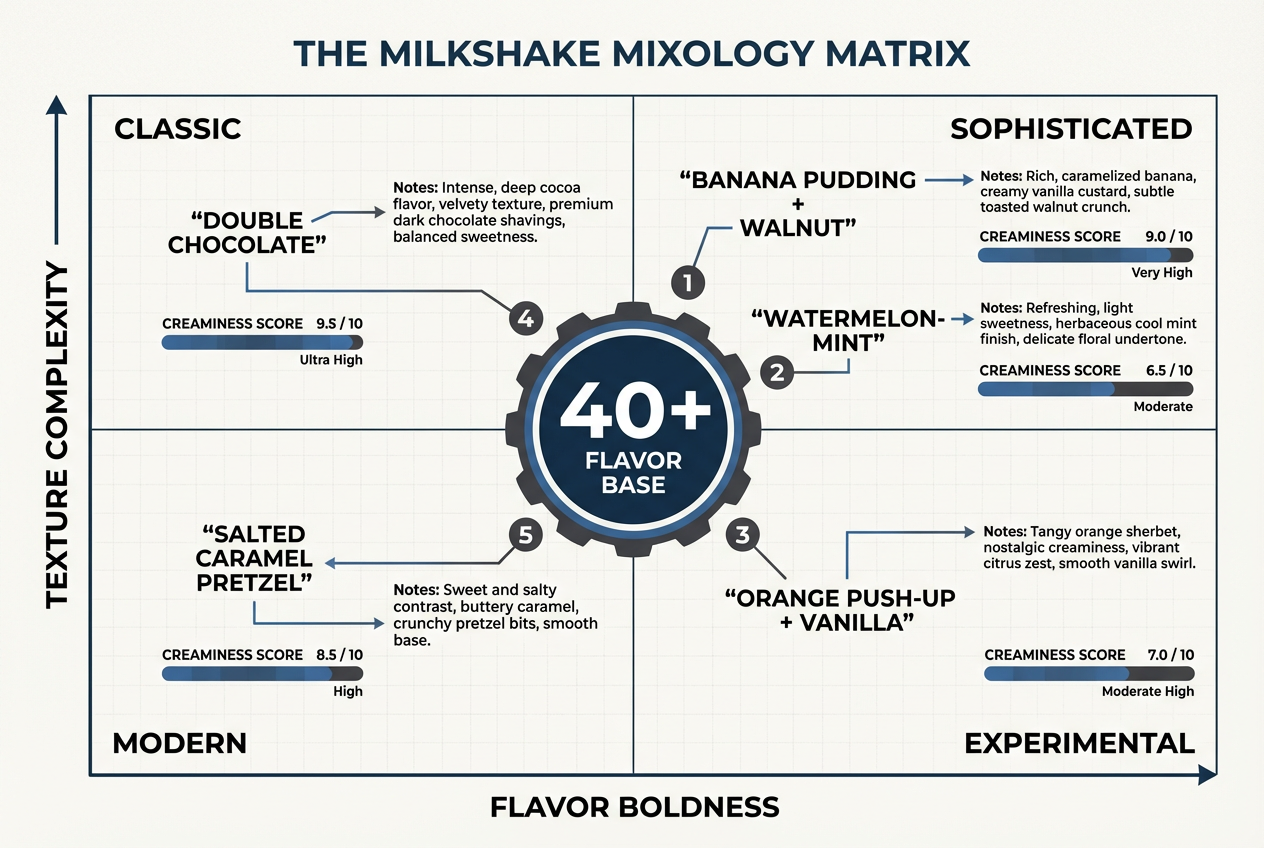 Transform a standard milkshake menu into a gourmet experience by pairing contrasting textures and bold flavor profiles using this curated mixology matrix.
The Milkshake Matrix: Organized by Sophistication
Classic Foundation Flavors (Single-note, crowd-friendly)
- Vanilla - Your baseline. Clean, simple, shows the quality of the dairy.
- Chocolate - Deeper than you expect. Good cacao presence.
- Strawberry - Artificial but committed. Tastes like the platonic ideal of strawberry.
Experimental Territory (Unusual combinations, high risk/reward)
- Banana Pudding + Walnut = "The Banana Bread" - Nutty richness balances banana sweetness
- Mint Chocolate Chip + Oreo = "The Thin Mint" - Cookie texture against mint cream
- Peanut Butter + Banana = "The Elvis" - Obviously. The frying isn’t there but the spirit is.
- Fresh Watermelon + Mint = "The Spa Day" - Summer in a cup, surprisingly sophisticated
Sophisticated Blends (Balanced, restaurant-quality concepts)
- Salted Caramel + Vanilla = "The French Ice Cream" - Classic pairing, elevated by salt
- Coffee + Oreo = "The Affogato Remix" - Bitter, sweet, textural
- Mocha + Peanut Butter = "The Reese’s Coffee" - Three-way flavor conversation
- Cheesecake + Cherry = "The Black Forest Shake" - Tangy dairy against fruit brightness
Danger Zone (Too sweet, texture issues, generally regrettable)
- Candy Bar + Brownie - Texture becomes grainy, sugar overpowers dairy
- Hi-C + Any cream flavor - Artificial fruit punch clashes with dairy fat
- Triple mixing attempts - You’re not creating complexity, just mud
The trick to mixing is understanding contrast. Don’t double down on the same flavor note. Banana + Banana Fudge is redundant. But Banana + Walnut creates tension - the nut’s slight bitterness plays against banana’s sweetness.
Think about texture too. Oreo adds crunch. Cheesecake adds density. Mixing two dense, heavy flavors (Brownie + Peanut Butter) creates something that coats your mouth and won’t let go. Not always what you want.
Seasonal strategy matters. Fresh Watermelon in summer makes sense - it’s refreshing, hydrating, not trying to be a milkshake-as-dessert. That same flavor in winter feels wrong. Coffee flavors hit different at 7 AM versus midnight.
One technique borrowed from cocktail culture: the split base. Instead of picking one flavor and adding a complement, pick two equally weighted flavors. Mocha-Caramel, half and half. You get bitter coffee, sweet chocolate, and salted caramel complexity all pulling in different directions.
Document your experiments. Seriously. The combinations you think you’ll remember - "Oh yeah, that amazing Mint-Coffee-Oreo thing I had in Raleigh" - will blur together after a few months. Write it down. Rate it. Note what worked and what didn’t.
This is where a tool like Savor becomes useful. You can log the exact combination, rate the individual components, and build a personal reference library of what milkshake mixes are worth repeating.
Secret Menu Hacks You Won’t Find on the Board
The real Cook Out menu exists in the gap between official policy and what they’ll actually make - from the "Walking Taco" side hack to strategic tray ordering that doubles your protein for the same price.
Every restaurant with a flexible menu develops an underground culture of hacks. Cook Out’s is particularly rich because the kitchen is built for customization. Here’s what the regulars know.
The Walking Taco - Order chili as a side. Order cheese quesadilla as a side. Assemble the quesadilla like a taco shell, fill with chili, fold, eat. You’ve created a entirely new menu item from existing components.
The Black and White Shake - Half vanilla, half chocolate. Simple, classic, somehow absent from most menus. The swirl creates alternating bites of pure chocolate and pure vanilla.
The Chicken Tray Value Hack - Chicken strips cost less than a burger. If you order a chicken strip tray and use your two sides for chicken nuggets and a corn dog, you’ve essentially ordered three proteins for the price of one entree. Not a balanced meal, but maximum bang for your buck.
The Cajun Everything - Request Cajun seasoning on your burger. On your fries. In your milkshake if you’re feeling adventurous (don’t). The seasoning blend is solid - paprika, garlic, cayenne - and it’s free. Turns standard items into something with actual spice.
The Loaded Fries Build - Order fries as a side. Order chili as a side. Order cheese from the burger. Combine. You’ve made chili cheese fries using the tray system.
The Milkshake Float - Order a milkshake and a Coke. Pour half the Coke into the shake. You’ve created a float for the price of two drinks, and honestly, the ratios work better than most places that officially serve floats.
These hacks matter because they demonstrate an important principle: the menu is a suggestion, not a limit. The people who get the most out of Cook Out are the ones who understand the components and recombine them.
This same mindset applies to cooking at home. You’re not bound by recipe titles. If you understand that a quesadilla is just cheese between tortillas, you can fill it with anything. The "official" menu is just the conservative version.
The Modern Urban Cookout Menu
The elevated cookout menu rejects grocery-store defaults in favor of high-quality sourcing, chef techniques, and seasonal thinking - turning a backyard gathering into an event worth documenting alongside your best restaurant meals.
Let’s shift gears. You’re not ordering from Cook Out anymore. You’re the one building the menu.
The problem with most cookout menus is they’re built on autopilot. You go to the store, grab hot dogs, hamburger meat, potato salad from the deli case, maybe some corn. Everything’s fine. Nothing’s memorable.
The modern approach treats a cookout like any other cooking project - start with quality ingredients, apply technique, create flavor layers. The fact that it happens outside on a grill doesn’t mean it has to be basic.
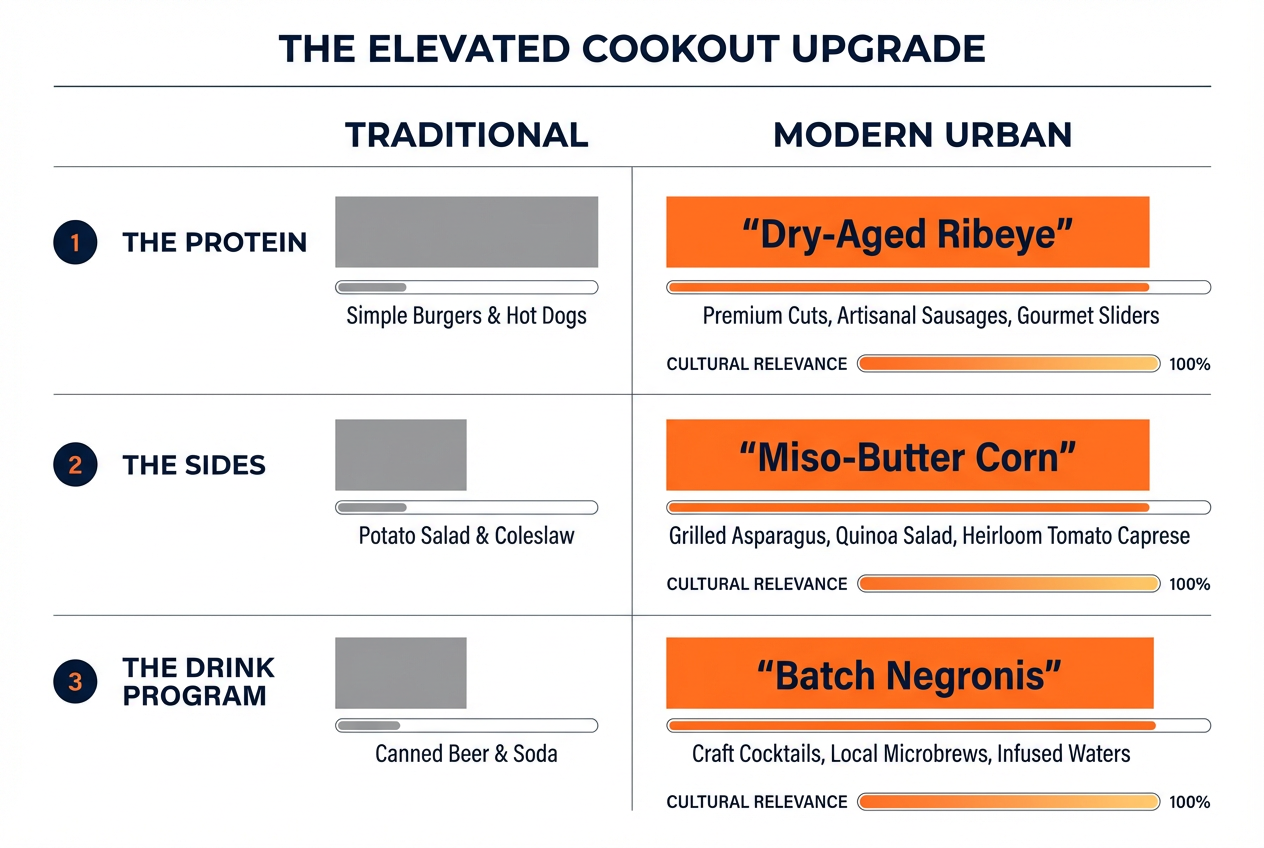 Elevate your hosting game by swapping generic staples for chef-driven alternatives that focus on technique, high-quality sourcing, and seasonal produce.
The Elevated Cookout: Component Breakdown
| Traditional Item | Modern Alternative | Why It Matters |
|---|---|---|
| Generic burger patties | Dry-aged ribeye blend, hand-formed | Fat content and aging create actual flavor, not just vehicle for toppings |
| Hot dogs | House-made sausages or quality links from a butcher | You can taste the difference between tube meat and actual pork |
| Bagged chips | Grilled stone fruit with burrata | Sweet char, creamy dairy, seasonal marker |
| Deli potato salad | Gochujang potato salad | Korean chili paste adds heat and funk, transforms familiar format |
| Corn on the cob | Miso-butter corn with shichimi togarashi | Umami fat amplifies corn’s natural sweetness, Japanese spice adds complexity |
| Canned beans | Charred romano beans with lemon and olive oil | Vegetable-forward, bright acidity, char from the grill |
| Bottled BBQ sauce | House fermented hot sauce | Actual fermentation creates depth you can’t buy |
The shift here is from convenience to intention. You’re making choices based on flavor and technique, not what’s easiest to find.
Building Your Protein Strategy
Great cookout proteins start with sourcing - prioritize high-fat content for burgers, proper marbling for steaks, and quality casings for sausages - then apply reverse-searing, dry-brining, or controlled char to develop complexity worth rating.
Let’s talk about meat. Most people approach cookout protein the same way: buy whatever’s on sale, season it at the last minute, grill it until it’s done. This works. It’s also boring.
Burgers: The patty matters more than the toppings. Use 80/20 chuck, or better, ask your butcher for a blend - short rib, brisket, and chuck creates layers of flavor. Form thick patties with a dimple in the center to prevent bulging. Salt heavily just before cooking, not hours before (that’s a meatball, not a burger).
Steaks: Ribeye for fat and flavor. Dry-brine with salt for 24 hours uncovered in the fridge. The exterior dries out, which means better crust when it hits the grill. Reverse-sear: start low and slow, finish with high heat. You get even cooking and serious char.
Sausages: Buy from a real butcher or make your own. The difference between supermarket links and properly seasoned, properly cased sausage is the difference between background noise and something you want to analyze. Grill over indirect heat first, then sear. Bursting casings mean you rushed it.
Alternative Proteins: Charred octopus. Grilled lamb ribs. Duck breast. If you’re hosting people who care about food, give them something they didn’t expect. The grill works for more than beef.
The technique matters as much as the ingredient. High heat creates char, which creates bitterness, which balances richness. But if everything’s charred, you’ve just added one note. Use zones - hot for searing, cool for finishing. Control the fire instead of reacting to it.
This is worth documenting. When you nail the reverse-sear on a ribeye or get that perfect crust on a burger, take the time to record it. What temperature? How long? What did the interior look like? Next time, you’ll have your own reference instead of guessing.
Chef-Driven Sides That Actually Matter
Transform standard cookout sides by treating vegetables like main ingredients - grill them for char, add fat for richness, incorporate acid for brightness, and season aggressively to create supporting players that compete for attention.
Sides at most cookouts exist to fill the plate. You’ve got your protein, here’s some starch and maybe a token vegetable. This is a waste of an opportunity.
Miso-Butter Corn: Grill corn in the husk until charred. Shuck it. Brush with softened butter mixed with white miso paste and a squeeze of lime. Sprinkle with shichimi togarashi (Japanese seven-spice). You’ve got sweetness from the corn, umami from the miso, heat from the spice, and fat to carry it all.
Gochujang Potato Salad: Boil waxy potatoes, cool, cut into chunks. Dress with mayo thinned with gochujang (Korean fermented chili paste), rice vinegar, and a touch of honey. Add scallions and toasted sesame seeds. It’s creamy like American potato salad but has actual flavor beyond mayo.
Grilled Stone Fruit with Burrata: Halve peaches or plums, grill cut-side down until caramelized. Serve with torn burrata, good olive oil, flaky salt, and basil. Sweet, creamy, herbaceous, acidic. It reads as dessert but works as a side.
Charred Romano Beans: Toss romano beans (the flat Italian ones) with olive oil and salt. Grill over high heat until blistered and charred in spots. Finish with lemon juice, more olive oil, and cracked black pepper. The char adds bitterness that makes the beans taste more like themselves.
Fermented Hot Sauce Slaw: Shred cabbage. Make a dressing with homemade fermented hot sauce, lime juice, fish sauce, and a touch of sugar. Let it sit for 30 minutes. The fermentation adds funk, the fish sauce adds umami, the lime adds brightness. This isn’t mayonnaise-based coleslaw - it’s a salad with a point of view.
The pattern here: take a familiar format, upgrade the ingredients, add a technique (char, fermentation, high-quality fat), and season aggressively. You’re not reinventing sides. You’re making them worth eating on purpose instead of out of obligation.
If you’re experimenting with new recipes and techniques, tracking what works and what doesn’t becomes your competitive advantage. A digital food journal lets you note that the miso-butter ratio was perfect at 2:1 but the lime was too much at a full tablespoon.
The Drink Program: Beyond Beer in a Cooler
A proper cookout drink menu pairs with smoke and char through batch cocktails, low-ABV options, and thoughtful non-alcoholic choices - build a program that complements the food instead of competing with it.
Most cookouts offer beer and maybe some wine. This is fine if you’re 22. If you’re hosting adults who pay attention to what they eat and drink, do better.
Batch Cocktails: Mix a pitcher of something before anyone arrives. A bourbon-based punch with lemon, ginger syrup, and sparkling water. A mezcal punch with grapefruit and jalapeño. The advantage of batching is consistency - everyone gets the same drink, properly balanced, without you playing bartender all night.
Low-ABV Options: Not everyone wants to get drunk at a 2 PM cookout. Offer a spritz - Aperol, prosecco, soda. Or a sherry-based cocktail - dry fino sherry with tonic and a lemon twist. These drinks refresh instead of overwhelm.
Non-Alcoholic Choices: Agua fresca. Cold brew coffee. Homemade ginger beer. If someone’s not drinking, don’t hand them a can of soda and call it done. Make something that required effort.
Pairing Logic: Smoke and char need acid and bitterness to cut through fat. That’s why beer works - hops provide bitterness, carbonation provides acid. But you can achieve the same effect with a tart cocktail or a dry wine. Think about the food you’re serving and what will cleanse the palate between bites.
If you’re documenting your meals (and you should be), don’t forget the drinks. That mezcal punch you made worked perfectly with the charred octopus, but it clashed with the miso corn. Write that down. Next time you’ll know.
Documenting Your Food Memories
Your phone’s camera roll is where food memories go to die - transform random photos into a searchable, rateable archive using structured tagging, consistent scoring, and dedicated apps designed to turn meals into lasting references.
Here’s the uncomfortable truth: you’ve eaten incredible meals that you can’t remember anymore. That pasta in Rome. The taco truck in Austin. The burger from Cook Out at 2 AM that somehow transcended its fast-food origins.
Your camera roll has 47,000 photos and zero organizational system. Finding that one dish requires scrolling for 20 minutes and hoping you recognize the plate.
This is fixable, but it requires treating food documentation like a system instead of a habit. Here’s how:
Use Consistent Scoring: Develop a rating framework you actually use. Not "this was good" but specific criteria - flavor, texture, execution, value. Rate immediately, while the memory’s fresh.
Tag Everything: Location, cuisine type, dish name, key ingredients. Tags make searching possible. "Korean" pulls up every Korean meal. "Grilled" shows everything with char. Your memory is bad at recall but great at recognition - tags help you rediscover what you’ve forgotten.
Write Tasting Notes: Three sentences minimum. What worked? What didn’t? Would you order it again? These notes become your personal food encyclopedia.
Take Better Photos: Natural light. Simple composition. Focus on the dish, not the table. You’re creating a reference, not an Instagram post. Better food photography starts with understanding your lighting.
Use the Right Tool: Your Notes app isn’t built for this. Neither is Instagram. You need something designed for food memories - structured entry, searchable tags, rating systems. That’s what Savor was built to do. It turns scattered photos into an actual database.
The value compounds. After a year, you have a reference library of 300+ rated dishes. You can search "best ramen" and see every bowl you’ve tried, sorted by score. You can look up "what did I eat in Portland" and get a complete trip recap.
This matters for Cook Out as much as fine dining. That perfect milkshake combination you stumbled into? Gone forever unless you wrote it down. The tray hack that maximized value? Lost in the fog of late-night hunger unless you logged it.
Food memory isn’t automatic. It’s a practice. The people who remember their meals are the ones who document them systematically.
Frequently Asked Questions
What are the most popular items on the Cook Out menu?
The Cook Out Tray remains the signature order - a main, two sides, and a drink for under $10. Within that structure, the Big Double Burger dominates as the main choice, french fries and onion rings lead the sides category, and the milkshakes outsell all other drinks combined. The Cajun-seasoned fries have developed a cult following, and the hushpuppies represent one of the few consistently perfect fast-food implementations of the format. Popularity doesn’t always equal quality, though - many regulars argue the BBQ plate and quesadilla sides offer better value and complexity than the standard burger-and-fries default.
How do I mix Cook Out milkshake flavors?
Tell the cashier you want a mixed shake and specify your two (or three) flavors with proportions. The standard approach is 50/50 for two flavors - "half vanilla, half Oreo" - but you can request specific ratios if you’re particular. The kitchen blends them together, creating a uniform flavor rather than a swirl. Start with complementary pairings (Peanut Butter + Banana, Mocha + Oreo) before attempting more experimental combinations. The texture matters as much as flavor - mixing two dense, heavy options like Brownie and Cheesecake creates something that coats your mouth, while pairing a chunky flavor (Oreo) with a smooth one (Coffee) maintains drinkability. Document your experiments with specific ratios and flavor notes, because you won’t remember the details after a few weeks.
What makes a great cookout menu for hosting?
A strong cookout menu balances high-quality protein, chef-driven sides with actual flavor profiles, and a drink program that pairs with smoke and char instead of competing with it. Start by upgrading your protein sourcing - dry-aged beef blends for burgers, properly marbled steaks, quality sausages from a real butcher. Apply technique: reverse-searing for steaks, proper dimpling for burgers, indirect-heat cooking for sausages. Build sides that function as genuine flavor components rather than plate-fillers: gochujang potato salad for heat and funk, miso-butter corn for umami richness, charred romano beans for bitter complexity. Create a drink program with batch cocktails, low-ABV options, and thoughtful non-alcoholic choices. The goal is creating an event worth documenting alongside your best restaurant meals, not just filling stomachs with generic cookout defaults.
How do I organize my food photos and memories?
Structured documentation starts with consistent scoring, comprehensive tagging, and immediate note-taking while the memory remains fresh. Develop a personal rating framework based on specific criteria - flavor intensity, textural contrast, execution quality, value assessment - rather than vague impressions. Tag every entry with location data, cuisine type, dish name, and key ingredients to enable future searching. Write minimum three-sentence tasting notes covering what worked, what failed, and whether you’d reorder. Upgrade your photography with natural lighting and simple composition focused on the dish itself. Most importantly, use tools designed specifically for food memory rather than generic note apps or social platforms - dedicated dish-tracking apps like Savor provide structured entry fields, searchable databases, and rating systems that transform random camera roll photos into genuine culinary reference libraries.
What’s the difference between cheap cookout food and elevated hosting?
The distinction lies in sourcing quality, applying technique, and treating the meal as a culinary event rather than functional fuel. Cheap cookouts default to convenience - pre-formed patties, generic hot dogs, deli potato salad, bottled sauces - prioritizing ease over flavor. Elevated hosting starts with ingredient selection: dry-aged beef, fresh sausages, seasonal produce. It applies cooking techniques that develop complexity: dry-brining steaks, reverse-searing proteins, charring vegetables to create bitter notes that balance richness. It builds flavor layers through fermentation (homemade hot sauce), umami bombs (miso butter), and acid balance (citrus, vinegar). The elevated approach documents the meal with photos, ratings, and notes, treating a backyard cookout with the same seriousness as restaurant dining. You’re creating food memories worth preserving, not just feeding people until they’re full.
Can I recreate Cook Out menu items at home?
Absolutely, and understanding the component structure makes recreation straightforward. The burgers use fresh-ground beef (likely 80/20 chuck), American cheese, and a soft potato bun - nothing complicated. The hushpuppies follow a standard cornmeal-buttermilk batter fried at 350°F until golden. The milkshakes blend soft-serve ice cream with flavor syrups and whole milk to achieve drinkable consistency. The Cajun seasoning reads as standard paprika-garlic-cayenne blend, available premixed or easily assembled. The real challenge isn’t the recipes - it’s the efficiency of the system that allows infinite customization. At home, recreate individual components and build your own tray combinations, documenting what works in your personal food database for future reference.
How do I plan a cookout menu for dietary restrictions?
Start by collecting actual restrictions rather than assumptions - some "vegetarians" eat fish, some avoid all animal products, some just don’t eat red meat. Build a menu with genuine variety across protein sources: grilled vegetables as primary dishes (not sad afterthoughts), quality plant-based proteins if appropriate, and seafood options for pescatarians. Focus on sides that work for multiple diets: grilled corn with miso-butter (make a vegan version with plant-based butter), romano beans with olive oil and lemon (naturally vegan), stone fruit with dairy-free cream alternatives. Mark allergens clearly and avoid cross-contamination on the grill by designating specific zones for different proteins. The goal is creating dishes so flavorful that dietary restrictions become incidental rather than limiting - nobody should feel like they’re eating "the vegan option" as a concession.
What cookout items are worth documenting and rating?
Document anything that surprises you, teaches you something, or represents a technique worth remembering. That includes successful experiments (the burger blend ratio that created perfect texture), failures (the overly sweet milkshake combination that taught you about balance), and discoveries (the Cook Out tray hack that maximized value). Rate proteins for quality, sourcing, and execution. Score sides based on whether they function as genuine flavor components or mere plate-fillers. Evaluate drinks on how well they pair with smoke and char. Track techniques that worked - specific grill temperatures, timing for reverse-searing, brine ratios that enhanced flavor without overwhelming. The items worth documenting are the ones you’ll want to reference later, whether you’re trying to recreate success or avoid repeating mistakes.