
How to Create a Family Cookbook: Preserve Recipes and Stories
John the smoothie monster
John lives for smoothie bowls and cold-pressed juices. He uses Savor to remember his best blends.
Creating a family cookbook is more than just a weekend project—it’s an act of preserving your family’s heart and history, one recipe at a time. This guide is...
Creating a family cookbook is more than just a weekend project—it’s an act of preserving your family’s heart and history, one recipe at a time. This guide is your complete roadmap for turning those scribbled notecards, treasured memories, and kitchen secrets into a beautiful heirloom that will connect generations.
Why Create a Family Cookbook?
A family cookbook becomes a living document, a tangible connection to the people, places, and moments that define your family's story. It’s a project that transforms scattered notes and half-remembered instructions into a legacy you can hold in your hands, share, and pass down. Think of it as a private food diary for your entire family's culinary journey.
This is your chance to connect with relatives, uncover forgotten stories, and make sure the flavors of your childhood are never lost. It’s about capturing not just what goes into a dish, but why it matters so much.
The Lasting Value of a Culinary Heirloom
Building this book is an investment in your family’s identity. The process itself often becomes a cherished memory, strengthening bonds as you work together across generations. To really dig into how creating new heirlooms shapes family connections, it's worth exploring the ideas in Rethinking Family Traditions: How to Build Meaningful Rituals for Modern Life.
The benefits of taking on this project go far beyond the kitchen:
- Preserves Heritage: It safeguards all those unwritten recipes and oral traditions that might otherwise fade away with time.
- Connects Generations: The book becomes a natural conversation starter, linking younger family members to their ancestors through shared meals and stories.
- Celebrates Individuality: It honors the specific dishes and quirky cooking methods that make your family wonderfully unique.
- Creates a Tangible Legacy: Unlike a digital file that can get lost on an old hard drive, a physical book is a durable heirloom that can be treasured for decades.
At first, the idea can feel a little overwhelming. But when you break it down, it's really just three clear, manageable phases.
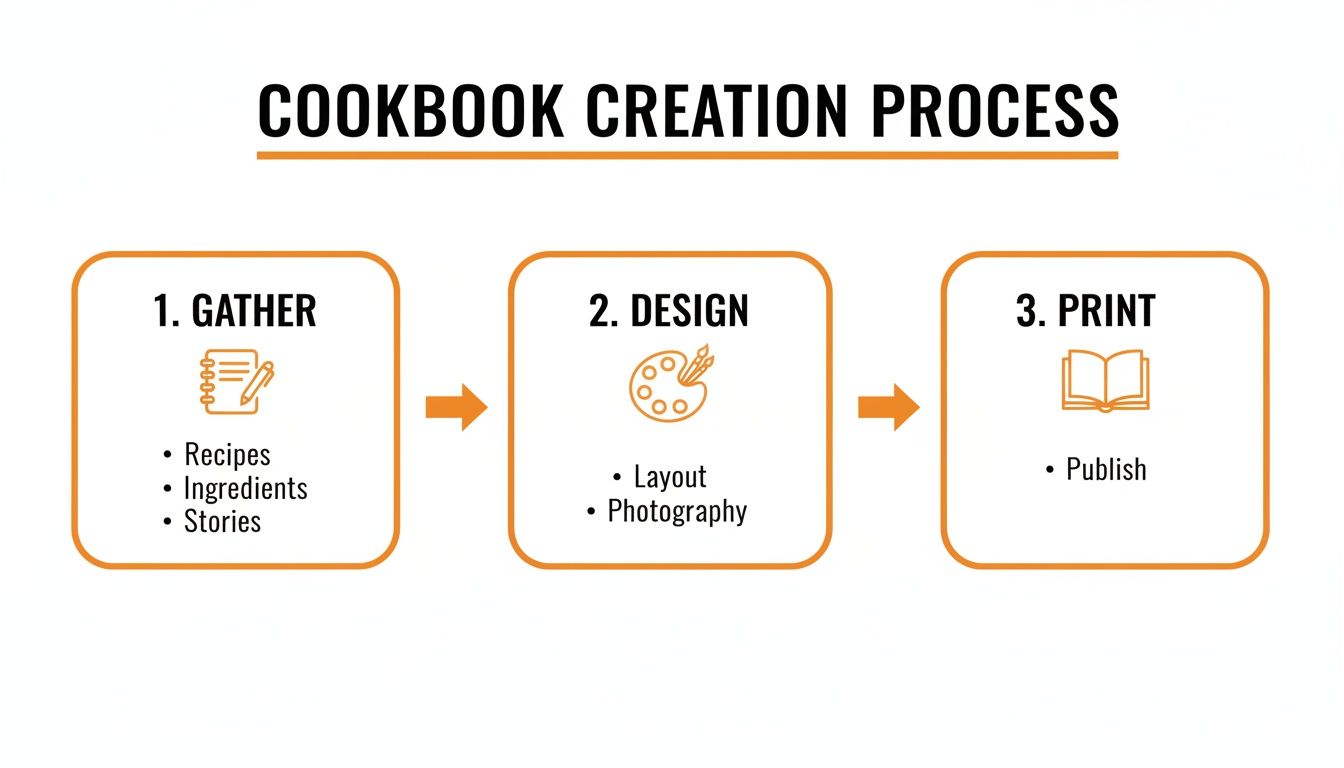
This simple path—from messy idea to finished heirloom—ensures you can tackle each part with confidence. From gathering memories to designing pages and finally printing the finished book, each phase builds right on the last.
Creating a family cookbook is an act of cultural preservation. It's about ensuring that the taste of your grandmother's pierogi or your uncle's barbecue sauce isn't just a memory, but a repeatable experience for future generations.
The journey to create a family cookbook is both a practical and emotional one. It requires organization and a bit of patience, but the reward is a deeply personal artifact that nourishes both body and soul. This guide will give you the structure and inspiration you need to see it through.
Family Cookbook Project Stages At a Glance
To give you a bird's-eye view of the road ahead, here’s a quick breakdown of the essential phases. This table outlines the entire journey, from that first spark of an idea to holding the finished book in your hands.
| Project Stage | Key Objective | Estimated Time |
|---|---|---|
| Phase 1: Gather | Collect all recipes, stories, photos, and family history. This is the heart of the project. | 4–8 weeks |
| Phase 2: Design | Organize the content, format recipes, lay out pages, and create a visually appealing design. | 3–6 weeks |
| Phase 3: Print & Share | Finalize the book, choose a printing service, and distribute the finished heirloom to family. | 2–4 weeks |
Think of these stages as your roadmap. Each one has its own set of tasks and milestones, but seeing them all laid out makes the whole process feel much more achievable. Now, let's dive into the details.
Gathering Your Family Recipes And Stories
This is where the real heart of the project beats. You're about to become the family's culinary detective, digging up the recipes and memories that define your shared history. This part of the process is less about neat organization and more about joyful discovery—it's an excavation of traditions, stories, and the little human details that give a dish its soul.
Your mission is to cast a wide net, reaching out to every corner of the family to unearth the recipes that truly matter. Some will be written on stained, well-loved index cards; others might only exist as a vague set of instructions in a great-aunt's memory. Both are absolute treasures for your project to create a family cookbook.
Sourcing Your Family's Culinary Treasures
First, you need to figure out where the recipes live. In most families, one or two people are the unofficial "keepers" of the culinary knowledge. They're your perfect starting point, but don't stop there. These recipes and their stories are often scattered across different generations and branches of the family tree.
Your outreach can be a mix of old-school and new-school methods. A group email, a post in the family Facebook group, or a shared Google Doc can work wonders for tech-savvy relatives. For others, a simple phone call or an in-person visit over coffee is far more personal and effective.
Here’s a practical checklist to get your collection process rolling:
- Identify Key Contributors: Make a list of family members most likely to have the goods—the best bakers, the holiday hosts, and the designated family historians.
- Set a Gentle Deadline: Give everyone a clear timeframe, like, "Please try to share your recipes by the end of next month." This creates a little momentum without feeling like a homework assignment.
- Create a Central Hub: Use a tool like Google Drive or Dropbox where people can easily upload digital files. For physical items, have one person be the designated collection point to avoid chaos.
- Request More Than Just Recipes: Be specific. Ask for photos of the dish, the person famous for making it, or the gatherings where it was served. And always, always ask for the story behind it.
- Follow Up Politely: Life gets busy. A friendly reminder a week before your deadline can be the nudge that brings in those last few submissions.
Unlocking the Stories Behind the Food
A recipe tells you how to make a dish, but the story tells you why it matters. Capturing these narratives is what will elevate your project from a simple collection of instructions into a true family heirloom. The trick is to ask open-ended questions that invite storytelling, not just one-word answers. It's a lot like what we encourage in our guide on how to get started with food memory journaling, where the context is every bit as important as the meal itself.
When you chat with a relative, have some thoughtful prompts ready. A fantastic tip is to record the audio of these conversations (with their permission, of course) to capture their voice and make sure you don't miss any of the wonderful details.
A cookbook without stories is just a manual. The memory of your grandfather carefully rolling out pasta dough is the ingredient that can never be measured, only shared.
Try these interview questions to get the conversation flowing:
- "Who first taught you how to make this?"
- "What holiday or special occasion immediately comes to mind when you think of this dish?"
- "Is there a funny story about a time this recipe went totally wrong?"
- "Why was this such a favorite in your house when you were growing up?"
- "Did you ever change or adapt the original recipe? What made you do that?"
These questions do more than just gather facts. They invite reflection and often lead to unexpected, heartwarming anecdotes that will make your cookbook truly special.
Handling Multiple Versions and Lost Recipes
It’s almost a guarantee you'll discover that three different aunts have their own "official" version of Grandma’s potato salad. Don't pick one—celebrate the differences! You can feature all three versions side-by-side with a small note about how each person made it their own. This beautifully illustrates the living, evolving nature of family traditions.
For relatives who are no longer with us, documenting their recipes requires a gentle, respectful touch. Talk to people who remember them and the dishes they mastered. Collect memories and try to recreate the recipe through kitchen experiments. You can even acknowledge this process right in the cookbook, honoring both the person and the collective effort to preserve their legacy. This collaborative recreation becomes a new, beautiful part of the recipe’s ongoing story.
Organizing And Standardizing Your Recipe Collection
Alright, you've done the hard part. You're now sitting on a wonderful, chaotic pile of recipes, stories, and dog-eared index cards. The next step is to bring a little order to the magic. This phase is all about creating a sense of consistency, making sure every recipe is clear, easy to follow, and fits beautifully into the book you're building.
A standardized format turns a pile of recipes into a real, usable cookbook.
The very first thing you need is a universal template. This ensures every dish gets the same treatment, giving the final book a cohesive, professional feel. If you're feeling a bit lost on how to structure the entire project from start to finish, using a book outline template can be a lifesaver for organizing your chapters and sections. A strong template does more than just list ingredients and steps; it carves out a dedicated space for the heart of the project—the memories.
Building Your Perfect Recipe Template
Your template is the blueprint for every single page. It should be a simple framework that captures everything needed to not only recreate the dish but also its story. A good template makes it much easier for you to plug in the information and, more importantly, for your family to find what they need at a glance.
For every recipe, try to include these key fields:
- Recipe Title: The official name of the dish.
- Submitted By: A little credit to the family member who shared it.
- Short Story or Memory: A paragraph capturing the personal story behind the food.
- Prep Time & Cook Time: Essential for anyone planning a meal.
- Serving Size: How many people does this feed?
- Ingredient List: Clear, precise measurements (we'll get to this).
- Step-by-Step Instructions: Numbered steps make everything easier to follow.
- Cook’s Notes: A spot for those little tips, tricks, or variations that make the dish special.
Creating a consistent format is about more than just making things look pretty. It’s an act of translation—turning a beloved but imprecise family memory into a clear set of instructions that a new generation can follow with confidence.
Getting your recipes organized also provides the perfect opportunity to sort out the photos you’ve gathered. As you format each recipe, you can pair it with the right images. Trust me, this is much simpler than trying to match hundreds of photos to recipes at the very end. For some great tips on managing your pictures, check out our guide on how to organize your iPhone pictures into albums for projects just like this.
Translating Vague Family Measurements
One of the most charming—and challenging—parts of this process is decoding vague family measurements. You know the ones: "a pinch of salt," "a splash of milk," or my personal favorite, "cook until it looks right." These directions are full of love but painfully short on specifics. Your job is to translate this beautiful intuition into standardized units.
The best way to do this is to make the dish yourself, ideally with the original cook by your side. As you go, measure everything. That "knob of butter" might turn out to be 2 tablespoons. A "handful of flour" could be roughly 1/2 cup. Document these conversions right in the recipe. This doesn't erase the original charm; it preserves it in a way anyone can successfully replicate.
Structuring Your Cookbook's Flow
Finally, you need to decide how the recipes will be arranged in the book. The structure you choose will guide the reader on a journey through your family's culinary world. There’s no single right way to do it, so pick the one that best tells your family’s unique story.
Here are a few popular approaches:
- By Course: This is the traditional path—Appetizers, Soups, Mains, Desserts. It's straightforward and incredibly easy for people to navigate.
- By Family Branch: You could organize sections by different sides of the family (e.g., "The Johnson Family Recipes" or "The Miller Family Favorites"). This is a wonderful way to highlight lineage and heritage.
- By Occasion: This one is my favorite for family cookbooks. Group recipes by the events where they truly shine, like "Holiday Feasts," "Summer Barbecues," or "Sunday Dinners." This method is wonderfully evocative because it ties the food directly to shared experiences.
Each approach offers a different lens through which to view your family’s history. Go with the structure that feels most authentic to your collection and will make the final book a true joy to explore.
Designing A Cookbook That Feels Like Family
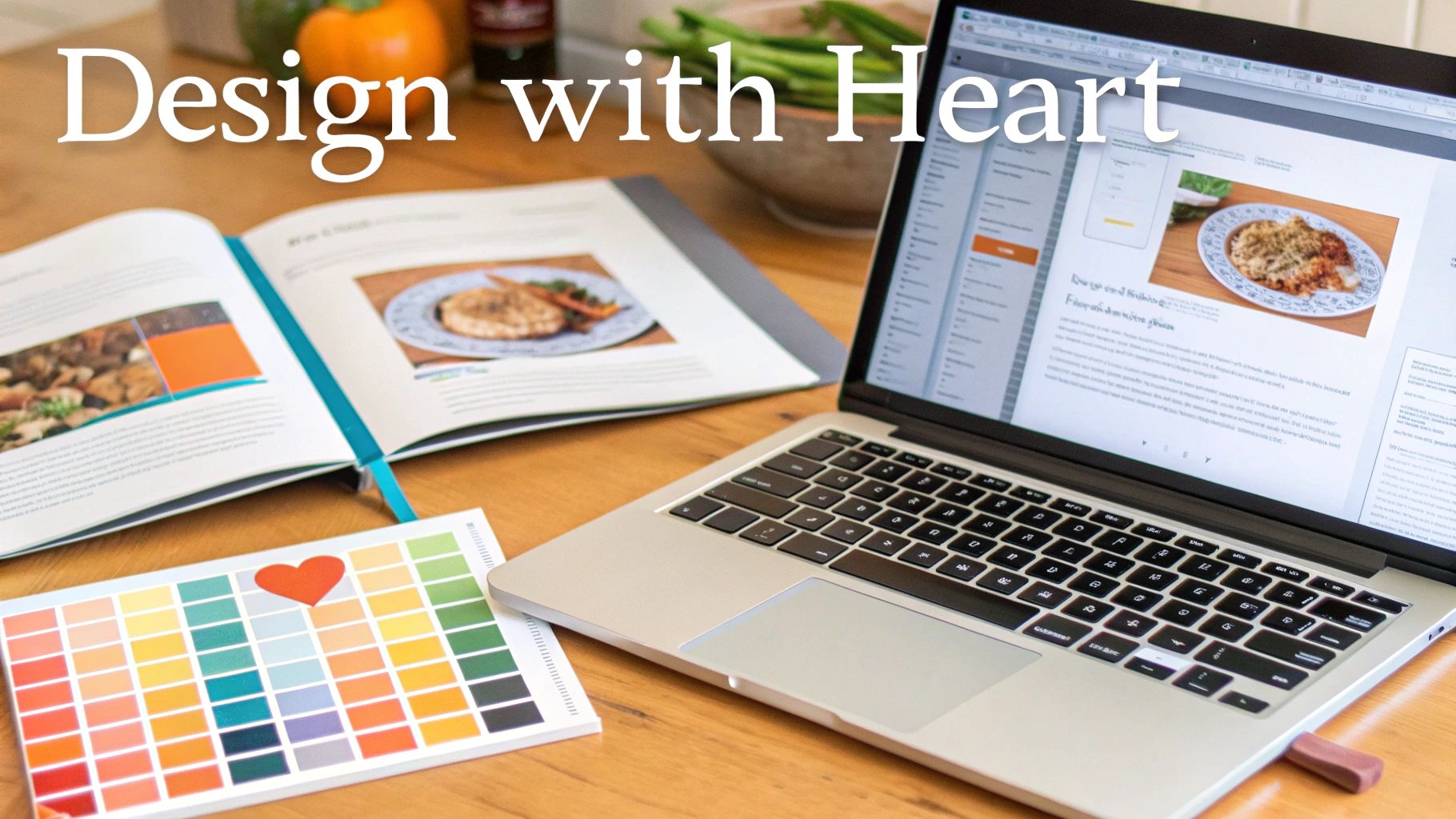
This is where the magic happens. Great design will transform your collection of recipes from a simple document into a beautiful, professional-looking keepsake your family will treasure. You’re giving all those stories and flavors a proper home, turning simple text into something that feels warm, personal, and intentional. You don't need to be a professional designer to pull this off.
The real goal is to make choices that echo your family's unique personality. From the colors and fonts you choose to how you place photos on the page, every little decision shapes the book's final feel. A well-designed cookbook isn't just easy to follow; it’s a joy to flip through, inviting everyone to connect with the heritage packed inside.
Choosing Your Core Design Elements
Before you jump into laying out pages, pause for a minute and think about the overall vibe. Are you picturing something modern and clean, or more rustic and nostalgic? Nailing down a few core design elements right now will make the whole book feel cohesive and thoughtfully put together.
First up: typography. Readability is everything here. I always recommend picking one clean, simple font for the main body text (like Georgia or Garamond) and a complementary, slightly more decorative font for recipe titles and headings (like Playfair Display). Sticking to just two or three fonts is a pro move that creates a polished look without overwhelming the eye.
Next, think about your color palette. A great trick is to pull colors from old family photos or maybe from the wallpaper in your grandmother's kitchen. This creates a palette that’s not just pretty, but meaningful. A simple scheme of two to three complementary colors plus a neutral tone is all you need to bring warmth and consistency to your design.
Incorporating Photos And Handwritten Notes
This is what makes a family cookbook truly special. Weaving in old photos and scans of original recipe cards can turn a page of instructions into a heartfelt memory. The trick is to blend these personal touches into your layout so they feel natural.
Place photos of the finished dish right next to the recipe, but don't stop there. Include those candid shots of family members cooking, laughing, and sharing meals. And please, don't forget those beautifully stained, handwritten recipe cards! Scanning them and placing them next to your typed-out version is such a powerful way to honor the original cook.
A scanned image of your grandmother's cursive, complete with a small coffee stain in the corner, does more to tell your family's story than any perfectly styled photo ever could. It’s authentic, tangible history.
High-quality photography can make a big difference, but you don't need a fancy camera—a modern smartphone is more than up to the task. If you want some pointers on making your food look its best, we've put together some practical tips on how to photograph food beautifully for your personal records.
Selecting The Right Design Tools And Templates
You don't have to start from scratch. Several incredibly user-friendly platforms offer templates made specifically for cookbooks, which makes the whole layout process so much easier. These tools handle the technical stuff so you can focus on the creative details.
Here are a few popular options, each with its own strengths:
- Canva: Super user-friendly with thousands of templates. It’s perfect for beginners and has a powerful drag-and-drop editor for adding text, photos, and other design elements.
- Blurb: This platform is geared specifically toward creating professional-quality printed books. It offers both a simple online tool and a more advanced desktop application called BookWright.
- Mixbook: Known for its highly customizable photo book templates, Mixbook is a fantastic choice if your cookbook is going to be very photo-heavy.
These platforms give you a solid foundation, but remember to make the templates your own. Change the colors, swap the fonts, and move things around to create a design that truly reflects your family's style.
This kind of personal project taps into a deeply felt trend. The global market for paper cookbooks was valued at USD 7,742.93 million in 2024 and is expected to keep climbing, driven by a powerful desire to preserve family traditions. You can read more about the enduring appeal of printed culinary legacies. It just goes to show that in our digital world, a tangible book filled with family history is more valuable than ever.
Printing And Sharing Your Culinary Legacy
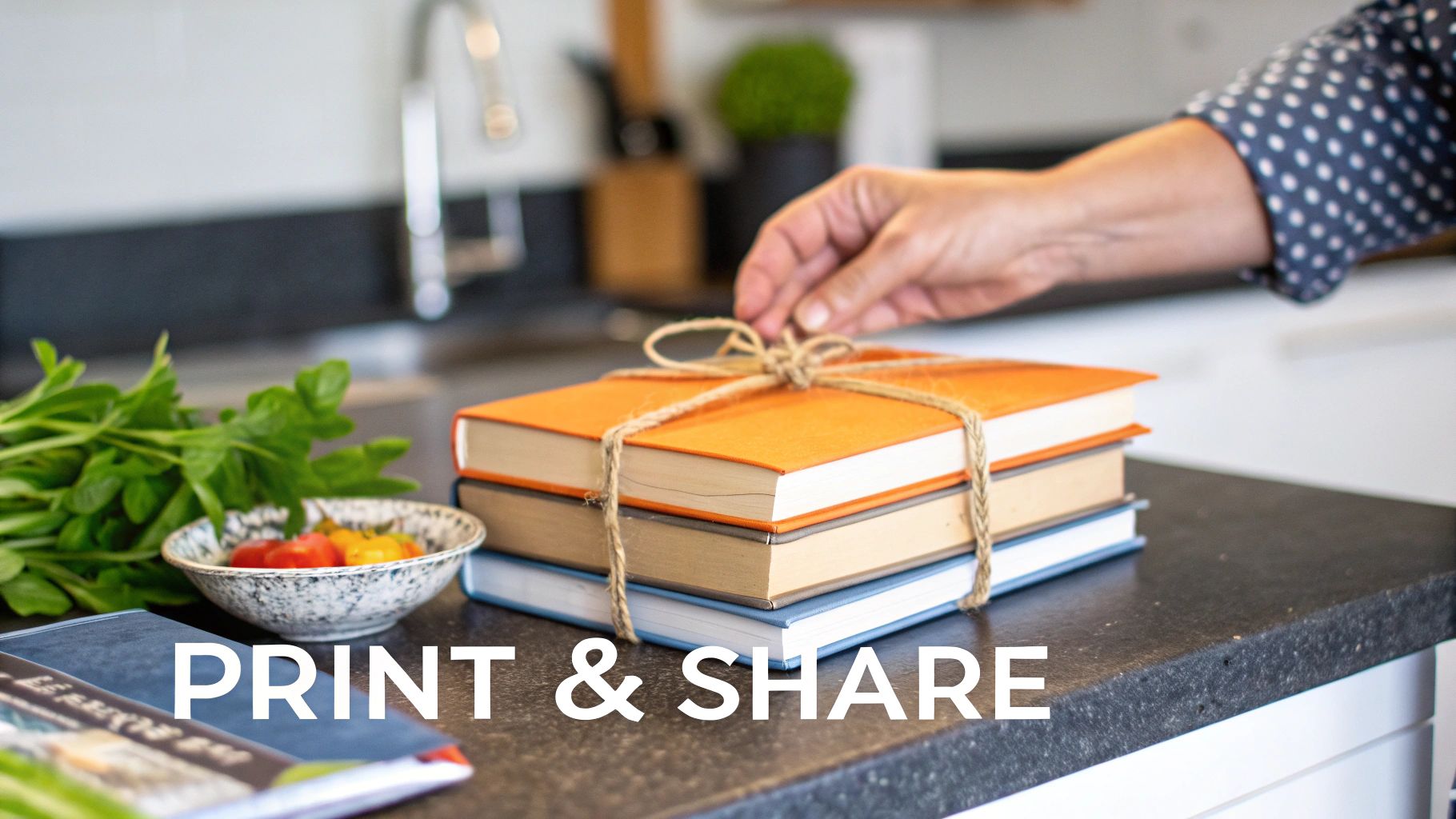
You’ve done it. The stories have been gathered, the recipes standardized, and the layout is a beautiful tribute to your family’s history. Now comes the most thrilling part: bringing all that hard work to life. This is the moment your project transforms from a file on your computer into a tangible legacy—a real, physical book that can be held, gifted, and passed down for generations.
Deciding how to print and share your cookbook is all about balancing your budget, the quality you’re aiming for, and how many copies you actually need. Whether you picture a sturdy hardcover on every family member’s shelf or a simple digital version for easy sharing, there's a perfect path for your project.
Print-On-Demand vs. Local Print Shops
You have two main roads for printing: online print-on-demand (POD) services and a traditional local print shop. Each has its own strengths, depending on the scale and goals of your cookbook.
Services like Blurb, Lulu, or Mixbook are incredibly convenient, especially for smaller batches. Their biggest advantage is no minimum order requirement. You can print a single test copy or just a handful for close relatives without a massive upfront cost. The per-book price can be higher, but for most family projects, that flexibility is a game-changer.
A local print shop, on the other hand, offers a more personal, hands-on experience. You can actually touch paper samples, talk through binding options face-to-face, and build a real relationship with the printer. They shine with bulk orders; if you need 50 or more copies, their per-book price will almost always beat a POD service.
Here’s a quick breakdown to help you decide:
| Feature | Print-On-Demand (POD) | Local Print Shop |
|---|---|---|
| Best For | Small quantities (1–50 copies) | Larger quantities (50+ copies) |
| Cost | Higher per book, no setup fees | Lower per book, potential setup fees |
| Flexibility | Order one at a time, anytime | Requires a single, larger print run |
| Process | Online upload and automated tools | In-person consultation and proofs |
| Turnaround | Typically 1–2 weeks per order | Varies, but can be faster for bulk jobs |
Getting Your Files Ready For A Perfect Print
No matter which route you take, prepping your files correctly is the key to a professional-looking book. A stunning design can be completely ruined by a few technical mistakes, so one last, careful check is non-negotiable before you hit "print."
This final check is your last line of defense against typos and technical glitches. Take the time to proofread one last time—your future self will thank you when you’re holding a flawless book in your hands.
Your printer will need a high-resolution file, usually a PDF. Before you export that final design, run through this quick checklist.
- Proofread Like Crazy: Read every single word one more time. Even better, have a family member with fresh eyes give it a look to catch typos you’ve become blind to.
- Check Image Resolution: Make sure every photo is at least 300 DPI (dots per inch). Anything less will look blurry or pixelated in print. Most design software will warn you if an image’s resolution is too low.
- Verify Your Margins: Check that no text or important parts of photos are creeping too close to the edge of the page. This "safe zone" prevents anything from getting trimmed off during the binding process.
- Export as a Print-Ready PDF: Use the "high-quality print" or "press quality" setting when you export from your design software. This locks in the colors and embeds all the fonts correctly in the file.
Thinking About Digital Sharing Options
While a physical book is the dream for many, don't overlook digital sharing. It’s a wonderful, immediate way to get your cookbook into everyone's hands and serves as a fantastic backup, ensuring the recipes are safe no matter what.
The easiest path is to simply export your cookbook as a high-quality PDF. You can email it to family members near and far or store it in a shared cloud folder like Google Drive or Dropbox for everyone to access.
For a more interactive feel, you could create a simple, private website. Platforms like WordPress or Squarespace let you post recipes individually, making them searchable and easy to update over time. It becomes a living, breathing version of your family cookbook.
Even as digital trends grow, family cookbooks are thriving. The global recipe websites market is projected to hit USD 10.5 billion by 2033. This surge in online recipe discovery perfectly complements the desire for tangible heirlooms, blending modern convenience with the permanence of a printed book. You can find more details about the growth of online recipe platforms and how it supports projects just like yours.
Common Questions About Making A Family Cookbook
Embarking on a project to create a family cookbook is an incredible feeling, but let's be honest—it almost always comes with a few hurdles. From trying to decode Grandma’s cryptic instructions to figuring out the costs, these questions pop up for just about everyone.
Think of these not as problems, but as part of the unique character of your book. Every challenge you solve just adds another layer of love and dedication to the final heirloom.
How Do I Handle Recipes With Vague Instructions?
This is the classic, most charming problem of any family cookbook project. You’ve got a recipe that calls for a “knob of butter” or advises you to “cook until it feels right.” These instructions come from a place of pure kitchen intuition, but they can be daunting for anyone trying to follow along. The key is to transform that intuition into a repeatable process.
Start by becoming a culinary detective. Your first move should be to talk to any relatives who might remember watching the dish being made. Ask questions that get beyond simple measurements.
- "What did the dough feel like at that stage? Was it sticky or smooth?"
- "What color was the sauce when you knew it was done?"
- "Was it more on the sweet side or the savory side?"
If you can't get a first-hand account, it's time for some fun in the kitchen. Look up a few similar modern recipes online to get a baseline for ingredients and temperatures. Then, start testing in small batches, taking meticulous notes on every single adjustment. This is the perfect excuse to enlist family members as official taste-testers to see how close you’re getting.
Embrace this part of the journey! When you finally add the recipe to the book, include a small note explaining that you've 'lovingly recreated' the dish to the best of your ability. This transparency doesn’t just help future cooks; it honors the original recipe's legacy while adding your own chapter to its story.
What Is The Most Cost-Effective Way To Print?
For most family projects that need a smaller number of copies, print-on-demand (POD) services are the clear winner. Companies like Blurb or Lulu are built for this exact scenario, letting you print as few as one single copy without any massive upfront investment. This is perfect when you're not sure if you need 10 copies or 30.
While the cost for each individual book might be slightly higher than a big bulk order from a local printer, you completely avoid the risk of paying for dozens of extra copies you don't need. To keep your costs down with POD services, here are a few things to consider:
- Softcover or Spiral-Bound: These binding options are significantly more affordable than a hardcover and are still very durable for kitchen use. A spiral-bound book that can lay flat is a fan favorite.
- Black-and-White Interior: If your budget is tight, printing the recipe pages in black and white can dramatically lower the cost. You can save the color printing for just a few special photo sections to make them pop.
No matter what, always order a single proof copy first. Holding a physical version in your hands is the only way to catch formatting errors, color issues, or typos before you place a larger order for the entire family. Trust me on this one.
How Can I Collect Stories From Relatives?
Connecting with relatives who aren't tech-savvy is absolutely crucial for capturing the richest stories. The simple solution? Meet them where they are most comfortable, which often means leaving technology behind.
A simple phone call or, even better, an in-person visit is by far the most effective approach. Use your smartphone's voice recording app to capture the conversation in their own words—you'll be amazed at the little details and turns of phrase you'd otherwise miss. For old photos and handwritten recipe cards, offer to scan them yourself during your visit using an app like Google PhotoScan. This takes all the technical burden right off their shoulders.
You can also go the analog route. Mail them a simple printed questionnaire with a stamped, self-addressed envelope. The goal here is to make contributing as effortless as possible. A little extra effort on your part removes any barriers for them, ensuring their priceless memories make it into the pages of your book.
Savor helps you document every dish and every food memory, turning fleeting tastes into a personal, searchable food diary. When you’re ready to track your own culinary adventures, from family recipes to restaurant discoveries, we’re here to help you capture every detail. Track tastes, share discoveries.