
How to Eat Mindfully and Savor Every Bite
Alex the juice queen
Alex hunts for the best juice bars and presses. She rates every sip and saves her favorites in Savor.
Mindful eating is a simple idea: it’s about trading rushed, distracted meals for the practice of paying full attention to your food. It’s about learning to...
Mindful eating is a simple idea: it’s about trading rushed, distracted meals for the practice of paying full attention to your food. It’s about learning to listen to your body’s signals of hunger and fullness, truly savoring each bite, and building a more intentional relationship with what’s on your plate.
What It Really Means to Eat Mindfully

Let’s be clear: mindful eating isn't another diet. There are no strict rules about what you should eat. Instead, it’s a powerful shift in how you eat. It’s about stepping away from autopilot—that familiar zone where you’re munching on chips while scrolling through your phone, only to look down and realize the bag is empty without remembering a single bite.
This approach is rooted in mindfulness, a practice that's all about awareness of the present moment. Before diving into the specifics of eating, it helps to get a handle on how to cultivate presence in your everyday life. Applying this same idea to your meals can completely change your relationship with food, turning it from a source of stress into something that brings genuine pleasure and connection.
Core Principles of Mindful Eating
The practice encourages you to notice not just the sensory details of your meal—the taste, the smell, the texture—but also your own internal thoughts and physical sensations. It’s about checking in with yourself without any judgment. To get started, it helps to have a framework.
Think of mindful eating as being built on five core pillars. These aren't rules, but rather gentle reminders to guide you back to the present moment during your meal.
The Five Pillars of Mindful Eating
| Pillar | What It Means | Quick Tip |
|---|---|---|
| Listen to Your Body | Recognizing true physical hunger versus emotional cravings (like eating out of boredom or stress). | Before eating, ask yourself: "On a scale of 1-10, how hungry am I really?" |
| Engage All Your Senses | Truly seeing, smelling, and tasting your food, which dramatically enhances satisfaction. | Take a moment to just look at your food before the first bite. Notice the colors and shapes. |
| Eat Without Judgment | Releasing guilt tied to certain foods and fostering a more accepting mindset. All palates are respected here. | If you find yourself labeling a food "bad," gently reframe it to "a food I enjoy sometimes." |
| Recognize Fullness | Slowing down gives your brain time to get the signal from your stomach that you're satisfied. | Try putting your fork down between bites. It’s a simple trick that makes a huge difference. |
| Understand Your Food's Journey | Acknowledging where your food came from and the effort it took to get to your plate. | Briefly consider one person who helped bring your meal to you (a farmer, a cook, a grocer). |
These pillars provide a simple, effective roadmap. They help you slow down and bring a sense of curiosity and appreciation to the table, which is really what this practice is all about.
By simply bringing awareness to your meals, you can transform a routine activity into a deeply enriching one. It’s not about perfection; it’s about making eating an intentional, enjoyable experience that nourishes both body and mind.
Ultimately, mindful eating helps you reconnect with the simple joy of food. This intentional approach makes documenting your food memories so much more meaningful, allowing you to track not just what you ate, but how it made you feel, moment by moment. When you rate like a critic, you'll find every meal tells a richer story.
Creating Your Space for a Mindful Meal
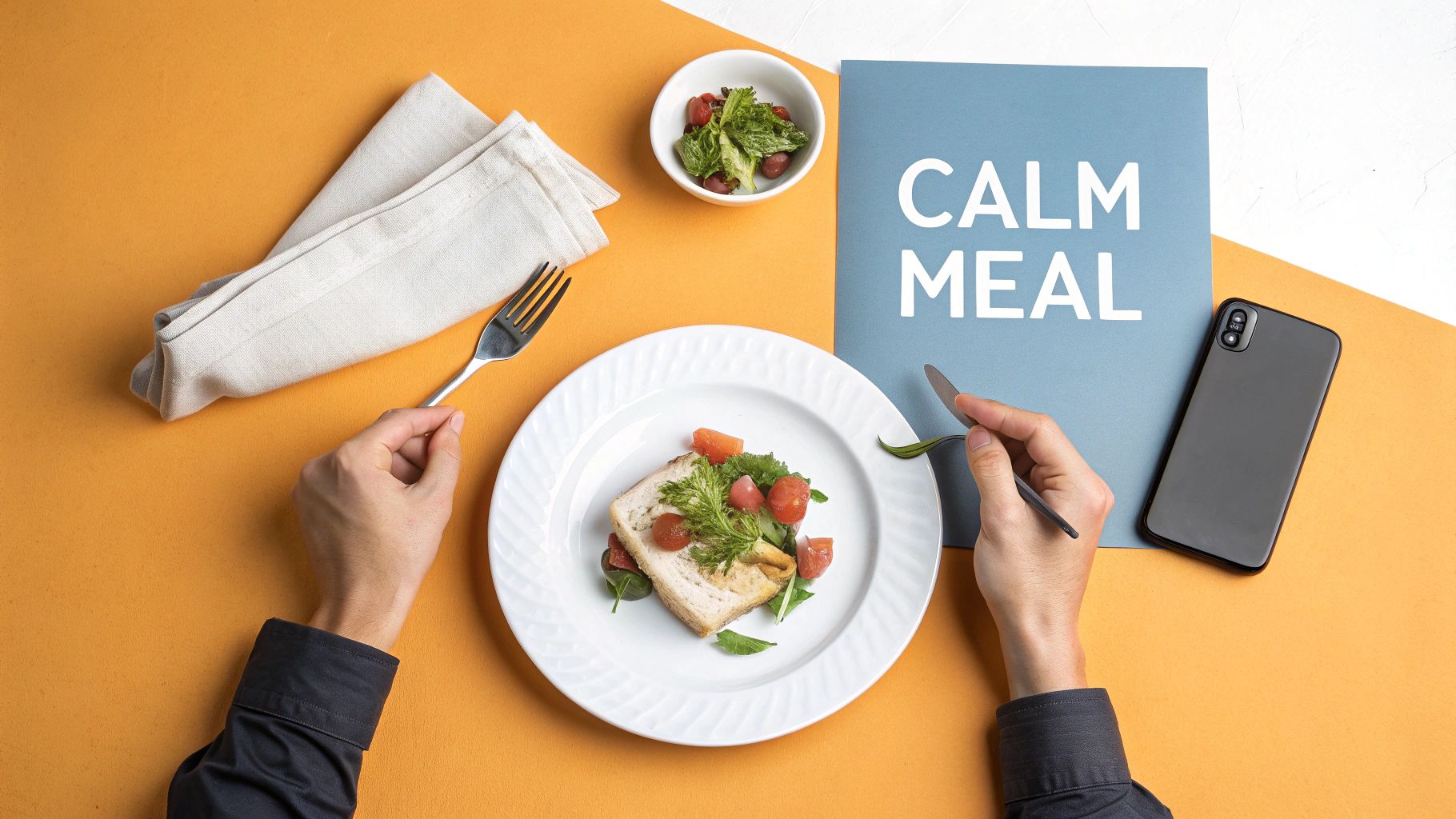
Before you even think about that first bite, your surroundings have already shaped the meal to come. Learning how to eat mindfully begins with setting the stage—transforming a routine act into a restorative experience. It's about creating an intentional break from the day's chaos to a moment of focused appreciation for your food.
Preparing your space isn’t fluff—it’s a direct investment in your own emotional state. According to a recent IFIC report, 17% of people now identify mindful eating as their main approach to food. The same survey found that 74% believe their food choices strongly impact their mental well-being, showing just how deeply we feel this link.
Designate a Distraction-Free Zone
Let’s be honest, one of the biggest hurdles to mindful eating is multitasking. We’ve all done it: eating at our desk while firing off emails or grabbing a bite on the couch with the TV blaring. When your attention is split, your brain can't fully register the sensory details of your meal, which leaves you feeling less satisfied and can easily lead to overeating.
The fix is surprisingly simple: create a dedicated space just for eating. Even if it's just a small corner of your kitchen counter, this one act sends a powerful signal to your brain that it's time to focus on just one thing—the food in front of you.
- Put Your Phone Away: Seriously. Keep it in another room or at least turn it on silent. The goal is to kill the temptation to scroll between bites.
- Step Away from Screens: This is non-negotiable. Turn off the TV, close the laptop, and move away from your workspace. Let your meal be the main event.
- Clear the Clutter: A tidy space really does help create a calm mind. Take a moment to clear away mail, keys, or anything else that doesn't belong at the table.
By creating a distraction-free environment, you’re not just changing where you eat—you’re changing your intention. You're signaling that this meal deserves your full, undivided attention.
Establish a Simple Pre-Meal Ritual
A pre-meal ritual acts as a bridge, helping you transition from whatever you were just doing into a state of presence. It doesn’t have to be some elaborate ceremony; a few simple, consistent actions can make a world of difference. To really nail the atmosphere, you might find some great ideas in this practical guide to relaxing at home, which has some excellent tips on setting a serene mood.
Try weaving one of these small habits into your routine before you eat:
- Take Three Deep Breaths: Before you pick up your fork, close your eyes and take three slow, deep breaths. This simple act calms your nervous system and centers your focus in an instant.
- Plate Your Food Beautifully: Even if you're just having leftovers, arrange your food thoughtfully on a nice plate. We eat with our eyes first, and an appealing presentation elevates the entire experience.
- Express Gratitude: Take a brief moment to appreciate the food you have—the ingredients, the person who made it, and the nourishment it's about to provide. This tiny pause cultivates a much deeper connection to your meal.
These small rituals help you arrive at the table fully present, ready to track tastes and share discoveries. When you’re ready, you can document these sensory details and rate like a critic in your private food diary, turning a mindful moment into a memory you can keep.
A Practical Sensory Eating Exercise

Alright, let's move from theory to practice. It's time to try a simple exercise that can turn your very next meal or snack into a rich, detailed sensory experience. The goal is straightforward: engage each of your senses, one by one.
This isn't just about enjoying your food more in the moment; it’s about building a powerful foundation for your personal food memory database.
You don’t need anything special for this. A simple piece of fruit, a cup of coffee, or even a single square of chocolate will do the trick. The key is to slow way down and approach the food with genuine curiosity, as if you’re experiencing it for the very first time.
First, Look With Intent
Before you even think about taking a bite, just look at it. Really look. Our eyes are the first sense to engage with food, setting our expectations and sparking desire. Instead of a quick glance, give it 30 full seconds of your undivided attention.
- See the colors. Are they vibrant or muted? Deep or light? Count how many different shades you can actually identify on your plate.
- Observe the shapes. Notice the forms and structures. Is the food smooth and symmetrical, or jagged and chaotic?
- Notice the textures. Can you see the texture before you feel it? Does it look creamy, crunchy, flaky, or dense?
This initial observation primes your brain for the experience, setting a deliberate and appreciative tone for the rest of the meal.
Journaling Prompt: Describe the visual landscape of your plate. What colors and shapes stand out the most? Does its appearance match what you expect it to taste like?
Next, Tune Into Smell And Sound
Now, bring the food closer and take a deep breath in through your nose. Scent is powerfully linked to both taste and memory, often triggering strong associations before a single bite is taken.
Try closing your eyes for a moment to amplify this sense. Can you isolate the different aromatic notes? Is it earthy, sweet, savory, or spicy?
Then, just listen. Pay attention to the subtle sounds your food makes—the crisp snap of a fresh vegetable, the gentle sizzle of a hot dish, or even just the clink of your fork against the plate. Every sound is part of the story.
Then, Explore Touch And Texture
It's time to engage your sense of touch. If it feels right, pick up a piece of the food with your fingers. Feel its weight, its temperature, its surface. Is it rough or smooth? Firm or delicate?
If you're using utensils, notice the sensation as your fork or spoon cuts into the food. The resistance it offers—or doesn't—provides more clues about what to expect when you finally take that first bite. This step helps you appreciate the physical properties that contribute so much to the overall experience.
Finally, Savor The Taste
Okay, now you can eat. Take a small, deliberate first bite, but resist the urge to immediately chew and swallow. Let the food rest on your tongue for just a moment. What are the very first flavors that emerge?
As you begin to chew slowly, notice how the flavors evolve and change. Does the taste intensify? Shift? Pay attention to where you sense the different tastes on your tongue—sweet, salty, sour, bitter, or umami. Chewing thoroughly not only helps with digestion but gives your brain the time it needs to fully decode the taste. Before taking your next bite, swallow completely and notice any flavors that linger.
By moving through these sensory stages, you transform eating from a passive act into an active exploration. Each meal becomes a new opportunity to track tastes and discover something new, helping you build a rich, personal catalog of food memories you can rate like a critic.
Applying Mindful Eating in the Real World
Mindful eating exercises are great, but let’s be honest—life isn't a quiet meditation retreat. The real test comes when you’re trying to stay present with your food while navigating a chaotic family dinner, a loud restaurant, or a rushed lunch break.
The goal isn't perfection. It's about adapting. It’s about weaving the core ideas of awareness into the messy, unpredictable moments of everyday life. You don’t need a silent room to be mindful; you just need to find small pockets of presence wherever you happen to be eating.
From the Desk Lunch to Dining Out
One of the most common hurdles is the dreaded desk lunch. We’ve all been there, shoveling down a salad while firing off emails. Instead of letting that happen, create a tiny ritual.
Even if you only have 10 minutes, turn away from your screen. For just that brief window, give your food your full attention. Dining out with friends brings its own challenges. The social energy is buzzing, and it's easy to finish your entire meal without tasting a single bite. Try this next time: for the first three bites of whatever you order, give the dish your complete attention. Really savor it. After that, you can relax back into the conversation, knowing you’ve already grounded yourself in the sensory experience.
- Family Gatherings: These can be tricky. Use your meal as an anchor. When the conversation gets tense, bring your focus back to the taste of the mashed potatoes. It’s a subtle but powerful way to stay centered.
- Traveling: What better opportunity for mindful eating than exploring a new cuisine? When you try a local specialty, treat it like a full-blown adventure. Notice how the flavors and textures differ from what you’re used to. Make a mental note—or a real one—of the unique spices and ingredients.
A fantastic way to build this habit is by keeping a private food diary. Tracking your meals helps you see patterns not just in what you eat, but how different settings and situations impact your entire experience. You can find some excellent tips on how to keep a food diary to get you started.
A Mindful Eating Travel Story
Picture this: you're wandering through a vibrant street market in a city you've never visited. You buy a simple, local pastry from a vendor. Your first instinct might be to eat it while walking, but instead, you find a small bench and give yourself just five minutes.
Before the first bite, you just look at it, noticing the flaky layers and the dusting of sugar. You take a deep breath and smell the sweet, buttery aroma mixing with the sounds and smells of the market. The first bite is crunchy, then soft and warm inside. You chew slowly, letting the flavors unfold, and discover a surprising hint of spice you didn't expect.
It's a tiny moment. But that small act of paying attention turns a simple snack into a vivid, lasting memory of your trip.
This is what applying mindful eating in the real world looks like. It’s not about huge, dramatic changes. It’s about collecting small, repeatable moments where you truly connect with your food. Every time you do this, you’re building a rich library of experiences, ready to track tastes and rate like a critic whenever a meal truly stands out.
Connecting Mindful Moments to Healthier Habits

Mindful eating isn't just about making a meal more enjoyable; it's a practice that gently nudges you toward healthier patterns without a single restrictive rule. When you slow down and really start listening, you begin to rebuild trust in your body's own wisdom. This is where those small, mindful moments start compounding into lasting, positive habits.
One of the first things people notice is a much better handle on portion sizes. It takes about 20 minutes for your stomach to send the "I'm full!" signal to your brain. When you're eating on autopilot, it's incredibly easy to blow right past that signal. Mindful eating builds in that crucial pause, letting you recognize when you’re satisfied and stop because your body has had enough—not just because your plate is empty.
Tuning Into Your Body’s Cues
This practice is a game-changer for anyone looking to heal their relationship with food. By shifting your focus from external rules to internal cues, you learn to tell the difference between true, physical hunger and emotional triggers like stress or boredom.
The research backs this up. One study, for example, found that an 8-week mindful eating program helped people with binge eating disorder significantly reduce binge episodes while also lowering their weight and BMI. It’s a powerful reminder that simply increasing your awareness can be one of the most effective strategies for making healthier choices.
When you pay close attention, you empower yourself to respond to what your body genuinely needs for nourishment, rather than reacting to fleeting emotions or external pressures. This creates a foundation of self-trust that diets often erode.
How Awareness Shapes Your Food Choices
Over time, mindful eating can also start to change what you crave. As you get more attuned to how different foods make you feel—both during and after you eat—you’ll find yourself naturally gravitating toward the options that leave you feeling energized and vibrant. That heavy, greasy lunch might taste great for ten minutes, but the afternoon energy crash that follows becomes a lot harder to ignore.
This isn't about labeling foods as "good" or "bad." Think of it as a simple, data-driven experiment on yourself:
- Notice the immediate effects: Does this meal make you feel focused and sharp, or sluggish and foggy?
- Track long-term feelings: How does a week of eating mostly whole foods compare to a week heavy on processed snacks when it comes to your energy and mood?
- Connect food to well-being: You might just find that a colorful salad genuinely feels better than a bag of chips because you’re finally paying attention to the outcome.
This whole process shares a lot of its DNA with intuitive eating. If you want to explore that complementary approach, check out our guide on how to start intuitive eating. By documenting your experiences, you create a personal roadmap to wellness, turning every single meal into a chance to learn more about yourself.
Got Questions? We’ve Got Answers
Stepping into a mindful eating practice is one thing, but making it work in a life that’s already packed is another. It's totally normal for a few practical questions to pop up.
Think of this as a quick-start guide, filled with straightforward advice for those real-world moments. The goal isn't to follow a rigid script, but to find what genuinely works for you.
How Long Should a Mindful Meal Take?
There’s no magic number, but aiming for at least 20 minutes is a great place to start. That's about how long it takes for your stomach to send the "I'm getting full" signal to your brain, which is a game-changer for preventing that overstuffed feeling.
But honestly, don’t watch the clock. Instead, focus on the small actions that naturally stretch the time.
- Chew like you mean it. Try chewing each bite until there’s not much left to chew. It feels weird at first, but it forces you to slow down and massively helps with digestion.
- Put your fork down. This is the simplest trick in the book. After each bite, just place your utensils back on the plate. It creates a natural pause, giving you a split second to actually taste your food and check in with your body.
A mindful snack might just be five minutes. What really matters is the quality of your attention, not the quantity of time. You’re just trying to be present, whether it’s for a full-blown feast or a single, perfect bite.
Can I Practice Mindful Eating with a Busy Family?
Absolutely. You don't need a silent monastery to be mindful. It's all about finding little pockets of presence in the beautiful, noisy chaos of family life.
Start small. You could dedicate just the first five minutes of dinner to eating in silence, focusing only on the food. Or maybe frame one meal a week as a "tasting game" where everyone shares what they notice about the flavors and textures. Even just mindfully sipping your coffee before anyone else is awake totally counts.
The point isn’t to have a perfectly clear mind; it’s about gently bringing your attention back when it wanders. Every single time you notice a distraction and return your focus to the food, you are successfully practicing mindfulness.
What if I Get Distracted or My Mind Wanders?
This is guaranteed to happen. Mindfulness isn't about achieving some state of perfect, empty-minded bliss. It's the practice of noticing when your thoughts have drifted off and gently, without judgment, guiding them back.
Think of it like a bicep curl for your brain. Each time your mind gets hijacked by your to-do list and you gently pull it back to the taste of your food, you’re strengthening your mindfulness muscle. There’s no failing here. It's an exercise in gentle redirection, not a test you can pass or fail. Just be kind to yourself.
Ready to turn these mindful moments into lasting memories? With Savor, you can track tastes, share discoveries, and build a private food diary that tells your unique story. Rate like a critic and never forget another amazing bite.
Start your journey at https://savortheapp.com.