
10 Essential Recipe Book Categories to Organize Your Food Memories
Alex the juice queen
Alex hunts for the best juice bars and presses. She rates every sip and saves her favorites in Savor.
Your cookbook collection is more than a set of instructions; it's a library of your tastes, travels, and traditions. But how do you make sense of it all? A...
Your cookbook collection is more than a set of instructions; it's a library of your tastes, travels, and traditions. But how do you make sense of it all? A traditional bookshelf can't help you compare a Neapolitan pizza technique from a chef's guide with the one you discovered in a travel memoir. Simply arranging books by author misses the rich connections between your culinary discoveries.
This guide moves beyond simple shelving to explore 10 essential recipe book categories. This framework helps you track your discoveries, compare techniques, and build a personal food memory database that reflects your unique journey. Let's create a system that helps you find exactly what you need, right when you need it.
By structuring your collection with these categories in mind, you can start to track tastes, share discoveries, and build a personal food memory database in Savor that reflects your unique journey.
1. Travel & Regional Cuisine Cookbooks
This category transports your kitchen to a specific location, from a bustling city to an entire country. These cookbooks are cultural deep dives, celebrating local traditions, indigenous ingredients, and the history behind iconic dishes. They offer an authentic taste of a place, making them perfect for culinary explorers who want to understand the "why" behind a recipe, not just the "how."
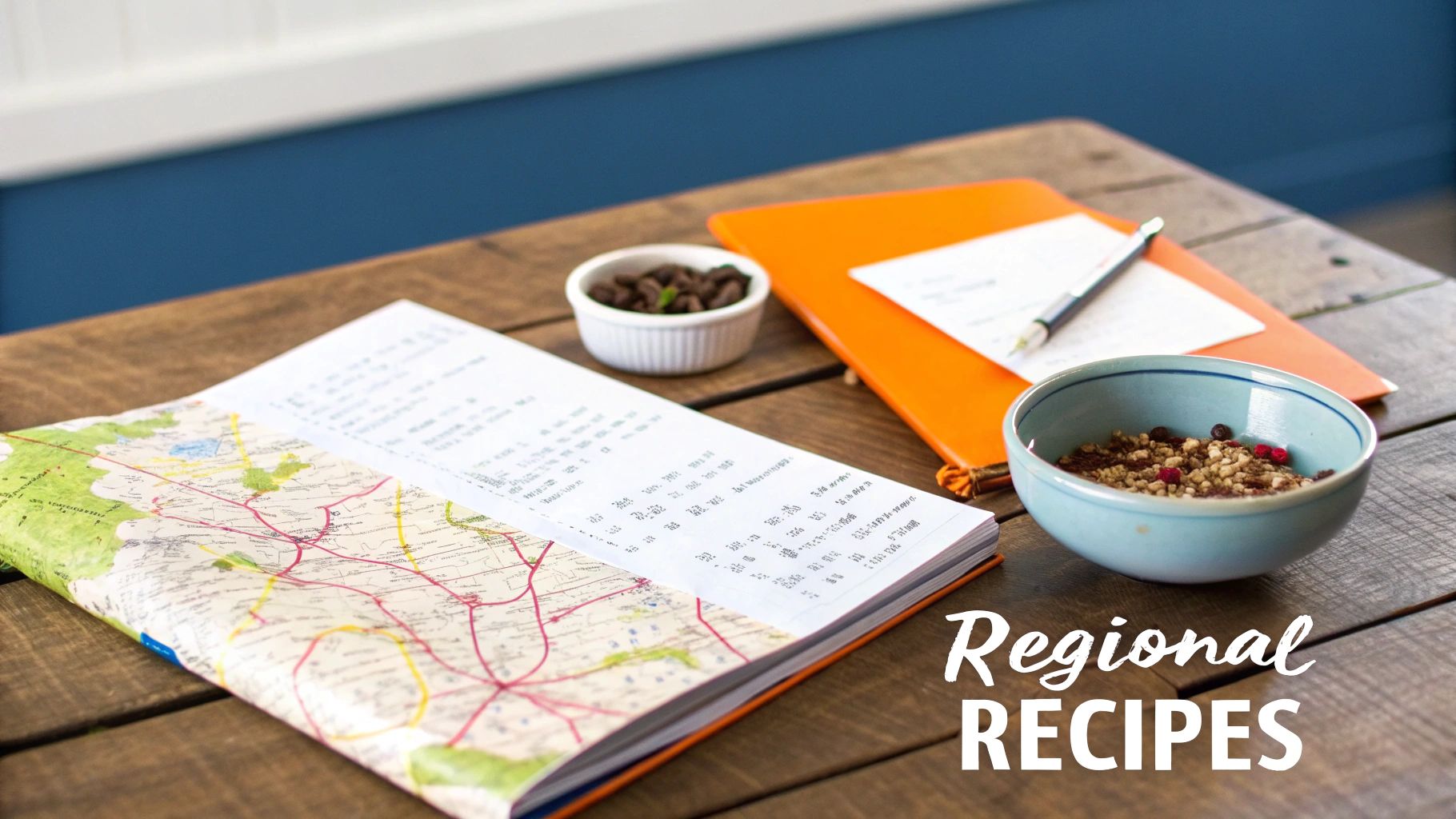
Authors like Yotam Ottolenghi and Fuchsia Dunlop have popularized this genre by blending storytelling with meticulously researched recipes. For those passionate about exploring diverse culinary landscapes, consider inspiration from the 10 best places to visit for foodies to enhance your regional cookbook collection. These books are ideal for anyone looking to connect with their heritage or document their food journey across different cuisines.
Key Takeaway: Regional cookbooks are more than recipe collections; they are travelogues and history lessons that connect you to the heart of a culture through its food.
How to Organize in Savor
- Create Region-Specific Lists: Dedicate separate lists in Savor to track dishes from different countries, like "Northern Italian Dishes" or "Oaxacan-Inspired Meals."
- Document Variations: Use Savor’s notes to compare the same dish across different regional cookbooks. How does a Bahamian steamed chicken differ from other Caribbean versions? For more insight, you can explore traditional Bahamian food and document your findings.
- Track Ingredient Swaps: Rate like a critic to find the best local alternatives for hard-to-find items, perfecting the recipe for your own pantry.
2. Wellness & Dietary Restriction Cookbooks
This growing category is designed for home cooks focused on specific health goals or dietary needs. These cookbooks offer more than just meal ideas; they provide a framework for eating styles like plant-based, gluten-free, or paleo. They are structured to help you achieve particular health outcomes, often including nutritional information while ensuring the recipes are both flavorful and satisfying.
Pioneers like Ella Mills (Deliciously Ella) have shown that health-conscious cooking can be accessible and delicious. These books are perfect for anyone managing allergies, seeking to improve their energy levels, or simply wanting to adopt a more mindful eating pattern. They empower you to take control of your health without sacrificing the joy of food.
Key Takeaway: Wellness cookbooks are practical guides that bridge the gap between nutritional science and the everyday kitchen, making specialized diets feel achievable and enjoyable.
How to Organize in Savor
- Create Goal-Oriented Lists: Dedicate specific lists in Savor to your wellness journey, such as "High-Protein Vegan Meals" or "Gluten-Free Bakes."
- Document How You Feel: Use Savor’s notes to track not just taste but also how certain meals affect your energy and satisfaction. This is a great first step if you want to learn how to start intuitive eating.
- Rate Dietary Swaps: Track and rate your favorite ingredient modifications, like using maple syrup instead of sugar, to perfect recipes for your needs.
3. Quick & Easy/Weeknight Meal Cookbooks
This indispensable category is tailored for a fast-paced lifestyle, focusing on meals that can be prepared in 30 minutes or less. These cookbooks prioritize efficiency, featuring simplified techniques and minimal ingredients. They are the go-to resource for busy professionals, parents, and anyone looking to avoid the temptation of takeout after a long day.
Authors like Alison Roman have mastered this genre by proving that convenience doesn't mean sacrificing quality or taste. Her recipes offer practical, reliable solutions for time-crunched home cooks. These books are perfect for building a repertoire of dependable dishes that fit seamlessly into a hectic schedule.
Key Takeaway: Weeknight meal cookbooks are tactical guides for the time-poor cook, transforming the daily question of "what's for dinner?" into a simple, stress-free activity.
How to Organize in Savor
- Create a "Weeknight Wins" List: Dedicate a special list in Savor to your most reliable quick meals. Track preparation times and satisfaction ratings to identify your top-performing recipes for busy evenings.
- Document Time-Saving Hacks: Use the notes feature to record shortcuts that worked well. Did swapping fresh garlic for garlic powder save time without losing flavor? Make a note.
- Compare "Quick" Claims: Rate like a critic by comparing a recipe's actual cooking time to the book's estimate. This helps you build a truly realistic list of go-to meals you can trust.
4. Professional Chef & Fine Dining Cookbooks
This advanced category brings the precision and artistry of the professional kitchen into your home. Penned by acclaimed chefs, these cookbooks are intensive guides to mastering sophisticated methods and restaurant-quality presentation. They serve as both technical manuals and sources of culinary inspiration for the ambitious home cook.
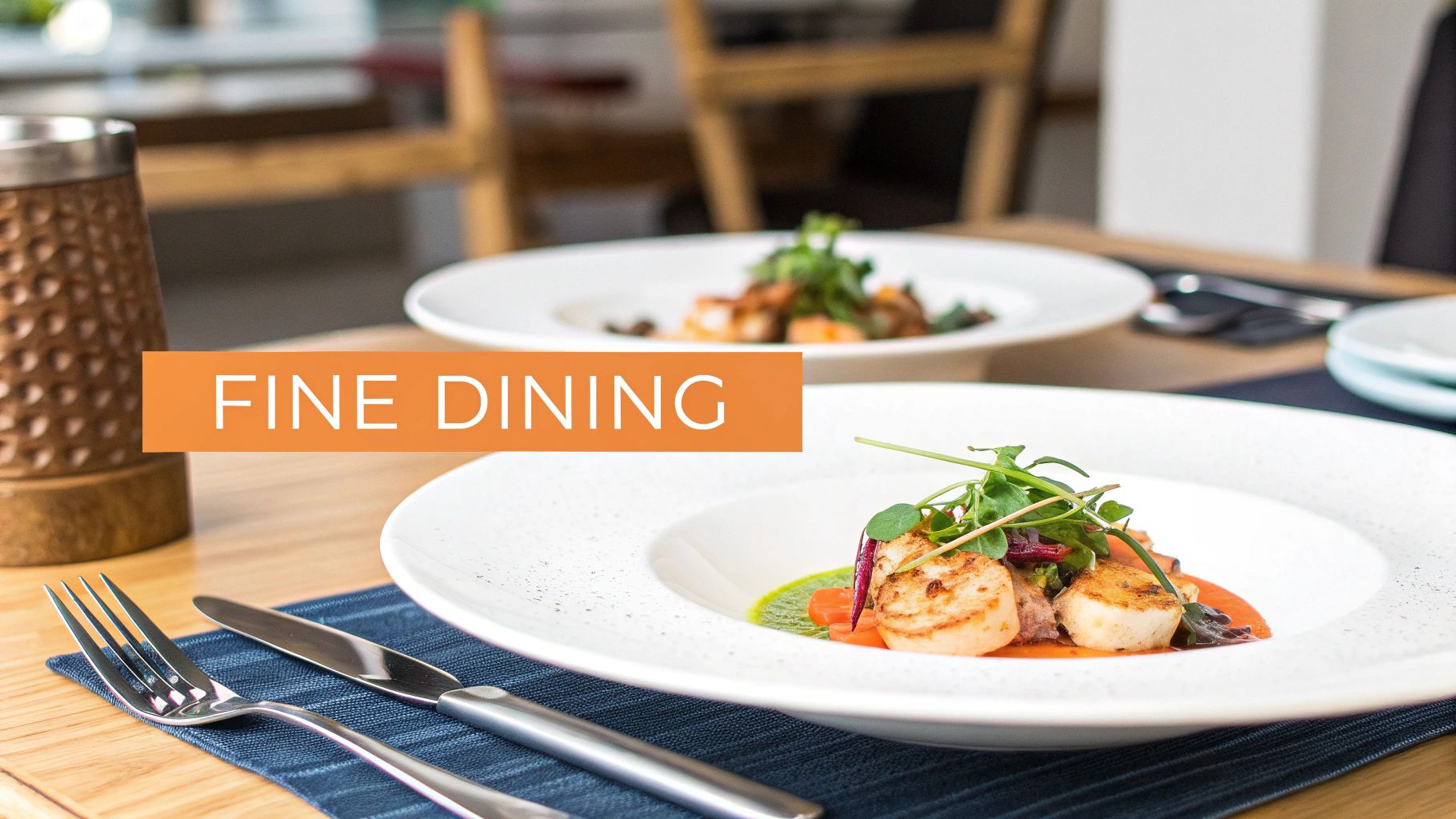
Modern masters such as Thomas Keller and Samin Nosrat have made professional techniques more accessible. Their works are essential for those looking to elevate their skills beyond basic recipes. These books are ideal for serious cooks who want to deconstruct complex dishes, understand foundational principles, and push their culinary boundaries.
Key Takeaway: Professional chef cookbooks are less about quick meals and more about mastering the foundational techniques that create extraordinary culinary experiences.
How to Organize in Savor
- Rate by Difficulty: Use Savor’s rating system to track recipes by both execution difficulty and final outcome. This helps you identify which challenging dishes are worth the effort.
- Document Core Techniques: Create a list titled "Mastered Techniques" and use notes to detail which skills—like making a perfect mother sauce—have most improved your cooking.
- Compare to Restaurant Originals: If you've tried a chef's dish at their restaurant, use Savor to log your experience and compare it side-by-side with your homemade version.
- Track Ingredient Sourcing: Keep a dedicated list in Savor to note where you successfully found high-quality or specialty ingredients required for fine dining recipes.
5. Cultural & Ethnic Specialty Cookbooks
This powerful category goes beyond simple geography to offer a deep and personal exploration of a specific culture's culinary heritage. Often written by authors with direct lineage to the traditions they document, these cookbooks are a blend of recipes, family stories, and historical context. They preserve authentic techniques and ingredient knowledge, celebrating the food that shapes cultural identity.
Authors like Michael Solomonov (Zahav) have brought these narratives to the forefront, showing how food is intertwined with memory and family. Unlike broader regional cookbooks, these specialty books often focus on the subtle nuances and rituals that define a cuisine, from holiday meals to everyday family dishes. They are perfect for anyone wanting to connect with their own heritage or explore the culinary traditions of others with respect.
Key Takeaway: Cultural cookbooks are intimate portraits of a people, told through recipes. They offer a way to understand history, family, and tradition one dish at a time.
How to Organize in Savor
- Create Heritage Lists: Dedicate specific lists in Savor to a cuisine you're exploring, such as "Jewish Holiday Baking" or "Classic Korean Banchan."
- Document Cultural Notes: Use Savor’s notes feature to jot down the cultural significance of a dish. Is it for a specific celebration? What family story did the author share? This adds depth to your cooking.
- Rate for Authenticity: Track how closely your recreated dish matches your expectations, noting any ingredient substitutions and how they impacted the final flavor.
6. Ingredient-Focused & Single-Ingredient Cookbooks
This category elevates a single ingredient, transforming it from a simple component into the star of the show. Whether dedicated to tomatoes, mushrooms, or chocolate, these cookbooks explore the chosen ingredient's history, versatility, and optimal preparation methods. They are deep dives that teach you how to maximize flavor and appreciate the subtle nuances of one specific item.
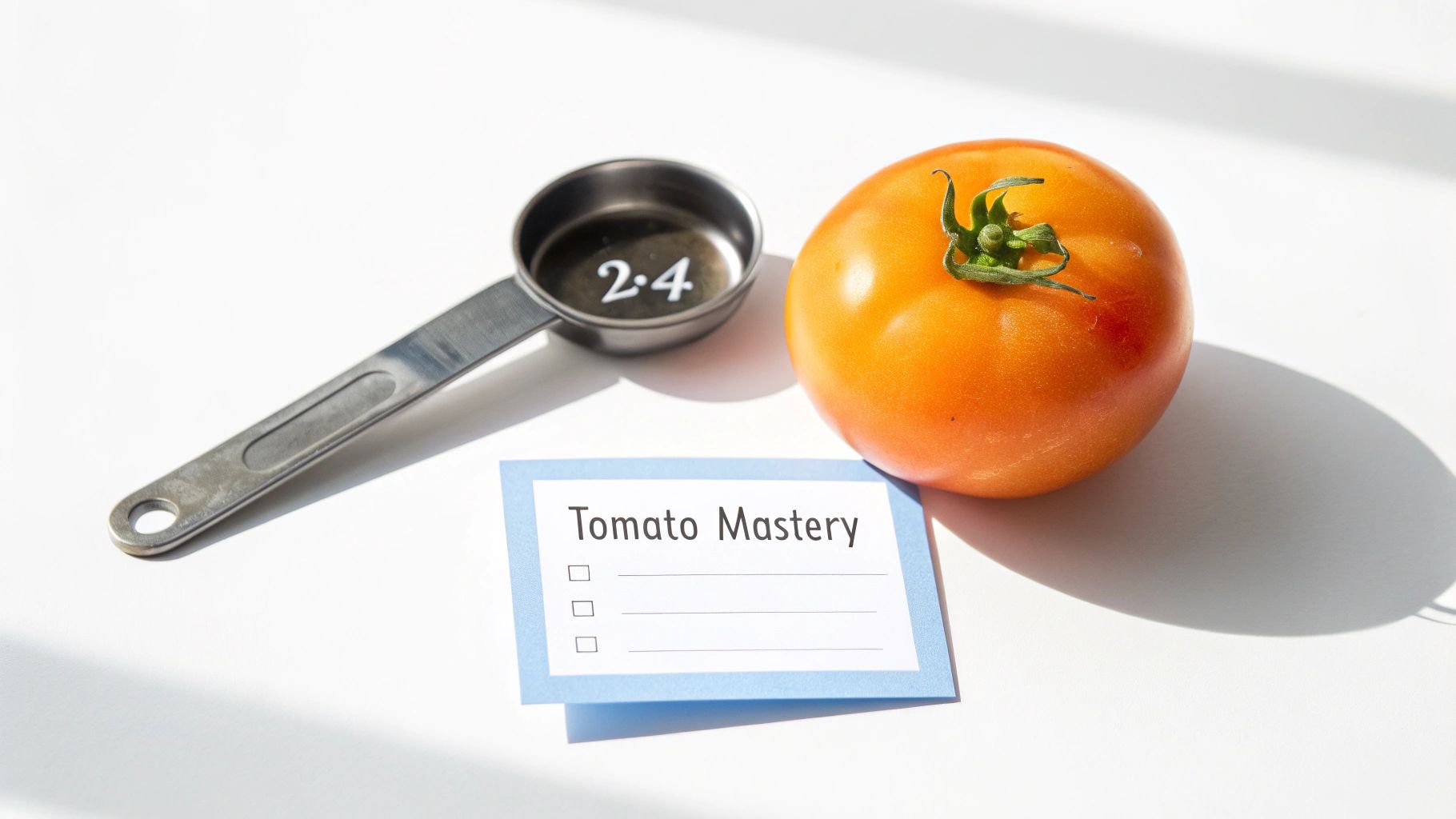
Authors like Samin Nosrat (Salt, Fat, Acid, Heat) have championed this fundamental approach, teaching cooks to master the building blocks of flavor rather than just memorizing steps. These books are perfect for curious home cooks who want to move beyond following recipes and start creating them. By truly understanding an ingredient, you gain the confidence to improvise and develop your own culinary style.
Key Takeaway: Single-ingredient cookbooks build culinary intuition by focusing on mastery of a core component, turning a home cook into a more knowledgeable and creative chef.
How to Organize in Savor
- Create Ingredient-Centric Lists: Build lists around a single ingredient, such as "Heirloom Tomato Dishes" or "Dark Chocolate Desserts," to compare its performance in different roles.
- Track Ingredient Variations: Use Savor’s rating and notes features to document your preferences. Do you prefer San Marzano or Roma tomatoes for sauce? Note your findings to refine future dishes.
- Document Sourcing: Keep a record of where you sourced premium ingredients. Note which farm stand had the best summer corn or which online store sells the most fragrant vanilla beans.
7. Food Memory & Food Writing Memoirs
This deeply personal category blends storytelling with culinary instruction. More than just a collection of recipes, these are memoirs that explore an author's life through the lens of food. They connect dishes to powerful memories, cultural identity, and emotional journeys, creating a rich, narrative-driven experience for readers who believe food is a story.
Authors like Michelle Zauner (Crying in H Mart) masterfully weave personal essays with recipes that anchor their stories. These experiential cookbooks invite you to cook not just a dish, but a memory. For those inspired to document their own culinary narrative, learning how to write a memoir outline can provide a blueprint. This category proves a recipe's most important ingredients are often the feelings associated with it.
Key Takeaway: Food memoirs remind us that recipes are living history, capturing moments of joy, sorrow, and connection that can be relived in the kitchen.
How to Organize in Savor
- Create Narrative-Driven Lists: Build lists that connect dishes to life events, such as "College Comfort Foods" or "Recipes from Grandma’s Kitchen," to create your own food memoir.
- Document the Story: Use Savor’s notes feature to record the personal memories, stories, or feelings associated with each recipe you try or create.
- Rate for Emotional Satisfaction: Go beyond taste and rate dishes based on their emotional resonance. Does a particular meal make you feel nostalgic, comforted, or celebratory?
8. Comparative & Technique-Based Cookbooks
This category shifts the focus from specific ingredients to the fundamental principles of cooking. Instead of just providing recipes, these books teach the "why" behind the methods, empowering home cooks with transferable skills. They explore core techniques like braising, showing how mastering one skill can unlock countless dishes.
Authors like Samin Nosrat (Salt, Fat, Acid, Heat) have championed this educational approach. Their works break down complex culinary science into accessible principles. These cookbooks are perfect for cooks who want to move beyond simply following instructions and learn to improvise with confidence. By understanding the science and art of a technique, you build a versatile culinary toolkit.
Key Takeaway: Technique-based cookbooks are foundational culinary textbooks that teach you how to cook, not just what to cook, building skills that apply to any recipe.
How to Organize in Savor
- Create Technique-Focused Lists: Dedicate lists in Savor to specific skills you are practicing, such as "Mastering Emulsions" or "Braising Experiments," to track your progress and rate outcomes.
- Document Nuances: Use the notes field to compare how the same technique is applied across different cuisines. How does French braising differ from a Chinese red-braise? Note the variations.
- Track Your Skill Progression: Rate your execution of a technique over time. Your first attempt at a hollandaise might be a 3/5, but after a few tries, you can document your improvement and note what adjustments led to success.
9. Family & Heirloom Recipe Cookbooks
This deeply personal category is less about culinary masters and more about preserving the heart of a home. Family and heirloom cookbooks are collections of recipes passed down through generations, celebrating the dishes that define family gatherings and holidays. They are living documents, often filled with handwritten notes, stories, and adaptations that tell a family's history.
These books are for anyone looking to connect with their roots or preserve their heritage. Authors like Michelle Zauner beautifully articulate the power of these food traditions. This category shows how a simple recipe can be a powerful link to personal history, making it one of the most meaningful types of recipe book categories.
Key Takeaway: Heirloom cookbooks are more than just instructions; they are edible archives that keep family stories, memories, and traditions alive for the next generation.
How to Organize in Savor
- Build a Digital Family Archive: Use Savor to create a digital version of your family's cookbook. You can learn more about how to create a family cookbook to preserve these precious recipes and their stories.
- Document Recipe Evolution: Use the notes feature to track how a single family recipe, like a classic lasagna, has changed over time. Document your grandmother's original method versus your modern take.
- Compare Family Versions: Create lists to compare different family members’ unique takes on the same traditional dish. Whose brisket recipe reigns supreme? Rate them side-by-side to find out.
10. Dietary Philosophy & Ethical Eating Cookbooks
This growing category connects the kitchen to a broader set of values, focusing on how our food choices impact the world. These cookbooks emphasize principles like sustainability, ethical sourcing, and zero-waste practices. They are for the conscious consumer who believes that what we eat is a statement about the kind of world we want to support.
Authors like Michael Pollan and Alice Waters pioneered this space by linking food ethics to everyday cooking. These books provide not just recipes, but a framework for making more informed and impactful decisions at the grocery store and in the kitchen. They are ideal for anyone looking to align their eating habits with their personal values, whether that means supporting local farmers or minimizing environmental footprints.
Key Takeaway: Ethical eating cookbooks empower you to cook with intention, transforming every meal into an opportunity to support your values and contribute to a more sustainable food system.
How to Organize in Savor
- Track Your Sources: Use Savor’s notes feature to document where you source your ingredients, such as a specific farm, local market, or ethical brand.
- Create Values-Based Lists: Dedicate lists in Savor to specific principles, like "Zero-Waste Recipes" or "Fair Trade Ingredient Dishes," to track your progress.
- Rate and Compare: Document and rate different versions of a recipe, comparing a conventional version with one made using ethically sourced ingredients. Note differences in taste, cost, and satisfaction.
10-Category Cookbook Comparison
| Category | Implementation complexity | Resource requirements | Expected outcomes | Ideal use cases | Key advantages |
|---|---|---|---|---|---|
| Travel & Regional Cuisine Cookbooks | Medium — varied regional techniques and steps | Variable — regional ingredients, occasional specialty tools | Authentic regional dishes and cultural understanding | Frequent travelers, cuisine explorers recreating discoveries | Deep authenticity, cultural context, comparative regional insight |
| Wellness & Dietary Restriction Cookbooks | Low–Medium — recipe adaptation and nutrition tracking | Specialized ingredients/substitutes, nutrition info | Nutritional adherence and improved health outcomes | People with dietary needs, wellness-focused eaters | Clear nutrition guidance, dietary compliance, substitution options |
| Quick & Easy / Weeknight Meal Cookbooks | Low — simple techniques, short prep times | Minimal pantry staples, basic equipment | Fast, reliable meals that increase home cooking frequency | Busy parents, weeknight cooks, beginners | Time-saving, budget-friendly, highly accessible |
| Professional Chef & Fine Dining Cookbooks | High — advanced techniques, precision required | Specialty equipment, high-quality/rare ingredients, time | Restaurant-quality results and advanced technique mastery | Serious home cooks, culinary students, content creators | Technique depth, aspirational presentation, flavor theory |
| Cultural & Ethnic Specialty Cookbooks | Medium–High — authentic, sometimes time-intensive methods | Specialty ingredients, cultural context, possible translation needs | Preserved culinary heritage and genuinely authentic dishes | Cultural food enthusiasts, respectful home cooks | Authentic recipes, cultural stories, heritage preservation |
| Ingredient-Focused & Single-Ingredient Cookbooks | Medium — deep technique variety around one ingredient | High-quality source of featured ingredient, seasonal considerations | Mastery of an ingredient and creative, waste-reducing uses | Ingredient enthusiasts, cooks seeking specialty skills | Focused expertise, ingredient versatility, reduced waste |
| Food Memory & Food Writing Memoirs | Low–Medium — recipes often secondary to narrative | Fewer practical requirements; emphasis on reading and reflection | Emotional engagement, inspiration, personal food reflection | Readers who enjoy memoirs, food writers, solo travelers | Emotional resonance, narrative-driven inspiration, memorable context |
| Comparative & Technique-Based Cookbooks | Medium–High — teaches transferable methods and troubleshooting | Some specialized tools, willingness to experiment and iterate | Transferable skills, greater cooking confidence and adaptability | Home cooks seeking skill growth, culinary educators | Fundamental techniques, cross-cultural applications, experimentation |
| Family & Heirloom Recipe Cookbooks | Low–Medium — informal methods, generational variations | Family knowledge, possible non-standard measurements | Preserved family heritage and meaningful shared recipes | Parents, family historians, community cooks | Personal preservation, generational connection, sentimental value |
| Dietary Philosophy & Ethical Eating Cookbooks | Medium — planning and mindset shifts required | Ethically sourced, seasonal ingredients; research and sourcing effort | Values-aligned eating, sustainable choices, community impact | Sustainability advocates, ethically-minded eaters | Aligns food with values, supports sustainable sourcing, social impact |
Build Your Personal Food Library, One Dish at a Time
Thinking in categories transforms a chaotic collection of recipes into a personal database of your culinary life. We’ve explored cookbooks from regional guides that transport you across continents to wellness manuals that align with your health goals. The goal isn't just to cook, but to understand what you love and why.
This structured approach helps you see the patterns in your palate and chronicle your journey as a home cook. Mastering these recipe book categories provides the framework for a more intentional cooking practice. You stop seeing individual recipes and start seeing a connected web of techniques, flavors, and memories that define your unique culinary identity.
Your Actionable Next Steps
To put these ideas into practice, start small and build momentum.
- Start with Your Favorites: Choose five of your most-loved recipes, whether they come from a worn-out cookbook, a blog post, or a handwritten card.
- Apply Multiple Tags: For each recipe, assign at least two categories from our list. A family lasagna might be tagged as Family & Heirloom and Cultural & Ethnic Specialty (Italian).
- Identify Your Primary Focus: Look at the tags you've used most. Do you lean toward Quick & Easy meals, or are you an explorer of Travel & Regional Cuisines? This helps you consciously expand your collection.
- Create a "To-Try" List: As you browse recipes, use these categories to tag dishes you want to make. This creates a curated, organized, and inspiring culinary bucket list.
Ultimately, organizing your recipes is about more than just finding what you want to cook. It’s about building a personal food library that reflects your past, serves your present, and inspires your future. Each category is a chapter in your food story, and every tagged recipe is a memory waiting to be made or revisited.
Ready to turn your culinary explorations into a searchable, private food diary? Go beyond the bookshelf and start documenting every memorable dish. Savor is a food memory database designed to help you organize your experiences, track tastes, and rate like a critic—all in one place. Download Savor today and begin building the ultimate chronicle of your food story.