

What Is a Flavor Profile and How Do You Read One | Savor
John the smoothie monster
John lives for smoothie bowls and cold-pressed juices. He uses Savor to remember his best blends.
What Is a Flavor Profile? Definition, Cuisine Guide & Tasting Method You know that dish you can't stop thinking about? The one you'd travel across town for?...
What Is a Flavor Profile? Definition, Cuisine Guide & Tasting Method
You know that dish you can't stop thinking about? The one you'd travel across town for? Its secret is its flavor profile - and you can learn to decode it in four steps.
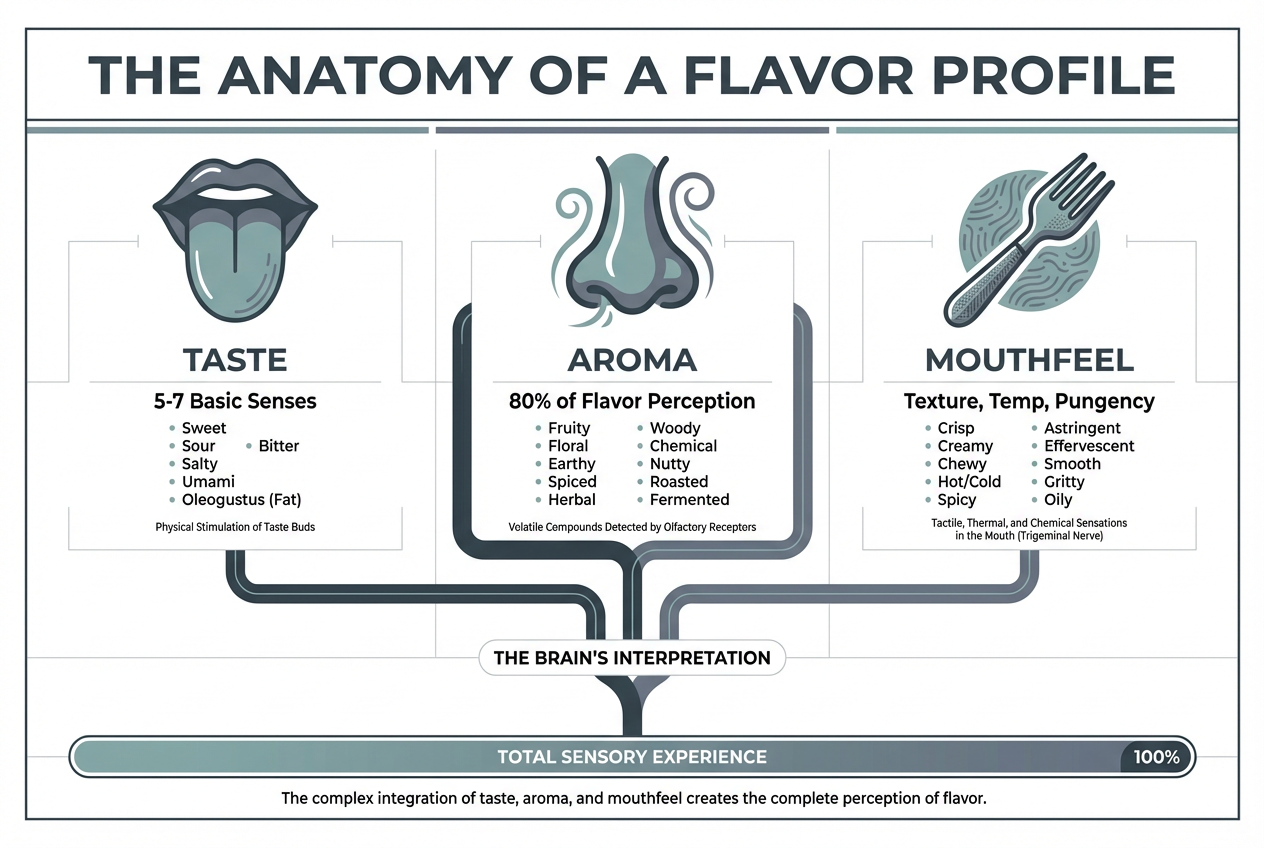
A flavor profile is the complete sensory signature of a dish. It's not just what your tongue detects. It's the interplay between taste (sweet, salty, bitter), aroma (what your nose picks up), and mouthfeel (texture, temperature, physical sensation). These three elements working together create what your brain registers as "flavor."
This isn't culinary school jargon. Understanding flavor profiles changes how you cook, order at restaurants, and remember exceptional meals. You'll finally have the vocabulary to explain why you love that particular ramen shop or what makes your grandmother's marinara unrepeatable.
The food industry knows this intimately. North America captures over 24% of the global flavors market, with food products accounting for nearly 65% of that demand. Companies invest millions in getting flavor profiles right because they directly influence what people buy and remember.
Table of Contents
- The Three Pillars: Taste, Aroma, and Mouthfeel
- How the Five Basic Tastes Interact
- Common Cuisine Flavor Profiles: A Global Reference
- Four Flavor Families You Already Know
- How to Balance Flavors When You've Gone Too Far
- The Four-Step Tasting Method
- Building Flavor Profiles in Your Kitchen
- Common Questions About Flavor Profiles
The Three Pillars: Taste, Aroma, and Mouthfeel
Every flavor profile rests on three sensory foundations. Think of them as the primary colors you mix to create infinite variations.
Pillar 1: Taste
Taste is the most straightforward - it's what your tongue's receptor cells detect. You're working with five basic sensations:
- Sweet - Sugars, honey, ripe fruit
- Salty - Table salt, soy sauce, cured meats
- Sour - Vinegar, citrus, fermented foods
- Bitter - Dark chocolate, coffee, kale
- Umami - Mushrooms, aged cheese, tomatoes, fish sauce
These aren't just isolated hits. They interact. Salt makes sweetness taste sweeter by suppressing bitter receptors. Acid cuts through fat and makes dishes taste brighter. Bitter balances excessive sweetness. Professional cooks manipulate these interactions constantly.
Pillar 2: Aroma
Here's the thing most people miss: smell accounts for roughly 80% of what your brain interprets as flavor. When you have a stuffy nose and food tastes like cardboard, that's aroma's absence.
Aroma compounds are volatile - they evaporate and travel up your nasal passages both through your nose (orthonasal) and the back of your throat while chewing (retronasal). This is why the same dish can smell different than it tastes.
The aromatic dimension includes:
- Fruity - Berries, tropical notes, citrus zest
- Floral - Lavender, rose, jasmine
- Earthy - Mushrooms, beets, truffles
- Smoky - Grilled meat, roasted peppers, bacon
- Spicy/Pungent - Black pepper, ginger, chili
Pillar 3: Mouthfeel
Mouthfeel is the physical experience. It's what makes potato chips satisfying beyond their salt content, or why a silky custard feels luxurious while scrambled eggs don't.
Common mouthfeel descriptors:
- Creamy - Avocado, hollandaise, panna cotta
- Crunchy - Fresh vegetables, fried chicken skin, nuts
- Chewy - Caramel, dried fruit, al dente pasta
- Tender - Braised short ribs, ripe peaches
- Crisp - Apples, lettuce, crackers
Temperature plays a role here too. Cold dulls flavor perception (ice cream needs more sugar than you'd think), while heat amplifies aromatic compounds.
Beyond the Basic Five
Researchers continue to debate additional taste categories. Pungent (the burn from capsaicin in chili peppers or piperine in black pepper) stimulates pain receptors rather than taste buds, but your brain registers it as part of the flavor experience. Astringent (the dry, puckering sensation from tea tannins or unripe persimmons) is a tactile feeling rather than a taste. Some scientists recognize oleogustus - the taste of fat itself - as a sixth basic taste, though this remains controversial.
How the Five Basic Tastes Interact
Understanding taste interactions is the difference between following a recipe blindly and actually cooking. Here's how the five basic tastes enhance or balance each other:
| Taste | Enhances | Balances | Example |
|---|---|---|---|
| Salt | Sweet, Umami | Bitter | A pinch of salt in chocolate chip cookies makes them taste sweeter |
| Sweet | Umami | Bitter, Sour, Spicy | Honey in a vinaigrette mellows sharp acidity |
| Sour/Acid | Salt | Fat, Sweet | Lemon juice cuts through the richness of salmon |
| Bitter | Sweet | Excessive Sweet | Dark chocolate balances caramel in desserts |
| Umami | Salt, Sweet | - | Parmesan amplifies the savory depth in tomato sauce |
Why this matters: When you oversalt a soup, adding acid (lemon juice) or a touch of sugar can bring it back into balance without making it taste sweet or sour. The tastes don't cancel out - they create a more complex perception where no single element dominates.
Take a classic marinara sauce. The primary flavor is sweet-acidic from tomatoes. The secondary flavors are umami from garlic and parmesan, with herbal notes from basil. The tertiary layer might be a slight bitterness from olive oil and oregano. Professional chefs build dishes in these layers, ensuring each one supports rather than competes with the others.
Common Cuisine Flavor Profiles: A Global Reference
Every regional cuisine has a recognizable signature - a combination of spices, acids, fats, and aromatics that makes a dish immediately identifiable. These are the building blocks professional cooks use to create authentic flavors without consulting recipes.
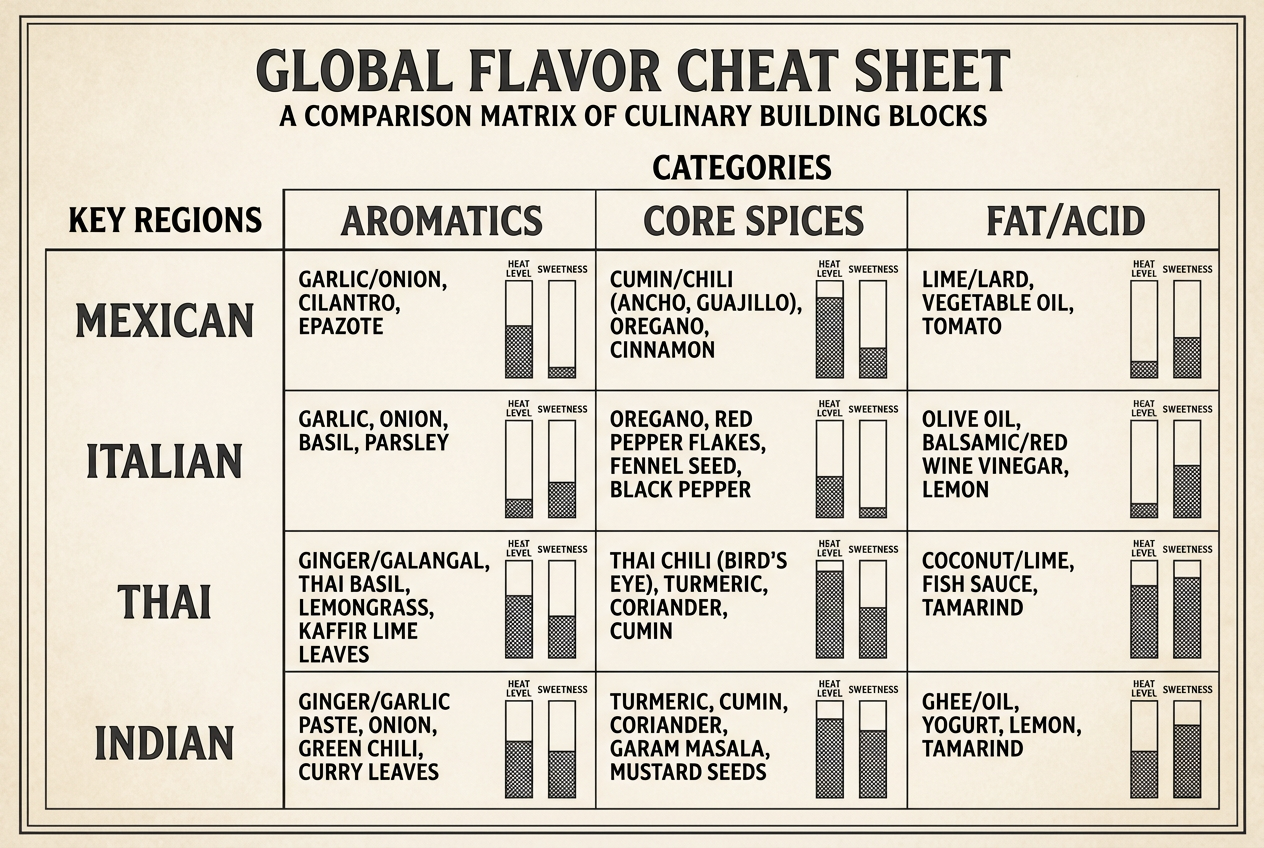
Here's your reference guide:
| Cuisine | Key Spices | Acid Component | Fat Base | Signature Aromatics | Example Dish |
|---|---|---|---|---|---|
| Mexican | Cumin, chili powder, oregano, coriander | Lime juice, tomatillos | Lard, vegetable oil | Cilantro, onion, garlic | Carnitas tacos |
| Italian | Basil, oregano, fennel, rosemary | Tomatoes, red wine vinegar, lemon | Olive oil, butter | Garlic, onion, parsley | Spaghetti pomodoro |
| Thai | Lemongrass, galangal, coriander root, white pepper | Lime juice, tamarind | Coconut milk, peanut oil | Thai basil, cilantro, kaffir lime | Tom yum soup |
| Indian | Cumin, coriander, turmeric, garam masala, fenugreek | Tamarind, lemon, yogurt | Ghee, mustard oil | Ginger, garlic, curry leaves | Chicken tikka masala |
| Japanese | Ginger, wasabi, shichimi togarashi | Rice vinegar, citrus (yuzu) | Sesame oil, mirin | Scallions, nori, bonito | Miso ramen |
| Mediterranean | Oregano, thyme, sumac, za'atar | Lemon juice, pomegranate molasses | Olive oil, tahini | Parsley, mint, garlic | Fattoush salad |
| French | Thyme, tarragon, herbes de Provence, bay leaf | Wine (red/white), shallot vinegar | Butter, duck fat, cream | Shallots, garlic, parsley | Coq au vin |
| Middle Eastern | Cumin, cinnamon, cardamom, sumac, allspice | Lemon juice, pomegranate | Olive oil, tahini, ghee | Mint, parsley, onion | Lamb shawarma |
| Korean | Gochugaru, sesame, ginger, garlic | Vinegar, fermented pastes | Sesame oil, perilla oil | Scallions, garlic, ginger | Kimchi jjigae |
| Caribbean | Allspice, nutmeg, cinnamon, scotch bonnet | Lime juice, sour orange | Coconut oil, butter | Thyme, scallions, garlic | Jerk chicken |
How to use this: If you want to make something taste "Thai," you don't need a recipe. Start with a fat base (coconut milk), add acid (lime), layer in aromatics (lemongrass, Thai basil), and season with the spice profile (galangal, white pepper). The specific ratios matter less than hitting all four categories.
Ready to start cataloging your flavor discoveries? Download Savor to build your personal flavor library and never lose track of an exceptional dish.
Four Flavor Families You Already Know
Once you recognize the three pillars, you'll start noticing patterns. Most dishes fall into one of four broad flavor families - categories that tell you immediately what the chef is trying to accomplish.
Bold and Savory
This family is built on umami and salt, usually with deep, earthy aromas and a rich mouthfeel. These are comfort foods - the dishes that feel like a warm blanket.
Examples: Slow-cooked beef stew, mushroom risotto, miso soup, aged cheddar, soy-braised short ribs, French onion soup
Characteristics: Dark colors, complex smells (roasted, caramelized, fermented), hearty textures
Light and Fresh
The opposite end of the spectrum. High acidity, bright aromatics (citrus, herbs), and a crisp or delicate mouthfeel define this family.
Examples: Ceviche, caprese salad, Vietnamese spring rolls, gazpacho, sashimi, arugula with lemon vinaigrette
Characteristics: Vibrant colors, clean flavors, little to no cooking, refreshing finish
Sweet and Rich
These dishes lead with sweetness but balance it with fat for complexity. They're indulgent without being cloying.
Examples: Crème brûlée, honey-glazed salmon, caramelized onions, brown butter gnocchi, Thai mango sticky rice
Characteristics: Golden-brown colors, smooth or creamy textures, often involves caramelization
Spicy and Complex
Not just about heat - this family layers multiple tastes (often all five) with pungent aromatics to create depth.
Examples: Sichuan mapo tofu, Louisiana gumbo, Indian vindaloo, Korean kimchi stew, Mexican mole
Characteristics: Multiple spice notes, layered cooking methods, builds heat gradually
Recognizing which family a dish belongs to is your shortcut to predicting whether you'll enjoy it. If you consistently love Bold and Savory dishes, you can scan any menu and identify candidates immediately.
How to Balance Flavors When You've Gone Too Far
Every cook overshoots occasionally. A dish becomes too salty, too acidic, or aggressively spicy. Here's your troubleshooting guide for correcting flavor profile mistakes:
| Problem | Solution | Why It Works | Example |
|---|---|---|---|
| Too Salty | Add acid (vinegar, citrus) or sweet (sugar, honey) | Sour and sweet flavors distract taste receptors from saltiness | Over-salted soup: add a splash of lemon juice and a pinch of sugar |
| Too Sweet | Add acid or bitter | Acid provides contrast; bitter compounds block sweet receptors | Too-sweet barbecue sauce: stir in apple cider vinegar or coffee |
| Too Acidic | Add fat or sweet | Fat coats the tongue and mutes acidity; sweet balances sour | Harsh vinaigrette: whisk in more olive oil or a touch of honey |
| Too Bitter | Add salt or sweet | Salt enhances perception of other flavors; sweet provides direct contrast | Bitter greens: dress with salty cheese and balsamic reduction |
| Too Spicy | Add fat or sweet | Capsaicin is fat-soluble; sweet distracts pain receptors | Scorching curry: stir in coconut milk or serve with mango chutney |
| Flat/Boring | Add acid, salt, or aromatic herbs | Acid and salt amplify existing flavors; aromatics add complexity | Bland stew: finish with red wine vinegar, flaky salt, and fresh parsley |
Important: Don't try to "cancel out" a mistake by dumping in the opposite flavor. You'll end up with a dish that tastes both too salty AND too sweet. Instead, add the balancing element gradually, tasting as you go, until the aggressive flavor recedes into the background.
The balancing act is what separates adequate cooking from memorable dishes. Professional chefs taste constantly during cooking - not just to check if something is "done," but to monitor the flavor profile's evolution and make micro-adjustments before the dish gets away from them.
The Four-Step Tasting Method
Identifying a flavor profile isn't a mystical skill. It's a systematic process anyone can learn. Here's how professionals deconstruct dishes:
Step 1: Observe Before You Taste
Look at the dish. Color tells you a lot - golden browns suggest caramelization (sweet, nutty), deep reds indicate tomatoes or chilies (acidic, spicy), pale creams hint at dairy (rich, mild). Notice texture contrasts. Is there a crispy element on a soft base? Those physical cues prepare your palate.
Smell the dish. Lean in and inhale deeply through your nose. What hits first? Herbal notes? Smokiness? Fruity brightness? Your olfactory system primes your taste expectations.
Step 2: Take a Small, Deliberate Bite
Don't just shovel it in. Take a modest portion and chew slowly. Let the food move around your mouth so it contacts all taste receptors - sweet receptors are concentrated at the tip of your tongue, bitter at the back.
Notice the initial taste. What hits first? Is it sweet, salty, or acidic? This is the primary flavor - the dominant taste the dish leads with.
Step 3: Identify the Layers
As you continue chewing, secondary flavors emerge. Maybe that initial sweetness is now balanced by umami. Perhaps there's a subtle bitterness or an herbal note developing.
Pay attention to retronasal aroma - the smell you perceive through the back of your throat while eating. This is where most complexity lives. That "taste" of basil or roasted garlic is actually aromatic compounds traveling up your nasal cavity.
Step 4: Assess the Finish
After you swallow, what lingers? Some dishes have a long finish (the flavor persists), others are clean and short. Spicy heat, bitterness, and umami tend to stick around. Bright, acidic flavors fade quickly.
Notice mouthfeel evolution. Does the dish coat your tongue (fat-based)? Leave it feeling dry (astringent)? Create a slight burn (spicy)? These sensations complete the profile.
Practice exercise: Order the same dish from three different restaurants. Use this four-step method on each version and take notes. You'll quickly develop a vocabulary for what you prefer and why one version beats the others.
Building Flavor Profiles in Your Kitchen
Understanding flavor profiles isn't just about analyzing restaurant meals. It transforms how you cook at home by giving you a framework for improvisation.
Start with a Cuisine Template
Pick a cuisine from the reference table above. Let's say Thai. You now have a blueprint:
- Fat base: Coconut milk
- Acid: Lime juice
- Aromatics: Lemongrass, Thai basil, ginger
- Spices: White pepper, coriander
Choose any protein (chicken, shrimp, tofu) and any vegetables. As long as you hit those four categories, the dish will taste recognizably Thai. The specific proportions matter less than including all the signature elements.
Layer Flavors in Stages
Professional cooks build flavor profiles in phases rather than dumping everything in at once:
Foundation layer (aromatics cooked in fat): Onions, garlic, ginger - these provide the base aromatic profile.
Body layer (main ingredients and spices): This is where you add proteins, vegetables, and dried spices. The spices bloom in the fat and coat the main ingredients.
Liquid layer (stocks, wines, tomatoes): Liquids carry flavor and create sauce. This is when acid often comes in (wine, citrus, tomatoes).
Finishing layer (fresh herbs, final acid, fat): Right before serving, add delicate fresh herbs, a squeeze of citrus, or a drizzle of quality olive oil. These bright notes sit on top of the developed flavors without cooking out.
Correct as You Go
Taste after each layer. If the foundation layer (just the aromatics) tastes flat, add salt now - it will season every subsequent layer. If the body tastes one-dimensional after adding the main ingredients, consider what's missing: Acid? Sweetness? An additional aromatic?
This iterative approach prevents the need for drastic corrections at the end.
Your Turn
Try this tonight: Pick your favorite dish and map it to one of the cuisine profiles above. What's the dominant taste? Which aroma makes it recognizable? Which mouthfeel components stand out? Write it down.
Your flavor memory is your cooking superpower. The more consciously you taste, the larger your internal library becomes. Eventually, you'll walk into a restaurant, smell the kitchen, and know exactly what flavor profile they're building before you see the menu.
Put your new skills to work. Download Savor and create a searchable archive of every dish that moves you. When you're trying to recreate a flavor six months from now, you'll have your notes, your score, and your memory - all in one place.
Common Questions About Flavor Profiles
What's the difference between taste and flavor?
Taste is the limited set of sensations your tongue detects: sweet, salty, sour, bitter, and umami. Flavor is the complete experience your brain constructs from taste, aroma, texture, temperature, and even visual cues. When people say "this tastes like lemon," they're mostly experiencing aroma - the tongue can't detect "lemon" as a taste, only the sourness of citric acid.
Can you train your palate to detect more flavors?
Absolutely. Professional sommeliers, chefs, and food scientists develop refined palates through deliberate practice. The key is mindful tasting - paying attention rather than eating on autopilot. Start by identifying just one element per bite (is this salty or sweet?), then gradually add complexity (what's the aromatic note behind the saltiness?). Keep a food journal. The act of describing flavors forces your brain to notice them more acutely.
How do restaurants develop signature flavor profiles?
Most high-end restaurants have a "house style" that appears across multiple dishes. This might be a preference for bright, acidic finishes (common in California cuisine), or rich, butter-forward preparations (French technique). Chefs achieve this by using the same foundational ingredients repeatedly - a particular vinegar, a signature spice blend, a preferred fat. Pay attention to these patterns. When a restaurant's dishes all share a certain brightness or depth, you've identified their flavor philosophy.