
8 Fun & Safe Cooking Activities for Toddlers to Track in 2025
John the smoothie monster
John lives for smoothie bowls and cold-pressed juices. He uses Savor to remember his best blends.
The kitchen can feel like a no-go zone for curious toddlers, but it's actually the ultimate sensory playground. The goal isn't to create a...
The kitchen can feel like a no-go zone for curious toddlers, but it's actually the ultimate sensory playground. The goal isn't to create a Michelin-star meal; it's to build a foundation of curiosity, confidence, and connection with food. Simple, safe cooking activities for toddlers do more than just develop fine motor skills—they create the first chapters of your child's unique food story. Every squished berry and sniff of cinnamon is a memory in their developing palate. A Montessori Learning Tower for safe kitchen independence is a great tool to empower your little one to safely participate and build confidence. This guide offers practical, low-mess activities designed to spark joy and document their discoveries.
This list provides a structured approach to kitchen adventures, grouped by skill level, from sensory play to simple recipe assembly. We'll show you how to turn these playful sessions into a living food diary, capturing taste preferences and messy moments alike. Forget perfection. It's time to track tastes, celebrate the process, and build a food memory database you and your child can look back on for years.
1. No-Cook Edible Sensory Exploration & Taste Memory Journaling
This activity introduces toddlers to cooking through their senses, without any heat or complex steps. It's designed to build a foundation for mindful eating by encouraging them to touch, smell, and taste individual ingredients in a playful setting. This approach transforms snack time into a powerful learning experience, connecting early sensory development with the joy of discovering new foods.
To understand the impact of edible sensory exploration, it's helpful to know more about what is sensory play and its role in development. This no-cook method is one of the most effective cooking activities for toddlers because it focuses entirely on exploration, building positive associations with textures and flavors. By documenting these first encounters in a private food diary like Savor, you create a beautiful taste memory timeline that captures your child’s evolving palate.
Why It Works for Toddlers
Toddlers are natural explorers, and this activity leverages their innate curiosity. Instead of a finished dish, you deconstruct it into its simplest parts: a juicy raspberry, a creamy dollop of yogurt, a crunchy piece of cereal. This isolates each sensory experience, helping them understand how different elements contribute to a meal.
How to Implement It
- Prepare the Station: Arrange small portions of 2–4 different ingredients in a muffin tin or on a sectioned plate. Choose soft, safe foods like avocado chunks, banana slices, plain yogurt, and soft-cooked pasta.
- Guide the Exploration: Encourage your toddler to touch, smell, and then taste each ingredient. Use simple, descriptive words like "squishy," "sweet," or "bumpy."
- Document in Savor: Snap a quick photo of their reaction to each food. Add a note about their response, such as “loved the tartness of the raspberry” or “made a funny face at the plain yogurt.” Rate like a critic to track their preferences over time.
Savor It Quick Prompts:
- Photo Idea: Capture their facial expression the moment they taste something new.
- Quick Note: "First time trying kiwi! Loved the texture but was surprised by the tartness."
- Rating: Give the "Plain Greek Yogurt" experience 2/5 stars based on their reaction.
2. Fruit & Veggie Stamping with Edible Paint
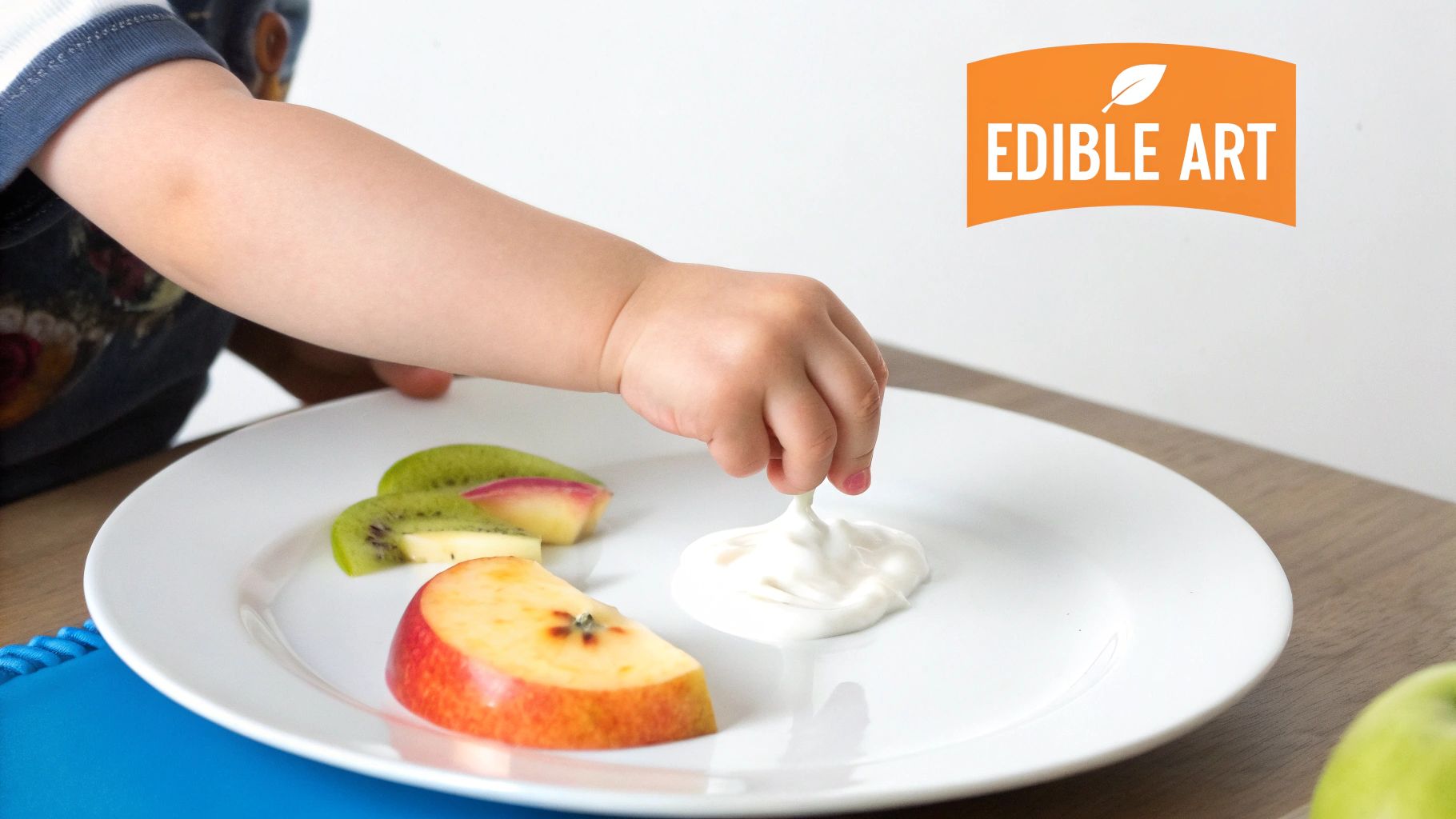
This activity turns snack time into a vibrant art project, combining fine motor skill development with flavor exploration. Toddlers use pre-cut fruits and vegetables as stamps and a simple yogurt-based edible "paint," allowing them to create and then eat their own masterpieces. This hands-on approach builds a positive connection between food and creativity, making it one of the most engaging cooking activities for toddlers.
The process of stamping, tasting, and seeing the colorful results provides a multi-sensory learning experience. You can document the unique art, the tasting reactions, and the textures their child enjoys in a food diary like Savor. Capturing this blend of art and food creates a rich memory of their developing creativity and palate.
Why It Works for Toddlers
This activity is perfect for toddlers because it satisfies their desire to touch, create, and taste everything. The act of gripping a piece of bell pepper or an apple slice to make a stamp strengthens their pincer grasp and hand-eye coordination. It also demystifies new foods by presenting them as fun tools, which can reduce hesitation around trying new fruits and vegetables.
How to Implement It
- Prepare the Station: Cut firm fruits and vegetables like apples, potatoes, and carrots into manageable stamp shapes. Mix plain yogurt with a drop of natural food coloring in small, shallow bowls for easy dipping.
- Guide the Exploration: Show your toddler how to dip a veggie stamp into the "paint" and press it onto a slice of bread or a plate. Encourage them to taste the paint and the raw stamps separately.
- Document in Savor: Take a picture of their final edible artwork before they eat it. Note which vegetable stamps they preferred using and their reaction to the taste of the colorful yogurt paint.
Savor It Quick Prompts:
- Photo Idea: Capture an overhead shot of their finished "stamped" bread masterpiece.
- Quick Note: "Loved using the bell pepper as a stamp. Was more interested in eating the 'paint' than the veggie."
- Rating: Give the "Apple Stamp" experience 4/5 stars for fun and engagement.
3. Cold Ingredient Mixing & Layering (No-Bake Parfaits)
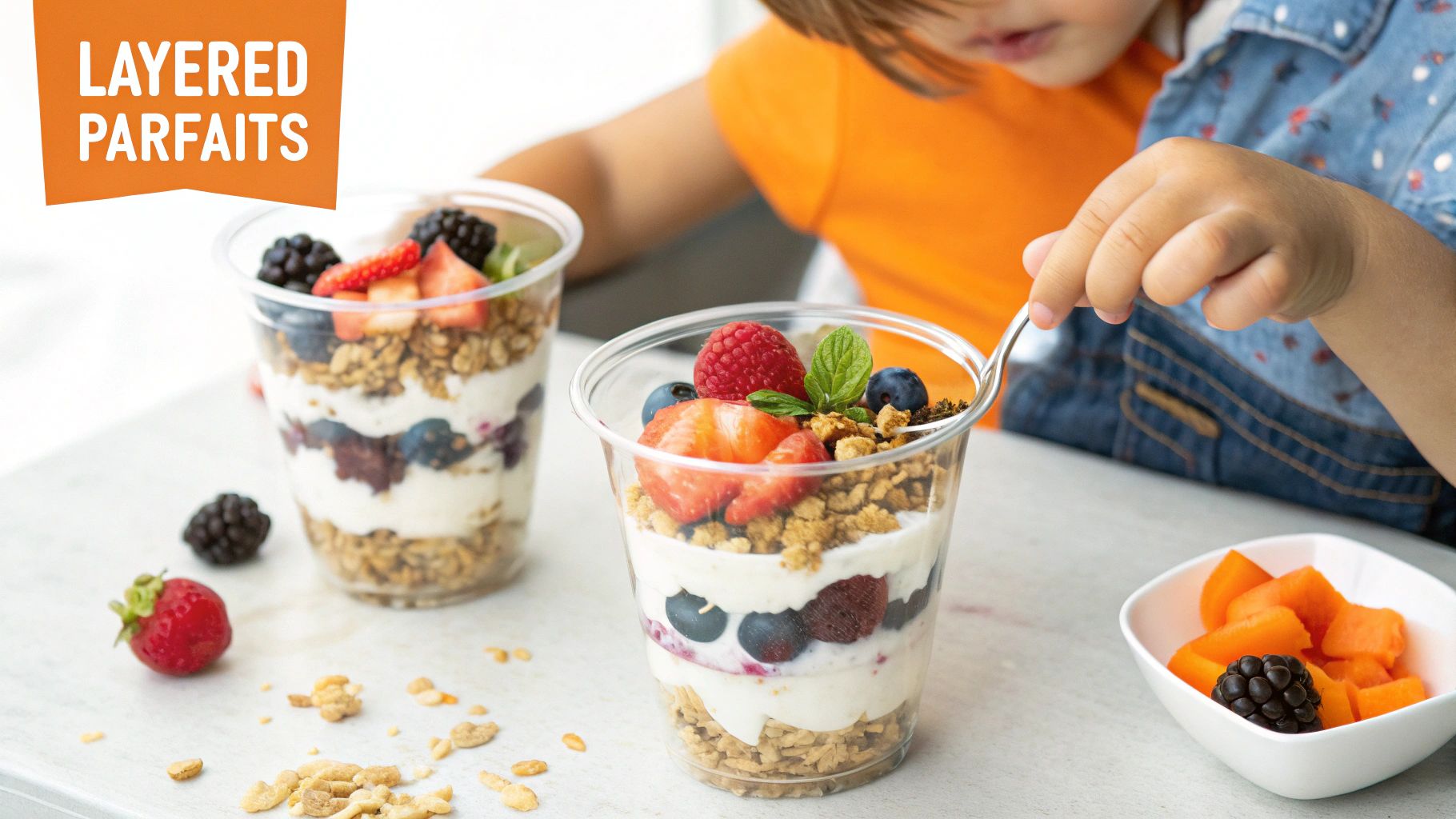
This no-heat activity is one of the safest and most visually rewarding cooking activities for toddlers, focusing on sequencing, fine motor skills, and an understanding of how individual ingredients combine. Toddlers can spoon and layer no-cook ingredients like yogurt, granola, and berries into clear containers. The process of building distinct layers teaches cause and effect while transforming simple components into a beautiful, edible creation.
Layering is a powerful technique for introducing food variety in a controlled way. It allows a child to see, touch, and taste each component separately before experiencing the combined result, building confidence by giving them creative control. By documenting different parfait combinations in Savor, you can track which textures and flavor pairings resonate most, creating a log of their early culinary experiments and preferences.
Why It Works for Toddlers
This activity taps into a toddler's love for sorting and stacking. The clear visual feedback of seeing colorful layers build up is immediately gratifying and helps them understand the concept of sequencing and order. It also introduces basic culinary construction, showing them how different textures (creamy yogurt, crunchy granola, soft fruit) work together.
How to Implement It
- Set Up the Ingredients: Place small bowls of 3–4 ingredients on a tray. Good options include plain yogurt, fruit puree, granola or crushed cereal, and soft berries. Provide a clear cup or small jar and a spoon.
- Demonstrate and Guide: Show your toddler how to add one layer at a time. You can say, "First, we add the yogurt. Next, let's sprinkle some berries." Encourage them to take the lead.
- Taste and Document: Let them enjoy their creation. In Savor, document the combination and their reaction to the layered flavors. Track tastes and share discoveries with family.
Savor It Quick Prompts:
- Photo Idea: Take a picture of the finished, layered parfait in its clear cup before it gets eaten.
- Quick Note: "Loved layering yogurt, blueberry puree, and crushed cereal. Was so proud of the stripes!"
- Rating: Give the "Yogurt & Berry Parfait" a 5/5 star rating for engagement and enjoyment.
4. Butter Making & Taste Progression (Shake & Taste Experience)
This magical activity transforms heavy cream into butter through the simple power of shaking. It’s a science experiment and a cooking lesson rolled into one, teaching toddlers about cause-and-effect as they physically feel and see the cream thicken. It's a perfect sensory-motor task that delivers a tangible, edible reward for their hard work.
The real power of this activity lies in its built-in taste progression. By tasting the cream at each distinct stage—liquid, whipped, and finally butter—toddlers learn how texture and flavor evolve, building sensory awareness. This is one of the most memorable cooking activities for toddlers because it connects their physical effort directly to the food they create and enjoy, fostering a deeper connection to ingredients.
Why It Works for Toddlers
This activity is ideal for toddlers because it relies on a simple, repetitive gross motor skill: shaking. The process is exciting and yields noticeable results in just a few minutes, holding their short attention spans. Witnessing the transformation from liquid to solid is a powerful demonstration of physical change, making an abstract scientific concept concrete and understandable.
How to Implement It
- Prepare the Jar: Pour about a half cup of room-temperature heavy cream into a small, securely sealed mason jar. A room-temperature start helps the butter form faster. Add a pinch of salt if desired.
- Shake, Shake, Shake: Hand the jar to your toddler and encourage them to shake it vigorously. You can put on some music to make it a fun "shake break." Take turns to keep the momentum going.
- Observe and Taste: After a few minutes, the sloshing sound will stop as the cream turns to whipped cream. Open the jar and let them have a taste. Continue shaking until you hear a thud—the butter has separated. Taste the final butter and compare it to the previous stages.
Savor It Quick Prompts:
- Photo Idea: A video of them shaking the jar, followed by a picture of the finished butter on a cracker.
- Quick Note: "We made butter! He was amazed when the cream turned solid. Loved tasting the whipped cream stage the most."
- Rating: Give the "Homemade Butter" experience 5/5 stars for the fun and delicious result.
5. Sensory Spice & Herb Exploration with Flavor Journaling
This activity introduces toddlers to the rich world of aromas and tastes by focusing on mild herbs and spices. It moves beyond just tasting food and delves into the scents that define culinary experiences, helping toddlers build a more sophisticated flavor vocabulary. By isolating individual spices, children learn to identify and appreciate the building blocks of flavor in a safe, controlled way.
Documenting these first aromatic encounters in a Savor journal creates a "flavor reference library" for your child. This log becomes an invaluable tool for understanding their developing palate. Learning about different spices from around the world can also become a fascinating part of your family’s cooking activities for toddlers, connecting simple kitchen play to global cultures.
Why It Works for Toddlers
A toddler's sense of smell is powerfully linked to memory and emotion. This activity taps directly into that connection, creating strong, positive associations with new flavors. Introducing spices like cinnamon or basil as a fun "smelling game" removes the pressure of eating and focuses on pure sensory discovery, which helps build their confidence and curiosity around unfamiliar foods.
How to Implement It
- Set Up the Sensory Station: Place a tiny amount of a mild, ground spice (like cinnamon or dried basil) into a small bowl. Prepare a neutral food base, such as a slice of banana, plain toast, or yogurt.
- Guide the Exploration: First, invite your toddler to gently smell the spice. Use descriptive words like "sweet," "warm," or "earthy." Then, show them how to sprinkle a very small amount onto the food base to taste.
- Document in Savor: Take a picture of the spice jar next to your toddler’s reaction. In the notes, describe their response to the smell and taste separately. Use the rating feature to track which spices are instant hits.
Savor It Quick Prompts:
- Photo Idea: A close-up of tiny fingers touching a sprinkle of cinnamon on a banana slice.
- Quick Note: "Smelled the mild paprika and said 'spicy!' but smiled after trying it on some avocado."
- Rating: Give "Dried Basil" a 4/5 star rating after they happily sprinkled it on their pasta.
6. Vegetable Garden Touching & Tasting (Farm-to-Mouth Play)
This activity bridges the gap between the garden and the kitchen, letting toddlers experience food in its most natural state. It involves touching, smelling, and tasting vegetables and herbs directly from a garden, container pot, or farmers' market stand. This farm-to-mouth approach creates a powerful, tangible connection, teaching little ones that food grows from the earth.
By engaging with plants in their original environment, toddlers experience an incredible variety of sensory inputs, from the texture of a fuzzy squash leaf to the bright scent of fresh mint. Understanding this concept is a core part of the farm-to-table movement, which you can learn more about by exploring what farm-to-table dining really means. For toddlers, this simple act is one of the most foundational cooking activities, building respect for ingredients and a positive relationship with fresh produce.
Why It Works for Toddlers
Toddlers learn through direct, hands-on experiences. This activity allows them to use all their senses to understand where their food comes from, making the abstract concept of "growth" concrete. Feeling the soil, seeing a carrot pulled from the ground, and tasting a sun-warmed cherry tomato creates a multi-sensory memory that is far more impactful than just seeing vegetables on a plate.
How to Implement It
- Find Your "Farm": This can be a community garden plot, a few herb pots on your balcony, or a visit to a local u-pick farm. Ensure any plants your toddler will taste are pesticide-free.
- Guide the Sensory Tour: Encourage them to gently touch the leaves, smell the flowers, and observe the different shapes and colors. Talk about how the plants feel: "This lettuce leaf is bumpy," or "The rosemary smells like a forest."
- Taste and Document: Pick a ripe vegetable or herb, wash it, and let them have a taste. In Savor, document the experience by snapping a photo of the plant itself, then another of your toddler tasting it. Note where you were and what they tried, creating a location-based taste memory.
Savor It Quick Prompts:
- Photo Idea: Capture a two-part shot: the vegetable on the vine, and your toddler’s reaction to tasting it.
- Quick Note: "Tasted a sun-warmed cherry tomato right from our garden pot. Eyes went wide with surprise at the sweetness!"
- Rating: Give the "Fresh-Picked Basil Leaf" experience 4/5 stars for its novel, strong aroma.
7. Toast Topping Assembly & Flavor Combination Building
This activity transforms a breakfast staple into a creative canvas for culinary exploration. While a parent handles the toasting, the toddler takes on the role of chef, choosing and assembling various toppings. This simple process introduces the concept of building flavors by combining different ingredients, providing immediate sensory feedback as they see, smell, and taste their unique creations.
By empowering your little one to build their own meal, you're not just making breakfast; you're cultivating an understanding of how individual components create a delicious whole. This hands-on assembly line is one of the most engaging cooking activities for toddlers because it offers instant gratification. Using a private food diary like Savor to document their favorite combinations helps you remember what works, turning a simple meal into a data point in their growing taste profile.
Why It Works for Toddlers
Toddlers crave independence, and this activity gives them a sense of ownership over their food. Spreading, sprinkling, and arranging toppings helps develop fine motor control and hand-eye coordination. It also introduces the idea of flavor pairing in a very basic, tangible way: what happens when you combine sweet berry mash with creamy cheese? This immediate cause-and-effect learning is powerful.
How to Implement It
- Prepare the Toppings: Set out 3–5 toddler-safe toppings in small, separate bowls. Think mashed avocado, plain yogurt, seed butter, fruit preserves, or a sprinkle of cinnamon.
- Toast and Present: Lightly toast a slice of bread so it’s firm but still easy for little hands to manage. Cut it into manageable strips or squares.
- Assemble and Create: Encourage your toddler to use a child-safe knife or their fingers to spread and sprinkle toppings. Let them experiment with different combinations.
- Document the Masterpiece: Before they take a bite, snap a photo of their finished toast art for your Savor journal. Note which combinations they seemed most excited to try or devoured first.
Savor It Quick Prompts:
- Photo Idea: Capture an overhead shot of the different toast creations before they are eaten.
- Quick Note: "Made a 'rainbow toast' with cream cheese, mashed raspberries, and avocado. He loved the combination!"
- Rating: Give the "Avocado & Cinnamon Toast" 4/5 stars based on how quickly it disappeared.
8. Cold Pasta Sensory Salad & Color Sorting Play
This activity transforms a simple pasta salad into a rich, multi-step sensory experience. Toddlers get to mix cooled pasta with soft, colorful vegetables and a mild sauce using their hands or a spoon. It's a fantastic way to combine tactile play with meal preparation, teaching little ones that cooking is a collaborative process where different family members contribute their unique skills.
The beauty of this task is its focus on assembly rather than cooking with heat, making it a safe and engaging introduction to creating a meal. This activity empowers toddlers by giving them ownership over their final creation. By mixing their own ingredients, they create unique flavor combinations, turning a simple lunch into a personal culinary experiment perfect for documenting in their Savor food diary.
Why It Works for Toddlers
This hands-on activity satisfies a toddler's natural desire to touch and mix things. The variety of shapes, colors, and textures provides rich sensory input. It also introduces cause and effect, as they see how their mixing directly changes the look of the salad. This is one of the most effective cooking activities for toddlers because it builds confidence and fine motor skills in a low-pressure, playful environment.
How to Implement It
- Prepare the Ingredients: An adult should cook and completely cool the pasta. Chop soft vegetables like cucumber, cherry tomato halves, and cooked carrots into bite-sized, safe pieces. Prepare mild mix-ins like soft cheese cubes or mild olives.
- Set Up the Mixing Station: Place the cooled pasta in a large, non-slip bowl. Arrange the vegetables and other mix-ins in separate small bowls. Provide a small amount of a mild sauce.
- Encourage Creation: Let your toddler use their hands or a child-safe spoon to add ingredients to the big bowl and mix everything together. You can guide them by talking about the colors, like "Let's add the red tomatoes!"
- Document the Masterpiece: Once they’ve created their salad, snap a picture for Savor. Note which ingredients they were most excited to add and their reaction to the final taste test.
Savor It Quick Prompts:
- Photo Idea: Capture an overhead shot of their colorful pasta creation before they take the first bite.
- Quick Note: "Loved mixing everything with his hands. Was most interested in the cheese cubes and ate all of those first!"
- Rating: Give their "Cucumber and Tomato Pasta Mix" 4/5 stars based on their engagement and enjoyment.
Comparison of 8 Toddler Cooking Activities
| Activity | Implementation complexity | Resource requirements | Expected outcomes | Ideal use cases | Key advantages |
|---|---|---|---|---|---|
| No-Cook Edible Sensory Exploration & Taste Memory Journaling | Low — no heat or special tools | Pre-prepped ingredients, shallow bowls, smartphone/camera | Early flavor ID, sensory vocabulary, visual taste diary | Short at-home sessions, childcare, picky-eater intro | Safe, fast, builds searchable taste history |
| Fruit & Veggie Stamping with Edible Paint | Medium — prep edible paint and cut produce | Yogurt/applesauce paints, pre-cut fruits/veggies, plates, wipes | Fine motor skills, art + taste exploration, photogenic results | Daycares, art-sensory workshops, social media content | Playful veg introduction; highly engaging and visual |
| Cold Ingredient Mixing & Layering (No-Bake Parfaits) | Low — assembly-focused | No-cook ingredients (yogurt, granola, fruit), clear cups | Sequencing, visual comparison, multiple flavor variations | Montessori-style activities, nutrition intro, Savor comparisons | Very safe; easy to document and compare variations |
| Butter Making & Taste Progression (Shake & Taste) | Medium — supervised hands-on process | Heavy cream, secure jar, optional salt | Cause-and-effect learning, texture/taste progression checkpoints | Process-focused education, Waldorf/Montessori, food ed programs | Visible transformation; multiple tasting stages |
| Sensory Spice & Herb Exploration with Flavoring Journaling | Low–Medium — requires careful guidance | Small spice samples, mild tasting bases (bread/banana), camera | Aroma recognition, flavor vocabulary, gradual desensitization | Cultural flavor intro, therapy for selective eaters, short sessions | Low waste; builds foundational spice familiarity |
| Vegetable Garden Touching & Tasting (Farm-to-Mouth) | Medium — logistics and safety checks needed | Access to garden/farm/market, pesticide-free produce, wipes | Understanding food origins, strong location-based memories | Outdoor education, farm visits, seasonal exploration | Connects source to taste; highly engaging and contextual |
| Toast Topping Assembly & Flavor Combination Building | Low — adult handles heat, child assembles | Bread, assorted toppings, toaster (adult use), small bowls | Decision-making, pairing skills, autonomy in food choices | Breakfast routines, fine-motor practice, quick taste comparisons | High engagement; many combinations with minimal prep |
| Cold Pasta Sensory Salad & Color Sorting Play | Medium — adult cooks pasta, child assembles | Cooked pasta, soft mix-ins, bowls/utensils | Collaborative cooking understanding, tactile mixing, varied combos | Family meals, longer engagement sessions, group settings | Extended engagement; teaches composite-dish concepts |
Your Family's Food Story Starts Now
Stepping into the kitchen with your toddler transforms a daily chore into a vibrant laboratory of discovery. The activities in this guide, from Sensory Spice Exploration to Toast Topping Assembly, are designed to do more than just occupy small hands. They are foundational experiences—the first chapters in your family's unique food story. Each squish of a fruit, sniff of an herb, and stir of a bowl builds a healthy, curious relationship with food.
These moments are about creating memories and documenting the evolution of a palate. The true value of these cooking activities for toddlers lies in their power to establish a lifelong appreciation for flavors, textures, and the process of creation. You are not just teaching them to mix and measure; you are teaching them to observe, question, and savor the world around them.
Key Takeaways for Your Culinary Adventures
As you embark on these kitchen adventures, remember the core principles that make them so impactful:
- Process Over Perfection: The goal is exploration, not a flawless final product. Embrace the mess as evidence of learning. The journey of shaking cream into butter is far more valuable than the butter itself.
- Sensory-Rich Experiences Matter: Toddlers learn through touch, taste, smell, and sight. Prioritize activities that engage multiple senses, like herb sniffing or edible paint stamping, to create strong, positive connections with new foods.
- Documentation Is Discovery: Capturing these moments turns fleeting experiences into a tangible record of your child’s development. Noting their reaction to a sour lemon or their delight in layering a parfait provides valuable insight into their evolving preferences.
Actionable Next Steps: Building Your Food Memory Database
Moving forward, your role is that of a gentle guide and a dedicated archivist. The next time you and your toddler are in the kitchen, focus on capturing the small details. What word did they use to describe the smell of cinnamon? Did they prefer the texture of the cold pasta or the smooth yogurt? These observations are the raw data of their personal food journey.
By consciously documenting these cooking activities for toddlers, you are building a private food diary that will become an invaluable resource. This collection of memories, preferences, and firsts will help you introduce new foods, understand picky phases, and celebrate the small wins. It’s a personalized roadmap to their palate that respects their individuality and encourages curiosity. Your family’s food story is being written in real-time; you just have to capture it.
Ready to turn these fleeting kitchen moments into a lasting family food legacy? Download Savor to easily document your toddler's first tastes, rate their unique culinary creations, and build a private, shareable diary of their food journey. Start tracking their flavor discoveries today at Savor and create a food story you'll cherish forever.
Continue Reading
Start Tracking Your Dishes Today
Transform your food photos into a searchable, ratable culinary memory bank.
Download Savor App