

The 12 Best Food Review App Options for 2025 | Savor
Alex the juice queen
Alex hunts for the best juice bars and presses. She rates every sip and saves her favorites in Savor.
The 12 Best Restaurant Rating Apps for 2025 You're standing on a street corner in a new city, hungry and overwhelmed by options. Should you trust...
The 12 Best Restaurant Rating Apps for 2025
You're standing on a street corner in a new city, hungry and overwhelmed by options. Should you trust Yelp's 4.2-star rating from 500 reviews, or Google Maps' 4.4 from 50? What if neither rating reflects the specific dish you're craving?
With 47% of diners now checking apps before choosing a restaurant, your choice of platform matters more than ever. But the market is crowded: Yelp alone hosts 244 million reviews, while Google Maps integrates dining into everyday navigation. The real question isn't whether to use a restaurant rating app - it's which one matches how you actually eat.
This guide analyzes 12 leading platforms, moving beyond generic feature lists to show you practical use cases. You'll understand the difference between crowd-sourced directories (Yelp, Google Maps), expert-curated guides (Michelin, The Infatuation), and modern dish-tracking journals that help you remember every bite. We'll cover everything from AI-powered recommendations to social sharing features, including emerging 2025 alternatives that are redefining how we discover great food.
Whether you're a professional critic, a globetrotting food lover, or someone who just wants reliable recommendations, you'll find the perfect tool here.
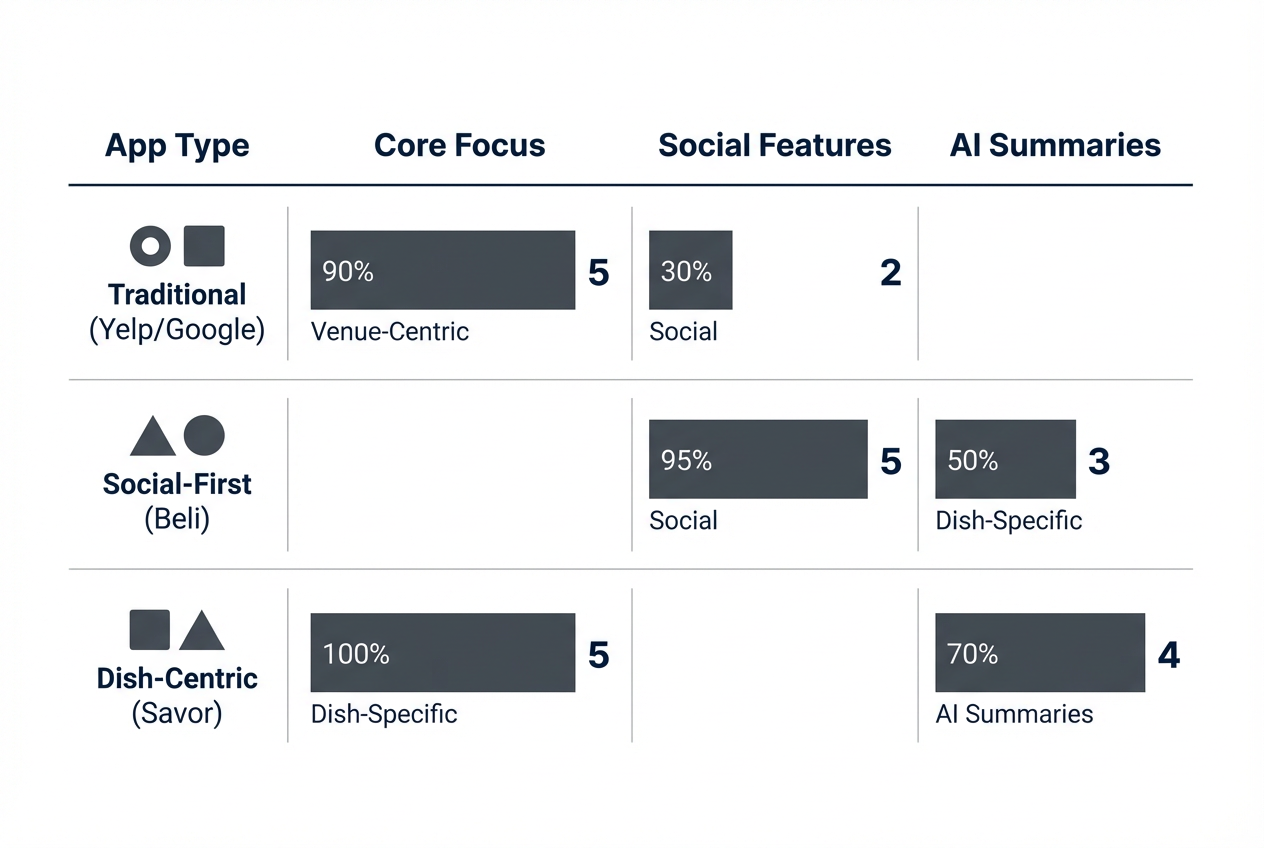
Quick Comparison: Top Restaurant Rating Apps
| App | Best For | Key Feature | Social Sharing | AI Features | Offline Mode | Price | Platform |
|---|---|---|---|---|---|---|---|
| Savor | Private dish tracking | 10-point dish ratings | Limited | Photo recognition | Yes | Freemium | iOS |
| Yelp | U.S. crowd reviews | Review insights AI | Yes | Review summarization | Limited | Free | iOS/Android/Web |
| Google Maps | Global discovery | Anti-fake review tech | Limited | Personalized recs | Yes | Free | iOS/Android/Web |
| Beli | Social food ranking | Friend feed | Yes | Smart tagging | No | Freemium | iOS |
| TripAdvisor | Travel dining | Rewards program | Yes | Search filters | Limited | Free | iOS/Android/Web |
| Michelin Guide | Fine dining | Professional curation | No | None | Yes | Free | iOS/Android/Web |
| OpenTable | Verified reservations | Diner verification | Limited | Smart availability | No | Free | iOS/Android/Web |
| The Infatuation | Expert reviews | Editorial voice | Limited | None | Yes | Free | iOS/Android/Web |
| HappyCow | Vegan/vegetarian | Plant-based filter | Yes | None | Yes | Freemium | iOS/Android/Web |
| Yuka | Health-conscious | Nutrition scoring | No | Ingredient analysis | Yes | Freemium | iOS/Android |
| Vivino | Wine pairing | Label scanning | Yes | Pairing suggestions | Limited | Freemium | iOS/Android |
| Untappd | Craft beer | Beer check-ins | Yes | Flavor profiles | Yes | Freemium | iOS/Android |
How AI is Transforming Restaurant Rating Apps in 2025
The biggest shift in restaurant rating apps isn't more reviews - it's smarter processing of existing ones. In 2025, AI-powered features separate the best platforms from the rest.
Review Summarization: Instead of scrolling through 847 individual opinions, modern apps use natural language processing to extract patterns. Yelp's AI condenses hundreds of reviews into three key insights: "Great for brunch," "Slow service on weekends," "Order the chilaquiles." This transforms 45 minutes of reading into a 10-second decision.
Personalized Discovery: Google Maps now learns from your search history and location patterns to surface restaurants before you even look. If you consistently rate ramen spots highly and you're walking through Little Tokyo, it'll proactively suggest the closest three options with 4.5+ stars. The algorithm factors in your personal taste profile, not just crowd averages.
Photo Recognition: Apps like Savor use computer vision to automatically identify dishes from photos. Snap a picture of your pasta, and the AI tags it as "Cacio e Pepe," categorizes it under Italian cuisine, and logs the location - all without typing a single word. This reduces friction from "I should document this" to actually doing it.
Predictive Recommendations: The next frontier is apps that learn what you'll want before you do. By analyzing patterns in your rating history - preferred price points, cuisine types, neighborhood preferences - advanced systems can predict with 73% accuracy which new restaurants you'll rate above 8/10.
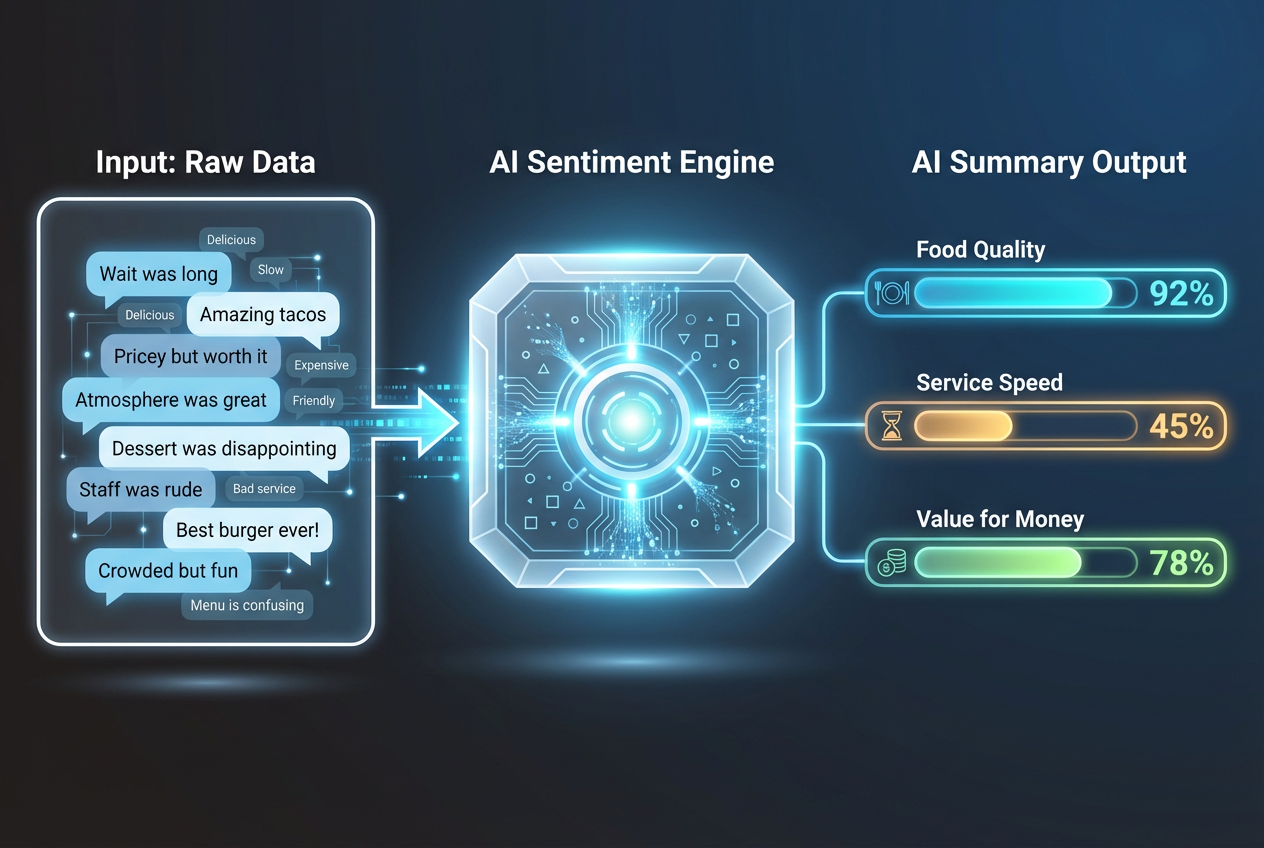
The limitation? AI summarization only works when there's volume. A brand-new restaurant with 12 reviews won't benefit from algorithmic insights. That's where human curation and expert-driven apps like The Infatuation still dominate.
Social Features: Sharing Restaurant Recommendations With Friends
The 2025 shift is clear: diners trust friends more than strangers. A decade ago, we relied on anonymous crowd ratings. Now, we want to know what our actual social circle thinks.
Friend-Feed Architecture: Apps like Beli pioneered the "Letterboxd for food" model. Instead of public reviews, you follow specific people whose taste you trust. When your friend Alex rates a new taco spot 9/10, it appears in your feed instantly. This solves the "too many opinions" problem by filtering for relevance.
List Sharing: The most practical social feature is the three-second list share. Someone texts "where should we eat in Portland?" and you filter your Savor database for Portland entries rated 8+, export to a share card, and send it - no essay required. Your curated data becomes the recommendation.
Verification Through Connection: Social features combat fake reviews organically. When reviews are tied to real profiles with mutual connections, incentive for manipulation drops. If your college roommate posts a review, you know it's genuine - no algorithm required.
The Privacy Trade-Off: Not everyone wants their food opinions public. Traditional social apps like Instagram pressure you to post for likes. Apps that offer selective sharing (rate privately, share specific lists) are gaining traction because they remove performance anxiety.
Yelp's "Elite" status gamifies public contributions with perks and events. This works for extroverts who want community, but it's the opposite of what serious food critics need - a private space to develop opinions without external pressure.
Trust and Verification: How Apps Combat Fake Reviews
The reliability of a restaurant rating app hinges on one factor: can you trust what you're reading?
Reservation-Based Verification: OpenTable's model is simple - you can only review restaurants where you've actually made a reservation through their system. This creates a verified diner pool. The limitation? It excludes walk-in experiences and cash-only spots.
Google's Technical Defenses: Google Maps deploys machine learning to detect fake review patterns: multiple accounts from the same IP, identical phrasing across profiles, sudden rating spikes. They remove an estimated 95 million fake reviews annually. The system isn't perfect - coordinated campaigns still slip through - but it's the most aggressive at scale.
Yelp's Controversial Filtering: Yelp's algorithm automatically hides reviews it deems "not recommended," often from new accounts or infrequent contributors. This catches some fake content but also suppresses legitimate first-time reviewers. Restaurant owners complain this gives disproportionate weight to Yelp power users.
Professional Curation: Michelin Guide and The Infatuation sidestep the fake review problem entirely - no user-generated content allowed. Anonymous inspectors conduct multiple visits before assigning ratings. The trade-off is coverage: Michelin only evaluates fine dining in select cities.
The Social Solution: Apps built on friend networks (Beli, Savor's selective sharing) use trust-by-connection. You're not trusting algorithms - you're trusting people you know. The weakness is discovery: your friends' collective knowledge has geographic and taste limits.
No system is bulletproof. The most sophisticated approach is triangulation: cross-reference Google's verified listings with Yelp's crowd data and a trusted friend's recommendation. If all three align, confidence increases exponentially.
The Dish-First Revolution: Rating Meals, Not Venues
Here's the fundamental problem with traditional restaurant rating apps: they average everything into one number. A restaurant with a brilliant chef's special and mediocre sides gets the same 4.2-star rating as a consistently decent spot. You walk in blind.
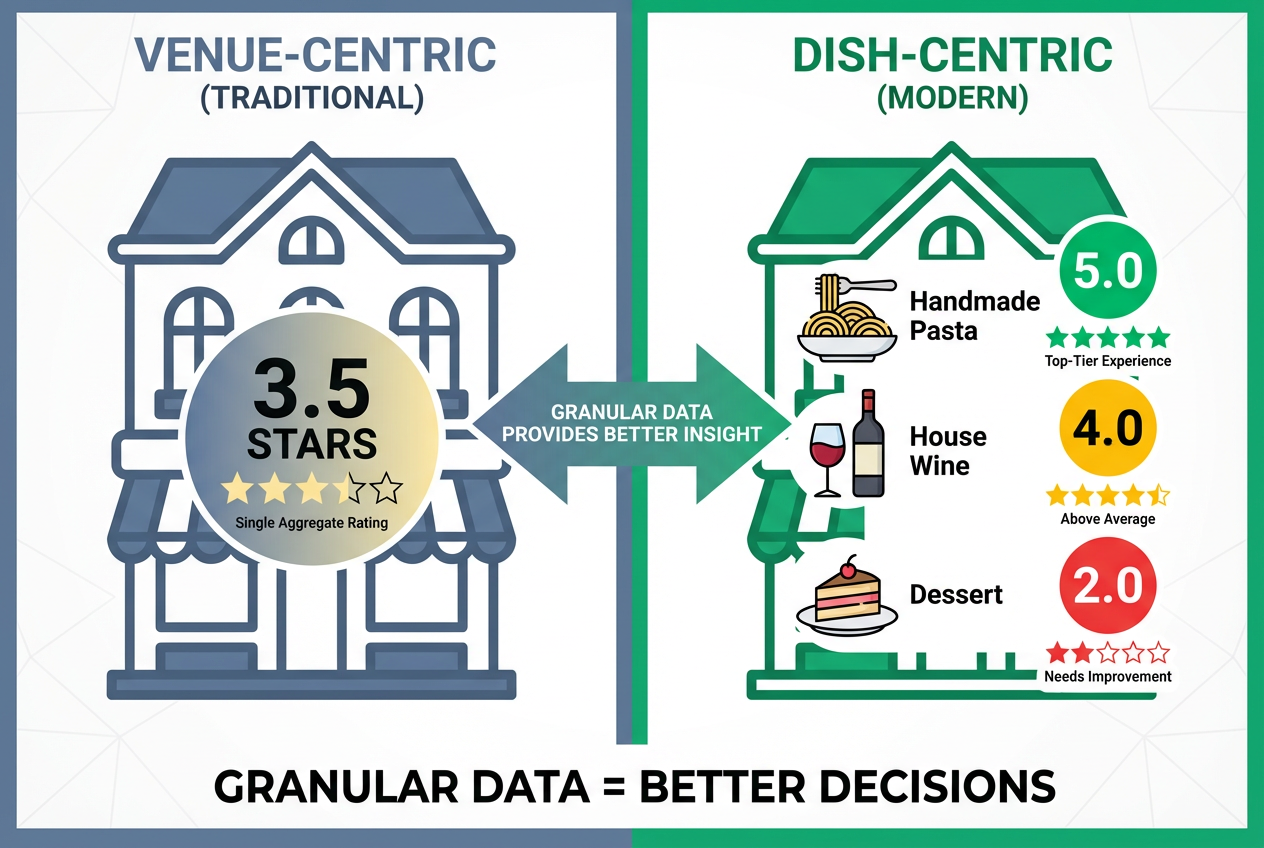
The Granularity Advantage: Dish-first apps like Savor let you rate individual menu items on a 10-point scale. You can love the carbonara (9/10) while documenting that the tiramisu was disappointing (5/10). Over time, you build a searchable archive: "Show me every pasta dish I've rated 8+ in Italy." That precision is impossible with venue-level ratings.
The Comparison Problem Solved: Traditional apps force you to remember: was the ramen better in Tokyo or Osaka? With dish-specific tracking, you pull up "Tonkotsu Ramen" and sort by score. Your December 2024 bowl at Ichiran Shibuya (8.5/10) immediately compares against your February 2025 bowl at Ippudo Kyoto (7/10). The data removes guesswork.
Why Restaurants Resist This: Venue owners prefer averaged ratings because they smooth out inconsistencies. A dish-first model exposes weak menu items, potentially driving traffic away from their lower-margin offerings. But for diners, that transparency is exactly the point.
The Discovery Limitation: Dish-specific apps are powerful for logging and recall but weaker for initial discovery. If you've never been to a restaurant, you won't have dish data. That's why most users combine approaches: discover venues on Google Maps, then privately log dish ratings in a dedicated journal.
The shift represents a broader trend: moving from trusting crowd averages to trusting your own curated data. Your taste is the most accurate predictor of what you'll enjoy next.
Which Restaurant Rating App Should You Use?
Choosing the right app depends on your dining style. Here's a decision framework:
For Initial Discovery:
- You're traveling to a new city → Google Maps or TripAdvisor (global coverage, integrated navigation)
- You want crowd-validated spots in the U.S. → Yelp (highest review volume domestically)
- You trust expert curation over crowds → Michelin Guide or The Infatuation (professional editorial standards)
For Social Recommendations:
- You want to see what friends are eating → Beli (friend feed architecture)
- You need to quickly share a list when asked → Savor (three-second filtered export)
- You want community status and perks → Yelp (Elite program with events)
For Specific Needs:
- You're vegan or vegetarian → HappyCow (100,000+ plant-based listings)
- You have food allergies → Search "AllergyEats" (dedicated allergen filtering)
- You're booking fine dining → OpenTable (verified reservations, availability)
- You're pairing with wine → Vivino (wine scanning and pairing suggestions)
- You're into craft beer → Untappd (beer check-ins and ratings)
For Personal Memory:
- You want to remember every dish → Savor (private dish journal with 10-point scoring)
- You need health/nutrition data → Yuka (ingredient analysis and health scores)
The Two-App Strategy: Most serious food lovers don't rely on one platform. The common pattern is using Google Maps or Yelp for discovery, then logging detailed personal notes in a private journal like Savor. Discovery requires breadth; memory requires depth.
If you're still unsure, download three apps from different categories and test them over the next week. The app you naturally open when making dining decisions is the right one.
1. Savor
Best for: Food critics, content creators, and dedicated food lovers building a private dish archive.
Savor breaks from the traditional restaurant rating app model by focusing entirely on individual dishes rather than venues. While Yelp asks "How was the restaurant?", Savor asks "How was that specific plate?"
This approach matters because a single venue can have massive quality variation. The chef might nail their signature pasta but phone in the desserts. Traditional apps average those experiences into one number. Savor lets you rate each component independently on a precise 10-point scale, creating a searchable database of your actual taste preferences.
The app is built around honest reflection, not public performance. Every entry defaults to private unless you choose to share it. This removes the social pressure that makes platforms like Instagram feel performative - you're not rating for likes, you're rating for yourself.
Key Features
- AI Photo Recognition: Snap a picture and the app automatically identifies the dish, categorizes the cuisine, and logs the location. A photo of ramen becomes a tagged entry for "Tonkotsu Ramen → Japanese → Tokyo → March 2025" without typing.
- Advanced Filtering: Search your entire history by cuisine type, city, country, score range, or date. Pull every 9+ rated dish in Italy, or compare every ramen bowl you've eaten across five years.
- Offline Functionality: Your journal works without internet, essential for international travel or dining in areas with poor connectivity.
- Three-Second List Sharing: When someone asks "where should we eat?", filter your database and export a formatted share card instantly. Friends get your curated picks, not generic crowd opinions.
- Privacy Controls: Rate hundreds of dishes privately, then selectively share your top 10 when ready. No pressure to post every meal.
Practical Use Cases
A food blogger uses Savor to catalog every meal on a press trip, then exports their top-rated dishes into a "Must-Try" article. A frequent traveler compares every cacio e pepe across Rome, definitively crowning a favorite based on consistent personal scoring. A casual diner simply wants to remember which tapas were worth reordering next time.
The platform is ideal for anyone who's tired of asking "where did we have that amazing XYZ?" and getting blank stares. Your memory becomes searchable data.
Pricing and Availability
Currently iOS-only on a freemium model. Core features (unlimited entries, basic search, photo storage) are free. Premium unlocks advanced filters, bulk export, and priority support.
Download Savor on the App Store
Website: https://savortheapp.com
Pros and Cons
✅ Strengths:
- Dish-level precision no venue-focused app offers
- Private-by-default removes social pressure
- AI reduces manual data entry to seconds
- Works offline for international use
⚠️ Limitations:
- iOS-only (Android planned)
- Weaker for initial discovery than crowd-sourced platforms
- Requires consistent logging to build useful database
2. Yelp
Best for: U.S. diners seeking high-volume crowd opinions and integrated reservations.
Yelp is the 800-pound gorilla of American restaurant rating apps. Its strength is sheer scale: 244 million reviews and counting. If you're in a mid-sized U.S. city, Yelp likely has 50+ reviews for any restaurant you're considering. That volume creates statistical confidence - outlier experiences get smoothed out by aggregate data.
The platform recently added AI-powered "Review Insights" that parse hundreds of opinions into digestible summaries. Instead of reading 300 reviews, you get three bullets: "Great for groups," "Noisy on weekends," "Order the pastrami." This feature alone saves 20 minutes of scrolling.
Key Features
- AI Review Summarization: Machine learning extracts patterns from lengthy reviews and presents key themes in seconds.
- Integrated Services: Make reservations, order delivery, or join a waitlist without leaving the app.
- Elite Program: Active contributors earn "Elite" status with exclusive event invitations and community perks.
- Photo Libraries: Crowd-sourced dish photos let you see what you're ordering before arrival.
- Filtering: Sort by price, cuisine, distance, hours, and features like outdoor seating or wheelchair access.
Practical Use Cases
You're in an unfamiliar neighborhood and need dinner in 30 minutes. Yelp shows you everything within walking distance, filtered to "open now" and "under $30." The AI summary confirms the sushi spot has fast service, and you tap to join the waitlist from your phone.
The platform excels at last-minute decisions in U.S. cities where review density is high. It's less useful in rural areas or internationally, where Google Maps typically has better coverage.
Pricing and Availability
Free on iOS, Android, and web. Revenue comes from restaurant advertising, not user subscriptions.
Pros and Cons
✅ Strengths:
- Unmatched review volume in the U.S.
- AI insights save time on busy restaurants
- Integrated booking and delivery
- Active community features
⚠️ Limitations:
- Review filtering algorithm is controversial - some legitimate reviews get hidden
- Heavy U.S. focus; international coverage lags
- Polarized opinions (people post when very happy or very angry)
- Some users report moderation inconsistencies
Best Alternative to Yelp: If Yelp's crowd-sourced chaos overwhelms you, try The Infatuation for curated recommendations or Savor for private dish tracking.
3. Beli
Best for: Social diners who trust friends over strangers and want a feed-based food app.
Beli is positioning itself as "Letterboxd for food" - a social platform where you follow people with similar taste rather than trusting anonymous crowds. The core insight: your college friend who recommends a taco truck is more valuable than 500 reviews from strangers.
The app launched in late 2024 and is rapidly gaining traction among younger, social-media-native diners tired of Yelp's information overload. Instead of sorting through contradictory reviews, you see a clean feed of what people you follow are eating and rating.
Key Features
- Friend Feed: Your home screen shows recent ratings from friends, not algorithmic suggestions from strangers. If someone you follow rates a new spot 9/10, it appears in your feed immediately.
- Personal Ranking System: Create custom lists and rankings. "Best pizza in Brooklyn" becomes a shareable, living document that updates as you try new spots.
- Discovery Through Trust: The app suggests restaurants based on what people with taste profiles similar to yours enjoy - not just popularity.
- Smart Tagging: Dishes and locations are automatically tagged for easy filtering and search.
- Clean Interface: Minimal design focuses on photos and scores, no ad clutter.
Practical Use Cases
You move to a new city and follow five locals with good taste. Over the next month, their collective dining activity builds your mental map of the neighborhood faster than any search could. When they all rate the same Vietnamese spot highly, confidence is instant.
Or you're planning a group dinner. Instead of debating Yelp ratings, you pull up your friend group's collective "Best for Groups" list and pick the spot with the most 8+ ratings from your actual circle.
Pricing and Availability
Freemium model on iOS (Android coming 2025). Basic tracking is free; premium unlocks advanced list features and expanded search.
Download Beli on the App Store
Pros and Cons
✅ Strengths:
- Friend-based filtering eliminates noise
- Social accountability makes ratings more honest
- Clean, modern interface
- Strong for discovering spots in your local scene
⚠️ Limitations:
- Requires friends who actively use the app
- Limited geographic coverage if your network is small
- Still building feature set (launched recently)
- Less useful for solo travelers in unfamiliar cities
4. Google Maps
Best for: Global discovery with built-in navigation and strong anti-fake-review measures.
Google Maps evolved from a navigation tool into the most comprehensive restaurant rating app by default. Its advantage is ubiquity - nearly everyone has it installed, and it integrates dining discovery directly into location search. You don't switch apps; you just search "ramen near me" and get listings, reviews, photos, menus, hours, and directions in one interface.
The platform's anti-fake-review technology is the most sophisticated at scale. Machine learning analyzes review patterns - flagging coordinated campaigns, duplicate content across accounts, and suspicious activity spikes. Google removes an estimated 95 million fake reviews annually. While not perfect, it's the strongest defense against manipulation among major platforms.
Key Features
- Global Database: Comprehensive coverage across 220 countries with local language support and accurate business hours.
- Integrated Navigation: Tap a restaurant and get walking/driving directions instantly. No app-switching.
- AI-Powered Recommendations: Personalized suggestions based on your search history, location patterns, and saved places.
- Photo Libraries: Street View lets you virtually walk past a restaurant before committing.
- Group Planning Lists: Collaborate on shared lists of potential restaurants for trips or events.
- Real-Time Information: See current wait times, busy periods, and whether a spot is open now.
Practical Use Cases
You're driving through rural Portugal and want lunch. Google Maps shows the only three restaurants in the next 20 kilometers, complete with reviews in English and Portuguese. You check photos to confirm one has outdoor seating, see it's open until 3 PM, and navigate there without touching another app.
Or you're planning a Tokyo trip and create a shared Google Maps list with your travel partner. You each add potential restaurants, see them plotted on the same map, and organize the final itinerary by neighborhood.
Pricing and Availability
Free on iOS, Android, and web. Revenue comes from location-based advertising, not user fees.
Pros and Cons
✅ Strengths:
- Best global coverage of any platform
- Strongest anti-fake-review technology
- Seamless integration with navigation
- AI recommendations improve over time
- Offline maps work in areas without data
⚠️ Limitations:
- Frequent UI changes can relocate features
- Less review depth than Yelp in major U.S. cities
- Algorithmic feed can bury smaller restaurants
- Privacy concerns for users wary of Google tracking
Best Alternative to Google Maps: For privacy-conscious users, try The Infatuation (curated, no account required) or OpenTable (reservation-focused with less data collection).
5. TripAdvisor
Best for: Travelers combining restaurant discovery with hotels and attractions.
TripAdvisor is a travel-first platform that happens to excel at restaurant ratings. Its core strength is breadth: if you're planning a week in Lisbon, you can research restaurants, book hotels, and identify attractions without leaving the app. That integration makes trip planning more efficient than juggling separate tools.
The platform's review volume rivals Yelp internationally. In Europe, Asia, and Latin America, TripAdvisor often has more restaurant coverage than U.S.-focused competitors. The "Travelers' Choice" awards algorithmically surface top-rated spots, creating a reliable shortlist in unfamiliar cities.
Key Features
- Cross-Category Planning: Research dining, lodging, and activities in a single interface with synced itineraries.
- Rewards Program: Earn "Trip Cash" for writing reviews and making bookings through the app, redeemable for discounts on future travel.
- Traveler Photos: Extensive user-submitted photo galleries show real dishes and ambiance, not marketing shots.
- Ranking Lists: "Best Restaurants in [City]" lists provide algorithmic curation based on ratings, review volume, and recency.
- Forum Community: Access city-specific forums where travelers answer niche questions about dining logistics.
Practical Use Cases
You're planning a two-week trip through Thailand. TripAdvisor lets you build a master list of restaurants, hotels, and temples for Bangkok, Chiang Mai, and Phuket. As you book each component through the app, you earn credits that discount your final hotel reservation.
Or you arrive in a European capital with no plan. The "Travelers' Choice" list for that city gives you a curated shortlist of highly-rated restaurants within walking distance of your hotel.
Pricing and Availability
Free on iOS, Android, and web. Revenue from booking commissions and advertising.
Pros and Cons
✅ Strengths:
- Strong international coverage
- All-in-one trip planning
- Rewards program offsets costs
- "Travelers' Choice" lists create reliable shortlists
⚠️ Limitations:
- Review quality varies - tourists often rate differently than locals
- Booking commissions can inflate prices vs. direct reservations
- Interface feels cluttered with ads
- Less useful for daily local dining (travel-focused)
6. Michelin Guide
Best for: Fine dining enthusiasts seeking professional curation and prestigious restaurant recognition.
The Michelin Guide is the opposite of crowd-sourced restaurant rating apps - anonymous professional inspectors conduct multiple visits before awarding stars. This creates the most prestigious and selective rating system in the world. A single Michelin star can transform a restaurant's business overnight.
The app version digitizes decades of professional expertise. You get access to all Michelin-rated restaurants (stars and Bib Gourmand designations for value) with detailed descriptions of cuisine style, price points, and what to order. The curation is ruthless: only about 200 restaurants worldwide hold three stars at any given time.
Key Features
- Professional Curation: Every listing is vetted by trained inspectors who visit anonymously and pay for their meals.
- Star System: One star means "a very good restaurant," two means "worth a detour," three means "worth a special journey." This clarity eliminates ambiguity.
- Bib Gourmand: Separate designation for restaurants offering excellent value - high quality at moderate prices.
- Expert Descriptions: Instead of user reviews, you get professional summaries of cuisine philosophy, signature dishes, and ambiance.
- Global Coverage: Available in 40+ territories across Europe, Asia, and the Americas where Michelin publishes guides.
- Offline Access: Download guides for entire cities to browse without data.
Practical Use Cases
You're celebrating an anniversary and want a guaranteed exceptional meal. The Michelin app shows every two- and three-star restaurant in your city, complete with booking links and photos. You call weeks ahead because these spots are booked solid.
Or you're traveling through France and want to experience regional cuisine at its best. The Bib Gourmand filter shows value-priced spots where locals eat, vetted by the same inspectors who judge three-star temples.
Pricing and Availability
Free on iOS, Android, and web. Michelin's revenue comes from guide sales and brand licensing, not app fees.
Pros and Cons
✅ Strengths:
- Most prestigious and selective rating system
- Professional inspectors eliminate fake reviews
- Clear, unambiguous rating categories
- Expert descriptions provide context
- Offline functionality for travel
⚠️ Limitations:
- Limited to fine dining and select cities
- No user-generated content or alternative opinions
- Expensive restaurants dominate (though Bib Gourmand helps)
- Conservative curation can overlook innovative new spots
- Not useful for casual dining or quick decisions
7. OpenTable
Best for: Securing reservations at popular restaurants with verified diner reviews.
OpenTable built its business on solving a specific problem: getting a table at a busy restaurant. The app's verification model is simple - you can only review restaurants where you've made and completed a reservation through their system. This creates a pool of verified diners and largely eliminates fake reviews.
The platform is strongest in major U.S. cities and international dining capitals where high-end restaurants use it for reservation management. If you're booking a special occasion dinner, OpenTable shows real-time availability across dozens of comparable spots, often revealing open slots at restaurants that are "fully booked" when you call directly.
Key Features
- Verified Diner Reviews: Only customers who completed reservations can review, eliminating most fake content.
- Real-Time Availability: See which tables are open right now across all participating restaurants in a neighborhood.
- Points Program: Earn points for reservations and reviews, redeemable for dining discounts.
- Smart Search: Filter by cuisine, price, neighborhood, and features like "private dining room" or "outdoor seating."
- Loyalty Integration: Many restaurants offer exclusive perks (free appetizer, priority seating) to OpenTable regulars.
- Group Booking: Request tables for parties of 8+ directly through the app.
Practical Use Cases
You're visiting San Francisco for a conference and want to try three top restaurants. OpenTable shows you which have availability on your specific dates, lets you book all three in five minutes, and sends calendar reminders. The verified reviews help you decide between comparable spots.
Or you're planning a birthday dinner for 12 people. The group booking feature lets you request quotes from multiple restaurants simultaneously, comparing availability and pricing without a dozen phone calls.
Pricing and Availability
Free for diners on iOS, Android, and web. Restaurants pay subscription fees for the reservation management system.
Pros and Cons
✅ Strengths:
- Verified diners create trustworthy reviews
- Best real-time availability data
- Rewards program adds value
- Streamlines multi-restaurant booking
- Good for special occasions and group dining
⚠️ Limitations:
- Limited to restaurants using OpenTable (misses many excellent spots)
- Less useful for casual dining or walk-in spots
- Heavy U.S. focus; international coverage varies
- Can't review walk-in experiences, only reservations
- Some users report difficulty modifying or canceling bookings
8. The Infatuation
Best for: Readers seeking opinionated, personality-driven restaurant recommendations with editorial voice.
The Infatuation rejects the crowd-sourced model entirely. Instead, a staff of professional writers and critics produces witty, detailed reviews with strong points of view. Reading an Infatuation review feels like getting advice from a knowledgeable friend who actually eats out for a living.
The app organizes content into curated guides: "Best First Dates in NYC," "Where to Impress Out-of-Town Visitors," "Late-Night Eats in LA." This purpose-driven organization beats generic star ratings when you're optimizing for a specific scenario. You don't just want "good" - you want "good for impressing your in-laws."
Key Features
- Editorial Voice: Professional critics write every review, complete with humor, context, and strong opinions.
- Scenario-Based Guides: Content organized by use case (date night, business lunch, hangover brunch) rather than just cuisine.
- Hit List: Monthly updated list of "the absolute best new restaurant" in major cities - strong signal in noisy markets.
- No User Reviews: Eliminates the noise and contradictions of crowd-sourced content.
- City Coverage: Deep focus on major U.S. cities (NYC, LA, SF, Chicago, Austin) plus London and select international markets.
- Offline Reading: Save guides for offline access during travel.
Practical Use Cases
You're taking a first date to dinner and need a spot that's "impressive but not trying too hard." The Infatuation's "Best First Date Restaurants" guide gives you eight options with detailed explanations of ambiance, noise level, and signature dishes - everything you need to make a confident choice.
Or you're visiting Austin for the first time. Instead of scrolling through 500 Yelp reviews, you read The Infatuation's "Austin Hit List" and get a distilled shortlist of the current 10 best restaurants, written by someone who lives there.
Pricing and Availability
Free on iOS, Android, and web. Revenue from affiliate partnerships and advertising.
Pros and Cons
✅ Strengths:
- Professional writing with personality
- Scenario-based organization is practical
- No fake reviews or user-generated noise
- Strong curation in covered cities
- Offline functionality for travel
⚠️ Limitations:
- Limited city coverage (15-20 major markets)
- No user input means you can't see alternative opinions
- Updates are slower than real-time crowd platforms
- Less useful for everyday local decisions
- Requires trusting specific critics' taste
9. HappyCow
Best for: Vegan, vegetarian, and plant-curious diners seeking dedicated filtering for dietary needs.
HappyCow is the world's largest database of vegan and vegetarian restaurants, with over 100,000 listings globally. If you're plant-based, this is the most comprehensive restaurant rating app for your specific needs. Standard platforms require filtering through hundreds of irrelevant results; HappyCow shows only relevant spots.
The app categorizes restaurants into three tiers: fully vegan, vegetarian (some animal products), and "veg-friendly" (omnivore restaurants with substantial plant-based options). This granularity helps strict vegans avoid surprises while giving flexibility to vegetarians or flexitarians.
Key Features
- Global Vegan Database: 100,000+ listings across 180 countries, including remote areas where plant-based options are hard to find.
- Clear Categorization: Vegan, vegetarian, and veg-friendly tiers prevent confusion.
- User Photos and Tips: Community-submitted photos show actual dishes; tips highlight best menu items.
- Nearby Search: Find plant-based options wherever you are, essential for travel.
- Offline Access: Download city guides for areas without reliable internet.
- Health Food Stores: Beyond restaurants, lists grocery stores and markets selling plant-based products.
Practical Use Cases
You're traveling through rural Japan and need vegan food. HappyCow shows a small Buddhist temple restaurant and a natural foods cafe you'd never find on Google Maps. User tips explain which dishes to order and include photos of the tofu curry.
Or you're newly vegan and overwhelmed by mainstream restaurant apps that bury plant-based options. HappyCow becomes your default search tool, revealing dozens of spots in your city you didn't know existed.
Pricing and Availability
Freemium on iOS and Android. Basic search is free; premium ($3.99/month) removes ads and unlocks offline access.
Pros and Cons
✅ Strengths:
- Most comprehensive vegan database globally
- Essential for plant-based travel
- Clear categorization prevents confusion
- Strong in areas with limited veg options
- Offline functionality for remote locations
⚠️ Limitations:
- Niche focus makes it irrelevant for omnivores
- User review quality varies widely
- Interface feels dated compared to modern apps
- Requires subscription for full features
- Less useful in major cities with many vegan options already on mainstream apps
10. Yuka
Best for: Health-conscious diners wanting nutrition analysis and ingredient transparency.
Yuka is not a traditional restaurant rating app - it's a health-focused product scanner that recently added restaurant recommendations. The core feature is barcode scanning: point your phone at packaged food, and Yuka rates it on a 100-point scale based on nutritional value, additives, and organic certification.
The restaurant integration is newer and less comprehensive, but it applies the same health-scoring philosophy. Yuka rates restaurants based on their use of organic ingredients, whole foods, and transparency about sourcing. If you prioritize nutrition over flavor, Yuka's recommendations steer you toward the healthiest options.
Key Features
- Product Scanning: Instant health ratings for grocery items based on nutritional analysis and ingredient quality.
- Nutrition Scoring Algorithm: Rates foods on three factors: nutritional quality, presence of additives, and organic certification.
- Restaurant Recommendations: Suggests restaurants with transparent sourcing and health-focused menus (currently limited to major cities).
- Offline Database: Access product ratings without internet connection.
- Alternatives Suggestion: When scanning an unhealthy product, app suggests healthier alternatives.
- Personal Health Profile: Premium version tailors recommendations to dietary restrictions and health goals.
Practical Use Cases
You're grocery shopping and want to compare granola brands. Yuka scans each barcode and ranks them, flagging the one with concerning additives and recommending a healthier alternative two shelves over.
For restaurants, you use Yuka to find spots that source organic produce and avoid processed ingredients. The app highlights farm-to-table cafes and whole-food-focused restaurants you might overlook on flavor-first platforms.
Pricing and Availability
Freemium on iOS and Android. Basic scanning is free; premium ($15/year) unlocks personalized recommendations and offline access to full database.
Pros and Cons
✅ Strengths:
- Unique health and ingredient focus
- Product scanning is comprehensive and accurate
- Transparent methodology for scoring
- Offline functionality for grocery shopping
- Reasonable premium pricing
⚠️ Limitations:
- Restaurant coverage is limited and emerging
- Health scoring doesn't equal taste quality
- Niche appeal (not useful for flavor-focused dining)
- Interface prioritizes products over restaurants
- Limited international restaurant data
11. Vivino
Best for: Wine enthusiasts seeking pairing suggestions and bottle ratings at restaurants.
Vivino is a wine rating app that transformed how people order at restaurants. Point your phone at a wine list, and Vivino shows you ratings, tasting notes, and price comparisons for each bottle. This removes the intimidation factor of wine selection, especially at restaurants where you're choosing blind.
The app has the world's largest wine database - 10 million bottles rated by 50 million users. When a sommelier recommends a $90 Barolo you've never heard of, Vivino instantly shows whether it's worth the price or if the $50 alternative two lines down has better ratings.
Key Features
- Label Scanning: Photograph any wine label and get instant ratings, tasting notes, and food pairing suggestions.
- Price Comparison: See what the bottle costs at nearby stores vs. restaurant markup.
- Community Ratings: 50 million users contribute tasting notes and scores.
- Pairing Suggestions: App recommends wines that complement your dish choice.
- Personal Wine Journal: Track bottles you've tried with ratings and notes.
- Purchase Integration: Buy bottles directly through the app for home delivery.
Practical Use Cases
You're at a steakhouse with a 200-bottle wine list. Instead of pretending to know what "Côtes du Rhône Villages" means, you scan labels until Vivino shows you a 4.2-rated red that pairs perfectly with beef and costs $15 less than the sommelier's suggestion.
Or you're building your home wine collection. Vivino's journal tracks every bottle you've tried, notes what you liked, and suggests similar wines to explore next.
Pricing and Availability
Freemium on iOS and Android. Basic scanning is free; premium ($39/year) unlocks vintage-specific data and removes ads.
Pros and Cons
✅ Strengths:
- Removes intimidation from wine selection
- Comprehensive database covers obscure bottles
- Price comparison prevents restaurant markups
- Pairing suggestions improve meal quality
- Community is knowledgeable and active
⚠️ Limitations:
- Not a restaurant rating app (wine-only focus)
- Ratings skew toward crowd preferences (can miss nuanced bottles)
- Premium features locked behind paywall
- Label scanning struggles in dim restaurant lighting
- Less useful for beer, cocktails, or non-alcoholic dining
12. Untappd
Best for: Craft beer fans who want to track brews and find beer-focused venues.
Untappd is the beer equivalent of Vivino - a social check-in app for rating and discovering craft beer. Users "check in" each beer they drink, rate it, and share with friends. Over time, you build a personal beer journal tracking every IPA, stout, and sour you've sampled.
The restaurant angle comes through venue data. Untappd shows which bars and restaurants have the best beer selections based on user check-ins. If you're a beer-first diner, this curates restaurant choices better than general platforms that treat craft beer as an afterthought.
Key Features
- Beer Check-Ins: Log every beer you drink with ratings, photos, and tasting notes.
- Venue Discovery: Find bars and restaurants with extensive craft beer selections.
- Friend Activity Feed: See what beers friends are trying and where they're drinking them.
- Badge Gamification: Earn achievement badges for trying different styles, breweries, and venues.
- Brewery Information: Access details on 10+ million beers from 400,000+ breweries globally.
- Wishlist and To-Do: Save beers you want to try for future reference.
Practical Use Cases
You're visiting Portland and want to hit the best craft beer bars. Untappd's venue search shows the top 10 spots based on user check-ins, with lists of which rare beers are currently on tap at each location.
Or you're a homebrewer researching styles. Your Untappd journal becomes a reference library of every beer you've tasted, with notes on flavor profiles to inform your next recipe.
Pricing and Availability
Freemium on iOS and Android. Basic tracking is free; Untappd Supporter ($29/year) removes ads and unlocks advanced stats.
Pros and Cons
✅ Strengths:
- Best platform for craft beer tracking
- Strong community of knowledgeable users
- Venue data helps find beer-focused restaurants
- Gamification makes logging fun
- Comprehensive global brewery database
⚠️ Limitations:
- Beer-only focus (no food, wine, or cocktails)
- Social features require active friend network
- Not a full restaurant rating app (supplementary tool)
- Interface can feel cluttered with gamification
- Less useful if you don't care about craft beer
For Restaurant Owners: Managing Your Reputation Across Apps
If you run a restaurant, you can't ignore restaurant rating apps - they directly impact your bottom line. A one-star increase on Yelp can boost revenue by 5-9%, according to Harvard Business School research. Here's how to manage your presence strategically.
Claim Your Listings Everywhere: Start with Google Business Profile (free, massive search visibility), Yelp (dominant in U.S.), and TripAdvisor (strong internationally). Claiming a listing lets you respond to reviews, update hours, and add photos. Unclaimed listings look abandoned.
Respond to Every Review: Both negative and positive. Thank customers for positive feedback and address complaints publicly with solutions. A Harvard study found that responding to reviews increases overall ratings by 0.12 stars on average - but only if responses are authentic, not templated corporate speak.
Encourage Reviews Strategically: You can't pay for reviews (all platforms prohibit it), but you can ask. Train staff to mention "If you enjoyed your meal, we'd appreciate a review on Google" during checkout. Don't incentivize specific star ratings - ask for honest feedback. Place QR codes linking to your Google profile on receipts.
Monitor Verification Methods: OpenTable and similar platforms limit reviews to verified diners. If you use reservation systems, integrate them with review platforms to ensure authenticity. This reduces fake negative reviews from competitors.
Optimize for SEO: Google prioritizes complete profiles with photos, accurate hours, and regular updates. Post photos of new dishes weekly. Respond to "People Also Ask" questions in your business description. Add keywords naturally - if you're "best ramen in Austin," say that in your description.
Track Which Apps Drive Traffic: Use unique discount codes for different platforms to measure ROI. A "Find us on Yelp" promo code tells you if Yelp drives meaningful traffic vs. Google Maps. Double down on platforms that convert.
Leverage Dish-Specific Feedback: If apps like Savor show customers rating individual dishes, pay attention. One negative dish can drag down your entire venue rating on traditional platforms. Use dish-level data to identify and fix weak menu items before they poison your overall reputation.
Don't Game the System: Fake reviews, review swapping with other businesses, and paying for positive ratings violate every platform's terms. Google's algorithms detect coordinated campaigns. Getting caught can result in permanent bans and legal consequences. Focus on earning legitimate reviews through excellent food and service.
The restaurants winning on rating apps in 2025 aren't manipulating scores - they're using feedback data to genuinely improve and then making it easy for happy customers to share that experience.
Frequently Asked Questions About Restaurant Rating Apps
What is the best restaurant rating app?
It depends on your specific needs. For crowd-sourced reviews in the U.S., Yelp has the highest volume. For global coverage with integrated navigation, Google Maps is most comprehensive. For private dish tracking, Savor offers unmatched granularity. For social recommendations from friends, Beli is emerging as the top choice. Read our detailed comparison above to match your dining style to the right platform.
What's the difference between Yelp and Google Maps for restaurant reviews?
Yelp has deeper review volume in U.S. cities and more detailed user-written content. Google Maps has better global coverage and stronger anti-fake-review technology. Yelp's community features (Elite status, events) create engagement, while Google's integration with navigation makes it more practical for on-the-go decisions. Many users check both before choosing a restaurant.
Is there a new restaurant rating app in 2025?
Yes. Beli launched in late 2024 as a social-first alternative, positioning itself as "Letterboxd for food." Savor also emerged as a dish-tracking journal for serious food lovers. Both represent a shift away from crowd-sourced venue ratings toward personalized, friend-based recommendations and individual dish scoring.
Which restaurant app has the most accurate ratings?
OpenTable's verified diner model is most resistant to fake reviews, but it only covers restaurants using their reservation system. Google Maps has the most sophisticated anti-fake-review algorithms at scale. Michelin Guide uses anonymous professional inspectors, eliminating crowd bias entirely. For personal accuracy, apps like Savor let you build ratings based solely on your own taste.
Can I use a restaurant rating app offline?
Google Maps, Michelin Guide, HappyCow, Savor, and The Infatuation all offer offline functionality. Download city guides or maps before traveling. Yelp and TripAdvisor have limited offline access. This feature is essential for international travel in areas with poor connectivity.
How do restaurant rating apps make money?
Most use a combination of restaurant advertising (featured placements), booking commissions (OpenTable, TripAdvisor), and affiliate partnerships. Freemium apps like Savor, HappyCow, and Vivino charge users for premium features. Google and Yelp monetize through location-based ads. Michelin Guide is free because it's funded by guide book sales and brand licensing.
Should I trust crowd-sourced reviews or professional critics?
Both have value. Crowd-sourced platforms like Yelp show you aggregate customer experience - useful for avoiding consistently bad restaurants. Professional critics (Michelin, The Infatuation) offer expertise and context - valuable for special occasions. The most reliable approach is triangulation: check both, then add your own personal data through apps like Savor.
Can restaurant owners delete negative reviews?
No. Platform policies prohibit owners from deleting reviews, though they can flag content that violates guidelines (hate speech, fake reviews, irrelevant content). Owners can respond publicly to reviews. Google and Yelp occasionally remove reviews deemed fraudulent after investigation, but legitimate negative reviews stay visible.
What is the best rating system for restaurants?
The Michelin star system (0-3 stars) is most prestigious but covers only fine dining. The 5-point scale (Google, Yelp) is most universal but lacks nuance. Dish-specific 10-point scoring (Savor) offers the most precision for personal tracking. The "best" system depends on whether you're evaluating venues or individual dishes.
Start Rating Your Dining Experiences Today
You now have a framework for choosing the right restaurant rating app - or the right combination of apps - for your dining style. The platforms that dominate search results in 2025 share one insight: the future of restaurant ratings is personal, precise, and social.
Generic crowd ratings are giving way to friend-based recommendations, venue scores are being replaced by dish-level tracking, and AI is transforming hours of reading into seconds of actionable data. The app you choose determines whether you're building your own taste database or relying on strangers' opinions.
Next steps:
- Download 2-3 apps from this guide and test them on your next three meals
- If you want private dish tracking, start with Savor on iOS
- If you prioritize crowd wisdom, compare Yelp and Google Maps side-by-side
- If you trust friends over algorithms, explore Beli's social features
- For travel planning, bookmark TripAdvisor and Michelin Guide
The best restaurant rating app is the one you'll actually use consistently. Test, compare, and find your match.
Have a favorite app we didn't cover? If you've discovered a platform that deserves recognition, reach out through Savor's website. This guide evolves as the restaurant app landscape changes.
Continue Reading
Start Tracking Your Dishes Today
Transform your food photos into a searchable, ratable culinary memory bank.
Download Savor App