

Your Guide to the Best Japan Food Review App | Savor
Alex the juice queen
Alex hunts for the best juice bars and presses. She rates every sip and saves her favorites in Savor.
Your Essential Guide to Japan Food Review Apps (2025) You're standing outside Shibuya Station at 7 PM. Forty restaurants surround you within 100 meters,...
Your Essential Guide to Japan Food Review Apps (2025)
You're standing outside Shibuya Station at 7 PM. Forty restaurants surround you within 100 meters, menus are entirely in Japanese, and you're starving. A Japan food review app isn't just helpful in this moment - it's your lifeline to eating well instead of wandering aimlessly until you settle for convenience store onigiri.
These apps pack user-generated ratings, unfiltered photos, and critical details for thousands of restaurants into your pocket. They help you find everything from a hidden six-seat ramen counter to a three-Michelin-star sushi bar. But here's what most guides won't tell you: the app that works brilliantly for Tokyo locals often confuses international visitors, and the one that tourists love lacks the depth serious food people need.
Why Japan Food Review Apps Are Different
Japan's restaurant scene operates by different rules. There's no Yelp here. The platforms locals trust use rating systems that seem backward to Western eyes - a 3.0 score is genuinely good, 3.5 is outstanding, and anything above 4.0 borders on legendary. This isn't grade inflation in reverse; it's a reflection of how seriously Japanese diners take their ratings.
The numbers back up how essential these tools have become. Japan's food app market is projected to hit $6 billion by the end of this year, and that's just delivery services. Add in restaurant discovery, and you're looking at a digital ecosystem that rivals Google Maps for daily use among locals.
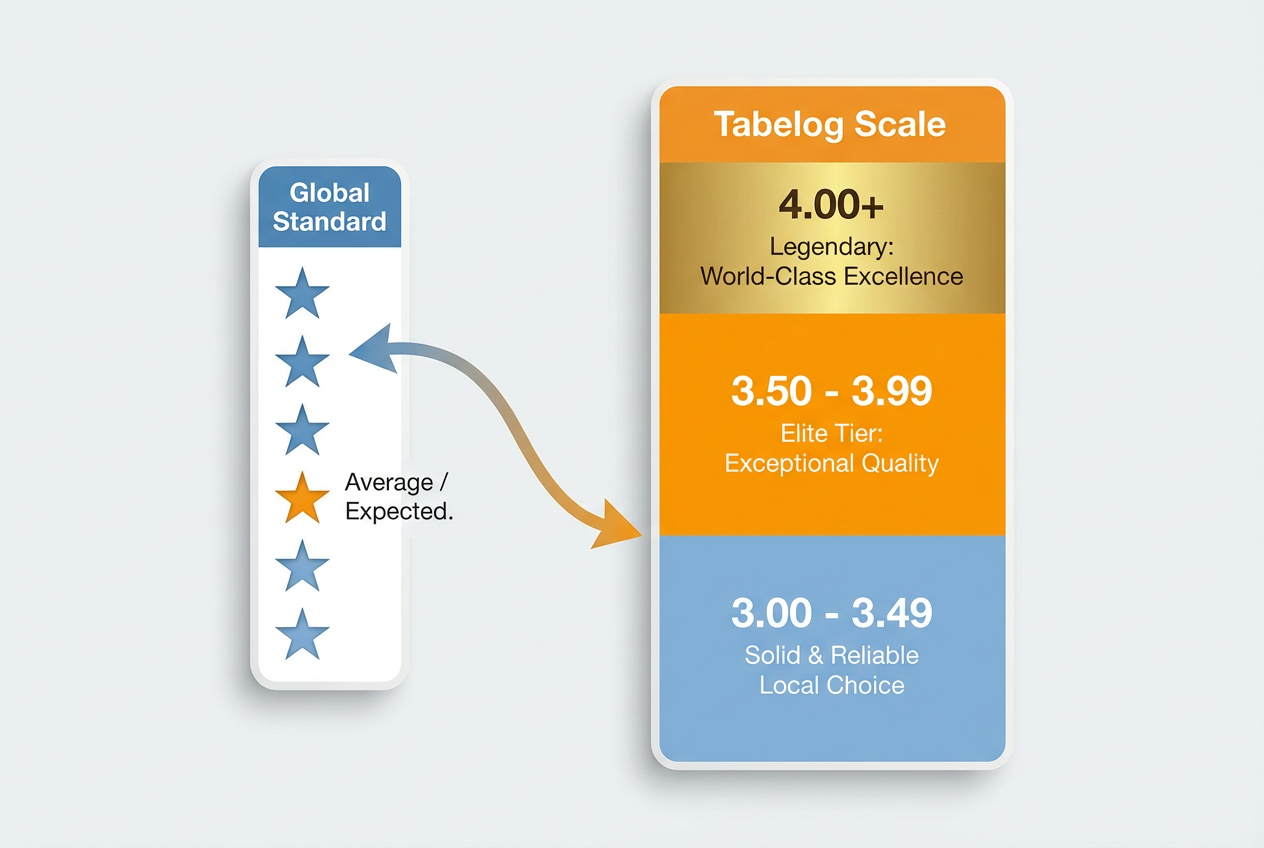
Understanding the Japanese rating curve is essential; while a 3.2 might seem low elsewhere, in Japan it signifies a high-quality, reliable establishment frequently visited by locals.
Breaking Through Language Barriers
Most restaurant review apps in Japan were built for Japanese speakers first. Menus don't get translated. Reviews stay in Japanese. Even the search filters assume you know the difference between tonkotsu and shoyu ramen styles. This created a years-long problem for international visitors who wanted access to the same quality information that locals used to find their meals.
That's finally changing. The big platforms now offer varying degrees of English support, though the depth and usability differ dramatically between apps.
What Makes a Japan Restaurant App Actually Useful
A restaurant finder needs specific capabilities to work in Japan's dense urban landscape. Generic features that work in New York or London fall apart when you're trying to locate a seven-seat yakitori bar tucked into a basement three blocks from Shinjuku Station.
Non-Negotiable Features
Precise geolocation isn't optional. Japanese addresses work differently - neighborhoods matter more than street numbers, and buildings often share similar names. You need GPS accuracy down to the meter, not the block.
Station-based search matches how locals actually navigate. They don't think "restaurants near Shibuya." They think "restaurants at Shibuya Station, Hachiko Exit." Apps built for the Japanese market understand this search pattern; ones designed for tourists often don't.
Advanced filtering separates casual apps from serious tools. You're not just searching for "Italian food." You want "handmade pasta under ¥3,000 per person, accepts credit cards, has counter seating, open past 10 PM." Japanese restaurant apps offer this granularity because the dining scene demands it.
User photos matter more than professional shots. The carefully styled images on a restaurant's website tell you what the chef hopes you'll order. The fifteen photos from last Tuesday night tell you what actually shows up on your table.
What International Visitors Need
Multi-language support is obvious but rarely executed well. Some apps translate the interface but leave all reviews in Japanese. Others translate reviews through machine translation that makes ramen descriptions read like technical manuals. The best ones have actual bilingual content from users who write in multiple languages.
Offline functionality saves you when data gets expensive or spotty. Download your restaurant lists, save maps, and access basic information without burning through your pocket Wi-Fi data or hunting for the café password.
Booking integration varies wildly by platform. Some apps let you reserve tables with a few taps. Others link out to external sites that require Japanese phone numbers. A few still expect you to call the restaurant yourself - which is fine if you speak Japanese and terrifying if you don't.
Tabelog: Japan's Restaurant Authority
Tabelog owns restaurant discovery in Japan the way Google owns search in most other countries. Its user base tops 130 million members, and its ratings carry enough weight that a 0.1 point increase can add a two-hour wait to a restaurant's evening rush.
The rating system is notoriously strict. A 3.0 means "this place is worth visiting." A 3.5 means "serious food people make reservations here weeks in advance." Anything above 4.0 occupies Michelin territory - there are only a few hundred restaurants nationwide with scores that high.
The 2024 English App Launch Changed Everything
For years, international visitors faced a frustrating reality: Tabelog's web interface existed in English, but barely. The real content - detailed reviews, photos, reservation systems - stayed locked in Japanese. Food-obsessed travelers created elaborate workarounds involving Chrome's translation feature and cross-referencing with Google Maps.
In late 2024, Tabelog finally released a proper English-language mobile app. This wasn't a half-hearted translation layer. They built dedicated interfaces for English, Chinese, and Korean speakers with localized content, simplified navigation, and actual customer support for international users.
The app includes translated restaurant descriptions, English search filters, and - critically - booking functionality that accepts international credit cards and phone numbers. You can now search "tsukemen in Meguro, open Sunday dinner" in English and get reliable results with photos from last week.
What it doesn't do well: The review content is still predominantly Japanese with machine translation. You'll get the gist, but the nuance that makes Tabelog reviews valuable gets lost. The offline functionality is limited - most features require an active connection.
How to Actually Use Tabelog
Start with station-based search. Type "Shibuya Station" and filter by cuisine type, price range, and current availability. The "Lunch" and "Dinner" toggles are your friend - many places operate completely different menus and price points between services.
Pay attention to review counts alongside ratings. A 3.4 with 500 reviews tells you more than a 3.8 with twelve reviews. Japanese diners are conservative raters; if hundreds of people took time to score a place 3.4, that restaurant has proven consistency.
The "T-Point" badge indicates you can earn loyalty points by booking through Tabelog. The "Tabelog Premium" restaurants have paid for enhanced listings, but the ratings themselves stay user-generated and can't be bought.
Gurunavi: Built for Booking
Gurunavi took a different path than Tabelog. Instead of building the most comprehensive rating database, they focused on making reservations frictionless. The result is an app that feels more tourist-friendly but lacks some of the depth serious food hunters want.
The English interface is cleaner and more intuitive than Tabelog's. Search results display translated menus with photos, reservation buttons sit prominently at the top, and the filter options use plain language instead of specialized culinary terminology.
Gurunavi's strength is its coupon system. Restaurants offer discounts - usually 10-20% off the bill or a free appetizer - through the platform. These deals work particularly well for yakitori chains, izakayas, and casual dining spots. You won't find many Michelin-starred places offering coupons, but for everyday eating, the savings add up.
The reservation system accepts international credit cards without drama. You don't need a Japanese phone number. Confirmation emails arrive in English with clear instructions and cancellation policies.
What it sacrifices: The rating system is less rigorous than Tabelog. Scores trend higher, reviews are shorter, and the user base skews toward tourists and business diners rather than serious food enthusiasts. For finding a reliable spot for a group dinner, it's excellent. For discovering that hidden tonkatsu counter that locals line up for? Less so.
Google Maps: The Familiar Fallback
Reddit threads about Japan food apps inevitably conclude with the same advice: "Just use Google Maps." There's a reason for this consensus - it's already on your phone, the interface needs no explanation, and the English reviews come from actual English speakers.
Google Maps in Japan has better coverage than you'd expect. Even small neighborhood restaurants have dozens of reviews, photos, and up-to-date business hours. The translation feature works on Japanese reviews, though with the usual machine translation quirks.
The rating system uses the familiar five-star scale that Western travelers understand instinctively. You can quickly scan photos uploaded by recent visitors, check the crowd level indicators, and use Street View to scout the entrance before you walk there.
Where Google Maps falls short: It lacks the booking integration that Japanese apps offer. Clicking "Reserve" usually dumps you to the restaurant's website or a third-party booking platform, often in Japanese. The reviews skew toward tourists and international residents, which means you might miss spots that locals love but foreigners haven't discovered yet. The offline maps work well for navigation but don't include detailed restaurant information.
AutoReserve and AI Booking Services
Here's a problem that emerged as Japan's top restaurants became internationally famous: many places only take reservations by phone, in Japanese, for specific time slots that book out within minutes of the lines opening.
Services like AutoReserve solve this by using AI to make the phone call for you. You specify the restaurant, date, time, and party size through an app. Their system calls the restaurant during business hours, makes the reservation in fluent Japanese, and sends you confirmation. Some services handle multiple restaurants simultaneously and will grab whatever becomes available first.

Modern tools like AutoReserve now integrate with major review apps, allowing travelers to bypass language barriers by having an AI system call the restaurant on their behalf.
The cost varies - some charge per reservation, others offer subscription plans. For restaurants where reservations open exactly one month in advance and fill within thirty minutes, these services are worth every yen.
Specialized Apps for Specific Needs
The major platforms cover most dining situations, but a few specialized apps fill important gaps.
Happy Cow: Essential for Plant-Based Eating
Finding vegan or vegetarian food in Japan requires different tools. Traditional Buddhist temple cuisine (shojin ryori) is plant-based by design, but modern Japanese restaurants often use fish-based dashi in seemingly vegetarian dishes.
Happy Cow catalogs plant-based restaurants, clearly marks which ones are fully vegan versus vegetarian-friendly, and includes English reviews from travelers who've actually eaten there. The filter options specify whether places accommodate vegan, vegetarian, or "vegan options available."
The community is active and honest. Reviews note when restaurants have changed menus or closed, which happens frequently in Japan's dynamic food scene.
Hotpepper Gourmet: For Deals and Volume
Hotpepper Gourmet is owned by the same parent company as Tabelog but targets a different market - casual dining, chains, izakayas, and anywhere you'd take a group without dropping serious money.
The coupon system is more aggressive than Gurunavi's. Restaurants offer all-you-can-drink plans, course menu discounts, and combo deals that make economic sense for groups of four or more.
The English support is minimal. Most users let their browser translate the page and focus on the images to understand menu options. It works well enough for casual spots where you're not worried about missing culinary nuances.
Bento.com: English-First Booking
Bento.com built their platform specifically for English-speaking travelers who want to book high-end restaurants without language barriers. The selection is curated - mostly Michelin-starred places, famous sushi counters, and kaiseki restaurants.
Every listing includes English descriptions, photos, menu explanations, and clear cancellation policies. Customer service operates in English if reservation issues arise.
You pay a premium for this service, both in the form of booking fees and the fact that budget-friendly restaurants aren't included. But if you're planning to spend ¥20,000 per person anyway, the booking fee is a small percentage of the total cost.
Which App Should You Actually Download?
The honest answer depends on what kind of eater you are and how deep you want to go into Japan's food scene.

Choosing the right app depends on your priorities; Tabelog leads in data accuracy for local spots, while Google Maps remains the most accessible for English-only speakers.
Download Tabelog if you're serious about food, willing to work through occasional translation issues, and want access to the same information Japanese food enthusiasts use. The 2024 English app dramatically improved the experience for international users. You'll eat better using Tabelog than any other single app.
Download Gurunavi if you want easy booking with minimal friction, you're traveling with a group, and you appreciate discounts. The restaurant selection is solid if not spectacular, and the English interface requires almost no learning curve.
Rely on Google Maps if you're doing a shorter trip, you want familiar technology, and you're comfortable with tourist-oriented recommendations. You won't discover the secret spots, but you won't eat badly either.
Add Happy Cow if you're vegetarian or vegan. The other apps have plant-based filter options, but Happy Cow's community actually understands the nuances of dairy-free, egg-free, and fish-stock-free cooking in a country where those distinctions aren't widely recognized.
Consider AutoReserve or similar services if you're targeting specific high-end restaurants that require Japanese-language phone reservations. The cost is minor compared to the meal itself, and the peace of mind is worth it.
The App Comparison Table
| App | Best For | English Support | Booking | Offline Mode | Rating System | Cost |
|---|---|---|---|---|---|---|
| Tabelog | Local accuracy & serious dining | Good (2024 app) | Limited | Minimal | Strict (3.5+ = elite) | Free |
| Gurunavi | Tourist-friendly booking | Excellent | Built-in | Partial | Moderate | Free |
| Google Maps | Familiar interface & English reviews | Native | External links | Yes (navigation only) | 5-star Western style | Free |
| Happy Cow | Vegan/vegetarian options | Native | External links | Yes | Community-based | Freemium |
| Hotpepper | Coupons & casual dining | Poor | Built-in | No | Moderate | Free |
| AutoReserve | High-end reservations | Native | Full service | N/A | N/A (booking only) | Paid per reservation |
| Savor | Personal food memory journal | Native | N/A | Yes | Private 10-point scale | Freemium |
What Review Apps Can't Do: Remembering What You Ate
Discovery apps solve the "where should we eat?" question brilliantly. They don't solve the "where was that incredible tempura place we went to last year?" problem at all.
Restaurant review platforms are built for browsing and finding. They're not designed to help you remember which specific dishes you loved, which ones disappointed, or how the ramen in Osaka compared to the ramen in Sapporo three months later.
This is where a dish-first food journal like Savor enters the picture. After Tabelog helps you find the restaurant, Savor helps you remember exactly what you ordered, what you scored it, and why. You're rating individual plates, not venues. When you search "tonkatsu" six months later, you see your own photos, your own scores, and your own notes - sorted by rating, city, or date.
Your food memories become searchable data. You can pull up "all the ramen I scored 8.5 or higher" or "everything I ate in Kyoto" in seconds. When someone asks "where should we go for yakitori?" you're not struggling to remember names. You're sharing a filtered list of your actual top scores with photos and notes.
The privacy matters too. Your ratings are honest because they're for you, not for public performance. No social pressure to be nice about mediocre meals. No worrying that the restaurant owner might see your three-star review. Just your real opinions about food, captured the moment you taste it.
Ready to remember every great meal? Download Savor at https://apps.apple.com/us/app/savor-remember-every-bite/id6745561315 and start building your personal food archive.
Understanding Japan's Rating Culture
Numbers mean different things in Japanese restaurant ratings. This isn't academic - it directly affects how you interpret scores and make dining decisions.
Japanese diners rate conservatively. Giving a restaurant a perfect 5.0 (or 5 on Tabelog's scale) suggests nothing could possibly be better. That feels presumptuous in a culture that values humility and continuous improvement. A 4.0+ score on Tabelog indicates a restaurant operating at the absolute peak of its category - world-class execution, flawless consistency, worth traveling specifically to visit.
A 3.5 means "this is an excellent restaurant I recommend without hesitation." A 3.0 means "this place does what it does well and I'd return." Anything above 3.0 represents a positive endorsement, not lukewarm approval.
This creates an interesting challenge when you're used to American-style ratings where anything below 4.0 suggests problems. On Tabelog, a 3.3-rated ramen shop might have an hour-long wait because locals know that score represents consistent quality and good value.
The review count matters as much as the score. Japanese users don't leave reviews casually. If a restaurant has 300+ reviews averaging 3.4, that's hundreds of diners who took time to formally rate their experience. That collective signal carries significant weight.
Building Your Tokyo Food Strategy
Here's how the apps work together in practice. You're planning a five-day Tokyo trip and want to eat as well as possible without wasting meals on tourist traps or spending three hours daily researching restaurants.
Before the trip:
- Download Tabelog (English app) and create an account.
- Browse high-rated restaurants in neighborhoods you'll visit. Save interesting options to your list.
- For any place that requires reservations (Tabelog shows this clearly), book through Gurunavi if they accept walk-in bookings, or use AutoReserve for places that require phone reservations.
- Download offline maps in Google Maps for the neighborhoods you'll explore.
- Download Savor and start testing it with meals before your trip so the interface feels natural when you're documenting forty meals in five days.
During the trip:
- Use Tabelog for spontaneous decisions when you're walking around hungry. Station-based search is your friend.
- Use Google Maps when you need English reviews to understand what dishes a place is known for.
- Open Savor immediately after finishing a meal - capture the photo while your plate still looks good, score the dish while the flavors are fresh in memory, and add a two-sentence note about what worked or didn't.
After the trip:
- Open Savor and search "Japan" or filter by city. Your entire culinary journey appears in one scrollable archive.
- When someone asks "what should I eat in Tokyo?" filter your Savor list to 8.5+ scores and share the automatically formatted list in three seconds.
- Next time you visit Japan (or any city with great ramen), search "ramen" in Savor and compare your new experiences to the baseline you've already established.
Common Questions About Japan Food Apps
Is there a Tabelog app in English?
Yes, as of late 2024. Tabelog launched a fully multilingual mobile app with dedicated English, Chinese, and Korean interfaces. The app includes translated restaurant information, English search filters, and booking functionality that accepts international credit cards. Some review content is still primarily in Japanese with machine translation, but the core experience is now accessible to English speakers.
Can foreigners use Tabelog in Japan?
Absolutely. The new Tabelog English app is specifically designed for international visitors. You can create an account with a non-Japanese phone number and email address. The booking system accepts international credit cards. The main limitation is that offline functionality is minimal compared to apps like Google Maps.
Is Tabelog free to use?
The basic Tabelog app is free with full access to restaurant listings, user reviews, photos, and ratings. Tabelog also offers a premium membership (Tabelog Premium) that provides benefits like priority reservation access and additional review features, but the free version is completely functional for finding and booking restaurants.
What is Japan's version of Yelp?
Tabelog is the closest equivalent to Yelp in Japan and is more widely used than Yelp ever was in the United States. While Yelp exists in Japan, it has minimal adoption. Japanese diners overwhelmingly trust Tabelog for restaurant discovery, with over 130 million registered users. The rating system is different (stricter than Yelp's), but the core concept - user-generated reviews and ratings - is the same.
Do I need a Japanese phone number to book restaurants through these apps?
It depends on the app and restaurant. Gurunavi and the new Tabelog English app accept international phone numbers for most bookings. Some high-end restaurants still require Japanese phone numbers for confirmation, which is where reservation services like AutoReserve or Bento.com become valuable. Google Maps typically links to external booking sites, which vary in their requirements.
Which app has the most accurate restaurant hours and location data?
Tabelog generally has the most accurate data for locally-focused restaurants because Japanese users actively maintain it. Google Maps accuracy varies - it's excellent for major restaurants and chains but can be outdated for small independent places. Always cross-reference business hours if you're making a special trip, as Japanese restaurants occasionally close unexpectedly for holidays or private events.
Start Capturing Your Japan Food Memories
Restaurant review apps will guide you to great meals throughout Japan. They'll help you decode ratings, navigate language barriers, and make reservations at places you'd never find on your own. They're essential tools for eating well in one of the world's greatest food destinations.
But those apps won't help you remember which bowl of ramen made you reconsider everything you thought you knew about noodles. They won't help you compare the yakitori in Shibuya to the yakitori in Osaka. They won't let you instantly share your top ten meals when friends ask where they should eat.
That's what Savor is built for. Your own private archive of every dish that mattered, scored honestly, searchable forever.
Download Savor at https://apps.apple.com/us/app/savor-remember-every-bite/id6745561315 and make sure your Japan food journey becomes more than just fading memories and overflowing camera rolls.
Continue Reading
Start Tracking Your Dishes Today
Transform your food photos into a searchable, ratable culinary memory bank.
Download Savor App