
Your Ultimate List of Cured Meats: 10 Varieties to Track and Compare
John the smoothie monster
John lives for smoothie bowls and cold-pressed juices. He uses Savor to remember his best blends.
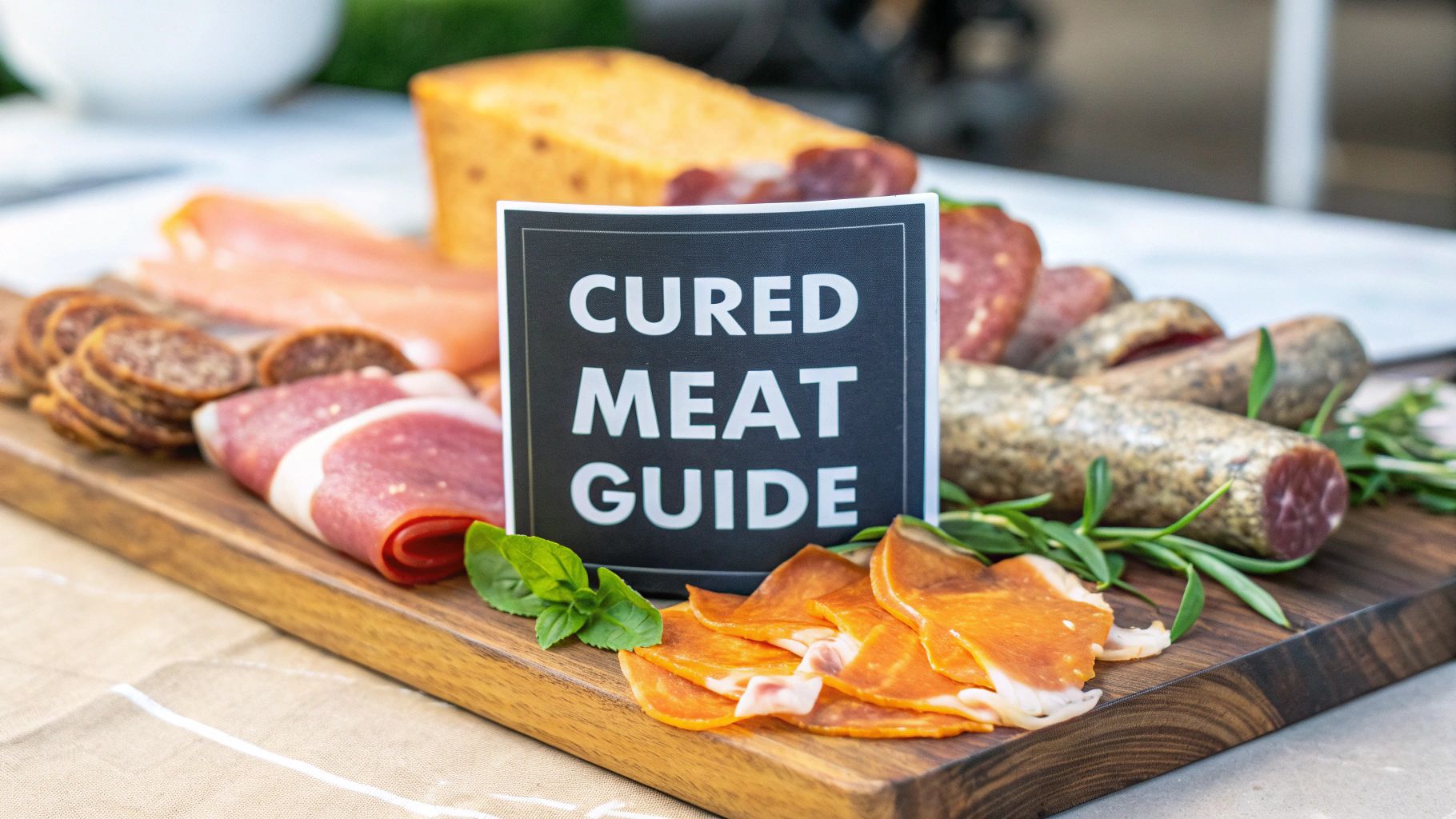
From the salty, sweet whisper of Prosciutto di Parma to the nutty, complex depth of Jamón Ibérico, the world of cured meats is a vast and delicious landscape....
From the salty, sweet whisper of Prosciutto di Parma to the nutty, complex depth of Jamón Ibérico, the world of cured meats is a vast and delicious landscape. It's a craft of patience, tradition, and terroir, where each slice tells a story of its origin. This art relies on meticulous processes refined over centuries, transforming simple cuts of meat into culinary treasures through salting, smoking, or air-drying. For a deeper understanding of the meticulous safety standards that govern the production of many cured meats, explore the importance of HACCP certification and food safety guidelines, which ensure these delicacies are safe to enjoy.
But how do you remember which one you loved at that little deli in Rome, or why the chorizo from one tapas bar was so much better than the rest? Navigating this extensive list of cured meats can feel overwhelming, especially when trying to recall subtle flavor differences between Pancetta and Guanciale. This guide is more than just a list; it's a starting point for your personal flavor journey, designed to help you distinguish, appreciate, and most importantly, remember.
We will explore ten essential cured meats, detailing their unique characteristics and origins, and offering practical tips for tasting and pairing. The goal isn't just to know them, but to build a personal catalog of your own experiences. By learning what defines each meat, you can start to rate like a critic, creating a food memory database that's uniquely yours. Let's begin the journey to track your tastes and share your discoveries.
1. Prosciutto
Prosciutto is an Italian dry-cured ham, celebrated globally for its delicate, nuanced flavor and silky, melt-in-your-mouth texture. This iconic item in our list of cured meats originates from the hind leg of a pig, which is meticulously salted and air-dried for a period ranging from 12 to 36 months. The result is a savory, slightly sweet meat that is almost always sliced paper-thin to fully appreciate its complex character.
This cured ham’s beauty lies in its simplicity and the profound impact of terroir. The specific climate, pig breed, and aging techniques of a region create distinct variations. For instance, Prosciutto di Parma DOP from Emilia-Romagna is known for its sweet, nutty notes, while Prosciutto di San Daniele DOP from Friuli-Venezia Giulia offers a more delicate flavor with a pronounced sweetness. The long curing process develops a rich, savory taste, a perfect example of what gives cured meats their satisfying depth. For a deeper dive into this fundamental flavor, you can learn more about umami here.
Tasting and Pairing Notes
To fully appreciate prosciutto, serve it at room temperature. The subtle fats soften, enhancing the aroma and flavor.
- Flavor Profile: Sweet, salty, savory, and nutty with a buttery texture. Aged versions develop more complex, funky, and concentrated flavors.
- Common Pairings: Its delicate sweetness pairs beautifully with fresh melon, figs, mozzarella, or a mild, crusty bread. For wine, consider a crisp Prosecco or a light-bodied white like Pinot Grigio.
- Savor Pro Tip: Use Savor to track prosciutto from different producers and regions. Tag your notes with the producer, age, and location. Rating each one helps you pinpoint which flavor profiles you prefer, building a personalized guide for future purchases. Rate like a critic and capture those fleeting details.
2. Jamón Ibérico
A treasure of Spanish gastronomy, Jamón Ibérico is a world-renowned cured ham derived from the native black Iberian pig. Revered for its deep, complex flavor and stunningly marbled fat that dissolves on the palate, this is a truly luxurious item in any list of cured meats. Produced primarily in western and southwestern Spain, the ham is salt-cured and then air-dried in natural conditions for an extensive period, typically between 24 and 48 months.
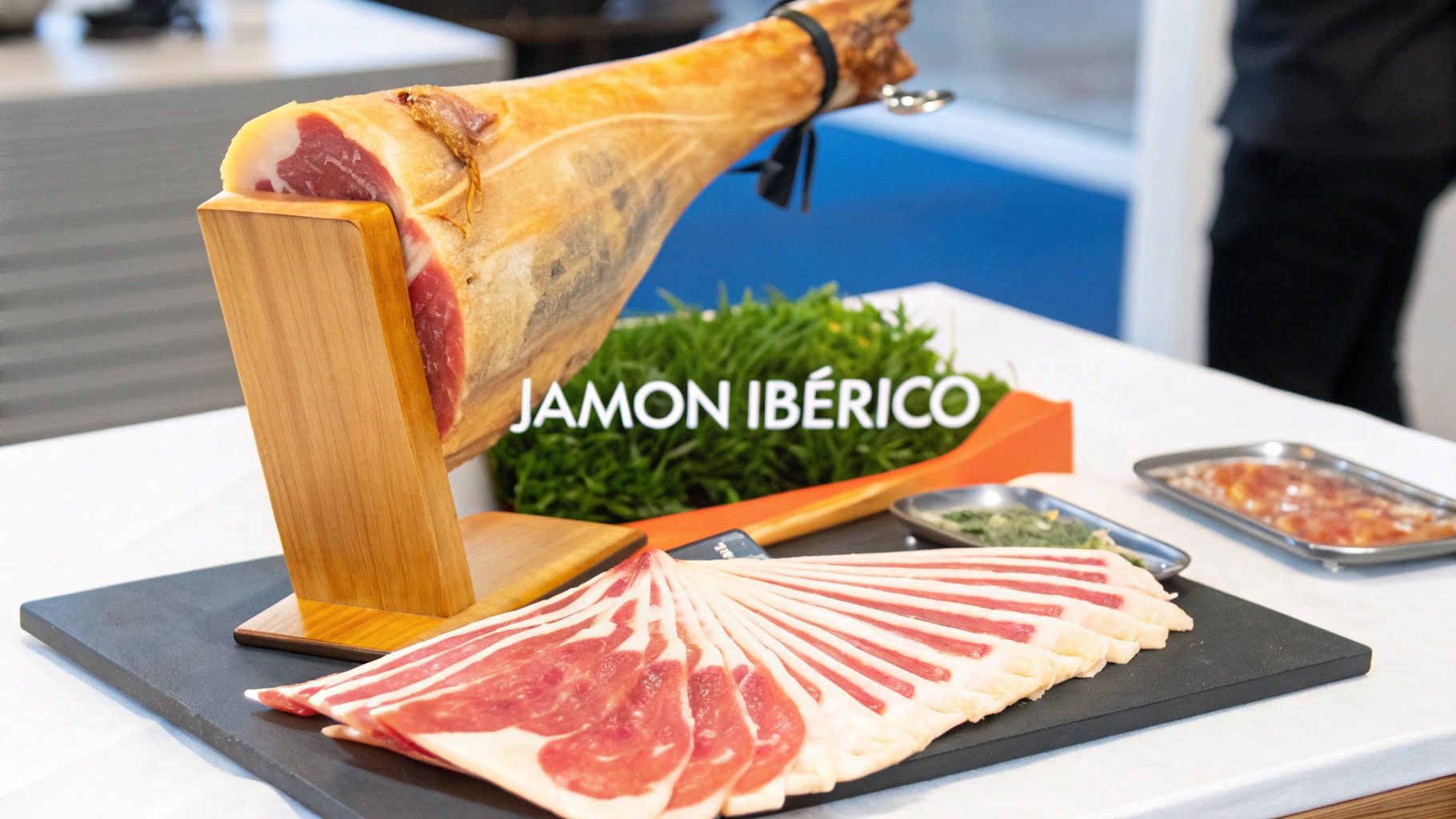
The ham's quality and final flavor are directly tied to the pig's diet, creating a fascinating grading system for enthusiasts to explore. The highest grade, Jamón Ibérico de Bellota, comes from free-range pigs that feast on acorns (bellotas) during the final fattening period. This diet imparts a rich, nutty flavor and high levels of oleic acid into the fat, similar to olive oil. Other grades, like Jamón Ibérico de Cebo, come from pigs raised on grains and compound feeds. This distinction provides a perfect case study in how a single ingredient can dramatically alter a product's final profile, making it a prime candidate for detailed tracking.
Tasting and Pairing Notes
For the ultimate experience, Jamón Ibérico should be hand-carved into small, thin slices and served at room temperature to allow its intricate aromas to bloom.
- Flavor Profile: Intensely savory, nutty, and complex, with a lingering sweetness. The fat is a key component, offering a rich, melt-in-your-mouth texture that is buttery rather than greasy.
- Common Pairings: Its robust flavor stands up well on its own or with simple accompaniments like picos (small, crunchy breadsticks) or a slice of Manchego cheese. For drinks, a dry Spanish sherry like Fino or Manzanilla is the classic choice, though a bold Spanish red wine also complements it beautifully.
- Savor Pro Tip: Create a dedicated list in Savor to compare bellota vs. cebo grades from different producers. Use tags for the producer, region, and age of each ham to build a personal reference guide. By documenting the nuances between each tasting, you can identify which flavor profiles justify a premium price for your palate. Rate like a critic to capture and remember those exquisite details.
3. Pancetta
Pancetta is an Italian cured pork belly, a foundational ingredient revered for its rich, savory flavor and succulent texture. Unlike its smoked American cousin, bacon, pancetta is cured with salt and a blend of spices such as black pepper, juniper, and garlic, then air-dried for two to three months. This process concentrates its deep, pork-forward taste, creating a versatile product that is a cornerstone of Italian cooking but is increasingly appreciated on its own as part of a charcuterie board.
The beauty of pancetta lies in its regional diversity, which showcases how local traditions and spice blends can transform the same cut of meat. For instance, Pancetta Romana from the Rome region is known for its heavy black pepper coating, while Pancetta di Calabria DOP from Southern Italy is often spiced with chili for a fiery kick. Understanding these variations is key to mastering Italian cuisine, a journey you can explore further by discovering the best pasta in Italy. Its high fat content renders beautifully when cooked, infusing dishes with incredible depth.
Tasting and Pairing Notes
When tasting pancetta raw (if it is the aged, sliceable kind), allow it to warm slightly to release its aromatic spices. When cooked, its fat becomes crisp and its flavor intensifies.
- Flavor Profile: Rich, porky, and deeply savory, with spice notes (pepper, juniper, nutmeg) and a clean, buttery finish. The texture ranges from tender and fatty to delightfully crisp when rendered.
- Common Pairings: Its savory depth makes it a perfect base for pasta sauces like carbonara and amatriciana. It also pairs wonderfully with brussels sprouts, beans, or wrapped around other meats and vegetables. For wine, an acidic white like Verdicchio or a light-bodied red like Chianti cuts through its richness.
- Savor Pro Tip: Use Savor to compare pancetta from different Italian regions. Tag your notes with the producer, region, and primary spices. Creating a list that ranks different pancettas by their fat-to-lean ratio will help you identify your ideal preference for cooking versus slicing. Rate like a critic to document how each one performs.
4. Speck
Speck is a distinctively smoky, juniper-infused cured ham from the Südtirol/Alto Adige region of Northern Italy. This unique entry in our list of cured meats bridges the gap between salty, air-dried Italian prosciutto and the hearty, smoked hams of Central Europe. Originating from the hind leg of a pig, it undergoes a two-part process: first, it is salt-cured with a signature spice rub including juniper berries and bay leaves, then it is lightly cold-smoked and aged for an average of 22 weeks. The result is a firm, dense ham with a deep red interior and an incomparably savory, smoky, and aromatic profile.
This Alpine delicacy’s character is a direct result of its geography, combining Mediterranean salting with Alpine smoking traditions. This method creates a flavor that is less salty than prosciutto but far more complex and robust. High-quality examples like Südtirol Speck PGI (Protected Geographical Indication) are guaranteed to follow traditional methods, offering a consistent and authentic taste.
Tasting and Pairing Notes
Serve speck sliced slightly thicker than prosciutto to fully appreciate its firm texture and deep, smoky essence. Bringing it to room temperature before serving will open up its aromatic qualities.
- Flavor Profile: Smoky, savory, and slightly spicy with distinct notes of juniper, bay leaf, and other Alpine herbs. It has a firm but yielding texture and a balanced saltiness that complements its smoky depth.
- Common Pairings: Its bold flavor stands up well to rustic, whole-grain breads, sharp cheeses like Asiago or Gruyère, and tangy pickles. For drinks, consider a malty German-style lager, a crisp Gewürztraminer, or a light-bodied red like Schiava.
- Savor Pro Tip: Use Savor to compare how smoking impacts cured meats. Log a tasting of speck next to a non-smoked prosciutto like San Daniele. Tag your notes with smoke intensity and specific spice profiles. Creating this side-by-side comparison helps you identify and document exactly how this unique curing process shapes the final taste. Rate like a critic to build your personal guide to Alpine charcuterie.
5. Serrano Ham
Serrano Ham, or Jamón Serrano, is Spain's quintessential dry-cured ham, an anchor of its culinary heritage and a celebrated item on any list of cured meats. Produced from various breeds of white pigs, its name translates to "ham from the sierra" or mountains, alluding to the traditional practice of curing hams in the dry, cool mountain air. The process involves salting and then air-drying the hind leg for at least 12 months, and often much longer, resulting in a firm texture and a deep, savory flavor profile.
Unlike its more famous cousin, Jamón Ibérico, Serrano offers an accessible entry point into the world of Spanish cured hams without sacrificing quality or tradition. The long curing process concentrates its flavors, developing rich umami and mineral notes. Regional variations from areas like Trevélez and Teruel have earned protected status (DOP and PGI) for their specific production methods and distinct taste. This makes Serrano an excellent product for understanding the impact of aging and terroir on cured meat.
Tasting and Pairing Notes
Serve Serrano Ham thinly sliced at room temperature to allow its complex aromatics and flavors to open up. Its lean texture provides a satisfying chew.
- Flavor Profile: Robustly savory, with distinct nutty and mineral notes and a lower fat content than Ibérico. Aged versions, like Reserva (aged at least 15 months) and Gran Reserva (aged at least 18 months), develop a more intense, complex flavor and sometimes feature tyrosine crystals that add a pleasant crunch.
- Common Pairings: Its bold flavor stands up well to Spanish cheeses like Manchego, olives, and crusty bread rubbed with tomato and garlic (pan con tomate). For drinks, a dry Spanish sherry (Fino or Manzanilla) or a bold red wine like Tempranillo is a classic choice.
- Savor Pro Tip: Use Savor to conduct a side-by-side tasting of Serrano and Jamón Ibérico. Create a list comparing their flavor, texture, and price to document the price-to-flavor relationship. You can also compare a Reserva and Gran Reserva from the same producer to isolate and rate the specific impact of longer aging. Rate like a critic to build your own definitive guide to Spanish hams.
6. Guanciale
Guanciale is an Italian cured pork jowl or cheek, a foundational element of Roman cuisine and a powerhouse in our list of cured meats. Unlike its relatives pancetta or bacon, which come from the belly, guanciale is made from the pig's jowl, a cut with a unique composition of rich fat and lean muscle. It is traditionally seasoned with salt, black pepper, and sometimes garlic or herbs, then cured and aged for at least three months. The result is a product with an intensely savory, deeply porky flavor and a texture that crisps beautifully while rendering its luscious, flavorful fat.
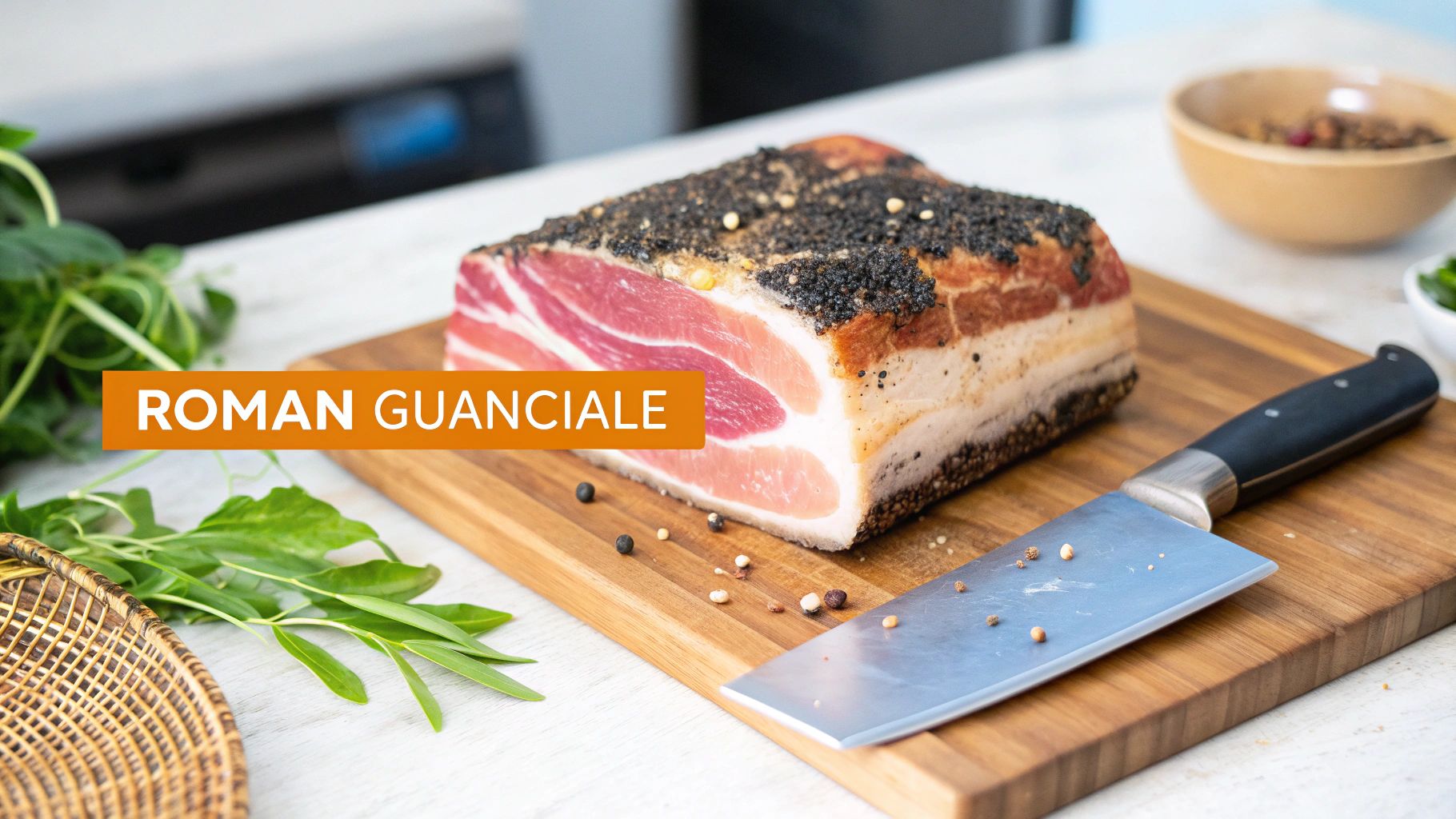
This cured meat’s character is defined by its anatomy. The jowl’s fat is firmer and has a higher melting point than pancetta, which is why it achieves a perfect crisp-tender balance when cooked. Its robust flavor is essential for classic pasta dishes like carbonara and amatriciana, where it forms the undeniable backbone of the sauce. Tracking regional and aging distinctions is a fantastic way to understand how a single cut of meat can express itself so differently.
Tasting and Pairing Notes
While primarily a cooking ingredient, guanciale can be sliced paper-thin and eaten raw when aged longer, offering a uniquely potent tasting experience.
- Flavor Profile: Intensely savory, funky, and porky with a pronounced peppery spice. The fat is rich and buttery, carrying the deep curing flavors.
- Common Pairings: Its primary role is in cooking, lending its rendered fat and crispy bits to pasta sauces, beans, and greens. When served raw, it needs little more than a piece of crusty bread. A bold, acidic red wine like Sangiovese can cut through its richness.
- Savor Pro Tip: Use Savor to document how guanciale’s flavor transforms a dish. Create a dedicated list tracking your carbonara attempts, noting the specific guanciale used and its impact. Rate like a critic by comparing a 3-month-aged guanciale against a 12-month version to see how the jowl's fat and flavor evolve over time.
7. Bresaola
Bresaola is an Italian air-dried, salt-cured beef, a standout in our list of cured meats for being one of the few prominent varieties made from beef. Originating from the Lombardy region in the Alps, it is typically made from the top round, a very lean cut. The meat is aged for two to three months, resulting in a deep ruby-red color, a firm yet tender texture, and an elegant, aromatic flavor that is far less fatty than its pork-based counterparts.
The beauty of Bresaola lies in its lean, muscular profile and subtle seasoning. Its production creates a completely different experience compared to prosciutto or salami, emphasizing mineral and savory notes over rich, buttery fats. The most renowned version is Bresaola della Valtellina PGI, which is protected for its specific regional production methods. For enthusiasts documenting food, bresaola is essential for tracking how the choice of animal fundamentally alters the outcome of curing.
Tasting and Pairing Notes
Serve bresaola thinly sliced and slightly chilled or at room temperature. Its robust flavor needs little adornment to shine.
- Flavor Profile: Savory, slightly salty, and mineral-forward with subtle hints of spice. It has a lean texture and a clean, almost gamey finish with a deep umami character.
- Common Pairings: Traditionally served with a drizzle of extra-virgin olive oil, a squeeze of lemon, and shavings of Parmesan cheese. It also pairs well with peppery arugula, crusty bread, and light-bodied red wines like a Valpolicella or a sparkling Franciacorta.
- Savor Pro Tip: Use Savor to create a separate list for beef-based cured meats to avoid confusing their mineral-heavy profiles with pork varieties. Track how slicing thickness affects your perception of its flavor, from delicate minerality to more pronounced gaminess. Rate like a critic by comparing Bresaola from Valtellina against other Alpine versions to document the subtle but distinct impact of regional terroir.
8. Chorizo
Chorizo is a vibrantly spiced pork sausage, a cornerstone of Spanish and Portuguese culinary traditions, and a standout in any list of cured meats. Unlike the subtle, delicate flavors of many other items, chorizo’s character is defined by bold seasonings, primarily paprika, garlic, and often wine. It is typically cured and air-dried for several weeks, resulting in a firm texture and deeply concentrated flavor that makes it one of the most versatile cured meats available.
The sausage’s identity is shaped by its key ingredient: paprika. Spanish chorizo comes in two main styles: Chorizo Dulce, made with sweet paprika, and Chorizo Picante, made with hot or smoked paprika (pimentón), which imparts a distinct smoky depth. From the premium Chorizo de Jabugo of Andalusia to the uniquely spiced Portuguese Chouriço, each regional variation tells a story. It’s important to distinguish cured chorizo, which is ready to eat, from fresh Mexican chorizo, an uncooked sausage that requires cooking and offers a different, spicier flavor experience.
Tasting and Pairing Notes
To best appreciate its complex spice profile, slice cured chorizo about a quarter-inch thick and serve it at room temperature.
- Flavor Profile: Savory, smoky, and spicy with a pronounced garlic and paprika essence. Its richness comes from a generous fat content, which carries the spice and creates a satisfying, lingering finish.
- Common Pairings: Its bold flavor stands up to robust pairings. Serve it with Manchego cheese, olives, and crusty bread as part of a tapas platter. It also adds incredible depth to stews, egg dishes, and rice preparations like paella. For wine, a Spanish Tempranillo or a dry rosé is an excellent match.
- Savor Pro Tip: Use Savor to compare Spanish smoked paprika versions against sweet paprika versions side-by-side. Tag each entry with its origin (e.g., "Spanish," "Portuguese") and type ("cured," "fresh") to build a clear understanding of regional differences. Rate like a critic by noting the paprika intensity and fat distribution, helping you identify the perfect chorizo for any dish.
9. Soppressata
Soppressata is a classic Italian dry-cured salami, renowned for its coarse grind and robust, peppery flavor. An essential item in any comprehensive list of cured meats, it originates from Southern Italy, particularly regions like Calabria and Tuscany. Made from pork, the meat is roughly chopped rather than finely ground, which gives soppressata its characteristically rustic and satisfyingly chewy texture. It is seasoned generously with whole or cracked black peppercorns, then stuffed into a casing and aged for several months.
This salami’s appeal comes from its straightforward yet bold flavor profile, where the quality of the pork and the punch of black pepper shine through. Regional variations offer exciting distinctions; for example, Soppressata Calabrese often includes spicy red pepper flakes for an extra kick, while Soppressata Toscana sticks to a more traditional black pepper and garlic seasoning. The coarse texture is a key differentiator, making each bite a more substantial experience compared to finely ground salamis. For those exploring Italian-American delis, you'll find this cured meat is a cornerstone of their offerings. You can find excellent examples at many of the best Italian delis in New York.
Tasting and Pairing Notes
Serve soppressata sliced slightly thicker than prosciutto to fully appreciate its wonderfully coarse texture.
- Flavor Profile: Primarily peppery and savory with rich pork notes. Depending on the region, it can range from mildly piquant to intensely spicy. The texture is firm, meaty, and pleasantly uneven.
- Common Pairings: Its bold flavor stands up well to sharp, aged cheeses like Pecorino or Provolone. It is also excellent with olives, crusty bread, or a full-bodied red wine such as Chianti or Nero d'Avola.
- Savor Pro Tip: Use Savor to compare different regional soppressata styles. Create a specific list to rank them by pepper intensity, noting whether they use black or red pepper. This helps you map your spice preferences and identify the exact flavor profile you enjoy most. Rate like a critic by documenting the grind coarseness and aging length to see how they impact the overall taste and texture.
10. Lardo
Lardo is a unique Italian salume made from cured pork fatback, a testament to the nose-to-tail philosophy of using every part of the animal. This delicacy, primarily from Tuscany, involves curing thick strips of pork fat with a mixture of sea salt, garlic, rosemary, and other spices. The seasoned fat is then aged for at least six months, often in special containers, which transforms its texture and flavor into something extraordinarily delicate and aromatic.
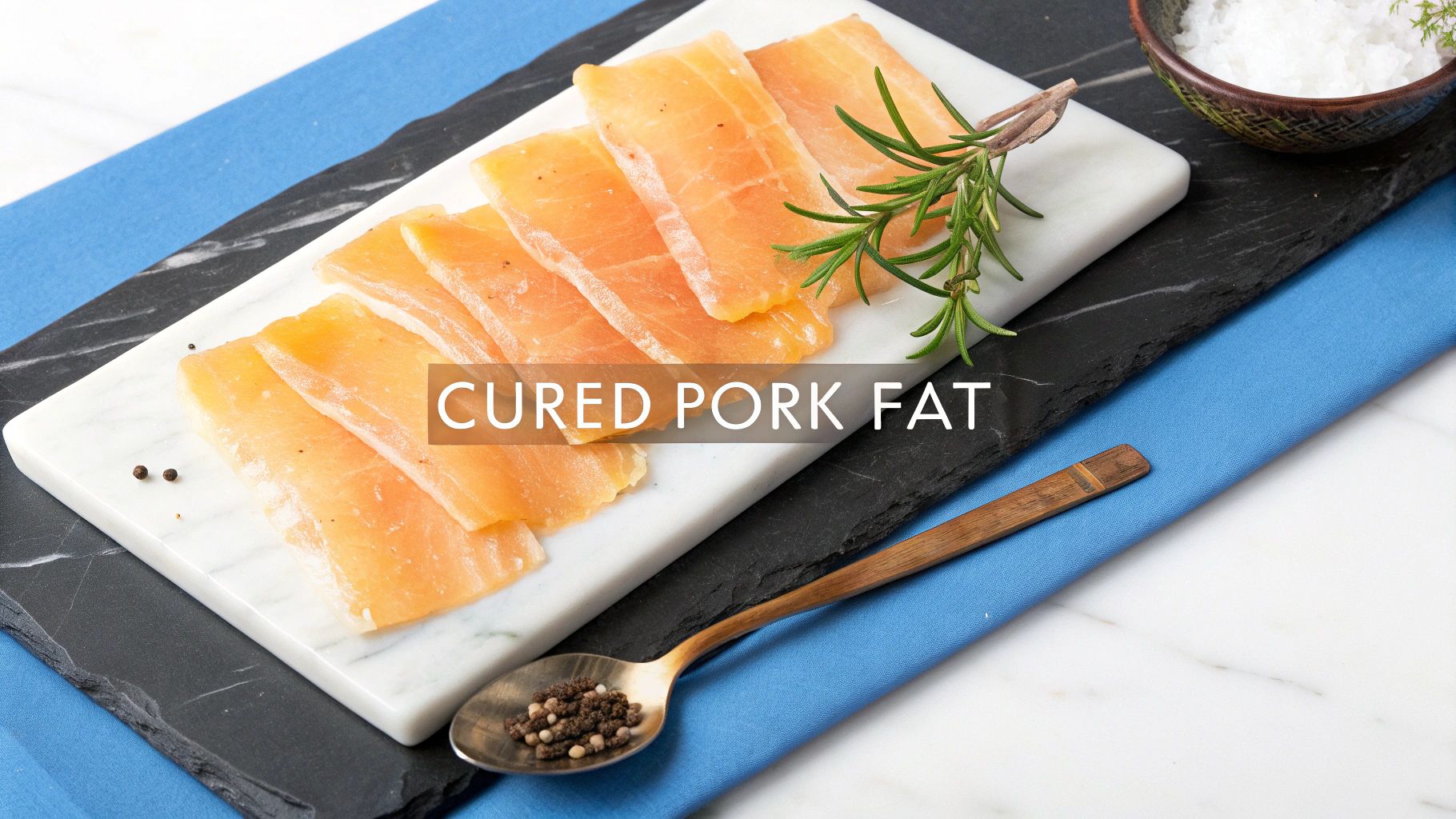
Unlike muscle-based cured meats, lardo celebrates pure fat as a delicacy. The most famous example, Lardo di Colonnata IGP, is aged in basins carved from local Carrara marble, a process that imparts a unique, slightly sweet flavor and a cool, smooth texture. Other regional variations may use wooden vessels, yielding different aromatic qualities. This item in our list of cured meats showcases how aging techniques and simple ingredients can create profound complexity from a humble starting point.
Tasting and Pairing Notes
Serve lardo sliced paper-thin so it melts on the tongue or on a warm piece of crusty bread. It is extremely rich, so a little goes a long way.
- Flavor Profile: Herbaceous, savory, and subtly sweet with a clean, buttery richness. The texture is silky and melts instantly, releasing notes of rosemary, garlic, and spice.
- Common Pairings: Its decadent flavor is best balanced with simple pairings like warm, unsalted bread, roasted potatoes, or draped over grilled shrimp. For drinks, a crisp, acidic white wine or a light-bodied red complements its richness.
- Savor Pro Tip: Use Savor to create a specialized list for fat-based cured products. Document whether the lardo was aged in marble or wood using producer and location tags. When tasting, rate the herbaceous intensity separately from the fat quality to pinpoint the influence of the seasonings. Rate like a critic to build your advanced palate for these unique delicacies.
10 Cured Meats Comparison
| Product | Production complexity | Resource requirements | Expected outcomes (flavor & texture) | Ideal use cases | Key advantages |
|---|---|---|---|---|---|
| Prosciutto | High — long dry-curing (12–36 months), strict climate control | Pork hind legs, salt, aging rooms, PDO certification for premium | Delicate, slightly sweet, silky texture; best thin-sliced | Benchmark tastings, charcuterie, regional comparisons | Ready-to-eat, consistent benchmark, long shelf stability |
| Jamón Ibérico | Very high — extended aging (24–48 months), breed- and diet-specific regs | Iberian pigs (bellota vs. cebo), long mountain drying, skilled curing | Intense umami, creamy melt-in-mouth fat, crystalline deposits | Luxury tastings, terroir and diet impact studies, high-end comparisons | Extreme complexity, strong terroir/diet signal, cultural prestige |
| Pancetta | Medium — short curing (2–3 months), seasoned belly | Pork belly, spice blends (pepper, garlic, juniper), casings | Rich, savory, high-fat, tender texture | Cooking ingredient and standalone tastings, affordable comparisons | Versatile (cook or eat raw), affordable, frequent sampling |
| Speck | Medium–high — dry-curing plus smoking (4–24 months) | Pork, Alpine herb smoking (juniper), controlled smoke/ageing, PDO option | Smoky, slightly spicy, balanced sweet-salty profile | Compare smoking intensity, Alpine vs. Mediterranean curing | Distinct smoky signature, verifiable regional authenticity |
| Serrano Ham | High — long mountain aging (7–10 years) | White pigs, long air-drying in mountain conditions, standard producers | Clean salty-savory, firmer texture, mineral notes | Budget-conscious aging studies, side-by-side with ibérico | More accessible than ibérico, consistent quality, widely sourced |
| Guanciale | Medium — moderate aging (3–12 months), cut-specific curing | Pork jowl, pepper/garlic seasoning, careful aging | Deeply porky, intensely savory, creamy fat that melts | Ingredient-led tastings (carbonara), study of cut/anatomy effects | Very distinctive flavor, strong sensory impressions, affordable |
| Bresaola | Medium — air-dried beef (2–3 months), minimal spicing | Lean beef (top round), salt/pepper/garlic, drying rooms, DOP variants | Lean, mineral, slightly gamey, tender thin slices | Documenting animal-type differences, lower-fat cured options | Unique beef category, lower fat, clear differentiation from pork |
| Chorizo | Low–medium — short curing/aging (2–8 weeks) with big spice variance | Pork, paprika (smoked or sweet), garlic, regional techniques | Paprika-forward (smoky or sweet), variable grind and firmness | Spice-impact studies, regional style comparisons, versatile cooking | Extremely varied styles, affordable, widely available |
| Soppressata | Medium — cured sausage with coarse grind (3–6 months) | Pork, coarse grind, black pepper, aging for firmness | Bold black-pepper character, coarse texture, dense mouthfeel | Texture-focused tastings, pepper-intensity comparisons | Distinct coarse texture, strong pepper anchor, shelf stable |
| Lardo | Medium–high — fat curing in marble/wood (6–10 months), delicate handling | Pork back fat, herbs (rosemary, garlic), marble/wood aging vessels | Silky, creamy melt-on-tongue fat with herbaceous infusion | Advanced nose-to-tail tastings, fat-focused sensory studies | Unique mouthfeel, highly distinctive category, artisanal appeal |
Start Your Own Cured Meats Chronicle
We have journeyed through a world rich with salt, smoke, and time, exploring ten magnificent examples from the vast universe of cured meats. From the delicate, nutty sweetness of Jamón Ibérico to the peppery punch of Soppressata and the aromatic silkiness of Lardo, this list of cured meats serves as your foundational map. Each entry, with its unique history, meticulous preparation, and distinct flavor profile, represents a culinary tradition refined over centuries.
The true value of this exploration, however, lies not just in knowing these names but in understanding what they mean to your palate. This guide is your starting point, an invitation to embark on a personal tasting adventure that goes beyond a simple list.
From Passive Tasting to Active Discovery
The real magic happens when you transition from a passive consumer to an active archivist of your own experiences. Think of yourself as a culinary cartographer, charting the territories of taste and texture. The goal is to build a rich, personal database of flavors that you can revisit, compare, and share.
- Document the Details: Did the Prosciutto di Parma you enjoyed in Emilia-Romagna have a more profound sweetness than the one from your local artisan deli? Note it down.
- Compare and Contrast: How does a 12-month aged Serrano Ham stack up against a 24-month one from the exact same producer? Only your records can tell that story.
- Track Your Preferences: You might discover you prefer the firm, lean texture of Bresaola in the summer and the rich, fatty comfort of Guanciale in the winter.
By capturing these nuances, you stop forgetting and start building expertise. Every charcuterie board becomes a field for research, and every meal is a data point in your evolving food story. You’ll begin to notice the subtle differences that elevate a good cured meat to an unforgettable one.
Building Your Personal Cured Meats Legacy
Creating a personal food diary is more than just a hobby; it's the practice of preserving memories. That fleeting moment of delight when you tasted perfectly sliced Speck for the first time doesn't have to be lost. Capturing it with a photo, a rating, and a few notes transforms a transient sensation into a permanent, searchable record.
Key Insight: A detailed food log is your personal, unbiased critic. It helps you remember not just what you ate, but why you loved it, enabling you to make more informed choices, impress guests with perfect pairings, and confidently navigate any deli counter or restaurant menu.
For home cooks and culinary enthusiasts aiming for that perfect, paper-thin slice, the right equipment is non-negotiable. Investing in one of the best meat slicers can transform your ability to serve delicate meats like prosciutto and bresaola with the texture and presentation they deserve, elevating your at-home charcuterie experience from good to professional.
Your chronicle is a living document. It will grow with every new discovery, from a rustic chorizo tasted on a trip through Spain to a locally-made basturma from a neighborhood market. This is your story, told through the universal language of food. Start today: snap a photo of your next charcuterie board, log the details, and give it a score. Your next great food discovery is waiting to be documented.
Ready to turn your tasting notes into a beautiful, searchable collection? Download Savor to create your private food diary, track your ratings, and build your own definitive list of cured meats. Track tastes, share discoveries. Start your journey today at Savor.
Continue Reading
Start Tracking Your Dishes Today
Transform your food photos into a searchable, ratable culinary memory bank.
Download Savor App