
Your Guide to a Photo Food Journal App
John the smoothie monster
John lives for smoothie bowls and cold-pressed juices. He uses Savor to remember his best blends.
A photo food journal app is your personal memory keeper for every meal you’ve ever loved. It's designed to turn those fleeting culinary moments into a...
A photo food journal app is your personal memory keeper for every meal you’ve ever loved. It's designed to turn those fleeting culinary moments into a searchable, visual story. This isn't about counting calories or chasing trends; it’s about capturing the real experience behind the dish—from a life-changing street taco to a celebratory dinner—so you can easily remember what you loved, what you didn't, and why.
Your Digital Memory Keeper for Meals
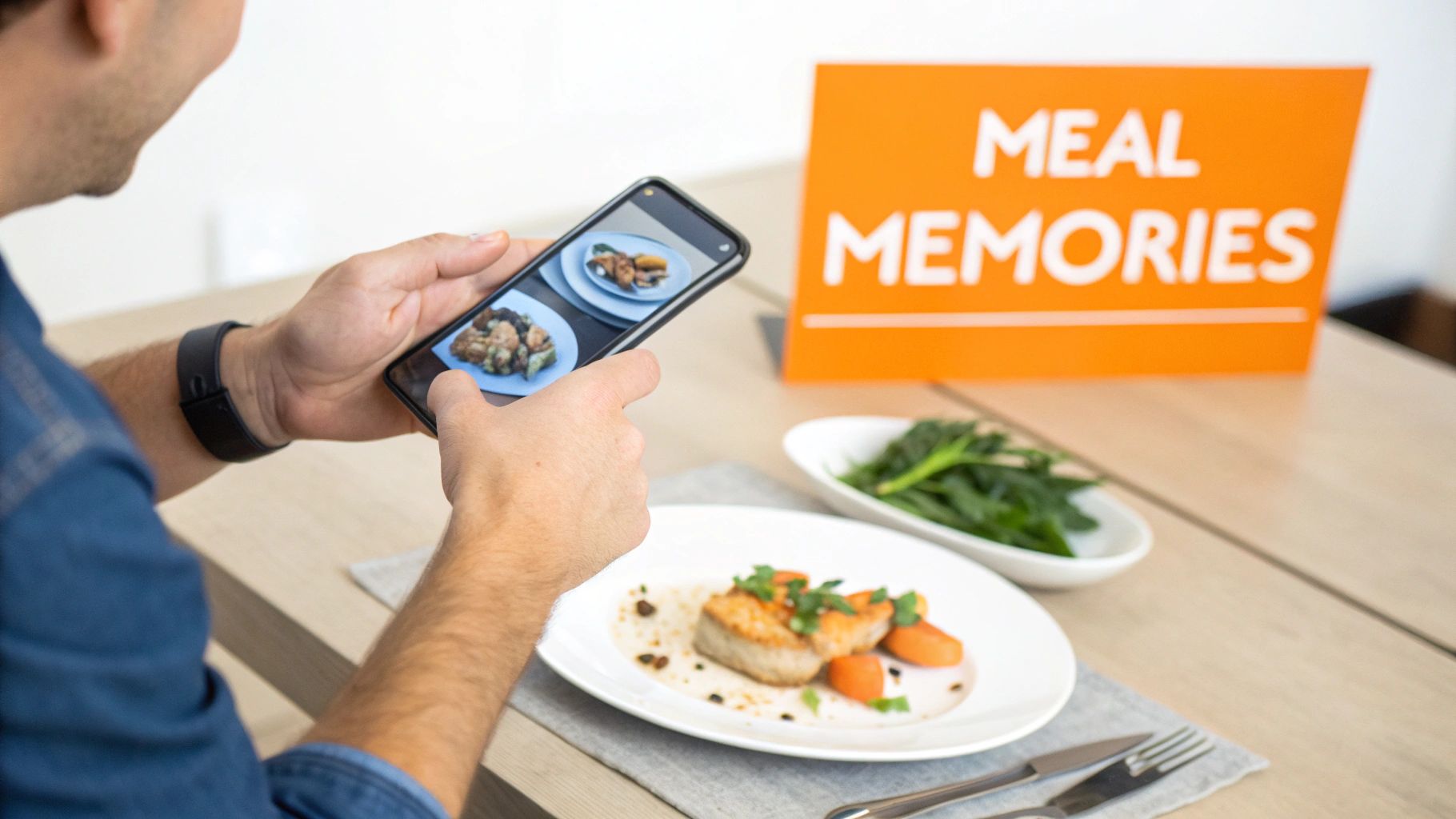
Ever had an incredible meal, only to forget the name of the dish a week later? You’re not alone. This is exactly where a photo food journal app changes everything, acting as a digital memoir for your palate. Think of it as your own private collection of food experiences, ready the moment you need to give a friend a recommendation or just remind yourself of a perfect flavor combination.
Whether you're documenting home-cooked triumphs or exploring new restaurants in your area, the app gives you a visual record of your culinary journey. It goes way beyond simple note-taking, helping you build a rich, searchable database of your own trusted tastes. The whole point is to create a reliable history of your food memories, one you can come back to again and again.
Why Visual Journaling Matters
The idea of tracking food with photos is catching on fast. The global market for diet and nutrition apps was valued at USD 2.14 billion in 2024 and is expected to hit USD 4.56 billion by 2030. A huge driver of this growth is the simple fact that photo-based logging is 40% faster and boosts consistency by 25% among users.
This trend highlights a simple truth: our brains are wired for visuals. A picture of a dish does more than just record what you ate; it instantly brings back the atmosphere, the presentation, and the feeling of that moment. You can learn more about how to turn these moments into lasting memories with the right food journaling app.
A great photo food journal is less like a spreadsheet and more like a storybook for your palate. It celebrates real food memories, helping you track tastes and share discoveries on your own terms.
How a Photo Food Journal App Actually Works
Think of a photo food journal app as less of a chore and more of a digital scrapbook for your taste buds. The whole idea is to make remembering a meal as simple and intuitive as taking a picture, so it fits right into your dining experience without making you feel like you’re doing homework at the table.
It all starts the moment your food arrives. The process is straightforward: you snap a photo, add your thoughts, and the app handles the rest. This simple act transforms a fleeting meal into a permanent, searchable memory, helping you build a rich, visual library of every dish you’ve ever tried.
From Plate to Private Database
It always begins with the photo. Before you even pick up your fork, you take a picture. That single action anchors the memory, capturing the dish’s presentation and the moment’s context. For a few pointers on getting a shot that does your food justice, check out our guide on how to photograph food.
Once the photo is locked in, the real magic starts. This is where you add the crucial details that bring the memory roaring back to life later on:
- Your Personal Rating: Go beyond a simple thumbs-up. Scoring a dish on a scale gives you a consistent way to measure what you truly love.
- Notes & Nuances: Was the sauce a little too sweet? The texture absolutely perfect? This is where you jot down the specific details a photo alone can never capture.
- Location & Company: Tag the restaurant and who you were with. It adds another layer of context to your food story, turning a simple meal into a full-blown memory.
The Power of Smart Organization
This is where modern photo food journal apps really pull away from a basic notes app. Many now use AI dish recognition to automatically identify and categorize what you're eating, which saves you from having to type everything out manually. This kind of smart technology is a huge reason the market for these apps climbed to USD 4.90 billion in 2024.
Thanks to this advanced image recognition, a whopping 68% of users now rely on photo uploads for most of their entries. It's just easier. In fact, manual logging has dropped by 35% since 2022. Your journal becomes a smart, self-organizing database that helps you track your tastes and share your discoveries without any of the friction. You can explore more about these trends in global nutrition app usage.
The goal isn't just to remember what you ate—it's to understand your own palate. A well-organized journal helps you compare dishes over time, rediscover old favorites, and make better dining decisions based on your own trusted experiences.
What Makes a Great Photo Food Journal App?
Let's be clear: a great photo food journal app is so much more than a glorified camera roll for your meals. The best ones turn what could be a simple log into your own powerful, personal food database. It’s all about transforming every meal you eat into a useful data point that helps you understand your own palate.
These apps are designed for culinary exploration, not just calorie counting. Think advanced rating systems that let you score everything from a dish's flavor and texture to its presentation, giving you a consistent way to judge every experience. When you combine that with smart filtering, you can instantly find answers to real-world questions like, "What was the best pasta I had last year?" or "Show me all the ramen I rated above an 8."
This simple workflow shows how a modern photo food journal app works. Capturing a photo is just the beginning.
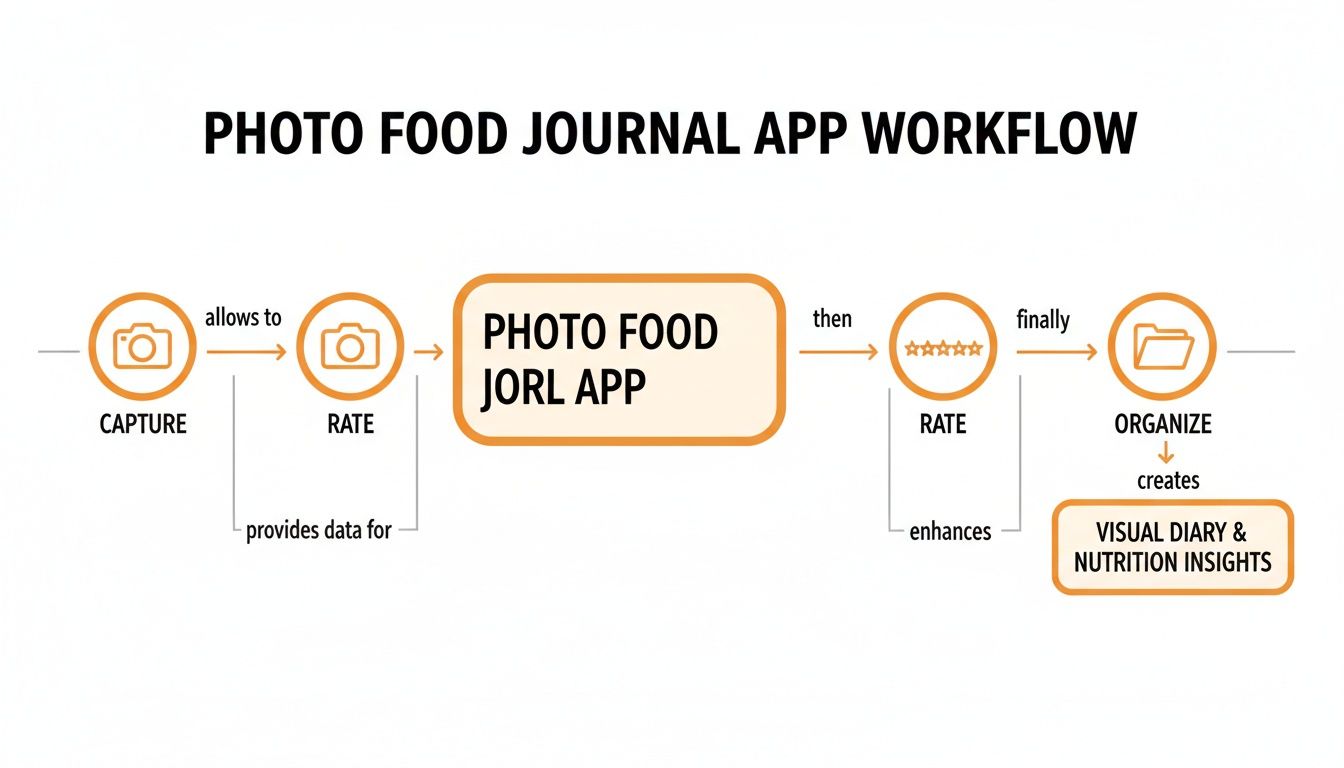
As you can see, the process is designed to be effortless, moving from a quick snapshot to detailed rating and, finally, to an organized visual diary of your culinary life.
Tools for the Modern Food Explorer
The real power of a photo food journal app is its ability to organize and make sense of your culinary life. Instead of a jumble of disconnected photos, you get a structured library of experiences. This is where you can truly rate like a critic—your own critic.
Here are the essential features that set a top-tier app apart:
- Advanced Rating Systems: Go beyond a simple star rating. Score dishes on multiple criteria like flavor, presentation, texture, and creativity to build a nuanced understanding of what you really enjoy.
- Custom Tags and Notes: Add the context a photo can't capture. Tag dishes with keywords like "spicy," "comfort food," or "date night," and add private notes about the atmosphere or the company you shared the meal with.
- Powerful Search and Filtering: A robust search function is non-negotiable. The ability to filter your entries by cuisine, location, rating, or custom tag is what makes your food memory database genuinely useful.
- Privacy-First Sharing: Your food journal is personal. A quality app lets you decide what to share and with whom, whether it's a curated list of your top 10 tacos or a single dish recommendation for a friend.
The ultimate goal is to build your own trusted source of truth. When you rely on your own curated data, you eliminate the noise of public review sites and make decisions based on a palate you know best—yours.
The evolution from scribbled notes to a dynamic digital archive is a game-changer. Let's compare the old way with the new.
Comparing Traditional Logs and Modern Photo Food Journals
This table illustrates the evolution of food journaling, comparing the limitations of old methods with the advanced capabilities of modern photo-first apps.
| Feature | Traditional Food Log (Pen & Paper / Basic App) | Modern Photo Food Journal App |
|---|---|---|
| Primary Input | Manual text entry (often tedious and inconsistent). | A quick photo, often with AI recognition to auto-fill details. |
| Rating System | Simple stars or a basic numerical score. | Multi-faceted scoring for flavor, texture, presentation, etc. |
| Searchability | Limited or non-existent. Finding a specific meal from years ago is a chore. | Powerful, filterable search by dish, location, rating, tags, or date. |
| Visual Record | None, or requires manually attaching a photo from your camera roll. | Photo-first design where the visual is central to the memory. |
| Context & Notes | Basic text notes, often unstructured. | Structured fields for tags, notes, location, and company, creating rich, layered memories. |
| Sharing | Difficult. You might have to screenshot a page or copy-paste text. | Built-in, privacy-focused sharing to send curated lists or single recommendations to friends. |
| Personal Insights | Provides a simple historical record. | Uncovers patterns in your taste, helping you discover your "Top 10" of anything and make better choices. |
The difference is clear. While traditional methods were about simple logging, modern apps are about building a personal, actionable food intelligence system.
From Simple Log to Personal Legacy
Over time, these features work together to create something more than just a diary; they build your personal food legacy. Your journal becomes a living document of your tastes, travels, and traditions.
It’s the tool you use to remember a special anniversary dinner, recreate a beloved family recipe, or simply rediscover a hidden gem you visited years ago. This is how you document your food story, one dish at a time.
Real-Life Stories from Food Journal Keepers
So, who is a photo food journal for, really? The short answer is anyone who sees food as more than just fuel. It’s for people who believe every meal is a collection of memories, discoveries, and traditions waiting to be captured.
These aren’t just tools for professional critics. They’re for real people wanting to track their tastes and share their finds without the noise of public review sites. Let’s meet a few of them. Each story shows how a simple app can solve a common, relatable problem in a meaningful way.
The Global Traveler
Meet Alex, a solo traveler whose mission is to find the best ramen in Tokyo. On past trips, his system was a total mess—a chaotic camera roll and scattered notes. When a friend asked for recommendations, he’d face the dreaded "recommendation scramble," endlessly scrolling to find that one perfect photo of tonkotsu from a tiny shop in Shinjuku.
Now, Alex uses a photo food journal app as his culinary passport. He snaps a photo of each bowl, gives it a quick rating on richness and noodle texture, and tags the neighborhood. When another friend plans a trip to Japan, Alex can instantly create and share a curated list of his top-rated ramen spots, complete with photos and personal notes. His scattered memories are now an organized, shareable guide.
The Family Historian
Sarah is the keeper of her family’s most cherished recipes. Her grandmother’s handwritten recipe cards are fading, and her kids are finally old enough to start learning the family traditions. She wanted a way to create a visual cookbook that captured not just the ingredients but the stories behind each dish—like the time her son finally flipped a pancake without it landing on the floor.
She started using a food journal to document their cooking adventures. Each entry includes a photo of the finished meal, a snapshot of the original recipe card, and notes on her kids' reactions. It’s become a living food memory database of their traditions, preserving generations of culinary history. For Sarah, the app is more than a log; it’s a modern family heirloom in the making.
The Local Explorer
Finally, there’s Maya, a self-proclaimed "solo diner" who loves exploring the hidden gems in her own city. She grew tired of generic review apps where the most-hyped restaurants rarely lived up to their ratings. Maya wanted a private space to record her honest opinions, comparing the gnocchi from three different Italian places in her neighborhood without any public judgment.
Her food journal is her private vault of trusted tastes. It’s where she can rate like a critic for an audience of one, building a reliable map of her city’s best dishes, not just its most popular venues.
These stories show that a photo food journal is a flexible tool for just about anyone. Whether you’re cataloging global adventures, preserving family traditions, or simply discovering the best bites in your own backyard, it helps turn fleeting moments into a lasting, personal food story.
How to Choose the Right App for You
So, you’re ready to start journaling but find yourself staring at a sea of options. It’s easy to feel a bit lost. The secret to picking the perfect photo food journal app is simple: find the one that actually lines up with what you want to achieve. Are you trying to build a personal library of your travels, document family recipes, or just create a private space to explore your own taste?
The first thing to figure out is your core motivation. Savor is not a venue review app, a dog review app, or a coupon saving app. It's a personal space built around the dish, not the restaurant. Choosing a dish-centric app is critical if your goal is to track and compare the food on your plate.
Your Personal Checklist for a Better Journal
To cut through the noise, you need to think about which features will genuinely make your life easier and keep you coming back. A clean, intuitive interface is non-negotiable. If an app is clunky or confusing, you just won’t use it. You want something that makes capturing, rating, and organizing your meals feel effortless—not like a chore.
Here’s a quick checklist to help you decide:
- User Interface (UI): Is it actually easy to navigate? A simple, clean design is what turns journaling from a task into a habit.
- Privacy Controls: Can you keep your entries completely private? Your food story is personal. You should always be in the driver's seat when it comes to who sees it.
- Smart Organization: Does the app have powerful search, filtering, and tagging? The ability to instantly find "the best tacos I had last year" is what makes a digital journal so powerful.
- Dish-First Focus: Does it put the meal front and center, rather than the restaurant? If you’re here to track tastes and compare dishes, a dish tracking app will serve you far better than a generic review platform.
Prioritizing Privacy and Purpose
As you weigh your options, don't overlook privacy. The digital journal app market is absolutely booming and is expected to hit USD 10.5 billion by 2032. In major markets, regulations now ensure that 92% of apps put a heavy emphasis on data security, which fits perfectly with Savor's philosophy of letting you share only what you want to share. This is especially important when user stats show that 45% of users feel frustrated by restaurant-centric tools and are actively looking for dish-first alternatives. For a deeper dive into these market trends, you can explore the full digital journal report.
Choosing the right app is about finding a home for your food memories. It should feel like your own private critic's notebook—a place to celebrate discoveries, quirks, and traditions without the noise of public opinion.
In the end, the best photo food journal app is the one that fits seamlessly into your life. By focusing on a clean interface, ironclad privacy, and features that let you rate like a critic for an audience of one, you’ll find a tool that helps you build a meaningful, lasting chronicle of your culinary journey.
Have Questions? We’ve Got Answers.
Jumping into a new app, especially one that catalogs your meals, naturally brings up a few questions. From privacy and phone storage to whether it's really for you, it’s smart to get the lay of the land before you start documenting your culinary life. We hear these questions all the time, so we’ve gathered them here to give you straight, practical answers.
Our goal is to clear away any confusion and show you how a thoughtfully designed app can become an indispensable tool for remembering your best meals, not just another novelty. Let's tackle these head-on so you can start your food journaling journey with total confidence.
Is My Food Journal Data Private?
This is one of the most important questions, and the answer should always be a simple, resounding "yes." Your food memories, ratings, and notes are your personal story. A trustworthy photo food journal app puts you in the driver's seat, keeping your entire journal private by default.
With an app like Savor, privacy isn't an afterthought; it’s a core principle. You decide what, if anything, you share. This means you can keep a completely private food diary for your own reference, or you can choose to share a specific, curated list of your "Top 5 Tacos in Austin" with a friend—all while the rest of your entries stay just for you. It's your story, and you should always hold the pen.
How Much Storage Will the App Use?
It’s a totally valid concern—nobody wants an app that eats up all their phone's storage. Modern apps are designed to be incredibly efficient, compressing photos to a high-quality, web-friendly size without sacrificing the clarity of your pictures. This ensures your visual memories look great without bogging down your device.
Think of it this way: instead of having hundreds of unorganized, full-resolution food photos cluttering your main camera roll, a journal app keeps them neatly organized within its own self-contained, optimized system. It acts more like a specialized gallery, giving you quick access to your food memories without the storage headache. You can typically store thousands of entries before making any significant dent in your phone's memory.
A great photo food journal app should feel like a lightweight, intelligent assistant, not a heavy burden on your device. Its job is to organize your memories efficiently, giving you instant access without the digital clutter.
Is It Only for Serious Food Critics?
Not at all. While it gives you the tools to Rate like a critic, a photo food journal is for anyone who loves food and wants to remember their experiences. It’s built for a whole range of people, each with their own unique goals.
- The Traveler: Documenting the best street food from a trip to Hanoi.
- The Home Cook: Creating a visual record of successful (and not-so-successful) kitchen experiments.
- The Parent: Preserving family recipes and the memories of cooking with kids.
- The Mindful Eater: Tracking how different foods make you feel, without the pressure of calorie counting.
The common thread here is a desire to capture and organize food memories in a meaningful way. It's about celebrating your personal food journey, whether that involves a Michelin-starred restaurant or the perfect grilled cheese made right at home. It’s a tool for curiosity and exploration, designed for every palate.
Ready to turn your food memories into a searchable, personal chronicle? With Savor, you can track tastes and share discoveries on your own terms. Rate like a critic.
Continue Reading
Start Tracking Your Dishes Today
Transform your food photos into a searchable, ratable culinary memory bank.
Download Savor App