
Best Sushi Restaurants Paris 2025: Top Michelin Winners
Alex the juice queen
Alex hunts for the best juice bars and presses. She rates every sip and saves her favorites in Savor.
The Definitive Guide to Paris Sushi: 2025 Retrospective & 2026 Michelin Winners Table of Contents The Tokyo-Paris Axis The Two-Star Titans: The Non-Negotiables...
The Definitive Guide to Paris Sushi: 2025 Retrospective & 2026 Michelin Winners
Table of Contents
- The Tokyo-Paris Axis
- The Two-Star Titans: The Non-Negotiables
- The Insider Counters: For the Serious Foodie
- The Aesthetic Masterpiece: Ogata
- The Serious Foodie Comparison Table
- Booking Intelligence and Logistics
- The 2026 Verdict: Where to Go When
- Frequently Asked Questions
The Tokyo-Paris Axis
Paris has become the global leader in "export sushi" in 2026, not by copying Tokyo but by creating a distinct Franco-Japanese dialogue where local terroir meets traditional technique.
You need to forget everything you think you know about sushi restaurants. Paris in 2026 isn't serving California rolls or fusion experiments that trade precision for spectacle. The city's top omakase counters are operating at a technical level that rivals Ginza, employing the same multi-day fish aging protocols, sourcing specific rice cultivars from Japan, and treating every nigiri as a study in temperature, acidity, and texture.
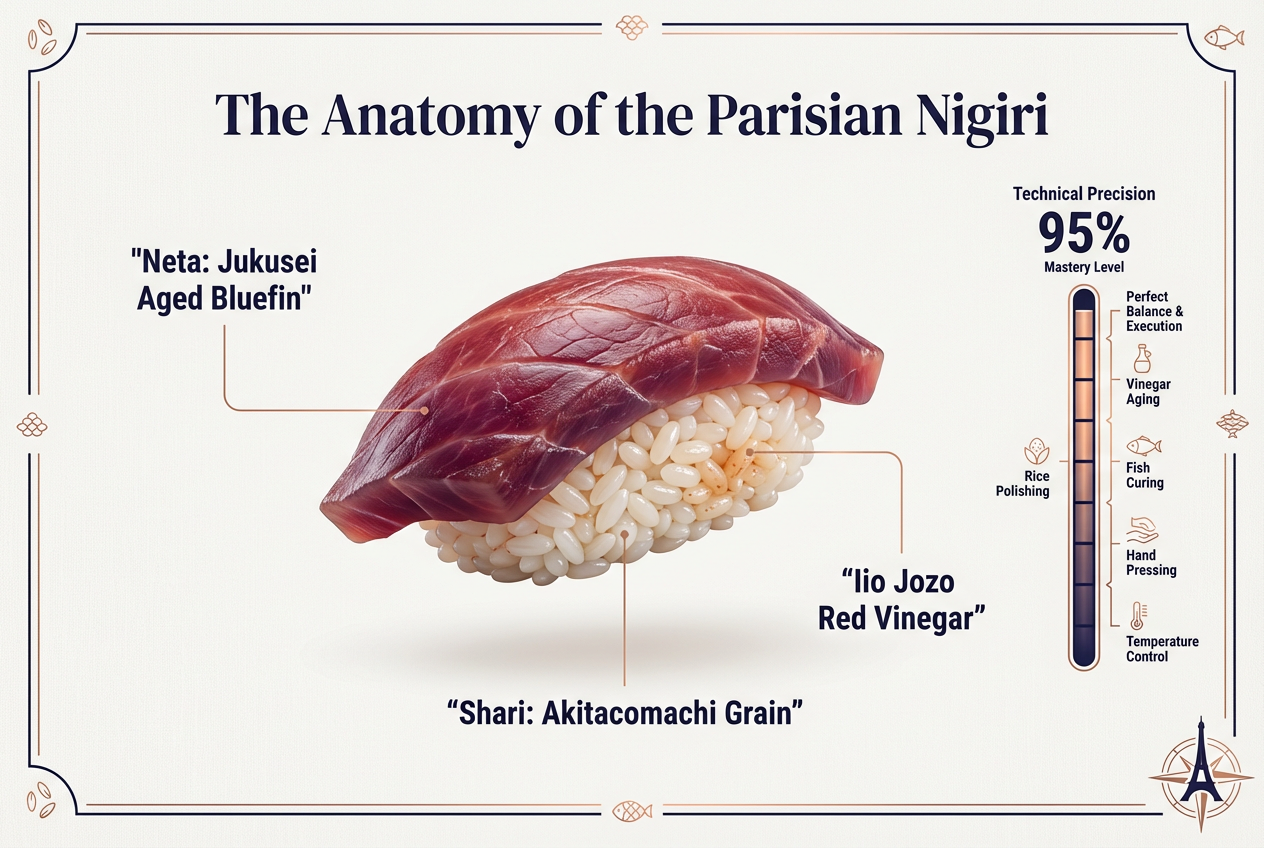
The term jukusei refers to the controlled aging of fish, a process that concentrates umami and transforms texture. At the highest level, this involves specific humidity and temperature conditions over periods ranging from 3 to 14 days. Meanwhile, shari is the seasoned rice that forms the foundation of every piece. The best Parisian counters are using Akitakomachi rice from Japan, seasoning it with red vinegar from Iio Jozo, and maintaining it at precisely 36°C throughout service.
Why Paris? The city's position as a luxury capital, combined with its willingness to pay Tokyo prices, has attracted a generation of technically trained Japanese chefs. These aren't line cooks making the leap to ownership. They're alumni of Michelin-starred kitchens in Tokyo who've chosen Paris as their stage, bringing with them decades of apprenticeship and relationships with fish suppliers that most Western cities can't access.
The 2026 Michelin Guide recognized this shift with two coveted two-star awards going to Japanese restaurants, a distinction that acknowledges not just excellent food but a complete culinary vision. This guide covers both the 2025 retrospective (what worked, what changed) and the current 2026 landscape, so you can plan your next trip with complete confidence.
The difference between excellent sushi and transcendent sushi comes down to details most diners never notice. The rice should have individual grains that separate on your tongue while holding together structurally. The vinegar should provide brightness without sharpness. The fish should be cool but not cold, and its texture should reflect deliberate aging rather than simple freshness. You'll find all of this in Paris, often served in settings that range from minimalist 6-seat counters to 17th-century mansions.
If you're serious about tracking exceptional meals across cities, you need a system beyond phone photos and vague memories. The best restaurant tracking apps help you organize technical details like fish aging protocols, rice cultivars, and specific dishes so you can build a real culinary archive.
The Two-Star Titans: The Non-Negotiables
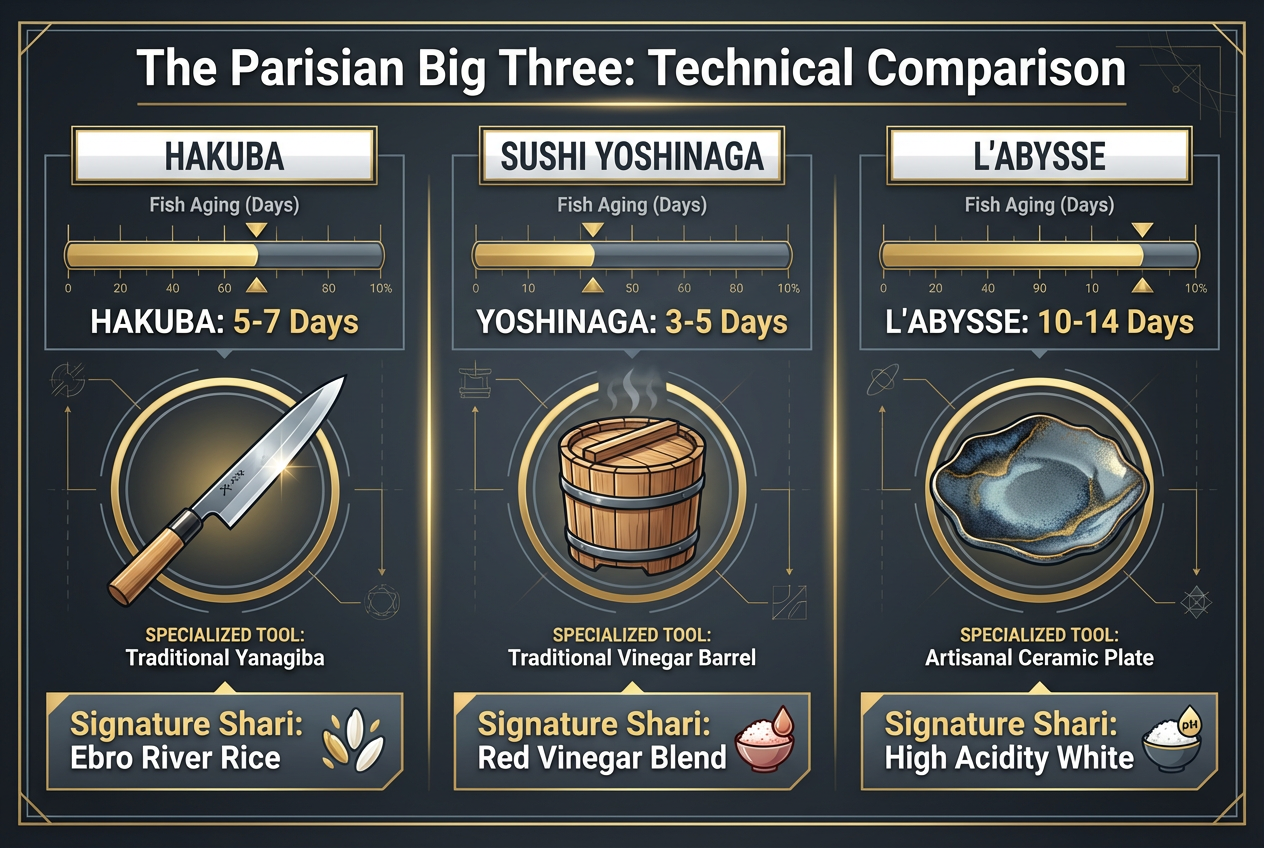
These three restaurants define the current peak of Parisian sushi: Hakuba for luxury spectacle, Sushi Yoshinaga for modernist adaptation, and L'Abysse for technical purity.
Hakuba: The LVMH Theatre
Takuya Watanabe didn't come to Paris to open a quiet counter. His collaboration with Arnaud Donckele at Cheval Blanc represents the most ambitious cross-cultural project in the city's dining scene. Hakuba earned its two Michelin stars by creating a dialogue between French luxury and Japanese technique that goes beyond simple fusion.
The restaurant uses water from Spain's Ebro River for its rice, a choice that Watanabe made after testing dozens of mineral profiles. The shari here has a subtle sweetness that complements the sauce-forward presentations. This isn't traditional Edomae sushi where the fish stands alone. Watanabe applies French techniques like beurre blanc reductions and champagne sabayon to specific courses within the omakase progression.
The signature piece is the kaki oyster nigiri, where a Brittany oyster is placed on shari and finished with a yuzu-champagne foam. It sounds like it shouldn't work, yet the acidity cuts through the oyster's brine while the rice provides a textural anchor. This is sushi as culinary theater, performed in a dining room that looks like it belongs in a contemporary art museum.
Expect to pay €380 for the full omakase. The wine pairings, curated to complement both Japanese and French elements, add another €180. This is a power lunch venue, a place to close deals or celebrate milestones, not a quiet shrine for solo contemplation.
Sushi Yoshinaga: The Rule Breaker
Tomoyuki Yoshinaga does something that would be heresy in Tokyo: he adapts his menu for French palates. The same nori used at Sushi Saito, one of Tokyo's most exclusive counters, appears here, but the compositions reflect a willingness to break with orthodoxy.
Yoshinaga removed tamago (sweet egg omelet) from his menu entirely, replacing it with courses that incorporate caviar and cream cheese. Before you dismiss this as pandering, understand that his technical foundations are impeccable. The fish aging follows strict jukusei protocols, and the rice seasoning uses a blend of red and white vinegars that took him three years to perfect.
The 2026 Michelin Guide awarded Yoshinaga two stars specifically for his ability to maintain Japanese technical standards while creating something distinct. His chawanmushi (steamed egg custard) is baked rather than steamed, creating a texture closer to flan with a caramelized top that adds a bitter note to balance the sweetness.
At €320 for the omakase, this represents a middle ground between pure traditionalism and fusion experimentation. You're getting a chef who respects the fundamentals but isn't imprisoned by them, someone willing to ask "what if" while maintaining the discipline that separates great sushi from good sushi.
L'Abysse: The Technician's Choice
Yasunari Okazaki runs the most technically pure counter in Paris. Located within Pavillon Ledoyen, L'Abysse focuses on one thing: showcasing fish at its optimal point of maturation. Okazaki's specialty is aging bluefin tuna, a process that can take up to 10 days depending on the fat content and cut.
The difference is immediately apparent. Fresh bluefin has a clean, almost mineral quality. Aged bluefin develops a concentrated umami that coats your palate, a richness that doesn't come from fattiness alone but from the controlled breakdown of proteins. Okazaki serves several cuts of tuna throughout the progression, demonstrating how aging affects different parts of the fish.
This is not a place for conversation or Instagram moments. L'Abysse operates with the hushed intensity of a classical music performance. The counter seats only eight, and Okazaki works with minimal interaction, allowing the fish to communicate directly.
The omakase here is €350, with a sake pairing that includes rare junmai daiginjo bottlings at €140. If you're looking for the closest thing to a Ginza experience without leaving Paris, this is your destination. Okazaki doesn't compromise, doesn't explain, and doesn't adjust for local preferences. You get sushi as he believes it should be served.
If you're tracking elite dining experiences across multiple cities, you need more than star ratings. The best restaurant review apps for foodies let you record technical details like fish aging protocols and rice temperatures, building a reference library that improves every future meal.
The Insider Counters: For the Serious Foodie
These smaller operations offer intimacy, precision, and in some cases, experiences you can't find anywhere else in Europe.
Aida: The 6-Seat Mystery
Chef Koji Aida operates the most exclusive counter in Paris, though you won't find a sign on the street. Located in the 7th arrondissement, this six-seat operation requires personal recommendations for first-time reservations. Aida cooks every single piece himself, which means service moves at a meditative pace.
What separates Aida is attention to detail that borders on obsessive. He adjusts shari temperature based on the specific fish being served. Delicate white fish gets slightly warmer rice to prevent thermal shock, while fatty tuna pairs with cooler rice to provide contrast. These aren't arbitrary choices but applications of principles learned during his 12-year apprenticeship in Tokyo.
The omakase progression here includes 18-20 pieces, each one a study in restraint. Aida doesn't use dramatic presentations or unusual ingredients. His philosophy centers on showcasing fish at its peak, which sometimes means refusing to serve certain species if the quality doesn't meet his standards.
Booking requires calling exactly 30 days in advance. There's no online system, no Resy integration. You call, you speak to Aida or his wife, and if there's availability, you get added to a handwritten ledger. The omakase is €280, with a small sake selection that Aida personally curates based on each evening's fish selection.
This is a solo dining pilgrimage, a place for quiet contemplation and absolute focus. Don't bring a large group. Don't expect conversation. Come prepared to pay attention to every detail, from the way the rice hits your tongue to the subtle shift in texture as you work through different aging periods.
Chakaiseki Akiyoshi: The Tea Ceremony
Akiyoshi Nagai operates the only restaurant in Paris that integrates traditional tea ceremony principles into a kaiseki-omakase progression. Meals here last a minimum of three hours, incorporating periods of ritual tea preparation between courses.
This isn't sushi in the Edomae style. It's a broader Japanese culinary experience that includes sashimi, grilled fish, seasonal vegetables, and rice dishes, all served in ceramics specifically chosen for each season. The tea ceremony integration means you're participating in a cultural exchange, not just eating dinner.
Nagai sources his tea directly from Uji, using matcha ground the morning of service. The bitter complexity of the tea resets your palate between courses, particularly after fatty fish or dishes with rich sauces. This interplay between tea and food represents centuries of Japanese culinary philosophy compressed into one evening.
The kaiseki progression is €250, with limited seating (12 guests maximum) in a space decorated with seasonal flowers and calligraphy scrolls that change weekly. You need to book at least 4 weeks in advance, and Nagai requests that you arrive with an open schedule. There are no rushed meals here, no tables being turned for a second seating.
For foodies accustomed to Western pacing, this will feel alien. You'll spend long stretches simply sitting, waiting for the next course while Nagai prepares tea with ritualized movements. It's meditation disguised as dinner, and it requires patience that most Western dining experiences don't demand.
Hanada: The Rising Star
Masayoshi Hanada represents the next generation of Parisian sushi chefs, having recently transitioned from his work at Sushi B to open his own counter in the 16th arrondissement. His background includes training at multiple Tokyo three-star establishments, and he brings that technical foundation to a counter that currently seats only eight.
What makes Hanada notable is his sourcing strategy. Rather than relying entirely on Japanese fish flown in multiple times weekly, he's building relationships with Brittany fishermen and applying Japanese aging techniques to local catch. The result is a menu that changes dramatically based on what's available at Rungis Market and direct suppliers.
His treatment of local turbot, aged for 5-7 days and served as translucent sashimi, demonstrates the potential of this approach. The fish develops a complexity that fresh turbot doesn't possess, with a texture that's simultaneously firm and yielding. Hanada serves it with nothing but a touch of fleur de sel and a drop of sudachi juice, allowing the aging to do the talking.
The omakase progression is €220, positioning Hanada as a more accessible entry point into serious Parisian sushi. He earned his first Michelin star in 2026, and based on the consistency of execution, a second star feels inevitable within the next two years.
Booking opens 3 weeks in advance through a simple online form. Hanada personally confirms each reservation via email, often asking about dietary restrictions and preferences in detail. This level of communication extends to the meal itself, where he'll explain sourcing decisions and aging protocols if you express interest.
The Aesthetic Masterpiece: Ogata
If Aida is a shrine and Hakuba is a theater, Ogata is a museum where the ceramics, architecture, and cultural immersion matter as much as the food.
Shinichiro Ogata created something unprecedented in Paris: a 17th-century hôtel particulier in the Marais converted into a complete Japanese aesthetic experience. You don't come here just to eat. You come to understand how space, light, ceramics, and food interact within Japanese design philosophy.
The building itself is worth the visit. Original wooden beams, stone walls, and period details provide the structure, while Ogata has inserted contemporary Japanese elements like shoji screens, tatami rooms, and a tea ceremony space. The dining counter overlooks a small courtyard garden maintained in the karesansui (dry landscape) style.
Each course is served on ceramics that Ogata personally selected from artisans across Japan. These aren't decorative flourishes but functional art pieces, with glaze patterns and shapes chosen to complement specific dishes. A spring sashimi course might arrive on a pale celadon plate that echoes new growth, while winter grilled fish is presented on rustic bizen-yaki stoneware that evokes earthiness.
The kaiseki-omakase progression here is €320, but there's a secret that serious foodies should know: Ogata offers a bento lunch service for €65. This abbreviated experience includes seasonal preparations served in a traditional lacquered box, all within the same extraordinary space. It's the best entry point into high-end Japanese dining culture in Paris, offering 70% of the aesthetic experience at 20% of the dinner cost.
Reservations require 4-6 weeks lead time for dinner, though lunch bento slots sometimes open with less notice. The email reservation system is straightforward, but spots fill within hours of opening. Set a calendar reminder and be ready to respond immediately when your target date becomes available.
The sake program here deserves special mention. Ogata stocks over 60 labels, including several that aren't available elsewhere in Europe. The sommelier will guide you toward regional pairings that complement the seasonal menu, often suggesting less common categories like aged koshu or sparkling sake.
This is where you take someone who appreciates design as much as food, who understands that a perfect meal engages multiple senses simultaneously. It's also the best setting for a significant occasion, where the cultural richness of the environment amplifies the emotional resonance of the meal.
For serious diners building a comprehensive dining archive across multiple cuisines and cities, restaurant review platforms that allow detailed notes on ambiance, ceramics, and cultural context provide more value than simple star ratings.
The Serious Foodie Comparison Table
Planning requires understanding booking windows, price positioning, and stylistic differences between venues.
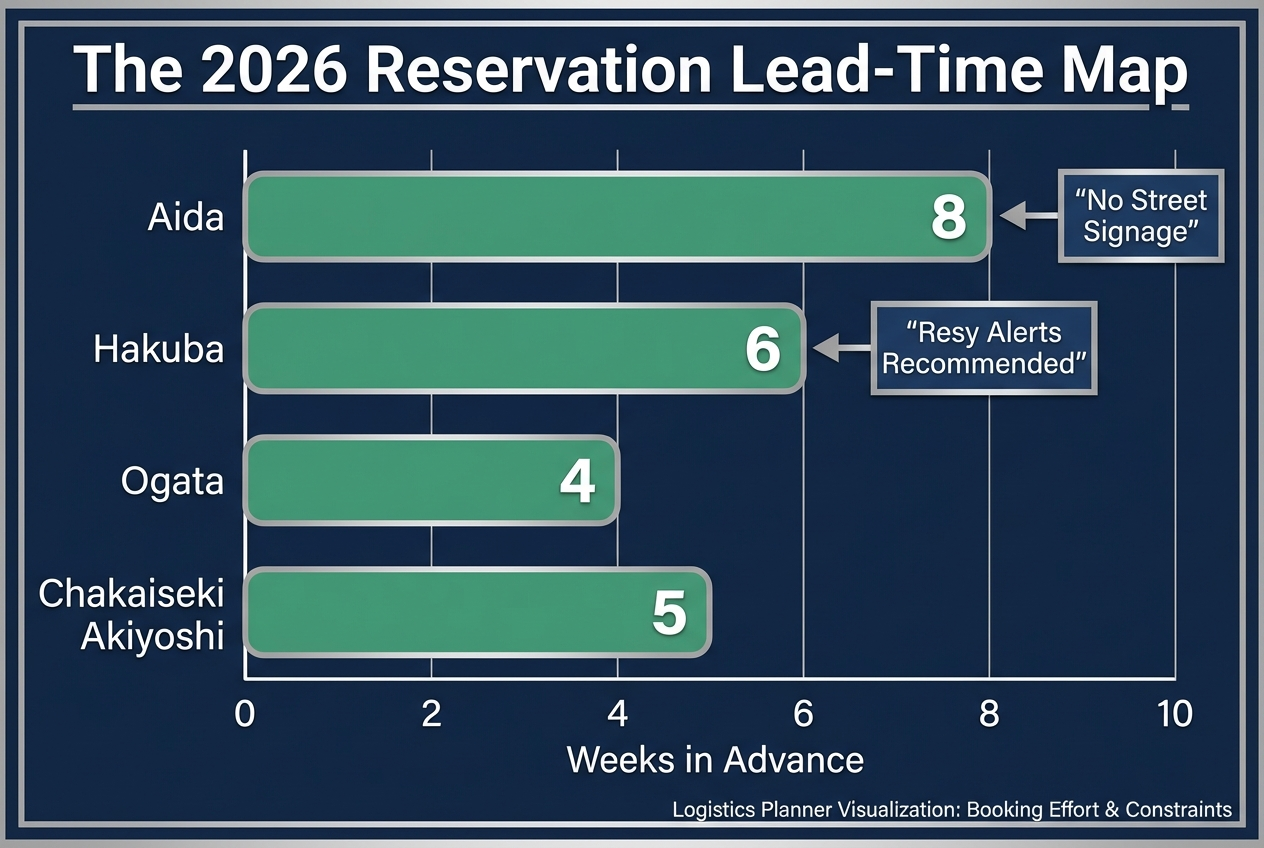
The logistics of accessing Paris's best sushi counters can be as complex as the food itself. Reservation systems vary wildly, from handwritten ledgers to competitive online platforms. Understanding these patterns is essential for successful planning.
Lead times matter more in Paris than almost any other dining city. The combination of limited seating and international demand means the best counters book out weeks in advance. Missing your window by even a single day can mean the difference between securing a table and waiting another month.
Here's what you need to know:
Hakuba requires a 6-week advance booking through the Cheval Blanc concierge or Resy. The restaurant holds back a few counter seats for hotel guests, so if you're staying at Cheval Blanc, you have a significant advantage. Walk-ins are theoretically possible for the bar area, but don't count on it. Peak dinner slots (7:30-8:30 PM) book out first, while earlier seatings (6:00 PM) sometimes remain available.
L'Abysse operates on a 5-week booking window, with reservations opening via email. They prefer direct communication over platforms, and response times can take 48-72 hours. Specify your preferred date range rather than a single night to increase your chances. The restaurant gives priority to previous guests and Pavillon Ledoyen regulars, so first-timers may need flexibility.
Sushi Yoshinaga uses a hybrid system: a 4-week window for new guests, but returning diners can book up to 8 weeks out. This creates a two-tier access structure where building a relationship matters. Email reservations in French receive faster responses than English inquiries, though both are accepted.
Aida maintains its mysterious 30-day phone-only system. Call at exactly 10:00 AM Paris time on the morning 30 days before your desired date. The line is often busy, requiring multiple attempts. First-time guests need a referral from a previous diner or industry contact. This gatekeeping is intentional, maintaining an intimate atmosphere.
Ogata offers the most tourist-friendly booking system: a straightforward email form with 4-6 week advance windows. The lunch bento service sometimes has shorter lead times (2-3 weeks), making it more accessible for travelers with less planning flexibility. Weekend dinner slots book fastest, while Tuesday and Wednesday evenings often have better availability.
Hanada currently offers the shortest lead time (3 weeks) and easiest access, though this will likely change as his reputation grows. Online form submissions receive confirmation within 24 hours. As one of the newer serious counters, he's actively building his clientele and appears more flexible about accommodating requests.
Price positioning ranges from €220 (Hanada) to €380 (Hakuba) for omakase progressions, not including beverages. Sake pairings add €100-180 depending on the venue. When budgeting, assume €400-600 per person for the complete experience including tax and service.
Counter seating varies from 6 (Aida) to 16 (Hakuba), with most venues operating in the 8-12 seat range. Smaller counters create intimacy but limit availability. Larger operations can feel less personal but offer better booking odds.
Sourcing strategies split between Japanese purists (L'Abysse, Yoshinaga) who fly in fish from Tsukiji Market multiple times weekly, and hybrid approaches (Hanada) that combine Japanese imports with aged local catch. Neither is inherently superior, but they produce different flavor profiles and reflect distinct philosophical approaches.
If you're visiting Paris as part of a broader culinary tour, the Japan food review app ecosystem offers valuable insights into comparative standards between Tokyo and export sushi operations.
Booking Intelligence and Logistics
Success requires understanding not just where to book, but when, how, and what insider strategies improve your odds.
The most common mistake is treating these restaurants like normal reservations. You can't decide on Tuesday to eat at Aida on Saturday. The system doesn't work that way, and approaching it casually guarantees disappointment.
Start with a calendar. Work backward from your Paris dates, identifying the exact day when reservations open for each target restaurant. Set phone reminders, prepare your message or phone script in advance, and be ready to act immediately when the window opens.
For phone reservations (Aida), have your dates written in both English and French. Speak slowly and clearly. French restaurants appreciate attempts at their language, even if your pronunciation is rough. "Bonjour, je voudrais réserver pour deux personnes" goes a long way before switching to English.
Email reservations require different tactics. Subject lines matter. "Reservation Request - [Date]" works better than vague subjects. In the body, include:
- Requested date(s) with flexibility windows
- Party size
- Any dietary restrictions (critical for omakase)
- Previous dining experience with the chef if applicable
- Contact phone number for confirmation
Keep the tone professional but warm. These are small operations where the chef or their immediate team reads every message. Generic form letters get lower priority than personal inquiries that demonstrate genuine interest.
Resy and similar platforms create their own dynamics. Enable notifications for your target restaurants, as cancellations happen regularly. Someone's business trip gets cancelled, opening a coveted slot 48 hours before service. The alert system lets you grab these opportunities.
Credit card holds are standard for high-end omakase. Expect to provide card details at booking, with per-person deposits ranging from €100-200. Cancellation policies vary, but most require 72-96 hours notice for full refund. Within that window, you forfeit the deposit. Last-minute cancellations (within 24 hours) often charge the full omakase price.
Dress codes at Parisian sushi counters lean formal. While none explicitly require jackets, the cultural expectation is smart casual minimum. Clean dark jeans work at most venues, but shorts, athletic wear, and strong fragrances are frowned upon. Remember you're sitting 18 inches from the chef for two hours. Respect the intimacy of the space.
Timing within your meal matters too. Arrive exactly on time - not early, not late. Omakase pacing depends on groups starting together. If you're 15 minutes late, you throw off the entire service flow, affecting not just your experience but other diners'.
Photography policies vary. Aida discourages photos entirely, preferring you stay present in the moment. Hakuba and Ogata welcome photography but request you avoid flash and intrusive angles. When in doubt, ask before pulling out your phone. Some chefs interpret constant photography as disrespect for the ephemeral nature of their work.
Solo diners have advantages at counter service. Many venues hold single counter seats for last-minute bookings or use them to fill gaps in reservations. If you're flexible and traveling alone, you can often secure spots that groups can't access.
The relationship-building aspect of these restaurants can't be overstated. Chefs remember serious diners who ask thoughtful questions, who respect the pacing, who finish every piece. Return visits unlock better seating positions, advance notice of special ingredients, and occasionally, off-menu preparations. This is the difference between being a tourist and being a regular, even if you only visit Paris twice a year.
For travelers managing multiple high-end reservations across cities, restaurant tracking systems help organize confirmation numbers, deposit receipts, and timing details in one accessible location.
The 2026 Verdict: Where to Go When
Different occasions, companions, and intentions demand different venues. Here's how to choose based on your specific situation.
Your first Paris omakase experience should be Ogata. The complete cultural immersion, the accessibility of the lunch bento option, and the balance between food quality and aesthetic education make it the ideal introduction. You'll leave understanding why ceramics matter, how seasonal ingredients drive menu design, and what "Japanese hospitality" means in practice. This foundation makes every subsequent sushi experience richer.
For a business dinner where you need to impress, Hakuba delivers spectacle and luxury in equal measure. The Cheval Blanc setting, the two Michelin stars, the Franco-Japanese fusion approach - all signal serious investment in the meal. The wine program accommodates clients who don't drink sake, and the dining room offers enough space for conversation without compromising the counter experience. This is where deals get closed.
Solo culinary pilgrimages demand Aida. Strip away the theatrics, the luxury hotel setting, the Instagram moments. What remains is you, the chef, and 18 pieces of sushi executed with precision that borders on spiritual practice. Bring a notebook if you want to capture technical details, but mostly bring presence and attention. This is dining as meditation.
When you want pure technical excellence without compromise, L'Abysse delivers Edomae sushi at a level that matches top Tokyo counters. Okazaki doesn't adapt for Western palates, doesn't explain his choices, and doesn't seek your approval. You either appreciate the 10-day aged o-toro or you don't. This isn't for sushi beginners. It's for diners who've already developed enough experience to recognize mastery when they taste it.
Adventurous eaters who want to see where sushi is heading should book Hanada. His integration of local French fish into Japanese aging protocols represents innovation grounded in technique rather than gimmickry. You're watching a chef develop a signature style in real time, before the second Michelin star inevitably arrives and transforms him into an institution.
For a cultural deep-dive beyond food, Chakaiseki Akiyoshi offers an experience that doesn't exist elsewhere in Europe. The tea ceremony integration, the three-hour pacing, the kaiseki progression - this is Japanese dining philosophy presented whole rather than fragmented. Bring patience and curiosity. Don't bring a tight schedule or expectations of a quick meal.
Couples celebrating milestones should choose based on their dynamic. Ogata works for partners who share aesthetic interests beyond food. Hakuba suits couples who enjoy luxury and spectacle. Aida is for relationships where comfortable silence already exists. Know yourselves before you book.
Repeat visitors to Paris should work through the counters chronologically by style rather than rating. Start with the most traditional (L'Abysse), move to adaptive modernism (Yoshinaga), then explore the French-influenced approach (Hakuba). This progression teaches you how different chefs interpret the same fundamental techniques through different cultural lenses.
The worst mistake is trying to hit multiple top counters in a single trip. Omakase is designed to be savored and reflected upon, not checked off a list. One perfect meal beats three rushed experiences. Give yourself a day between serious sushi dinners to let your palate reset and your memory solidify.
Budget-conscious serious diners should prioritize the Ogata lunch bento (€65) and Hanada's dinner (€220) over trying to squeeze into the most expensive options. Price doesn't scale linearly with quality at this level. You'll learn as much from Hanada's technically precise execution as from Hakuba's luxury presentation, and you'll spend half as much doing it.
Weather and seasonal timing matter more than most visitors realize. Spring (April-May) brings sakura-inspired presentations and spring fish like firefly squid. Summer counters feature hamo (pike conger) and sweet shrimp. Fall showcases Pacific saury and matsutake mushrooms. Winter delivers the fattiest tuna and richest preparations. Check what's in season when planning your dates, as this drives the entire omakase progression.
If you're building a comprehensive food review archive across cuisines and cities, documenting these seasonal variations helps you understand cyclical menu patterns at elite restaurants worldwide.
Frequently Asked Questions
How far in advance do I need to book Paris's best sushi restaurants?
You need 4-8 weeks for most top counters. Hakuba requires 6 weeks through Resy or the Cheval Blanc concierge. L'Abysse wants 5 weeks via email. Aida operates on exactly 30 days through phone reservations only. Ogata needs 4-6 weeks, though lunch bento slots occasionally open with shorter notice. Hanada currently books 3 weeks out but expect that window to expand. Missing the booking window by even one day can mean waiting another month, so set calendar reminders and be ready to act immediately when reservations open.
What's the difference between Edomae sushi and what's served in Paris?
Edomae refers to the traditional Tokyo style emphasizing aged fish, minimal seasoning, and precise technique developed during the Edo period. Most Paris top counters follow these principles but adapt in subtle ways. Hakuba incorporates French sauce techniques that would never appear in Tokyo. Yoshinaga adds ingredients like cream cheese that break with orthodoxy. L'Abysse and Aida stay closest to pure Edomae style, using the same aging protocols and rice preparation you'd find at top Ginza counters. The technical foundations remain consistent, but the cultural context creates variations you won't find in Japan.
Can I eat at these restaurants if I don't speak French?
Yes, though French attempts are appreciated. All the restaurants mentioned serve international clientele and have staff who speak English. Aida operates with minimal conversation regardless of language. Hakuba caters to luxury hotel guests from around the world. Email reservations work in English at every venue. Phone reservations for Aida are the only potential language barrier, but speaking slowly and having your dates written out helps. The omakase format means you're not ordering from a menu anyway - the chef controls the progression regardless of your language skills.
What should I avoid doing at a high-end sushi counter?
Don't drown sushi in soy sauce - the chef has already seasoned each piece precisely. Don't rub chopsticks together, which implies cheap disposable utensils. Don't wear strong perfume or cologne that interferes with subtle fish aromas. Don't take flash photography without asking. Don't arrive late, as it disrupts the entire service rhythm. Don't ignore pieces you've been served - if you have allergies, communicate them at booking, not mid-service. Don't touch the shari with your hands unless eating nigiri directly (which is acceptable). Don't expect substitutions or menu changes. You're experiencing the chef's vision, not building a custom meal.
Are these restaurants worth the €300-400 per person price point?
That depends entirely on what you value. If you're comparing them to standard sushi restaurants, the price will seem absurd. If you understand you're paying for decades of chef training, multi-day fish aging protocols, imported rice cultivars, artisanal vinegars, and execution at the highest technical level, the value proposition makes sense. These aren't meals - they're cultural education and technical demonstration compressed into 18-20 pieces. For serious foodies building knowledge across cuisines, the investment teaches you what excellence looks like at its peak. For casual diners who just want good sushi, plenty of €80 options exist that will satisfy perfectly well.
How does Paris sushi compare to Tokyo?
The best Paris counters now operate at a technical level comparable to top Tokyo venues, though the cultural context differs. Tokyo has depth - hundreds of serious counters creating competition that pushes innovation. Paris has breadth - chefs willing to experiment with French ingredients and techniques. Fish quality in Paris can match Tokyo when sourced from Tsukiji or top European suppliers. The primary difference is cultural: Tokyo sushi exists within a centuries-old tradition with specific expectations, while Paris sushi operates in a more experimental space. Neither is inherently better, just different expressions of the same foundational techniques.
What's the best way to learn about sushi before visiting these restaurants?
Read "The Story of Sushi" by Trevor Corson for cultural and technical foundations. Watch "Jiro Dreams of Sushi" to understand the apprenticeship system and pursuit of perfection. Study fish aging techniques and rice preparation methods through culinary resources. Visit a few mid-tier sushi restaurants to develop your palate before investing in the top counters. Learn the difference between tuna cuts (akami, chutoro, otoro) and common white fish varieties. Understand that wasabi should be fresh-grated, not the green paste most Western sushi uses. The more context you bring, the more you'll notice and appreciate during the actual meal.
Can I request specific fish or preparations at an omakase counter?
Generally no. Omakase literally means "I'll leave it up to you" - you're trusting the chef's judgment about what fish is at its peak that day. Dietary restrictions and allergies should be communicated at booking, and chefs will work around them. But requesting specific fish or asking for substitutions breaks the fundamental omakase contract. The progression is carefully designed to build flavors and textures in a specific sequence. If you want control over your meal, order a la carte at restaurants that offer that option. At pure omakase counters, surrender control and trust the chef's expertise.