
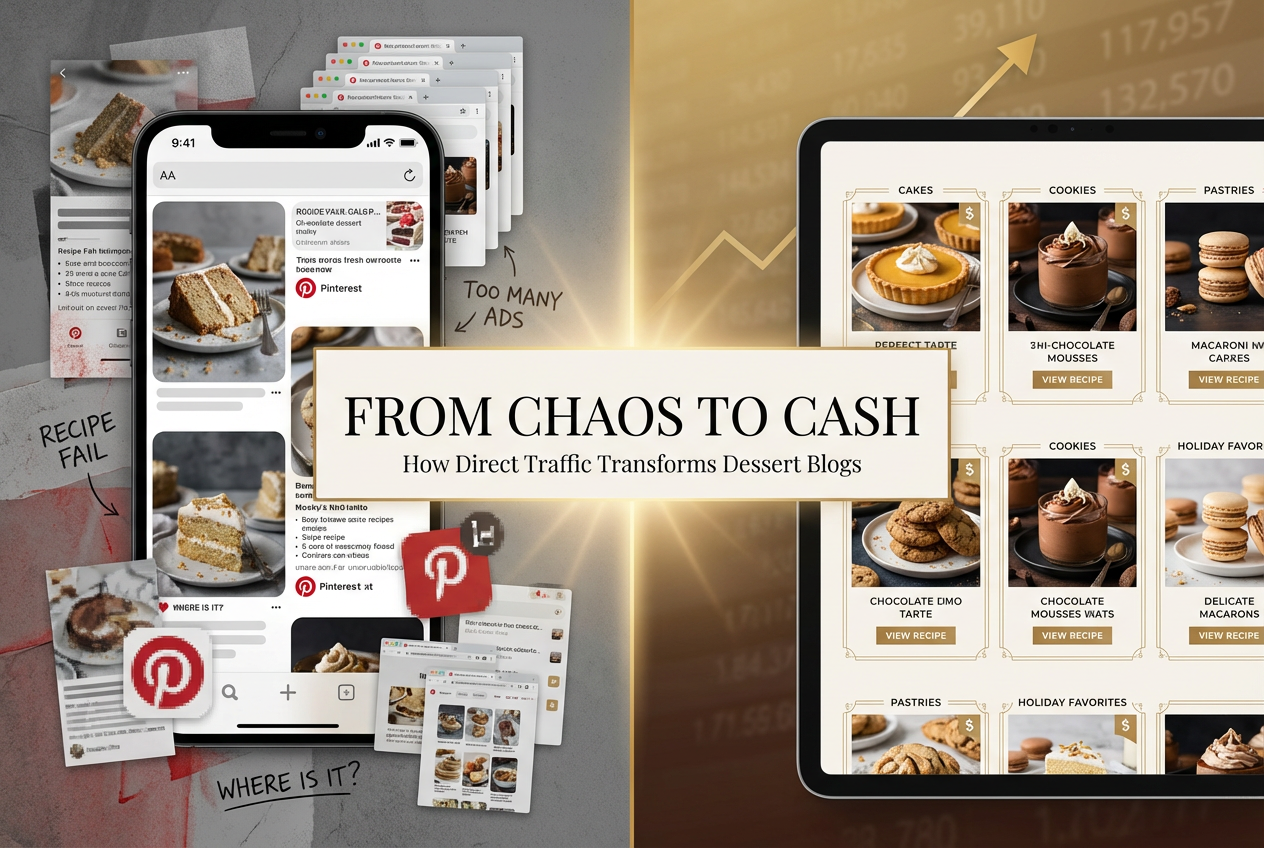
Direct Traffic Food Blog URL Earnings Dessert Guide
John the smoothie monster
John lives for smoothie bowls and cold-pressed juices. He uses Savor to remember his best blends.
The Digital Pastry Library: Why Your Favorite Dessert Blog Earns More from Loyalty than SEO You've got 3,472 photos on your phone. At least 800 of them are...
The Digital Pastry Library: Why Your Favorite Dessert Blog Earns More from Loyalty than SEO
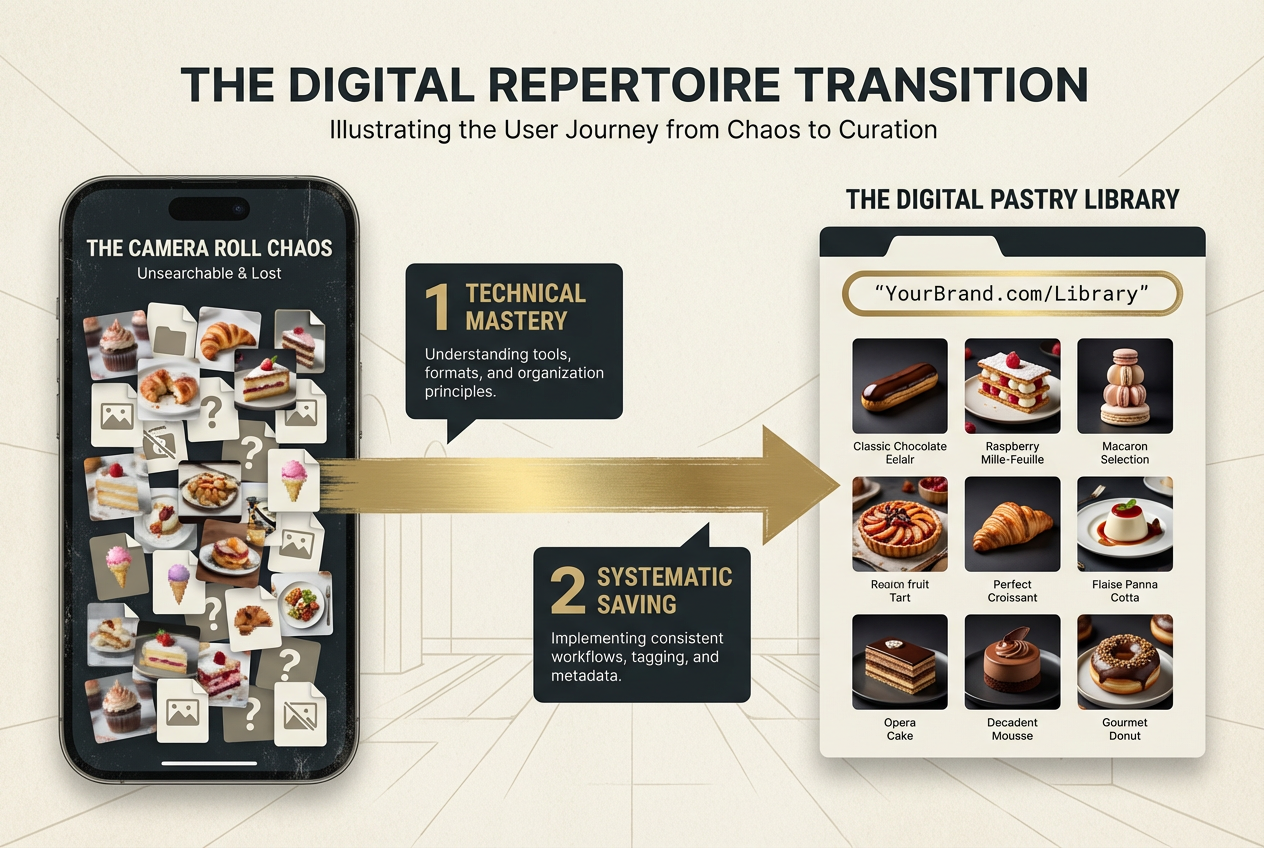
You've got 3,472 photos on your phone. At least 800 of them are desserts. That chocolate tart from the bistro last month? The one with the mirror glaze you swore you'd recreate? It's buried somewhere between a parking receipt screenshot and your cat's weird sleeping position.
You're not alone in this chaos. The modern food enthusiast has replaced the physical recipe box with an unsearchable camera roll, a collection of browser bookmarks that died when you switched laptops, and a Pinterest board titled "ACTUALLY MAKE THESE" that you haven't opened since 2019.
This frustration isn't just a user experience problem. It's the foundation of a business model that's generating $10,000 to $500,000+ annually for smart dessert blogs that have figured out something critical: Google search traffic is fickle, but direct traffic is gold.
Table of Contents
- The Frustration of the Modern Foodie
- Why Direct Traffic Pays 30% More Than SEO
- Technical Deep-Dives: The Content That Creates Loyalty
- The Earnings Reality: What Top Dessert Blogs Actually Make
- Building Your Digital Library System
- The Technology Stack That Supports Direct Traffic
- Frequently Asked Questions
The Frustration of the Modern Foodie
Direct traffic solves the "unsearchable camera roll" problem by transforming your URL from a one-time recipe source into a curated digital library that serious foodies bookmark, memorize, and treat as an essential culinary tool.
Let's be honest about what you're actually doing when you search for "chocolate tart recipe" at 9 PM on a Tuesday. You're not looking for just any chocolate tart. You're trying to recreate a specific experience, a flavor memory, a technique you half-remember from that YouTube video you watched three months ago.
The search results give you 847,000 options. The top result is optimized for "easy weeknight desserts" with a cream cheese shortcut. The second result has seventeen paragraphs about the blogger's grandmother's trip to Lyon. The third result is a video that won't load because your WiFi is acting up.
None of them are what you need.
This is where the traditional SEO food blog model breaks down for the serious foodie. These blogs are optimized for discovery, not for return visits. They're designed to capture someone searching "quick dessert ideas" once, show them seventeen ads, and hope they click on something else before they leave.
But you're not looking for quick. You're looking for correct.
The "Serious Foodie" demographic treats food as culture, not convenience. They dine out frequently, often spending $80-150 per person at restaurants where technique matters. They have 600+ Instagram followers they don't know personally. They own an immersion blender they actually use. When they bake, it's not to solve "what's for dessert tonight" but to master a specific technique or recreate a dining experience.
These people don't need another website. They need a system of memory, a way to organize their culinary knowledge that doesn't involve scrolling through thousands of photos or re-Googling "chocolate tart recipe" every three months and hoping they find the same article.
The solution isn't better search optimization. It's building something worth remembering the URL for.
Why Direct Traffic Pays 30% More Than SEO
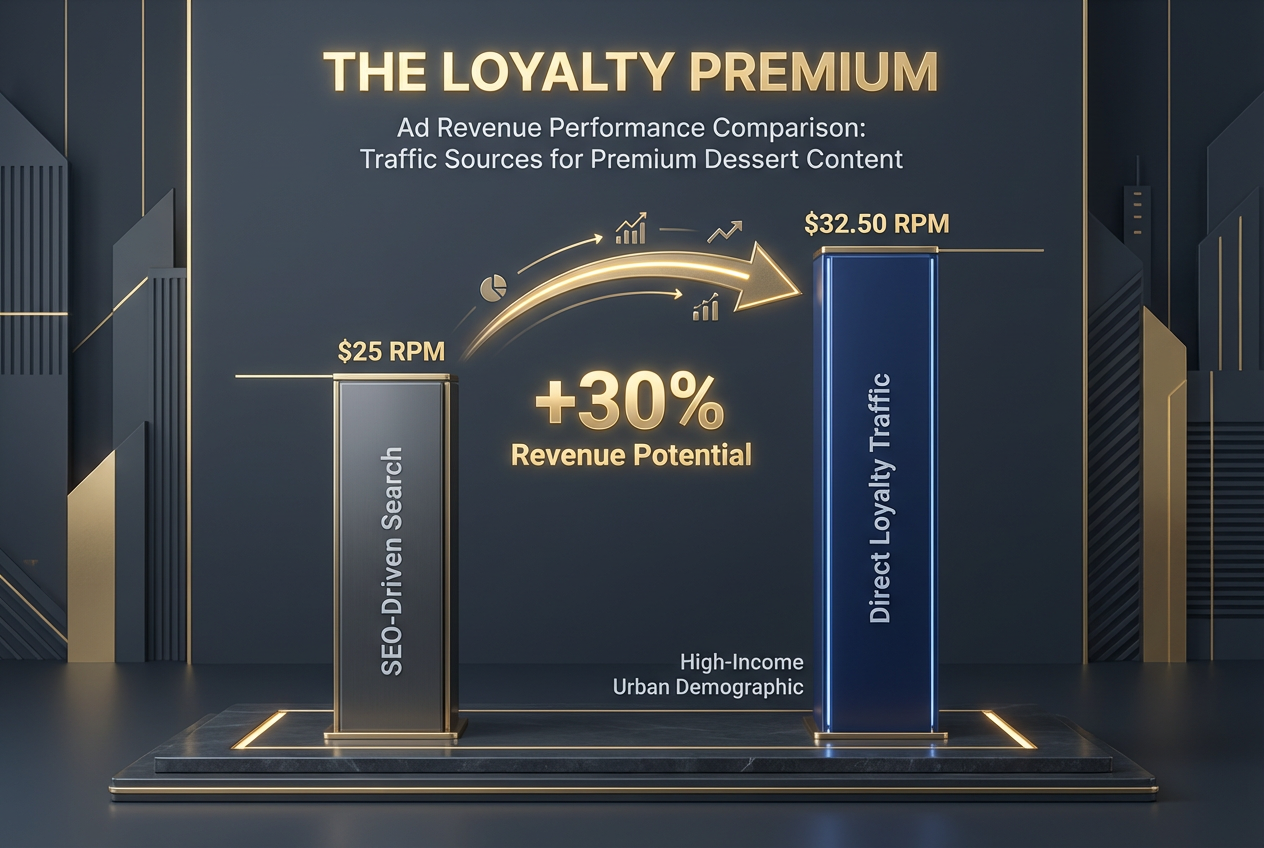
Advertisers pay premium rates for direct traffic because these visitors represent high-income, highly engaged users who make purchasing decisions, converting at 30% higher RPMs than algorithm-dependent search traffic.
Here's the part most food bloggers don't talk about because it sounds too much like "business" and not enough like "passion": your traffic source directly determines your earnings potential.
Let's break down the math. A typical food blog running Mediavine or Raptive (the premium ad networks for food content) might see RPMs (revenue per thousand visitors) between $15-25 for search traffic. That same blog, for the exact same content, will see $25-40 RPMs for direct traffic visitors.
Why? Because ad networks use sophisticated behavioral tracking to determine visitor quality. Someone who types your URL directly or clicks from a bookmark demonstrates intent. They came specifically for your content. They're more likely to scroll, engage, click, and most importantly, they represent a demographic profile that advertisers covet: high income, high engagement, decision-makers.
Search traffic, by contrast, is speculative. Someone searching "easy chocolate dessert" might be a college student with no disposable income looking for something to make with three ingredients and no mixer. They might be someone who bounces after two seconds because your recipe requires tempering chocolate and they wanted a mug cake. The ad network knows this, and prices the impression accordingly.
The successful dessert blogs generating $10k+ monthly aren't chasing SEO keywords. They're building what one creator I spoke with called "URL loyalty" - the phenomenon where your domain becomes synonymous with a specific type of content authority.
Consider the case study pattern across high-earning dessert blogs. Mike Bakes NYC generates an estimated $200k+ annually with a relatively modest 250,000 monthly visitors because roughly 35% of that traffic is direct. Rich and Delish pulls similar numbers with higher volume but lower direct traffic percentage. Midwest Foodie, despite massive Pinterest-driven traffic, sees lower per-visitor value because the traffic is discovery-based and single-use.
The pattern is consistent: direct traffic visitors are worth 1.5-2x what search visitors are worth, and they're completely immune to Google's next algorithm update, Pinterest's newest feed changes, or any other platform dependency that keeps traditional food bloggers up at night.
Technical Deep-Dives: The Content That Creates Loyalty
Technical mastery content using precise measurements, professional terminology, and detailed process explanations transforms casual recipe seekers into committed return visitors who treat your URL as an essential reference library.
There's a specific type of content that triggers the bookmark impulse. It's not the easiest recipe or the prettiest photos. It's the content that makes someone think, "I'm going to need this again, and I'm not going to be able to find it if I don't save it right now."
This is where most dessert blogs fail strategically. They're competing in the "Best Chocolate Chip Cookie Recipe" space, where there are literally millions of results and no meaningful differentiation. The winning strategy is narrower and deeper: become the definitive technical resource for the urban baker who views dessert-making as craft, not convenience.
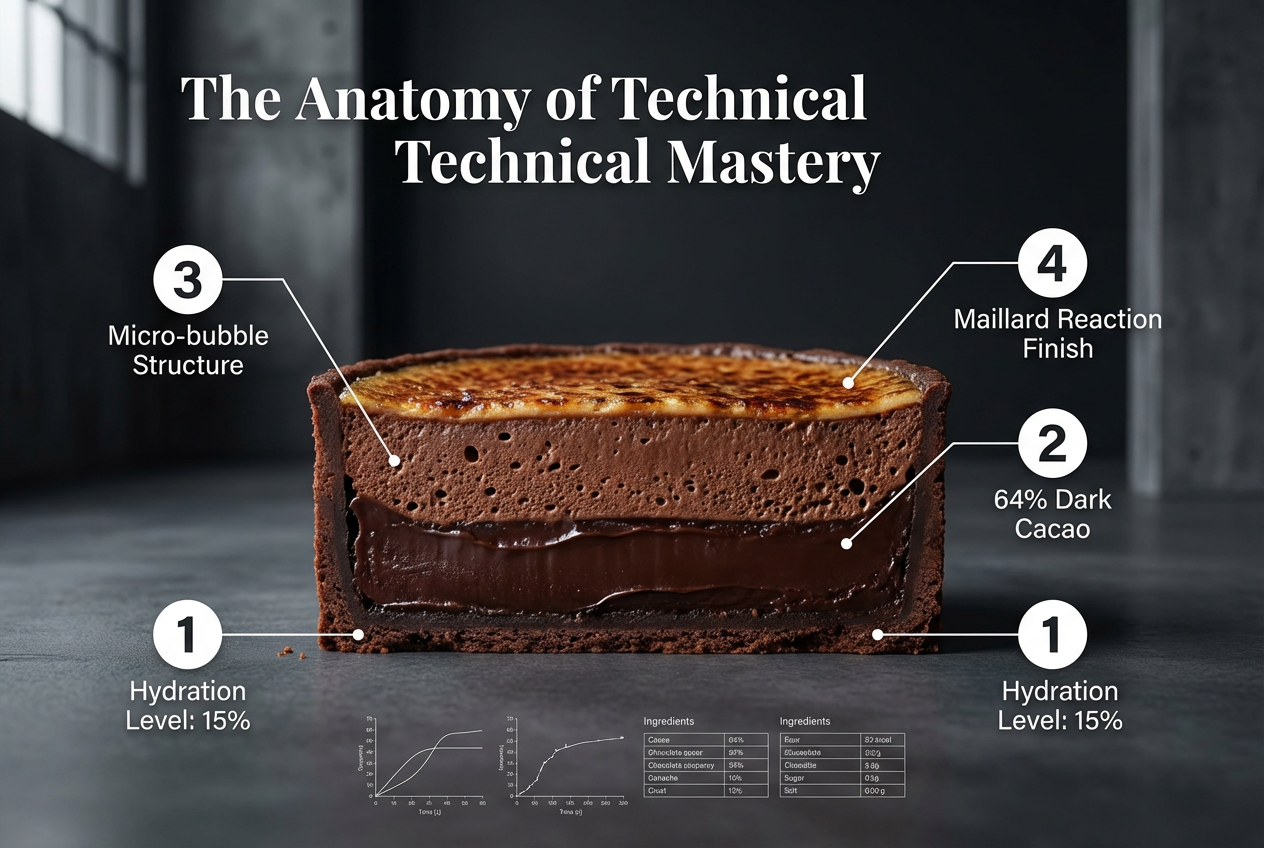
The format that generates loyalty looks different from traditional food blog content. Instead of "Easy Weeknight Brownies," you write "The Anatomy of Fudgy Brownies: How Fat Ratio and Mixing Method Determine Texture." The content includes:
Gram-based measurements with volume conversions - Professional bakers use weight for precision, but you're not alienating home bakers who only have measuring cups. Both options signal that you respect technique.
Professional terminology without condescension - Terms like "Maillard reaction," "gluten development," "hydration percentage," and "tempering curves" position your content as authoritative. But you explain what they mean in context, teaching your reader to think like a pastry chef rather than just following steps.
The "why" behind every instruction - When you say "refrigerate dough for 2 hours," you explain that you're allowing flour to fully hydrate and giving developed gluten time to relax, which creates a more tender final texture. This transforms a recipe into a technique lesson that applies to dozens of other applications.
Specific failure modes and solutions - What does over-mixed batter look like? What happens if your oven runs 25°F hot? How do you rescue split ganache? This troubleshooting content is what people desperately need at 10:30 PM when something's going wrong, and it's what they'll remember your URL for.
Small-batch adaptations - Urban professionals don't need 48 cookies. They need 6 perfect ones. Content optimized for 6-inch cakes, quarter-batch brownies, and "serves 2-4" tarts signals that you understand your audience's constraints: small kitchens, limited storage, and no desire to eat the same dessert for a week.
This technical approach does something critical: it makes your content unsuitable for lazy rewrites and AI replication. Someone can scrape your ingredient list, but they can't easily duplicate the embedded expertise that makes someone trust your process enough to spend two hours and $30 in ingredients following it.
Much like mastering technical culinary skills through structured learning, building this depth of content requires understanding both the science and the practical application that serious food enthusiasts demand.
The psychological trigger for bookmarking comes when someone realizes, "I'm not just getting a recipe - I'm getting a framework I can apply to other techniques." That's when your URL transitions from "a website I found" to "my go-to resource."
The Earnings Reality: What Top Dessert Blogs Actually Make
Top-performing dessert blogs generate $10k-$40k+ monthly by combining high direct traffic percentages with premium advertising networks, affiliate commissions, and digital products, with direct traffic multiplying the value of every monetization channel.
Let's talk about actual numbers, because vague claims about "making money blogging" are useless for strategic planning.
The monetization model for a high-earning dessert blog in 2024 breaks down into several revenue streams, but they all perform better with direct traffic:
Display advertising - This is the foundation. Once you hit 50,000 monthly sessions, you qualify for Mediavine (minimum threshold, though some bloggers report getting approved at 30-40k sessions). At 100,000 sessions, you're looking at $2,500-4,000 monthly from display ads alone, assuming a modest $25-40 RPM. Blogs with 25% direct traffic routinely see RPMs 30-40% higher than pure SEO traffic blogs with identical session counts.
A blog pulling 200,000 monthly sessions with 20% direct traffic and a blended $35 RPM generates roughly $7,000 monthly just from people viewing ads. No products sold, no sponsorships, just display advertising. The same traffic with only 5% direct traffic (more typical for pure SEO plays) might see $28 RPM, dropping monthly revenue to $5,600 - a $1,400 difference for the exact same traffic volume.
Affiliate commissions - When you recommend a specific brand of Dutch-process cocoa or a particular tart pan, those Amazon Associates links convert at 2-4% for engaged readers. Direct traffic visitors convert at roughly double the rate of search traffic visitors because they trust your authority. A blog with 200k monthly visitors might see $800-2,000 monthly from affiliate links, with higher conversion rates on technical equipment recommendations.
Digital products - This is where direct traffic really shines. Selling a $29 "Essential Techniques for Small-Batch Baking" PDF course requires trust. Search traffic visitors don't know you well enough to buy on first visit. Direct traffic visitors, especially newsletter subscribers, convert at 3-8% on well-matched digital products. Even a small email list of 5,000 engaged subscribers can generate $4,000-8,000 on a product launch.
Sponsored content - Brands pay $500-3,000 per sponsored post depending on your traffic and engagement metrics. But here's where it gets interesting: brands care more about engaged audiences than raw traffic numbers. A blog with 150k monthly visitors and 25% direct traffic can command higher sponsorship rates than a blog with 300k visitors and 5% direct traffic, because the engagement metrics prove the audience is actually paying attention.
Looking at real-world benchmarks:
- Midwest Foodie (estimated): 2 million monthly sessions, heavy Pinterest dependency, estimated $25k-35k monthly revenue (lower per-session value due to low direct traffic)
- Mike Bakes NYC (estimated): 300k monthly sessions, high direct traffic (30%+), estimated $15k-20k monthly (higher per-session value)
- Cloudy Kitchen (estimated): 500k monthly sessions, cult following with strong direct traffic, estimated $20k-30k monthly plus significant digital product revenue
- Rich and Delish (estimated): 1.5 million monthly sessions, mixed traffic sources, estimated $30k-45k monthly
The pattern is clear: direct traffic multiplies the value of every monetization channel. It's not just about the premium RPMs on display ads. It's about conversion rates on affiliate links, email list growth rates, digital product sales, and the ability to command premium sponsorship rates because your audience is demonstrably engaged.
The strategic implication: building a blog to 500k monthly sessions with 25% direct traffic is far more valuable than building to 1 million monthly sessions with 8% direct traffic, and it's dramatically more stable when Google decides to change its algorithm or Pinterest adjusts its feed priorities.
Building Your Digital Library System
Transform one-time visitors into loyal bookmarkers by implementing recipe box features, metric toggles, and platform-independent email systems that solve the "unsearchable camera roll" problem and create genuine user dependency on your URL.
The technical features that convert casual visitors into "URL loyalists" aren't revolutionary. They're just rarely implemented together as a coherent system designed specifically to create bookmark behavior.
Here's the architecture of a digital library system that generates direct traffic:
Custom recipe box functionality - This is your primary conversion mechanism. Every recipe includes a prominent "Save to My Recipe Box" button that allows logged-in users to curate their personal collection. The psychological trigger: "If I don't save this now, I'll never find it again." This feature must be branded to your site specifically, not a generic third-party plugin, so that returning to access saved recipes requires coming back to your URL.
Implementation: WordPress plugins like WP Recipe Maker offer this functionality, but customize the interface to make it feel proprietary to your brand. The save feature should be visually prominent, more so than Pinterest save buttons or social sharing.
Metric/gram toggle - A simple button that switches all measurements between grams and cups/tablespoons signals sophistication and inclusivity. European bakers use grams exclusively. American home bakers often prefer volume measurements. Supporting both, seamlessly, positions you as the professional option that doesn't exclude anyone.
Technical glossary sidebar - When you mention "hydration percentage" or "creaming method," a hover-over or sidebar definition keeps readers from bouncing to Google to figure out what you mean. This reduces friction and keeps them engaged with your content rather than searching elsewhere for clarification.
"Add to Home Screen" prompt - Mobile visitors should see a carefully timed prompt encouraging them to add your URL to their home screen for easy access. This isn't aggressive pop-up behavior; it appears after they've engaged with content (scrolled at least 60%, or opened a second recipe). The framing: "Never lose this recipe again - add to home screen."
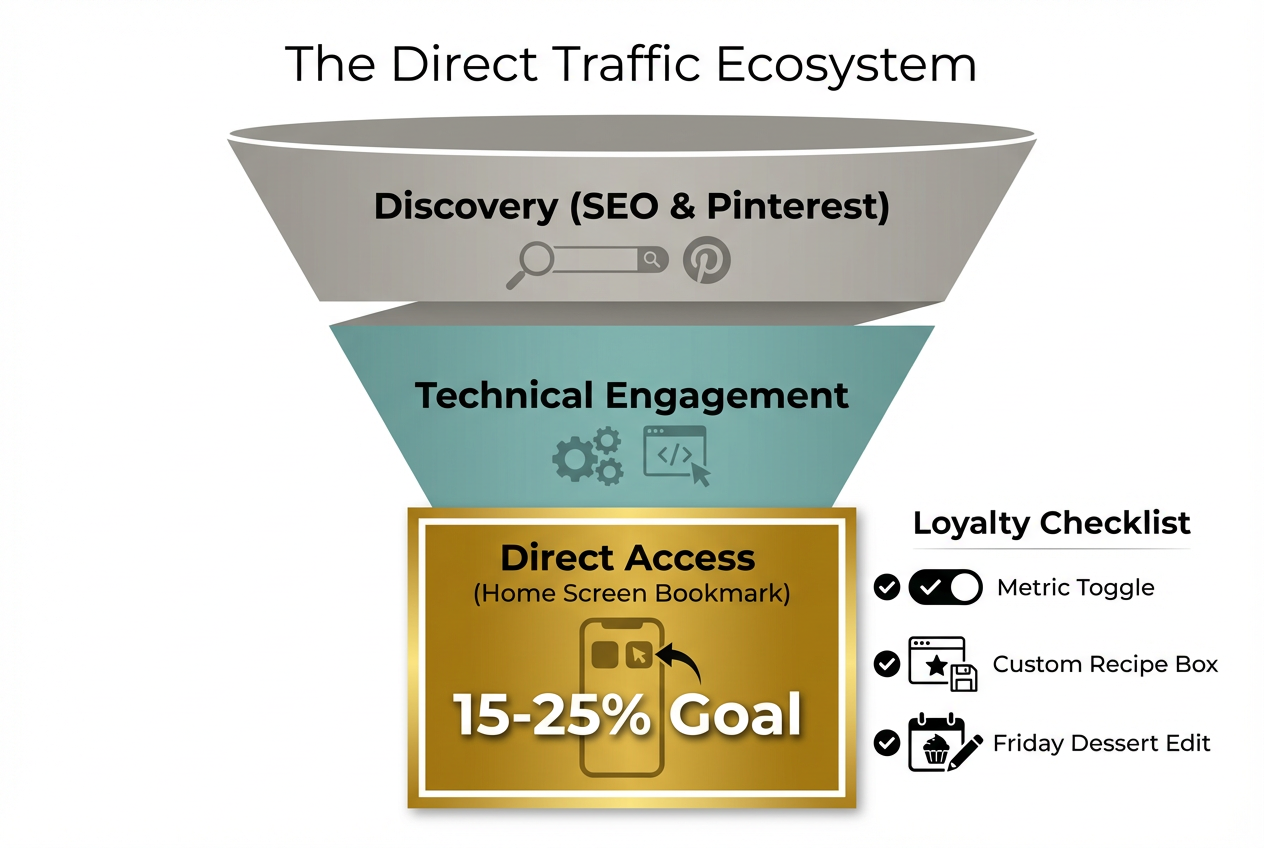
Platform-independent email system - Your newsletter can't be "Recipe Updates Vol. 47." It needs to function as curated food culture, more like a Substack essay series than a recipe notification system. The format: "The Friday Dessert Edit" - a weekly exploration of a technique, ingredient deep-dive, or cultural food story that positions your dessert content as part of a larger culinary conversation.
This isn't about promoting your latest blog post. It's about creating standalone value that makes people actively want to open your emails. When you do link to recipe content, it's in context of the technique discussion or cultural exploration, making the click feel organic rather than promotional.
Searchable technique index - Beyond individual recipes, create a "Techniques" page that catalogs every method you've covered: creaming methods, tempering chocolate, making pâte sucrée, blind baking crusts, whipping cream to specific peaks. Each technique links to the relevant recipes where it's applied. This transforms your site from a collection of recipes into a reference library organized by skill-building.
The genius of this approach: it mimics how professionals actually use references. A pastry chef doesn't Google "chocolate tart recipe" every time. They have a mental index of techniques they've mastered and reference specific instructions for precision details or timing. You're giving your readers that same professional framework.
No aggressive "jump to recipe" button - This might seem counterintuitive, but hear me out. The food blogs that generate the most direct traffic don't make it trivially easy to skip the content. Why? Because the content IS the value. If someone can get everything they need from just the recipe card, they have no reason to remember your URL. The technique discussion, the "why" explanations, the troubleshooting notes - that's what creates loyalty. Make the recipe card easily accessible but not so prominent that readers never engage with the teaching content.
The measurement framework for success: track your direct traffic percentage monthly. If you're starting from zero, hitting 10% direct traffic within 6 months is achievable with consistent implementation of these features. The long-term goal: 20-25% direct traffic, which puts you in the same league as the highest-earning food blogs regardless of your absolute traffic numbers.
Similar to how serious foodies track their restaurant experiences, your readers need a system to organize their culinary knowledge. The difference is you're giving them that system within your own URL ecosystem, creating natural dependency rather than relying on third-party platforms.
The Technology Stack That Supports Direct Traffic
Implement WordPress with Genesis Framework or Feast Plugin, email automation through Kit or Substack, premium ad networks like Raptive or Mediavine, and strategic Pinterest integration to build a scalable system that prioritizes loyalty over algorithmic dependency.
The technical infrastructure matters because the wrong choices create friction between you and direct traffic growth. You need speed, functionality, and platform independence.
Core platform: WordPress - Despite the emergence of newer platforms, WordPress remains the optimal choice for serious food bloggers because of plugin ecosystem depth and ad network compatibility. Specifically:
Genesis Framework (StudioPress themes) provides speed and clean code structure. Many of the highest-earning food blogs run on Genesis because it loads fast and handles heavy traffic without performance degradation. Alternative: Feast Plugin, which is specifically designed for food bloggers and includes recipe card functionality, speed optimization, and layouts proven to work with Mediavine/Raptive ad placement.
Avoid: Wix, Squarespace, or other proprietary platforms that limit your ability to implement custom features, integrate with premium ad networks, or migrate content if needed. You're building an asset, not renting one.
Email system: Kit or Substack - Your email list is your hedge against platform dependency. If Google drops your rankings tomorrow, you still have direct access to engaged readers.
Kit (formerly ConvertKit) offers sophisticated automation, tagging, and segmentation. You can create separate sequences for different reader interests (chocolate-focused, small-batch, technical deep-dives) and deliver personalized content based on engagement patterns. The visual automation builder makes it easy to create sophisticated funnels without coding knowledge.
Alternative: Substack if you want to blend newsletter and blog functionality. Substack's appeal is simplicity and built-in discovery mechanism, but you sacrifice some control over branding and monetization compared to Kit + WordPress combination.
Avoid: MailChimp's free tier (insufficient automation), standard email marketing platforms focused on e-commerce rather than content engagement.
Monetization: Raptive or Mediavine - These are the only two ad networks worth considering for serious food content. Both require minimum traffic thresholds (Mediavine: 50k sessions, Raptive: 100k sessions), but the RPM difference compared to Google AdSense or lower-tier networks is dramatic enough that you should view these thresholds as necessary milestones, not optional goals.
Raptive (formerly AdThrive) typically delivers slightly higher RPMs but has a higher barrier to entry. Mediavine has a more supportive community and better educational resources for newer bloggers. Both handle ad placement optimization automatically and work to maximize revenue without degrading user experience so badly that it kills your direct traffic growth.
The strategic approach: use Google AdSense or Ezoic while building to the threshold traffic levels, but optimize your content and features for direct traffic growth knowing that hitting premium ad network thresholds will dramatically increase your per-visitor value.
Initial discovery: Pinterest - Here's the nuanced part: Pinterest isn't evil, it's just insufficient as your only traffic strategy. Use Pinterest for initial discovery and first-touch exposure, but structure your content and site features to convert that first visit into direct traffic for future visits.
The Pinterest strategy for serious dessert content: create visually compelling pins featuring the technical angle rather than just pretty desserts. Pin titles like "The Science of Fudgy Brownies: Fat Ratios Explained" or "Why Your Chocolate Ganache Splits (And How to Fix It)" attract the serious foodie demographic rather than casual browsers looking for "quick dessert ideas."
Link these pins to comprehensive hub content on your site, not just individual recipes. A pin about chocolate tempering should link to your "Complete Guide to Working with Chocolate" hub page, which then links out to specific recipes using those techniques. This gives first-time visitors context and increases the likelihood they'll explore multiple pages (boosting session depth, which improves ad revenue) and recognize the value of bookmarking for future reference.
Speed optimization: Critical - Direct traffic won't matter if your site takes 8 seconds to load. Use WP Rocket or comparable caching plugin, implement lazy loading for images, use a CDN (Content Delivery Network), and compress images without quality loss. Your Core Web Vitals scores directly impact both SEO performance and user experience.
The benchmark: your homepage should load in under 2 seconds on mobile, individual recipe pages in under 3 seconds. Use Google's PageSpeed Insights to identify specific bottlenecks.
Analytics: Google Analytics 4 + custom tracking - Beyond basic traffic metrics, set up event tracking for specific engagement actions: recipe saves, email signups, technique glossary interactions, time on page for different content types. This data tells you what's actually creating loyalty versus what's just generating pageviews.
The metric that matters most: returning visitor percentage, which is closely related to direct traffic percentage but captures anyone who's been to your site before, regardless of how they arrived this time. If your returning visitor percentage is growing month-over-month, your loyalty strategy is working.
Much like how tracking your restaurant experiences requires the right tools, building a high-value dessert blog requires matching your technology stack to your strategic goals. Every platform choice should be evaluated on whether it increases or decreases friction between a casual visitor and a loyal bookmark-creating return user.
Frequently Asked Questions
What percentage of direct traffic should a dessert blog target?
Aim for 20-25% direct traffic within 18-24 months of consistent implementation of loyalty-building features. This range puts you in line with the highest-earning dessert blogs and represents substantial insulation against algorithm changes. Start by tracking your current percentage (most blogs see 5-8% direct traffic with no specific strategy) and set quarterly improvement goals. The first 10% is harder than the second 10% because you're establishing initial brand recognition and building your recipe box user base.
How long does it take to generate meaningful income from a dessert blog?
Realistic timeline: 12-18 months to reach premium ad network thresholds (50k monthly sessions for Mediavine), at which point you're generating $1,500-3,000 monthly from display advertising alone. Add another 6-12 months to build sufficient direct traffic percentage and email list to justify creating digital products or commanding premium sponsored content rates. Most bloggers who quit do so in months 6-9 when traffic is growing but monetization hasn't kicked in yet. The strategic difference: building for direct traffic creates compounding growth - your month 18 traffic is far more valuable per visitor than your month 6 traffic, even at identical volume.
Should dessert content focus on easy recipes or technical deep-dives?
The "easy recipe" space is catastrophically oversaturated and generates low-value search traffic that rarely converts to direct visitors. Technical deep-dives targeted at serious foodies create differentiation, command higher engagement, and generate the kind of trust that triggers bookmark behavior. The strategic sweet spot: technical accuracy with accessible explanations. You're not writing for professional pastry chefs, you're writing for ambitious home bakers who want to understand why techniques work. This audience has higher disposable income, buys more specialty equipment (better affiliate conversion), and engages more deeply with content (higher ad revenue per session).
How important is Instagram for driving traffic to a dessert blog?
Instagram is valuable for brand building and community engagement but terrible for driving meaningful traffic. The platform actively discourages external linking, and Instagram traffic that does arrive tends to be lower-quality (high bounce rate, low session duration) compared to Pinterest or direct traffic. Better strategic use of Instagram: build brand recognition and authority that makes people remember your URL, rather than trying to drive click-through traffic. Post technique videos, behind-the-scenes content, and dessert photography that establishes expertise, then include your URL prominently in bio and encourage followers to "get the full recipe and technique breakdown at [yoursite].com." The goal is brand memorability, not click-through rate.
What makes visitors bookmark a food blog versus just Googling again next time?
Bookmark behavior is triggered when someone recognizes that returning to your specific URL is easier and more reliable than searching again. This happens when: 1) Your content solved a problem that generic search results couldn't (technical depth, specific technique explanations), 2) You offer features that require an account or save state (recipe box, personalized collections), 3) Your content is organized in a way that makes it useful as ongoing reference (technique index, searchable database), or 4) Your brand voice and perspective are distinctive enough that alternative sources feel inadequate. The common thread: you've provided value that's difficult to replicate elsewhere. Generic recipes don't generate bookmarks. Technical expertise packaged as a reference library does.
Can you build a successful dessert blog without Pinterest?
Theoretically yes, practically very difficult. Pinterest remains the most effective initial discovery mechanism for food content because it's actively used by people searching for specific solutions (unlike Instagram's entertainment-focused browse behavior). The strategic approach isn't Pinterest dependency, it's Pinterest as gateway: use it for initial discovery and first exposure, but structure your content and site features to convert that first visit into email signup or recipe box save, creating a direct relationship that doesn't require Pinterest for future interactions. Some blogs have built audiences primarily through Instagram or TikTok, but the traffic volume required to hit premium ad network thresholds is harder to achieve without Pinterest's search-intent traffic.
What's the minimum content volume needed before focusing on direct traffic features?
You need at least 30-40 pieces of substantial content (comprehensive recipes with technique explanations, not just recipe cards) before implementing sophisticated direct traffic features like recipe boxes makes sense. Why? Because the value of a recipe box is proportional to the depth of content available to save. Launching a "save recipes" feature with only 10 recipes feels pointless. The strategic sequence: months 1-6 focus on building content volume and initial traffic through Pinterest and SEO, months 6-12 implement loyalty features and shift focus to direct traffic conversion, months 12+ optimize for monetization and scale. Most bloggers fail by trying to monetize too early or by continuing to focus purely on traffic volume after they've built sufficient content depth to emphasize loyalty instead.
How do you price sponsored content for a dessert blog with high direct traffic?
Direct traffic percentage justifies premium pricing because it demonstrates genuine audience engagement rather than algorithmic traffic that might disappear. Base pricing formula: ($25-40 per 1,000 monthly sessions) × (your monthly sessions / 1,000) × (direct traffic multiplier of 1.2-1.5). A blog with 200k monthly sessions and 25% direct traffic can command $5,000-8,000 per sponsored post, while a blog with 400k monthly sessions and 8% direct traffic might only command $4,000-6,000 despite double the traffic volume. Present your direct traffic percentage and returning visitor rate in your media kit as proof of audience quality. Brands increasingly understand that engaged audiences convert better than algorithm-dependent traffic, and they'll pay accordingly.