
How to Find the Best Red Wine for Your Palate
Alex the juice queen
Alex hunts for the best juice bars and presses. She rates every sip and saves her favorites in Savor.
Trying to find the best red wine is a personal quest, not a race to a finish line. A critic might hand a perfect score to a powerhouse Napa Cabernet Sauvignon,...
Trying to find the best red wine is a personal quest, not a race to a finish line. A critic might hand a perfect score to a powerhouse Napa Cabernet Sauvignon, but your heart might belong to a delicate, earthy Pinot Noir from Burgundy.
The truth is, the "best" red wine is simply the one that makes you happy, tells a great story, and sticks in your memory long after the bottle is empty.
Your Journey to Finding the Best Red Wine Starts Here
Welcome to your roadmap for the world of red wine. Whether you’re just starting to get curious or you’ve been swirling and sipping for years, this guide is here to cut through the noise and help you figure out what you genuinely love. It's easy to feel lost in a sea of jargon and expert scores, but getting to know wine doesn’t have to be intimidating.
Think of it like building the perfect music playlist. At first, you probably only know the big radio hits—the famous grapes like Cabernet Sauvignon and Merlot. But the more you listen, you start discovering new artists (grape varieties), exploring different genres (regions), and finding those specific albums (vintages) that just click. The goal isn’t to find one single "best song" but to build a collection that fits any mood or occasion.
This guide will give you the tools to become your own expert. We'll dive into:
- The Building Blocks: Get to know the most popular red grapes and what makes each one tick.
- A World Tour: We'll journey through the world's top wine regions to see how a sense of place shapes what's in your glass.
- Tasting and Pairing: Master the fundamentals of tasting wine and matching it brilliantly with food.
- Tracking Your Tastes: Learn how to log your experiences to build a personal catalog of your favorites.
Your palate is the only critic that matters. The most decorated wine in the world is meaningless if you don’t enjoy drinking it. The real adventure is in the exploration itself—track tastes, share discoveries, and create a private food diary that is 100% yours.
Every bottle tells a story. Every glass is a new clue about your own preferences. This isn't about chasing trends; it's about kicking off a flavor adventure where you call the shots on what makes a red wine the best. Let's get started.
Understanding the Building Blocks of Red Wine
Before you can zero in on your favorite red wine, it helps to know what’s actually going on in your glass. Think of wine as a recipe with a few core components—grapes, acidity, tannins, and body—that all come together to create a unique experience. Getting a handle on these fundamentals gives you the language to describe what you like, which is the first and most important step to finding more of it.
It all starts with the grape. While there are literally thousands of varieties out there, a handful of stars dominate the red wine world, each with its own distinct personality. Getting to know them is like learning the key players on a team; their individual strengths define the final result.
This simple diagram shows how your personal journey to finding the best red wine starts with you, branching out to consider the grapes, regions, and tasting notes that shape your preferences.
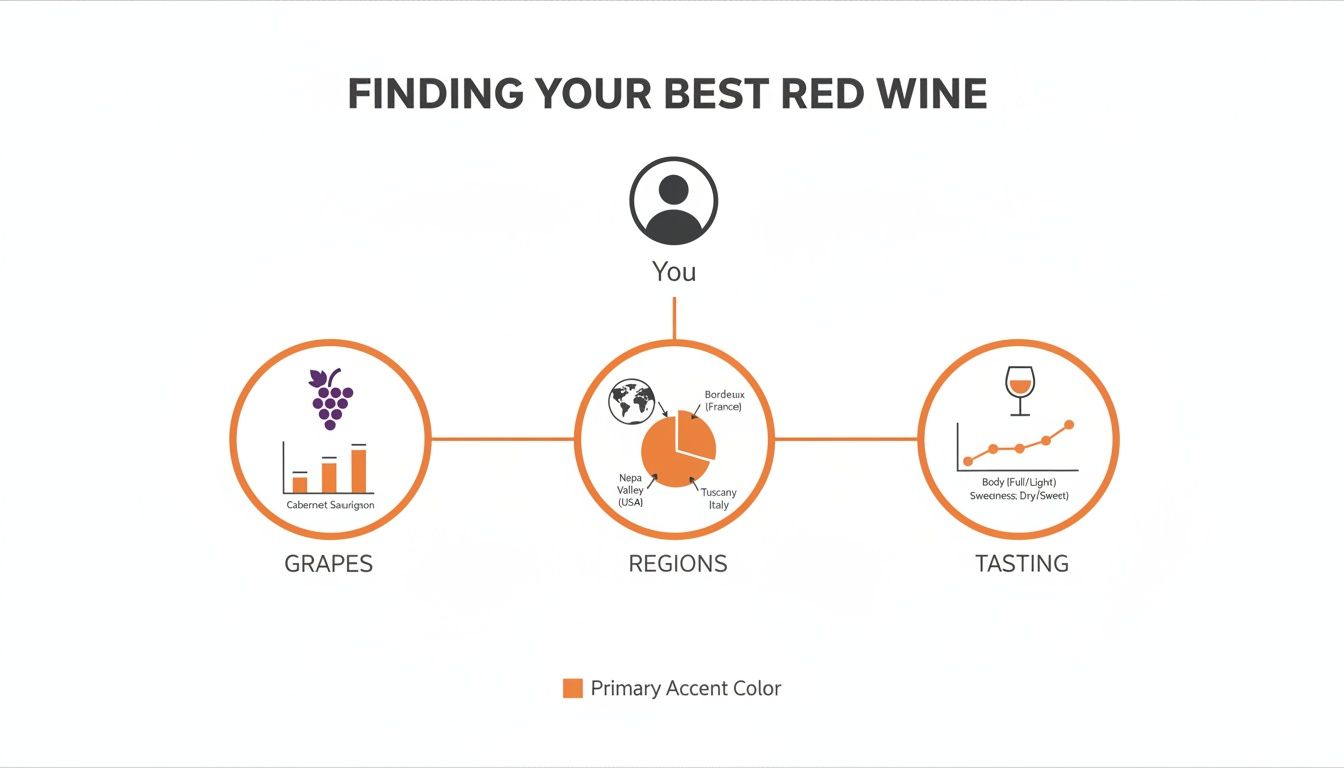
As you can see, your personal taste is the starting point, influenced by a few key factors you can learn to identify and track over time.
The Most Popular Red Wine Grapes
Getting started with the "big three" red grapes is a fantastic way to begin any tasting journey. They represent a huge spectrum of flavors and textures, making them perfect benchmarks for figuring out what you truly enjoy.
Cabernet Sauvignon: Often called the king of red grapes, Cabernet Sauvignon is famous for its full-bodied structure and bold, dark fruit flavors like black cherry and blackcurrant. You'll often find notes of cedar, tobacco, and even graphite. Its firm tannins are what make it a classic partner for rich, fatty foods like a good steak.
Merlot: Softer and plusher than its famous counterpart, Merlot is known for ripe, juicy fruit flavors of plum and raspberry. With its smoother tannins and often velvety texture, it’s an approachable and incredibly versatile choice that pairs well with a huge range of dishes.
Pinot Noir: This is the most delicate of the bunch, prized for its elegance and complex aromas. Expect bright red fruit flavors like cherry and cranberry, often with earthy undertones of mushroom or forest floor. Its lighter body and high acidity make it one of the most food-friendly wines on the planet.
Beyond these, other key players offer some exciting diversity. Syrah (sometimes called Shiraz) delivers bold, peppery notes and dark fruit, while Malbec from Argentina is beloved for its rich blackberry flavors and smooth, chocolatey finish.
To make it easier to compare these grapes at a glance, here’s a quick-reference table that breaks down their essential characteristics.
Comparing Popular Red Wine Grape Varieties
| Grape Variety | Primary Flavors | Body & Tannin | Classic Food Pairings |
|---|---|---|---|
| Cabernet Sauvignon | Black Cherry, Blackcurrant, Cedar | Full-bodied, High Tannin | Steak, Lamb, Hearty Stews |
| Merlot | Plum, Raspberry, Chocolate | Medium to Full-bodied, Soft Tannin | Roasted Chicken, Pasta, Burgers |
| Pinot Noir | Cherry, Cranberry, Mushroom | Light-bodied, Low Tannin | Salmon, Duck, Mushroom Dishes |
| Syrah / Shiraz | Blackberry, Pepper, Smoked Meat | Full-bodied, High Tannin | BBQ, Grilled Meats, Game |
| Malbec | Blackberry, Plum, Cocoa | Medium to Full-bodied, Smooth Tannin | Lean Red Meats, Empanadas |
This table is a great starting point for connecting a grape's profile to the kind of food it complements best, helping you make smarter pairing choices.
Decoding the Language of Wine
When you read a wine description or try to jot down your own notes, you'll run into a few key terms. Understanding them is simpler than it sounds and is crucial for articulating what you like. For a deeper dive into this, you can learn more about what a flavor profile is in our detailed guide.
Think of tannins as the "pucker power" in wine. It’s that drying sensation you feel on your gums, similar to drinking a strong black tea or eating a walnut. Tannins add structure and complexity, and they are a key reason why certain red wines age so well.
Beyond tannins, two other elements are essential for describing any red wine:
Acidity: This is the mouth-watering quality of a wine. It’s what makes your palate feel refreshed and keeps the wine from tasting flat or heavy. A wine with good acidity feels bright and lively.
Body: This refers to the weight and texture of the wine in your mouth. Is it light and delicate like skim milk (light-bodied), or rich and heavy like whole milk (full-bodied)? A medium-bodied wine falls somewhere in between.
By paying attention to the grape, tannins, acidity, and body, you start building a mental database of your preferences. You’ll soon move from saying, "I like this red wine," to, "I prefer full-bodied wines with smooth tannins and dark fruit notes." That clarity is the secret to consistently finding a bottle you’ll love.
A World Tour of Top Red Wine Regions
Geography is everything in the world of wine. Seriously. A Cabernet Sauvignon grown in the cool, gravelly soils of Bordeaux will taste completely different from one that soaked up the relentless California sun in Napa Valley. This "sense of place" is what winemakers call terroir, and it’s the magic that shapes everything in your glass—from the climate and soil to centuries-old local traditions.
Getting a handle on these regional differences is one of the biggest steps you can take toward finding reds you truly love. It helps you connect the dots between a wine's flavor and its origin story. This isn't about memorizing a map; it's about discovering why a bottle from one place is a bold, fruit-forward powerhouse while another is an earthy, elegant masterpiece.
Once you find a few regions that consistently produce styles you enjoy, your next trip to the wine shop becomes a much more confident and rewarding adventure.
Classic Old World Regions
Old World wines, mostly from Europe, are all about subtlety, structure, and tradition. Winemakers here tend to let the land do the talking, which often results in wines that are more savory, earthy, and built to age gracefully.
Bordeaux, France: The undisputed king of red blends and the spiritual home of Cabernet Sauvignon and Merlot. Wines from the "Left Bank" are Cabernet-dominant, known for their powerful structure, tannins, and notes of blackcurrant and graphite. "Right Bank" wines are softer and plusher, with Merlot in the lead, offering flavors of ripe plum and cherry.
Tuscany, Italy: In the heart of Italy, Tuscany is all about Sangiovese, the grape behind Chianti Classico and Brunello di Montalcino. These wines are famous for their high acidity, firm tannins, and savory notes of cherry, tomato leaf, and leather. They practically beg for food.
Rioja, Spain: Spain's most celebrated wine region is synonymous with the Tempranillo grape. Rioja reds are instantly recognizable for their notes of red fruit, dill, and vanilla—a signature of aging in American oak barrels. They offer incredible value and complexity, from the fresh Crianza to the deeply layered Gran Reserva.
Old World regions often feel like a conversation with history. The wines reflect centuries of tradition and a deep respect for the land, producing flavors that are more about earth and structure than explosive fruit.
If you find yourself logging glowing notes for these wines, you likely have a palate that leans toward savory, structured reds that come alive with food and time.
Vibrant New World Hotspots
New World regions—think North and South America, Australia, and beyond—are celebrated for their innovation and fruit-forward styles. Thanks to warmer climates, these areas produce wines that are often bolder, richer, and more approachable right out of the bottle.
Napa Valley, California: This is the global benchmark for New World Cabernet Sauvignon. Napa Cabs are powerful, full-bodied reds packed with ripe flavors of blackberry, cassis, and mocha. They are unapologetically lush and consistently impressive.
Mendoza, Argentina: Tucked into the high-altitude foothills of the Andes, Mendoza is the world capital of Malbec. The grape absolutely thrives here, creating inky, full-bodied wines bursting with blackberry, plum, and chocolate, all wrapped in a smooth, velvety texture.
Barossa Valley, Australia: If you love big, powerful reds, look no further. Barossa Valley Shiraz is a uniquely rich and concentrated style of Syrah, known for intense dark fruit, spice, and a signature chocolatey finish. It's a true powerhouse.
Rising Stars and Hidden Gems
While the classic regions get most of the glory, some of the most exciting finds are coming from up-and-coming areas. These regions offer exceptional quality and value, proving that great red wine can come from anywhere.
Portugal is a perfect example. While famous for Port, its dry red wines are finally getting the international acclaim they deserve. At the recent Decanter World Wine Awards 2025, Portugal snagged a record 554 medals, including five "Best in Show" awards. This incredible performance was led by reds from places like the Douro Valley, showing that regions once known only for fortified wines are now producing some of the world's best table wines. For anyone tracking their tastings, these awards are a huge signal pointing to regions delivering consistent excellence. You can discover more about these award-winning regions on Decanter.com.
Exploring these rising stars lets you get ahead of the curve, discovering fantastic wines before they become household names. Keeping a log of these finds helps you build a unique map of your own palate.
What Makes a Great Red Wine Expensive
Ever wonder why you can grab a perfectly drinkable bottle of red for $15, while another one just a few shelves over is priced at $1,500? That massive price gap isn’t just marketing fluff. It’s a complex story of place, process, people, and time.
Think of it like the difference between a solid, factory-made guitar and a handcrafted instrument from a legendary luthier. Both can play music, but one is a unique work of art, shaped by rare materials and masterful skill. The same principle applies to wine, where every single decision—from the exact patch of dirt to the type of oak barrel used—adds to the final cost and character of what's in the bottle.
The Power of Place and Scarcity
The single biggest driver of a wine's price is where the grapes are grown. A tiny, revered vineyard in Burgundy's Côte de Nuits might only produce a few thousand bottles a year. That extreme rarity, combined with intense demand from collectors all over the world, naturally sends prices soaring.
Vineyards in prestigious regions like Napa Valley, Bordeaux, and Barolo have what the wine world calls "provenance"—a proven track record of producing exceptional wines, vintage after vintage. The land itself is astronomically expensive, and farming it is a high-stakes game.
It all boils down to simple supply and demand. If a world-famous vineyard produces only enough grapes for 500 cases of wine, and thousands of people are clamoring to buy it, the price will reflect that fierce competition. This is why a wine's origin story is so vital to its value.
The Cost of Craftsmanship
Once the grapes leave the vineyard, the winemaking process itself takes center stage. Inexpensive wines are usually made in massive quantities using highly mechanized processes to keep costs down. They’re often fermented in huge stainless steel tanks and bottled young to get them on shelves as quickly as possible.
Premium red wines, on the other hand, are made with an almost obsessive attention to detail:
- Hand-Harvesting: Instead of using machines, grapes are picked by hand to ensure only the absolute best bunches make the cut. This is far more labor-intensive and expensive.
- Oak Aging: The best red wines are often aged in new French oak barrels, which can cost over $1,000 each. These barrels impart those complex flavors of vanilla, spice, and toast but can only be used a few times before their magic fades.
- Time in the Cellar: Expensive wines are frequently aged for years at the winery before they're even released, tying up a ton of capital and requiring significant climate-controlled storage. This aging process allows the wine's tannins to soften and its complex flavors to develop into something truly special.
Age, Acclaim, and Investment Potential
Finally, a wine's ability to age and the praise it receives from critics are massive price drivers. Wines built to last for decades, like a top-tier Bordeaux or Barolo, are seen as more than just a beverage; they become assets. As bottles are opened and consumed over the years, their rarity increases, and their flavors evolve into something magnificent. Get a high score from a respected critic, and a wine's price can skyrocket overnight.
This investment potential is very real. Fine wine has delivered stunning returns, with Bordeaux classics like Château Cheval Blanc 2001 yielding 259% over the last decade. Other legendary bottles, such as Mouton Rothschild 2000 and La Mission Haut-Brion 1998, have posted returns of over 250%. These figures show how the best red wines from iconic producers can appreciate in value, cementing their status as tangible assets. You can discover more about the historic performance of fine wine on Bordeauxindex.com.
Understanding these dynamics helps you see the story behind the price tag. That $20 Malbec offers fantastic, immediate pleasure, while a $200 Barolo offers a taste of a specific place and time, promising to evolve for years to come. Your job is simply to decide which story you want to be a part of.
The Art of Tasting and Pairing Red Wine
Alright, let's get to the best part—actually enjoying the wine. Finding your personal favorite red is an active experience, a fun bit of detective work that happens right in your glass. This is where you graduate from simply drinking wine to truly tasting it, turning every bottle into a small discovery.
The whole process doesn't need to be stuffy or complicated. It’s really just about paying attention to the aromas, the flavors, and the way the wine feels in your mouth. When you start noticing these details, you begin building a mental library of what you love, connecting the dots between a specific grape, the region it came from, and your own palate.
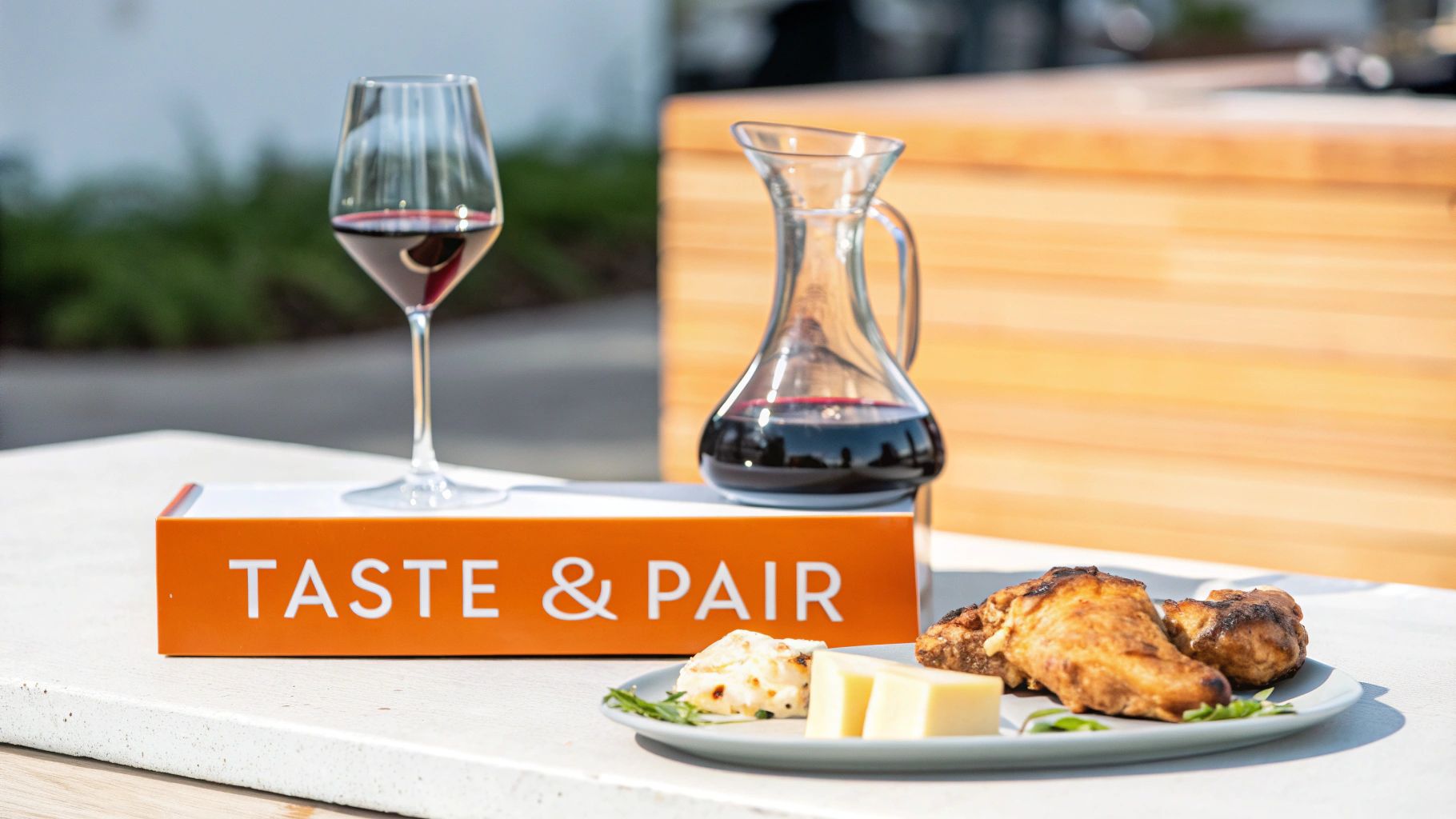
The Four Steps to Tasting Wine
Look, you don't need a fancy certificate to taste wine like a pro. Most experts use a simple, four-step method that anyone can master. It’s often called the 'See, Swirl, Smell, Sip' method, and it’s designed to wake up all your senses and unlock the wine's full story.
- See: Tilt your glass against a white background (a napkin works great). What color is it? A deep, inky purple might suggest a young, bold wine, while a paler garnet could hint at an older vintage or a lighter grape like Pinot Noir.
- Swirl: Give the wine a gentle swirl in the glass. This simple move is a total game-changer. It gets oxygen into the wine, releasing all those amazing aromatic compounds that have been cooped up in the bottle.
- Smell: Now, get your nose right in there and take a deep sniff. What do you pick up? Don't worry about being "right." Just notice what comes to mind. Is it fruity, like black cherry or raspberry? Or maybe something more earthy, like leather or mushroom? If it was aged in oak, you might even get hints of vanilla or cedar.
- Sip: Finally, take a small sip and let it wash over your entire palate. Think about the flavors, the body (how heavy it feels), and the finish (how long the taste sticks around). This is where you feel the interplay of fruit, acidity, and those tannins we talked about. To really dig into this, you can explore our guide on what are the five basic tastes and how they show up in both food and wine.
Serving Red Wine for Maximum Flavor
How you serve your red wine can make a world of difference. Get two simple things right—temperature and aeration—and you'll elevate a good glass of wine to a great one.
Believe it or not, most people serve red wine too warm. A "room temperature" red can taste flat and boozy, with the alcohol overpowering the delicate fruit flavors. The sweet spot for full-bodied reds like Cabernet Sauvignon is 60-65°F (15-18°C). Lighter reds like Pinot Noir are even better with a slight chill, around 55-60°F (13-15°C). The fix is easy: just pop the bottle in the fridge for 15-20 minutes before you plan to open it.
Decanting—pouring the wine into another container before serving—is another pro move. It does two things. First, it separates the wine from any sediment that might have collected in an older bottle. More importantly, it exposes the wine to a rush of oxygen. This aeration process softens up the tannins and lets the complex aromas and flavors truly open up, especially for a young, powerful red.
Simple Principles for Perfect Food Pairings
Pairing food and wine isn't about rigid rules; it's about creating balance. You want the food and the wine to make each other better. A few guiding principles can help you nail it every time.
The old saying "what grows together, goes together" is a classic for a reason. Think of a rustic Tuscan Sangiovese with a rich tomato pasta, or a juicy Argentinian Malbec with a grilled steak. These pairings work because they literally grew up alongside each other over centuries.
Here are two simple strategies that almost always work:
Congruent Pairing: This is all about matching similar flavors. A bold, smoky Cabernet Sauvignon from Napa is a perfect match for a charred steak right off the grill. The toasty notes from the oak barrel in the wine echo the smoky flavors in the meat. It just works.
Contrasting Pairing: Here, you're using opposites to create balance. The bright acidity in a good Pinot Noir is fantastic at cutting through the richness of something like roasted duck. It cleanses your palate with each sip, making every bite of food taste as vibrant as the first.
At the end of the day, the best pairing is the one you like the most. Use these ideas as a jumping-off point, but don't ever be afraid to experiment. Keep track of what you try, note what works and what doesn't, and you'll be pairing like a sommelier in no time.
How to Track Your Tastes and Discover Your Favorites
Let's be honest. The real secret to finding the best red wine for you has nothing to do with chasing critic scores or shelling out for the most expensive bottle on the shelf. It’s about becoming the world’s leading expert on your own palate.
This means turning passive tasting into active discovery. Instead of just deciding you "like" or "dislike" a wine, you start building a living, breathing chronicle of your experiences. The most powerful tool in your wine journey isn't a fancy corkscrew; it's your memory. And a private wine diary ensures no great bottle ever gets lost to the fog of time.
Start Your Own Private Wine Diary
Getting started is far easier than you think. Every time you open a bottle of red, just take a moment to capture the experience. This isn’t about writing a formal, stuffy review. It’s about creating a quick, personal snapshot that your future self will thank you for.
The whole process takes less than a minute but pays off for years to come.
Snap a Photo: A quick picture of the label is the fastest way to remember exactly what you drank. It instantly captures the producer, grape, region, and vintage without you having to type a thing.
Give It a Score: Rate the wine on a simple 1-10 scale. This is your personal truth. Over time, this number becomes incredibly powerful, allowing you to see at a glance how a new Merlot stacks up against every other Merlot you’ve ever tasted.
Jot Down Notes: This is where the story comes alive. Add a few quick, personal thoughts. Think "bold cherry, smooth finish" for the flavor, "Friday pizza night" for the occasion, and maybe "perfect with pepperoni" for the pairing.
By consistently capturing these three simple things, you turn a fleeting moment into a permanent, useful record. You’ll start to see the patterns in what you truly enjoy, moving beyond guesswork.
Turn Your Data into Discovery
Once you’ve logged a few tastings, the real fun begins. That simple diary transforms into a powerful database you can use to make smarter choices and find new favorites. It’s your data, your story.
The goal is to build a trusted resource that reflects your palate, not a stranger's. You stop relying on generic recommendations and start trusting your own, well-documented history of taste.
This personal chronicle lets you create instant, custom lists tailored to your life. Imagine being able to pull up these lists in seconds:
- Best Weeknight Cabs Under $20
- Favorite Italian Reds for Pasta Night
- Top-Rated Pinot Noirs from Oregon
- Go-To Wines to Bring to a BBQ
This is how you move from guessing to knowing. You’ll be able to walk into a wine shop or talk to a sommelier with the confidence that comes from truly understanding your own preferences.
If you need a little help pinpointing what you like right now, take a moment to explore our Taste Profile Quiz for some personalized insights. This journey of self-discovery is, without a doubt, the most rewarding part of appreciating wine.
Your Questions About Red Wine Answered
As you start exploring the incredible world of red wine, you’re going to have questions. Everyone does. Think of this as your go-to spot for clear, straight-up answers to some of the most common curiosities.
How Do I Know If a Red Wine Is "Good"?
Here’s the simple truth: if you enjoy drinking it, it's a good wine. Period. While critics and pros use complex scoring systems, the only thing that really matters is your own palate.
That said, when experts talk about a wine's quality, they're usually looking at its balance—how the fruit, acid, tannin, and alcohol all play together without one overpowering the others. They also consider complexity, which is just the range of different aromas and flavors you can pick out, and the finish, or how long that pleasant taste sticks around after you swallow.
A truly great red wine feels complete and harmonious from the first sniff to the last sip. The best way to figure out what's "good" for you is to start logging what you drink and what you think. You'll quickly see your own patterns emerge, and that becomes your personal definition of an excellent bottle.
What Does "Vintage" Mean and How Much Does It Matter?
The vintage is just the year the grapes were picked from the vine. It can have a massive impact on a wine’s personality because the weather—sunshine, rain, heat—is different every single year.
A hot, sunny year might give you ripe, bold, and powerful wines. On the other hand, a cooler, wetter year could produce reds that are more delicate and acidic.
For the everyday bottles you grab for a weeknight dinner, the vintage isn't something to lose sleep over. But for high-end wines from classic regions like Bordeaux or Burgundy, vintage is everything. A great vintage can produce legendary wines that age for decades, while a tough year might result in bottles that are best enjoyed young.
What Is the Best Red Wine in the World?
Ah, the million-dollar question. The honest answer is that it's always changing, and there’s no single "best" red for everyone.
However, some bottles consistently reach legendary status among both critics and everyday drinkers. Lists of the world’s top-rated reds often include icons like Château Pétrus from Pomerol, France, or Hundred Acre Cabernet Sauvignon from California—both are famous for their sheer opulence and complexity. Italy’s Tenuta San Guido Sassicaia is another name you'll see again and again, proving that truly timeless reds are made all over the globe.
These consensus picks, often pulled from millions of user ratings, point to a shared love for wines that are powerful, perfectly balanced, and built to evolve beautifully over time. You can see a full list of these crowd-sourced legends on Vivino.com to get a feel for what the world is drinking.
How Long Can I Keep Red Wine After Opening It?
Once you pop that cork, oxygen starts to work on the wine, and its flavors will begin to fade. As a general rule, most red wines will last for 3-5 days after being opened.
The key is to re-cork the bottle tightly and stick it in the fridge—yes, even reds! The cold temperature dramatically slows down the oxidation process. Fuller-bodied wines with more tannin, like a Cabernet Sauvignon, will usually last a day or two longer than lighter reds like Pinot Noir.
If you're interested in wines that have serious staying power after opening, you might want to explore fortified wines like Sherry wine, which can last for weeks or even months.
Your journey to finding the best red wine is a personal adventure of taste and memory. With Savor, you have the perfect tool to document every discovery, compare your finds, and build a private chronicle of your unique palate. Stop letting great bottles fade from memory.