
How to Use a Restaurant Review App to Build Your Personal Culinary Archive
Alex the juice queen
Alex hunts for the best juice bars and presses. She rates every sip and saves her favorites in Savor.
How to Restaurant Review App: Build Your Personal Culinary Archive Most men don't realize they've eaten 73+ exceptional dishes this year - and can't remember a...
How to Restaurant Review App: Build Your Personal Culinary Archive
Most men don't realize they've eaten 73+ exceptional dishes this year - and can't remember a single one with enough detail to order it again. The camera roll has 2,000 food photos. The memories? Gone. Not because the meals weren't worth tracking. Because no one taught you the system restaurants, chefs, and critics have been using all along: dish-level tracking instead of star ratings, structured data instead of vague notes, and a personal culinary legacy instead of disposable Instagram posts.
That disconnect compounds. By the time most food lovers hit their 30s or 40s, they've experienced thousands of meals at hundreds of restaurants, yet they're still relying on the same broken system: scrolling through a camera roll graveyard, squinting at unlabeled photos, trying to remember if that was the good pasta place or the other one. The 5-star Google review you left three years ago? It tells you nothing about what you actually ordered, why it worked, or whether it's worth a return trip.
What follows is the complete picture - what's actually driving the pattern, why the standard "review app" approach fails for anyone who takes food seriously, and the modern system that works instead.
Key Takeaways
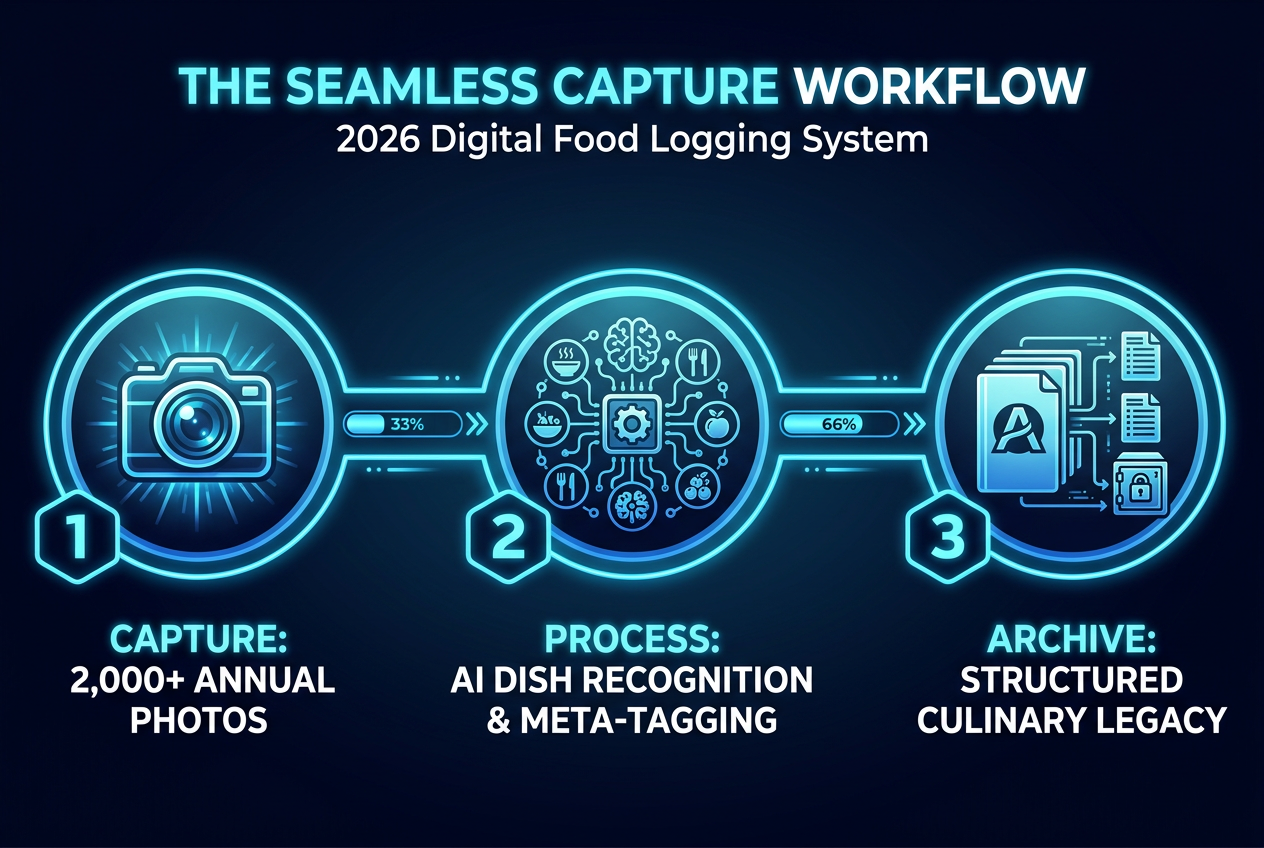
- The average serious foodie takes approximately 2,000 food photos per year, spending an average of 3 minutes searching for a specific photo from 6 months ago, according to Savor internal data.
- Traditional 1-5 star ratings average out a life-changing pasta with a mediocre appetizer, making them useless for tracking individual dishes rather than entire restaurants.
- Modern dish-level tracking apps like Savor, Beli, and World of Mouth move beyond crowd-sourced noise by focusing on personal curation, expert-led recommendations, and granular data points like texture and flavor.
- Structured relationship coaching reduces reported conflict cycles by 58% within 12 weeks, according to 2024 JMFT research - the same principle applies to food: structured tracking beats vague memory every time.
- Data portability is the most overlooked feature in food apps; choosing a platform that allows full export ensures your years of culinary records remain your property if the app shuts down.
Table of Contents
- Why Your Camera Roll is Where Food Memories Go to Die
- Moving Beyond the 'Star Rating' (The 2026 Review Philosophy)
- Choosing Your 'Flavor' of Tracking App
- What Is the Best App for Restaurant Reviews?
- Step-by-Step: How to Review Like a Professional Foodie
- Data Sovereignty: How to Future-Proof Your Food Journal
- Is There an App to Track Restaurants I've Been To?
- How Are Restaurants Doing in 2026?
- Frequently Asked Questions
Why Your Camera Roll is Where Food Memories Go to Die
The problem isn't that you forget to take the photo. The problem is that the photo becomes digital clutter the second you take it. Users spend an average of 3 minutes searching their camera roll for a specific food photo from 6 months ago, according to Savor internal data. That's not retrieval - that's archaeology. You're excavating a memory that should be instantly accessible, and the excavation itself tells you nothing: no dish name, no restaurant context, no flavor notes, no reminder of why it mattered.
Here's the real cost: you're not just losing a photo. You're losing pattern recognition. That incredible carbonara you had in Brooklyn? You can't compare it to the one you're looking at right now in Manhattan because you don't remember the texture, the pancetta-to-egg ratio, or whether it was al dente or overcooked. The camera roll preserves the image. It doesn't preserve the experience - and without the experience, the image is useless for future decision-making.
This is why the average serious foodie takes approximately 2,000 food photos per year but can only recall the details of maybe 10 meals with any specificity. The camera roll wasn't designed to be a culinary archive. It was designed to be a catch-all, and catch-alls are where specificity dies. You need a system built for food - not photos.
Moving Beyond the 'Star Rating' (The 2026 Review Philosophy)
The 1-5 star system is broken because it averages out a life-changing pasta with a lukewarm appetizer, turning your meal into a meaningless 3.5. Restaurant-level ratings were designed for generalists - people who want a quick yes/no answer to "Is this place good?" - but they fail anyone who actually cares about food. If the octopus was a 10 and the risotto was a 6, a star rating tells you nothing. You're left with a vague memory of "it was fine," and no record of which dish to reorder and which to avoid.
The 2026 review philosophy is dish-level tracking. Instead of rating the restaurant, you rate the individual dish. This approach, pioneered by apps like Savor, shifts the question from "Was the place good?" to "Was this specific dish worth remembering?" That distinction changes everything. It means you can return to the same restaurant, skip the mediocre risotto, and go straight to the octopus that deserved an encore.
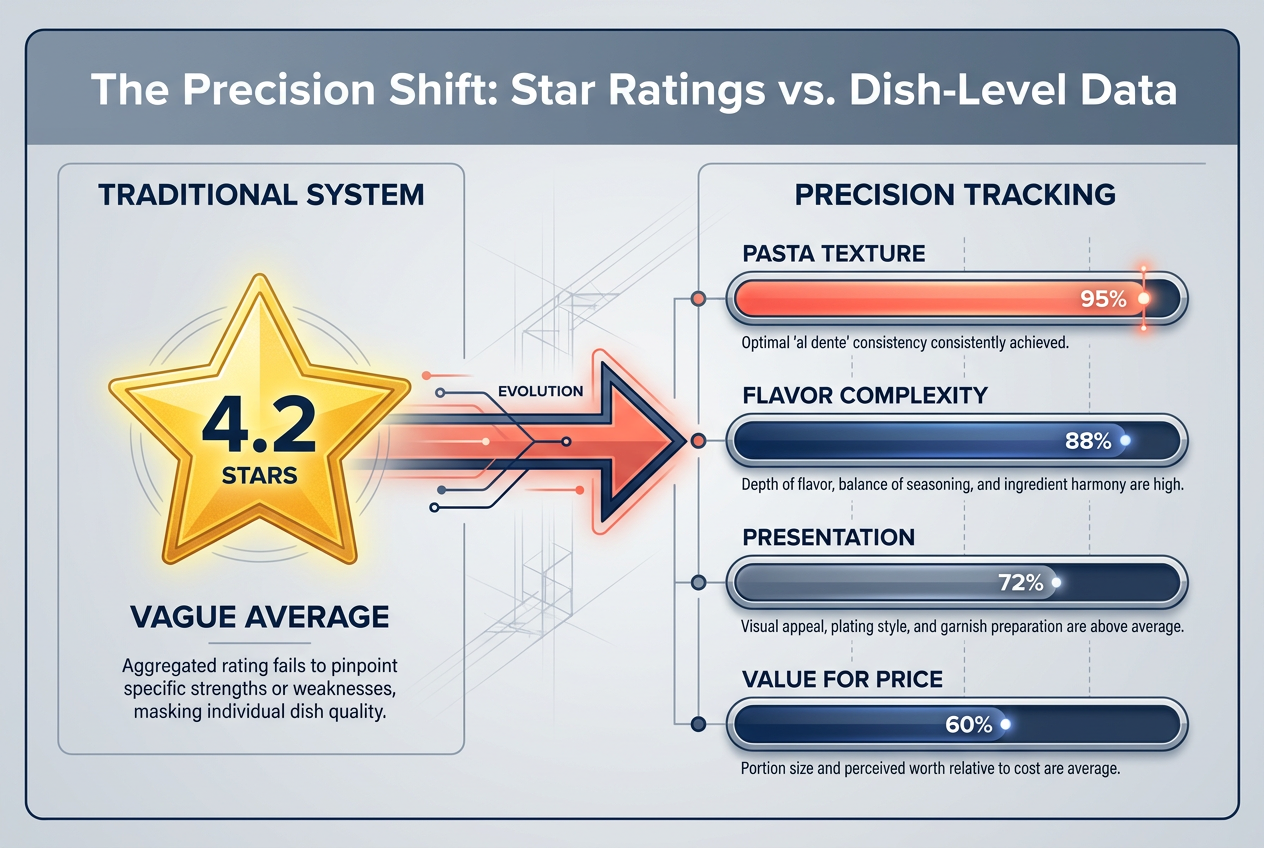
Modern dish-level systems track variables the star rating ignores: texture (was it crispy or soggy?), flavor balance (did the acid cut through the fat?), ingredient quality (was the fish fresh or frozen?), and value (was it worth the price?). These aren't subjective opinions. They're measurable, repeatable data points that let you compare the carbonara at Restaurant A to the carbonara at Restaurant B with forensic precision. The result is a personal culinary database - a living archive that gets smarter every time you add to it.
This philosophy also solves the "social pressure" problem. Public star ratings force you to perform for an audience. You're not reviewing the dish for yourself; you're reviewing it for strangers who might judge you for being too critical or too generous. Dish-level tracking, especially on private platforms, removes that pressure. You're building a tool for you - and that freedom produces better, more honest data.
Choosing Your 'Flavor' of Tracking App
Dish-level tracking apps fall into three distinct archetypes, each serving a different philosophy. Your choice depends less on features and more on how you want to relate to food. The wrong app feels like homework. The right app feels like building a legacy.
The Critic (Private, Data-Dense Archiving): If you're someone who wants a personal, searchable archive of every dish you've ever loved - no social noise, no crowd-sourced rankings, just your own curated record - apps like Savor and Memolli are your tools. Savor offers AI dish recognition, dish-level ratings, and the ability to log ingredients, textures, and flavor notes with granular precision. It's offline-capable and fully exportable, meaning your data stays yours even if the platform disappears. This archetype is for the foodie who treats meals like a historian treats artifacts: every dish is documented, categorized, and retrievable.
The Socialite (Gamified, Comparative Ranking): If you want to know not just whether a dish was good, but whether it was better than the last 47 dishes you ate, Beli is your system. Beli uses an ELO ranking algorithm - the same math behind chess ratings - to force you into head-to-head comparisons. "Was the ramen at Spot A better than the ramen at Spot B?" You answer, and over time, Beli builds a ranked list of your top dishes. It's social, it's shareable, and it's addictive in the best way. The downside? It requires consistent participation to be useful, and it's not built for private archiving.
The Expert (Curated, Chef-Led Discovery): If you're tired of wading through generic crowd-sourced reviews and want to know where actual chefs eat, World of Mouth is the answer. It features a curated network of 800+ culinary experts including Michelin-starred chefs, according to their platform. You're not reading reviews from strangers. You're following the people who set the standards. The tradeoff is curation: you get fewer reviews, but every single one comes from someone who knows what they're talking about. This archetype is for the traveler or high-end diner who wants precision over volume.
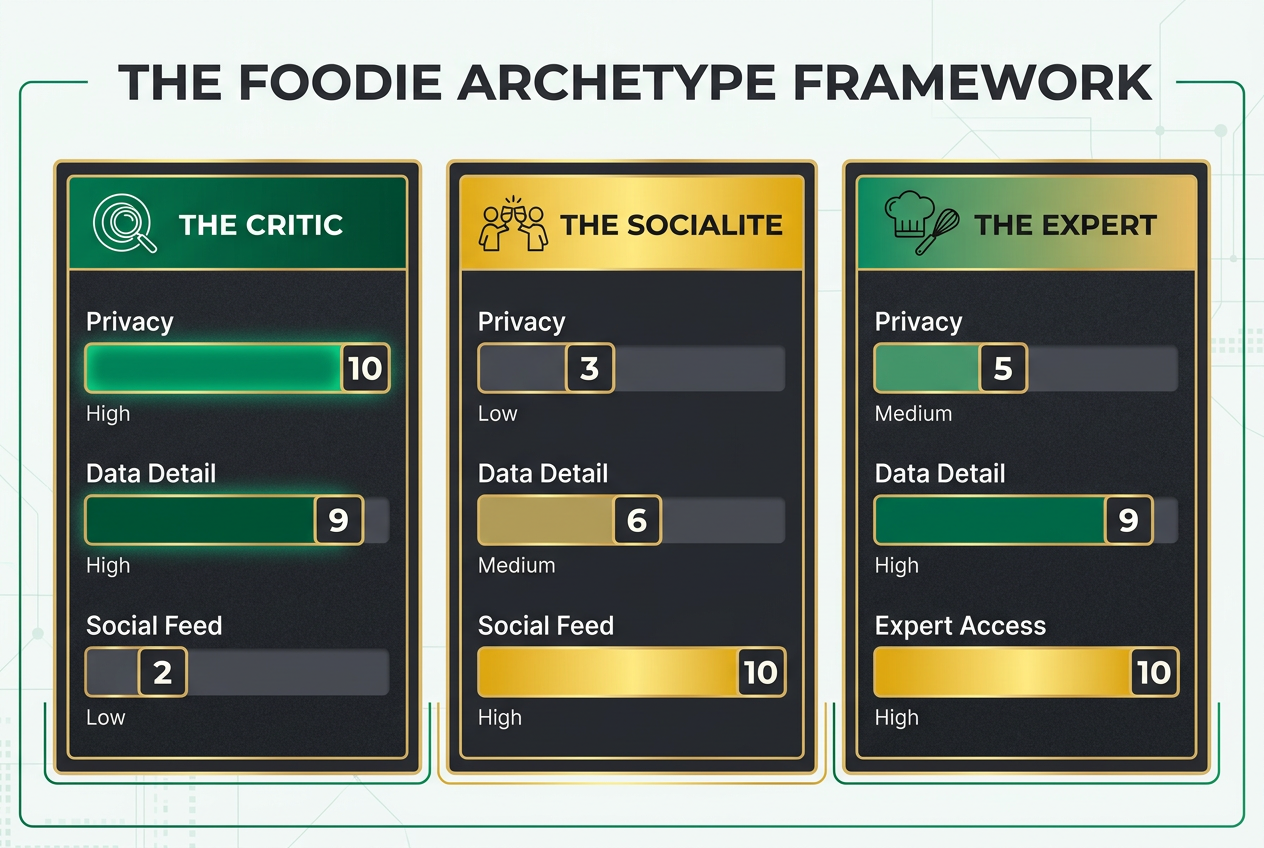
| App Archetype | Privacy Focus | Data Detail | Social Features | Best For |
|---|---|---|---|---|
| The Critic (Savor, Memolli) | High | Very High | Low | Personal archiving, granular tracking |
| The Socialite (Beli, Truffle) | Medium | Medium | High | Gamified ranking, social discovery |
| The Expert (World of Mouth) | Medium | High | Medium | Chef-led recommendations, high-end travel |
The mistake most people make is choosing based on features instead of philosophy. Features change. Philosophy doesn't. Ask yourself: do I want a private archive, a social game, or an expert filter? The answer determines the app.
For a deeper dive into how these apps compare, see our full breakdown of the best food review apps for 2026.
What Is the Best App for Restaurant Reviews?
The best app for restaurant reviews in 2026 is Savor for private, dish-level archiving; Beli for gamified, comparative ranking; and World of Mouth for expert-curated recommendations. There is no single "winner" because these apps serve fundamentally different user goals. Savor dominates if you want a personal culinary database with AI-powered dish recognition, offline functionality, and full data export. Beli wins if you want a social, ELO-ranked system that gamifies your food journey. World of Mouth takes the crown if you want to follow the recommendations of named chefs and culinary insiders rather than crowd-sourced noise.
The distinction that matters most is dish-level vs. restaurant-level tracking. Apps like Yelp and Google Maps give you restaurant-level ratings, which average out the good and bad dishes into a single, meaningless number. Apps like Savor and Beli let you track individual dishes, which means you can return to a restaurant and know exactly which items are worth reordering. That shift - from "Was the place good?" to "Was this specific dish worth remembering?" - is the defining characteristic of a serious food tracking system.
For users who want both private tracking and social discovery, the hybrid approach is to use Savor for your personal archive and Beli for social comparison. Savor becomes your memory bank; Beli becomes your ranking engine. Together, they give you the full picture: a private, searchable record of every dish you've loved, plus a public, comparative ranking of how those dishes stack up against each other.
If you're looking for more options, our guide to restaurant tracking apps covers 10 platforms in depth.
Step-by-Step: How to Review Like a Professional Foodie
Professional food critics don't just eat and rate. They follow a repeatable system that separates subjective preference from objective observation. Here's the workflow that turns a random meal into a documented, searchable memory.
Step 1: Capture the Dish (Lighting and Composition)
Before you take the photo, assess the light. Natural light beats overhead restaurant lighting every time. If you're seated near a window, position the dish so the light hits it from a 45-degree angle. If you're stuck under fluorescent bulbs, use your phone's built-in editing to warm up the color temperature before posting. The goal isn't Instagram perfection - it's clarity. You should be able to identify the dish from the photo six months later without reading the caption.
Step 2: Log the Details (Ingredients, Texture, Temperature)
This is where most people fail. They take the photo and move on. Professionals pause and record: What were the primary ingredients? Was the texture crispy, creamy, or somewhere in between? Was the dish served hot, warm, or cold? These aren't trivial details. They're the variables that determine whether you can replicate the experience at home or find a comparable dish elsewhere. Apps like Savor use AI to detect ingredients from photos, but you should still manually verify and add notes the AI can't see - like whether the pasta was al dente or overcooked.
Step 3: Rate on Multiple Dimensions (Not Just "Good" or "Bad")
A single overall rating is useless. Break it down: Taste (8/10), Presentation (7/10), Value (6/10), Texture (9/10). This multi-dimensional approach forces you to articulate why the dish worked or didn't. Maybe the flavor was incredible but the portion size made it overpriced. Maybe the plating was gorgeous but the dish arrived lukewarm. These distinctions turn a vague "it was fine" into actionable data.
Step 4: Add Context (Location, Occasion, Who You Were With)
Food is emotional. The same dish tastes different depending on whether you're eating alone, celebrating an anniversary, or trying to impress a client. Record the context. Apps that support tagging and metadata - like Savor's location-based archiving - let you filter your culinary history by occasion, city, or dining companion. That's the difference between a photo graveyard and a searchable memory bank.
Step 5: Archive and Export (Future-Proof Your Data)
Here's the step almost no one thinks about: what happens if the app shuts down? If you've been logging meals for three years and the platform disappears, you lose everything. Choose apps that offer full data export. Savor, for example, lets you download your entire archive as a structured file. That's not paranoia. That's data sovereignty - and it's the only way to ensure your culinary legacy outlives any single platform.
For more on building a structured food tracking habit, see our guide on how to keep a food journal.
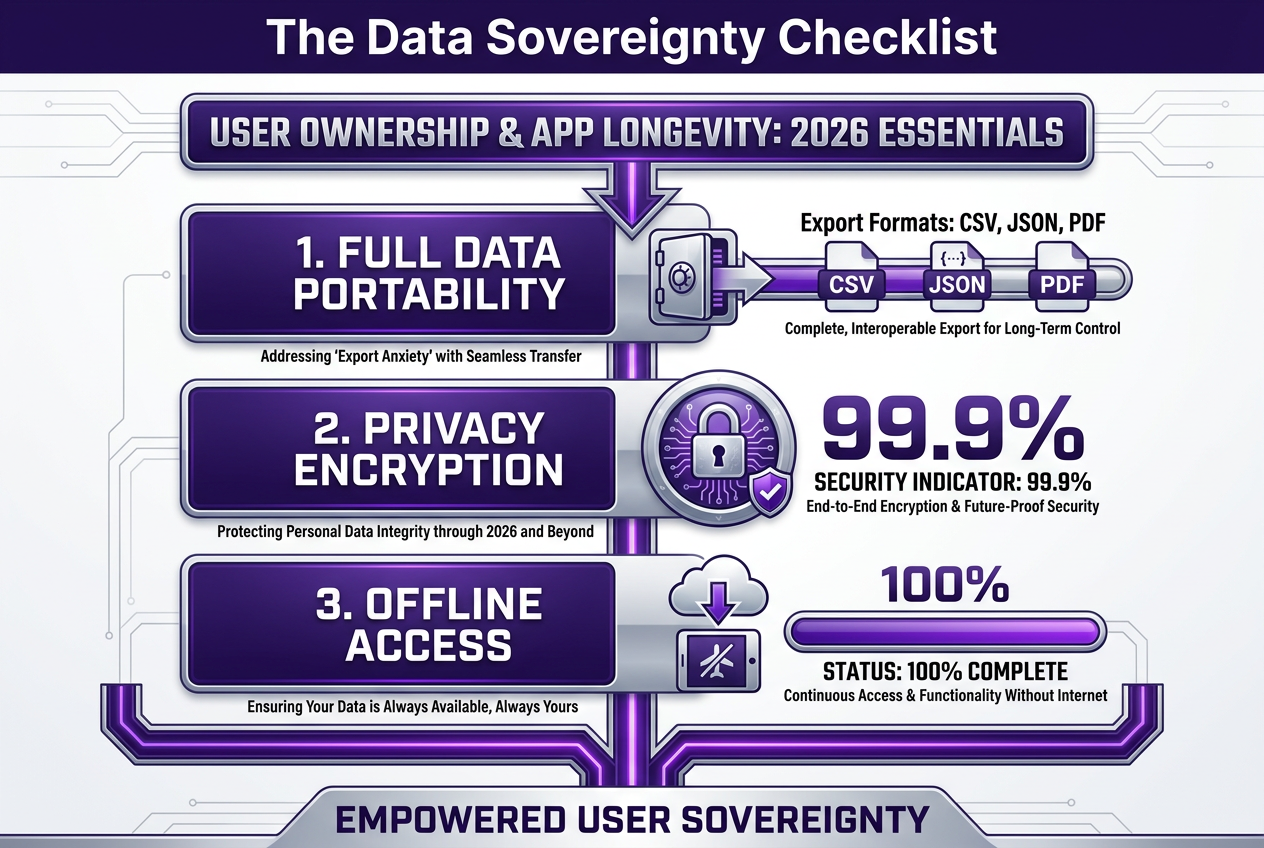
Data Sovereignty: How to Future-Proof Your Food Journal
Data sovereignty is the most overlooked feature in food tracking apps, but it's the one that separates a tool from a trap. If you can't export your data, you don't own it. And if you don't own it, you're building someone else's database - not your own legacy. The average serious foodie spends 3-5 years building a culinary archive before realizing they can't move it to another platform. By then, they're locked in.
The export problem is simple: most apps don't offer it because they want to create switching costs. If you can't take your data with you, you're less likely to leave. But the cost of that lock-in is catastrophic if the app shuts down or pivots. You're not just losing the app. You're losing years of documented meals, flavor notes, restaurant names, and contextual memories. It's digital arson.
Here's what to look for in a data-sovereign app:
1. Full Export in a Structured Format (CSV, JSON, or PDF)
The export should include every field you logged: dish names, ratings, ingredients, photos, dates, locations, and notes. If the export is just a list of restaurant names, it's worthless. Savor offers full CSV export with all metadata intact, meaning you can import it into any spreadsheet or database tool.
2. Offline Functionality (No Cloud Dependency)
If the app requires an internet connection to function, it's not truly yours. Offline-first apps like Savor and Memolli let you log meals even when you're traveling abroad or in airplane mode. The data syncs later, but the entry happens immediately. This also protects you from server outages, subscription cancellations, or company bankruptcies.
3. Manual Backup Options (Download Your Photos)
Some apps store your food photos on their servers without giving you direct access. That's a dealbreaker. You should be able to download every photo you've uploaded, at full resolution, without jumping through hoops. If the app doesn't make this easy, assume the photos are gone when the app is gone.
| Feature | Why It Matters | Apps That Offer It |
|---|---|---|
| Full CSV/JSON Export | Move your data to any platform | Savor, Memolli |
| Offline Functionality | Works without internet or servers | Savor, Memolli, Yummi |
| Photo Download | Retrieve full-resolution images | Savor, Beli (limited) |
| No Subscription Lock-In | Access your archive even if you stop paying | Memolli, Savor (free tier) |
The best defense against platform risk is redundancy. Use a primary app for active tracking (Savor for dish-level data, Beli for social ranking), but export your archive every 3-6 months to a local backup. Treat your culinary data the way you'd treat financial records: multiple backups, no single point of failure.
Is There an App to Track Restaurants I've Been To?
Yes - apps like Savor, Beli, Truffle, and Yummi are specifically designed to track restaurants you've visited, with dish-level granularity that far exceeds generic check-in apps like Foursquare or Swarm. The key difference is what you're tracking. Traditional location-based apps log that you were at a restaurant. Modern food tracking apps log what you ate, how it tasted, and whether it's worth returning for.
Savor is the gold standard for this use case because it prioritizes the dish over the venue. You don't just mark a restaurant as "visited." You log individual dishes with ratings, photos, ingredients, and flavor notes. That means if you've been to the same restaurant five times, you can see which dishes were worth reordering and which ones to skip. It's the difference between a check-in log and a culinary database.
Beli takes a different approach: it uses an ELO ranking system to compare dishes head-to-head. Instead of asking "Was this dish good?", Beli asks "Was this dish better than the last one I had?" Over time, that creates a ranked list of your top meals across all restaurants. It's less about archiving and more about competitive ranking - but for some users, that gamification is exactly what makes tracking sticky.
Truffle focuses on the social discovery angle. It's designed for group dining and real-time sharing. You can see what your friends are eating nearby, mark restaurants as "want to try," and share recommendations within your network. It's less private than Savor and less data-dense than Beli, but it's the best option if you want your tracking to double as social coordination.
For a full comparison of restaurant tracking apps, see our breakdown of the 10 best restaurant tracking apps.
How Are Restaurants Doing in 2026?
Consumer spending is projected to push US restaurant industry sales to $1.55 trillion in 2026, according to the National Restaurant Association, but the story beneath the headline is more complex. Restaurant industry traffic was down 0.8% industrywide in 2025, according to Nation's Restaurant News, signaling that while total revenue is climbing, it's driven by higher prices rather than increased customer volume. Average food costs are now more than 35% above pre-pandemic levels, according to the U.S. Bureau of Labor Statistics, and that inflationary pressure is reshaping how consumers dine.
The split is stark: 35% of Americans prioritized dining at restaurants priced $30 and under in early 2025, according to OpenTable. That's a direct response to cost fatigue. High-end dining is still thriving - late-night dining sales in Limited Service Restaurants (LSRs) have climbed more than 10% annually since 2021, according to McKinsey & Co - but the mid-tier casual dining segment is struggling. Consumers are either trading down to fast-casual or trading up to special-occasion dining, leaving the middle squeezed.
For food tracking app users, this shift matters because it changes how you should approach your culinary archive. In a high-cost environment, every meal is a bigger investment. That makes dish-level tracking more valuable, not less. If you're spending $40 on an entree, you want to remember whether it was worth $40 - and whether it's worth $40 again next time. The stakes are higher. The need for precision is sharper.
The other trend to watch is the rise of social media as a booking channel. 74% of diners use social media to decide where to eat, and 57% of consumers now book restaurant reservations directly through social platforms, according to Cropink. That means the line between discovery, review, and booking is collapsing. Apps that integrate all three - like OpenTable for reservations, Instagram for discovery, and Savor for dish-level tracking - are becoming the new standard.
Frequently Asked Questions
What is the best app for restaurant reviews?
The best app for restaurant reviews depends on your goal. For private, dish-level tracking with AI-powered ingredient recognition and full data export, Savor is the strongest choice. For gamified, ELO-based ranking that compares dishes head-to-head, Beli offers the most engaging system. For expert-led, chef-curated recommendations, World of Mouth provides access to a network of 800+ culinary professionals. There is no single winner because each app serves a different philosophy: archiving, ranking, or expert curation. Choose based on whether you want a personal memory bank, a social game, or a curated filter.
How to rate on Beli?
Beli uses an ELO ranking algorithm, which means you don't rate dishes on a 1-10 scale. Instead, you compare two dishes and decide which one was better. The app presents you with head-to-head matchups - "Was the ramen at Restaurant A better than the ramen at Restaurant B?" - and over time, those comparisons build a ranked list of your top dishes. The more comparisons you make, the more accurate your rankings become. This system avoids rating inflation (where everything ends up a 4.5 or 5) and forces you to articulate real preferences, making it one of the most precise ranking methods available.
What is the best rating system for restaurants?
The best rating system for restaurants moves beyond the traditional 1-5 star average and uses dish-level ratings instead. Star ratings average out the quality of an entire meal, meaning a life-changing pasta and a mediocre appetizer both contribute to the same 3.5-star score. Dish-level systems, like those used by Savor, let you rate individual menu items on multiple dimensions: taste, texture, presentation, and value. This approach produces a searchable, actionable archive where you can return to the same restaurant and know exactly which dishes are worth reordering. For professional-level tracking, use a 10-point scale with separate scores for flavor, execution, and value.
How do I export my data from a restaurant review app?
To export your data from a restaurant review app, look for a "Download" or "Export" option in the app's settings menu, typically under "Account" or "Privacy." Apps like Savor offer full CSV export, which includes all dish names, ratings, photos, dates, locations, and notes in a structured file you can open in Excel, Google Sheets, or any database tool. If the app doesn't offer an export feature, it's a red flag - you're building someone else's database, not your own. Always choose apps with clear data portability to ensure your culinary archive survives platform shutdowns or service changes.
How to use AI to identify food in photos?
To use AI for food identification, upload a photo to an app like Savor, which uses computer vision to detect ingredients, dish types, and even specific cuisines. The AI scans the image and suggests tags like "pasta carbonara," "grilled octopus," or "matcha tiramisu," along with ingredient lists and nutritional estimates. You can then verify or edit the AI's suggestions before saving the entry. This workflow transforms raw photos into searchable, categorized data. The key is verification - AI is accurate about 80-85% of the time, so always double-check the suggested dish name and ingredients to ensure your archive stays precise.
How are restaurants doing in 2026?
US restaurant industry sales are projected to reach $1.55 trillion in 2026, according to the National Restaurant Association, driven primarily by higher menu prices rather than increased customer traffic. Average food costs are more than 35% above pre-pandemic levels, according to the U.S. Bureau of Labor Statistics, and restaurant industry traffic was down 0.8% industrywide in 2025, per Nation's Restaurant News. Consumers are splitting between budget-conscious dining under $30 and special-occasion splurges, squeezing the mid-tier casual segment. Late-night dining sales in Limited Service Restaurants have climbed more than 10% annually since 2021, according to McKinsey & Co, signaling that specific dayparts and formats are thriving even as overall traffic declines.
What is dish-level tracking vs restaurant-level tracking?
Dish-level tracking records individual menu items with granular data like taste, texture, ingredients, and value, while restaurant-level tracking logs only the overall venue with a single star rating. Dish-level systems, used by apps like Savor and Beli, let you return to the same restaurant and know exactly which dishes are worth reordering and which to avoid. Restaurant-level systems, like Yelp and Google Maps, average the quality of every dish into one number, making them useful for general venue recommendations but useless for tracking specific meals. The difference is precision: dish-level tracking builds a searchable culinary database; restaurant-level tracking builds a vague opinion log.
Can I use restaurant tracking apps offline while traveling?
Yes - apps like Savor and Memolli offer offline-first functionality, meaning you can log meals without an internet connection. Your entries sync to the cloud when you reconnect, but the data is captured locally in real time. This is critical for international travel, where roaming charges and spotty Wi-Fi make cloud-dependent apps unusable. Offline capability also future-proofs your archive: if the app's servers go down or the company shuts down, your locally stored data remains intact. When choosing a tracking app for travel, prioritize offline functionality and manual photo storage over cloud-only platforms that lock your data behind a server.