
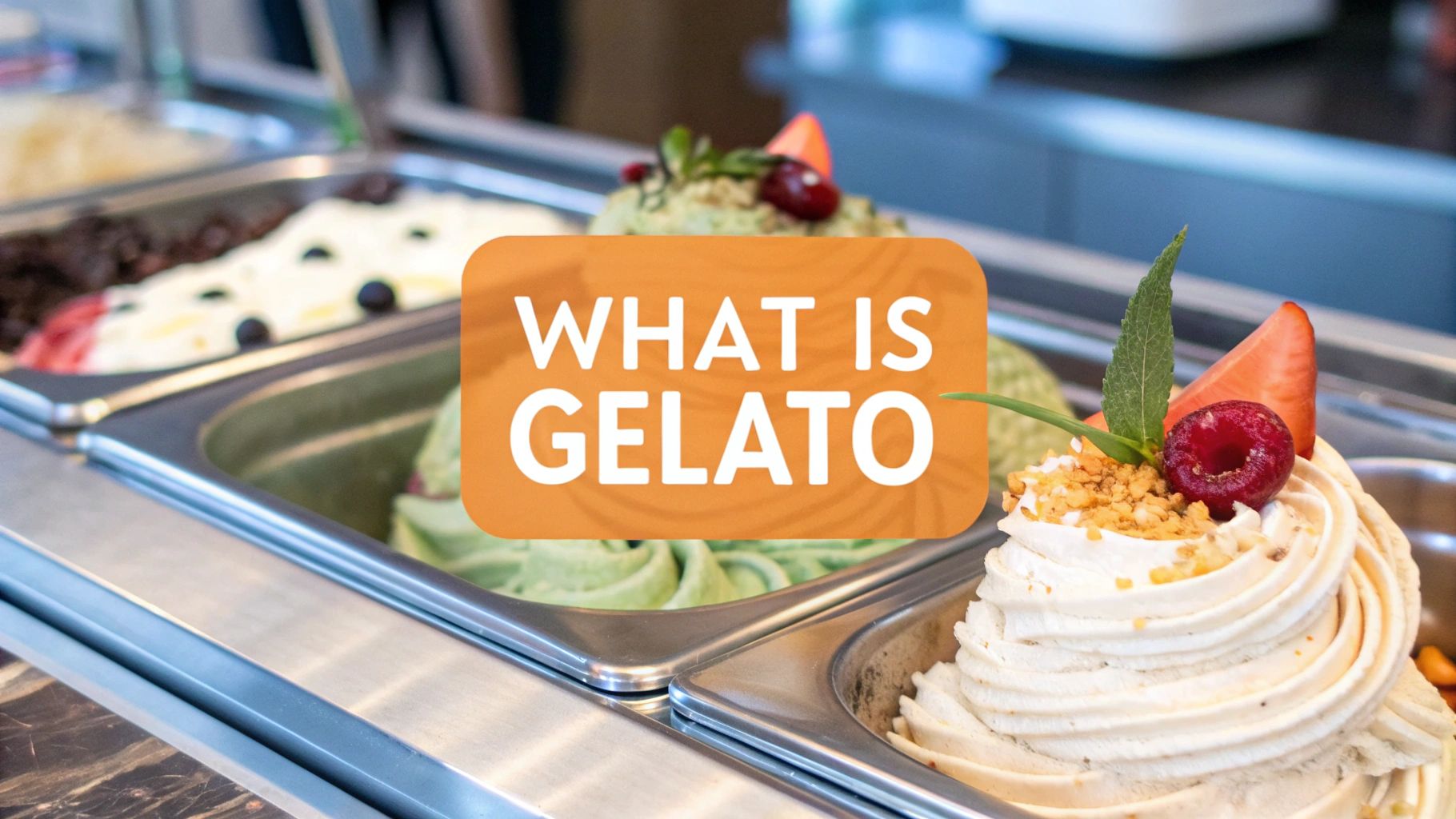
What Is Gelato and Why Is It So Different From Ice Cream?
Alex the juice queen
Alex hunts for the best juice bars and presses. She rates every sip and saves her favorites in Savor.
Let's clear things up right from the start. Gelato isn't just a fancy name for ice cream. Think of it as ice cream’s more sophisticated, flavor-forward...
Let's clear things up right from the start. Gelato isn't just a fancy name for ice cream. Think of it as ice cream’s more sophisticated, flavor-forward Italian cousin.
It’s a traditional frozen dessert obsessed with delivering intense, pure flavor and a dense, silky texture above all else. Its magic comes from a few key differences in how it's made: using more milk than cream, churning it much slower to keep it from getting too airy, and serving it just a bit warmer.
So What Is Gelato Exactly?
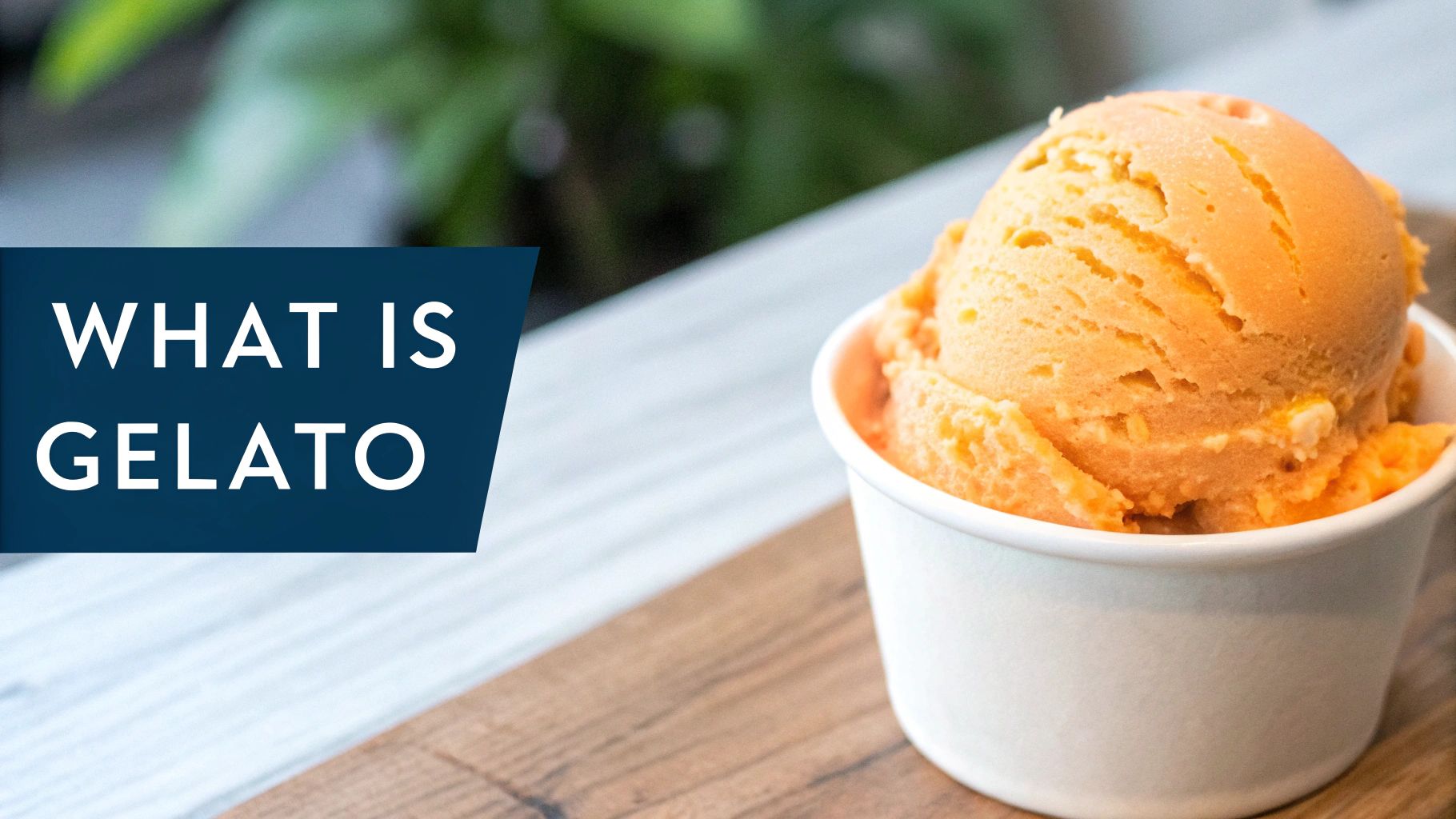
This specific combination creates a richer, smoother experience on your palate, one that allows the star ingredients—like a batch of freshly roasted Sicilian pistachios or sun-ripened raspberries—to really sing.
Every single element, from the serving temperature to the fat content, is carefully dialed in to create a very specific sensory experience. True gelato isn't just about being cold and sweet; it's a craft designed to deliver the most authentic and powerful taste possible. Understanding these small but crucial distinctions is the key to appreciating why a scoop of real, artisanal gelato feels so different from anything else. It also helps you get better at describing what you love, building out your own unique flavor profile as you track and compare your favorite foods.
Gelato vs Ice Cream At a Glance
To give you a quick snapshot, here’s a simple table that breaks down the key differences between traditional Italian gelato and its American-style ice cream counterpart.
| Attribute | Gelato | Ice Cream |
|---|---|---|
| Fat Content | Lower (4-9% butterfat) | Higher (10-25% butterfat) |
| Main Ingredient | Mostly milk | Mostly cream |
| Air Content (Overrun) | Low (25-30%) | High (50-100%) |
| Serving Temperature | Warmer (10-22°F / -12 to -5°C) | Colder (0-10°F / -18 to -12°C) |
| Texture | Dense, silky, and smooth | Lighter, fluffier, and icier |
| Flavor Intensity | More direct and vibrant | Often muted by fat and cold |
As you can see, each of these factors plays a huge role in the final product you taste, which we'll dive into next.
The Art and Science of Making Gelato

Making real gelato is a beautiful dance between art and science, a craft where every single step is deliberate. It all begins with a deceptively simple base of fresh, high-quality ingredients. Unlike a lot of commercial frozen desserts, authentic gelato builds its flavor on whole milk, just a touch of cream, and pure, natural flavorings. There are no artificial shortcuts here.
This dedication to purity means the process itself has to be flawless. The secret weapon is a slow-churning technique the Italians call 'mantecazione'. This method carefully freezes the base while incorporating as little air as possible into the mix. This meticulous, slow churn is what gives gelato its soul. It creates ice crystals that are significantly smaller than those in ice cream, resulting in that famously smooth, dense, and velvety texture that never feels sharp or icy on your tongue.
The Slow Churn Difference
The magic of the slow churn isn't just about texture; it fundamentally reshapes the entire flavor experience. By whipping in far less air—typically just 25-30% overrun, a measure of the air content—the final product is much denser.
This density is the key. It means the star flavors, whether it’s a rich Sicilian pistachio or a bright Amalfi lemon, are more concentrated and powerful. You’re literally getting more flavor and less air in every single spoonful. It’s a purposeful choice that values intensity over sheer volume, which is why even a small scoop of well-made gelato feels so deeply satisfying.
A Focus on Natural Ingredients
Authentic gelato also proudly skips the fillers you might find elsewhere, like high-fructose corn syrup, which has helped build its reputation as a "better-for-you" indulgence. This focus on cleaner labels and natural quality is a huge reason for its booming popularity.
In today's more health-conscious world, gelato stands out. It often contains 20-30% less fat than its ice cream cousin, a distinction that's fueling serious market growth. Projections show the market expanding from USD 16.60 billion in 2025 to USD 22.58 billion by 2030, with the rise of excellent vegan options adding even more momentum. You can dig into the numbers in the full gelato market analysis from Mordor Intelligence. This blend of thoughtful technique and superior ingredients is what elevates gelato from a simple dessert to a true culinary art form.
A Rich History From Renaissance Feasts to Global Craze
The story of gelato is as rich and layered as its flavor, a tale that winds all the way back to 16th-century Florence. Legend points to a brilliant artist and engineer named Bernardo Buontalenti, who is said to have whipped up the first modern gelato around 1565. But this wasn't for the masses—he created his frozen masterpiece for the extravagant, theatrical feasts of the powerful Medici court.
Initially, gelato was an exclusive luxury, a symbol of wealth and refined taste served only at the banquets of Italian nobility. From these royal beginnings, the craft slowly began to trickle out to the public. The real magic happened when artisans started opening their own dedicated shops, or 'gelaterie', turning gelato from a rare indulgence into a beloved part of everyday Italian life. These neighborhood shops quickly became community hubs, each one perfecting its own secret recipes.
From Italian Icon to Worldwide Phenomenon
For centuries, gelato remained a distinctly Italian treasure. But as Italian immigrants began to travel the globe, they brought their most cherished culinary traditions with them. This cultural export introduced gelato to entirely new audiences, who quickly fell hard for its intense flavors and artisanal spirit. This slow, steady spread laid the foundation for the global sensation it is today.
Today, gelato is far more than an Italian dessert; it's a worldwide symbol of craftsmanship and culinary passion. From those early Medici feasts, it has evolved into a massive global industry, valued at a staggering USD 23.48 billion in 2024 and projected to hit USD 36.22 billion by 2033. You can explore more data in the full market report from Grand View Research.
The Enduring Appeal of Authenticity
What drives this unstoppable popularity? It's the deep, unshakable connection to its artisanal heritage. True gelato still embodies the classic Italian principles of using only the highest quality ingredients and preparing them with meticulous care. Whether you're hunting for perfect gelato in Florence or amazing pasta, the focus is always on genuine, time-honored techniques.
This is exactly why documenting your gelato discoveries feels so meaningful. You’re not just eating a dessert; you're tasting a piece of history, one delicious spoonful at a time.
Gelato vs Ice Cream: A Detailed Comparison
While gelato and ice cream might share the same freezer aisle, they are worlds apart. They’re fundamentally different creations, each designed to deliver a distinct sensory experience. To truly appreciate what makes gelato so special, you have to look past the surface and understand the core differences that define each one. Think of it this way: comparing gelato and ice cream is like comparing a finely tuned espresso to a large drip coffee. Both are satisfying, but they are crafted for entirely different moments and palates.
It All Starts With the Ingredients
The most significant distinction lies in their very foundation: ingredients and fat content.
- Ice Cream: Traditional American-style ice cream is built on a foundation of heavy cream. By law in the U.S., it must contain at least 10% butterfat, but premium versions often push that number to 18% or even higher.
- Gelato: Gelato takes the opposite approach. It’s a milk-heavy creation that uses far less cream, resulting in a butterfat content of just 4-9%.
This might sound like a small technicality, but it completely changes the tasting experience. Fat coats the tongue, which can mute the intensity of flavors. With less butterfat getting in the way, gelato allows the pure essence of its ingredients—whether it's rich pistachio, toasted hazelnut, or fresh strawberry—to come through with stunning clarity and vibrancy.
Air Content: The Difference Between Fluffy and Silky
Another critical, but often overlooked, difference is the amount of air whipped into the base during churning. This is a factor known in the industry as "overrun."
- Ice Cream: Ice cream is churned at a high speed, a process that aggressively whips a ton of air into the mixture. This can increase its volume by 50% to over 100%, which is what gives ice cream its characteristically light and fluffy texture.
- Gelato: Gelato is treated with more patience. It’s churned at a much slower, more deliberate pace. This gentle technique minimizes the amount of air folded in, keeping the overrun to a mere 25-30%.
The result is a product that's far denser, richer, and more concentrated in flavor. That low air content is what contributes to gelato's signature silky, luxurious mouthfeel—a quality you just don't find in its airier cousin.
Temperature is Everything
Finally, we have to talk about temperature, a crucial factor that dictates both texture and taste.
- Ice Cream: Ice cream is served at a frigid 0-10°F (-18 to -12°C). This deep freeze is necessary to keep its high-fat structure solid and scoopable. The downside? That intense cold numbs your taste buds, further dulling its flavor profile.
- Gelato: Gelato is served significantly warmer, typically between 10-22°F (-12 to -5°C). This warmer temperature gives gelato its famous soft, elastic texture and allows your palate to perceive the flavors more fully without being shocked by cold. It’s the very reason you rarely get "brain freeze" from a scoop of gelato.
Of course, whether you're serving gelato or ice cream, proper temperature control is key. Both desserts require precise storage to maintain their ideal texture and flavor, which is why professionals rely on specialized commercial frozen dessert storage solutions.
This timeline traces gelato's journey from its Florentine origins in 1565, through its global expansion by 2024, to its projected future growth by 2033. The visualization highlights how a dessert born in the Renaissance has become a global culinary staple, with a future focused on continued innovation and market expansion.
How to Spot Authentic Gelato Like an Expert
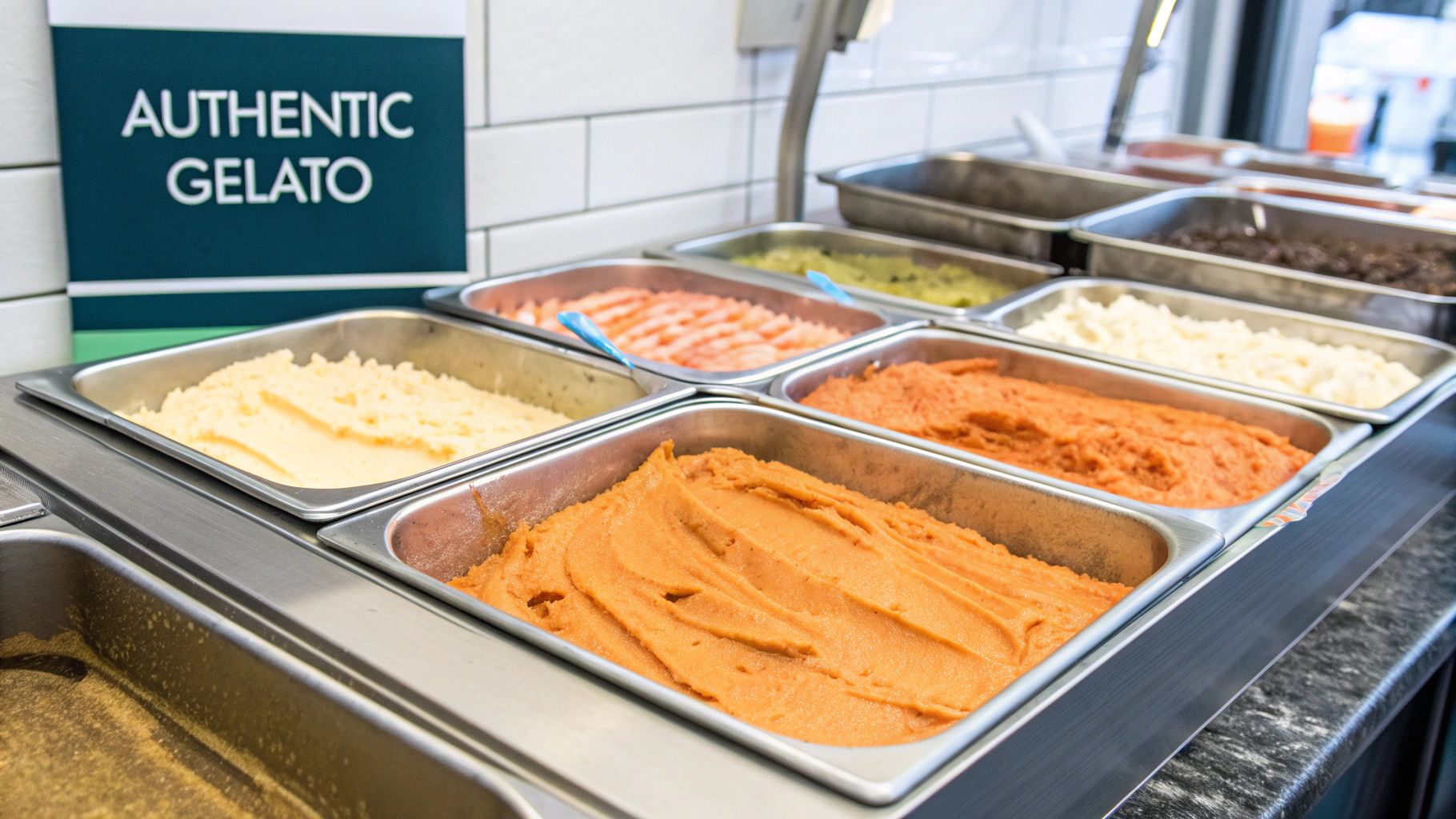
Walking through the vibrant streets of an Italian city, you're faced with a delicious dilemma. Every corner seems to have a gelateria, but how do you separate the real artisans from the tourist traps? It's easier than you think. With a few key visual cues, you can learn to spot high-quality, authentic gelato and avoid the disappointing imitations.
First things first: look at how the gelato is presented. Real, artisanal gelato is dense, so it should never be piled high in giant, gravity-defying mounds. Those impressive-looking mountains of brightly colored fluff are a huge red flag—they’re pumped full of air and stabilizers. Instead, look for gelato stored flat in simple stainless steel pans or, even better, in lidded metal tubs called 'pozzetti'. These protect the gelato from air and light, preserving its perfect texture.
Decoding the Colors and Flavors
Next, judge the colors. Authentic gelato gets its color only from its ingredients, so the hues should be natural and subtle—never electric or neon.
- Pistachio: This is the ultimate test. Real pistachio gelato should be a pale, earthy, brownish-green, not bright artificial green.
- Banana: Look for a grayish-white or creamy off-white color. If it’s vibrant yellow, it’s fake.
- Mint: True mint gelato, infused with actual mint leaves, should be white.
- Lemon: Expect a pale, creamy yellow or almost-white sorbetto, not a shocking, fluorescent yellow.
Finally, take a quick glance at the menu. A quality gelateria focuses on a curated selection of classic Italian flavors and seasonal specialties made with fresh, local fruit. Look for mainstays like Stracciatella (vanilla with chocolate shavings), Nocciola (hazelnut), and Amarena (vanilla with sour cherries). Seeing these classics done right is a sign you're in good hands. To really master this skill, you sometimes have to venture off the beaten path and explore hidden gems in Italy, where the most traditional gelaterie are often found.
Document Your Own Gelato Discoveries
A truly great scoop of gelato is more than just a dessert. It’s a memory in the making. The right flavor can instantly teleport you back to a sun-drenched Italian piazza or a beloved local shop. Instead of letting those moments fade, you can start documenting them, building a personal chronicle of your culinary journey.
This isn’t about being a food critic or chasing trends. It’s about celebrating your own palate and what you enjoy. Think of it as creating a personal flavor map—a way to compare that perfect hazelnut gelato you found in Rome with a new discovery back home. By tracking your tastes, you’re telling a story only you can tell.
Start Your Personal Flavor Log
Keeping a record of your gelato experiences helps you pinpoint exactly what makes a scoop unforgettable. Was it the impossibly creamy texture? The intense, true-to-life flavor? The unique combination of ingredients? Documenting these details turns a fleeting taste into a lasting memory you can revisit and share.
- Note the Details: Jot down the flavor, the name of the gelateria, its location, and the date.
- Rate Your Experience: Use a simple scoring system to remember how much you loved it.
- Capture the Moment: Snap a quick photo to remember the color, texture, and presentation.
Tools like a dedicated food finding app make this process simple, allowing you to build a searchable database of your favorite scoops right from your phone. With e-commerce channels in the gelato market growing at a 9.3% CAGR, travelers can instantly log their gelato adventures, snapping a photo of a pistachio scoop in Tokyo and rating it against a memory from Milan. This creates personalized lists that are far more meaningful than generic online reviews. You can find more details in the latest gelato market insights from Fortune Business Insights.
So the next time you find a scoop worth remembering, take a moment to save it. Rate like a critic, and add another delicious chapter to your own food story.
A Few Lingering Questions About Gelato
Even after you've learned the history and the science, a few practical questions always seem to pop up. Think of these as the final, delicious details that will help you appreciate every spoonful, whether you’re standing in a piazza in Florence or visiting your new favorite local spot. Let's clear up some of the most common curiosities.
Is Gelato Actually Healthier Than Ice Cream?
While "healthy" is always a tricky word, gelato generally has a better nutritional profile than its American counterpart. When you get down to the numbers, it typically has fewer calories, less sugar, and significantly less fat. The reason is simple: its foundation is milk, not cream. This simple swap means you get a lighter, cleaner-tasting treat without sacrificing any of the rich flavor you're after.
Can You Find Dairy-Free or Vegan Gelato?
Absolutely. While the classic creme flavors are milk-based, Italian tradition has always had a dairy-free side, and modern gelaterie are constantly innovating.
- Sorbetto: This is the original dairy-free frozen dessert. True sorbetto is nothing more than water, sugar, and high-quality fruit. The result is an incredibly pure and intense flavor that’s both refreshing and satisfying.
- Plant-Based Gelato: As demand has grown, many shops now craft creamy vegan gelato using alternatives like almond, coconut, or oat milk. A skilled gelato maker can use these to create a texture that’s nearly indistinguishable from the real thing.
Why Does Good Gelato Cost So Much?
That higher price tag isn't just for show—it's a direct reflection of the quality and craftsmanship behind each batch. Think of it as paying for an artisanal product, not a factory-made dessert. The cost comes down to a few key factors: premium ingredients (like pistachios imported from Sicily), the time-consuming, small-batch process, and the specialized equipment required to churn it so slowly. You’re paying for a handcrafted experience, and you can taste the difference.
Ready to document your own gelato adventures and build a personal flavor map? With Savor, you can turn every scoop into a lasting memory. Track tastes, share discoveries and rate like a critic.