
A Food Lover’s Guide to the Best Chocolate in the World
Harry the matcha king
Harry is our resident matcha obsessive. He’s tasted hundreds of bowls and tracks every cup in Savor.
Trying to find the best chocolate in the world isn't about crowning a single champion. Instead, the real answer is deeply personal, often discovered in a...
Trying to find the best chocolate in the world isn't about crowning a single champion. Instead, the real answer is deeply personal, often discovered in a single bar where you can taste its entire story—much like a great wine tells you about its vineyard. True quality isn’t a mystery; it’s a direct result of the cacao’s genetics, the unique place it grew, and the masterful touch of the chocolatier who turned it into a bar.
This guide is for anyone curious about what makes a chocolate bar truly special. It’s not about being a snob; it’s about appreciating the incredible craft that goes into the good stuff and, more importantly, figuring out what you actually love.
What Defines World-Class Chocolate
The world’s love for chocolate is massive. The global market is valued at roughly $148 billion in 2024, a number that speaks volumes about its universal appeal. You can dig into more data on the global chocolate market to see just how deep this passion runs.
But within that huge industry, there's a world of difference between an everyday snack and a bar that can change how you think about flavor. To find the best, you have to look past the pretty wrapper and understand what really creates an exceptional experience. This is where you learn to tell the difference between a mass-produced candy bar and a genuine artisanal treasure.
The Four Pillars of Quality
Think of truly world-class chocolate as a symphony where four key players have to be in perfect harmony. If one is off-key, the whole thing falls apart. These are the pillars that support every great bar of chocolate, and understanding them is the first step toward tasting like an expert.
It's helpful to organize these concepts into a simple framework. The table below breaks down the four essential elements that separate the good from the unforgettable.
The Four Pillars of World-Class Chocolate
| Pillar | What It Means | Why It Matters for Flavor |
|---|---|---|
| Cacao Genetics | The specific type of cacao bean used. | This is the chocolate’s DNA. Rare Criollo beans offer complex, delicate notes, while robust Forastero provides that classic, deep "chocolatey" flavor. |
| Terroir | The "somewhere-ness"—the soil, climate, and altitude of where the cacao grew. | This gives chocolate its regional accent. A bar from Madagascar might burst with bright citrus, while one from Ecuador could be floral and nutty. |
| Post-Harvest Processing | How the beans are fermented and dried immediately after harvest. | This is where flavor is born. Good fermentation develops the building blocks of taste; bad fermentation can ruin even the world’s best beans. |
| Chocolatier's Skill | The art of roasting, grinding, and tempering the beans into a finished bar. | This is the final performance. A skilled chocolatier unlocks all the potential created in the first three stages, turning great beans into a sublime bar. |
Keeping these four pillars in mind is your secret weapon. They give you a framework to rate like a critic and start building a personal map of what you love. The goal is to track tastes, share discoveries, and create a catalog of your experiences that ultimately leads you to your personal best chocolate in the world.
From Cacao Bean to Chocolate Bar
Every truly exceptional chocolate bar—the kind you think about long after the last piece is gone—starts its life as a humble cacao bean. The journey from a pod growing in the tropics to a polished bar is a delicate dance between nature, science, and art, where every single step dramatically shapes the final flavor. Pulling back the curtain on this process gives you a whole new appreciation for the craft and, more importantly, helps you spot true quality.
The search for the world's best chocolate begins with the bean itself. While there are thousands of local varieties, most fall into three main families, each with its own distinct personality. The easiest way to think about them is like grape varieties in wine; you wouldn't expect a Cabernet Sauvignon to taste like a Pinot Grigio, and the same principle applies here.
This flowchart breaks down the essential journey from raw ingredient to finished product, showing how the bean, the environment (terroir), and the maker's skill all intersect.
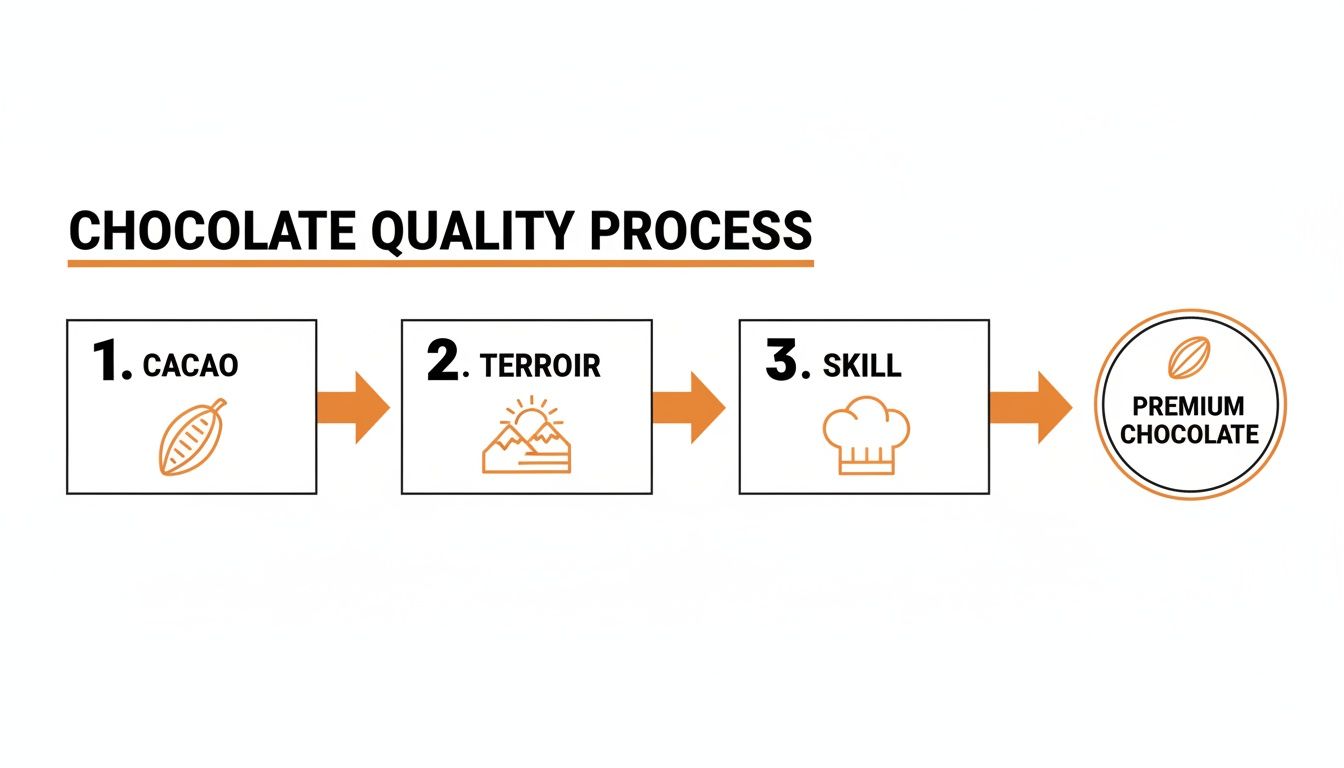
As you can see, a great bar isn't just about a good bean; it’s about protecting and enhancing its potential at every stage, from the moment it's picked on the farm to the final touches in the chocolatier's workshop.
The Three Families of Cacao
Just as you might log your favorite coffee origins or wine regions in your Savor food diary, getting to know the primary cacao types is the first real step in mapping out your chocolate palate. Each one brings something totally unique to the table.
- Criollo (The Rare Aristocrat): This is the prized vintage of the cacao world, making up less than 5% of global production. Criollo beans are naturally low in bitterness and high in complex secondary notes like nuts, caramel, and red fruits. If you find a bar made with pure Criollo, you’re holding something special.
- Forastero (The Robust Workhorse): This is the bean behind that classic, deep "chocolatey" flavor we all know and love. It’s hardy, high-yielding, and accounts for over 80% of the world’s cacao. While it’s often used for bulk industrial chocolate, high-quality Forastero—especially the Arriba Nacional variety from Ecuador—can be wonderfully floral and nuanced.
- Trinitario (The Versatile Hybrid): A natural cross between Criollo and Forastero, Trinitario really does combine the best of both worlds. It has the robust, reliable nature of Forastero but carries many of the complex fruity and floral notes of Criollo, making it a huge favorite among craft chocolate makers.
If Forastero is a dependable, crowd-pleasing table grape, then Criollo is a prized Pinot Noir—temperamental, expressive, and capable of extraordinary nuance. Trinitario sits beautifully right in the middle, offering a fantastic range of possibilities for makers to play with.
Unlocking Flavor After the Harvest
Once the cacao pods are harvested, the real magic starts to happen. The steps taken immediately after picking are arguably the most critical for developing flavor. A chocolatier can’t add notes that weren't created here; they can only work with what the farm gives them.
The first crucial stage is fermentation. Beans are scooped out of the pods, pulp and all, and placed in wooden boxes or piled under banana leaves for several days. This process kills the bean's germ, breaks down intensely bitter compounds, and builds the essential flavor precursors—the very building blocks of taste. Botch the fermentation, and you'll get a flat, acidic, or rubbery taste that no amount of skill can fix later on.
After fermentation, the beans must be dried carefully, usually under the sun, to reduce their moisture content from around 60% all the way down to just 7%. This stops the fermentation process and makes the beans stable enough for transport. Dry them too quickly, and the beans can lock in a harsh, acidic flavor. Too slowly, and they can develop mold. It’s a true balancing act.
The Chocolatier’s Art and Skill
When the dried beans finally reach the chocolatier, the final transformation begins. This is where meticulous craft and precision come into play, turning a raw agricultural product into a luxurious treat.
The first major step is roasting. Much like roasting coffee, this is where the final flavor profile is developed, bringing out all those nutty, fruity, or floral notes that were created during fermentation. A light roast might preserve a bean's delicate acidity, while a darker roast will create deeper, more classic cocoa flavors.
Next, the roasted beans are cracked open, and their papery shells are removed in a process called winnowing. The remaining nibs are then ground into a thick, gritty paste called chocolate liquor. This liquor is then mixed with sugar, extra cocoa butter, and sometimes milk powder. The final, crucial step is conching—a process of continuous mixing, grinding, and aerating that refines the texture and mellows out any remaining harsh flavors. The longer a chocolate is conched, sometimes for up to 72 hours, the smoother and more luxurious its texture will be.
From the genetics of the bean to the final conching time, every choice matters. It’s this meticulous, fascinating journey that makes discovering the best chocolate in the world such a rewarding experience—one worth tracking, one bite at a time.
Exploring the World’s Premier Chocolate Regions
Just like a wine lover can tell you the difference between a Bordeaux and a Burgundy, or a coffee aficionado knows exactly what to expect from an Ethiopian bean, the world of fine chocolate is all about geography. The best cacao grows in a very specific part of the world, a slice of the globe known as the “Cacao Belt,” which wraps around the equator about 20 degrees north and south.
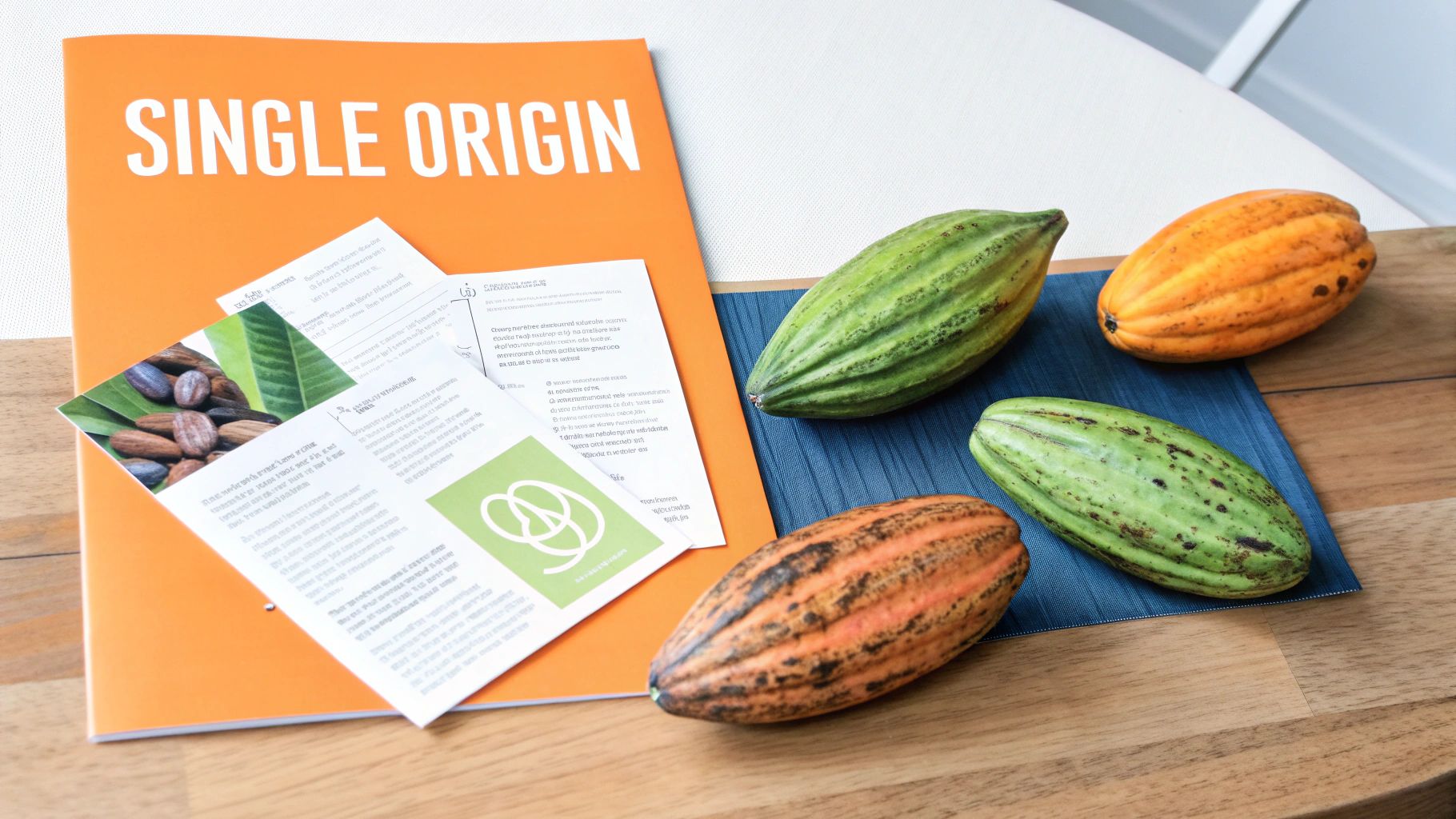
But it’s the unique terroir within this belt—that magical blend of soil, climate, and local farming practices—that gives each region's chocolate its own distinct personality. Knowing these regions is like having a cheat sheet for the chocolate aisle. Instead of grabbing a bar at random, you can start picking single-origin chocolates based on the specific flavors you're in the mood for.
Ecuador: The Floral and Nutty Heartbeat
Ecuador is home to a national treasure: the Arriba Nacional cacao bean. This isn't your average Forastero bean; it’s renowned for its delicate, complex aromas, a world away from the bold, straightforward chocolate notes you might be used to. The country's consistent rainfall and rich volcanic soil work together to coax out beautiful floral and nutty notes.
When you taste a single-origin bar from Ecuador, you're looking for:
- Distinct floral aromas, often compared to jasmine or orange blossom.
- Subtle hints of nuts and a background of dark fruit.
- A smooth, well-balanced finish that is both rich and surprisingly delicate.
This is the perfect place to start if you enjoy chocolate that's more nuanced and aromatic than intensely powerful. It’s a masterclass in how terroir can elevate a common bean into something truly extraordinary.
Peru: The Bright and Fruity Amazonian Gem
Peruvian chocolate is a vibrant explosion of flavor, a direct reflection of the incredible biodiversity of its Amazonian growing regions. The country is a hotspot for rare and native cacao varieties, many of which were rediscovered and saved from extinction by passionate farmers and chocolate makers.
The result is a chocolate that’s often bright, acidic, and bursting with fruit-forward notes. Forget that deep, classic cocoa flavor for a moment; this is a lively, dynamic experience that can completely redefine what you expect from a dark chocolate bar. Think of Peruvian chocolate as the Sauvignon Blanc of the cacao world—crisp, zesty, and full of character.
Venezuela: The Legendary Criollo Sanctuary
For chocolate purists, Venezuela is hallowed ground. This is the ancestral home of some of the world's rarest and most sought-after Criollo beans, especially from legendary regions like Chuao and Porcelana. For centuries, these beans have been the gold standard for luxury chocolate, prized for their near-total lack of bitterness and their incredibly complex secondary flavors.
A bar made with Venezuelan Criollo is an event. Expect a symphony of delicate notes, including:
- Caramel and cream undertones.
- Hints of dried fruit, nuts, and subtle spice.
- An exceptionally smooth, lingering finish that evolves on the palate.
Because they’re so rare, these chocolates often come with a higher price tag, but they offer an unparalleled tasting experience that’s a must for any serious enthusiast. They are a direct link to the historical roots of fine chocolate.
Madagascar: The Tangy and Citrus-Forward Island
Madagascar is unmistakable. The island's unique soil and climate conditions produce cacao with a signature flavor profile you won't find anywhere else in the world: a bright, zesty tanginess. This is mainly due to the Trinitario beans that thrive there, developing a pronounced red fruit and citrus acidity during the fermentation process.
Tasting a Madagascan bar is a wake-up call for your palate. You'll immediately notice a sharp, clean burst of flavor reminiscent of raspberries, cherries, or grapefruit, followed by a rich cocoa base.
As you explore these regional flavors, it’s fascinating to see how different tropical areas produce their own unique culinary signatures. For a taste of another vibrant tropical food culture, you can learn more about the diverse dishes in the Dominican Republic. It’s a fantastic way to track tastes and share discoveries across different cuisines.
How to Taste Chocolate Like a Professional
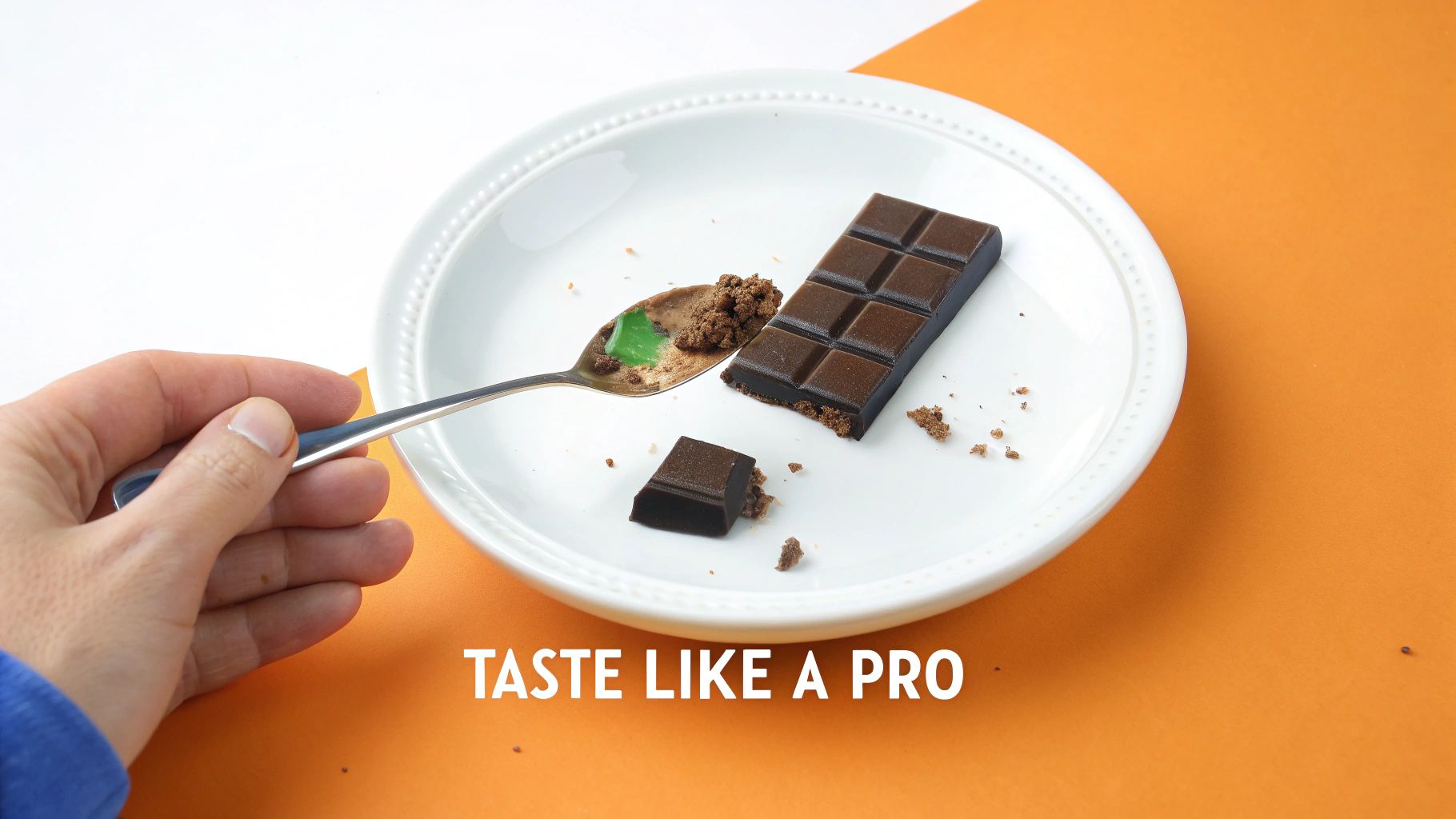
Ready to get more out of every single bar you try? Tasting chocolate like a pro isn't about being snobby or using a bunch of fancy jargon. It's really just about slowing down and paying attention. It’s a simple practice that turns a quick treat into a genuine discovery.
This little ritual can completely change your relationship with chocolate. You'll start using all your senses to understand the full story the maker is trying to tell. It’s a skill that helps you pinpoint exactly what you love, making it so much easier to find the best chocolate in the world for your own unique palate.
The Four Steps of Intentional Tasting
Long before you even take a bite, the chocolate has a lot to tell you. By following these four simple steps, you engage your senses in a specific order, building a complete picture of the chocolate’s quality and character.
Look (Sight): A well-tempered, high-quality bar should have a glossy, even sheen. It shouldn't look dull, chalky, or streaky. The color needs to be consistent, which often hints at its cacao percentage and where the beans came from.
Snap (Sound): Now, break off a piece. A top-tier chocolate bar makes a sharp, clean snap. That sound is a dead giveaway for good tempering and a high cocoa butter content, which is what gives you that incredible, smooth texture. If it just bends or crumbles, it’s likely a sign of lower quality or that it wasn't stored properly.
Smell (Aroma): Before you even think about tasting, bring the piece up to your nose and take a deep breath. What do you pick up? You might notice hints of roasted nuts, fresh berries, damp earth, or even coffee. It's a critical step—over 80% of what we think of as flavor actually comes from our sense of smell.
Taste (Flavor): Finally. Place that small piece on your tongue and fight the urge to chew right away. Just let it melt. As the cocoa butter melts, it releases a whole wave of complex flavors across your palate. Pay attention to how the taste evolves from the first notes to the lingering finish.
Building Your Flavor Vocabulary
Putting words to what you're tasting is the best way to remember and compare different chocolates. As the bar melts, try to identify its flavor profile. If you want to get a better handle on this, check out our guide that explores what a flavor profile is and how to start picking out its different parts.
To get you started, here's a simple table that organizes some common flavor notes into families. Think of it as a cheat sheet for your taste buds.
A Beginner's Chocolate Tasting Wheel
| Flavor Family | Common Descriptors | Example Origin |
|---|---|---|
| Fruity | Raspberry, cherry, citrus, raisin, apricot | Madagascar, Peru |
| Nutty | Roasted almond, hazelnut, walnut, cashew | Ecuador, Brazil |
| Earthy | Soil, mushroom, leather, tobacco, wood | Papua New Guinea |
| Floral | Jasmine, rose, orange blossom, lavender | Ecuador (Arriba Nacional) |
| Spicy | Cinnamon, black pepper, anise, clove | Venezuela, Mexico |
| Caramel | Brown sugar, toffee, honey, butterscotch | Dominican Republic |
Once you start using these words, you'll find it much easier to pinpoint what makes one bar different from another. The point isn’t just to ask, "Do I like this?" but to ask, "What do I taste?" Is it the bright acidity of a Madagascan bar or the creamy nuttiness of a Venezuelan Criollo? Answering that question is the first step to building your personal flavor library.
Beyond the Bar
Tasting is a skill that gets better with practice. Once you feel more confident, you can start digging into more advanced flavor dimensions. For a real challenge that will sharpen your palate, try creating some perfect chocolate and wine pairings. It's a fantastic way to train yourself to pick up on subtle notes and how different flavors complement each other.
Every time you log a tasting in your food memory database, you’re doing more than just recording a snack. You are building a detailed map of your own palate, allowing you to track tastes and share discoveries with real precision and confidence.
Recognizing Ethical and Award-Winning Chocolate
Truly great chocolate tells a story that goes far beyond its flavor. It’s a story about the land where the cacao was grown, the fairness with which its farmers were treated, and the skill of the maker who transformed it. The world's best chocolate doesn't just taste good; it does good.
This is where ethical sourcing and industry awards become your most trusted guides. Think of them as reliable signposts on your journey, pointing you toward producers who are deeply committed to sustainability, fairness, and masterful craftsmanship. Learning to spot these signals is what turns you from a casual chocolate eater into a conscious connoisseur.
What Those Labels on the Wrapper Actually Mean
When you see a certification on a chocolate bar, it’s not just a logo—it’s a promise. These labels give you a peek behind the curtain of the supply chain, helping you put your money behind companies that prioritize both people and the planet.
Here are the key certifications to look for and what they stand for:
- Fair Trade: This is one of the most familiar seals, and its main goal is to ensure farmers get a fair, stable price for their cacao. It also champions community development and enforces strict standards against child and forced labor, fostering more balanced trading relationships.
- Direct Trade: With this model, chocolatiers cut out the middlemen and buy beans straight from the farmers or their co-ops. This often means farmers earn a much higher price for their crop and builds a powerful, collaborative relationship that improves cacao quality over time.
- Rainforest Alliance: That little green frog logo means the cacao was grown on farms that meet tough standards for environmental, social, and economic sustainability. It's all about protecting biodiversity, conserving natural resources, and promoting the well-being of workers.
The Oscars of the Chocolate World
Just like the film industry has the Academy Awards, the fine chocolate world has its own prestigious competitions where experts gather to crown the year’s most exceptional creations. Spotting one of these awards on a bar is a trusted shortcut to discovering true excellence. It means that bar has been blind-tasted and vetted by some of the sharpest palates on the planet.
Winning an international award is a clear signal of a chocolatier's obsession with quality. It's confirmation that they have mastered every single step of the process, from sourcing phenomenal beans to executing a perfect roast and conche. Keep an eye out for these two major awards when you’re shopping:
- Academy of Chocolate Awards: Based in the UK, this influential group judges thousands of entries from all over the globe, handing out bronze, silver, and gold medals to the absolute best in each category.
- International Chocolate Awards: This is a massive global competition with regional rounds leading up to a World Final. A win here is a huge honor and a rock-solid indicator of world-class quality and innovation.
By learning to recognize these ethical labels and awards, you add powerful new tools to your tasting toolkit. It’s another way to track tastes, share discoveries, and build a collection of chocolates you can feel genuinely great about enjoying.
Building Your Personal Chocolate Library
Your journey to find the world's best chocolate is a personal story—a chronicle of flavors and discoveries far too good to forget. But how many times have you tasted something incredible, only to completely forget its name a month later?
This is where a dedicated food journal becomes your most essential tool. By logging each chocolate bar you try, you’re not just keeping a list. You're building a powerful, personal "flavor library" of your own experiences. You'll move from simply liking something to understanding exactly what makes it so special.
Turning Tastings Into a Searchable Story
The process is simple, but its effect is profound. The next time you try a new chocolate, just take a moment to capture the key details. This isn't about writing a formal review; it's about creating a memory anchor you can come back to.
Start with the basics:
- The Chocolate's Identity: Jot down the brand, the cacao's origin (like Madagascar 72%), and any key details like "bean-to-bar" or "single origin."
- A Quick Photo: Snap a picture of the wrapper and the bar itself. A visual cue is often the fastest way to bring a memory back to life.
- Your Personal Rating: Give it a score that makes sense to you. This simple number helps you instantly sort your absolute favorites from the ones you wouldn't buy again.
Here’s a look at what a detailed entry can capture in a private food diary app.
An entry like this captures more than just a rating; it saves the context—the who, what, and where—that makes a food memory truly meaningful.
Comparing Tastes and Discovering Your Palate
Once you start building this library, its true power begins to shine. Instead of relying on a fuzzy memory, you can directly compare experiences with perfect clarity. You can pull up every 70% bar from Peru you’ve ever tried and see which one really stood out. Did you prefer the one with nutty notes, or the one that was more fruit-forward?
This simple practice transforms you from a passive consumer into an active taster. You’re no longer just eating chocolate; you’re mapping your own palate, spotting patterns, and sharpening your ability to recognize true quality. You’ll start noticing the subtle differences between a chocolatier who favors a light roast and one who goes for a darker, more intense flavor profile. For a deeper look at this, our guide on using a dish tracking app to build your taste memory has more practical tips.
The goal isn’t to find one single "best" chocolate in the world. It's to build a personal, trusted catalog of what is best for you, based on your own documented experiences. Track tastes, share discoveries—starting with your own. Over time, this library becomes more than just a list. It's a chronicle of your travels, a log of special occasions, and a detailed map of your evolving tastes.
Your Top Gourmet Chocolate Questions, Answered
As you venture deeper into the world of craft chocolate, a few questions always pop up. Understanding the finer points of buying, storing, and truly tasting these incredible bars is all part of the fun. Let’s clear up some of the most common curiosities.
Cacao Percentage and Quality
Does a higher cacao percentage mean better chocolate?
Not necessarily. A high percentage like 85% simply tells you there's more cacao and less sugar in the bar. It promises a more intense, less sweet flavor, but that's about it.
True quality comes down to the bean itself—its origin, its genetics, and how skillfully the chocolate maker handled it. A beautifully crafted 70% bar made from exceptional beans will always taste better than a harsh, bitter 85% bar made from low-grade, poorly processed cacao. Think of percentage as a measure of intensity, not a badge of quality.
The White Chocolate Debate
So, is white chocolate really chocolate?
This is a hot-button issue among chocolate lovers. White chocolate is made from cocoa butter—the rich, flavorful fat pressed from the cacao bean—along with sugar and milk.
What's missing? The cocoa solids. Those are the non-fat parts of the bean that give dark and milk chocolate their signature flavor and deep brown color. Because it comes from the cacao plant, it's definitely in the family. But some purists see it more as a "chocolate confection" than true, deep-flavored chocolate.
Proper Chocolate Storage
What’s the best way to store my fancy chocolate bars?
Treat them like a fine wine. The ideal spot is a cool, dark, and dry place, somewhere between 60-68°F (15-20°C).
The refrigerator is your enemy here. Too much moisture and cold can cause "sugar bloom"—that gritty, white film you sometimes see. Plus, chocolate is like a sponge for odors, and nobody wants their single-origin bar to taste like last night's leftovers. An airtight container tucked away in a pantry is perfect for keeping its flavor and silky texture intact.
And while we're talking about enjoying chocolate, its role in celebrations is huge. For a different perspective, checking out creative chocolate fountain ideas shows just how versatile and fun it can be beyond the bar.
Ready to start documenting your own tasting journey? With Savor, you can track every bar you try, make notes on its unique flavors, and build a personal library of your discoveries. Download the app and find your version of the best chocolate in the world today.