
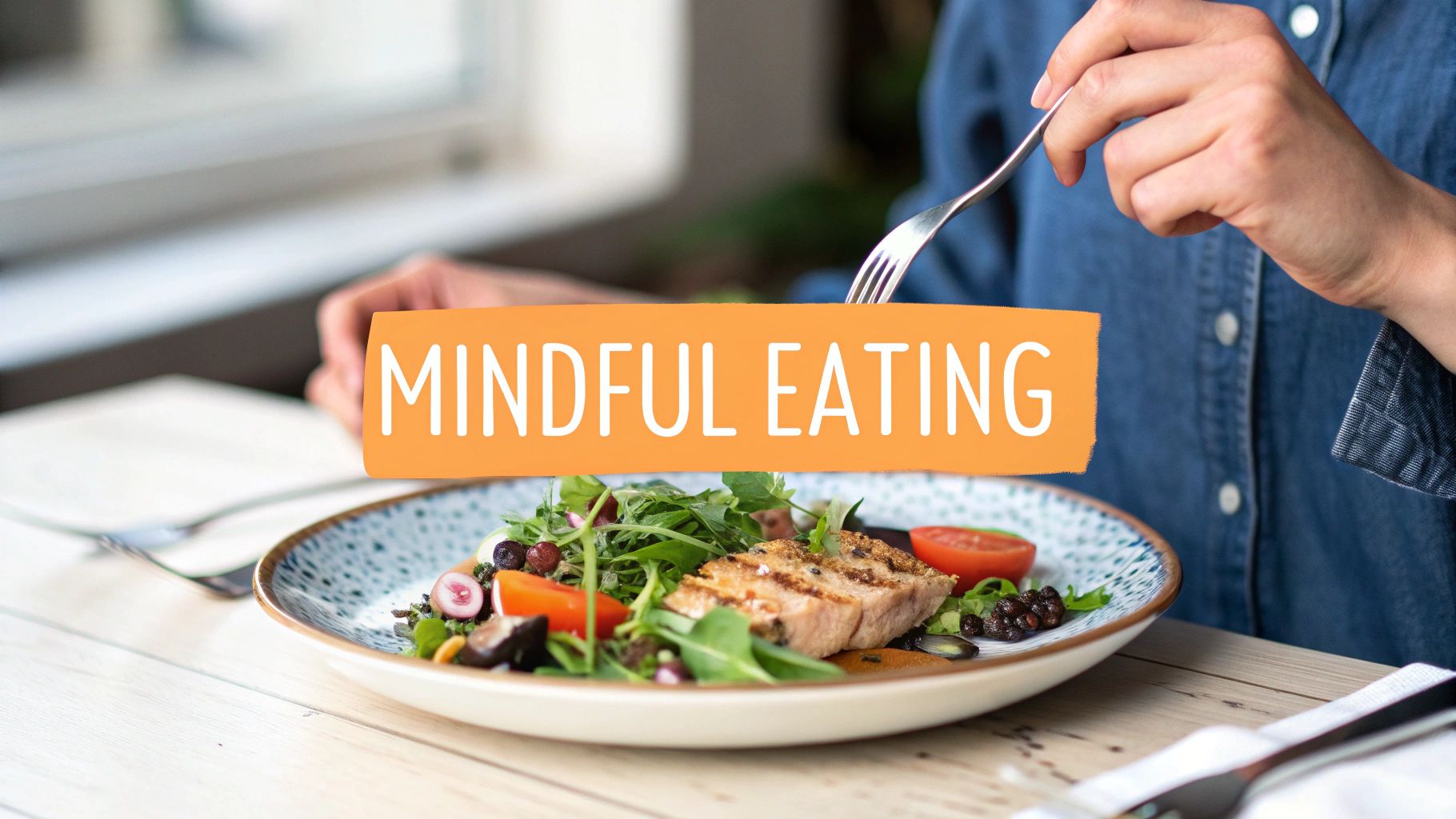
How to Practice Mindful Eating and Truly Savor Every Bite
John the smoothie monster
John lives for smoothie bowls and cold-pressed juices. He uses Savor to remember his best blends.
Mindful eating is all about being fully present with your food . It means paying attention to the taste, smell, and texture of what you’re eating and listening...
Mindful eating is all about being fully present with your food. It means paying attention to the taste, smell, and texture of what you’re eating and listening to your body’s actual hunger signals. Think of it less like a diet and more like a shift in awareness. It’s a way to reconnect with the simple experience of eating, helping you enjoy your meals more and understand what your body truly needs.
What Is Mindful Eating and Why Does It Matter
In a world where we eat while scrolling, driving, or staring at a laptop, mindful eating is a powerful antidote. It’s the simple act of bringing your full, non-judgmental attention to your meal. It’s an invitation to slow down and build a healthier, more intentional relationship with what’s on your plate.
Instead of obsessing over rules, mindful eating is about observation. It helps you notice the crucial difference between physical hunger and emotional triggers like stress or boredom. The whole idea is grounded in the broader concept of practicing mindfulness daily, which sets the foundation for this entire approach.
The Real Benefits of Paying Attention
When you eat mindfully, you’re not just fueling your body; you’re taking care of your overall well-being. This small change in awareness brings some surprisingly practical benefits that can fit into any lifestyle, from busy parents to frequent travelers.
- Improved Digestion: Simply eating slower and chewing more thoroughly gives your digestive system the time it needs to work properly, which can go a long way in reducing discomfort and bloating.
- Reduced Stress: Turning your meal into a moment of calm focus can be a genuine mental break, helping to lower your stress levels throughout the day.
- Better Hunger Cue Recognition: You get much better at telling the difference between true, physical hunger and a passing craving, empowering you to give your body what it actually needs.
- Greater Food Enjoyment: By engaging all of your senses, you can discover new flavors and textures even in familiar foods. An ordinary meal can become a genuinely rich experience.
This approach isn't about perfection; it's about presence. It’s a tool for anyone looking to build a healthier, more joyful connection with their food and body.
It’s no surprise this practice is catching on as more people move away from rigid diets. Consumers are ditching calorie counting—which is tied to feelings of guilt in 70% of dieters—for more intuitive approaches that are twice as effective for long-term weight management. Mindful eating, in particular, has been shown to reduce binge eating by 40% by helping people recognize their emotional triggers.
This is a key part of a much larger wellness movement, which you can dive into in our guide on how to start intuitive eating.
Your First Steps Into Mindful Eating

Starting a mindful eating practice doesn't require a special retreat or a complete life overhaul. It begins with your very next meal and a quiet intention to just pay attention. The goal isn’t perfection; it’s presence.
The first, and maybe most powerful, step is to create a pocket of peace. This might feel awkward at first, but it’s crucial. Turn off the TV. Put your phone on silent and move it out of arm’s reach. Close the laptop. Give yourself the gift of a few minutes dedicated solely to the experience of eating. This simple act clears the way for you to actually connect with your food and your body.
Engage Your Senses
With distractions out of the way, you can dive into the core of the practice: engaging all your senses. Before you even take a bite, just look at your plate. This simple act transforms eating from an automatic habit into a conscious, sensory experience.
- Sight: Really look at the colors and shapes. Notice the vibrant green of the lettuce, the deep red of a tomato, or the golden crust on a piece of bread. Appreciate the visual appeal of what’s in front of you.
- Smell: Bring the plate closer and inhale. What aromas do you notice? Is it the earthy scent of roasted vegetables, the zesty fragrance of lemon, or the comforting smell of warm spices?
- Touch: Pay attention to texture. Feel the weight of your fork or the warmth of a mug in your hands. Notice the crispness of a cracker or the smoothness of yogurt on your tongue.
- Sound: Listen to the sounds your food makes. Hear the crunch of a fresh apple, the sizzle of a hot dish, or the gentle clink of your spoon against the bowl.
- Taste: Finally, take that first bite and let it linger. Chew slowly. Try to identify all the different flavors—sweet, salty, sour, bitter, and umami. Notice how the taste changes and evolves.
This sensory exploration isn't just a mental exercise; it directly impacts your well-being. A recent Kaiser Family Foundation survey found 58% of US consumers now prioritize stricter limits on food chemicals, a sentiment that aligns perfectly with mindful eating's focus on real, nutrient-dense choices.
By eating slowly, you can improve digestion by 20-30%, giving your body's enzymes time to work more efficiently. This simple change can help reduce the bloating that affects 40% of fast-paced urban eaters. You can discover more insights on nutrition trends from the Global Wellness Institute.
Check In and Reflect
Mindful eating is also about listening to your body. A great way to start is by trying a "mid-meal pause." About halfway through eating, just put your utensils down and take a breath. Ask yourself, "On a scale of 1 to 10, how hungry am I right now?" This quick check-in helps you reconnect with your body’s fullness cues, preventing you from eating on autopilot until the plate is empty.
The real discovery isn't just about the food; it's about understanding your own body's signals without judgment.
After you finish, take another moment for quiet reflection. How do you feel physically? Are you comfortably satisfied, overly full, or still a bit hungry? How do you feel emotionally? This post-meal check-in is a perfect opportunity to jot down a few notes in a private food diary like Savor. Tracking these discoveries helps you recognize patterns and celebrate your unique food journey.
To expand your practice, think about how even a simple act like drinking tea can become a mindful experience. For instance, you could delve into mindful matcha tea preparation.
Mindful Eating Quick-Start Checklist
Getting started is as simple as making a few small, intentional changes at your next meal. Use this checklist as a guide to begin your practice today.
| Action | Why It Works |
|---|---|
| Remove Distractions | Creates the mental space needed to focus on your food and body. |
| Observe Your Food | Engages your sense of sight and builds anticipation for the meal. |
| Smell Before You Eat | Activates your salivary glands and prepares your body for digestion. |
| Take One Mindful Bite | Forces you to slow down and truly savor the first taste. |
| Chew Thoroughly | Aids digestion and allows you to notice more complex flavors. |
| Put Your Fork Down | Creates a natural pause, preventing you from rushing through the meal. |
| Check Your Fullness | Helps you reconnect with your body's natural hunger and satiety cues. |
| Express Gratitude | Fosters a positive connection with your food and the nourishment it provides. |
This isn't about adding another set of rigid rules to your life. Think of it as a set of gentle reminders to bring a little more awareness and enjoyment to the simple act of eating.
Advanced Mindful Eating Techniques

So, you've gotten the hang of the basics—slowing down, chewing properly, and really paying attention to your senses. Fantastic. Now, let's go a little deeper.
These next techniques are less about rules and more about cultivating a curious, observant relationship with your body. We're moving beyond how you eat and into the much more interesting territory of why you eat. It’s about learning to hear the difference between true physical hunger and its many emotional impostors—like stress, boredom, or loneliness—that often send us to the pantry on autopilot.
Distinguishing Physical from Emotional Hunger
One of the most powerful things you can do is perform a quick "body scan" before you eat. This isn't complicated; it’s just a quiet moment of focus. Before taking that first bite, sit down for a minute, close your eyes if it feels right, and just check in with yourself from head to toe.
Zero in on your stomach. What's going on there? Is there a feeling of emptiness, maybe a dull ache or a little growl? That's almost certainly physical hunger. But what if the urge to eat feels sudden, intensely specific (like only chocolate will do), and seems to live more in your head or your emotions? That might be an emotional trigger.
A key insight from mindful eating is that not every urge to eat is about physical need. Recognizing the difference gives you the power to respond to what your body and mind are truly asking for.
The Practice of Eating with Gratitude
Here’s another simple but profound practice: start each meal with a moment of gratitude. This doesn't need to be a formal ritual. Just take a single, deep breath and quietly acknowledge the incredible journey your food took to get to your plate.
Think about the farmers who grew the vegetables, the drivers who transported them, and the hands that prepared the meal. This tiny act shifts your mindset from mindless consumption to conscious connection. It frames the meal as an act of nourishment, not just another task to check off your to-do list.
Introducing Taste Mapping for Deeper Discovery
For anyone who loves to document their food experiences, taste mapping is a total game-changer. This is the practice of consciously identifying all the different flavor notes in each bite you take. As you chew, try to pinpoint the primary tastes and notice how they play together.
- Sweet: Can you find the natural sweetness in a roasted carrot or fresh corn?
- Salty: Is the saltiness sharp and upfront, or is it a milder, more savory background note?
- Sour: Notice that bright, acidic pop from a squeeze of lime or the tang in yogurt.
- Bitter: This could be the pleasant bitterness of dark chocolate, coffee, or radicchio.
- Umami: Can you recognize that deep, savory flavor you find in mushrooms, soy sauce, and aged cheeses?
Learning to isolate these elements makes every meal an opportunity for discovery. It’s the perfect skill for anyone who wants to "Rate like a critic" in their private food journal, because it allows for much more nuanced and detailed entries. To get better at this, you can explore more about what are the five basic tastes and how to spot them in the wild.
Mindful Eating for Travelers and Busy Families

Let's be real: practicing mindful eating can feel completely out of reach when you're navigating a new city or trying to wrangle a chaotic family dinner. The good news? You don't need a silent, perfectly controlled setting.
Mindfulness is a portable skill that actually thrives in the messy reality of our lives, whether you're standing at a bustling street market in Hanoi or sitting at a noisy kitchen table on a Tuesday night. The secret is to adapt the practice to fit your actual circumstances. It’s about finding small, meaningful moments of presence wherever you are.
Making Mindfulness Work on the Go
For travelers, every meal is an invitation to discovery. Instead of feeling overwhelmed by a strange new cuisine, use mindfulness to anchor the experience. Just focus on one specific, unique flavor. Is it the smoky paprika in that Spanish tapa or the bright hit of lemongrass in a Thai curry? Pinpointing that one sensation is a powerful act of mindfulness.
Another simple trick is the "five mindful bites" rule. For the first five bites of any meal, give it your full attention—no phone, no map, no distractions. After that, relax and eat normally. This tiny habit lets you truly appreciate the food without adding any pressure to your travel schedule.
This kind of thinking is catching on globally. Mindful eating has surged as a major nutrition trend, with 67% of consumers showing a strong interest in how deliberate eating can boost cognitive health. It's a direct response to our screen-saturated lives, where meals often become just another task to check off. For a traveler, this means truly savoring a street taco in Mexico City, transforming a fleeting bite into a memory that lasts. You can read more about how mindful eating is taking center stage in 2025.
A private food diary is a traveler's best friend. It helps you "Track tastes, share discoveries," turning fleeting moments from a Roman trattoria into a permanent food memory database you can revisit anytime.
Simple Mindful Habits for Busy Families
With families, creating mindful moments is all about setting simple, achievable traditions. The goal is connection, not perfection. A fantastic place to start is with a "phone-free dinner" rule. Everyone puts their devices into a basket before sitting down. This one small act removes the single biggest distraction and creates space for actual conversation.
You can also introduce a "one mindful meal a week" tradition. Pick one meal—like Sunday brunch or Friday pizza night—where everyone agrees to slow down and share something they notice about their food.
Turn it into a game by asking fun questions:
- What’s the crunchiest thing on your plate?
- Can you name three different colors you see?
- Which food has the strongest smell?
These small, consistent habits build a foundation of mindfulness that can grow over time. They teach everyone in the family—kids and adults alike—to appreciate their food and each other just a little bit more, one meal at a time.
How to Build a Lasting Mindful Eating Habit
Shifting your awareness is the first part of the puzzle, but consistency is what turns a new practice into a habit that actually sticks. The secret is to approach this with curiosity, not criticism. It’s all about exploring your personal food story and tracking what you discover along the way, without the pressure to be perfect.
Think of yourself as the friendly, honest critic of your own experiences. The goal here is progress, not perfection. If you manage just one mindful meal this week, that’s a huge win. We're aiming to build a habit that feels supportive and sustainable, one bite at a time.
Track Your Tastes and Discover Your Patterns
One of the most powerful ways to make this habit stick is to start a food and mood journal. This isn't about counting calories or feeling guilty about your choices. It's a tool for spotting the fascinating patterns between what you eat, how you eat, and the way you feel afterward—both physically and emotionally.
A private food diary gives you a space to document the whole experience. You can jot down notes on the colors, aromas, and textures of a dish, but also capture the context. Where were you? Who were you with? Feeling stressed, happy, or rushed? Writing these details down helps you connect the dots over time.
Progress isn't about eating perfectly every day. It's about becoming more aware of your own unique patterns and making small, intentional shifts that feel right for you.
As you keep at it, you’ll start to see how your palate evolves as your mindfulness grows. You might notice that slowing down helps you pick out new flavors in an old favorite, or that a certain meal consistently leaves you feeling energized. Using a dedicated food journal app can make this process feel seamless, helping you organize your observations and build a searchable log of your entire taste journey.
From Practice to Habit: A Checklist for Consistency
Staying motivated is a lot easier when you have a simple framework. Use these gentle reminders to reinforce your mindful eating habit without adding more stress to your plate.
Set a Small, Achievable Goal. Don't try to make every single meal a mindful masterpiece. Start with something you know you can do, like committing to the first five bites of dinner each night or having one fully mindful lunch per week.
Link It to an Existing Routine. The best way to build a new habit is to attach it to one you already have. For example, try taking three deep breaths right after you sit down at the table, just like you might before starting a work call.
Reflect Without Judgment. At the end of the day or week, glance back at your food diary entries. Look for patterns with curiosity, not criticism. Ask yourself, "What did I learn this week?" instead of "Did I do it right?"
Celebrate the Small Wins. Acknowledge your progress, no matter how minor it seems. Did you remember to put your phone away during a meal? Did you notice you were full and decide to stop eating? Every little step is a success worth celebrating.
Got Questions About Mindful Eating?
Starting any new practice is going to bring up some questions, and mindful eating is no different. It's totally normal to hit a few snags or wonder if you're "doing it right." Think of these common hurdles not as problems, but as part of the process.
Let's walk through some of the questions we hear all the time. The goal here is curiosity, not criticism. Every question is just a chance to get to know yourself a little better.
Do I Have to Eat Slowly All the Time?
Absolutely not. Life is messy and busy, and the idea of a long, contemplative meal every single day is just not realistic for most of us. The goal is progress, not perfection.
Instead of an all-or-nothing mindset, try starting small. Maybe you commit to one mindful meal a week. Or, even simpler, you could just focus on the first five bites of every meal. It’s about creating small pockets of awareness, not adding another stressful rule to your life. The practice is meant to be flexible enough to fit into even the most hectic schedules.
What if I Get Distracted While Eating?
Good news: you will. And that’s completely okay. In fact, noticing your distraction is the practice. The goal isn’t to force your mind into a state of perfect, Zen-like emptiness—that's pretty much impossible.
The real work is in the noticing. When you realize your mind has wandered off to your to-do list or a conversation you had yesterday, just gently guide your attention back. No judgment, no frustration. Each time you bring your focus back to the taste, texture, or aroma on your plate, you’re strengthening your mindfulness muscle. It’s the act of returning that builds the habit.
Is Mindful Eating a Diet for Weight Loss?
Mindful eating is not a diet. Let me say that again: it is not a diet. Its real focus is on building awareness, learning to trust your body’s hunger and fullness cues, and healing your relationship with food. It’s about the how and why of eating, not just the what.
Some people might find their weight naturally shifts as they become more in tune with their body's actual needs, but that's a potential side effect, not the primary goal. This practice is about finding freedom and trust, not living by restrictions and rules.
The real aim is to move away from the numbers on a scale and focus instead on how you feel—energized, satisfied, and connected to your body’s wisdom.
How Can I Practice Mindful Eating with My Family?
Bringing this practice to the family table can be a really wonderful way to connect, but it works best as a gentle invitation, not a set of strict rules. Keep it light and even playful.
- Create a No-Screen Zone: This is a simple but powerful first step. Have a designated basket where everyone (yes, even the adults) leaves their devices during the meal.
- Start with a Moment of Gratitude: Before digging in, go around the table and have each person share one thing they’re grateful for. It instantly shifts the energy and sets a more present tone.
- Make It a Sensing Game: This is especially great for kids. Ask them to describe their food using their senses. What’s the loudest food on their plate? What does it smell like? Can they find three different colors?
By making it an engaging, shared experience, you can slowly build a family culture of appreciation and presence around your meals together.
Ready to document your own journey and discover your unique taste patterns? Savor is the private food diary built to help you Track tastes, share discoveries. Start documenting your meals and watch your food story unfold. Rate like a critic today.