
What Is Umami Flavor? A Simple Guide to the Fifth Taste
John the smoothie monster
John lives for smoothie bowls and cold-pressed juices. He uses Savor to remember his best blends.
You know that deep, savory, mouth-watering flavor that makes a perfectly seared steak, a slice of aged parmesan, or a slow-simmered broth so incredibly...
You know that deep, savory, mouth-watering flavor that makes a perfectly seared steak, a slice of aged parmesan, or a slow-simmered broth so incredibly satisfying? That’s umami. It’s the fifth basic taste, joining the familiar quartet of sweet, sour, salty, and bitter. Often described as a meaty or brothy richness, umami is what makes a dish feel complete, comforting, and deeply delicious.
Understanding Umami: The Fifth Basic Taste
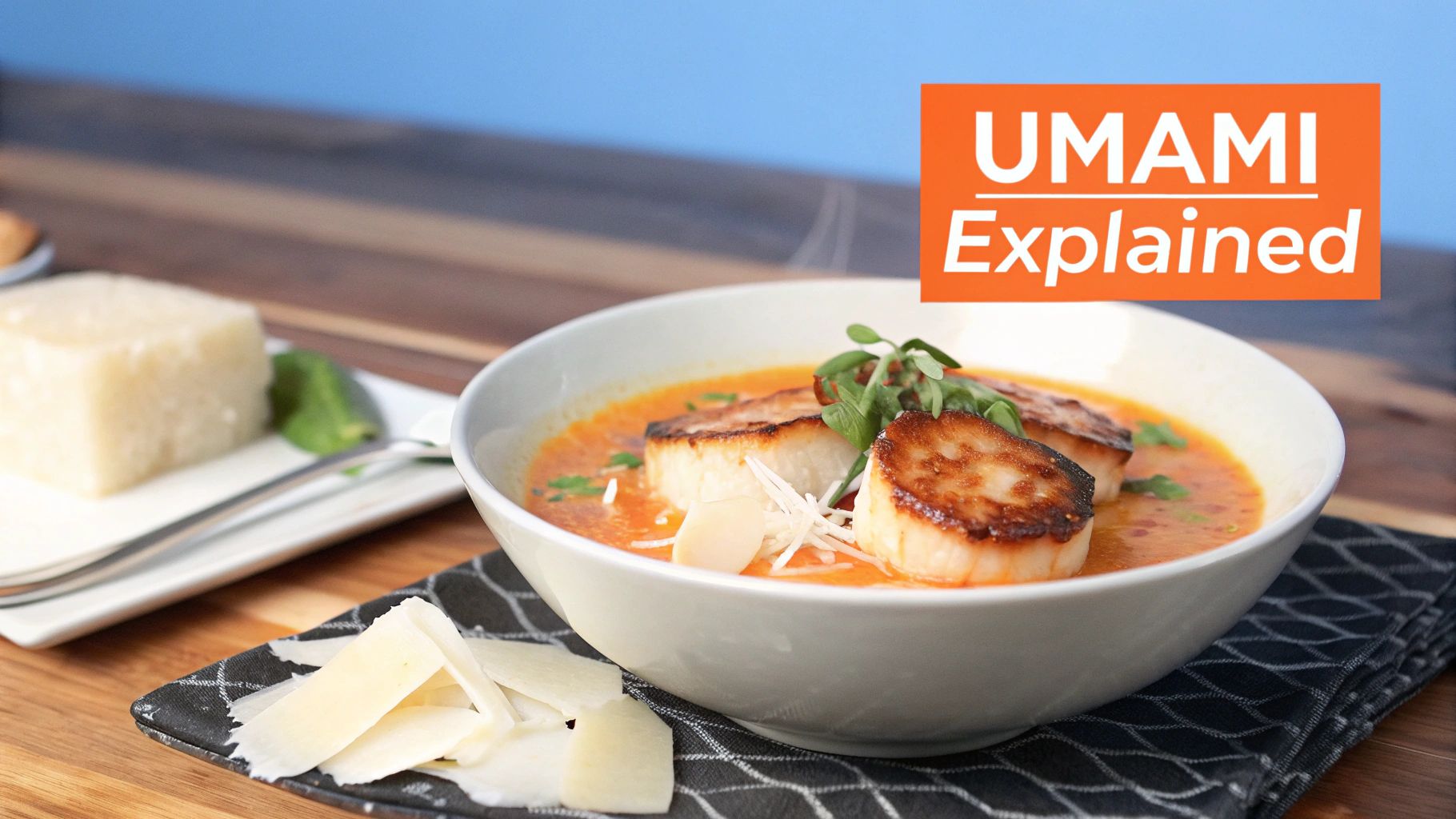
If a dish were a song, umami would be the deep, resonant bassline. You might not always notice it on its own, but it provides a foundational depth that makes all the other notes—the sweetness of carrots, the saltiness of olives, the sourness of lemon—sound fuller and more harmonious. Without it, the flavor can feel thin, almost like something is missing.
This satisfying taste doesn't just add complexity; it’s an ancient signal to our brains that we're eating protein-rich foods, which is why it feels so essential. It creates a well-rounded experience that coats your tongue and lingers in the most pleasant way.
The Five Pillars of Taste
Your palate is constantly working to identify a symphony of flavors. Truly understanding all of them is the first step to becoming a more mindful eater and building a richer library of food memories.
The primary tastes your tongue can detect are:
- Sweet: The taste of energy, typically signaling sugars found in fruits and carbohydrates.
- Sour: An indicator of acidity, present in everything from citrus and vinegar to fermented foods like yogurt.
- Salty: Essential for our bodies to function and a powerful tool for enhancing other flavors in a dish.
- Bitter: A sharp taste that can signal certain plant compounds, like those in coffee, dark chocolate, or bitter greens.
- Umami: The savory taste that signals the presence of amino acids—specifically, glutamate.
Recognizing these distinct components is the key to accurately logging your food memories. To dive deeper, check out our complete guide on what are the five basic tastes.
Learning to pinpoint what umami flavor is specifically will completely change how you track your meals in an app like Savor, transforming a simple rating into a detailed story about your palate.
The Story Behind the Savory Sensation
While that deep, savory satisfaction in a bowl of ramen or a slice of aged parmesan feels timeless, umami’s official story has a surprisingly clear beginning. For centuries, cooks instinctively knew how to pull these profound flavors from their ingredients, but the sensation itself didn't have a name. It was just… delicious.
That all changed in the early 20th century, thanks to the curiosity of one Japanese chemist and a humble bowl of soup. The entire journey starts with a common kitchen staple: kombu, the dried seaweed that forms the base of Japan’s iconic dashi broth. Professor Kikunae Ikeda of Tokyo Imperial University was fascinated by dashi. He noticed it had a distinct, mouthwatering taste that was completely separate from sweet, sour, salty, or bitter. He was determined to figure out what it was.
From Seaweed to Science
In 1908, after meticulously breaking down the kombu broth, Ikeda finally isolated the molecule responsible for that unique savory hit: glutamate. He proposed this was a fifth basic taste and gave it a name that felt just right: "umami," a Japanese word that loosely translates to the "essence of deliciousness."
Just a year later, he partnered with Saburosuke Suzuki to commercialize this discovery as monosodium glutamate (MSG), making the concentrated taste of umami available to kitchens worldwide. It was a game-changer. You can even explore the full history of umami's discovery from the company that started it all.
But despite its long history in Eastern cuisine and its commercial success, umami struggled to gain scientific acceptance in the West for decades. It wasn't until the late 1900s—when researchers finally pinpointed specific umami taste receptors on the human tongue—that it was officially welcomed into the global scientific consensus as the fifth basic taste.
This journey, from an intuitive flavor to a scientifically proven fact, is what makes every savory bite so fascinating. When you log a rich, meaty stew or a mushroom-topped pizza in your Savor journal, you're not just recording a meal. You’re connecting your personal food memory to over a century of culinary discovery.
The Science Behind That "Something Special" Flavor
Ever wonder what’s happening on a chemical level when you take a bite of something so deeply savory it makes you close your eyes? Let's peek behind the culinary curtain. The science of what makes umami so satisfying is actually pretty straightforward.
Your taste buds are wired with specific receptors designed to recognize an amino acid called glutamate. When you eat foods swimming in it—like a sun-ripened tomato or a sliver of aged parmesan—those receptors fire off a powerful "this is delicious" signal straight to your brain. This chemical handshake is why umami-rich foods feel so complete and satisfying. It’s your body’s ancient, built-in system for identifying foods rich in protein and vital nutrients. But the real magic, the kind chefs build entire careers on, happens when glutamate finds a partner.
Unlocking Umami Synergy
The secret to truly profound, complex savory flavor lies in a concept called umami synergy. This is a powerful flavor-boosting partnership that happens when glutamate teams up with a few other compounds known as nucleotides. Think of it like this: glutamate is a fantastic solo guitarist playing a solid, satisfying tune. But when nucleotides like 5′-inosinate and 5′-guanylate show up, they act as the perfect rhythm section and amplifier, turning that solid tune into a full-blown concert. The music becomes louder, richer, and far more complex.
This synergy explains why a cheeseburger topped with sautéed mushrooms and bacon tastes infinitely more satisfying than eating the beef, cheese, and mushrooms all on their own. The individual umami notes don't just add up; they multiply. Chemically speaking, these nucleotides amplify the glutamate, making the perceived umami intensity many times stronger than the sum of its parts. It’s a fundamental principle used by chefs to build rich stocks, deeply flavored sauces, and world-class charcuterie. If you really want to go down the rabbit hole, you can explore the sensory science behind umami synergy and see just how it works.
This chemical teamwork creates a mild, spreading, and lingering taste that stimulates salivation. It’s the scientific reason behind that deeply satisfying feeling that makes a dish truly memorable.
Understanding this framework gives you a new lens for tasting the world. When you log a dish in your Savor journal, you can start pinpointing exactly what makes it special. Was it the simple, clean glutamate of a great tomato sauce, or was it the powerful synergy from a perfectly balanced combination of ingredients?
How to Train Your Palate to Identify Umami
Spotting umami isn’t some innate culinary superpower; it’s a skill you build, one mindful bite at a time. The key is to stop thinking about abstract definitions and start paying attention to the physical sensations. Umami isn't just a taste—it's a feeling.
It’s that satisfying, mouth-coating richness that makes you salivate and leaves a savory echo long after the food is gone. Think of it as a subtle warmth that spreads across your tongue, giving a dish a sense of fullness and completion. One of the best ways to isolate this sensation is with a simple side-by-side comparison.
A Quick Tasting Exercise
To really get it, you need to taste it in its purest form. Grab two versions of the same ingredient: a slice of a fresh, raw tomato and a spoonful of concentrated tomato paste.
- The Raw Tomato: You’ll pick up on bright, acidic, and sweet notes. The flavor is clean and sharp.
- The Tomato Paste: The flavor here is deeper, rounder, almost meaty. That concentrated, savory depth that lingers on your palate? That's the umami.
This little exercise helps you filter out the other tastes and zero in on that specific savory quality. It’s a great way to start noticing the difference when you’re logging meals in Savor—was the flavor bright and fresh, or did it have that deep, mouth-watering background note?
Spotting Umami in the Wild
Once you know what you’re looking for, you’ll start finding umami everywhere. The more you practice, the easier it becomes to identify it on a menu or in your own cooking. Developing specific tasting techniques is a game-changer for sharpening your palate for all kinds of sensory details; for instance, you can learn how to taste olive oil like an expert to train your brain to notice nuance.
As we covered, the most powerful umami experiences often happen through synergy, when a glutamate-rich food meets one packed with nucleotides.
This is where the magic really happens.
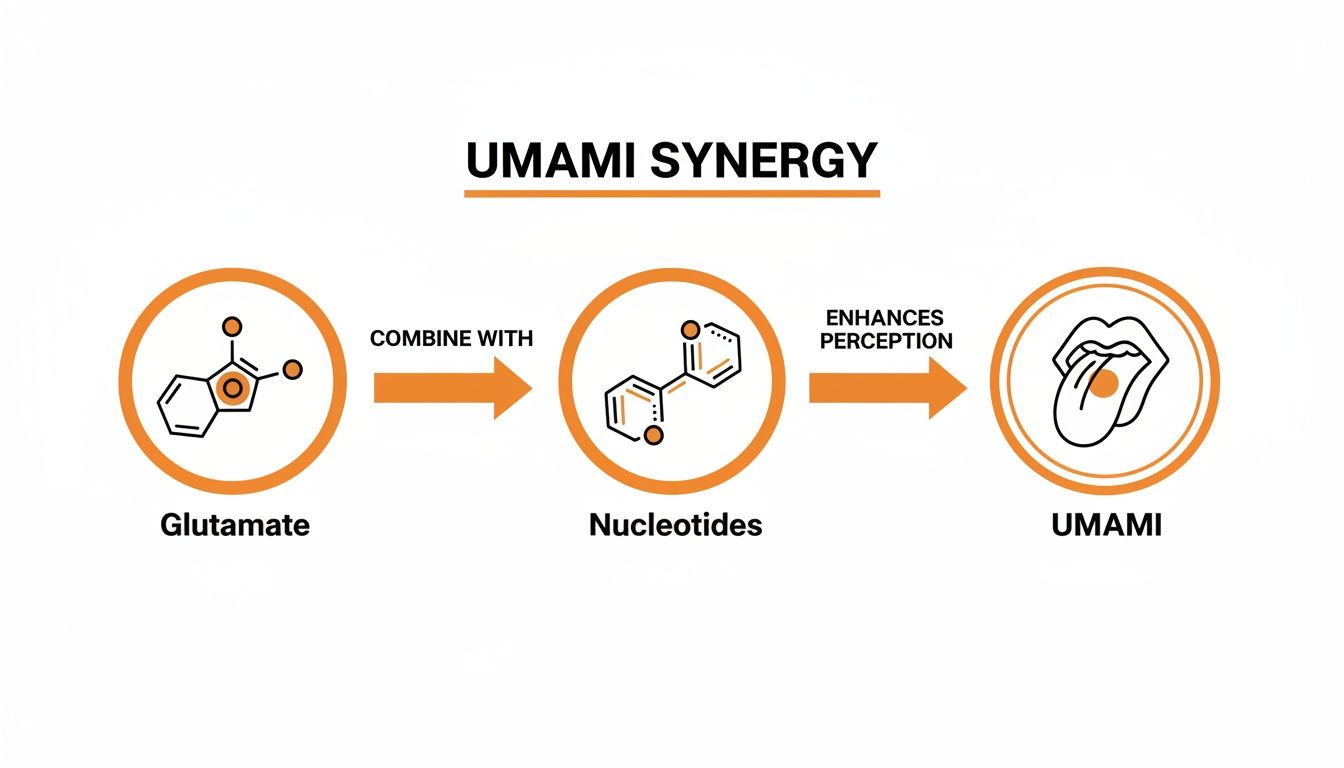
The key takeaway here is that these compounds don't just add their flavors together—they multiply them, creating a savory profile that's far more intense and complex than either ingredient could achieve on its own. It’s the secret behind why a simple mushroom-parmesan pasta can taste so incredibly rich and satisfying.
How to Boost Umami in Your Home Cooking

Alright, now that you can spot umami in the wild, it’s time to bring that knowledge into your own kitchen. Boosting the savory depth of your cooking doesn’t require fancy techniques or complicated recipes. It’s really just about layering flavors with simple, powerful ingredients—many of which you probably already have on hand.
Think of these ingredients as your personal flavor-building blocks. A splash of soy sauce can completely transform a marinade, a spoonful of tomato paste deepens a sauce, and a few dried mushrooms can create a broth with incredible body. Each little addition introduces another layer of that satisfying, mouth-watering quality we’re chasing.
Simple Swaps for Savory Success
Building a richer flavor profile is often as simple as a small swap or a single new addition. This is where you get to experiment and create more memorable meals—the kind you’ll actually be excited to log in your food journal.
Here are a few dead-simple ways to dial up the umami in your everyday dishes:
- Save Your Rinds: Never, ever throw away the rind from a block of Parmesan cheese. Tossing it into your next soup, stew, or stock as it simmers releases a massive amount of savory, nutty flavor. Just fish it out before serving.
- Embrace Fermentation: A small dollop of miso paste whisked into a salad dressing or used as a glaze for roasted vegetables adds an instant, complex saltiness and depth that feels like it took hours to build.
- Use Anchovies Fearlessly: Don't be afraid of them. One or two anchovy fillets melted into a warm pan with olive oil and garlic will completely dissolve, leaving behind a profound savory base for pasta sauces with zero fishy taste. It’s pure magic.
- Try Nutritional Yeast: A staple in plant-based cooking for a reason, nutritional yeast has a cheesy, nutty flavor that’s perfect for sprinkling over popcorn, pasta, or roasted veggies for an easy umami hit.
Remember, a little goes a long way. The goal is to enhance the flavors already in your dish, not to steamroll them. Start with a small amount, taste, and then adjust.
Learning which ingredients pack the biggest savory punch is the key. For instance, our guide on this aged cheeses list explores how different varieties bring their own unique levels of umami to the table.
Using Your Food Journal to Track Umami

This is where the rubber meets the road. Learning about umami is one thing, but actively tracking it is what truly transforms how you understand your own palate. A food journal becomes your personal taste laboratory, moving you beyond a simple "that was delicious" to pinpointing exactly why.
Instead of a generic note, you can start asking sharper questions. Was the satisfying depth in that pasta from the slow-cooked tomato sauce, the aged Parmesan, or the sautéed mushrooms? By isolating the source, you start building a rich database of your own preferences. This is the heart of mindful eating and the first real step to knowing what you love.
From Diary to Database
Turning your food log into a powerful tool for discovery is actually pretty simple. The goal is to capture the specifics so you can compare experiences over time. With a dedicated food journal app, you can create a searchable, sortable history of your best bites.
Next time you log a meal, try adding a few custom notes:
- Umami Source: Pinpoint the ingredient you think is driving the savory flavor. Think "Soy-miso glaze," "Aged cheddar," or "Caramelized onions."
- Intensity Score: Rate the umami on a scale of 1-10. Was it a subtle background note or the undisputed star of the show?
- Flavor Profile: Note whether the umami felt clean and brothy, like in a dashi, or deep and complex, like in a beef stew.
By consistently logging these details, you’re not just remembering meals; you’re creating a personalized map of your own unique taste.
Before you know it, you can create custom lists like "My Top 5 Umami Burgers" or "Best Ramen Broths in the City," turning scattered memories into actionable, side-by-side comparisons you can actually trust.
A Few More Questions About Umami
Got a few lingering questions about umami? You’re not alone. It’s a concept that can feel a bit mysterious at first, so let’s clear up a few of the most common curiosities we hear.
Is Umami Just a Fancy Word for Salty?
Not at all, though they are often partners in crime on the plate. Saltiness comes from sodium chloride, while umami is the taste of glutamates. Here’s a good way to tell them apart: salt provides a sharp, straightforward taste. Umami, on the other hand, creates a mouth-watering sensation and adds a brothy, savory depth that salt just can't deliver on its own.
So, Is MSG Bad for You?
Monosodium glutamate, or MSG, has had a rough reputation, but it’s really just the purest, most concentrated form of umami. Its image was damaged by old, unfounded fears about “Chinese Restaurant Syndrome,” but decades of controlled studies have consistently failed to show any widespread negative effects at normal dietary levels. Today, food safety authorities all over the world recognize MSG as safe to eat. You can discover more insights about umami's history and its long journey into modern kitchens.
The key takeaway here is that umami is a fundamental taste, not some strange, artificial additive. Whether it comes from a dash of MSG, a perfectly ripe tomato, or a slice of aged Parmesan, your tongue is having the same deeply satisfying experience.
Can a Dish Actually Have Too Much Umami?
Absolutely. Just like a dish can be painfully salty or cloyingly sweet, you can definitely overdo it with umami. When it’s cranked up too high, it can steamroll the other flavors, making the whole dish feel heavy, flat, or one-dimensional. The best cooking always strikes a balance, using umami not as the star of the show, but as the brilliant supporting actor that makes all the other tastes shine brighter.
Ready to become a more mindful taster? With Savor, you can track every detail of your meals, from umami intensity to flavor pairings, building a personal database of your unique palate. Track tastes, share discoveries. Rate like a critic at savortheapp.com.