
Your Ultimate Aged Cheeses List: 10 Varieties to Track and Compare
Harry the matcha king
Harry is our resident matcha obsessive. He’s tasted hundreds of bowls and tracks every cup in Savor.
Every food memory tells a story, and few ingredients offer a narrative as rich and complex as aged cheese. From the crystalline crunch of a 36-month...
Every food memory tells a story, and few ingredients offer a narrative as rich and complex as aged cheese. From the crystalline crunch of a 36-month Parmigiano-Reggiano to the creamy, nutty notes of a well-aged Comté, the aging process transforms simple milk into a library of flavors waiting to be explored. This transformation is where the real magic happens, creating distinct textures and aromatic profiles that deserve to be remembered. As you start your flavor journey, understanding how to present these selections, such as by learning the art of creating the perfect cheese board, can make the entire tasting experience even better.
This comprehensive aged cheeses list is more than a simple roundup; it’s a practical guide designed to help you build your personal taste database. We’ll explore ten essential aged cheeses, giving you the tools to document their unique characteristics, from milk type and texture to specific flavor notes. This approach helps you track how they evolve and build a food diary that truly reflects your palate, making it easy to compare and recall your favorites.
Forget trying to remember that perfect Gruyère from your trip last year or the exact difference between a 12-month and an 18-month Cheddar you tried months apart. It’s time to create a permanent, searchable chronicle of your discoveries. This guide provides the structure to turn fleeting tastes into lasting memories. Let’s begin the journey to track tastes, one incredible cheese at a time.
1. Parmigiano-Reggiano (24-36 Month Aged)
Known as the "King of Cheeses," Parmigiano-Reggiano is a legally protected designation of origin (PDO) cheese from specific provinces in Italy, including Parma and Reggio Emilia. This hard, granular cheese is made from unpasteurized cow's milk and is celebrated for its intricate flavor profile, which intensifies dramatically with age. While the minimum aging is 12 months, the 24 to 36-month window is where it truly develops its signature characteristics.
At 24 months, the cheese strikes a harmonious balance between nutty, savory notes and a subtle sweetness. By 36 months, its flavor deepens into a more complex, umami-rich experience with pronounced crystalline textures—known as tyrosine crystals—that provide a delightful crunch. These crystals are a hallmark of a well-aged cheese and a fun detail to note in your food diary.
Why It's a Must-Try
Parmigiano-Reggiano is not just an ingredient; it's a culinary benchmark. Its consistent quality and profound flavor make it a fantastic tool for anyone looking to understand the fundamentals of taste. For families, grating a 36-month Parmigiano over pasta can be a lesson in how aging develops complexity. For your own food journey, you can track its evolution by comparing different ages, noting how a 24-month version tastes on its own versus melted into a dish.
Tips for Tasting and Tracking
To fully appreciate this iconic cheese from our aged cheeses list, consider these actionable steps:
- Document Specifics: When you log this cheese, note the exact aging period (e.g., 24, 30, or 36 months) and its province (Parma, Reggio Emilia, Modena). This precision allows for accurate side-by-side comparisons over time.
- Taste in Stages: First, taste a small piece on its own to identify its core attributes. Then, rate it again after incorporating it into a dish to see how its profile changes with heat and other ingredients.
- Visual Documentation: Take a photo of the rind and a cross-section of the cheese. The density of the tyrosine crystals and the deepening color of the paste are excellent visual indicators of age and quality.
- Explore Its Flavor Profile: As you taste, try to pinpoint specific notes like roasted almond, brown butter, or even a hint of dried fruit. You can learn more about defining a flavor profile to better articulate your experience.
2. Comté (12-36 Month Aged)
Hailing from the Jura Massif region of eastern France, Comté is a revered French Alpine cheese with a Protected Designation of Origin (PDO). Made from unpasteurized cow's milk, specifically from Montbéliarde or French Simmental breeds, its character is deeply tied to the seasons. The 12 to 36-month aging window showcases its remarkable versatility, with flavors ranging from milky and fruity in younger wheels to nutty, toasty, and spicy in more mature ones.
At 12 months, Comté often presents a semi-hard, supple texture with sweet, lactic notes and hints of brown butter and stone fruit. As it ages toward 36 months, its body becomes firm and dense, developing crunchy amino acid crystals similar to those in Parmigiano. The flavor profile evolves dramatically, gaining layers of roasted nuts, dark caramel, and even subtle notes of leather or coffee, making it a standout on any aged cheeses list.
Why It's a Must-Try
Comté is the perfect cheese for understanding terroir—the concept of how a food's environment shapes its flavor. For your own food diary, creating a 'Comté Across Seasons' list can reveal how summer-milk cheese (from cows grazing on pasture) differs from winter-milk cheese (from cows eating hay). It’s a fun way to compare how a 12-month summer Comté you tried in France differs from a 24-month winter Comté you found back home.
Tips for Tasting and Tracking
To get the most out of this dynamic French classic from our aged cheeses list, use these specific tracking methods:
- Document Specifics: When logging Comté, note its age and, crucially, the production season (summer vs. winter milk). This detail is key to identifying its unique flavor patterns over time.
- Taste in Stages: Rate the rind separately from the paste. The rind’s earthy, sometimes musty notes are an integral part of its maturation and offer different insights than the interior paste.
- Visual Documentation: Photograph a cross-section to capture the density of any crystals and the color of the paste, which ranges from pale ivory in winter to a golden yellow in summer. These are visual markers of its age and origin.
- Explore Its Flavor Profile: As you taste, try to identify its complex notes. Is it more fruity and floral, or does it lean toward roasted hazelnuts and toffee? Comparing a 12-month wheel to a 24-month wheel is an excellent exercise in taste development.
3. Pecorino Romano (8-12 Month Aged)
A foundational cheese in Italian cuisine, Pecorino Romano is a hard, salty cheese made from sheep's milk (pecora means "sheep" in Italian). With a protected designation of origin (PDO), authentic Pecorino Romano is primarily produced in Sardinia, Lazio, and the Tuscan province of Grosseto. Its sharp, tangy, and distinctly salty characteristics intensify significantly even within its relatively short 8 to 12-month aging window.
Unlike the nutty sweetness of Parmigiano, Pecorino Romano offers a pungent, piquant flavor profile that is unapologetically bold. At 8 months, it has a firm texture and a sharp but approachable taste. By 12 months, it becomes harder, more granular, and develops a powerful saltiness that makes it an iconic grating cheese, especially for classic Roman pasta dishes like cacio e pepe and amatriciana. This cheese is a fantastic entry on any aged cheeses list for those who appreciate robust flavors.
Why It's a Must-Try
Pecorino Romano is an excellent case study in regional terroir and the impact of relatively short-term aging. Its assertive flavor makes it a powerful ingredient that can define a dish. For families, documenting Pecorino at 8, 10, and 12 months is a great way to teach kids how flavor develops over time. You could also build a "Pecorino Romano Across Italy" list, comparing how a Sardinian wheel used in Cagliari differs from a Lazio version found in a Roman trattoria.
Tips for Tasting and Tracking
To get the most out of this quintessential Italian cheese, use these specific documentation strategies:
- Document Specifics: When logging this cheese, note its production region (Lazio, Sardinia, or Tuscany). These geographical differences create significant variations in flavor that are fascinating to compare.
- Taste in Stages: Create separate ratings for Pecorino Romano tasted on its own versus grated over hot pasta. This tracks how its salty, sharp profile melts and melds with other ingredients, a key part of its culinary identity.
- Visual Documentation: Photograph the rind's color and texture. The intensity of the color and the dryness of the paste are useful visual markers for tracking its maturation, even within a narrow four-month window.
- Track the Timeline: Check the packaging for a production date to establish a precise aging timeline. This allows you to make accurate comparisons over time, noting how a 9-month-old cheese from spring lambing season tastes different from a 12-month-old one.
4. Manchego (6-24 Month Aged)
Hailing from the La Mancha region of Spain, Manchego is the country's most celebrated cheese and a staple on any aged cheeses list. This protected designation of origin (PDO) cheese is made exclusively from the milk of the Manchega sheep. Its distinct flavor and firm, buttery texture evolve dramatically across its wide aging spectrum, which is officially categorized from semicurado (a few months) to viejo (12+ months). This variation makes it a perfect subject for comparison.
At six months, Manchego offers a creamy, pliable texture with mild, nutty flavors and a pleasant sweetness. As it ages towards 12 and even 24 months, it becomes more piquant and peppery. The paste hardens, developing a flaky, crystalline quality, and its initial nutty notes deepen into a more complex profile with hints of caramel and lanolin. This remarkable transformation within a single type of cheese provides a clear lesson in the power of maturation.
Why It's a Must-Try
Manchego’s broad aging range offers an accessible yet profound way to understand how time impacts flavor and texture. For a home cook, comparing a 12-month curado Manchego in a melted tapa versus its raw form on a cheeseboard can reveal how its profile shifts with temperature. You can even track digestibility patterns across different aging periods, noting in your private food diary if the older, more broken-down viejo feels easier on your system. Its consistent availability also allows you to build a "Manchego Across Spanish Regions" list to compare nuances between producers.
Tips for Tasting and Tracking
To fully capture the journey of this Spanish icon, consider these actionable steps:
- Document the Aging Category: When logging your tasting, always note the specific Spanish aging term: Semicurado (3-6 months), Curado (6-12 months), or Viejo (12+ months). This precision is crucial for accurate comparisons over time.
- Taste Progressively: To build a strong baseline, try tasting different ages in a single session, moving from youngest to oldest. This highlights the progressive development of sharpness and crystalline texture.
- Photograph the Rind: The distinctive crosshatch pattern on the rind, a relic of the traditional grass molds, becomes more pronounced with age. Documenting this can be a great visual marker for your records.
- Explore Producer Variations: Rate the same aging period (e.g., a 12-month Curado) from two different producers. This exercise can reveal the subtle but significant impact of the cheesemaker's craft on the final product. You can learn more about sheep's milk cheese to better understand its unique properties.
5. Gruyère (12-36 Month Aged)
A celebrated Swiss Alpine hard cheese with centuries of tradition, Gruyère AOP (Appellation d'Origine Protégée) offers a fascinating study in how aging shapes flavor and texture. Made from unpasteurized cow's milk in the cantons of western Switzerland, its character evolves significantly across its aging spectrum. While younger Gruyère (around 5-9 months) is mild and creamy, the 12 to 36-month window is where it gains its renowned complexity and depth.

At 12 months, Gruyère presents a firm yet supple texture with balanced notes of fruit and nuts. As it progresses toward 36 months, its paste becomes drier and more crystalline, developing intense, earthy flavors with hints of caramel and a piquant finish. This transformation makes it a versatile choice for any aged cheeses list, excelling both on a cheese board and as a culinary ingredient where its meltability and flavor are prized.
Why It's a Must-Try
Gruyère’s dual identity as a standalone cheese and a melting superstar makes it an essential case study for any food enthusiast. Its clear evolution with age provides a tangible lesson in maturation. A home cook can track how an 18-month Gruyère creates a smooth, nutty fondue, while a 36-month version adds a sharper, more complex crust to a French onion soup. For travelers, documenting the nuances of Gruyère used in fondues across different Swiss cantons becomes a delicious mission, revealing subtle regional producer variations.
Tips for Tasting and Tracking
To get the most out of your Gruyère explorations and build a detailed food memory database, follow these actionable steps:
- Document the Application: When you log this cheese, tag its culinary use (e.g., "fondue," "standalone," "gratin"). This helps you build context-specific preferences and understand how its flavor profile performs under different conditions.
- Note the Exact Age: Always record the specific aging period listed on the packaging (e.g., 12, 18, 24 months). This precision is key to making accurate side-by-side comparisons over time.
- Photograph the Crystals: Take a close-up photo of a cross-section of the cheese. The density of its tyrosine or calcium lactate crystals is a fantastic visual indicator of its maturation and flavor intensity.
- Conduct Regional Comparisons: For a deeper dive, try tasting same-aged Gruyère from different producers or Alpine regions in a single session to identify terroir-driven differences.
6. Aged Gouda (18-36 Month Aged)
A celebrated export from the Netherlands, Gouda transforms from a mild, semi-hard cheese into a profoundly complex and flavorful experience with extended aging. While young Gouda is creamy and subtle, aged versions (Boerenkaas, or "farmer's cheese," often falls into this category) develop a firm, crystalline texture and a rich, burnt-caramel sweetness. The 18 to 36-month aging window is where these sought-after characteristics become most prominent.

As Gouda matures, its moisture content decreases, and the paste hardens, forming crunchy amino acid crystals similar to those in Parmigiano-Reggiano. Its flavor evolves from simple milky notes to deep, layered profiles of butterscotch, toasted nuts, and a savory, almost brothy finish. This dramatic transformation makes aged Gouda an excellent case study in the effects of affinage (the art of aging cheese), and its global availability allows for fascinating comparisons.
Why It's a Must-Try
Aged Gouda is an accessible yet sophisticated cheese, making it a perfect entry point for exploring the world of aged cheeses. A traveler might create a list comparing an artisanal farmer's market Gouda from Amsterdam with a premium brand like Beemster found in their local grocery store, documenting the vast differences in production methods and terroir. It’s also great for a family tasting, letting everyone discover how a single cheese can offer such a wide range of flavors.
Tips for Tasting and Tracking
To get the most out of your aged Gouda experience, use these actionable steps to document your journey:
- Document the Age Category: Always log the specific aging period from the packaging (e.g., "Extra Matured," "24-Month," or "Over Matured"). This precision is key to filtering your taste history and making accurate comparisons over time.
- Compare Production Styles: Create separate rated categories for artisanal farmstead Gouda versus mass-produced versions. This helps you identify whether you prefer the nuanced complexity of small-batch cheese or the consistent quality of a larger brand.
- Visual Documentation: Photograph the rind, noting if it is natural or coated in wax. Also, capture a cross-section to document the density of crystals, a clear visual marker of its maturation and a key part of this aged cheeses list entry.
- Taste in a Flight: To build a reliable baseline for scoring, taste multiple aged Goudas in a single session. This side-by-side comparison sharpens your palate and helps you pinpoint the distinct characteristics of each producer and age.
7. Aged Cheddar (12-24 Month Aged)
A versatile English tradition, Cheddar’s character transforms dramatically with age, moving from smooth and mild to intensely sharp and crystalline. Its widespread production across different regions and aging styles makes it an ideal cheese for tracking how geography and maturation methods influence a globally popular cheese. The 12 to 24-month window captures Cheddar at its most dynamic, developing the signature "bite" and complex savory notes it is famous for.
At 12 months, a mature Cheddar offers a balanced sharpness with a creamy, firm texture. By 24 months, it becomes an extra-mature cheese, often developing crunchy calcium lactate crystals that deliver a delightful textural contrast. The flavor deepens, introducing nutty, earthy, and sometimes slightly sweet undertones that showcase the full potential of this classic from our aged cheeses list.
Why It's a Must-Try
Aged Cheddar is a brilliant educational tool for any food enthusiast due to its accessibility and variety. Its transformation is a clear lesson in the impact of aging. For instance, a parent cooking with their kids can compare how a 12-month Cheddar melts smoothly in a sauce versus the grainier, richer result from a 24-month block. A traveler could build a 'Cheddar Across British Regions' list, comparing West Country, Somerset, and Scottish variants from a single tasting session at London’s Borough Market.
Tips for Tasting and Tracking
To fully appreciate the nuances of aged Cheddar and track your discoveries, consider these specific steps:
- Document Provenance: When you log this cheese, tag the specific region (e.g., Somerset, West Country, Scottish) and differentiate between artisanal producers like Montgomery's and industrial brands. This helps build a useful geographic preference map.
- Rate Melted vs. Raw: Rate a piece of the Cheddar on its own first. Then, create a separate entry rating it in a melted application, such as on toast or in a sauce. This helps you track its versatility and how its flavor profile shifts with heat, which is particularly relevant when considering the best cheese for Mexican food and other melted dishes.
- Visual Documentation: Photograph the cheese's cross-section and its color. Note the density of crystals and the deepening amber hue as indicators of age and quality, allowing for easy visual comparison between different cheddars.
- Create Filtered Lists: Use tags to create specific, actionable lists like "Best West Country Mature Cheddar" or "Sharpest 24-Month Scottish Cheddar" to guide future purchases or even a trip to the UK.
8. Parmigiano-Reggiano (40+ Month Aged - Extra Vecchio)
Entering the realm of "Extra Vecchio" or "Stravecchione," Parmigiano-Reggiano aged for 40 months or more is the pinnacle of the cheesemaker's art. This ultra-aged variant of the PDO cheese is made from the same unpasteurized cow's milk in Italy's designated regions but is matured to its absolute peak. At this extended age, the cheese becomes exceptionally dry, brittle, and intensely concentrated, representing the outer limits of flavor development.
The flavor profile is a powerful symphony of umami, spice, and toasted nuts, with notes of leather and dried fruit that are far more pronounced than in its younger counterparts. The texture is defined by an abundance of tyrosine crystals, creating a granular and crunchy mouthfeel that is both surprising and deeply satisfying. This cheese isn't for melting or grating casually; it’s a meditative tasting experience, best enjoyed in small, deliberate pieces.
Why It's a Must-Try
For the serious food enthusiast, the 40+ month Parmigiano-Reggiano is a benchmark for understanding how time transforms a single ingredient. It offers a tangible lesson in the science of aging and flavor complexity. You might document a 40-month wheel in Parma, rating it separately from a 24-month version to highlight its unique attributes. Similarly, you could create a "Parmigiano Aging Curve" list to compare 24, 36, and 40-month variants side-by-side, tracking the evolution of aroma, texture, and taste.
Tips for Tasting and Tracking
To properly document this exceptional cheese from our aged cheeses list, a structured approach is essential:
- Verify Authenticity: Purchase only from a reputable source that can confirm its "Extra Vecchio" status. Look for the official markings on the rind, and photograph this patina as a visual record of its extensive aging.
- Conduct a Comparative Tasting: The best way to understand its unique character is to taste it directly against a 36-month version. This allows you to objectively document the specific differences in flavor intensity and crystalline texture.
- Document the Context: Treat this as a milestone tasting. In your food journal, record the location, occasion, and even your companions. This transforms a simple rating into a richer food memory.
- Create a Pilgrimage List: For the ultimate enthusiast, build a "Parmigiano-Reggiano Pilgrimage" list. Use it to track visits to different aging caves in the Emilia-Romagna region, documenting the nuances of each producer's ultra-aged masterpiece right at the source.
9. Mimolette (18-36 Month Aged)
Often recognized by its unmissable bright orange paste and cratered, moon-like rind, Mimolette is a distinctive hard cheese from the Lille region of France. Made from pasteurized cow's milk and colored with natural annatto, its appearance is as memorable as its flavor. While younger versions exist, the cheese truly comes into its own when aged between 18 and 36 months, a period where it transforms from a semi-hard, mild cheese into a hard, intensely flavored one.
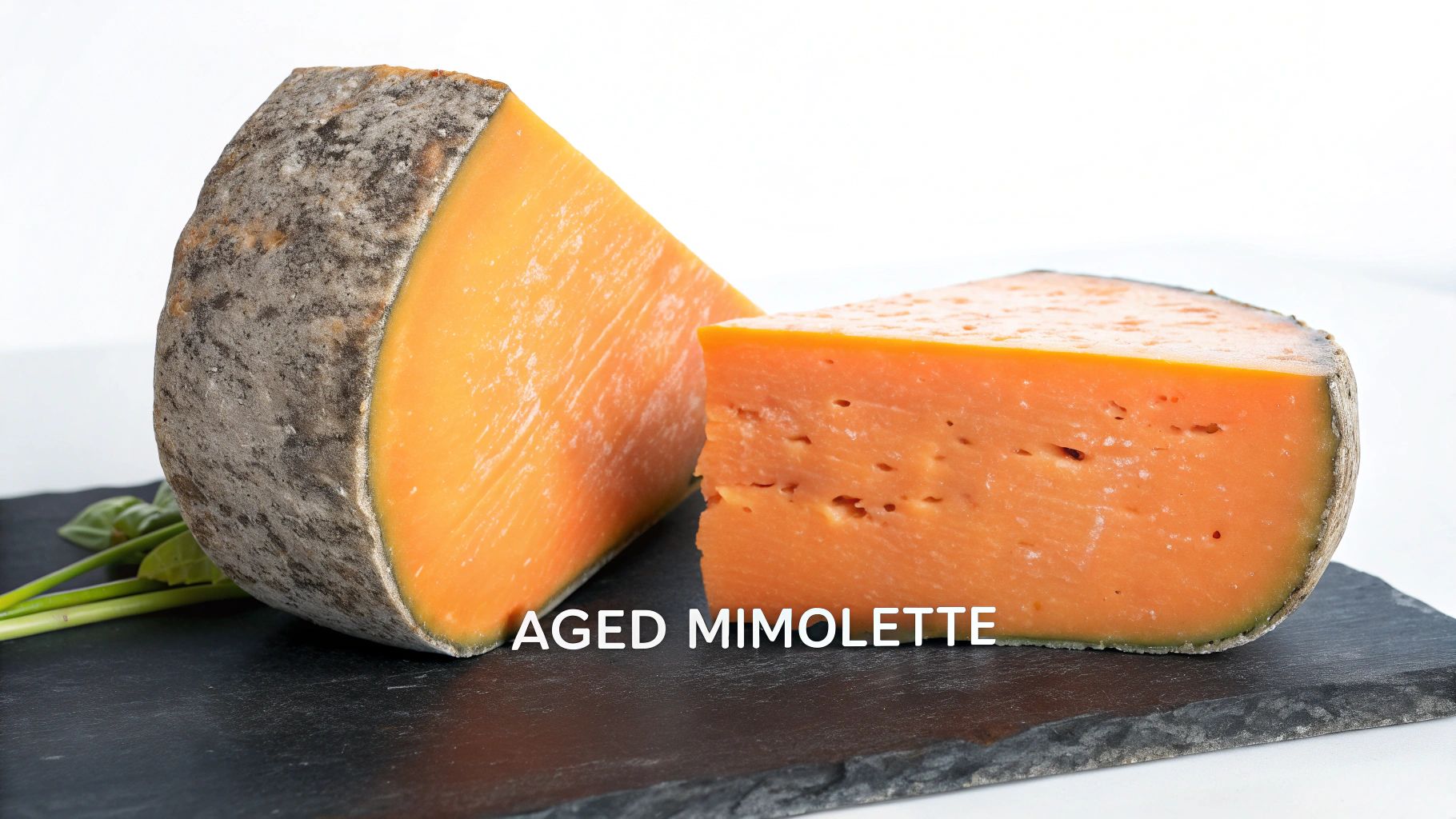
At 18 months (Vieux), Mimolette develops a deep, salty, and nutty flavor reminiscent of toasted hazelnuts and caramel. By 36 months (Extra Vieux), its texture becomes extremely firm, brittle, and crystalline, and the flavor concentrates into a powerful, savory experience with hints of butterscotch. The unique rind is created by cheese mites (ciron), which are introduced to the surface to aerate the cheese as it ages, contributing to its signature texture and earthy aroma.
Why It's a Must-Try
Mimolette’s dramatic visual transformation makes it a perfect case study for any cheese lover. Photographing a cross-section at 12, 24, and 36 months provides a stunning visual narrative of how aging impacts a cheese's character. Anyone curious about different food cultures can track its regional identity by documenting variations between Mimolette from Lille versus other producers, creating a rich log of French cheesemaking traditions.
Tips for Tasting and Tracking
To fully capture the unique qualities of this item from our aged cheeses list, consider these actionable steps:
- Document the Aging Tier: When you log this cheese, be specific about its age classification: Jeune (young), Demi-Vieux (semi-old), Vieux (old), or Extra Vieux (extra-old). This precision is key for accurate comparisons over time.
- Photograph Color Progression: Take photos of the cheese's interior. Documenting the shift from bright, traffic-cone orange to a deeper, burnished amber is a fantastic way to visually track the aging process.
- Note Textural Changes: As you taste, pay close attention to the texture. Describe its firmness, the presence of crystals, and how it breaks apart. This helps you understand how aging physically alters the cheese.
- Compare Producers: Taste Mimolette from two different fromageries at the same age. Documenting the subtle differences in saltiness, nuttiness, or rind development will reveal the artistry of individual cheesemakers.
10. Aged Appenzell (6-36 Month Aged)
Hailing from the Appenzellerland region of Switzerland, Appenzell is an Alpine cheese renowned for its uniquely pungent and complex flavor, a direct result of its secret herbal brine. Made from raw cow's milk, the cheese wheels are washed with this proprietary "sulz" during the aging process. This brining imbues the cheese with a spicy, fruity, and herbal character that sets it apart from other mountain cheeses and deepens significantly as it matures from 6 to over 36 months.
The aging spectrum offers a fascinating journey in taste. At 6 months, Appenzell is mild and nutty with a noticeable tang. As it approaches 12 months and beyond, the herbal brine permeates the paste, developing a more pronounced spiciness and a profound, savory umami quality. The texture transitions from semi-hard and pliable to firm and crystalline, making it a standout on any aged cheeses list for its dynamic evolution.
Why It's a Must-Try
Appenzell offers a direct lesson in how specific production techniques, like herbal brining, can radically shape a cheese's final flavor profile. For the curious eater, documenting the subtle differences between producers can reveal the secrets of regional Swiss traditions. You could build an "Alpine Cheese Across Nations" list to compare Appenzell with other aged cheeses from France or Italy, noting how terroir and technique interact. It's a fun way to track how a 12-month Appenzell from a tasting room in Switzerland compares to an imported version at home.
Tips for Tasting and Tracking
To get the most out of your Appenzell tasting experience, use these actionable steps to document your journey:
- Document Production Details: If possible, note the producer and any available information on the brining herbs. This detail is crucial for comparing different versions and understanding their unique characteristics.
- Isolate the Brine Influence: Taste Appenzell alongside a non-brined Alpine cheese like Gruyère. This side-by-side comparison helps you objectively identify and describe the specific flavor notes contributed by the herbal wash.
- Visual Documentation: Photograph the rind's color and texture, which are directly affected by the brine. Also, capture a cross-section to track how the color of the paste deepens and crystallizes with age.
- Taste in Context: First, rate the cheese on its own to establish a baseline. Then, taste it as part of a cheese board to see how its distinct herbal notes complement or contrast with fruits, nuts, and other foods.
Top 10 Aged Cheeses Comparison
| Cheese | Acquisition complexity | Resource requirements (cost & sourcing) | Expected outcomes (flavor & texture evolution) | Ideal use cases | Key advantages |
|---|---|---|---|---|---|
| Parmigiano-Reggiano (24–36 mo) | Moderate — widely available at specialty retailers; authenticated PDO labeling | High cost; needs cool storage but long shelf life | Granular crystals; intensified nutty‑umami with age | Cross‑cuisine dish comparisons; aging studies | PDO consistency, recognizability, measurable aging curve |
| Comté (12–36 mo) | Moderate — available in EU/US specialty shops; seasonal variants | Moderate cost; note production season for comparisons | Wide shift from mild‑nutty to crystalline‑complex | Seasonal/age comparisons; producer variance tracking | Strong age-driven changes; seasonal milk effects |
| Pecorino Romano (8–12 mo) | Easy — common in supermarkets and Italian markets | Low cost; short aging window; shelf‑stable grated forms | Sharp, salty, peppery; salt intensity increases with age | Dish‑centric tracking (cacio e pepe, carbonara) | Distinctive salt profile; clear age differentiation; affordability |
| Manchego (6–24 mo) | Moderate — best sourced in Spain, variable elsewhere | Moderate cost; multiple defined age categories | Range from creamy‑mild to intense umami/crystalline | Time‑series aging studies; visual rind progression | Multiple age classes, visual rind markers, versatile uses |
| Gruyère (12–36 mo) | Moderate — specialty shops and imports | Higher cost; exact aging should be recorded | Nutty → caramel/mineral → deep umami with crystals | Melting applications (fondue, soups); culinary comparisons | Versatile culinary use; clear measurable maturation |
| Aged Gouda (18–36 mo) | Easy — broadly available in retail and specialty stores | Affordable to moderate; mass vs. artisanal quality varies | Butterscotch/caramel notes and pronounced crystals | Budget-friendly aging comparisons; artisan vs mass studies | Clear age labeling; strong flavor shifts; accessible sampling |
| Aged Cheddar (12–24 mo) | Very easy — widely distributed globally | Low to moderate cost; quality varies by producer | Smooth → sharp → intensely crystalline and tangy | Regional variation studies; cooking/melting behavior | Extremely accessible; many regional and aging styles |
| Parmigiano-Reggiano (40+ mo, Extra Vecchio) | Hard — rare, specialty importers and producers | Very high cost; limited supply; authentication advised | Extremely concentrated caramel/butterscotch, intense crystals | Connoisseur tastings; collector and advanced aging documentation | Rarity, highly differentiable flavors, collectible status |
| Mimolette (18–36 mo) | Moderate — available at specialty shops; visual appeal | Moderate cost; photogenic rind/color progression | Color deepens; texture crystallizes; complex spice notes | Visual/photo documentation; content creation; regional studies | Striking visual progression; memorable aesthetics; distinct flavor |
| Aged Appenzell (6–36 mo) | Moderate–hard — specialty Swiss imports recommended | Higher cost; limited outside Switzerland; brined‑rind detail useful | Herbal, spiced, umami profile from brine; intensifies with age | Studies of brined‑rind effects; Alpine tradition comparisons | Unique brined‑rind character; highly differentiated flavor |
Turn Your Tasting Notes into a Lasting Legacy
Our journey through this extensive aged cheeses list has taken us from the nutty, crystalline depths of a 40-month Parmigiano-Reggiano to the sweet, caramel notes of an aged Gouda. We've explored the terroir-driven complexities of Comté and Gruyère, the sheep's milk tang of Pecorino and Manchego, and the bold character of aged Cheddar. This guide serves not just as a reference, but as a passport to a world of concentrated flavor, texture, and aroma.
The most crucial takeaway is that "aged cheese" is not a monolithic category. It's a spectrum of possibilities, where time, milk type, and technique converge to create something truly extraordinary. Understanding the differences between a 12-month and a 36-month Comté, or how a wheel of Gruyère develops its signature savory notes, empowers you to be a more discerning and adventurous consumer. You now have the framework to appreciate the artistry behind each wedge and wheel.
From Tasting to Tracking: Building Your Personal Cheese Canon
The real value of this exploration begins when you make it your own. Simply reading about these cheeses is one thing; actively documenting your personal experiences is another. This list is a launchpad for creating a personal flavor database—a private food diary that reflects your unique palate and culinary adventures.
Think of each cheese you try as a new entry in your culinary memoir.
- Capture the Details: Was it a 24-month Parmigiano-Reggiano or a 36-month? What did you pair it with? Where did you buy it? These specifics are the building blocks of useful food memories.
- Rate Your Experience: Go beyond "good" or "bad." Develop a simple rating system. Was the texture crumbly or creamy? Did it have notes of hazelnut, butterscotch, or lanolin? Capturing these sensory details helps you identify patterns in what you love.
- Track Your Pairings: Did that Aged Cheddar shine with a crisp apple or fall flat with a bold red wine? Documenting what works (and what doesn't) turns every cheese board into a valuable experiment.
By systematically documenting your encounters with this aged cheeses list, you transform from a passive taster into an active curator of your own preferences. You’ll never again forget the name of that incredible Manchego you tried on vacation or the specific age of Gruyère that perfects your fondue recipe.
Creating Actionable Insights from Your Cheese Journey
Building this personal cheese library isn't just for sentimental value; it provides actionable, data-driven insights that can elevate your everyday culinary life. It allows you to shop smarter, cook with more confidence, and share your discoveries with precision.
Imagine these scenarios:
- Hosting a Dinner Party: Instead of guessing, you can consult your notes to find the exact aged Gouda that your friends raved about six months ago.
- Exploring a New Cheese Shop: You can confidently ask the monger for an "aged Appenzeller with prominent spicy notes" because you know that's a profile you enjoy.
- Building the Perfect Cheese Board: You can look back at your ratings to create a flight of cheeses with complementary textures and escalating flavor intensity, ensuring a perfectly balanced experience.
This methodical approach to tasting demystifies the world of cheese, making it more accessible and rewarding. Your notes become a trusted resource, more valuable than any generic review because they are tailored entirely to you. You are, in essence, becoming the world's foremost expert on your own palate. The next time you encounter an aged cheese, see it not just as food, but as a story waiting to be recorded.
Ready to turn your tasting notes into a searchable, shareable, and lasting legacy? The Savor app is the perfect tool for creating a private food diary, letting you document every cheese, rate like a critic, and build an invaluable database of your own culinary discoveries. Start capturing your flavor memories today at Savor.
Continue Reading
Start Tracking Your Dishes Today
Transform your food photos into a searchable, ratable culinary memory bank.
Download Savor App