
How to Rate Dishes Objectively When Dining Out: A Field Guide for the Serious Foodie
Harry the matcha king
Harry is our resident matcha obsessive. He’s tasted hundreds of bowls and tracks every cup in Savor.
How to Rate Dishes Objectively When Dining Out: A Field Guide for the Serious Foodie You just finished an extraordinary bowl of ramen. The broth was deep,...
How to Rate Dishes Objectively When Dining Out: A Field Guide for the Serious Foodie
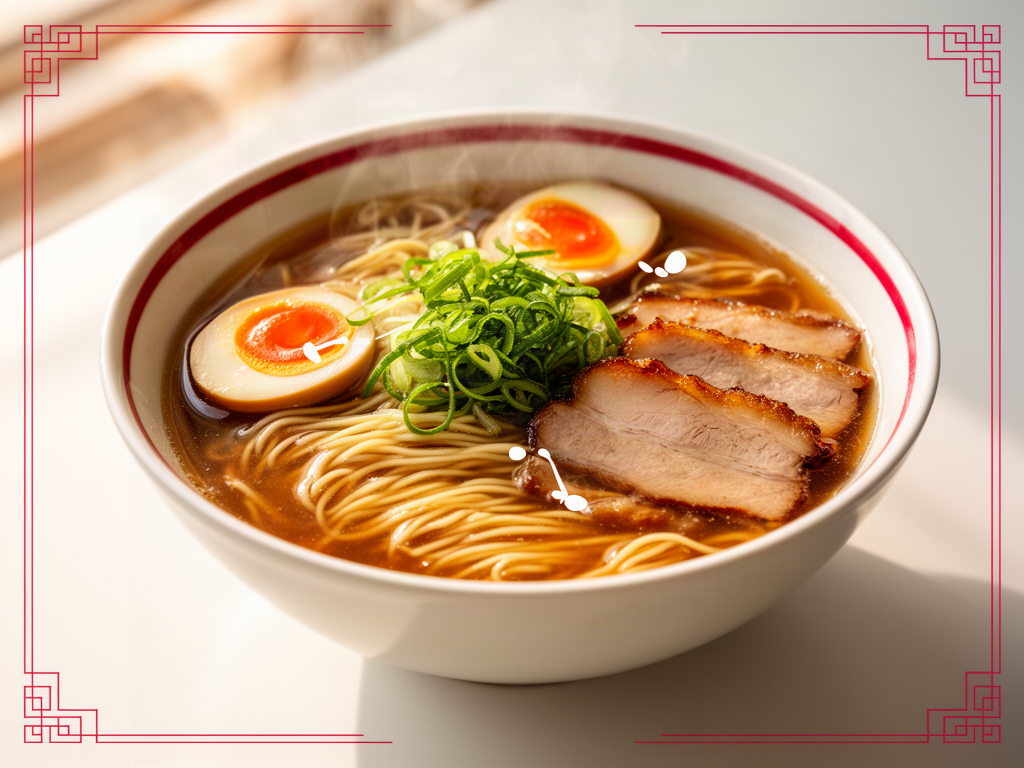
You just finished an extraordinary bowl of ramen. The broth was deep, layered, almost alive. The noodles had that perfect chew. You took a photo, smiled, and left the restaurant.
Three months later, you're scrolling through 2,400 food photos trying to remember where that incredible bowl was. Was it in Tokyo? Portland? You remember it was life-changing, but you can't reconstruct why. All you have is a blurry photo and a vague memory of "really good."
The problem isn't your palate. It's your system.
Table of Contents
- The Philosophy of the Objective Palate
- The Four Pillars of the Dish Scorecard
- The Sensory Evaluation Checklist
- The 2026 Tech Stack for Foodies
- How to Handle Social Friction
- Frequently Asked Questions
The Philosophy of the Objective Palate
Objectivity in food rating doesn't mean stripping away personal preference. It means building a repeatable framework that separates what the dish is from how you felt when you ate it.
Professional food inspectors evaluate more than 250 anonymous meals per year, and they do it using consistent criteria. The Michelin Guide uses five pillars: quality of ingredients, mastery of flavor and cooking techniques, the personality of the chef in their cuisine, value for money, and consistency between visits. You're not Michelin, but you can borrow their discipline.
The challenge for the serious foodie is this: you're building a personal taste archive, not publishing criticism. Your ratings need to serve one person - future you, standing in front of a menu in Rome, trying to remember if the carbonara at that place near Termini was worth the detour.
The Subjectivity Offset: Acknowledging Bias
Here's the uncomfortable truth: a dish eaten when you're starving tastes better than the same dish eaten when you're full. A meal shared with someone you love feels more memorable than the same meal eaten alone. The lighting matters. Your mood matters. The music matters.
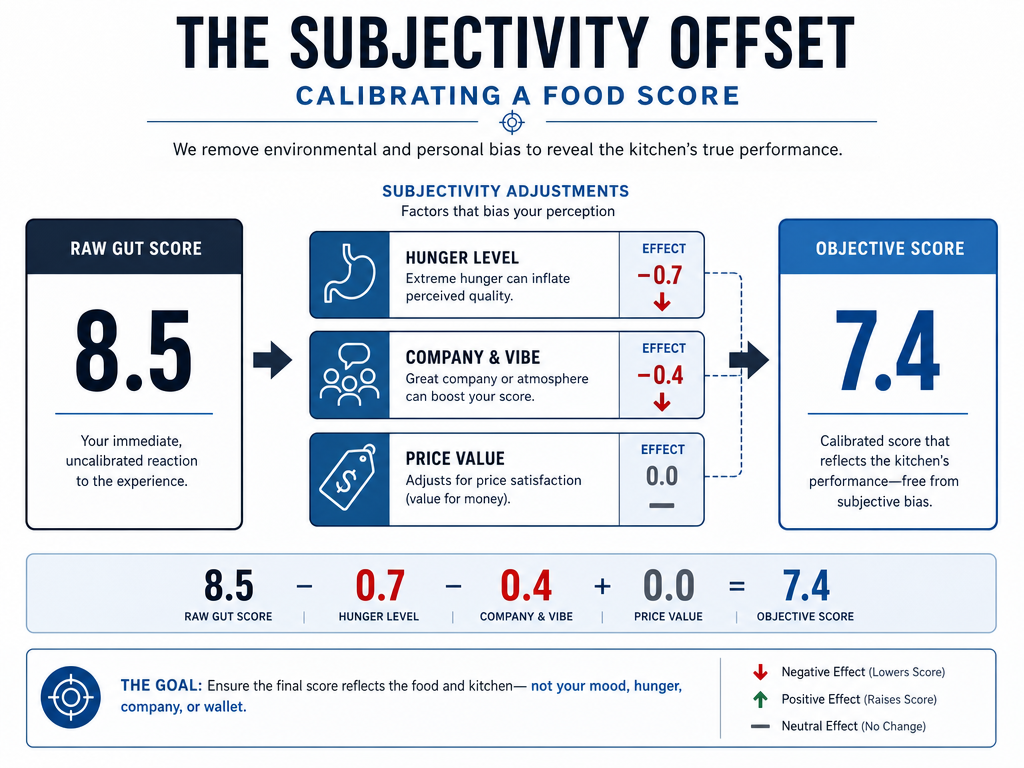
The 'Subjectivity Offset' is a critical tool for serious foodies, allowing them to subtract the influence of high hunger or great company from the actual dish quality.
The "Subjectivity Offset" is your correction mechanism. Before you score a dish, ask yourself three questions:
- Hunger Level: Am I starving, moderately hungry, or comfortably full?
- Social Context: Am I dining solo, with close friends, or on a date?
- Mood Baseline: Am I stressed, neutral, or euphoric?
If you're ravenous and dining with great company, mentally subtract a point from your initial reaction. If you're full and eating alone after a bad day, add a point. Over time, this calibration becomes instinctive.
The Four Pillars of the Dish Scorecard
Professional critics don't taste food randomly. They break it down into component parts. Your personal rating system should do the same.
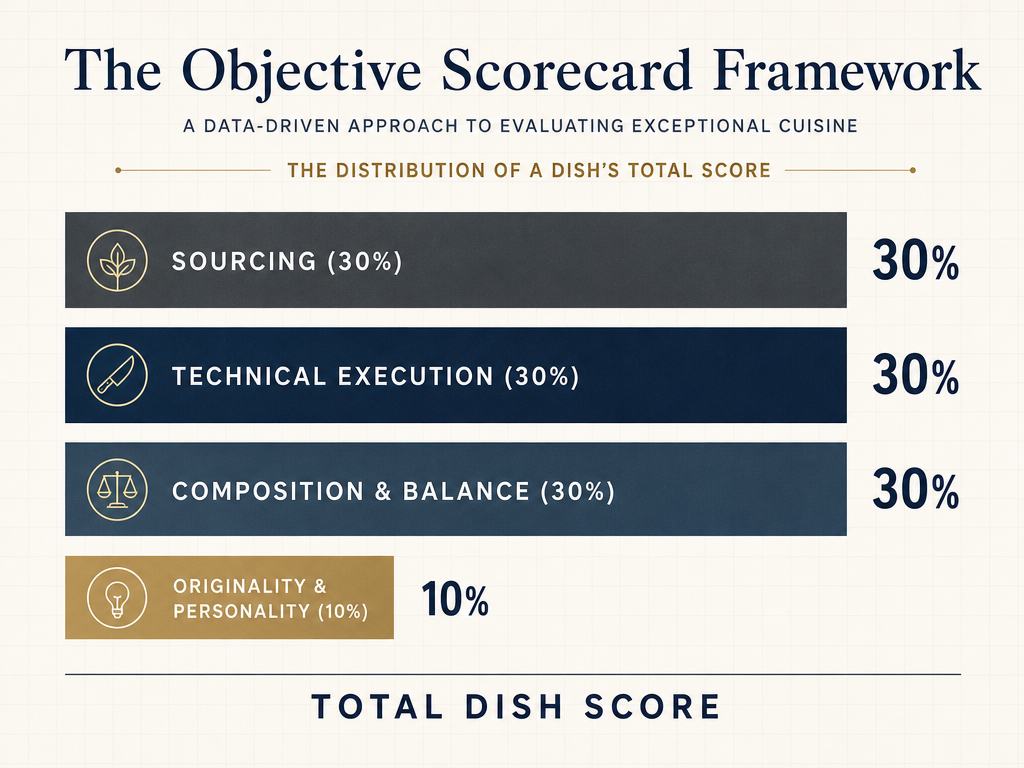
Professional dish rating requires a weighted approach, prioritizing ingredient quality and technical skill over novelty to ensure an objective and repeatable assessment of culinary excellence.
Component A: Sourcing (30%)
Ingredient quality is the foundation. Is the produce at peak ripeness? Is the protein premium-grade? Can you taste the difference between commodity mozzarella and actual buffalo mozzarella from Campania?
Ask yourself:
- Does this taste like the best version of this ingredient?
- Can I detect shortcuts (frozen instead of fresh, low-grade oil, factory-farmed protein)?
- Is there a clear seasonal sensibility to the ingredient selection?
Component B: Technical Execution (30%)
This is where craft separates amateurs from professionals. Is the sear on that steak perfect - a dark, caramelized crust without a gray band underneath? Is the emulsion in the hollandaise stable? Are the pasta noodles cooked precisely to al dente?
Look for:
- Temperature control: Is the dish served at the right temperature?
- Timing: Are delicate greens wilted from sitting under a heat lamp, or are they crisp?
- Knife skills: Are the vegetables uniformly cut, or haphazardly chopped?
- Textural precision: Does the dish deliver the textures it promises (crispy skin, tender meat, silky sauce)?
You don't need culinary school to evaluate this. You need attention. If you've eaten a technique done well once, you can recognize when it's done poorly.
Component C: Composition and Balance (30%)
This is the harmony pillar. A dish can have perfect ingredients and flawless technique but still fail if the flavors don't work together. Acid balances fat. Salt amplifies sweetness. Bitterness needs a counterpoint.
Evaluate:
- Acid vs. Fat: Does the dish feel heavy and cloying, or does acid cut through richness?
- Salt calibration: Is the dish underseasoned, oversalted, or perfectly balanced?
- Textural contrast: Is there interplay between crunchy and creamy, chewy and tender?
- Flavor progression: Does the dish evolve as you eat it, or does it taste identical from the first bite to the last?
Component D: Originality and Personality (10%)
This is the smallest pillar because novelty is overrated. A perfect margherita pizza doesn't need innovation - it needs mastery. That said, originality matters when it's earned.
Ask:
- Does this dish offer something I can't find elsewhere?
- Is the originality thoughtful, or is it novelty for novelty's sake?
- Can I taste the chef's perspective, or does this feel like a committee-designed menu item?
Score each pillar out of 10, then calculate a weighted total out of 100. A dish scoring 80+ is exceptional. A dish scoring 90+ is worth a pilgrimage.
The Sensory Evaluation Checklist
Before you assign numbers, engage all five senses. Your rating is only as good as your observation.
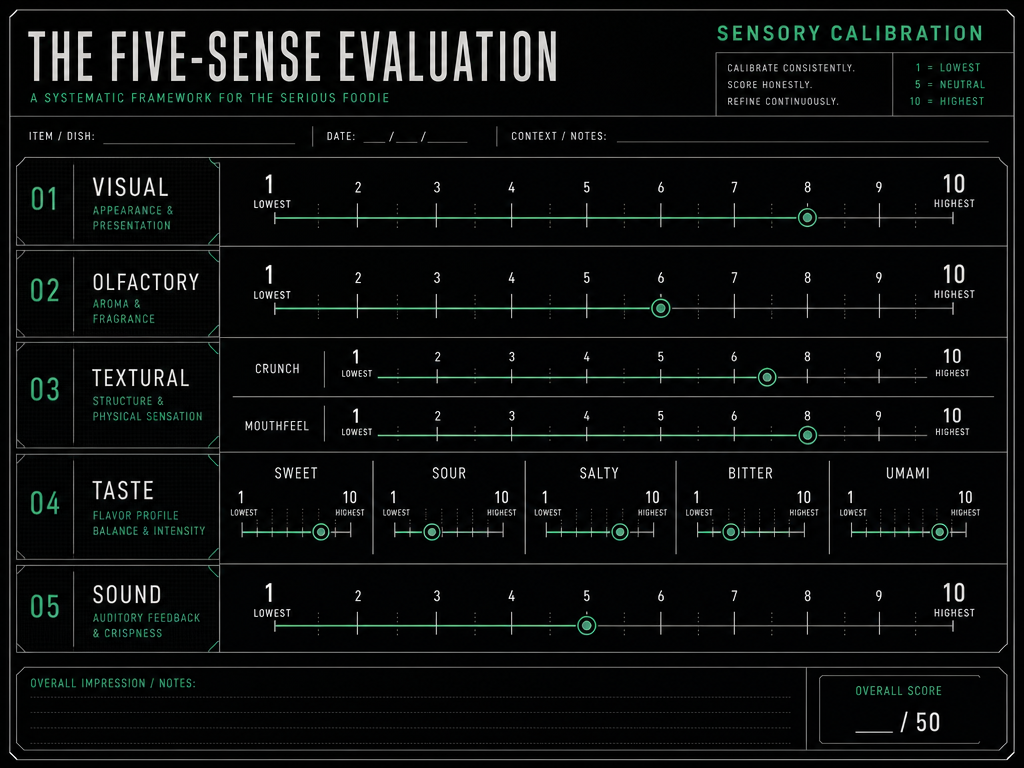
Breaking down a meal into specific sensory data points allows diners to move past 'delicious' and identify the exact elements that make or break a dish.
Visual: The First Impression
Plating isn't superficial - it's a signal of care. A dish that looks like it was thrown onto the plate probably tastes like it was thrown together.
Observe:
- Color saturation: Are the greens vibrant or dull? Is the sear on the protein a rich mahogany or a pale tan?
- Plating geometry: Is there intentional composition, or does it look random?
- Garnish purpose: Are the garnishes edible and functional, or are they decorative distractions?
Olfactory: Aromas Before the First Bite
Smell is responsible for a substantial portion of what we perceive as taste. Before you touch your fork, lean in. What hits you first?
Note:
- Dominant aromas: Is it butter, char, citrus, spice?
- Aromatic complexity: Do you detect multiple layers, or is it one-dimensional?
- Off-notes: Does anything smell wrong (rancid oil, burnt garlic, oxidized wine)?
Textural: The Architecture of the Bite
Texture is where good dishes become great. The contrast between a crispy skin and a tender interior, between a crunchy element and a creamy sauce, is what keeps you coming back for another bite.
Evaluate:
- Primary texture: Is the protein tender, chewy, or tough?
- Textural contrast: Is there interplay between different elements?
- Mouthfeel: Does the dish coat your palate (rich, fatty) or feel clean (bright, acidic)?
- "Chew" resistance: Does the dish require effort, or does it dissolve immediately?
Taste: Deconstructing the Five Basics
Your tongue detects five basic tastes: sweet, sour, salty, bitter, and umami. A balanced dish engages multiple taste receptors.
Break it down:
- Sweet: Is there natural sweetness from caramelization or added sugar?
- Sour: Is there acidity from citrus, vinegar, or fermentation?
- Salty: Is the seasoning appropriate, or does salt dominate?
- Bitter: Is there bitterness from char, coffee, dark chocolate, or greens?
- Umami: Is there savory depth from meat, fish, mushrooms, tomatoes, or aged cheese?
Sound: The Underrated Sense
Yes, sound matters. The crunch of a perfectly fried chicken skin, the crackle of a fresh baguette crust, the sizzle of fajitas arriving at the table - these auditory cues signal freshness and proper execution.
Listen for:
- Crunch: Is it sharp and clean, or soft and stale?
- Sizzle: Is the dish still actively cooking when it reaches you?
- Silence: Sometimes the absence of sound (a silent, soggy fry) tells you everything you need to know.
The 2026 Tech Stack for Foodies
You've evaluated the dish. Now you need to remember it. Your camera roll is not a database - it's a graveyard. The right tool makes the difference between a fleeting memory and a searchable culinary archive.
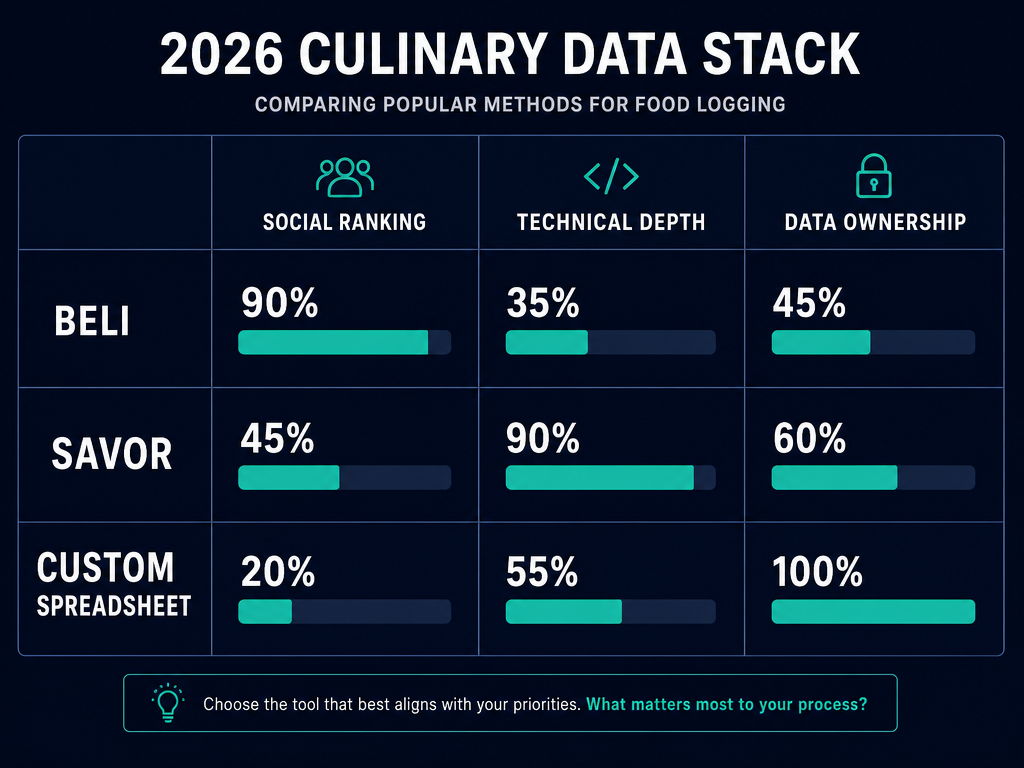
Choosing the right logging tool depends on your goals: use social-first apps for community rankings or custom databases for maximum technical control and data portability.
Beli: Best for Social Rankings
Beli is identified as one of the leading restaurant-tracking apps for enthusiasts in 2026. It's built for the friend group that shares recommendations constantly. You can create lists, tag friends, and see where your network is eating.
Best for: Social diners who want to crowdsource recommendations within a trusted circle.
Limitation: It's restaurant-first, not dish-first. You can rate venues, but drilling down to individual dishes requires workarounds.
Savor: Best for Dish-Specific 1-10 Logs
Savor is designed for the diner who cares more about the carbonara at that place near Termini than the restaurant itself. It's dish-centric, letting you log individual plates with photos, ratings, and tasting notes.
Best for: Serious foodies building a personal taste memory database.
Limitation: It's private by design. If you want social sharing, you'll need to export and share manually.
For those who want to organize their restaurant photos beyond just a camera roll, Savor provides the structure to turn random food photos into a searchable archive.
Notion/Excel: Best for the Ultimate Database User
If you're technically inclined and want absolute control over your data structure, a custom spreadsheet or Notion database gives you infinite flexibility. You can create custom fields (region, cuisine type, price point, chef name), build pivot tables, and export your data however you want.
Best for: Data nerds who enjoy the process of building systems.
Limitation: High friction. Logging a meal in a spreadsheet is slower and less intuitive than using a dedicated app.
The 30-Second Log: A Practical Workflow
Don't let perfect be the enemy of good. Here's a realistic logging workflow that won't ruin your meal:
- At the table: Take a photo. Tag the three dominant ingredients mentally.
- Before you leave: Assign a "Gut Score" out of 10 in your app. No overthinking.
- In the car/train: Complete the technical breakdown. Add tasting notes. Adjust your score if needed.
This keeps logging fast enough that it doesn't interfere with the social experience but thorough enough that future you will remember the dish.
If you're looking for the best apps to track your favorite dishes, the key is finding one that matches your logging speed and detail preferences.
How to Handle Social Friction
Let's address the elephant in the dining room: nobody wants to be the person who spends five minutes photographing their food while everyone else waits to eat.
Mental Tasting During the Meal
Train yourself to evaluate while you eat. You don't need a notebook. As you take your first bite, mentally note:
- What hits first? (Fat, acid, salt, sweetness?)
- What's the dominant texture?
- What's the single strongest impression?
This takes seconds, not minutes. You're building muscle memory, not conducting a lab analysis.
Logging After the Moment
The most socially graceful approach is to log your notes after the meal, not during. Take your photo when the dish arrives (everyone does this now - it's expected), then put your phone away. Engage with your companions. Eat. Enjoy.
When the meal is over and you're walking back to your car or waiting for the train, that's when you pull out your app and complete your log. The dish is still fresh in your memory, but you haven't sacrificed the experience for the documentation.
Explaining Your System to Skeptics
If someone asks why you're logging your meals, be honest but brief:
"I eat at a lot of places, and I was tired of forgetting which dishes were actually worth ordering again. This helps me remember."
Most people get it. Food memory is universal. The ones who don't get it weren't going to support your hobby anyway.
For those interested in how to keep a food journal that balances documentation with presence, the key is speed and intention - log enough to remember, but not so much that you lose the moment.
Frequently Asked Questions
What are some different ways to rate food?
The most common systems are:
- 1-10 scale: Intuitive, granular, allows for nuance.
- 5-star system: Familiar (thanks to Yelp and Google), but many people struggle with the difference between 3 and 4 stars.
- Multi-criteria rubric: Break the dish into categories (sourcing, execution, balance, originality) and score each independently.
The best system is the one you'll actually use consistently. If you find yourself agonizing over whether something is an 8 or a 9, switch to a simpler scale.
How do you evaluate mastery of technique if you aren't a chef?
You don't need professional training to recognize good technique - you need exposure. Once you've eaten a perfect risotto (al dente rice, creamy without being gluey, no hard center), you can identify when a restaurant undercooks or overcooks it.
Build your reference library by:
- Eating at highly-rated restaurants occasionally to calibrate your palate.
- Watching technique-focused cooking shows (not competition shows, but instructional content).
- Reading about the fundamentals of cooking methods (searing, braising, emulsifying).
Over time, your eye (and palate) will learn to spot the difference between competence and mastery.
How can I take effective rating notes without ruining the social aspect of the meal?
Use the "mental tasting" technique during the meal, then log details afterward. Take your photo when the dish arrives, then put your phone away. After the meal, when you're walking to your car or riding the train home, spend two minutes completing your log.
This approach respects both your future memory needs and your present dining companions.
How do I rate consistency if I only visit a restaurant once?
You can't fully evaluate consistency with a single visit, but you can evaluate internal consistency - are the components of this dish uniformly cooked? Is the seasoning balanced throughout? Are multiple bites of the same dish delivering the same experience?
For true consistency across visits, you'd need to return multiple times. But for a personal taste archive, internal consistency on a single visit is a useful proxy.
What's the difference between rating a restaurant and rating a dish?
Rating a restaurant judges the entire experience: service, ambiance, value, the full menu. Rating a dish isolates the food itself. Professional critics like Michelin focus solely on the food, while consumer platforms like Yelp blend service, atmosphere, and value into a single score.
For a personal food archive, dish-level ratings are far more useful. You don't need to remember that the service was slow - you need to remember that the duck confit was transcendent.
If you're exploring best food review apps, look for platforms that allow you to rate individual dishes, not just venues.
Is a 4.0 to 4.5 rating on Google or Yelp considered good?
A 4.0 to 4.5 rating on Google or Yelp is considered "very good," but exceptional restaurants usually require a substantial volume of reviews above 4.5. The challenge with aggregated star ratings is that they average everything - food, service, atmosphere, value - into a single number, which obscures the signal you actually care about.
This is why dish-level tracking matters. A 4.2-star restaurant might have a 9.5/10 signature dish and a 6/10 appetizer. The aggregate rating doesn't tell you which is which.
What is food sensory evaluation?
Food sensory evaluation is the scientific practice of using your senses (sight, smell, taste, texture, sound) to assess food quality. Professional sensory panels use this approach in product development and quality control.
As a diner, you're doing an informal version of the same thing: breaking down the sensory experience into observable components rather than relying on vague impressions like "it was good."
What apps are people using instead of Yelp in 2026?
Serious foodies have moved away from public review platforms toward private tracking tools. Beli, Crumble, and Savor are identified as leading restaurant-tracking apps for enthusiasts in 2026. These apps prioritize personal memory and trusted networks over crowd-sourced anonymous reviews.
The shift reflects a broader trend: people want tools that help them remember their own experiences, not tools that tell them what to think about a restaurant.
For a comprehensive look at the best apps to remember every dish you've eaten, focus on platforms that let you log specific dishes with photos and detailed notes.
How can I organize my food photos by restaurant or dish type?
Your iPhone's native Photos app isn't built for this. You need a dedicated food tracking tool that lets you tag photos by restaurant, dish type, cuisine, and location. Apps like Savor and Beli provide this structure natively.
Alternatively, you can organize your food photos manually using albums and metadata, but it's time-consuming and doesn't scale well once you've logged hundreds of meals.
Your camera roll is no longer a graveyard. You now have a framework to evaluate dishes objectively, log them efficiently, and build a personal taste archive that actually serves you. The next time you have an extraordinary meal, you won't just remember the feeling - you'll remember the details.
Continue Reading
Start Tracking Your Dishes Today
Transform your food photos into a searchable, ratable culinary memory bank.
Download Savor App