
Broth vs. Stock: What's the Real Difference?
It all comes down to a simple, fundamental difference: broth is made from meat, while stock is made from bones.
This single distinction sends them down two completely different culinary paths. Broth ends up lighter, more seasoned, and ready to be enjoyed on its own—think of it as a finished product. Stock, on the other hand, pulls rich, gelatinous collagen from the bones, creating a liquid with incredible body and depth. It’s the perfect, unsung hero for building sauces and gravies.
Settling the Broth vs. Stock Debate
Think of stock as the foundational building block of your kitchen. It's a neutral, unseasoned base designed to give structure and a deep, savory backbone to other recipes. Broth is the star of the show—it’s seasoned, flavorful, and ready to be sipped or serve as the heart of a simple soup, like a classic chicken noodle.
This isn't just a modern chef's preference; the distinction has some serious history. The word 'broth' first appeared in English around the 14th century, describing simple meat-and-vegetable liquids simmered for just 1-2 hours. It was straightforward, comforting food.
Stock, however, didn't make its way into the culinary world until 1667, a full 300 years later. That gap tells a story of its evolution as a chef's secret weapon, born from the elite kitchens of French brigades. You can read more about the history of these culinary terms to see how deep these roots go.
This handy visual breaks it all down, showing how broth's journey starts with meat, while stock's begins with bones.
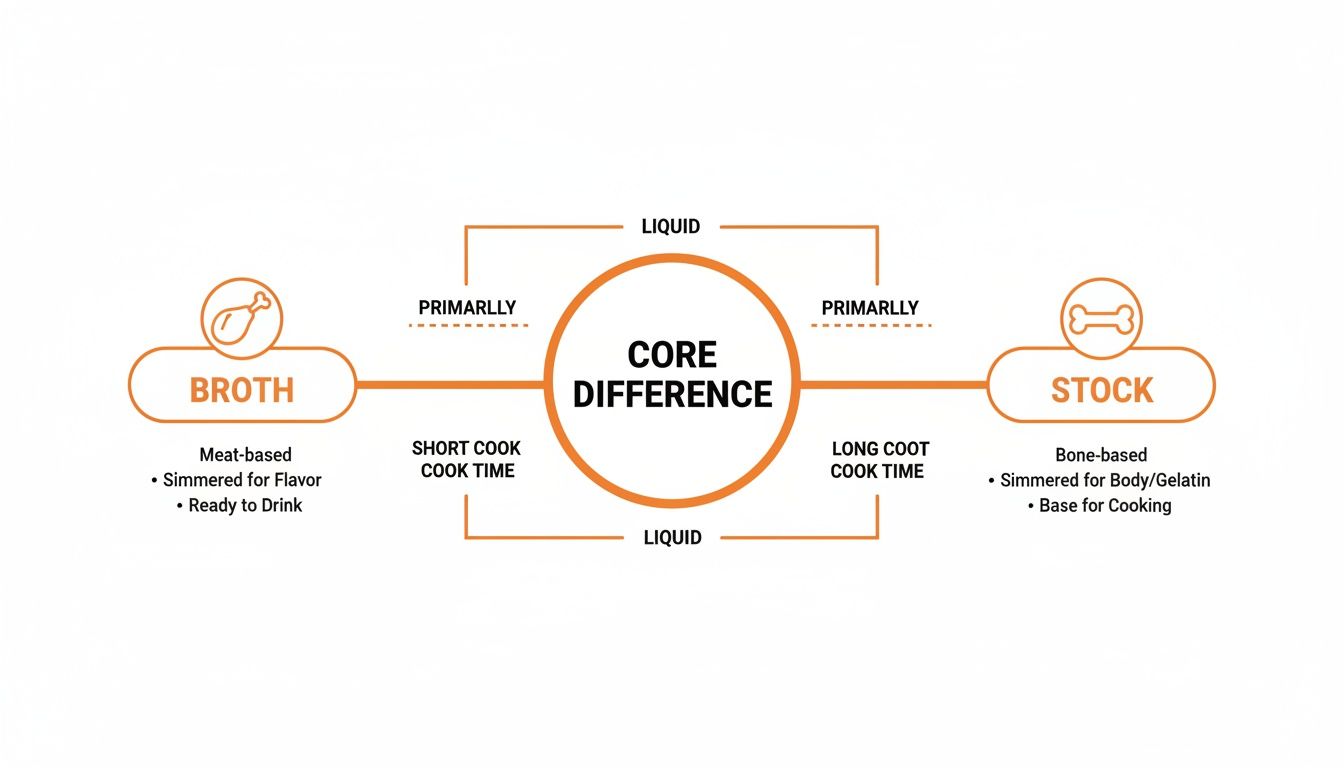
To make things even clearer, here’s a quick side-by-side comparison.
Broth vs. Stock at a Glance
This table breaks down the core differences, giving you a quick reference for the kitchen.
| Characteristic | Broth | Stock |
|---|---|---|
| Main Ingredient | Meat (with some optional bones) | Bones (with some optional meat scraps) |
| Simmer Time | Short (usually 1-2 hours) | Long (often 6-12+ hours) |
| Seasoning | Seasoned during cooking; can be consumed on its own | Unseasoned; intended as a neutral base for other dishes |
| Flavor Profile | Lighter, more delicate flavor of the meat itself | Deep, rich, and complex flavor from marrow and collagen |
| Texture & Body | Thin and watery | Rich and viscous; often gelatinous when chilled |
| Primary Use | Soups (like chicken noodle), sipping, or as a light cooking liquid | Sauces, gravies, demi-glace, braises, and enriching soups/stews |
Ultimately, understanding this key difference—meat versus bones—is the first and most important step. Once you've got that down, you can start mastering how and when to use each one to elevate your own cooking.
The Heart of the Matter: Core Ingredients
The real difference between broth and stock isn't a fussy culinary rule; it’s about the very first choice you make. It's about what goes into the pot. Are you starting with bones or with meat? That one decision sets the stage for everything that follows—the simmer time, the final texture, and what the liquid is ultimately destined to become.
For stock, it's all about the bones. We're talking chicken carcasses, beef knuckles, pork necks, and fish frames. These aren't just leftovers; they are absolute treasure troves of collagen. As they simmer away for hours, that connective tissue slowly melts into gelatin, creating a liquid with incredible body and a rich, savory depth. Think of stock as the strong, silent foundation of a dish.
For broth, the spotlight shifts entirely to the meat. Chunks of chicken breast, beef shank, or other meaty pieces are gently simmered to pull their clean, direct flavor into the water. The goal here isn't body; it's a light, delicate liquid that tastes distinctly of the meat it was cooked with.
The Power of Bones in Stock
When you make stock, you're not just making flavored water; you're patiently extracting the very soul of the bones. It's a slow, deliberate process that pulls out minerals and, most importantly, that magical collagen from every joint and crevice.
- Collagen is Everything: This is the non-negotiable star of the show. When you gently heat collagen over a long period, it transforms into gelatin. This is what gives a great stock its signature silky, slightly sticky mouthfeel. It’s the reason a properly made, chilled stock will set up into a firm, jiggly gel.
- Marrow Adds Richness: If you're using larger beef or veal bones, you get the added bonus of marrow. Roasting these bones first coaxes out a deep, buttery richness that adds another layer of profound flavor to your finished stock.
- A Neutral (But Savory) Canvas: Because the flavor is coming from the essence of the bones rather than seasoned meat, the resulting stock is a relatively neutral—yet deeply savory—base. It's the perfect starting point for building complex sauces, gravies, and stews.
Meat's Role in a Flavorful Broth
While stock is all about building structure, broth is built for immediate, recognizable flavor. Using meat as the main event creates a completely different experience.
Here's an easy way to remember it: think about what you’d rather sip from a mug on a cold day. You’d drink broth. With its seasoned, meaty flavor, it's ready to go. Stock, while deeply satisfying, is an ingredient waiting for its moment to shine.
Broth is designed to be a finished product, or at least very close to one. The meat gives it a straightforward, clean taste that doesn't need much help, which is why it’s the star in simple, clear soups like chicken noodle or Vietnamese pho. It’s less about creating body and all about delivering a delicious flavor that can stand proudly on its own. This fundamental ingredient choice is the first and most important step in understanding what truly separates these two kitchen workhorses.
The Role of Cooking Time and Technique
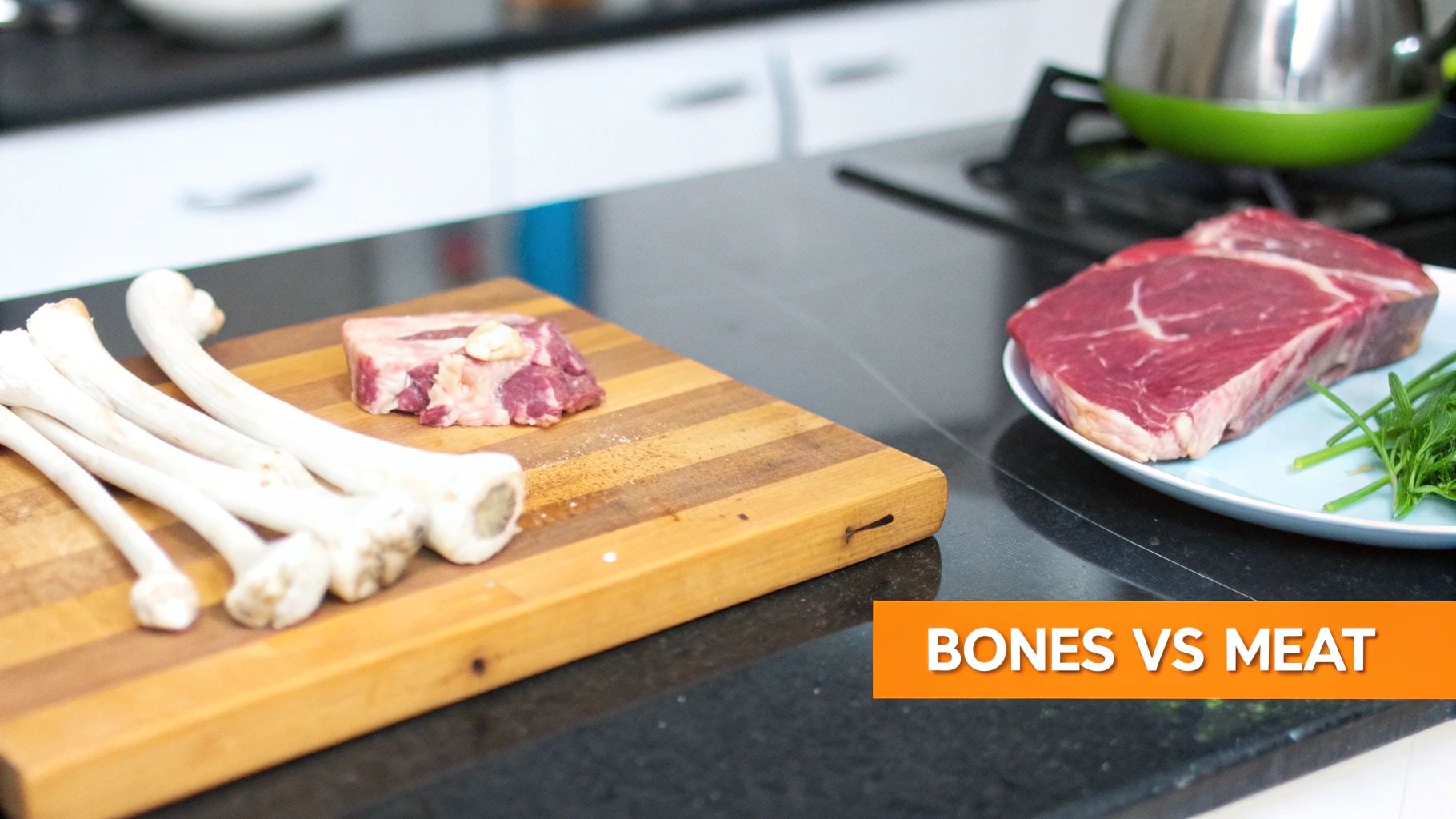
Ingredients are just the starting point. The real magic—and the clearest difference between broth and stock—happens in the pot. It all comes down to time and technique.
Think of making stock as a lesson in patience. It’s a low-and-slow marathon designed for one purpose: pulling every last bit of collagen, minerals, and flavor from bones. This isn't a quick job. We're talking a long, gentle simmer that can last anywhere from 4 to 12 hours. For rich beef or veal stocks, it can go even longer.
On the other hand, broth is a sprint. It’s all about capturing the bright, clean flavor of meat in a much shorter window. The goal is a delicious liquid you can enjoy right away.
The Art of the Simmer
A violent, rolling boil is the absolute enemy of good stock. It emulsifies fats and clouds the liquid, leaving you with a greasy, murky mess. Instead, you want the surface to barely tremble, with just a few lazy bubbles breaking through every so often. This is the secret to a crystal-clear, deeply flavorful result.
It’s this long, gentle cooking that gives stock its character. Professional chefs often rely on essential commercial types of pots, like towering stockpots built specifically for this kind of extended simmering.
Mastering the simmer is key for both, but the philosophy is different:
- Gentle Heat for Stock: A slow, patient simmer coaxes gelatin from the bones without agitating impurities. This allows you to easily skim them off, preserving that beautiful clarity.
- Efficient Heat for Broth: Since you're working with meat, the goal is to extract flavor quickly without turning the meat tough and stringy. A lively simmer for just 1 to 2 hours is all it takes.
This fundamental difference is what separates a foundational ingredient (stock) from something that's practically a finished dish on its own (broth). If you want to see these techniques in action, exploring some of the best cooking classes online can give you the visual cues to perfect your simmer.
Why Skimming Matters
Whether you're making a quick broth or a long-simmered stock, skimming is non-negotiable. As the liquid heats up, proteins and other impurities rise to the top, forming a layer of foam or "scum." Don't skip this step.
Removing this foam is crucial for a clean, pure-tasting result. If you don't, you'll end up with a cloudy liquid that has a slightly bitter, off-putting flavor, undermining all the time you've invested.
Use a fine-mesh skimmer or a large spoon to periodically remove the foam as it forms, especially during the first hour of cooking. It’s a simple act of clarification that makes a world of difference, ensuring your finished product is as pure and delicious as possible. The technique you use directly impacts the taste you track and remember.
Comparing Flavor and Texture Profiles
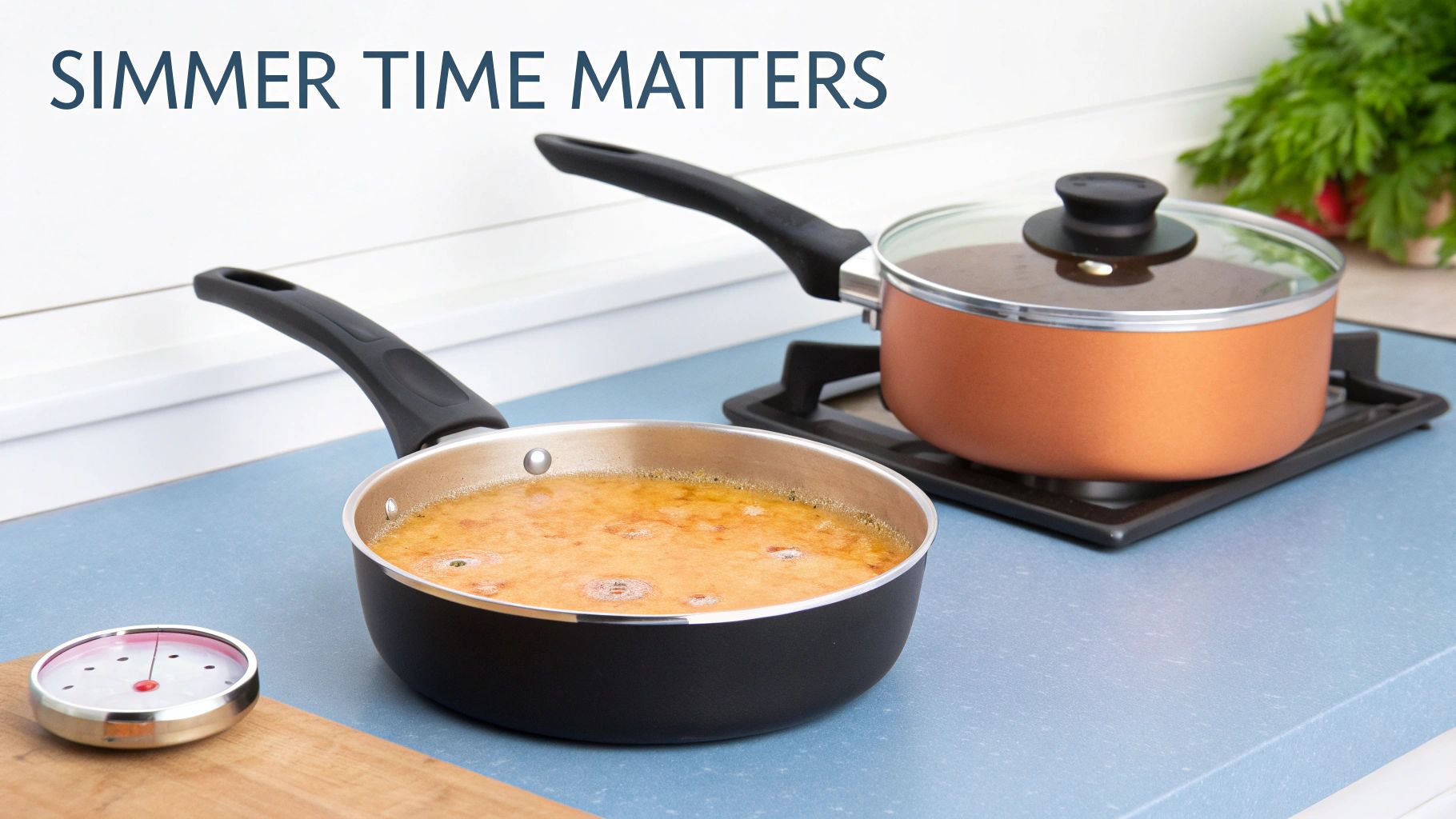
After all that simmering, what’s the actual difference on your tongue? This is where the debate really ends. The contrast between broth and stock isn’t just about the ingredient list; it’s a completely different sensory experience.
Broth is direct and clean. Because it’s made from meat and seasoned from the start, its flavor is complete and ready to be sipped on its own. Texturally, it’s thin and light, which is why it’s perfect for a classic chicken noodle soup or a delicate wonton soup where the liquid itself is a star.
Stock, on the other hand, is all about depth and body. Its flavor is richer and more complex, but it's also neutral because it's left unseasoned. This makes it a fantastic foundation to build upon. The real tell is its texture—all that collagen from the bones gives stock a viscous, almost silky mouthfeel that coats your tongue.
The Tell-Tale Gelatin Test
One of the most satisfying moments for any cook is seeing what happens to a well-made stock once it chills. If you’ve done everything right, your liquid will transform into a firm, jiggly gel. Don’t be alarmed—this is the gold standard!
That gelatinous texture is the visual proof that you’ve successfully extracted a ton of collagen. This is the secret weapon that gives sauces and gravies a luxurious, restaurant-quality body without needing to add a bunch of flour or cornstarch.
Broth, which doesn't have that high concentration of collagen, will stay liquid even when it’s refrigerated. This simple "jiggle test" is the most definitive way to see the difference between your broth and stock right in your own kitchen.
Documenting the Nuances of Texture
For anyone who really cares about food, the difference between a good sauce and a truly great one often boils down to texture. Was it velvety? Silky? Thin? Taking a moment to notice and document these subtle details is how you build a more sophisticated palate. To dig deeper, check out our guide on what is a flavor profile to sharpen your understanding.
Using a private food diary to log the specific mouthfeel of your dishes creates a personal taste library. You can track these sensory details, helping you remember exactly what made that one gravy so memorable or why a particular ramen bowl felt more satisfying than another. Over time, these notes become an invaluable tool for recreating your favorite meals and trusting your own culinary instincts.
Choosing the Right Liquid for Your Dish
Alright, we've covered the ingredients and the process. Now for the most important part: putting this knowledge to work in your own kitchen. Knowing the technical differences is one thing, but choosing the right liquid for your recipe is what separates a good dish from a great one.
Luckily, it all comes down to a single, simple question: Is the liquid the star of the show, or is it a supporting character?
Think of it this way. Since broth is already seasoned and has a lighter flavor, it shines in simple soups where the liquid itself is meant to be tasted and enjoyed. A classic chicken noodle soup, a delicate wonton soup, or a comforting matzo ball soup—these dishes rely on broth for their finished, sip-worthy flavor. It's also perfect for gently poaching fish or cooking grains like quinoa, infusing them with a subtle savory note.
Stock, on the other hand, is the ultimate team player. With its rich, unseasoned depth and gelatinous body, it's the foundation you need for building complex sauces, pan gravies, and hearty stews. That gelatin creates a luxurious, velvety mouthfeel you just can't get from broth. For a dish like risotto, a good stock’s viscosity is the secret to that signature creamy texture without having to load it up with dairy.
When to Use Broth
Reach for broth when you want a light, flavorful liquid that won't overpower the other ingredients. It's the perfect choice for:
- Simple, Clear Soups: Think chicken noodle, egg drop, or any soup where the liquid is a primary flavor component.
- Poaching: A fantastic medium for gently cooking delicate proteins like fish, chicken, or shrimp.
- Cooking Grains: The easiest way to infuse flavor directly into rice, quinoa, or couscous as they cook.
- Quick Pan Sauces: Perfect for deglazing a pan after sautéing meat or veggies to create a light, instant sauce.
When to Use Stock
Stock is your go-to when you need to build richness, body, and a deep savory base. It's the foundation for dishes like:
- Hearty Stews and Braises: It provides a substantial, collagen-rich base for long-cooked dishes like beef stew or pot roast.
- Gravies and Sauces: The gelatin is your best friend here, creating a naturally thick and velvety texture.
- Risotto: Its body is essential for creating that famously creamy consistency.
- Enriching Other Dishes: A splash of stock can add an incredible boost of flavor to mashed potatoes or sautéed greens.
The core principle is simple: Use broth when you want to taste the liquid; use stock when you want to feel its body. Tracking this subtle but crucial difference in your own cooking is how you start to understand what makes a dish truly memorable.
So, can you substitute one for the other in a pinch? Sometimes. You can definitely use stock in a soup, but you’ll need to season it properly with salt and other aromatics. Using broth to make a gravy is much trickier; it lacks the body from gelatin and will likely require more flour or cornstarch to thicken up.
Understanding what is the difference between broth and stock is all about empowering you to make confident choices that bring your culinary vision to life. It’s about appreciating the different sensory experiences each liquid provides. To go even deeper on this, you might enjoy our guide on what are the five basic tastes.
Your Culinary Decision Guide
To make it even clearer, here’s a quick-glance table to help you decide which liquid to grab for some common kitchen tasks.
| Dish/Purpose | Best Choice | Why It Works Best |
|---|---|---|
| Chicken Noodle Soup | Broth | The liquid is a main flavor component; it needs to be seasoned and ready to sip. |
| Thanksgiving Gravy | Stock | The gelatin from the bones provides natural body and a rich, velvety mouthfeel. |
| Creamy Risotto | Stock | Its viscosity helps create the signature creamy texture without adding excess dairy. |
| Poaching Salmon | Broth | Gently infuses the delicate fish with a subtle, savory flavor without overpowering it. |
| Hearty Beef Stew | Stock | Provides a deep, rich foundation that can stand up to long, slow cooking times. |
| Cooking Quinoa | Broth | A simple way to add flavor to grains, making them a more interesting side dish. |
This guide isn't about rigid rules but about understanding the tools at your disposal. Once you know what each liquid brings to the table, you can make smarter, more delicious decisions every time you cook.
Navigating Store-Bought Options and Bone Broth
Walking down the soup aisle can feel like a pop quiz. Cartons labeled “cooking stock,” “sipping broth,” and everything in between all compete for your attention, and frankly, the marketing terms often blur the very lines we just spent time clarifying.
This is where reading the ingredients becomes your secret weapon. You have to learn to look past the front of the box.
You'll find plenty of products labeled “broth” that are actually made with bones, just like a traditional stock. The catch? They're almost always heavily seasoned with salt, yeast extract, and other flavor enhancers to make them taste great right out of the box. That convenience is a trade-off—it gives you way less control over the final flavor of your dish.
On the flip side, you might grab a carton of “stock” only to find it’s surprisingly thin and watery, lacking that rich, gelatinous body you get from a true, long-simmered liquid. It's a perfect example of how the words on the package don't always tell the whole story.
The Deal With Bone Broth
So, where does the trendy “bone broth” fit into this whole picture? Think of it as a hybrid that aims to give you the best of both worlds.
Bone broth is essentially a high-quality, long-simmered stock that has been lightly seasoned and packaged to be consumed like a broth. It combines the collagen-rich, body-building method of stock-making with the ready-to-enjoy purpose of a broth.
It’s specifically designed for sipping, delivering all those nutritional benefits from the gelatin and minerals that are pulled from bones simmered for anywhere from 8 to 24 hours.
When you're at the store, keep these simple guidelines in mind:
- For Sauces and Gravies: Your best bet is an unsalted or low-sodium stock. This puts you in the driver's seat. Check the ingredients for bones listed high up, and bonus points if you find a brand that gels when it's chilled—that’s a true sign of quality.
- For Sipping and Simple Soups: A high-quality store-bought broth or a dedicated bone broth is a great choice here. Just pay close attention to the sodium content to make sure it fits your taste and dietary needs.
Once you understand what is the difference between broth and stock, you can look right past the marketing fluff. By checking the ingredients and knowing what your recipe needs, you can pick the perfect liquid foundation every single time.
Common Questions About Broth and Stock
Even after laying it all out, a few questions always seem to surface. Let's tackle them head-on, clearing up any lingering confusion so you can feel completely confident in your own kitchen.
Why Didn't My Stock Gel?
This is, without a doubt, the most common question. You simmer for hours, cool it down, and… nothing. Just liquid. The answer almost always comes down to one thing: collagen. If your stock stays watery in the fridge, it's a sign that not enough collagen was extracted.
There are a few usual suspects for this:
- Not Enough Bones: The ratio of water to bones was probably a little off. Think of it like making Jell-O—if you use too much water, it won't set. You need a ton of collagen-rich bones like chicken feet, wings, and beef knuckles to get that beautiful gel.
- You Pulled It Too Soon: Collagen needs time to break down into gelatin. A long, slow simmer, often for 6+ hours, is non-negotiable. Cutting this corner is the most frequent reason for a liquidy stock.
- Boiling Instead of Simmering: This is a subtle but crucial mistake. A rolling boil is too aggressive and can actually shred the delicate gelatin structures as they try to form. You're looking for a gentle, lazy simmer with bubbles just barely breaking the surface.
Is Cloudy Stock Bad?
Not at all! A cloudy stock is perfectly safe and usually tastes fantastic. Don't throw it out.
The cloudiness is just a cosmetic issue caused by fats and proteins emulsifying into the liquid. This usually happens when the stock boils too vigorously instead of simmering gently. While high-end restaurant chefs might obsess over a crystal-clear consommé for a refined dish, a cloudy stock is perfectly fine for hearty stews, creamy soups, and rustic sauces where clarity is the last thing on your mind.
Honestly, think of it as a sign of a hearty, homemade effort, not a culinary failure.
Can I Use Broth Instead of Stock in a Recipe?
You absolutely can, but you'll need to be strategic about it. If a recipe calls for stock and all you have is broth, the number one thing to watch is the sodium content.
Store-bought broths are often packed with salt. Your best bet is to grab a low-sodium version and then adjust the seasoning yourself at the very end. The other thing to remember is that you'll miss the rich body and velvety mouthfeel that gelatin provides. For gravies and sauces, you might need to give it a little help with a thickener, like a simple cornstarch slurry or a roux, to get the consistency just right.
Knowing the core differences between broth and stock is what helps you troubleshoot these kinds of substitutions on the fly.
Ready to remember every delicious detail of your culinary creations? With Savor, you can document your meals, from the texture of a perfect gravy to the flavor of a comforting broth. Track tastes, share discoveries.