
How to Track Dish Ratings From Multiple Cities: The Complete System for Serious Foodies
Harry the matcha king
Harry is our resident matcha obsessive. He’s tasted hundreds of bowls and tracks every cup in Savor.
How to Track Dish Ratings From Multiple Cities: The Complete System for Serious Foodies Your camera roll is a graveyard. Somewhere between photo 1,847 and...
How to Track Dish Ratings From Multiple Cities: The Complete System for Serious Foodies
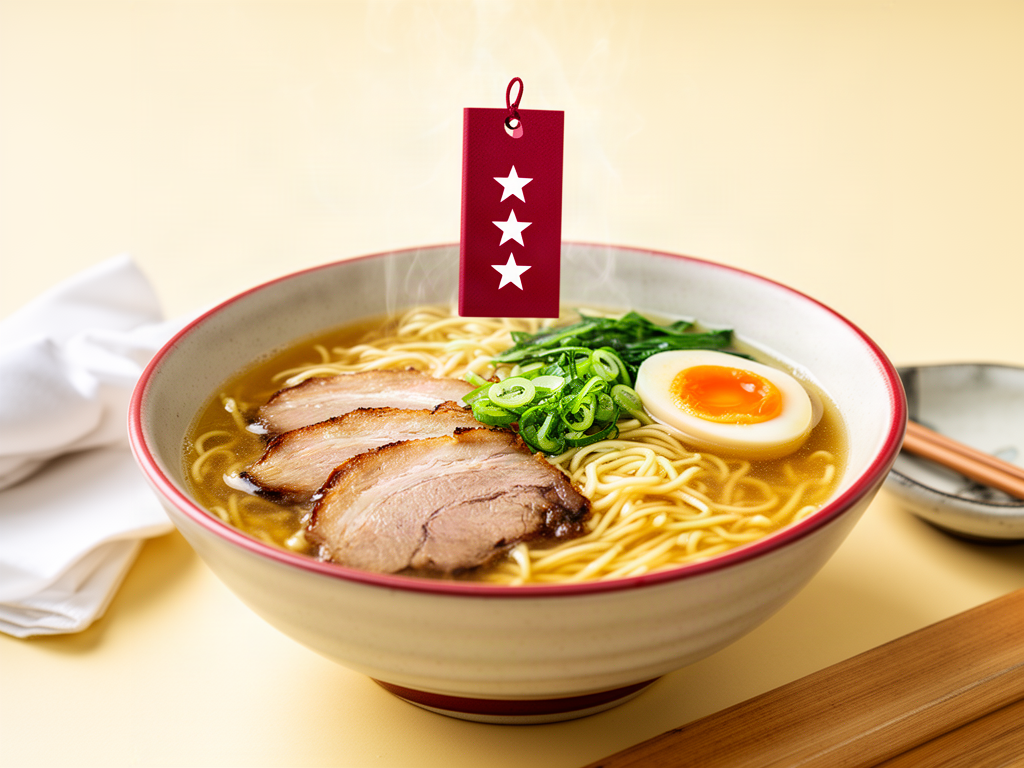
Your camera roll is a graveyard. Somewhere between photo 1,847 and 2,903 sits that life-changing bowl of ramen you had in Tokyo three months ago. You remember the steam rising from the broth, the way the chashu dissolved on your tongue, but you can't recall the restaurant's name. Was it in Shibuya? Shinjuku? The specific dish name is lost. The exact address? Gone.
This is the Camera Roll Problem, and it's costing you more than just memories. You're losing the ability to make informed dining decisions across cities, to share meaningful recommendations with traveling friends, and to build a personal culinary database that actually improves over time. Generic five-star restaurant reviews won't solve this. You need dish-level intelligence - a searchable record of which specific plates are worth ordering in each city you visit.
This guide provides the complete system for tracking individual dish ratings across multiple cities, transforming your scattered food photos into a structured, searchable culinary archive.
 Moving beyond the 'Camera Roll Problem' allows foodies to transform thousands of unsearchable photos into a searchable, high-precision database of every meal ever eaten.
Table of Contents
- Why Dish-Level Tracking Beats Restaurant Ratings
- The Four Core Decisions Before You Start
- App Deep-Dives by Diner Archetype
- The Multi-City Workflow: A Step-by-Step System
- The Personal Rating Framework
- Data Portability and Future-Proofing
- Frequently Asked Questions
Why Dish-Level Tracking Beats Restaurant Ratings
A four-star restaurant can serve a ten-point carbonara and a mediocre risotto. Restaurant-level ratings collapse this nuance into useless averages. You don't return to a place because it's "good overall" - you return because of a specific dish that haunts you weeks later.
The serious foodie shift is from "Is this restaurant worth visiting?" to "Which exact dish should I order at this specific location?" This requires granular, dish-first documentation that traditional review platforms can't provide.
Consider the real-world scenario: You're visiting San Francisco next month. Your friend asks, "Where should I eat?" You remember having incredible pasta somewhere in North Beach, but you can't recall the restaurant name, the dish name, or your exact rating. Your camera roll shows fourteen pasta photos from that trip. This is data, but it's not intelligence.
Dish-level tracking solves this by making every meal searchable by location, cuisine type, specific dish name, and your personal rating. Three months later, you can filter for "San Francisco + Pasta + 9+ rating" and get an instant answer.
The Four Core Decisions Before You Start
Before choosing an app or building a system, you need to make four foundational decisions that will determine your entire workflow. These aren't preferences - they're architectural choices that affect how useful your data becomes over time.
Social vs. Private: Do You Want an Audience?
The Trade-Off: Public tracking creates social accountability and community discovery, but it also introduces performance pressure. Private tracking preserves honest, unfiltered opinions but eliminates the serendipity of seeing what others in your network rate highly.
- Choose Social If: You value competitive leaderboards, want to discover what friends are eating in real-time, and don't mind your ratings being visible to others.
- Choose Private If: You want to write brutally honest reviews, track meals without social pressure, or keep your dining history entirely personal.
Apps like Beli and Crumble emphasize social features, while Savor and Memolli default to private archives. This single decision will eliminate half your options immediately.
Ranking vs. Scoring: How You Assign Value
This is the difference between asking "Which is better?" versus "How good is this on an absolute scale?"
ELO Ranking (Head-to-Head Comparison): Beli uses an ELO ranking system to compute scores out of 10 based on head-to-head restaurant comparisons. You're shown two previous meals and asked to pick the superior one. Over time, this builds a ranked list. The advantage is speed and comparative accuracy. The limitation is that comparing pizza to sushi feels absurd when they serve entirely different purposes.
10-Point Absolute Scoring: Apps like Crumble and Savor let you rate dishes on a fixed scale (1/10th star precision is common). This allows for independent evaluation but requires you to maintain internal consistency across cuisines and price points.
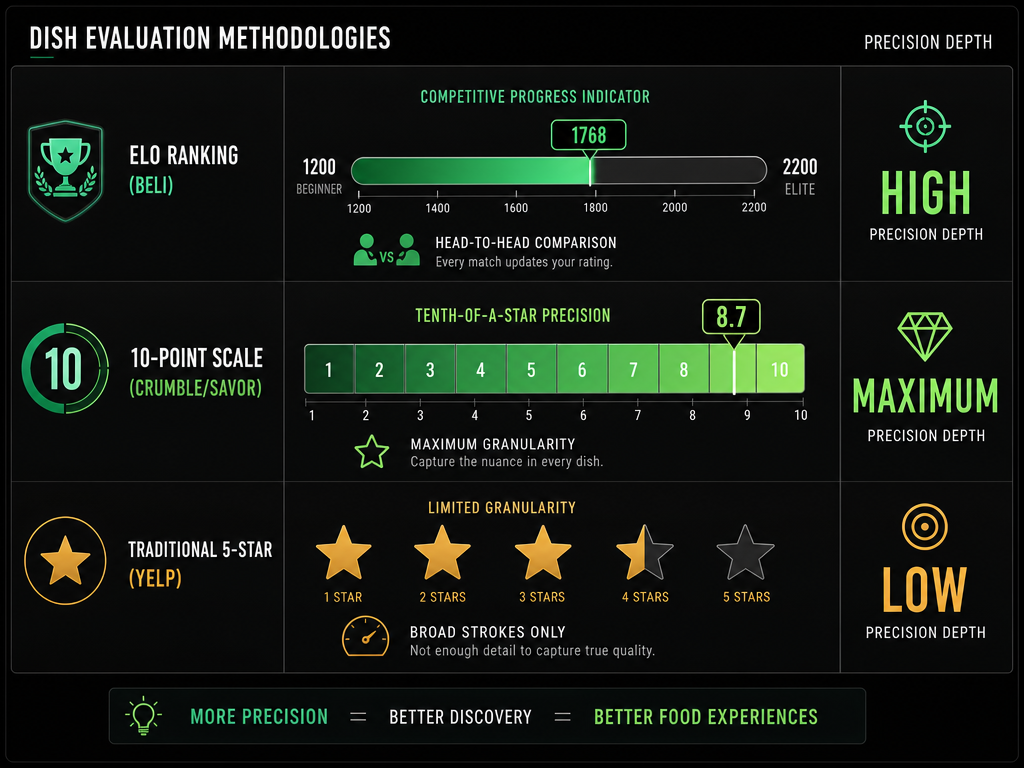 Precision matters: While traditional 5-star systems offer limited insight, ELO and 10-point scales provide the granularity needed to rank the world's best dishes accurately.
The Hybrid Solution: Some serious foodies use ELO for creating a "personal top 100" and 10-point scales for raw data capture. The systems serve different purposes - one answers "What should I order next?" and the other answers "Was this meal objectively excellent?"
Automation Effort: Manual Precision vs. Low-Friction Capture
High-Effort, High-Detail Systems: Apps like Crumble and Savor require you to manually enter the restaurant name, dish name, price, flavor notes, and a photo. This takes 90 seconds per dish but creates a searchable database with structured metadata.
Low-Effort, Auto-Capture Systems: Truffle scans your Instagram Stories automatically, and Yummi backdates timestamps to when a photo was actually taken, allowing for batch-uploading historical meals. You get speed at the cost of structure - your notes are loose, and filtering by dish name requires manual cleanup later.
The Reality Check: Most people start with high-effort systems during a vacation ("I'll be diligent about this trip!") and default to low-effort capture as daily life resumes. Build your system around the workflow you'll actually maintain, not the one you wish you had discipline for.
Travel Utility: Offline Access and Map-Based Discovery
If you travel internationally, two features become non-negotiable: offline maps and proximity alerts.
Mapstr offers proximity alerts when users walk near a previously saved spot, useful for multi-city travel. You're walking through a neighborhood in Paris, and your phone buzzes: "You saved a bakery 200 meters away three years ago and rated it 9/10." This transforms your archive from a passive list into an active travel companion.
Offline functionality matters because data roaming is expensive and unreliable. Apps like Memolli and Mapstr let you download city maps in advance, so you can access your saved spots without cellular service.
App Deep-Dives by Diner Archetype
Your ideal app depends less on features and more on your dining personality. Here's how to match your archetype to the right tool.
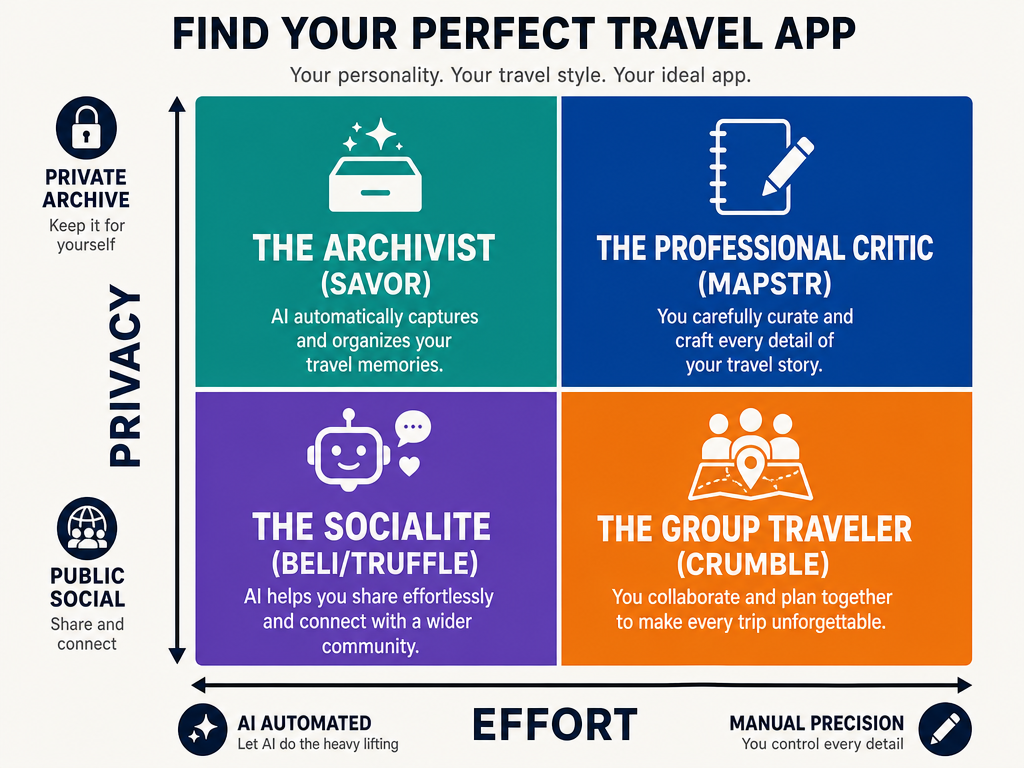 Choosing your tracking workflow depends on two main factors: how much effort you want to put into logging and whether you want to share your map publicly.
The Socialite: Beli
Best For: Competitive diners who want to see how their taste ranks against friends, discover trending spots in real-time, and maintain a public-facing culinary identity.
Core Mechanic: ELO-based ranking through head-to-head comparisons. You rate by choosing between two previous meals, and the app calculates a numerical score. Over time, this builds a ranked list of your favorite restaurants.
Critical Limitation: Beli's user base is currently densest in large US cities like NYC and SF. If you're dining in smaller cities or internationally, you'll encounter fewer community recommendations and less social validation for niche spots.
Who Should Skip It: Anyone dining primarily at mom-and-pop restaurants without an Instagram presence, or anyone who wants to write private, unfiltered critiques without worrying about how friends will perceive their taste.
The Archivist: Savor
Best For: Diners who want AI-powered dish recognition, private detailed logs, and the ability to search their entire dining history by city, dish type, or flavor profile.
Core Mechanic: Photo-first capture with AI recognition that auto-suggests dish names and restaurant details. You can add structured tasting notes (saltiness, umami level, texture) and filter your archive with surgical precision.
Critical Strength: Privacy by default. Your reviews are never public unless you explicitly share them. This encourages honest, detailed documentation without social performance pressure.
Who Should Skip It: If you want community discovery and don't care about building a searchable personal archive, Savor's feature set will feel like overkill. It's optimized for people who dine out 100+ times per year and want to remember specific details years later.
Learn more about how to track your favorite dishes with private, searchable systems.
The Group Traveler: Crumble
Best For: Friends who travel together frequently, share dining recommendations within a tight circle, and want per-dish precision without public social feeds.
Core Mechanic: Friends-only map sharing with 1/10th star precision. You create private food maps for specific trips (e.g., "Tokyo 2026") and share them with select people. Each dish gets its own rating, not just the restaurant.
Critical Strength: The privacy model sits between fully public (Beli) and fully private (Savor). You're sharing with intentional audiences, not broadcasting to strangers.
Who Should Skip It: Solo diners who don't need collaborative features, or anyone who wants automated capture instead of manual logging.
The Visual Storyteller: Yummi
Best For: Instagram-first diners who want a photo timeline of their food life, automatic organization by date and location, and minimal data entry.
Core Mechanic: Upload photos, and Yummi builds a visual "Foodprint" timeline. The app backdates entries to when photos were taken, so you can batch-upload years of camera roll history and maintain chronological accuracy.
Critical Limitation: Loose structure. You're not building a searchable database with standardized dish names or flavor tags. This is a visual memory book, not a culinary spreadsheet.
Who Should Skip It: Anyone who wants to filter by cuisine type, compare similar dishes across cities, or export structured data for analysis.
The Minimalist: Mapstr
Best For: People who track all kinds of places (not just food), want a simple pin-on-a-map interface, and prioritize discovery over detailed documentation.
Core Mechanic: Drop a pin, add a photo and brief note, and organize by custom lists. Mapstr is lightweight and doesn't force you into a complex rating system.
Critical Strength: Proximity alerts. Walk past a saved spot, and the app reminds you it exists.
Who Should Skip It: Serious foodies who need dish-level granularity. Mapstr treats restaurants as single entities, not collections of dishes.
For broader context on the best food review apps, see our comprehensive comparison.
The Multi-City Workflow: A Step-by-Step System
Here's how to implement a cross-city dish tracking system that actually works during travel.
Before the Trip: Pre-Load Your Wishlist
- Aggregate Recommendations: Collect dish-specific intel from friends, food blogs, and local food writers. Don't just save restaurant names - save exact dishes with photos.
- Tag by Neighborhood: Organize your wishlist by geographic clusters. "Shibuya Ramen," "Montmartre Bakeries," "North Beach Italian."
- Enable Offline Maps: Download city maps in Mapstr or Memolli before you land. Data roaming failures won't kill your ability to navigate to saved spots.
During the Meal: Fast-Capture Protocol
The goal is to document without disrupting the dining experience. Speed matters more than perfection.
- Photo First: Capture the dish from a natural angle. Don't rearrange the table or wait for perfect lighting.
- Voice Note (Optional): If the app supports it, record a 15-second voice memo immediately after the first bite. This captures ephemeral impressions that you'll forget by dessert.
- Quick Score: Assign a rough rating (1-10 or ELO comparison) within 60 seconds. You can refine later, but the initial impression is often the most accurate.
After the Meal: Structured Enhancement
Within 24 hours, while memory is fresh:
- Add Dish Name and Price: Standardize formatting. "Cacio e Pepe - €14" not "really good pasta."
- Location Tag: Confirm the restaurant's exact address. Many apps auto-populate this, but verify accuracy for future searches.
- City Filter Tag: Manually add a city tag if the app doesn't auto-generate one. This becomes your primary search filter months later.
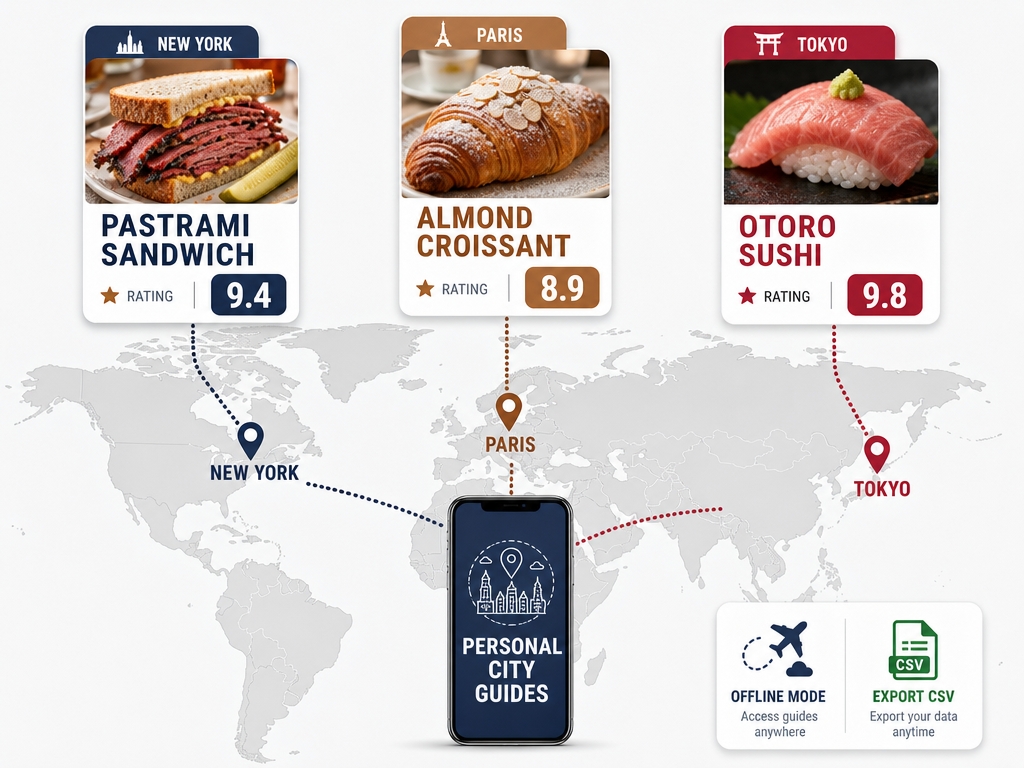 Modern food tracking apps allow you to build a global culinary legacy, filtering your highest-rated dishes by city or neighborhood for future travel.
Post-Trip: Archive Review and Pattern Recognition
One week after returning:
- Filter by City: Pull up all meals from the trip. Look for patterns. Did one neighborhood consistently deliver? Did a specific cuisine type dominate your top ratings?
- Comparative Analysis: If you visited the same city previously, compare this trip's ratings to past visits. Are your standards rising? Are certain restaurants declining?
- Share Selectively: Export a curated list of 9+ rated dishes and share with friends planning similar trips. This is where your archive becomes a service to others.
For practical examples of how professional foodies implement this system, see how to track every dish you've eaten.
The Personal Rating Framework
Consistent ratings require a framework, not just intuition. Here's a field-tested system that maintains calibration across cuisines and price points.
The 10-Point Scale (Dish-Specific)
- 9-10: Extraordinary. You'd fly to this city specifically for this dish. It redefined your understanding of what's possible with these ingredients.
- 7-8: Excellent. Strong execution, memorable, worth ordering again. These dishes populate your "recommend without hesitation" list.
- 5-6: Solid. Technically competent, but forgettable. You wouldn't seek it out, but you don't regret eating it.
- 3-4: Disappointing. Technical flaws or mismatched expectations. You're actively glad you documented this to avoid it in the future.
- 1-2: Offensive. Serious quality issues. This is the "warn others" category.
Calibration Questions
Before assigning a score, ask:
- Would I order this again if I returned tomorrow? (Yes = 7+)
- Would I recommend this specific dish to a visiting friend? (Yes = 8+)
- Is this the best version of this dish I've ever had? (Yes = 9+)
Context Adjustment
Your rating should account for context, but don't artificially inflate scores based on price or location charm.
- Street Food vs. Fine Dining: A street taco can earn top marks. An expensive tasting menu course can disappoint. Judge based on whether the dish achieves what it's attempting, not on production value.
- First Bite vs. Last Bite: If your enthusiasm drops noticeably by the end (the dish is too rich, too salty, or the novelty wears off), adjust your rating downward.
This framework applies equally whether you're using ELO comparisons or absolute scores. The questions remain the same; only the input method changes.
Data Portability and Future-Proofing
The harsh reality: most apps will shut down eventually. Your culinary archive is only as valuable as your ability to export it.
Essential Export Features
- CSV/JSON Export: Structured data you can import into spreadsheets or other platforms. Look for apps that offer this without paywalls.
- Photo Backup: Confirm that dish photos are stored at full resolution and can be bulk-downloaded. Some apps compress images to save server costs, degrading your archive over time.
- Plain Text Notes: If you've written detailed tasting notes, ensure they export in a readable format, not trapped in proprietary encoding.
The Local Backup Protocol
Every quarter:
- Export Everything: Download your entire database and photo collection.
- Store Redundantly: Keep one copy in cloud storage (Google Drive, Dropbox) and one on an external hard drive.
- Verify Integrity: Open the export file and spot-check entries. Confirm photos are viewable and data fields are populated.
If an app doesn't offer export functionality, treat it as a temporary tool, not a long-term archive. You're renting space for your data, not owning it.
For more on building durable food memory systems, see how to organize restaurant photos by dish.
Frequently Asked Questions
Is there a best app for tracking dishes across multiple cities?
No single app dominates for all use cases. Beli excels for social discovery in major US cities, Savor provides the deepest private archival system with AI recognition, and Crumble serves groups traveling together. Your choice depends on whether you prioritize social features, privacy, or collaborative sharing. The "best" app is the one whose workflow you'll actually maintain consistently.
How do I handle tasting menus with 12+ courses without manual data entry fatigue?
Two strategies work: Use Savor's AI dish recognition to batch-scan photos after the meal, or use Beli's single-visit log to rate the overall experience rather than individual courses. For serious documentation, take one photo per course during service, then spend 10 minutes after the meal adding minimal notes (dish name, standout flavors). You're not writing essays - you're creating search keys for future memory retrieval.
Which apps allow me to filter my ratings by city or neighborhood?
Savor, Crumble, and Memolli all support city-based filtering. Mapstr offers neighborhood tagging through custom lists. The key is consistent tagging discipline - if you don't manually add a city tag during logging, the app can't retroactively generate one from GPS coordinates alone (many restaurants share coordinates across franchise locations).
Can I export my dish ratings if an app shuts down?
Only if the app offers CSV or JSON export. Savor and Crumble both provide this. Beli currently does not. Before committing to any platform, navigate to settings and confirm export functionality exists. If you can't export, you're building a data prison, not an archive.
Is Beli better than Yelp for finding good dishes?
Beli rates restaurants through comparative ranking, not individual dishes, so it doesn't solve the core problem Yelp has - both collapse nuance into single aggregate scores. Beli's ELO system computes scores out of 10 based on head-to-head restaurant comparisons, which means you're still tracking venues, not specific plates. For dish-level intelligence, you need apps like Savor or Crumble that let you rate the carbonara separately from the tiramisu.
How accurate are apps that auto-scan dishes from Instagram Stories?
Truffle's Instagram integration captures convenience at the cost of structure. You'll get a chronological feed of meals, but dish names, prices, and structured ratings require manual cleanup. It's best used as a backup memory system alongside a primary app where you log details manually. Think of it as a safety net for meals you forgot to document properly, not a primary archival method.
What's the best way to organize dish ratings when traveling internationally?
Create a two-tier tagging system: City (Tokyo, Paris, Barcelona) and Neighborhood (Shibuya, Montmartre, Gothic Quarter). This allows broad searches ("Show me everything from Tokyo") and narrow ones ("What did I eat in Shibuya specifically?"). Add a Trip Date tag to compare repeat visits to the same city years apart.
Do any apps work offline for international travel without data roaming?
Mapstr offers proximity alerts when users walk near a previously saved spot, useful for multi-city travel, and supports offline map downloads. Memolli also provides offline functionality. Before traveling, download city-specific maps and confirm your saved spots are accessible without cellular connection. Test this before departure - don't discover the limitation at Charles de Gaulle Airport.
Your camera roll doesn't have to be a graveyard. With a systematic approach to dish-level tracking across cities, every meal becomes a searchable data point in your personal culinary legacy. The system you build today determines whether you'll remember that life-changing bowl of ramen three years from now - or scroll past photo 2,847 wondering what it was called.
The best time to start was after your first extraordinary meal. The second-best time is right now, before you forget today's lunch.