
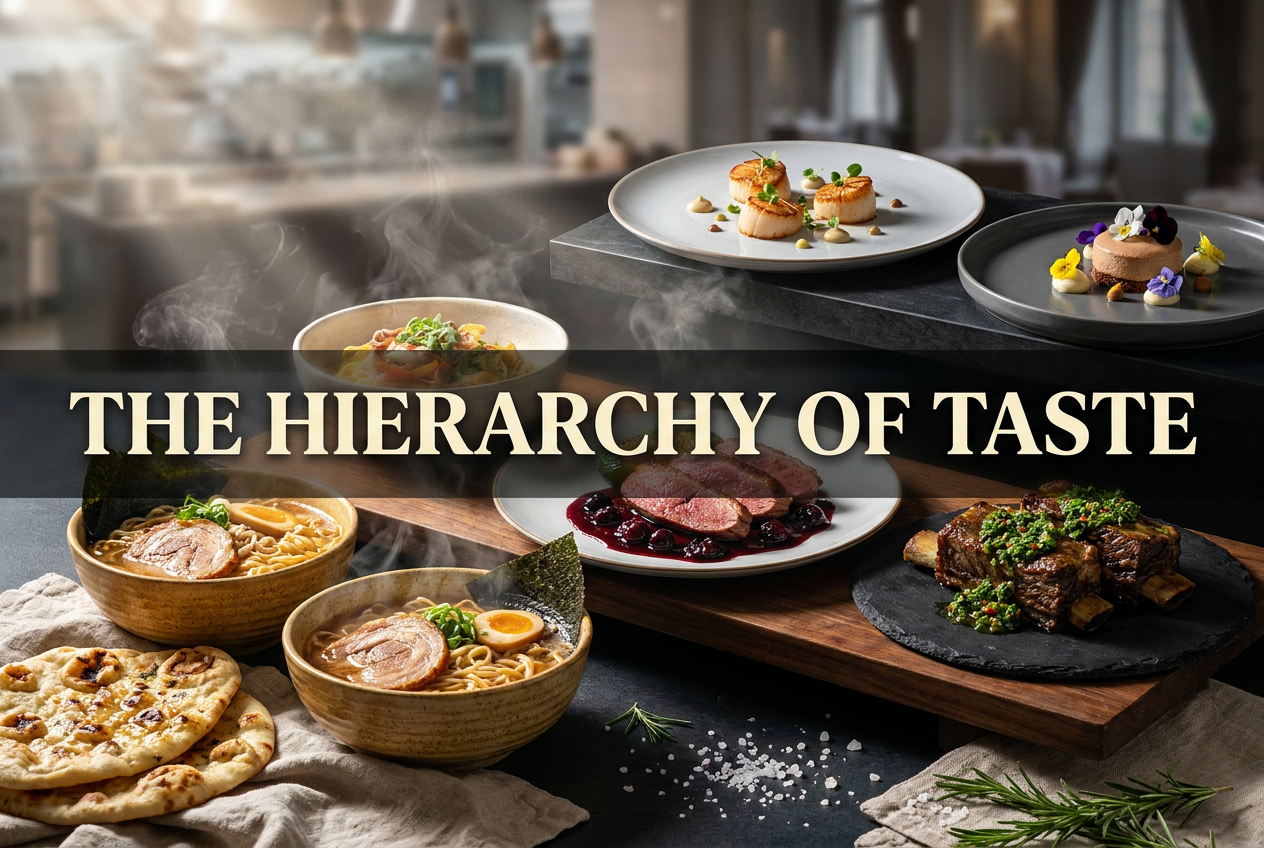
The Serious Foodie’s Hierarchy of Taste: 50 Extraordinary Dishes to Remember
Alex the juice queen
Alex hunts for the best juice bars and presses. She rates every sip and saves her favorites in Savor.
The Serious Foodie’s Hierarchy of Taste: The World’s 50 Most Extraordinary Dishes (And How to Actually Remember Them) Your camera roll holds 2,847 food photos....
The Serious Foodie’s Hierarchy of Taste: The World’s 50 Most Extraordinary Dishes (And How to Actually Remember Them)
Your camera roll holds 2,847 food photos. You remember approximately twelve of those meals with any specificity. The rest? A digital graveyard of unidentified noodles, forgotten tacos, and that one spectacular thing you ate in Barcelona that’s now just "plate with sauce."
This isn’t a failing of your memory. It’s a design flaw in how we approach exceptional food. We treat meals like moments to capture, not experiences to catalog.
The problem with most "tastiest food" lists is they’re built for people who want to kill time during lunch, not for people who travel 6,000 miles for a specific bowl of ramen. They tell you to eat "pizza" and "chocolate" - advice so generic it’s almost offensive. What kind of pizza? Where? Which chocolate, and why does it matter?
This guide is different. It’s not a countdown. It’s a framework for understanding what makes certain dishes transcend mere deliciousness and enter the realm of the unforgettable - and more importantly, a system for making sure you never lose that memory again.
Table of Contents
- Introduction: What Makes a Dish "The Tastiest"?
- The Umami Titans: The Heavy Hitters
- The Acidity and Spice Alchemists
- Texture and Technique: The Sensation Dishes
- The Three-Tier Taste Map: From Street to Avant-Garde
- The Serious Foodie’s Logistics: Moving From Eating to Curating
- Frequently Asked Questions
Introduction: What Makes a Dish "The Tastiest"?
Most people think taste is subjective. They’re half right. Personal preference is subjective. But the technical reasons a dish achieves greatness? Those follow rules.
The world’s most extraordinary foods share a specific architecture. They balance fat and acid. They layer textures. They deploy heat - both temperature and spice - with surgical precision. And they carry cultural narrative weight that turns a plate of food into a story you’ll tell for years.
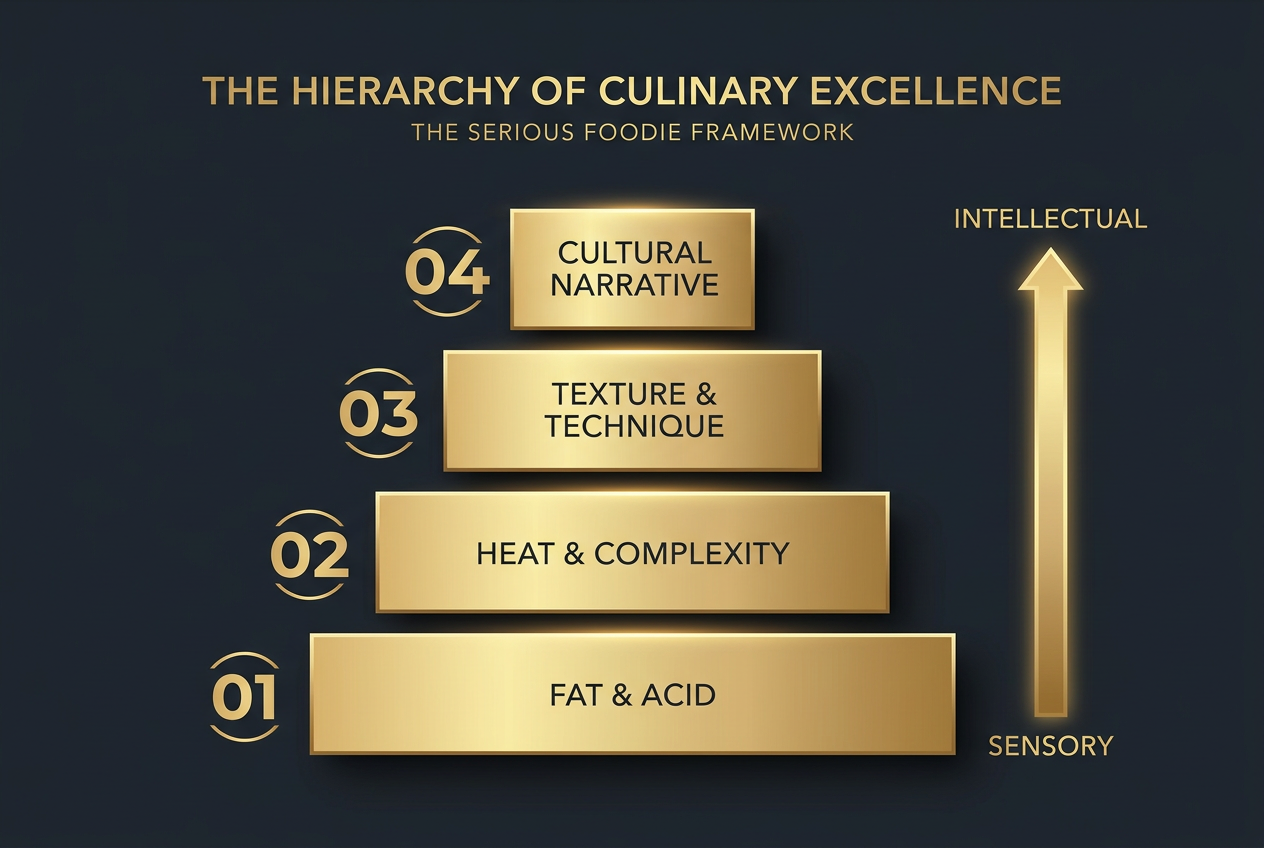
Think about the last meal that genuinely stopped you mid-bite. Chances are it wasn’t because of a single element. A perfectly marbled piece of Wagyu A5 isn’t just about the beef - it’s about the way that fat melts at body temperature, the sear that creates a Maillard crust, the finishing salt that amplifies the umami, and the centuries of breeding and butchery technique that made it possible.
The "Serious Foodie" mindset means treating food as culture, not fuel. It means understanding that when you eat Neapolitan pizza in Naples, you’re not just eating dough and cheese. You’re tasting volcanic soil, centuries of milling tradition, buffalo milk from a specific region, and the precise physics of a 900°F wood-fired oven.
But here’s where most food writing fails you: it tells you what to eat, then leaves you on your own to remember it. Three months later, that transformative meal is just another jpeg with no context, no location data, no flavor notes. If you’re serious about food, that’s unacceptable.
The dishes that follow aren’t ranked. They’re organized by flavor profile and technique - the actual elements that make them memorable. More importantly, we’ll show you how to document them in a way that makes your experience searchable, shareable, and genuinely useful six months from now when you’re trying to remember exactly what made that meal so special.
The Umami Titans: The Heavy Hitters
Umami is the fifth taste, but it’s the first one that separates casual eaters from people who actually understand flavor. It’s that deep, savory, almost addictive quality that makes certain foods linger in your memory long after the meal ends.
The dishes in this category aren’t just delicious. They’re chemically engineered by centuries of tradition to trigger specific pleasure responses in your brain.
Wagyu A5 (Japan)
The gold standard. Real A5 Wagyu from Japan isn’t just expensive beef - it’s a completely different species of experience. The marbling (intramuscular fat) is so intense that the meat appears almost white. When cooked properly, it melts at 77°F, which is below human body temperature. That means it literally dissolves on your tongue.
Where to find it: Authentic A5 comes from specific prefectures - Kobe, Matsusaka, Ōmi. Don’t settle for "Wagyu-style" beef at an American steakhouse. If you’re paying less than $40 per ounce, you’re not eating the real thing. In Japan, expect to pay $200-400 for a proper tasting menu that lets you compare different cuts and preparations.
What makes it unforgettable: The texture is part of it, but the real magic is the umami punch. A5 Wagyu has glutamate levels that rival aged Parmesan. One bite rewires your understanding of what beef can be.
Jamón Ibérico de Bellota (Spain)
If you think you’ve had "Spanish ham," you probably haven’t had this. Real Jamón Ibérico de Bellota comes from black Iberian pigs that roam oak forests eating only acorns (bellotas) during the montanera season. The result is ham with a nutty, complex flavor profile that’s closer to a fine wine than to meat.
The technical specs matter here. The acorn-only diet creates meat with a fat profile closer to olive oil than pork - high in oleic acid, which means it melts at a lower temperature. Proper bellota ham is cured for a minimum of 36 months, often longer. The best producers in Extremadura and Huelva age theirs for five years.
When you’re standing at a market in Seville and someone offers you a sample, pay attention to the fat. It should be translucent, almost golden. Room temperature is non-negotiable - cold ham is a crime. The flavor should hit in waves: salt, then sweetness, then that deep, almost wild funk that comes from the acorns.
Neapolitan Pizza (Italy)
You haven’t eaten pizza until you’ve had it in Naples. That’s not food snobbery - it’s physics and chemistry. Neapolitan pizza is protected by an actual certification (STG - Specialità Tradizionale Garantita) that specifies everything from the flour type to the oven temperature.
The crust is made from Tipo 00 flour, water, salt, and yeast. That’s it. No oil, no sugar, no nonsense. It’s proofed for a minimum of eight hours, often 24. The sauce is raw San Marzano tomatoes, hand-crushed. The cheese is fior di latte or buffalo mozzarella from Campania. And the oven? Wood-fired, 800-900°F, cooking time 60-90 seconds.
What you taste is the product of volcanic soil (Vesuvius), specific wheat varieties, buffalo that graze on mineral-rich grasses, and the exact hydration level needed for a crust with the proper char-to-chew ratio. The best pizzerias in Naples - L’Antica Pizzeria da Michele, Sorbillo, Starita - have been perfecting this for generations.

The Acidity and Spice Alchemists
If umami is the foundation, acidity is the architecture. These dishes use acid and heat not just as flavoring agents but as structural elements that define the entire eating experience.
Tom Yum Goong (Thailand)
This isn’t soup. It’s a controlled explosion of flavor engineered to hit every taste receptor simultaneously. Tom Yum Goong is the dish that proves Thai cuisine is less about spice tolerance and more about precise, almost mathematical balance.
The base is a broth built from lemongrass, galangal, and kaffir lime leaves - three ingredients that create a citrus-forward foundation with none of the sweetness you’d get from actual citrus. Then comes the heat: bird’s eye chilies, crushed or whole depending on the cook’s mercy. The umami layer is nam pla (fish sauce) and, ideally, whole prawns with heads on (the head fat is where the real flavor lives). Finally, lime juice and cilantro hit right before serving.
The result is a liquid that shouldn’t work but does - sour and spicy and savory and aromatic all at once. A proper bowl from a street vendor in Bangkok costs $3. A mediocre version at a fusion restaurant in New York costs $18 and tastes like neither fish nor fowl.
What to track: The balance point. Too much lime and it’s just sour. Not enough fish sauce and it’s hollow. When it’s right, each spoonful should make you wonder how something so chaotic tastes so precise.
Ceviche (Peru)
Ceviche is sometimes called the national dish of Peru, but that undersells it. It’s closer to a philosophy. At its simplest, ceviche is raw fish "cooked" by citrus acid. In practice, it’s a test of everything a cook knows about fish, acid, timing, and restraint.
The fish has to be impeccably fresh - caught that morning, not yesterday. The most traditional version uses corvina or sole, but you’ll also see mahi-mahi, octopus, or mixed seafood. The acid is lime juice, applied just minutes before serving. If it sits too long, the fish overcooks and turns rubbery. The garnishes - red onion, cilantro, chili - are there for texture and heat, not to mask the fish.
Leche de tigre, the citrus-based liquid left after the fish is cured, is considered a hangover cure in Peru. It’s also the marker of a great ceviche - if the liquid is dull or watery, the dish failed.
In Lima, the best ceviches are served at lunchtime, when the fish is at peak freshness. Ordering ceviche for dinner is something tourists do. For the real experience, find a cevichería in Miraflores or Barranco and order ají amarillo-spiked ceviche mixto with cancha (roasted corn) and sweet potato on the side.
Sinigang (Philippines)
Sinigang doesn’t get the global recognition it deserves, which is fine - it means there’s less competition for the good versions. It’s a sour soup built around tamarind, though some regional versions use calamansi, guava, or unripe mango for the acid base.
The protein varies. Pork belly is traditional. Shrimp is common. Fish head sinigang is for people who understand that the best parts of the fish aren’t filets. The vegetables - water spinach (kangkong), long beans, eggplant, radish - soak up the sour broth and provide textural contrast.
The key is the sourness level. It should make you wince just slightly on the first spoonful, then settle into something almost craveable. Served over rice, it’s comfort food with an edge - the kind of dish you want when you’re sick, hungover, or just tired of everything tasting like itself.
If you’re tracking this dish properly, note the protein and the exact sour ingredient. Tamarind sinigang tastes completely different from calamansi sinigang, and that distinction matters when you’re trying to recreate the memory six months later.
Texture and Technique: The Sensation Dishes
Great food isn’t just about taste. It’s about the physical sensation of eating - the way a perfectly executed dish plays with temperature, structure, and mouthfeel.
Xiao Long Bao (China)
Soup dumplings are a miracle of engineering disguised as a simple dumpling. Inside that thin, pleated wrapper is a pocket of soup that somehow survives the steaming process without leaking. The soup isn’t added - it comes from aspic (gelatinized broth) that melts during steaming.
Din Tai Fung standardized xiao long bao to a near-absurd degree: 18 pleats per dumpling, 5 grams of filling, 21 grams total weight. But the best versions come from hole-in-the-wall shops in Shanghai where the dough is rolled so thin you can see the filling through it.
The eating technique matters. You use a spoon to catch the dumpling, nibble a small hole in the wrapper, sip the soup (carefully - it’s molten), then eat the rest in one bite. Doing it wrong means burning your mouth or losing half the soup onto your plate. Doing it right means understanding exactly why this dish has survived centuries of Chinese culinary evolution.
Pastel de Nata (Portugal)
Custard tarts exist in a dozen cuisines. Portugal’s version is the only one that matters. Pastel de nata - specifically, the ones made at Pastéis de Belém in Lisbon using a secret recipe from the 19th century - are the platonic ideal of custard and pastry.
The shell is puff pastry, but not the kind you get from a supermarket freezer section. It’s made from a dough folded and rolled dozens of times to create hundreds of flaky layers. The custard is egg yolks, sugar, milk, and a touch of flour or cornstarch, baked at extremely high heat (around 550°F) so the top caramelizes into a dark, almost burnt crown.
When you bite into a fresh one - and they must be fresh, ideally still warm from the oven - the contrast is everything. Crispy shell, creamy custard, bitter-sweet caramelized top. A dusting of cinnamon and powdered sugar is traditional but optional.
Tracking note: Pastéis de Belém is the original, but hundreds of pastelarias across Lisbon make excellent versions. Beyond the Camera Roll: The 5 Best Apps to Track Every Dish You Eat would help you compare versions and identify the variables that matter - shell thickness, custard sweetness, caramelization level.
Croissant (France)
A proper croissant is the most technically demanding item in a baker’s repertoire. It requires three days of work, precise temperature control, and the kind of attention to detail that borders on obsessive.
The dough is a laminated dough - butter folded into dough multiple times to create distinct layers. Each "turn" doubles the layers. Three turns create 27 layers. Four turns create 81. The butter has to stay cold enough to remain solid but warm enough to be pliable. Too cold and it shatters. Too warm and it melts into the dough, destroying the layers.
A great croissant should shatter when you bite it, sending flakes of pastry across the table. The interior should be airy, almost honeycomb-like, with a slight yeasty tang. The exterior should be deeply golden, not pale blonde.
In Paris, every corner boulangerie makes croissants. Most are mediocre. The exceptional ones - Du Pain et des Idées, Blé Sucré, Liberté - are worth the pilgrimage. Eat it still warm, without butter or jam. If it needs anything added, it wasn’t made properly.
The Three-Tier Taste Map: From Street to Avant-Garde
Not every extraordinary dish requires a three-month reservation or a transatlantic flight. The world’s best food exists in three tiers, each with its own rules.
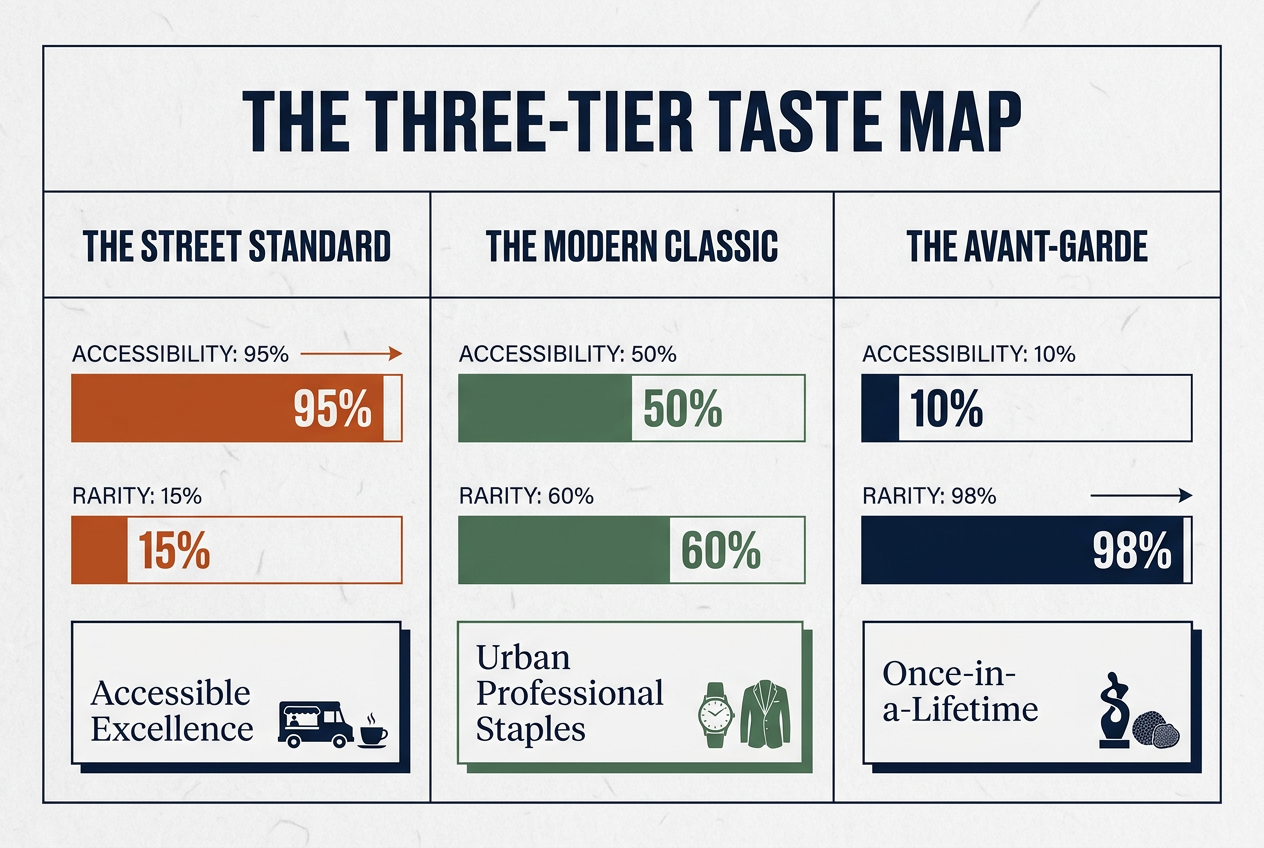
The Street Standard: Accessible Excellence
These are dishes you can find on nearly every continent, made by people who’ve been perfecting them for decades. The barrier to entry is low. The ceiling for quality is surprisingly high.
Tacos al Pastor (Mexico): The iconic vertical spit, the pineapple crown, the marriage of Lebanese shawarma technique and Mexican ingredients. Done right - thin-sliced pork, caramelized pineapple, fresh cilantro and onion, two corn tortillas - it’s a $2 masterpiece.
Pad Thai (Thailand): Possibly the most bastardized dish in global cuisine, which makes the authentic versions even more remarkable. Street vendors in Bangkok still make it the right way: thin rice noodles, tamarind paste (not ketchup), dried shrimp, peanuts, and an egg scrambled directly into the wok. The texture should be slightly sticky, not gloopy. The flavor should be sour-sweet-savory, not sugar-forward.
Banh Mi (Vietnam): French colonialism’s only worthwhile contribution to Vietnamese cuisine. A baguette (but lighter, airier than French baguettes), mayonnaise, pâté, pickled vegetables, cilantro, chili, and your choice of protein. The best versions cost $3 from a street cart and contain more layers of flavor and texture than most restaurant tasting menus.
Tracking these dishes matters because quality varies wildly. That incredible taco stand you found in Mexico City? Without location data and specific notes about what made it special, you’ll never find it again. Tools like how to build a personal restaurant library can help you catalog street food with the same rigor you’d apply to Michelin-starred restaurants.
The Modern Classic: Urban Professional Staples
These are the dishes that define a city’s contemporary food culture. Not quite street food, not fine dining. The sweet spot where skill, accessibility, and consistent quality meet.
Omakase Sushi (Tokyo/New York/Los Angeles): Not the $500 Jiro experience. The $80-120 counter seat at a neighborhood sushi bar where the chef knows your name and adjusts the rice temperature and vinegar level based on what fish came in that morning.
Neapolitan Pizza (Naples/New York): We covered this in the Umami section, but it bears repeating. A great pizza is a modern classic - widely available in major cities, technically demanding, and capable of triggering genuinely transcendent experiences when executed properly.
Tonkotsu Ramen (Japan/Major Cities): The 18-hour pork bone broth, the noodles cooked to exact specifications, the pork belly that’s been braised and torched. A great bowl costs $15-20. A mediocre bowl costs the same and tastes like dishwater. Learning to tell the difference is part of the journey.
The Avant-Garde: Once-in-a-Lifetime
These are the meals that require planning, investment, and often, genuine luck. But when they work, they redefine what food can be.
Noma (Copenhagen): Even if you never get a reservation, understanding what Noma does matters. It’s not just molecular gastronomy or Nordic ingredients. It’s a complete rethinking of what constitutes "food" - fermented grasshoppers, reindeer heart served raw, vegetables treated with the same reverence as proteins.
El Bulli (closed, but its legacy lives): Ferran Adrià’s temple to culinary deconstruction. Spherified olives. Hot ice cream. Dishes that looked like one thing and tasted like another. The restaurant closed in 2011, but its influence ripples through every ambitious kitchen in the world.
Alinea (Chicago): Grant Achatz’s current masterwork. Edible balloons made from apple taffy. Deconstructed pad thai served on an aromatic pillow. Dessert plated directly on the table. The line between food and theater blurs, and that’s the point.
The avant-garde tier isn’t about practicality. It’s about expanding the boundaries of what food can communicate. Most people will eat at these restaurants once, maybe never. But understanding what they’re trying to achieve - that changes how you think about every meal after.
The Serious Foodie’s Logistics: Moving From Eating to Curating
Here’s the uncomfortable truth: you’re forgetting most of the best meals you’ve ever eaten. Not because your memory is bad, but because your documentation system doesn’t exist.
You take a photo. Maybe you add a geotag if you remember. Sometimes you write a half-sentence caption. Six months later, you’re scrolling through your camera roll trying to remember if that incredible pasta was in Rome or Florence, whether the sauce was carbonara or cacio e pepe, and what the name of the restaurant was.
This is where casual food lovers and serious foodies diverge.

The Real Problem with Food Photography
Professional food photographers spend hours lighting a single plate. You have about 15 seconds before everyone at the table starts judging you. The compromise isn’t to take worse photos - it’s to develop a system that captures the right information quickly.
The most important photo isn’t always the styled overhead shot. Sometimes it’s the cross-section showing the layers of a sandwich. Sometimes it’s the menu with the exact name of the dish. Sometimes it’s the storefront sign so you can find it again.
What to capture:
- The dish, obviously: But focus on the parts that made it special. The char on the crust. The marbling in the meat. The way the sauce pooled on the plate.
- Context clues: Menu, business card, signage. Anything that helps you identify and relocate the experience.
- Details that fade: The garnish you removed. The sauce on the side. The specific type of bread. Small details that won’t make it into your memory six months from now.
For a deeper look at proper food documentation techniques, how to photograph food breaks down the fundamentals.
Metadata is Everything
A photo without metadata is just a jpeg. A photo with proper tagging becomes searchable, shareable, and genuinely useful.
At minimum, you need:
- Location: GPS coordinates, neighborhood, city, country
- Date and time: Sounds obvious, but most camera rolls lose this information
- Dish name: The actual name from the menu, not "pasta" or "noodles"
- Restaurant name: Spelled correctly, with location
- Price: Helps you remember if this was a $15 lunch special or a $150 tasting menu
- Dining companions: Who you were with affects the memory and the recommendations you’ll make later
The right tools make this trivial. Manual tagging in your photo app makes this impossible. Apps specifically designed for food documentation - think of them as the best food diary apps but focused on memory rather than calories - handle most of this automatically.
Rating Systems That Actually Work
Five stars don’t tell you anything useful. "Would I order this again?" is slightly better but still incomplete. A proper rating system helps you understand not just if a dish was good, but why it was good and how it compared to other similar dishes.
Consider tracking:
- Taste (out of 10): The obvious one. But be specific. Was it perfectly balanced? Was there a flaw?
- Technique (out of 10): How well was it executed? A simple dish done perfectly scores high. A complex dish with flaws doesn’t.
- Value (out of 10): Not just price, but whether the experience justified the cost.
- Memorability (out of 10): Would you tell someone about this a year from now?
Professional critics use 100-point scales. Home cooks can get by with 10-point scales. The key is consistency - rate enough dishes and patterns emerge. You discover you’re an 8+ for bold flavors and a 6 for subtle ones. That’s useful information.
The dish rating calculator can help standardize your approach if you’re just starting to develop a system.
Building Your Personal Food Database
This is where it comes together. A searchable, filterable, shareable record of every significant meal you’ve eaten.
You want to be able to:
- Find all the ramen you’ve rated above an 8
- Pull up every pasta dish you ate in Italy, sorted by rating
- Generate a list of your top 20 meals in the last year to share with friends
- Search by ingredient (all dishes with truffle, all dishes with uni)
- Filter by price range when someone asks for budget-friendly recommendations
Your camera roll can’t do this. A spreadsheet can, technically, but good luck maintaining it. Purpose-built food apps are designed exactly for this use case.
The transition from "taking food photos" to "building a curated food database" is the line between casual food tourism and serious culinary archiving. It’s the difference between eating well and understanding what you’re eating well enough to find it again, recommend it accurately, and build on the experience.
For platform-specific recommendations, the best apps to organize food photos by restaurant covers the current landscape.
Frequently Asked Questions
What is the tastiest food in the world?
There’s no single "tastiest food" because taste is both personal and contextual. However, certain dishes consistently rank as transcendent experiences across cultures: A5 Wagyu beef for its umami intensity and melt-in-mouth texture, Jamón Ibérico de Bellota for its complex flavor development over years of aging, and Neapolitan pizza for its perfect balance of simple ingredients executed with centuries of technique. The tastiest food for you depends on your flavor preferences, but these dishes represent peaks of culinary achievement that most serious food lovers recognize as exceptional.
How do I remember all the great meals I’ve eaten?
Most people rely on photos alone, which is why they forget 90% of their best meals within six months. The solution is a systematic approach: take photos that capture details (not just pretty overhead shots), immediately record the dish name and restaurant while it’s fresh, rate the experience using a consistent scale, and add searchable tags for location, cuisine type, and key ingredients. Apps designed for food memory - not calorie tracking - make this process fast enough that it doesn’t disrupt the meal. The goal is creating a personal food database that’s actually searchable later.
What makes certain dishes more memorable than others?
Memorable dishes typically excel in multiple dimensions simultaneously. They balance fat and acid at a molecular level, layer contrasting textures, deploy heat (both temperature and spice) precisely, and carry cultural or emotional weight. A dish becomes unforgettable when technical execution meets storytelling - when you’re not just eating skillfully prepared food, but experiencing a tradition, a place, or a moment in time. The most memorable meals also often involve an element of discovery or surprise, whether that’s an unexpected flavor combination or finding excellence in an unlikely setting.
How should I rate dishes I eat?
A useful rating system goes beyond simple 5-star rankings. Consider tracking taste (overall flavor balance), technique (execution quality), value (experience relative to cost), and memorability (would you tell someone about this later). Use a 10-point scale for each category, which gives you enough granularity to distinguish between "very good" and "exceptional" without overthinking it. Most importantly, be consistent - rate enough dishes and patterns emerge that reveal your actual preferences rather than what you think you should like. The rate my food tool can help you develop a consistent framework.
What’s the difference between street food and fine dining quality?
Price and setting are surface differences. The real distinction is complexity and reproducibility. Street food achieves excellence through mastery of a single dish or technique refined over years - that taco vendor has made the same taco 10,000 times. Fine dining pursues innovation and variety, often changing menus seasonally or even nightly. But exceptional street food can match or exceed fine dining in pure flavor and technical skill. The best approach is to judge each dish on its own terms rather than assuming expensive automatically means better. Some of the world’s most celebrated chefs maintain street food stalls alongside their Michelin-starred restaurants.
How can I organize my food photos better?
Stop treating your camera roll as your food archive - it wasn’t designed for that purpose. Instead, use a dedicated system that captures metadata automatically: location, date, restaurant name, dish name, and your rating. Create searchable tags for cuisine types, key ingredients, and occasions. The goal is making your food memories queryable: "Show me all the ramen I rated 8 or higher" or "What was that pasta place in Rome I loved?" Most people need apps specifically built for food organization rather than trying to force general photo apps to work for this specialized use case.
Is it worth traveling specifically for food?
If food is a genuine passion rather than just fuel, absolutely. The difference between eating Neapolitan pizza in Naples versus your local pizzeria isn’t subtle - it’s the difference between the original and a translation. That said, food travel works best when it’s intentional and documented. Going to Tokyo and eating at seven random ramen shops teaches you less than researching three specific styles, visiting acclaimed examples of each, and comparing them systematically. The investment in travel pays dividends when you return with knowledge and context that changes how you eat everywhere else. Tools that help you track restaurant meals properly turn food tourism into actual education.
How do I know if a dish is "authentic"?
Authenticity is complicated, but start with these markers: Does the restaurant serve a regional specialty in or near that actual region? Is the owner or chef from that food culture? Are the ingredients sourced properly (San Marzano tomatoes for Neapolitan pizza, actual Ibérico ham rather than domestic substitutes)? Most importantly, does the preparation follow traditional techniques rather than shortcuts? That said, "authentic" doesn’t always mean "best" - some of the most interesting food happens when traditions evolve. The key is understanding what you’re eating: is this a faithful rendition of a classic, or is it an intentional reinterpretation? Both can be excellent, but they’re different experiences.