
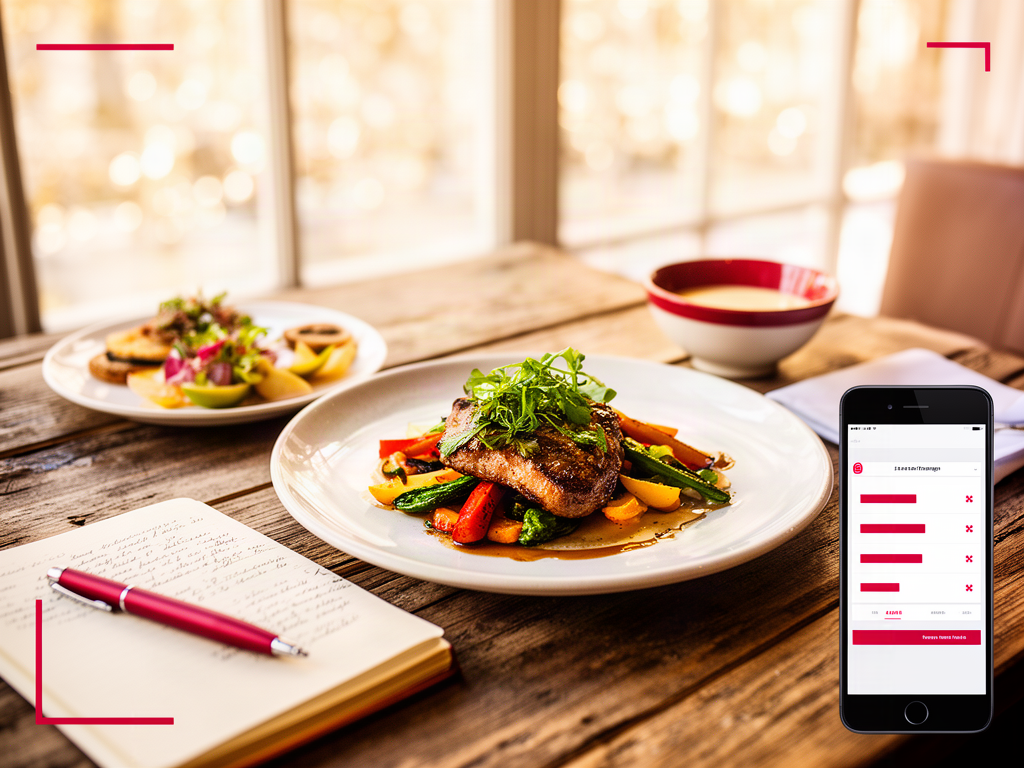
How to Track the Best Dishes by Restaurant Visit: A System for Foodies
Alex the juice queen
Alex hunts for the best juice bars and presses. She rates every sip and saves her favorites in Savor.
How to Track the Best Dishes by Restaurant Visit: The Complete System for Serious Foodies Your camera roll holds 2,847 food photos. You remember taking them....
How to Track the Best Dishes by Restaurant Visit: The Complete System for Serious Foodies
Your camera roll holds 2,847 food photos. You remember taking them. You remember spending money on the meals. But can you recall which dishes were actually worth ordering again?
Most people treat dining out like disposable entertainment. They eat, they pay, they forget. But if you're reading this, you've already realized something critical: the restaurant isn't the unit of measurement that matters. The dish is.
This guide will teach you how to build a personal dish tracking system that actually works - one that turns your scattered food memories into a searchable, actionable archive.
Table of Contents
- Why Tracking Dishes (Not Restaurants) Changes Everything
- The Dish-First Philosophy
- The Universal Dish Scorecard
- The 30-Second Rule: Invisible Tracking
- Tool Selection: The Persona Matrix
- Migration: Rescuing Your Food Photos
- Building Your Sensory Vocabulary
- Frequently Asked Questions
Why Tracking Dishes (Not Restaurants) Changes Everything
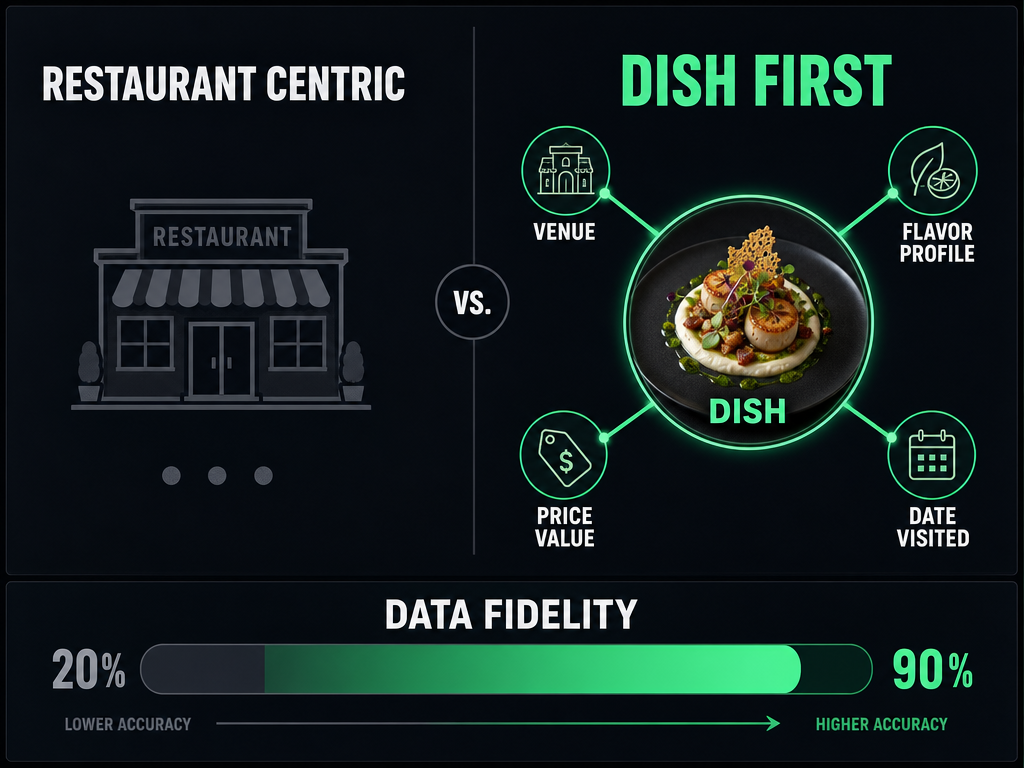 Shifting from tracking venues to tracking individual plates allows for higher data fidelity and more accurate future recommendations based on specific culinary preferences.
Think about the last time you returned to a restaurant based on a friend's recommendation. They said, "You have to go to this place." So you went. The service was fine. The atmosphere was pleasant. But the food? Mediocre at best.
Here's what happened: your friend loved one specific dish. But they recommended the entire restaurant. You ordered something different. The experience failed.
This is the fundamental problem with venue-centric tracking. When you rate a restaurant, you're collapsing dozens of variables - the appetizer, the entrée, the dessert, the service, the acoustics, the restroom cleanliness - into a single blunt metric. A 4-star rating tells you almost nothing.
Dish-first tracking solves this. Instead of asking, "Is this a good restaurant?" you ask, "Which specific plates here are worth ordering?" You're not building a list of places. You're building an archive of flavors.
The practical advantage is immediate: when you return to a neighborhood six months later, you don't need to remember which restaurant was "pretty good." You search your archive for "best carbonara" and retrieve the exact dish, the exact venue, and the specific notes you made about why it mattered.
This is what Beli has surpassed 100M ratings by doing: prioritizing dish-level tracking over venue-level reviews.
The Dish-First Philosophy
The shift from restaurant ratings to dish tracking isn't just a technical change - it's a philosophical one. You're moving from the position of a passive consumer to an active curator.
When you rate a restaurant, you're participating in the wisdom of the crowd. When you track a dish, you're building a personal canon.
Here's what that means in practice:
Restaurant-Centric Thinking:
- "We should try that new Italian place everyone's talking about."
- "It was good, I'd give it 4 stars."
- Three months later: complete amnesia about what you ordered.
Dish-First Thinking:
- "I want to find the best cacio e pepe in the city."
- "The version at Lilia was perfect: 9.5/10. Deeply peppery, ideal texture."
- Three months later: you can compare it against the version you tried in Rome.
This approach scales. After a year, you won't have a vague sense that you "like Italian food." You'll have a ranked list of the 12 best pastas you've ever eaten, complete with tasting notes, photos, and GPS coordinates.
The Universal Dish Scorecard
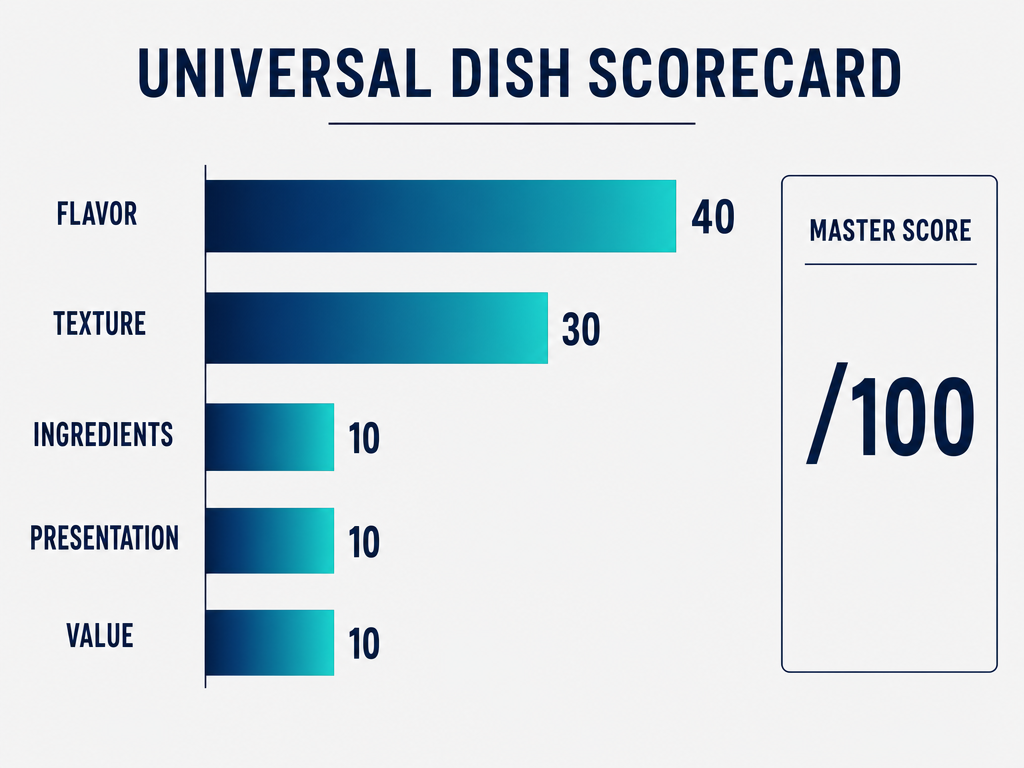 Professional food critics use weighted scoring systems to evaluate plates; prioritizing flavor and texture ensures your personal database reflects true culinary quality.
If you're going to track dishes, you need a consistent framework for evaluation. Otherwise, your ratings will drift over time and become meaningless.
The "Universal Dish Scorecard" uses a 100-point Master Score: Flavor (40), Texture (30), Ingredients (10), Presentation (10), Value (10).
Let's break down why this structure works:
Flavor (40 points)
This is the core. A dish can be plated like art and made with $200/lb ingredients, but if it doesn't taste good, it fails. Flavor evaluation breaks into three sub-categories:
- Balance: Are the elements harmonious or is one component overwhelming the others?
- Intensity: Is the flavor bold and memorable or muted and forgettable?
- Complexity: Does the dish reveal new notes as you eat it, or is it one-dimensional?
Texture (30 points)
Texture is the most underrated dimension of cooking. A perfectly executed dish has textural contrast - crispy against creamy, tender against crunchy. This category asks:
- Mouthfeel: Is the texture pleasant to eat?
- Contrast: Are there multiple textures working together?
- Temperature: Is the dish served at the correct temperature for its intended texture?
Ingredients (10 points)
Quality inputs matter, but they're not everything. A dish made with farmers market vegetables will usually beat one made with commodity produce, but technique and seasoning can bridge a surprising gap. Consider:
- Freshness: Are the ingredients at peak quality?
- Seasonality: Is the dish making use of what's currently optimal?
- Sourcing: Can you taste the difference in ingredient quality?
Presentation (10 points)
We eat with our eyes first. Presentation isn't about Instagram aesthetics - it's about whether the visual setup prepares you correctly for what's about to happen. A rustic bowl of ramen should look rustic. A $300 tasting menu course should look composed.
Value (10 points)
Value isn't about being cheap. It's about whether the experience justified the cost. A $4 taco can be a 10/10 on value. A $90 steak that's cooked improperly is a 2/10.
This scoring system gives you the structure to compare a $5 street food dish in Bangkok against a $150 tasting menu course in Copenhagen - not on absolute quality, but on whether each dish achieved what it set out to do.
For more on how to apply this framework in real time, see how to rate dishes while eating out.
The 30-Second Rule: Invisible Tracking
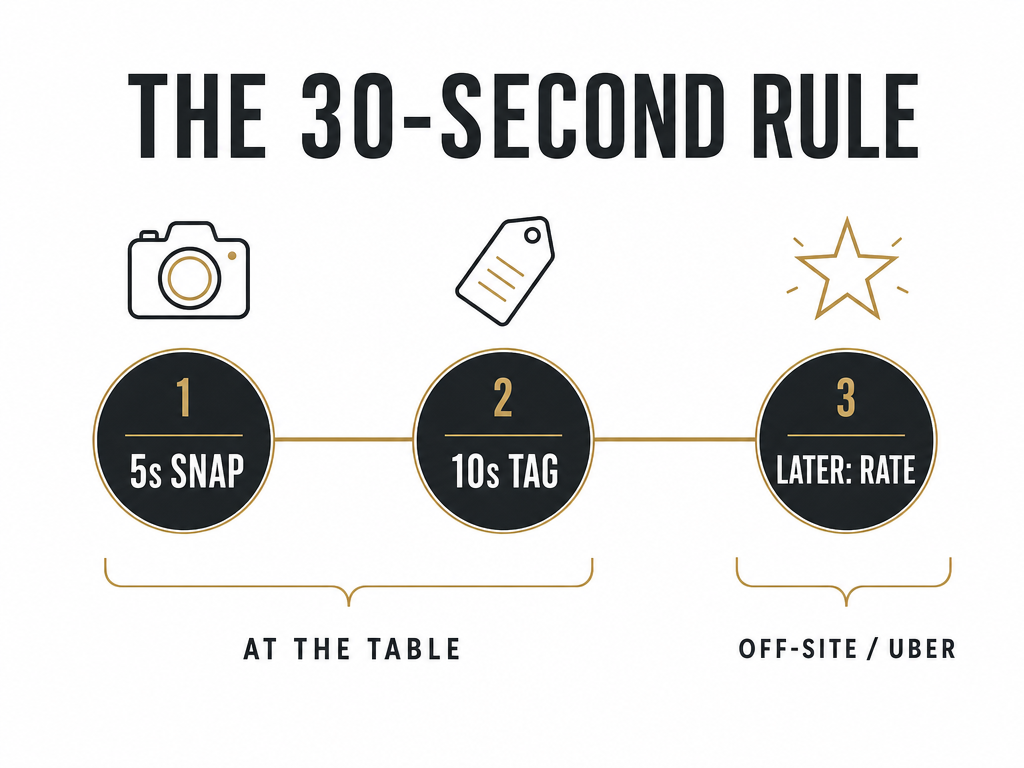 Mastering the 30-second rule allows you to build a high-quality food journal without disrupting the social flow or etiquette of a professional dinner.
Here's the problem: no one wants to be the person at the table furiously typing notes into their phone while everyone else is trying to have a conversation.
The "30-second rule" consists of 5s for the snap, 10s for mental keywords, and rating later off-site.
Here's how it works:
During the Meal (5 seconds): Take a single photo of the dish. One photo. Not six angles and a boomerang. Just one clean shot that captures the plate as served.
Immediately After the Photo (10 seconds): Commit three sensory keywords to memory. Not full sentences. Just words. "Funky. Crispy. Lime." Or "Velvety. Bitter. Herbal." You're building mental anchors.
After the Meal (5-10 minutes): This is the critical step. You don't rate the dish at the table. You rate it in the Uber. Or in the hotel room. Or on the walk home.
Why? Because if a dish was truly memorable, you should be able to recall it 15 minutes later without looking at your notes. This built-in delay is a memorability test. If you can't remember what made it special after a short gap, it wasn't that special.
This workflow respects the social dynamics of dining while still capturing what matters. You're not performing for Instagram. You're building a memory system.
Tool Selection: The Persona Matrix
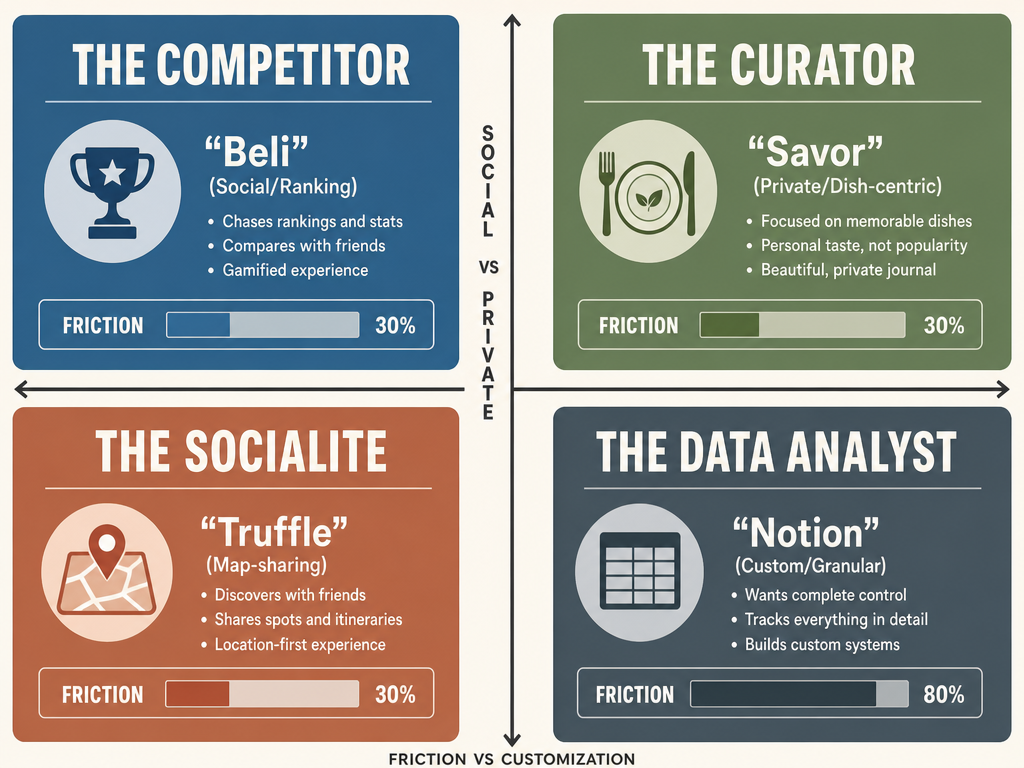 Selecting the right system depends on your dining persona; whether you value social competition or private, granular data determines which tool will stick.
The right tool depends on your "dining persona" - how you think about food tracking and what you want to do with the data. Here are the four primary archetypes:
The Competitor: Beli
Best for: People who want to build a ranked leaderboard of their favorite restaurants through head-to-head comparisons.
Beli doesn't ask you to assign arbitrary star ratings. Instead, it shows you two restaurants you've visited and asks, "Which one was better?" After a series of these comparisons, it builds a personal leaderboard that reflects your actual preferences.
This works well for people who think in relative terms rather than absolute scores. The downside: it's optimized for venue ranking, not dish tracking. You can note specific dishes, but the core mechanic is still restaurant-vs-restaurant.
The Curator: Savor
Best for: People who want a private, dish-first archive with high-resolution data capture.
Savor is built around the idea that the dish - not the restaurant - is the primary unit. You log individual plates, score them using criteria like the Universal Dish Scorecard, add sensory notes, and search by ingredient, cuisine, or location.
This is the tool for people who want to answer questions like, "What was the best duck I've ever eaten?" or "Show me every 9+ rated pasta dish I've had in Italy." The focus is on private curation rather than social competition.
The Socialite: Truffle
Best for: People who care more about mapping where they've been than ranking what they ate.
Truffle is "Goodreads for food." It's about building a visual map of your dining history and seeing where your friends have been. The emphasis is on social connection rather than granular evaluation. You're not scoring dishes out of 100 - you're checking in and sharing discoveries.
This works if your primary goal is to coordinate with friends and trade recommendations rather than build a personal taste database.
The Data Analyst: Notion
Best for: People who want complete control over their data structure and are willing to invest setup time.
A custom Notion database lets you define exactly what fields matter to you. Want to track who you dined with? The wine pairing? The weather? Whether it was a date night or a business meal? Notion lets you build that.
The tradeoff: high setup friction. You need to design your own templates and stay disciplined about data entry. But if you already use Notion for other parts of your life, this can be the most powerful option.
For a deeper look at different tracking approaches, explore the best apps to track favorite dishes.
Migration: Rescuing Your Food Photos
You already have a database. It's just trapped in your camera roll.
Here's how to systematically extract value from years of accumulated food photos:
Step 1: Export Google Maps Starred Places
If you've been casually starring restaurants in Google Maps, you can export that data. Open Google Takeout, select Maps, and download your saved places as a JSON file. This gives you a starting list of venues.
The problem: these are venue saves, not dish saves. You'll need to manually review each one and reconstruct what you actually ordered. This is tedious, but for high-value meals, it's worth it.
Step 2: Batch-Tag iPhone Photos by Location
Go to your Photos app and search "Food." iOS is surprisingly good at recognizing food photos. From there, you can add location tags in bulk by selecting multiple photos and editing the location field.
Once tagged, you can search by city name. "Show me all food photos from Tokyo" suddenly becomes possible. From there, you can triage: which dishes were actually worth documenting?
Step 3: Clean Up the Notes App Graveyard
If you're like most people, your Notes app has 47 entries titled "Good restaurants" or "Places to try." These are low-fidelity saves - just names with no context.
Go through them systematically. For each entry, ask: "Would I actually order this again if I were in that city tomorrow?" If the answer is no, delete it. If yes, migrate it to your proper tracking system with as much detail as you can recall.
The goal isn't to preserve everything. It's to preserve what matters.
For help organizing your photo archive, see how to organize food photos by restaurant.
Building Your Sensory Vocabulary
The difference between "It was good" and a useful tasting note is vocabulary.
Here's a starter list of sensory terms organized by category. These are the words that replace vague adjectives:
Texture (Positive):
- Velvety, silky, creamy, tender, crispy, crunchy, flaky, airy, springy, toothsome
Texture (Negative):
- Gelatinous, rubbery, mushy, gritty, pasty, slimy, mealy, tough, dry, soggy
Acidity:
- Bright, sharp, tart, tangy, zesty, zippy, cutting, piercing, balanced, muted
Umami:
- Savory, meaty, brothy, earthy, funky, pungent, aged, fermented, deep, layered
Sweetness:
- Caramelized, honeyed, fruity, floral, candied, cloying, balanced, subtle, jammy
Spice:
- Warming, fiery, numbing, tingling, lingering, aggressive, balanced, aromatic
Aroma:
- Fragrant, perfumed, smoky, roasted, grassy, herbaceous, woodsy, floral, pungent
Using specific language like this creates mental anchors. When you write "velvety with a sharp citrus cut," you're encoding the memory in a way that "delicious" never could.
Frequently Asked Questions
What is the best app to track my food intake?
If you're tracking for calorie or macro purposes, apps like MyFitnessPal or Cronometer are the standard. But if you're tracking to remember great dishes and build a personal culinary archive, you need a dish-first tool like Savor or Beli. The use case determines the tool.
Is Beli still invite only?
As of 2026, Beli has expanded significantly and is no longer invite-only in most regions. You can download it directly from the App Store. The early waitlist phase helped them control growth, but the platform now serves a much larger user base.
How to track food from restaurants?
Use the 30-second rule: snap a photo, commit three sensory keywords to memory, and rate the dish after the meal rather than at the table. Then log it in a dish-first tracking app with location data, cuisine type, and a score using a consistent framework like the Universal Dish Scorecard.
Is Notion good for meal planning?
Notion excels at meal planning if you're willing to build custom templates. You can create databases that link recipes, ingredients, shopping lists, and meal schedules. The flexibility is unmatched, but the setup time is significant. For most people, a dedicated meal planning app like Mealime or Paprika will be faster to deploy.
What does Gen Z use instead of Yelp?
Gen Z tends to trust TikTok and Instagram for restaurant discovery more than traditional review platforms. They're looking for authentic, creator-driven recommendations rather than aggregated star ratings. Apps like Beli and Truffle are gaining traction because they emphasize personal curation over crowd consensus.
What is the best app to find restaurant deals?
Seated offers up to 30% back in rewards for dining at participating high-end venues. If you're specifically looking for deals on quality restaurants rather than fast food discounts, Seated is one of the better options. It partners with higher-end establishments and provides cashback rather than coupons.
What app can I use to find restaurant deals?
Beyond Seated, apps like OpenTable Dining Rewards and Resy AmEx Offers provide value for frequent diners. The key is to choose platforms that partner with restaurants you'd actually want to visit, not just chains offering generic discounts.
What is the best app to review restaurants?
It depends on whether you want public influence or private memory. For public reviews that help others, Google Maps has the widest reach. For private, dish-level tracking that helps you remember your own dining history, Savor is purpose-built for that use case.
Which food ordering app is best?
For delivery, DoorDash, Uber Eats, and Grubhub dominate most US markets. The "best" one depends on your location and which app has partnerships with the restaurants you frequent. Check all three for a specific restaurant - delivery fees and estimated times often vary significantly.
Your camera roll is a graveyard of extraordinary meals. Most people accept this. But you don't have to.
Building a dish tracking system isn't about becoming a food blogger or competing for Instagram likes. It's about respecting your own time and money enough to remember what was worth it.
Start with one dish. Take the photo. Write three words. Rate it after the meal. Do that 10 times, and you'll have a functional archive. Do it 100 times, and you'll have a personal culinary database that outperforms any public review platform for your specific tastes.
The question isn't whether you should track your meals. It's whether you want to remember them.
For more on organizing your culinary life, explore beyond the camera roll: how to build a personal restaurant library.