
How to Track Every Signature Dish Across Multiple Restaurants Like a Pro
John the smoothie monster
John lives for smoothie bowls and cold-pressed juices. He uses Savor to remember his best blends.
How to Track Signature Dishes Across Multiple Restaurants: The Complete System for Serious Foodies Your camera roll holds thousands of food photos. Somewhere...
How to Track Signature Dishes Across Multiple Restaurants: The Complete System for Serious Foodies
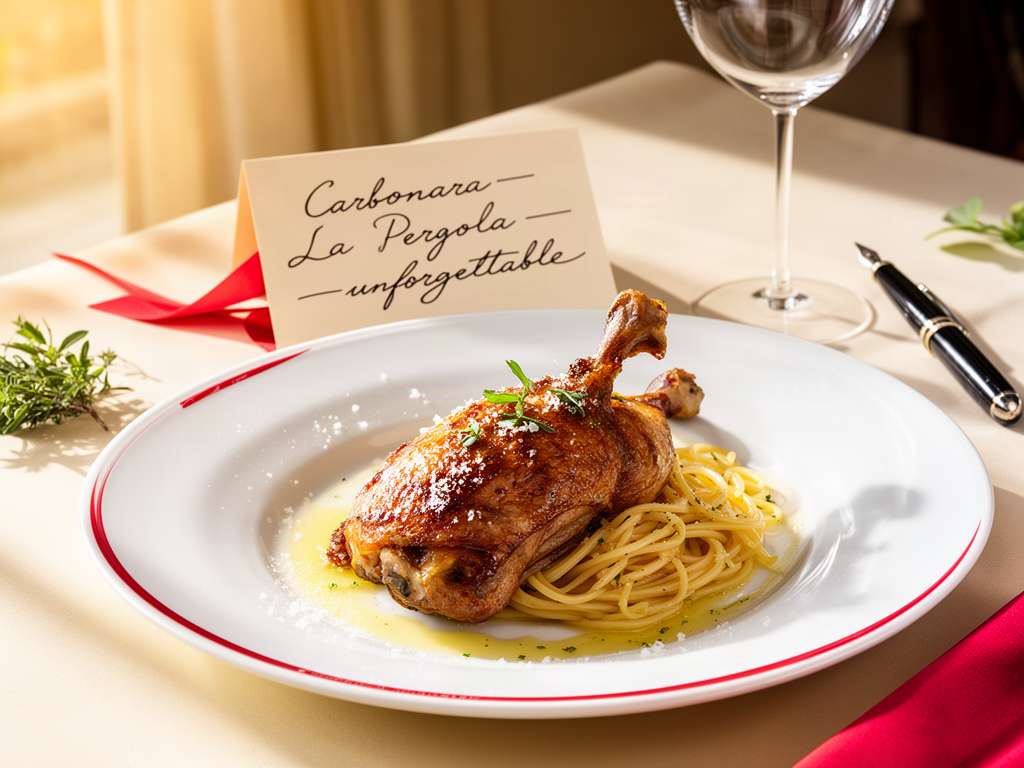
Your camera roll holds thousands of food photos. Somewhere between the blurry espresso shot and that perfectly plated duck confit is the evidence of an extraordinary meal you can barely remember. You know it was good. You know it was somewhere in Rome. But which restaurant? Which dish? Why was it unforgettable?
Most restaurant rating systems ask you to judge the entire experience with a single star rating. But that's useless when the carbonara was a 10 and the wine was a 2. The real question isn't "Was the restaurant good?" It's "Which specific dish should I order again, and where?"
This is the difference between passive dining and active documentation. You're not just eating anymore - you're building a personal taste archive, a searchable database of every exceptional plate you've encountered. And it requires a completely different set of tools.
Table of Contents
- Why Restaurant Ratings Miss the Point
- The Big Three: Tool Comparison
- The Signature Dish Discovery Workflow
- Logging Habits That Actually Work
- The Technical Deep Dive: Using Photo Metadata
- The 30-Day Selective Migration Plan
- Data Portability and Platform Risk
- Ranking vs. Rating: Which System Fits You?
- Manual Entry vs. AI Recognition
- Frequently Asked Questions
Why Restaurant Ratings Miss the Point
Here's the problem with most review platforms: they prioritize the restaurant's overall quality rather than the dish's specific execution. You end up with a 4-star rating that tells you almost nothing about what to actually order.
Think about it. You walk into a place with great service, decent wine, and a beautiful interior. Four stars. But the dish you came for - the one everyone talks about - was mediocre. Or worse: it was exceptional, but you can't remember its name three months later.
This is why serious foodies are abandoning traditional review platforms entirely. They're not looking for crowd-sourced consensus about a restaurant's vibe. They're looking for a way to answer a much more specific question: "What was that life-changing thing I ate, and where can I get it again?"
The shift is from rating restaurants to rating dishes. And it changes everything.
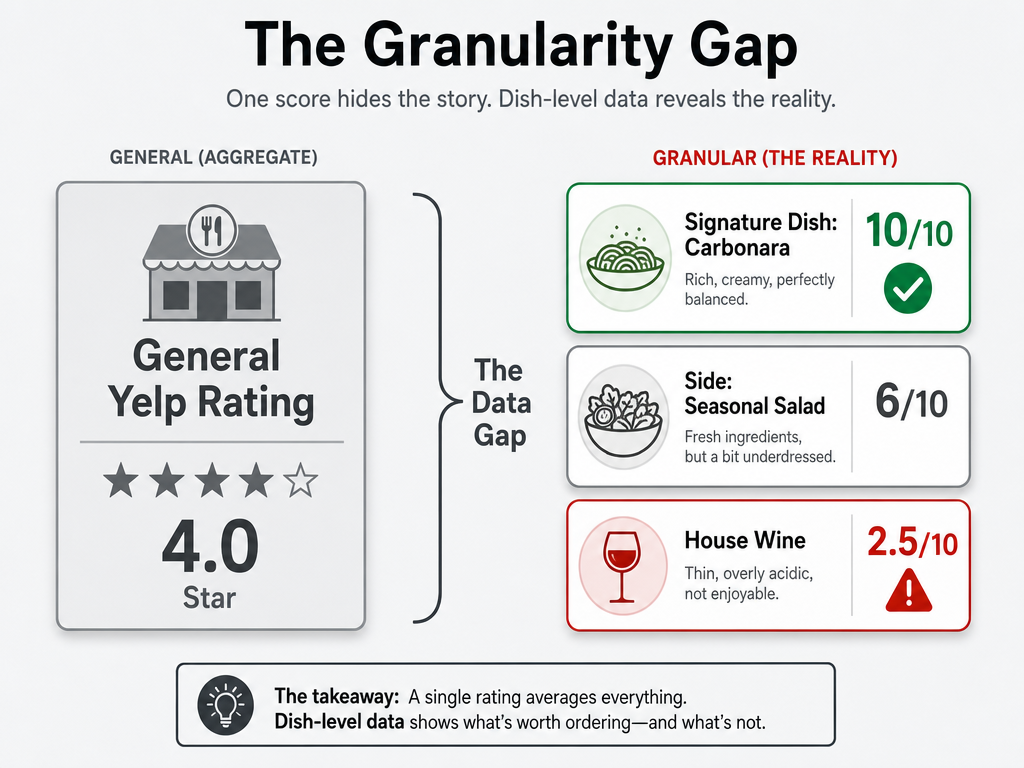 Generic restaurant ratings often hide the excellence of specific signature dishes or the failure of others; dish-level tracking ensures you always know exactly what to order.
The Big Three: Tool Comparison
The landscape of dish-tracking tools breaks down into three distinct philosophies. Your choice depends entirely on what you value: social competition, private archiving, or total data ownership.
Beli: For the Social/Competitive Foodie
Beli is the "Letterboxd for food." It's built around a forced-choice ranking system (ELO-style) where you compare dishes against each other to build a definitive hierarchy of your favorites. The app reached over 60 million global reviews in 2025, and user-logged reviews grew from 13 million in 2023 to 30 million in 2024.
Beli's demographic skews young - roughly 80% of users are under age 35 - and the platform functions as much as a social network as it does a tracking tool. 10% of its user base is currently located in New York City, which tells you something about its urban, trend-conscious audience.
Best for: People who want to share their food map publicly, compete with friends, and engage with a community of like-minded diners.
Limitations: The social aspect means your data isn't entirely private. If Beli shuts down or changes its terms, you might lose years of rankings.
Savor/Crumble: For the Archivist
These apps treat your dining history as a private reference library, not a public flex. Savor emphasizes AI-assisted dish recognition to help you build a "culinary archive" with dish-level metadata. Crumble advocates for logging during the "dead moment" before the bill arrives - a specific ritual designed to combat procrastination.
Both platforms focus on absolute rating (rating each dish on a scale) rather than comparative ranking. The philosophy here is clear: you're building a personal memory bank, not a social leaderboard.
Best for: People who want detailed, private dish notes and prefer AI assistance for photo recognition and tagging.
Limitations: AI recognition isn't perfect. You'll still need to manually correct dish names and add context the algorithm can't infer.
Spreadsheets: For the Data Purist
Some foodies swear by manual systems - Google Sheets, Notion databases, or even pen-and-paper logs. The argument is simple: you control the structure, you own the data forever, and there's zero platform risk.
One advocate for this approach recommends keeping columns "brutal and simple": Restaurant, Dish, City, Cost, Rating, and Notes. The system works because it's portable, searchable, and immune to app shutdowns or changing privacy policies.
Best for: People who want total control, zero platform risk, and don't mind manual data entry.
Limitations: No AI assistance, no photo integration, and you're responsible for building the entire infrastructure yourself.
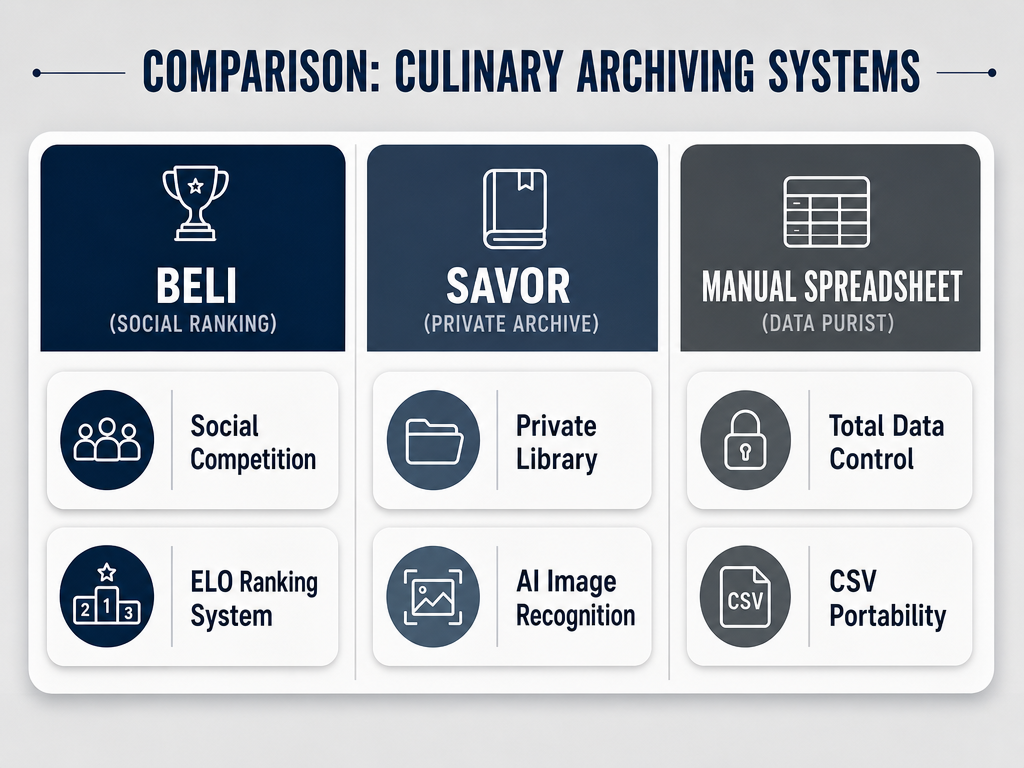 Choosing the right tool depends on whether you value social competition, private archiving, or total data ownership when cataloging your favorite signature dishes.
The Signature Dish Discovery Workflow
Here's the dirty secret: most people don't know what a restaurant's "signature dish" is until after they've ordered. You rely on the server, or worse, you guess. This is inefficient.
The solution is a three-step research protocol that identifies the must-order item before you even walk through the door.
Step 1: Check Google Maps "Popular Dishes"
Google Maps now surfaces AI-detected "popular dishes" based on photo frequency and engagement. This isn't editorial curation - it's algorithmic aggregation. When dozens of people photograph the same plate, the algorithm notices.
Pull up the restaurant on Google Maps. Scroll past the star rating. Look for the "Popular dishes" section. If a specific item appears consistently, that's your starting point.
Step 2: Scan Instagram "Recent" Tagged Photos
Instagram's location tags reveal what people are actually ordering right now, not six months ago. Search the restaurant's location tag. Filter by "Recent." Scroll through the last 50 posts. The dish that appears most frequently is the one you want.
This method bypasses influencer partnerships and sponsored content. You're seeing what regular diners photograph, which is a surprisingly reliable indicator of what's worth eating.
Step 3: Look for "The Dish" in Michelin/Eater Guides
Professional critics often identify a restaurant's defining plate. Michelin's "Point of View" sections, Eater's city guides, and similar editorial sources frequently name the one dish that justifies the trip.
Cross-reference these three sources. If Google Maps, Instagram, and a professional critic all point to the same plate, you've found the signature dish.
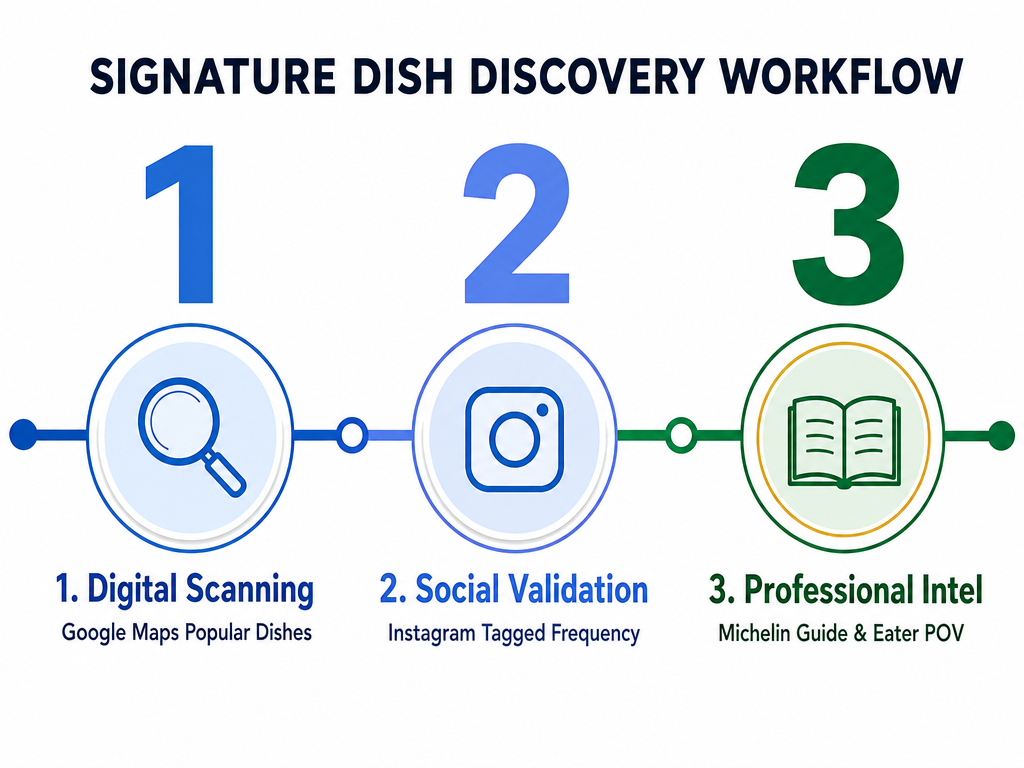 Master the art of the pre-meal research by cross-referencing AI-detected popular dishes with social media trends and professional culinary critique to find the must-order item.
Logging Habits That Actually Work
The difference between a useful food archive and an abandoned camera roll comes down to when you log the information. Most people fail because they wait until later. "Later" never comes.
The solution is the "30-Second Rule": log the dish name and a quick rating after you order but before the bill arrives. This is the dead moment when you're waiting for the check, slightly bored, and your phone is already in your hand.
If you're using Beli, rank the dish against a recent favorite. If you're using Savor or Crumble, snap a photo and add a quick note about texture, flavor, or why it stood out. If you're using a spreadsheet, pull it up and enter the row.
The key is to make logging a natural part of the meal, not a homework assignment you do at the hotel. Most serious foodies report that this single habit change - logging in the moment - is what finally makes dish tracking sustainable.
For those struggling with a backlog of undocumented meals, see the 30-Day Selective Migration Plan below.
The Technical Deep Dive: Using Photo Metadata
Your iPhone already knows more about your food photos than you realize. Every image contains embedded metadata: the date, time, location, and (on iOS 15+) objects detected in the scene.
On iOS, open a food photo. Tap the info button (the "i" in a circle). Scroll down to "Look Up" and tap it. If the AI recognizes the dish type - ramen, pizza, croissant - it'll show you related information and similar images in your library.
This isn't perfect. The AI can't distinguish between good ramen and great ramen, and it won't tell you the restaurant's name. But it's a powerful starting point for retroactively organizing your camera roll when building a backlog.
On Android, Google Photos offers similar functionality through its "Search" feature. Type "pasta" or "sushi" and it'll surface relevant photos based on visual recognition.
The limitation: neither system tracks dish names or your personal ratings. They're useful for organizing photos, but they don't replace a dedicated tracking app or manual system.
The 30-Day Selective Migration Plan
Here's the problem: you've been taking food photos for years, and now you want to organize them. But the idea of logging 2,000 meals feels impossible.
The solution isn't to migrate everything. It's to migrate selectively.
Start with the top 50 lifetime meals. These are the dishes you'd recommend to a friend without hesitation. Scroll through your camera roll, identify the photos that still make you hungry, and log only those.
Break it into daily targets: 2-3 meals per day for 30 days. That's 60-90 entries, which covers most people's truly exceptional dining experiences.
For each entry, log the essentials: restaurant name, city, dish name, and a brief note about why it mattered. Don't worry about perfect scores or elaborate tasting notes. The goal is to get the information out of your camera roll and into a searchable system.
After 30 days, you'll have a functional archive of your best meals. Everything else can stay in your camera roll as backup. You're not trying to document every meal - you're trying to remember the great ones.
Data Portability and Platform Risk
Every app you trust with your food memories is one acquisition, pivot, or shutdown away from disappearing. This is why data portability matters.
Before committing to any platform, check whether it offers CSV or JSON export. This is your insurance policy. If the app shuts down or changes its terms, you can export your data and move it elsewhere.
Beli, as of this writing, does not publicly advertise a bulk export feature. Savor and Crumble both emphasize data ownership, but you'll need to verify their current export capabilities directly.
Spreadsheet users don't face this problem. Your data is already in a portable, future-proof format. You can move it between Google Sheets, Excel, Notion, or any other tool without losing anything.
This isn't paranoia. It's prudence. The history of consumer apps is littered with platforms that seemed permanent until they weren't.
Ranking vs. Rating: Which System Fits You?
This is one of the most fundamental disagreements in food tracking: should you rank dishes against each other (Beli's approach) or rate them on an absolute scale (Savor/Crumble's approach)?
Ranking is better for social engagement and gamification. It forces you to make comparative judgments: "Was this carbonara better than the one I had in Rome?" The system produces a definitive hierarchy, which is satisfying if you enjoy competitive tracking.
Rating is better for archival precision. It allows you to score a dish on its own merits without reference to past meals. A 9.2/10 means the same thing whether you ate it yesterday or three years ago.
The best system depends on your goal. If you're building a public food map to share with friends, ranking makes sense. If you're building a private memory archive, absolute ratings are more flexible.
Some foodies use both: a numerical rating for personal records and a relative ranking for social sharing. There's no wrong answer - just different tools for different purposes.
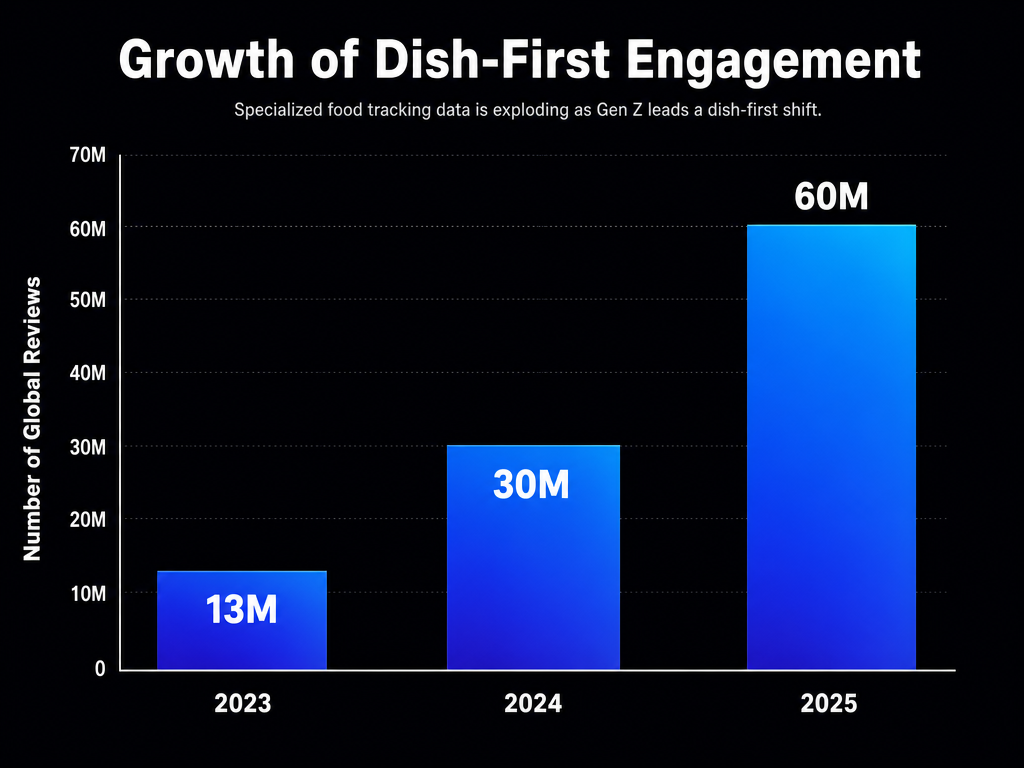 The massive growth in specialized food tracking apps like Beli reflects a shift in diner behavior, moving from general business reviews toward specific dish rankings.
Manual Entry vs. AI Recognition
Newer apps claim AI dish recognition is essential for high-frequency diners. The argument: you can't manually log 200+ meals a year without burning out.
The counterargument: manual entry forces you to be thoughtful. If you're typing "duck confit with cherry gastrique," you're engaging with the memory in a way that tapping an AI suggestion doesn't provide.
The truth is somewhere in between. AI recognition is useful for reducing friction, but it's not a substitute for personal notes. The algorithm can identify "pasta," but it can't tell you why this particular plate mattered.
The best approach: use AI for the basics (dish type, restaurant name) and add manual notes for context (texture, flavor, why it stood out). This balances efficiency with depth.
If you're serious about building a long-term archive, don't rely entirely on automation. The most valuable information - why a dish was exceptional - requires human judgment.
Frequently Asked Questions
Is there an app that can track restaurants I've visited?
Yes. Beli, Savor, and Crumble all track restaurants, but their primary focus is on tracking individual dishes rather than just locations. Traditional review platforms like Yelp and Google Maps track restaurants too, but they don't prioritize dish-level detail. If you want to remember specific plates, you need a dish-first tool. For a broader comparison of options, see our guide to the best apps to track your restaurant legacy.
What is the best app for creating a checklist for restaurants?
If you want a simple checklist of places to visit, Google Maps "Saved" lists or Apple Maps collections work fine. But if you want to track which specific dishes you've tried and which ones you want to order again, you need a dedicated dish-tracking app. Savor and Crumble both support this use case, while Beli focuses more on ranking favorites than maintaining a to-do list.
How to find a signature dish?
Use the three-step workflow: check Google Maps "Popular Dishes" (AI-detected), scan Instagram's recent location-tagged photos for frequency, and look for professional mentions in Michelin or Eater guides. When all three sources point to the same plate, you've found the signature dish. For more on identifying must-order items before you arrive, see our guide to building a personal restaurant library.
What makes Beli different from Yelp?
Beli focuses on personal dish rankings rather than crowd-sourced restaurant ratings. Yelp asks "Was this restaurant good?" Beli asks "Which specific dishes would I order again, and how do they rank against each other?" The platform uses an ELO-style ranking system where you compare dishes head-to-head, and it's designed for social sharing among friends rather than public reviews for strangers.
Is there an app for foodies?
Multiple apps cater to serious foodies, but they serve different needs. Beli is for social ranking and competition. Savor and Crumble are for private archiving with AI assistance. Spreadsheets offer total control and zero platform risk. Your choice depends on whether you value social features, privacy, or data ownership. For a deeper dive into the options, see our comprehensive guide to food software.
How can I export my restaurant data if an app shuts down?
Before committing to any platform, verify it offers CSV or JSON export. This lets you download your entire database and move it to another tool. Spreadsheet-based systems have this built in by default. App-based platforms vary - some offer robust export features, others don't. Always check the platform's data portability policy before investing years of entries.
Is it better to rate dishes on a 5-star scale or use comparative ranking?
It depends on your goal. Comparative ranking (like Beli's ELO system) is better for social engagement and creating a definitive hierarchy. Absolute rating (like a 10-point scale) is better for archival precision and independent evaluation. Some users maintain both: a numerical score for personal records and relative rankings for sharing with friends. Neither system is inherently superior - they're tools for different purposes.
Your camera roll doesn't have to be a graveyard. The difference between passive dining and active documentation is a system - a repeatable process for identifying signature dishes, logging them in the moment, and organizing them in a way that actually serves you later.
Whether you choose a social platform like Beli, a private archive like Savor, or the manual control of a spreadsheet, the important thing is to start. Pick the top five meals you've had this year. Log them tonight. That's your foundation.
Everything else is just repetition.