
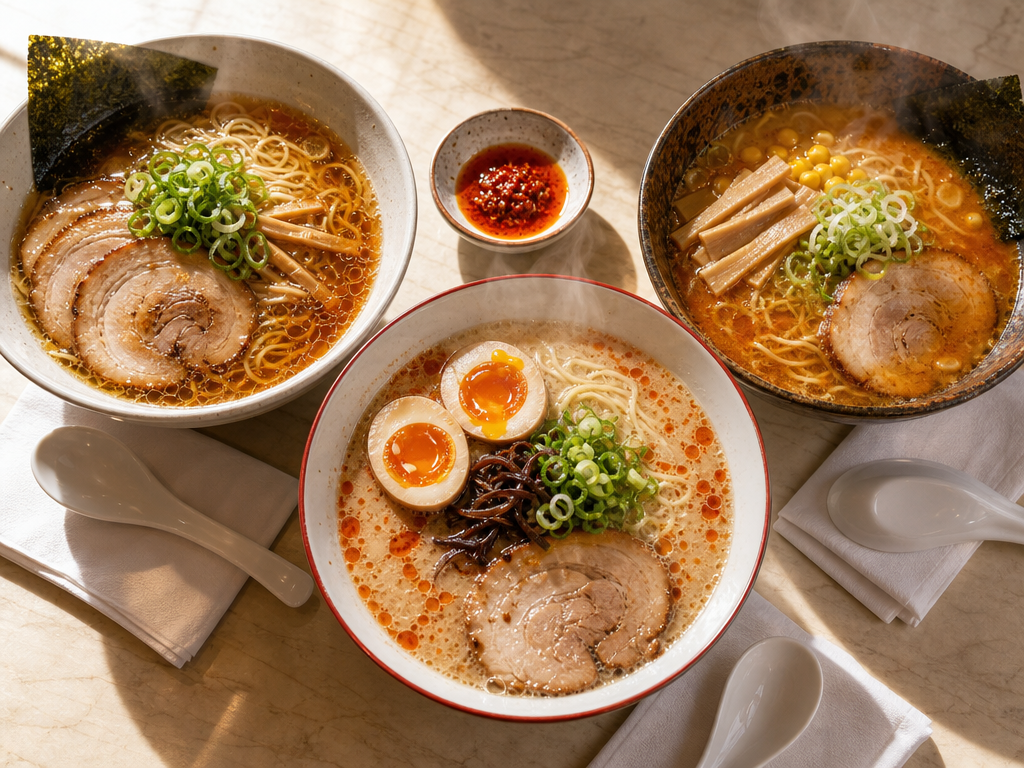
A Global Framework to Compare Ramen Across Cities You Visited
Alex the juice queen
Alex hunts for the best juice bars and presses. She rates every sip and saves her favorites in Savor.
Ramen City Rankings: A Global Comparison of Regional Styles, Costs, and the "Q-Factor" You spent a modest amount on a life-changing bowl of tonkotsu in...
Ramen City Rankings: A Global Comparison of Regional Styles, Costs, and the "Q-Factor"
You spent a modest amount on a life-changing bowl of tonkotsu in Fukuoka. Three months later, you dropped considerably more on ramen in New York that didn't even come close. The question isn't just "which city has better ramen?" It's "how do I evaluate, remember, and compare these experiences across continents?"
This isn't a listicle of "top ramen spots." It's a framework for understanding how regional ramen styles develop as distinct culinary islands, how pricing reflects (or distorts) quality across global markets, and how to build a personal rating system that actually helps you make better decisions about where to eat next.
Table of Contents
- What Defines a City's Ramen Identity?
- The Price-to-Umami Paradox: Tokyo vs. NYC
- The Q-Factor: Is the Wait Worth the Bowl?
- City-by-City Ramen Profiles
- The Review Framework: How to Score Any Bowl
- Tracking Your Ramen Journey
- Frequently Asked Questions
What Defines a City's Ramen Identity?
Every major ramen city functions as what researchers call a "culinary island" - a distinct ecosystem where local ingredients, water chemistry, cultural preferences, and immigration patterns create unique style variations. Tokyo didn't become the world's ramen capital by accident. It happened through decades of regional styles colliding in a dense urban environment where 194 Michelin-starred restaurants compete for attention.
The island theory explains why London's ramen scene includes Indian-inspired variations with curry bases, or why Los Angeles shops experiment with avocado and tomato. These aren't mistakes - they're adaptations driven by local ingredient availability and the surrounding food culture.
Consider Yokohama-style (Ie-kei) ramen, which ranked #1 in global popularity lists for 2026. This style emerged from a single shop in 1974 and spread throughout Japan before jumping to the United States. Its defining characteristic - a creamy tonkotsu-shoyu hybrid with thick noodles - represents a bridge between traditional regional styles. That bridge-building approach is precisely why it travels well across cultural boundaries.
The Price-to-Umami Paradox: Tokyo vs. NYC
The most common question from serious foodies planning international ramen trips: "Is it worth flying to Japan for ramen when we have great shops in New York?"
The answer lies in understanding the massive pricing gap. In Tokyo, basic bowl prices typically range from ¥800-¥1,200 ($5-$8 USD), and even craft or specialty ramen in Japan rarely exceeds ¥1,800 ($11 USD). Meanwhile, a typical gourmet bowl in the US (NYC/LA) with tip averages approximately $20-$25.
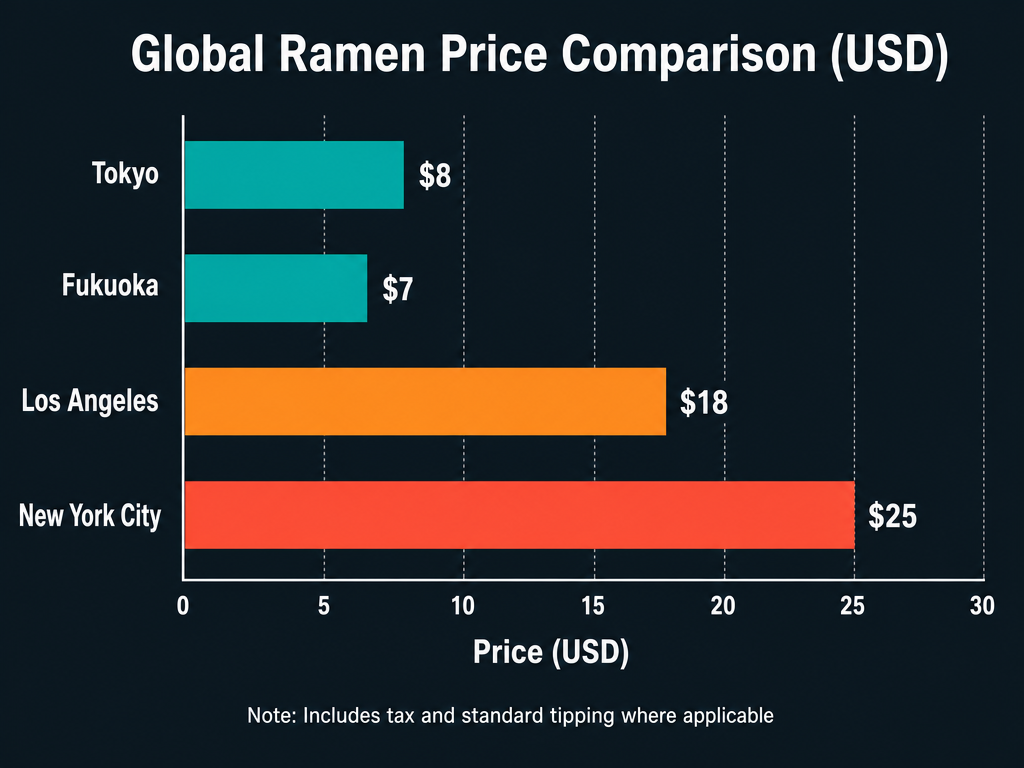 A direct comparison of global ramen pricing, highlighting the significant value gap between Japan's traditional craft shops and the premium-priced markets in the United States.
This isn't just currency conversion - it reflects fundamentally different business models. Japanese ramen shops operate on razor-thin margins with high customer turnover. A shop in Tokyo's Shibuya district might serve hundreds of bowls daily at modest prices. That same shop transplanted to Manhattan would face rent costs substantially higher, leading to either smaller portions, higher prices, or both.
The paradox deepens when you consider ingredient sourcing. A New York shop importing authentic chashu pork, menma bamboo shoots, and specific noodle flour from Japan incurs shipping costs that Japanese shops never face. That high-priced NYC bowl might contain considerable food costs before labor and overhead.
Does this mean Tokyo ramen is objectively "better" than New York ramen? No. It means you're evaluating different value propositions. Japanese Yelp alternatives like Tabelog use sophisticated scoring systems that separate "value" from "quality," a distinction American review platforms rarely make.
The Q-Factor: Is the Wait Worth the Bowl?
The "Q-Factor" measures wait time against reward - a metric professional food critics use but rarely share publicly. It's the answer to "would I wait this long for this bowl again?"
High Q-Factor bowls share specific characteristics:
Broth complexity that reveals layers over time. A great tonkotsu doesn't just taste "creamy" - you notice the pork bone depth in the first sip, slight garlic sweetness in the middle, and a lingering umami finish. This complexity justifies longer waits because the bowl stays interesting from first bite to last.
Noodle texture that holds up. The difference between a short wait and a long wait often shows up in noodle preparation. Top shops achieve that ideal "katame" (firm) bite that maintains structure even as the broth coats each strand. This requires precise timing and water temperature control that only experienced ramen-ya can nail consistently.
The "sense" - ambiance and ritual. Some shops earn high Q-Factor scores not just for the bowl itself but for the complete experience. A chef preparing each bowl individually behind the counter, the specific way they char the chashu before serving, the carefully selected soundtrack - these elements compound over a long wait, making the eventual bowl feel earned rather than overdue.
Tokyo shops like Tsuta (the first Michelin-starred ramen shop) regularly command lengthy waits. That's a Q-Factor most US shops can't justify because the American dining culture treats long lines with more skepticism. Understanding your personal Q-Factor threshold - maybe it's short, maybe it's extended - helps you make smarter decisions about which shops merit the investment.
City-by-City Ramen Profiles
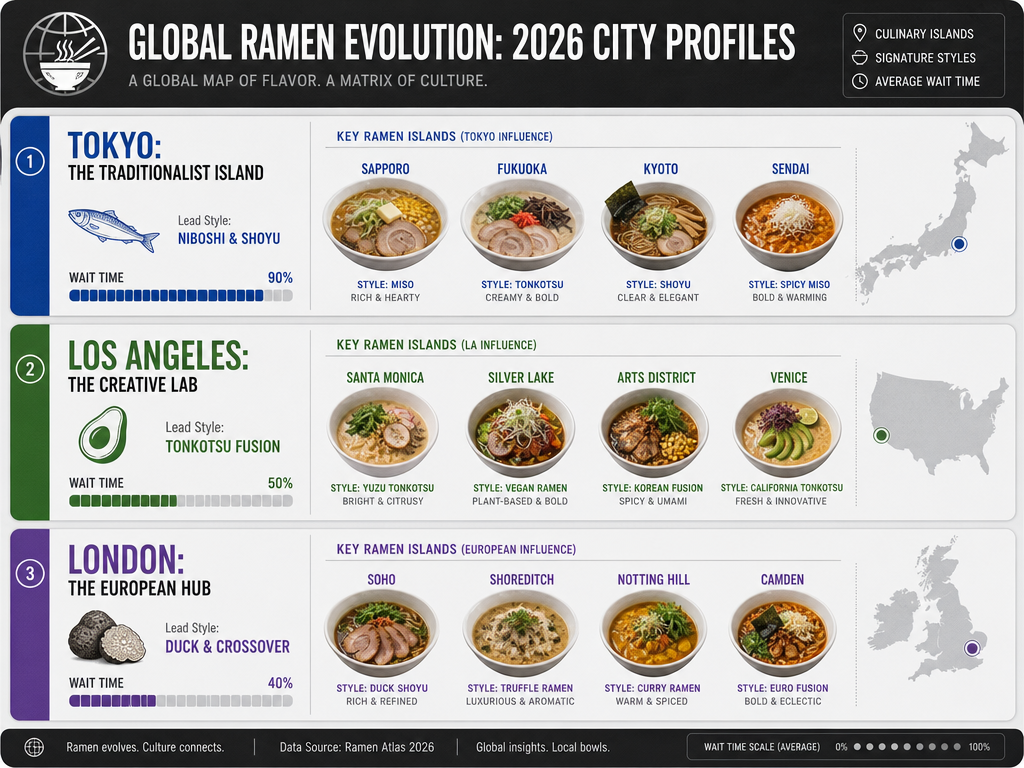 Regional ramen identities have evolved into distinct 'islands,' where local ingredients and cultural preferences dictate the dominant flavor profiles and innovation trends in each city.
Tokyo: The Traditionalist's Island
Best for: Niboshi (sardine-based broths), classic shoyu, Jiro-kei (ultra-thick tonkotsu with massive vegetable toppings)
Price: Low to moderate
Wait: High at top-tier shops
Tokyo offers the highest concentration of regional styles in the smallest geographic area. You can sample authentic Hakata-style tonkotsu in Shibuya, then walk a short distance to a Sapporo-style miso shop in Shinjuku. This density creates a competitive environment where shops must differentiate through extreme specialization rather than fusion experimentation.
The city's hard water contributes to the characteristic clarity of Tokyo-style shoyu ramen - minerals interact with the tare (sauce base) to create a clean, almost transparent broth that showcases ingredient quality. You'll notice this immediately if you try the same style in a soft-water city like Vancouver.
For serious foodies, Tokyo rewards methodical exploration. Skip the "best ramen in Tokyo" lists and instead focus on a single style per trip. Spend several days eating only tsukemen (dipping noodles), noting how different shops handle noodle thickness, broth concentration, and temperature.
Fukuoka (Hakata): The Tonkotsu Purist's Pilgrimage
Best for: Classic tonkotsu with customizable firmness levels
Price: Very low
Wait: Moderate
Fukuoka is where tonkotsu was perfected, and the city maintains strong opinions about what constitutes an "authentic" bowl. Locals expect thin, straight noodles, milky-white broth from pork bones simmered many hours, and minimal toppings - typically just chashu, green onions, and pickled ginger.
The defining feature of Hakata ramen culture is "kaedama" - ordering a second serving of noodles to add to your remaining broth, usually for a very modest price. This practice emerged from the local preference for eating noodles quickly while still firm, then extending the meal without wasting the flavorful broth.
Fukuoka shops operate on extreme efficiency. You'll often order from a vending machine, sit at a counter with minimal interaction, eat quickly, and leave. This isn't rudeness - it's respect for the next customer waiting outside. The entire experience, from order to exit, is remarkably brief.
New York City: The Fine-Dining Frontier
Best for: Fusion experiments, high-end ingredients, sushi-adjacent presentations
Price: High
Wait: Moderate at most shops
New York ramen exists in a strange middle ground - too expensive to be casual street food, too informal to be true fine dining. This creates opportunities for innovation that wouldn't work in Tokyo's more rigid framework.
Shops like Ivan Ramen pioneered the use of rye noodles, while others experiment with duck-based broths or uni toppings that would be considered excessive in Japan. These aren't "inauthentic" - they're adaptations to a market where diners expect creativity and are willing to pay for it.
The city's ramen scene also benefits from significant Japanese expatriate populations in Queens and Manhattan, leading to pockets of more traditional shops that maintain Tokyo-level quality at slightly inflated prices. Understanding this geographic split - innovative fusion in Manhattan vs. traditional in Queens - helps you make better choices based on what you're craving.
One significant advantage: New York's competitive dining scene means shops must maintain consistency or face immediate social media backlash. You're less likely to encounter wildly variable quality compared to smaller US markets.
Los Angeles: The Creative Laboratory
Best for: Tonkotsu variations, plant-based experimentation, Mexican-Japanese fusion
Price: Moderate to high
Wait: Moderate
Los Angeles ramen benefits from the largest Japanese-American population outside Japan and a food culture that celebrates fusion without apology. This combination produces genuinely interesting hybrid styles - like shops that incorporate Mexican chiles into the tare or offer vegan broths that don't taste like punishment.
The city's car-dependent layout means ramen shops cluster in specific neighborhoods (Little Tokyo, Sawtelle, Torrance) rather than spreading evenly. This creates micro-scenes where shops in the same area develop friendly rivalries, constantly one-upping each other on ingredient quality or presentation.
LA also pioneered the "tsukemen boom" in the US, with shops like Tsujita leading the charge on thick, intensely flavored dipping broths served alongside chilled noodles. This style works particularly well in LA's climate, where a steaming bowl of soup isn't always appealing.
The Mexican influence on LA ramen deserves special mention. Shops like Ramen Hood experiment with smoked jalapeño oils, while others offer sides that blur the line between Japanese izakaya food and Mexican antojitos. These aren't gimmicks - they reflect the city's genuine multicultural identity.
London and Paris: The European Crossover
Best for: Truffle additions, duck-based broths, Italian and Indian fusion elements
Price: Very high
Wait: Moderate
European ramen scenes remain smaller but increasingly sophisticated. London's ramen landscape has evolved from novelty to serious business, with shops like Bone Daddies and Tonkotsu maintaining multiple locations that serve substantial volumes weekly.
The defining characteristic of European ramen is its willingness to incorporate local luxury ingredients without irony. A Paris shop might add foie gras to a miso broth, or a London venue might finish a bowl with aged Parmigiano-Reggiano. These additions would seem absurd in Tokyo but make sense in markets where diners already associate Japanese food with high-end dining.
Water chemistry poses challenges for European ramen shops. Paris's particularly mineral-heavy water requires shops to either install expensive filtration systems or adjust their recipes to compensate. This technical challenge means the baseline quality floor sits lower than in Tokyo, even at higher price points.
The European ramen market also suffers from ingredient supply chain issues. Fresh ramen noodles require specific flour blends that aren't commonly available in Europe, forcing shops to either import at high cost or work with local mills to develop suitable alternatives. When you eat ramen in London, you're often tasting these compromises - not always bad, but different from the Tokyo ideal.
The Review Framework: How to Score Any Bowl
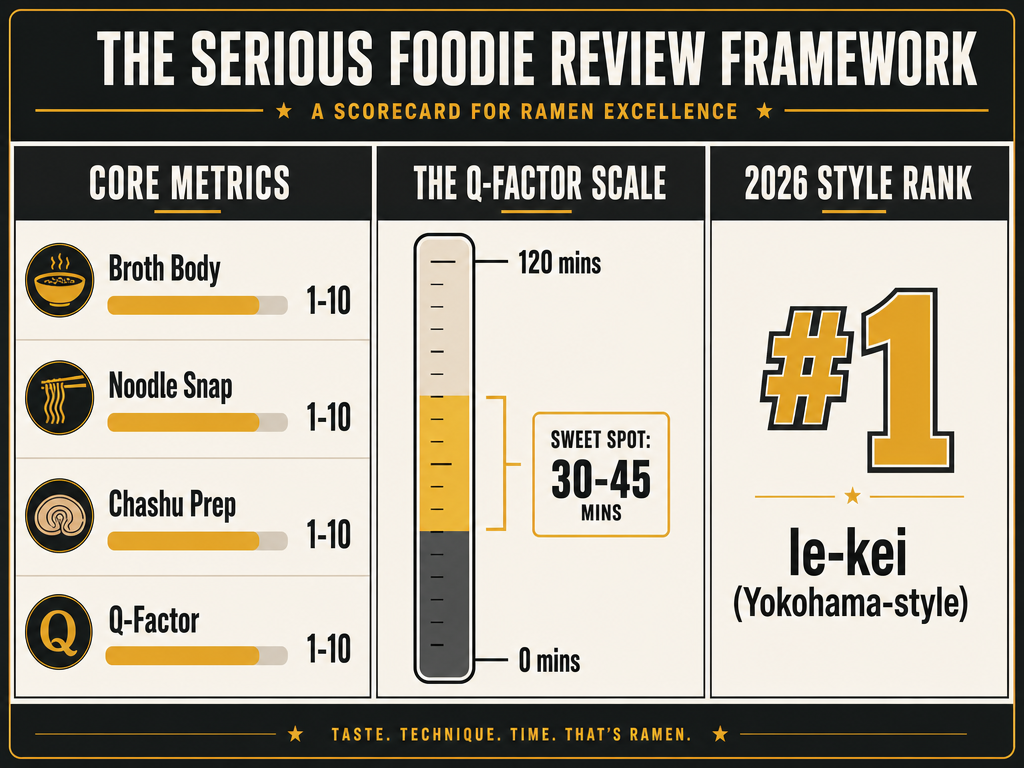 This standardized review framework allows serious foodies to quantify their dining experience, moving beyond simple photos to analytical data-driven evaluations of broth and wait times.
Professional ramen critics use a scoring system that breaks down into four key components. This isn't about being pretentious - it's about creating consistent measurements you can actually use to compare bowls across cities and styles.
Broth Body: Evaluate depth, umami intensity, and finish. A top-scoring broth reveals new flavors with each sip and leaves a clean aftertaste rather than a heavy, greasy coating. A lower-scoring broth tastes one-dimensional or relies too heavily on salt for flavor.
Ask yourself: Would I want to drink this broth by itself? The best broths are complex enough to stand alone.
Noodle Execution: Assess texture, thickness appropriateness for the broth style, and how well they hold up over time. Top-scoring noodles maintain that ideal "al dente" bite through the entire bowl, with enough surface texture to hold broth effectively.
The key test: Do the last noodles taste as good as the first ones? Poorly made noodles turn mushy within minutes.
Toppings and Composition: Evaluate chashu preparation, egg doneness, and how well supporting ingredients complement the main event. A perfectly soft-boiled egg with a jammy yolk isn't just aesthetic - it adds textural contrast and richness that balances a lighter broth.
Watch for: Chashu that's been properly torched before serving, marinated eggs with actual flavor penetration, and thoughtful garnishes rather than random vegetable pile-ons.
The "Sense" Factor: This captures everything else - ambiance, service style, and whether the complete experience justifies the price and wait. A high sense score means you'd actively recommend the shop to other serious foodies and return yourself. A low sense score means the food might be technically proficient but the overall experience feels soulless or overpriced.
Using this framework consistently across multiple bowls creates a personal database you can actually trust. Instead of vague memories of "that good ramen place in Tokyo," you'll have specific scores showing that Shop A earned a substantially higher rating while Shop B managed a more modest score despite similar prices.
Apps designed for tracking individual dishes rather than restaurants make this process substantially easier than maintaining spreadsheets or relying on your camera roll.
Tracking Your Ramen Journey
Your camera roll holds hundreds of ramen photos. Three months from now, you won't remember which bowl came from which shop, what you paid, or why you loved it. This isn't a memory problem - it's an organizational problem.
The solution isn't taking better notes in your iPhone's Notes app. It's building a systematic approach to tracking restaurant meals that captures the information you'll actually need later.
Start with these five fields for every bowl:
Location specifics: Not just "Tokyo" but the specific ward and nearest station. Ramen shop names often overlap between cities, and you'll want to find that exact place again.
Style classification: Tonkotsu, shoyu, miso, tsukemen, or hybrid. This helps you identify patterns in your preferences over time.
Quantitative metrics: Price, wait time, your score using the framework above.
Qualitative notes: Two sentences maximum capturing what made this bowl distinctive. "Broth had noticeable ginger heat. Chashu was too lean." These specific observations matter more than poetic descriptions.
Comparison anchor: Reference your previous best bowl in this style. "Better than Ippudo NYC but not quite Ichiran Fukuoka level." This creates a mental ranking that's more useful than absolute scores.
The goal isn't to become a food blogger documenting every meal for an audience. It's to build a personal reference system that helps you make better decisions about where to eat next. When you're planning a trip to Osaka, you want to quickly recall which specific ramen styles you've enjoyed most, not scroll through numerous unsearchable photos trying to remember.
Modern food review platforms designed for this purpose handle the organizational work automatically, letting you focus on the eating and evaluation rather than data entry.
Frequently Asked Questions
What is the number one ramen in the world?
There's no single "best ramen" because the category is too diverse. Yokohama-style (Ie-kei) ramen ranked #1 in global popularity lists for 2026, but popularity doesn't equal quality. The "best" ramen depends entirely on your preferences - do you want delicate niboshi, rich tonkotsu, or innovative fusion?
The more useful question: "What's the best ramen style for my specific taste profile?" If you prefer lighter, more nuanced flavors, Tokyo-style shoyu will beat heavy Hakata tonkotsu every time, regardless of objective quality measurements.
How much is a bowl of ramen in Tokyo?
Basic bowl prices in Tokyo typically range from ¥800-¥1,200 ($5-$8 USD), with craft or specialty ramen rarely exceeding ¥1,800 ($11 USD). These prices include tax and don't require tipping, making them genuinely affordable compared to Western markets.
The price consistency across Tokyo reflects strong cultural expectations about ramen's role as everyday food rather than luxury dining. Even Michelin-starred ramen shops maintain relatively modest pricing compared to other starred restaurants.
Why is ramen so expensive in the USA?
American ramen prices reflect substantially higher operational costs - rent, labor, and imported ingredients can be significantly more expensive than in Japan. A typical gourmet bowl in the US (NYC/LA) averages approximately $20-$25 with tip.
The pricing also reflects different business models. US ramen shops often operate more like sit-down restaurants with table service and larger spaces, while Japanese shops maximize turnover with counter seating and minimal service interaction.
Is there any Michelin star ramen?
Yes - several ramen shops have earned Michelin stars, with Tsuta in Tokyo being the first in 2015. Tokyo holds 194 Michelin-starred restaurants, including multiple ramen establishments.
However, Michelin stars for ramen remain controversial within the serious foodie community. Many argue that the formal Michelin criteria (service, ambiance, presentation) don't align well with ramen's working-class roots. A starred ramen shop isn't necessarily "better" than an unstarred neighborhood favorite - just more aligned with European fine-dining expectations.
Which city has the best ramen?
Tokyo offers the highest concentration of quality and variety, but "best" depends on what you're seeking. Fukuoka (Hakata) remains unmatched for traditional tonkotsu. New York leads in high-end fusion. Los Angeles excels at creative experimentation.
The more productive approach: identify which specific styles interest you most, then target cities known for those specialties. Understanding how different review platforms work in each market helps you find the standout shops once you arrive.
What are the four major ramen styles?
The classical four styles are shoyu (soy sauce-based), shio (salt-based), miso (fermented soybean paste), and tonkotsu (pork bone broth). These represent base broths, not complete style definitions.
Modern ramen has evolved substantially beyond this framework. Tsukemen (dipping noodles), mazemen (brothless ramen), and countless regional variations like Yokohama-style Ie-kei or Kitakata-style make the "four styles" classification increasingly outdated. Understanding regional variations matters more than memorizing basic categories.
Your camera roll tells a story of dozens, maybe hundreds of ramen bowls. But without a system for organizing, evaluating, and comparing those experiences, they're just photos. The serious foodie's advantage isn't just eating at great shops - it's building a personal database that makes every future meal better informed. Apps designed specifically for dish-level tracking turn that camera roll graveyard into a searchable culinary archive you'll actually use.