
How to Catalog Dishes by Flavor Profile: A Searchable System for Serious Foodies
Alex the juice queen
Alex hunts for the best juice bars and presses. She rates every sip and saves her favorites in Savor.
How to Catalog Dishes by Flavor Profile: A Searchable System for Serious Foodies You just had an extraordinary bowl of ramen. The broth was intensely umami,...
How to Catalog Dishes by Flavor Profile: A Searchable System for Serious Foodies
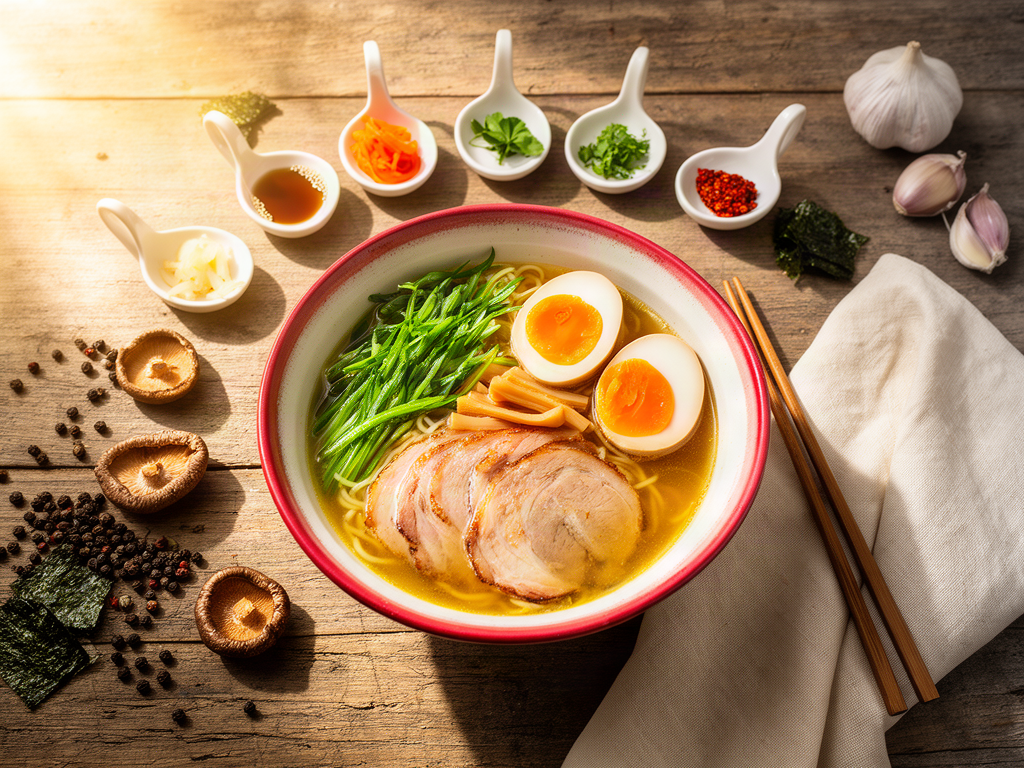
You just had an extraordinary bowl of ramen. The broth was intensely umami, with a subtle smokiness that reminded you of that legendary tonkotsu place you tried two years ago in Tokyo. But now, three months later, you can't remember the restaurant's name, and your camera roll offers no clues. The problem isn't your memory. It's that you've been cataloging food like it's 2015.
Most food lovers organize their dining experiences by restaurant name or star rating. That's useful if you're trying to remember where you ate. But it's useless when you're craving a specific flavor experience and can't recall where you had it. What you need is a system that catalogs dishes by their sensory data, not just their location.
Table of Contents
- What Does It Mean to Catalog by Flavor Profile?
- The Three-Pillar Framework: Taste, Aroma, and Mouthfeel
- Building Your Flavor Taxonomy
- Choosing Your Tech Stack
- The 30-Second Field Capture System
- The Weekly Database Sync
- How to Search Your Archive
- Common Mistakes to Avoid
- Frequently Asked Questions
What Does It Mean to Catalog by Flavor Profile?
Cataloging by flavor profile means organizing your food experiences based on sensory characteristics rather than restaurant metadata. Instead of searching for "that place in Brooklyn," you're searching for "bright, citrusy, umami-forward dishes with a silky texture."
Flavor profiles are defined by three distinct pillars: Taste, Aroma, and Mouthfeel. The reason this matters is that aroma accounts for up to 80% of what we perceive as flavor. If you're only logging "spicy" or "sweet," you're missing most of the sensory story.
The fundamental shift is moving from venue-based cataloging (Thai restaurant, Italian restaurant) to experience-based cataloging (funky and acidic, rich and earthy). This allows you to answer questions like "Where did I have that dish with the smoky, fatty profile that I loved last summer?" rather than just "What was the name of that restaurant?"
For serious foodies who want to build a proper culinary database, you'll also want to explore how to build a searchable food memory archive beyond basic categorization.
The Three-Pillar Framework: Taste, Aroma, and Mouthfeel
Professional flavor profiling relies on three distinct sensory dimensions. Understanding each one is essential for building a catalog that actually helps you rediscover dishes.
The Tastes (What Your Tongue Detects)
Your tongue recognizes six primary taste sensations. Each one creates a different physiological response and shapes how you perceive a dish.
Sweet - Detected by receptors at the tip of your tongue. Signals energy-rich foods. Found in caramelized onions, ripe tomatoes, mirin-glazed salmon.
Sour - Sensed along the sides of your tongue. Indicates acidity. Present in ceviche, kimchi, sourdough bread, vinaigrettes.
Salty - Perceived across the entire tongue surface. Enhances other flavors. Dominant in cured meats, aged cheeses, miso, anchovies.
Bitter - Concentrated at the back of the tongue. Can signal toxins but also complexity. Found in radicchio, dark chocolate, coffee, burnt ends.
Umami - Distributed throughout the tongue. Indicates protein-rich foods. Strong in aged parmesan, soy sauce, mushrooms, dashi, dry-aged beef.
Spicy - Actually a pain response, not a taste. Triggered by capsaicin in chili peppers or piperine in black pepper. Creates heat without changing temperature.
When you're cataloging a dish, identify which 1-2 tastes dominate. A perfectly balanced dish might have all six present, but usually one or two define the experience.
The Aromas (What Your Nose Interprets)
Since aroma drives most of what we call "flavor," this is where your catalog gains real search power. Industrial flavor families include Fruit, Dessert, Brown and Warm, Cooling/Mint, Botanical, and Savory/Spice. You can adapt this framework for personal use.
Floral - Jasmine rice, elderflower, rose water, lavender honey
Woody - Smoked meats, cedar plank salmon, rosemary, thyme
Smoky - Charred vegetables, grilled octopus, mezcal, Lapsang Souchong tea
Fruity - Stone fruit sauces, citrus zest, berry reductions, tropical salsas
Herbal - Basil, cilantro, mint, tarragon, green curry paste
Earthy - Mushrooms, truffles, beets, lentils, root vegetables
Funky - Aged cheese, fermented foods, fish sauce, blue cheese, natto
Aromatic descriptors are where cuisine tags often fail. A dish can be "Thai" by origin but "woody and smoky" by aroma. That distinction helps you find similar flavor experiences across different cuisines.
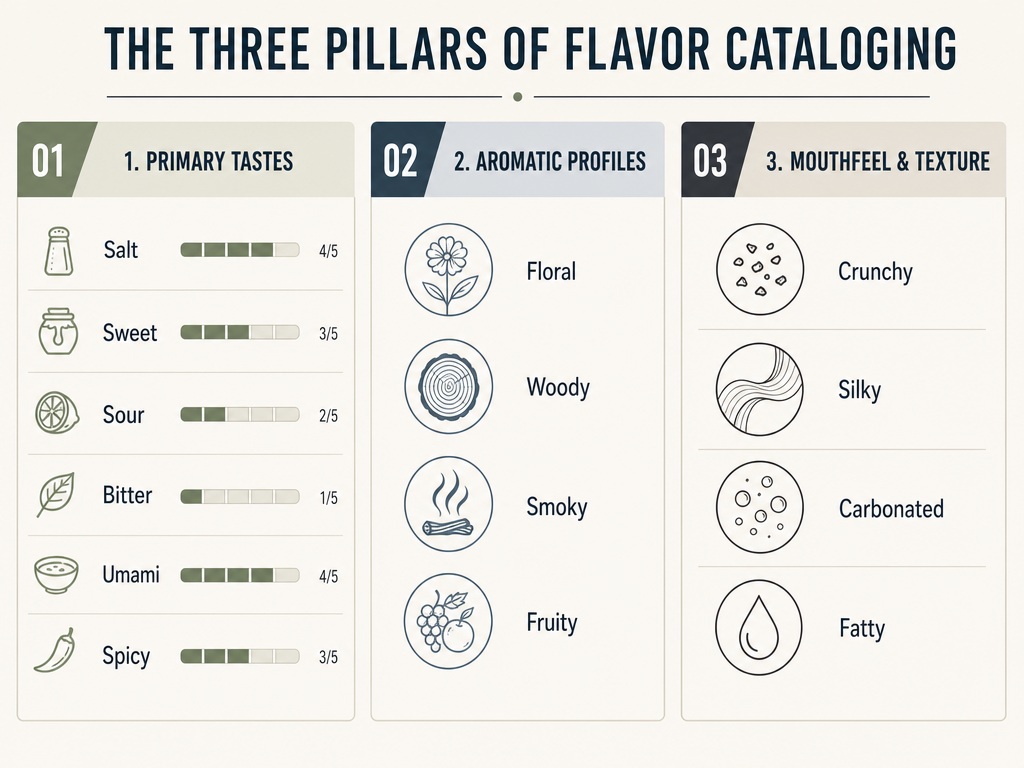 A comprehensive taxonomy framework for categorizing dishes beyond simple cuisine tags, focusing on the sensory data points that define a professional-grade culinary database.
The Mouthfeel (What Your Palate Experiences)
Texture and physical sensation complete the flavor profile. Mouthfeel is why you can distinguish between two dishes with identical taste and aroma.
Crunchy/Crispy - Fried chicken skin, tempura, crackling pork, toast
Silky/Smooth - Burrata, panna cotta, French-style scrambled eggs, hollandaise
Creamy/Rich - Bone marrow, foie gras, carbonara, aioli
Chewy/Tender - Slow-cooked short ribs, fresh pasta, braised octopus
Carbonated/Effervescent - Pickled vegetables, kombucha, champagne sauces
Fatty/Unctuous - Duck confit, pork belly, butter-poached lobster, toro
Light/Delicate - Steamed fish, sashimi, clear broths, raw vegetables
Cataloging mouthfeel helps you distinguish between a silky miso soup and a rich tonkotsu ramen, even though both might be tagged "umami-forward Japanese soup."
Building Your Flavor Taxonomy
Now that you understand the three pillars, you need a working vocabulary. Here's a practical flavor tagging system that balances precision with speed.
Primary Categories (Choose 1-2 per dish)
Start with the dominant sensory experience:
- Sweet & Rich - Desserts, caramelized proteins, sweet-and-savory glazes
- Sour & Bright - Ceviches, pickled dishes, vinegar-forward sauces
- Salty & Savory - Cured meats, aged cheeses, anchovy-based dishes
- Bitter & Complex - Dark leafy greens, coffee rubs, burnt elements
- Umami & Deep - Aged proteins, fermented ingredients, mushroom-heavy dishes
- Spicy & Pungent - Chili-forward curries, Sichuan preparations, wasabi
Secondary Aromatic Tags (Choose 1-3 per dish)
Add aromatic layers:
- Floral
- Woody
- Smoky
- Fruity (citrus, stone fruit, tropical)
- Herbal (fresh herbs vs. dried herbs)
- Earthy
- Funky
Texture Descriptors (Choose 1-2 per dish)
Finish with mouthfeel:
- Crunchy
- Silky
- Rich/Fatty
- Light
- Chewy
- Creamy
A properly tagged dish might look like this in your system:
Dish: Duck Confit with Cherry Gastrique
Primary Profile: Sweet & Rich, Salty & Savory
Aromatics: Fruity (stone fruit), Woody (thyme)
Texture: Rich/Fatty, Crispy (skin)
Cuisine Context: French
Notice that "French" is context, not the primary organizing principle. You can now search for "rich, fruity, fatty dishes" and find this duck confit alongside a pork belly with plum sauce, even though one is French and one might be Chinese.
If you're building a more advanced system, consider how professional food critics score dishes consistently using multi-dimensional frameworks.
Choosing Your Tech Stack
The tool you use determines how deep you can go. There's a trade-off between logging speed and search power.
The Quick Log: Beli App
Best for: Social sharing, basic rankings, low-friction logging
Limitations: Minimal flavor metadata fields, limited search by sensory characteristics
Beli excels at helping you rank restaurants and share lists with friends. You can tag dishes with basic descriptors, but the app isn't built for granular flavor profiling. If you're just starting to move beyond your camera roll, it's a solid entry point.
The Pro Database: Notion or Airtable
Best for: Deep flavor cataloging, advanced search, personal culinary archive
Limitations: Requires upfront setup, more time per entry
For serious food tracking, a relational database gives you real search power. Here's a starter property schema:
Database Properties:
- Dish Name (Text)
- Restaurant (Text, with relation to separate Restaurant database)
- Date Eaten (Date)
- City/Location (Text or Select)
- Primary Flavor Tags (Multi-select: Sweet & Rich, Sour & Bright, Salty & Savory, etc.)
- Aromatic Profile (Multi-select: Floral, Woody, Smoky, Fruity, Herbal, Earthy, Funky)
- Texture Profile (Multi-select: Crunchy, Silky, Rich/Fatty, Light, Chewy, Creamy)
- Dominant Spice/Herb (Text)
- Cuisine Context (Select: French, Japanese, Mexican, etc.)
- The Vibe Match (Select: Date Night, Business Lunch, Late Night, Comfort Food, Special Occasion)
- Photo (File upload)
- Quick Notes (Long text)
- Would Order Again? (Checkbox)
- Rating (Number, 1-10)
This structure lets you run searches like "Show me all rich, earthy dishes with a silky texture that I rated 8 or higher" or "Find umami-forward dishes I've had for late-night meals."
You can also explore how to organize food pictures by dish type for more advanced filing systems.
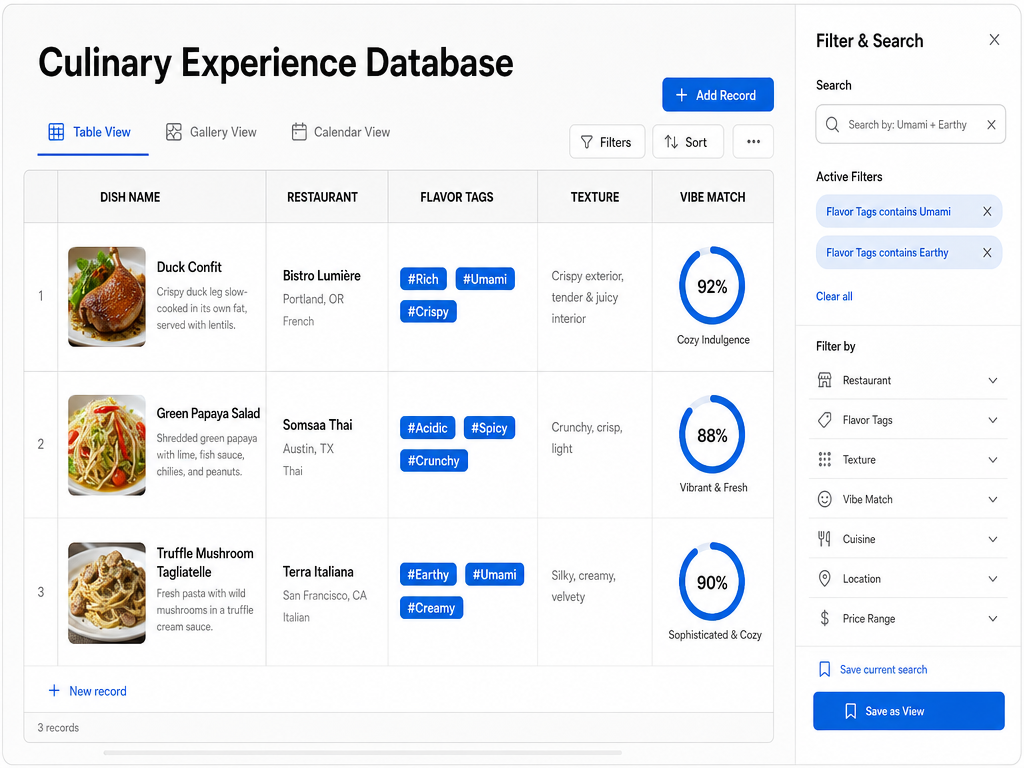 Transform your culinary history into a searchable second brain by using a structured database schema that prioritizes flavor and texture metadata over simple restaurant names.
Instagram Guides or Apple Notes
Best for: Visual curation, sharing with others
Limitations: No structured search, hard to filter by specific attributes
These are better for creating curated lists (Best Pasta in Rome, Spicy Dishes I Loved in 2025) than for building a searchable flavor archive. Think of them as public-facing highlights rather than your working database.
Comparison: Log Depth vs. Effort
| Tool | Effort Level | Searchability | Best For |
|---|---|---|---|
| Camera Roll | Zero | None | Visual memories only |
| Beli App | Low | By Restaurant/Rating | Ranking favorites with friends |
| Notion Database | High | Deep (Filter by flavor/texture) | Building a personal culinary library |
| Instagram Guides | Medium | Visual/Social | Curation for others |
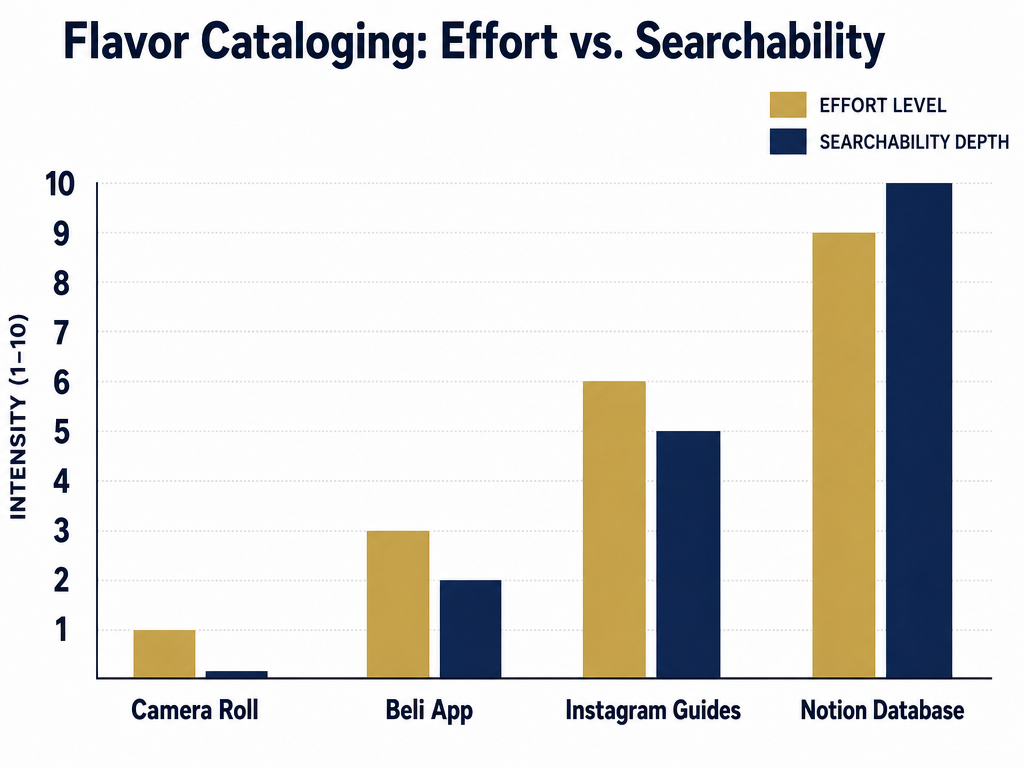 Evaluate the trade-offs between logging effort and search power to choose the system that best fits your dedication to building a professional food catalog.
For a detailed comparison of tracking tools, see the best apps to track your favorite dishes.
The 30-Second Field Capture System
The biggest barrier to maintaining a flavor catalog is the friction of logging at the table. You need a system that captures essential data without killing the dining experience.
The Minimum Viable Entry
When the dish arrives, capture:
- One photo - Well-lit, shows the dish clearly
- Three flavor tags - Pick the most dominant (e.g., "Umami, Smoky, Silky")
- One-sentence note - What made it memorable
Do this before you start eating. The entire process takes 30 seconds.
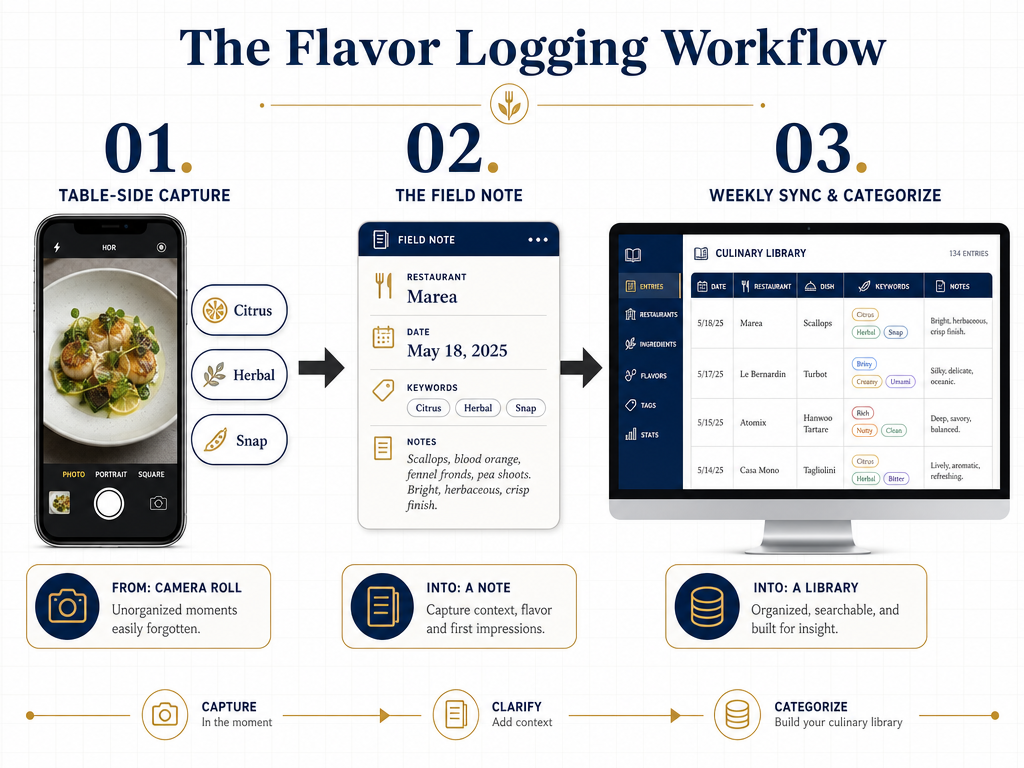 A streamlined workflow allows you to capture essential flavor data at the table in seconds without disrupting the dining experience, ensuring your database stays updated.
The Note-Taking Method
Use your phone's native notes app or a dedicated field journal app. Create a quick template:
[Restaurant Name]
[Dish Name]
Tags: [Flavor 1], [Flavor 2], [Texture]
Note: [One sentence]
Example:
Osteria Francescana
Tortellini in Parmigiano Cream
Tags: Umami, Rich, Silky
Note: Like eating a cloud made of cheese. Simplicity at its finest.
Later, during your weekly sync, you'll transfer this to your proper database with full metadata.
For advanced photo techniques, check out how to photograph food without ruining the moment.
The Weekly Database Sync
Raw field notes are useless if they never make it into your searchable system. Set aside 15-20 minutes once a week to process your dining log.
The Sunday Ritual
- Pull up your week's photos - Sort by date, filter for food images
- Match photos to field notes - Cross-reference with your quick capture data
- Fill in database properties - Add all flavor tags, aromatics, texture descriptors
- Expand your notes - While memory is fresh, add context (What was the occasion? Who were you with? What would you pair with this?)
- Tag for future searches - Think about how you'll want to find this dish later
The Data Quality Check
Ask yourself these questions for each entry:
- Can I search for this dish by its flavor characteristics, not just restaurant name?
- Would I be able to recognize this dish again based on my description?
- Have I captured what made it memorable, not just that it was "good"?
If you can't answer yes to all three, your entry needs more detail.
How to Search Your Archive
A flavor-based catalog is only valuable if you can actually find dishes when you need them. Here's how to run powerful searches.
Search by Craving
The Question: "I want something rich and fatty with a smoky element."
The Search (Notion/Airtable):
- Filter: Texture Profile contains "Rich/Fatty"
- AND: Aromatic Profile contains "Smoky"
- Sort by: Rating (highest first)
This might surface a smoked brisket from Texas, a bacon-wrapped date from a Spanish tapas bar, and a grilled mackerel from a Japanese izakaya. Three different cuisines, one unified flavor experience.
Search by Season or Occasion
The Question: "What are my favorite summer dishes with bright, acidic profiles?"
The Search:
- Filter: Date Eaten is between June 1 and August 31
- AND: Primary Flavor Tags contains "Sour & Bright"
- Sort by: Date Eaten (most recent)
This reveals patterns in your eating habits and helps you rediscover seasonal favorites.
Search by Cuisine Cross-Reference
The Question: "What dishes outside of Japanese cuisine have similar umami depth to the ramen I loved?"
The Search:
- Filter: Primary Flavor Tags contains "Umami & Deep"
- AND: Cuisine Context does not contain "Japanese"
- Sort by: Rating (highest first)
You might discover that a French onion soup, a bowl of Italian tortellini in brodo, and a Korean jjigae all share that deep umami quality you're craving.
For more on building a personal restaurant library with this search methodology, see how to build a personal restaurant library.
Search by Ingredient or Technique
The Question: "Where have I had the best dishes featuring fermented ingredients?"
The Search:
- Filter: Aromatic Profile contains "Funky"
- OR: Dominant Spice/Herb contains "kimchi" OR "miso" OR "fish sauce"
- Sort by: Rating (highest first)
This type of search is impossible with venue-based systems like Yelp. It's the reason flavor profiling matters.
Common Mistakes to Avoid
After watching hundreds of food lovers try to build flavor catalogs, the same mistakes show up repeatedly.
Mistake 1: Over-Tagging
Don't tag a dish with every possible flavor descriptor. Choose the 2-3 that dominate the experience. A perfectly balanced dish might have sweet, sour, salty, and umami notes, but if the smoky aroma is what you remember, that's your primary tag.
Mistake 2: Confusing Cuisine with Flavor
"Thai" is not a flavor profile. "Bright, herbaceous, spicy with a funky fish sauce base" is. Use cuisine as context, not as your organizing principle.
Mistake 3: Logging Only the Highs
Your catalog becomes more useful when you include mediocre dishes too. Knowing what didn't work ("This carbonara was too rich without enough salt to balance it") teaches you about your own palate.
Mistake 4: Delaying the Sync
Field notes that sit for three weeks are useless. You won't remember the details. Sync weekly, or the system collapses.
Mistake 5: Ignoring Your "Vibe Match" Field
The best pasta carbonara of your life might still be wrong for a business lunch. Context matters. Use that "Vibe Match" property to filter for the right occasion.
Frequently Asked Questions
What if I don't have a sophisticated palate yet?
Start simple. Can you tell the difference between sweet and salty? Crunchy and smooth? That's enough to begin. Your palate will develop as you pay attention. The act of cataloging trains your sensory awareness.
How detailed should my flavor notes be?
Detailed enough that you could explain the dish to someone who's never tasted it. If your note says "good pasta," that's not enough. If it says "silky cacio e pepe with aggressive black pepper heat and a creamy, salty finish," you've captured the experience.
Should I catalog home-cooked meals or just restaurant dishes?
Both. Home cooking teaches you about ingredient behavior and technique. A simple roasted chicken at home might reveal that you prefer dishes with a crispy, fatty skin element, which helps you order better at restaurants.
How do I handle dishes that don't fit standard categories?
Create new tags. Your system should evolve with your palate. If you keep encountering dishes with a "grassy, vegetal" aroma that doesn't fit under "herbal," add "grassy" as a custom aromatic descriptor.
What's the difference between a flavor profile and a taste profile?
A taste profile focuses on the basic tongue sensations (sweet, sour, salty, bitter, umami, spicy). A flavor profile includes taste, aroma, and mouthfeel together. For more on this distinction, see what is a flavor profile.
Can I use this system for drinks and cocktails?
Yes. Wine, cocktails, coffee, and tea all have flavor profiles. The same three-pillar framework applies. A natural wine might be "funky, earthy, light-bodied." An Old Fashioned is "sweet and bitter, woody, rich."
How do I catalog a tasting menu with 12 courses?
Either log the 2-3 standout dishes in detail, or create a single entry for the menu as a whole with notes on the chef's flavor philosophy. Don't try to catalog every amuse-bouche or you'll burn out.
What if I'm traveling and eating 3-4 meals a day?
Lower your logging standards temporarily. Capture photos and basic tags in the moment, then do a deep sync when you're home. Better to have minimal data than to skip logging entirely because the standard feels too high.
Should I catalog by the dish name or by its core ingredient?
Both. Tag the dish name exactly as it appears on the menu, but also note the core ingredient in your "Dominant Spice/Herb" or notes field. This helps you search for "all duck dishes I've loved" or "best uses of miso."
How long does it take to build a useful catalog?
You'll start seeing patterns after 30-50 logged dishes. After 100+ entries, your archive becomes a genuine tool for discovering what you actually like. After 200+ dishes, you have a personal flavor encyclopedia.
The camera roll is where great meals go to die. A flavor-based catalog is where they come back to life. It's the difference between vaguely remembering that "Tokyo had good ramen" and being able to say "I want that rich, funky, umami-forward tonkotsu with the silky chashu from Ichiran in Shibuya."
Start tonight. Pick three dishes from your camera roll, tag them with the three-pillar framework, and add them to whichever tool you choose. By next month, you'll have a searchable archive. By next year, you'll have a second brain for food.